


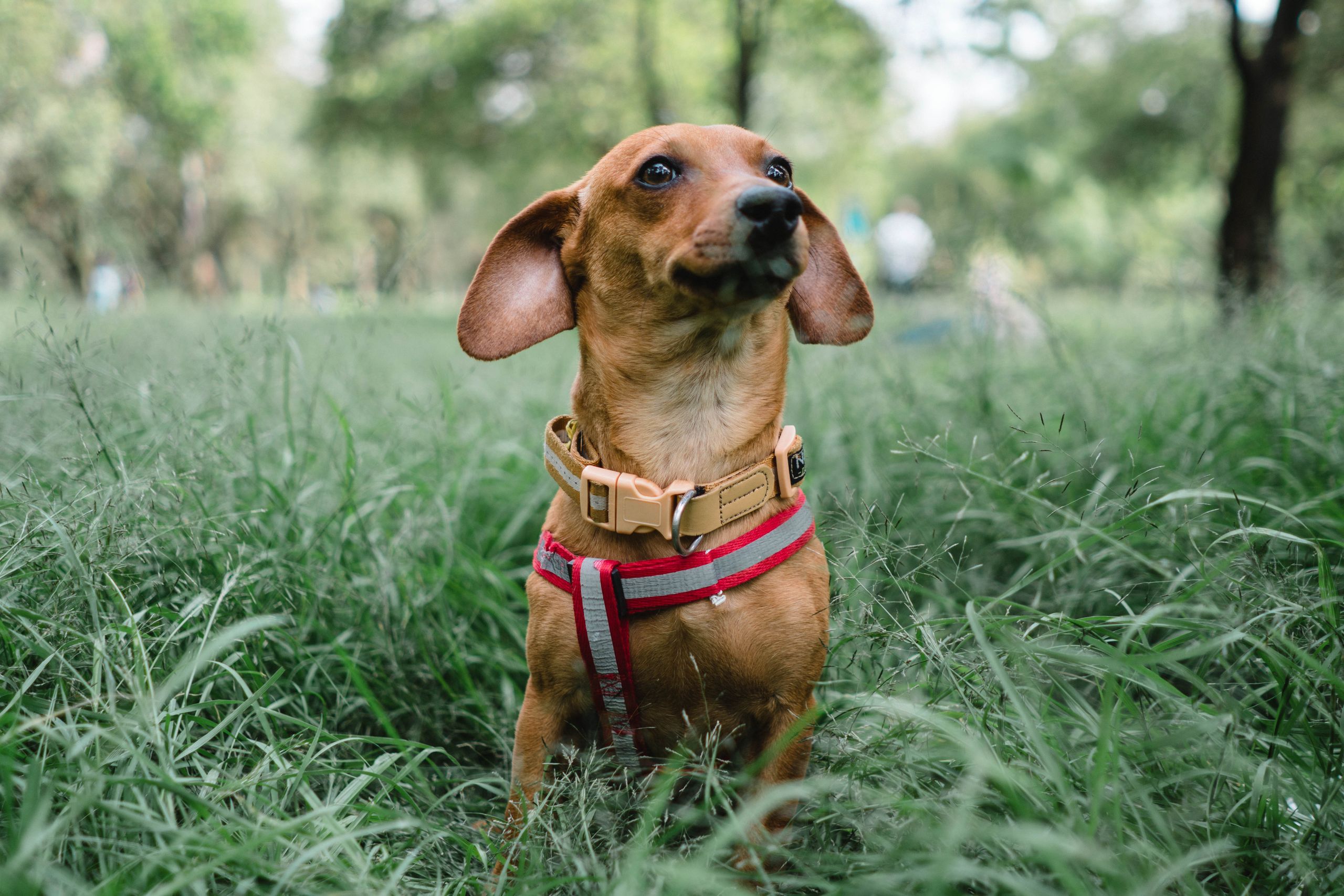
History
The Dachshund is a German breed that, according to the FCI standard, evolved from Bracken dogs bred for hunting below ground. It is regarded as one of the most versatile hunting breeds, and it also works above ground. The oldest breed club, the Deutsche Teckelklub, was founded in 1888. The standard still treats it as a working dog, and the breed sits in FCI Group 4, which contains Dachshunds alone, with a working trial required.
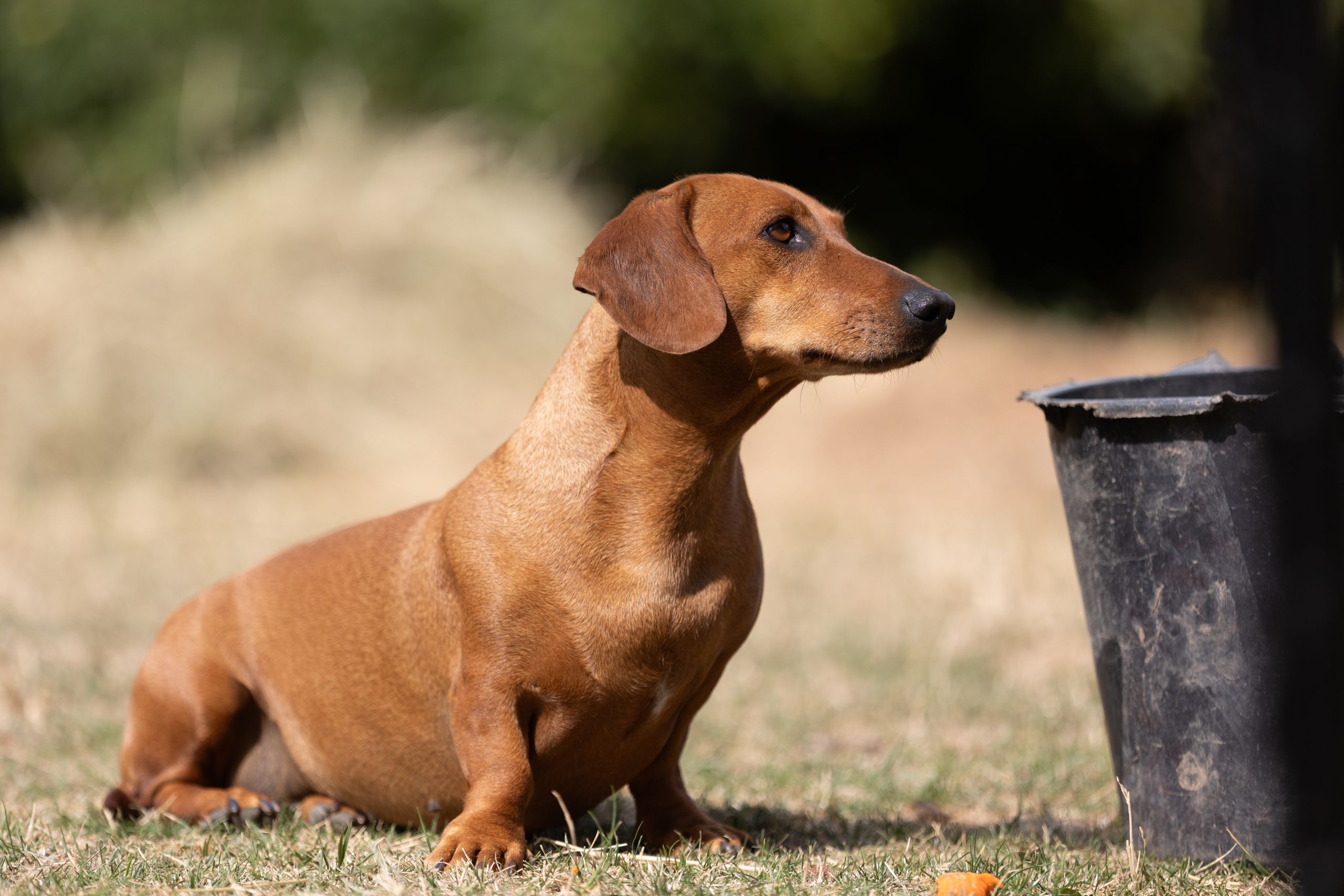
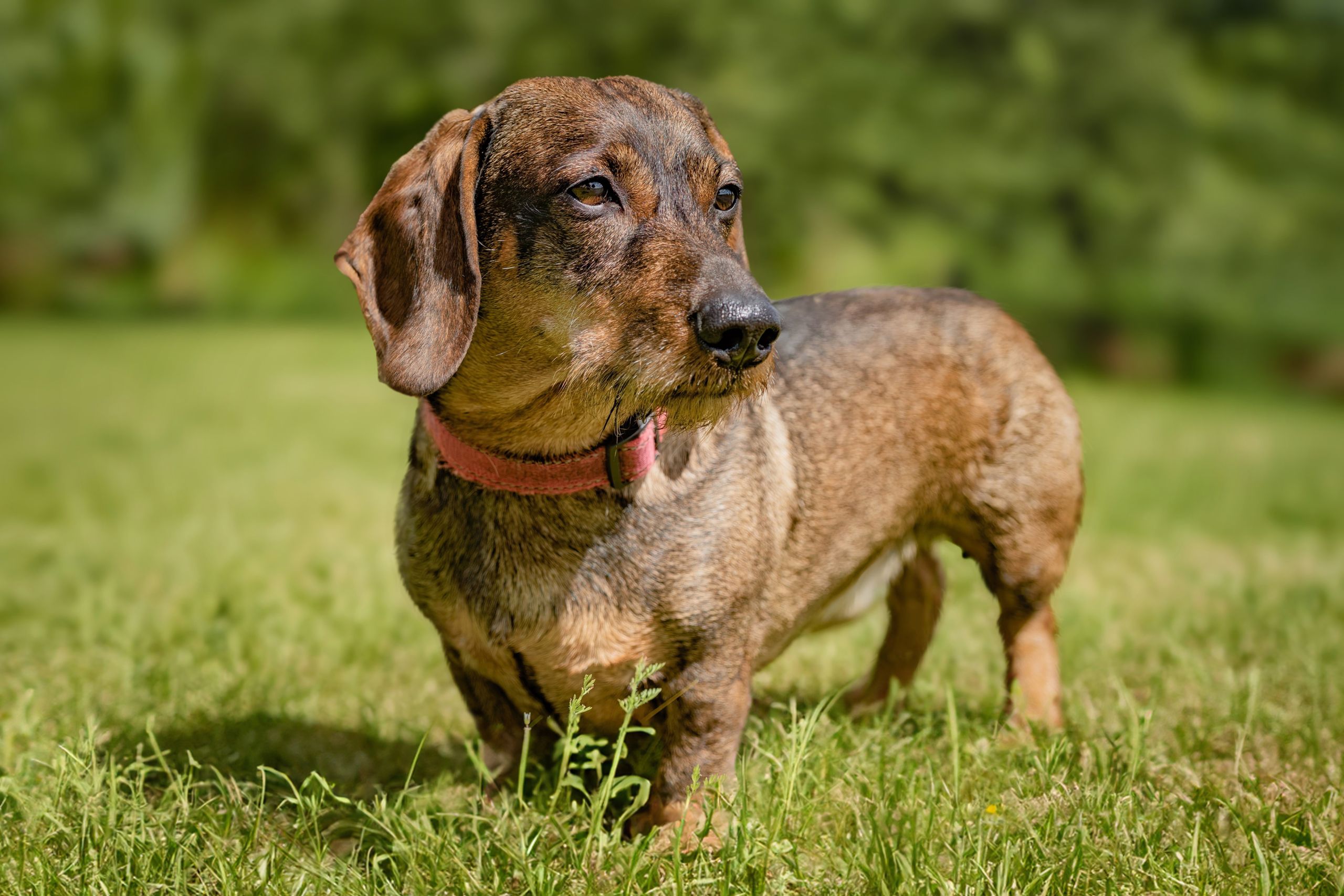
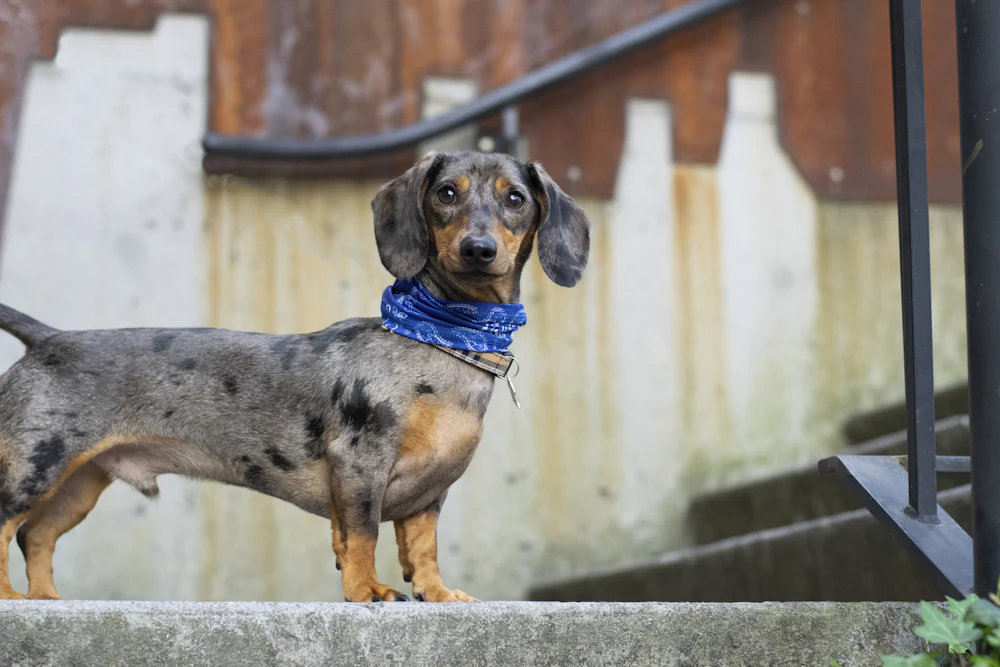
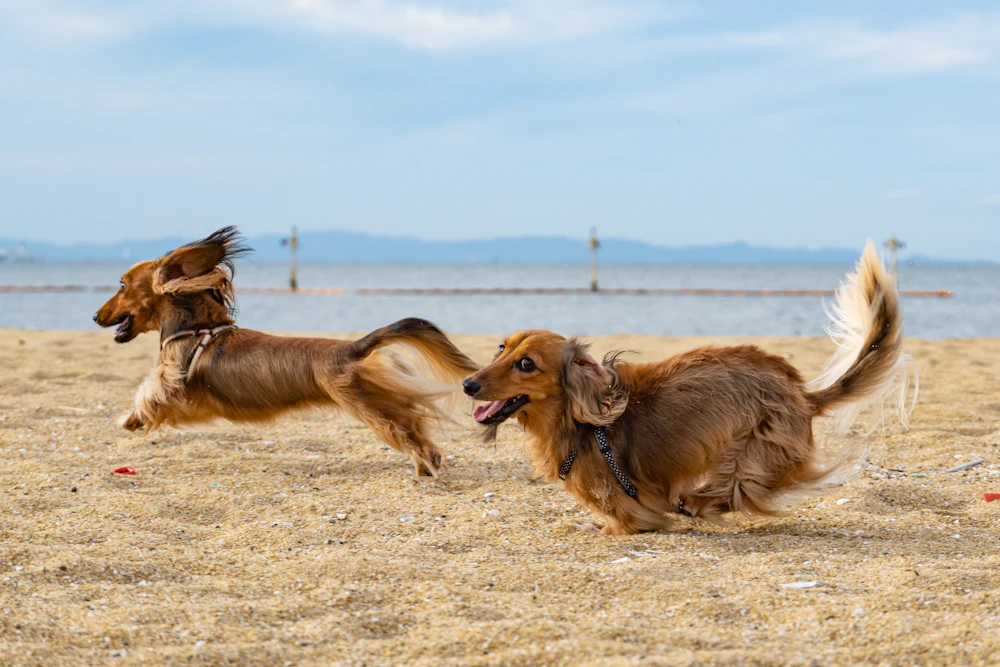
Over time the breed developed into three sizes and three coat varieties. The sizes are standard, miniature and rabbit, and the FCI separates them by chest circumference: 35 to 47 cm for standard dogs, 30 to 37 cm for miniatures and 25 to 32 cm for rabbit dachshunds. The coats are smooth-haired, wire-haired and long-haired. The standard describes a low, short-legged, elongated but compact and very muscular build, with body length about 1.7 to 1.8 times the height at the withers.
Temperament
The FCI describes the Dachshund as friendly by nature, neither fearful nor aggressive, and of even temperament. It adds that this is a passionate, persistent and fast hunting dog with an excellent nose. Those are two different animals under one coat: a charming, affectionate house dog, and a determined tracker who will follow a smell across a field and ignore all instructions.
At home the Dachshund is loyal, observant and often attached to one person. It is also loud for its size, and many are quick to bark at the door, the lift and the neighbour's trolley. Wire-haired dogs tend to be more boisterous, long-haired dogs a little softer, and smooth-haired dogs somewhere between. Independent thinking is the common thread, so patience helps more than force.
Children and other pets
Dachshunds can be affectionate family dogs, and many enjoy children who are calm and respectful. Rough handling is a real risk, as picking up a long-backed dog incorrectly can hurt its spine, so children must learn to support the chest and hindquarters. Some are protective of toys and food. They usually live well with other dogs, though they may stand up to much larger ones, and small pets can trigger the hunting instinct.
Exercise and the daily walk
An adult Dachshund needs about an hour a day, usually in two walks, with plenty of time to sniff. Despite the short legs it has real stamina and enjoys a long woodland walk. Scent games, tracking and hide-and-seek in the flat satisfy the mind. Keep exercise steady and avoid repeated jumping, which strains the back.
Protect the spine: stop the dog leaping off sofas and beds, use ramps or steps, and avoid carrying it by the middle. Keep it on a lead in places where a scent might lead it down a hole or into thick cover, because recall fades when the nose is on a trail. Young puppies should not be asked to climb many stairs or run long distances.
Training
Dachshunds are clever and learn quickly, but they decide what is worth their effort. Reward-based training with tasty treats works well; scolding produces a sulky, defiant dog. Start early with house training, which can be slow, and keep a steady routine. Short, varied sessions suit them far better than long drills, and the best rewards are scents and games that use the nose.
Teach recall in a safe place and build it patiently, since the hunting instinct is strong. Practise calm behaviour at the door, because barking is a common issue in flats, and teach the dog to use stairs or a ramp rather than jump. Handle the paws, ears and mouth routinely so that grooming and vet visits are smooth, and socialise the puppy widely.
Coat and grooming
There are three coats. Smooth-haired dogs need only a wipe or occasional brush, wire-haired dogs need regular brushing and periodic stripping to keep their harsh coat, and long-haired dogs need brushing several times a week to prevent tangles behind the ears. The FCI permits red as a single colour, black or brown with tan, dapple and brindle patterns. Check the ears and teeth, and dry the dog after rain.
Feeding and weight
Dachshunds love food and gain weight easily, which is dangerous for the spine. Feed a complete, good-quality diet in two measured meals, weigh the food and count treats within the daily allowance. A dog that is slightly lean is healthier than one that is round. Avoid feeding scraps, keep water available and ask your vet to check body condition regularly.
Work out a starting calorie figure and food weight with the calorie calculator. Not sure this is the right breed? Take the quiz.
Health
Every breed carries predispositions. These are the conditions most often discussed for the Dachshund, not a prediction for any individual dog.
- Intervertebral disc disease, a spinal problem that is common in this long-backed breed
- Obesity, which greatly increases the strain on the spine
- Progressive retinal atrophy in some lines, an inherited eye disease
- Dental disease, which is common in small breeds
- Ear infections, particularly in the long-haired variety
What to ask the breeder. Ask for eye test results and, where relevant to the lines, evidence of back health and the incidence of disc problems in the family. Also ask which coat and size the parents are and how the puppies have been socialised.
Choosing a puppy
Choose a breeder who raises puppies in the home and can show the parents. Keep a puppy lean, prevent jumping on and off furniture, and carry it with support under the chest and hindquarters. Begin house training at once, introduce the lift, noises and strangers early, and teach quiet at the door. Expect a bold, noisy and endlessly curious puppy.
In Luxembourg the national kennel club is the Fédération Cynologique Luxembourgeoise (FCL), a member of the FCI. Many owners also buy from breeders in Germany, France or Belgium; a puppy coming from another EU country must be microchipped and vaccinated against rabies, which in practice means it cannot travel before about fifteen weeks of age. Where to get a dog in Luxembourg.
The older Dachshund
Older Dachshunds are prone to back trouble, so watch for reluctance to jump, a hunched posture, yelping when lifted, or weakness in the hind legs, and call the vet at once. Keep weight down, use ramps and non-slip floors, and maintain gentle daily walks. Dental care, eye checks and warm bedding help keep an older dog comfortable.
A realistic day
A realistic weekday for a working household in Luxembourg City, with a midday visit. Adjust it to your dog, not the other way round.
Toilet break and a 30 minute sniffing walk. Carry down stairs if the dog is small or young, and keep the lead short near other dogs.
A chew or food puzzle in a quiet spot. Many are calm once the door shuts, but some bark, so build alone time gradually.
Midday visit: toilet break, water, a short walk and a scent game in the flat, with no jumping on or off furniture.
The main walk of about 45 minutes in a park or forest edge, on a long line where recall is unreliable, then dinner.
Last toilet break, a brush and a warm bed at floor level or with a ramp. The dog sleeps well after a good sniffing day.
A Dachshund in Luxembourg
A Dachshund suits Luxembourg flats well, with one condition: stairs. A building with a lift is a gift, and carrying a dog down a flight of steps is a good habit for young dogs and anyone with a long-backed pet. The Pétrusse valley, Parc Merl and the municipal park give enough variety for daily walks, and the Bambësch and Grünewald forests give a scent hound plenty of ground to track.
The main issues are noise and weather. Barking carries through thin walls, so teach quiet early and exercise the dog well. Winters can feel cold to a short-legged dog, and some owners use a coat, while summers in the 30s call for early or late walks. As everywhere in the country, a Dachshund needs a microchip, a declaration to the commune, third-party liability insurance and the annual dog tax. Buses and trams are free, and a small dachshund travels easily.
Every dog in Luxembourg must be identified, declared to the commune and covered by liability insurance. How registration works.
When you travel
A sitter must protect the back: no jumping from furniture, no rough lifting, and use ramps or stairs with care. Follow the feeding plan strictly, since the dog will beg, and keep the lead and a secure harness on for walks. Watch for barking and digging when it is left, and call the vet quickly if the dog yelps, drags a leg or will not move.
PAWLY's holiday and overnight care takes place in your home, so your dog keeps its own bed and routine.
Myths and facts
MythDachshunds are lapdogs.
FactThey are affectionate, but the FCI describes a passionate, persistent hunting dog with an excellent nose. They need walks and mental work.
MythBack problems are inevitable.
FactDisc disease is a real risk in the breed, but a lean weight, no jumping and careful handling reduce it. Ask the breeder about the lines.
MythAll Dachshunds are the same.
FactThere are three sizes and three coats, and temperament varies. Wire-haired dogs are often livelier, long-haired ones a little gentler.
Is it the right dog for you?
Suits
- Owners who enjoy a bold, funny, affectionate dog with a mind of its own
- Flat dwellers with a lift or the willingness to carry the dog
- People who like scent games, woodland walks and routine
- Households who will keep the dog lean and the furniture ramped
Think twice if
- You want an obedient dog that is reliable off the lead
- Noise in a shared building would cause problems
- You have many stairs and no wish to carry a dog
- You cannot manage weight and treats carefully
Questions owners ask
Are Dachshunds good with children?
They can be, provided the children are gentle. The dog's back is vulnerable, so children should never pick it up unsupervised, and the dog needs a quiet refuge. Show children how to sit and offer a lap instead.
How big is a Dachshund?
The FCI uses chest circumference: 35 to 47 cm for standard, 30 to 37 cm for miniature and 25 to 32 cm for rabbit. Weight depends on the size and the individual dog.
Why do Dachshunds bark so much?
They were bred to work alone underground and to give voice when they found game. Many bark at noises, so teach quiet early, provide exercise and avoid reinforcing barking with attention.
How do I protect my Dachshund's back?
Keep it lean, prevent jumping from furniture and stairs, support the chest and hindquarters when lifting, and use a harness. See the vet quickly if it shows pain or weakness.
Sources
Photo: Pexels (Pexels License) · Photo: Pexels (Pexels License) · Photo: Unsplash (Unsplash License) · Photo: Unsplash (Unsplash License) · Photo: Pexels (Pexels License)
General information for dog owners in Luxembourg, not veterinary or legal advice. Official facts (origin, size, group, history and temperament as described by the breed standard) follow the FCI standard; health and care sections reflect breed-club and veterinary guidance and are typical ranges rather than rules. For your own dog, ask your vet, the breed club or your commune. How this guide is written and checked. Last reviewed 8 October 2026.
Need someone for your Dachshund?
PAWLY offers an individual 45-minute walk or a home visit at your dog's pace, the same walker every time, and a written report with photos after every visit, across Luxembourg City.
Read next: the journal, for the Dachshund
All articles
Long-backed breeds, stairs and the spine
A long back makes stairs matter more than most owners think.

Teeth: the problem owners find least interesting and vets see most
Teeth are a known weak point in the Dachshund; this is the routine that helps.

Small dogs, and the training they never get
Small dogs are often the least trained; worth reading before habits set in.
Similar breeds
All 198 breeds
Beagle
A cheerful, sociable nose on four legs. Everything about living with a Beagle follows from the nose.
EnergyGroomingFlat life
Basset Hound
A short-legged hound of real substance, placid and affectionate at home, single-minded once a scent reaches that long, low nose.
EnergyGroomingFlat life
Miniature Schnauzer
A small, sturdy German farm dog with a beard, eyebrows and a lot to say.
EnergyGroomingFlat life

