


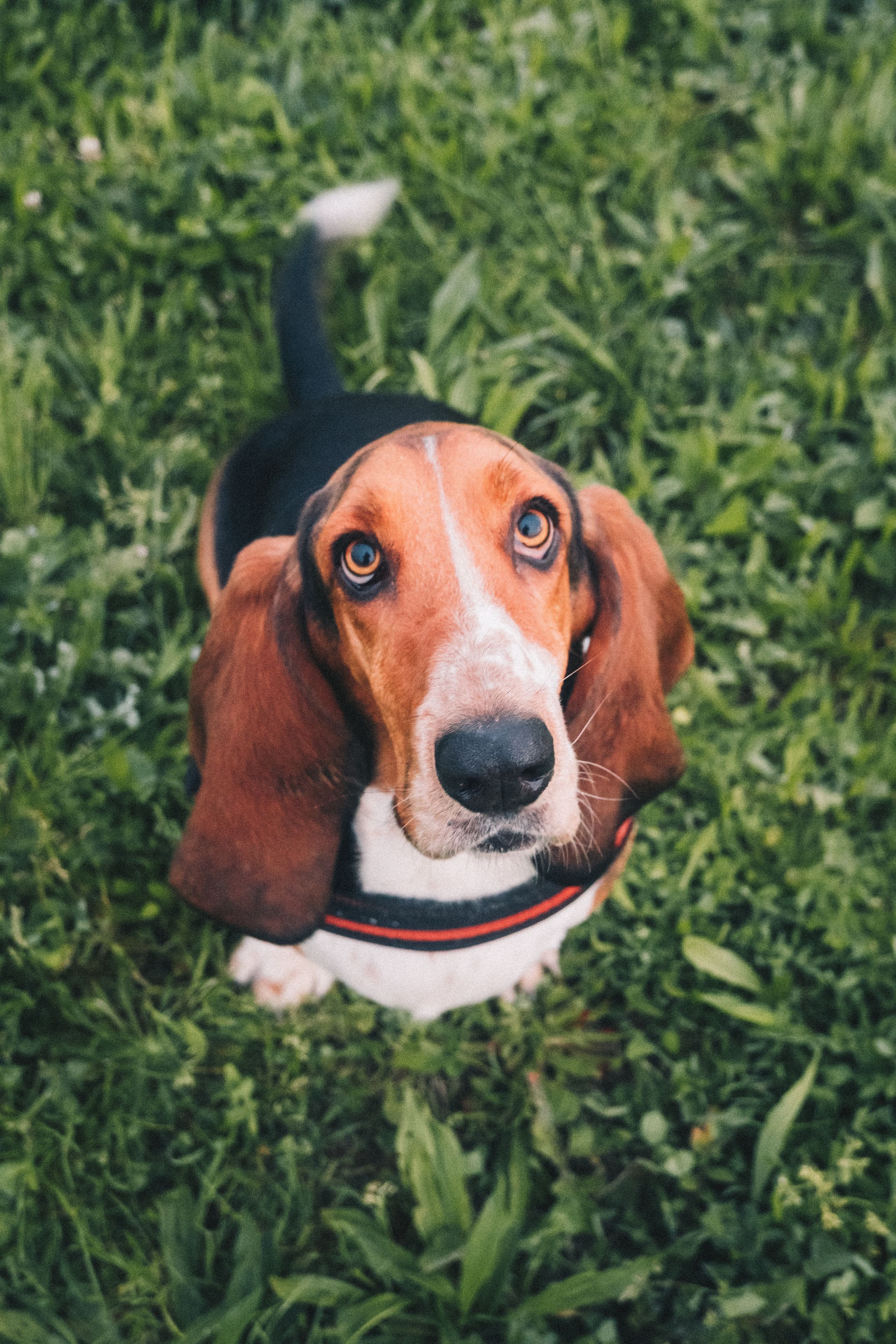
History
According to the FCI standard, the Basset was reputedly bred by monks in France in the Middle Ages to hunt in heavy cover, with a nose that it can hold close to the ground. Short legs kept the hound slow enough for hunters on foot to follow. Although related to the French basset breeds, the Basset Hound as we know it was developed in Britain, which is why Great Britain is its country of origin within the FCI.
British breeders worked on French imports during the second half of the nineteenth century, and the Basset Hound Club was founded in 1884, according to the Royal Kennel Club. The breed hunts its traditional quarry, the hare, by scent at a slow but persistent pace. The current FCI standard, dated 2010, places it in Group 6, Section 1.3, among the small-sized hounds, and the breed is subject to a working trial.
Temperament
The FCI standard sums up the temperament as placid, never aggressive or timid, and affectionate. It also mentions a deep, melodious voice, which is the hound's way of announcing a find in the field and, at home, the arrival of visitors or the absence of its owner. Many Bassets are gentle, sociable and happy to spend long hours dozing.
Behind the mournful face is a pack hound with a strong will. Once a scent is found the Basset follows it with total concentration, and it can seem selectively deaf to its owner. This is not stubbornness for its own sake, but the result of generations of independent scent work. Patience and good humour are the owner's most useful qualities.
Children and other pets
Bassets are usually excellent with children: tolerant, gentle and happy to be part of family life. Supervise play so that the dog's long back is not strained by lifting or rough games. As pack hounds they generally get on well with other dogs and often enjoy canine company. Cats raised with them are usually accepted, although some will chase small animals outdoors when the scent is strong.
Exercise and the daily walk
An adult Basset needs about an hour of walking a day, preferably at a steady pace with plenty of time to sniff. Short legs do not mean low stamina, and many Bassets can walk a long way once warmed up. Scent work, tracking games and nose work classes suit the breed perfectly and tire it more than a fast walk.
Off-lead walking is risky because a Basset following a scent will not hear a recall. Use a long line in parks and forests. Avoid jumping, repeated stairs and rough play, which can strain the long back and short legs, and use ramps or lift the dog with support under both chest and hindquarters.
Training
Bassets learn well with food rewards and short, cheerful sessions, but they are not built for rapid, repeated obedience. Expect slower responses and plan training around the dog's interests: food, scent and companionship. Harsh methods simply make a Basset switch off.
House training can take longer than with some breeds, so be consistent and patient. Teach a recall around food from an early age, loose-lead walking, and calm behaviour when left alone, since a lonely Basset can howl in a way the whole building will hear.
Coat and grooming
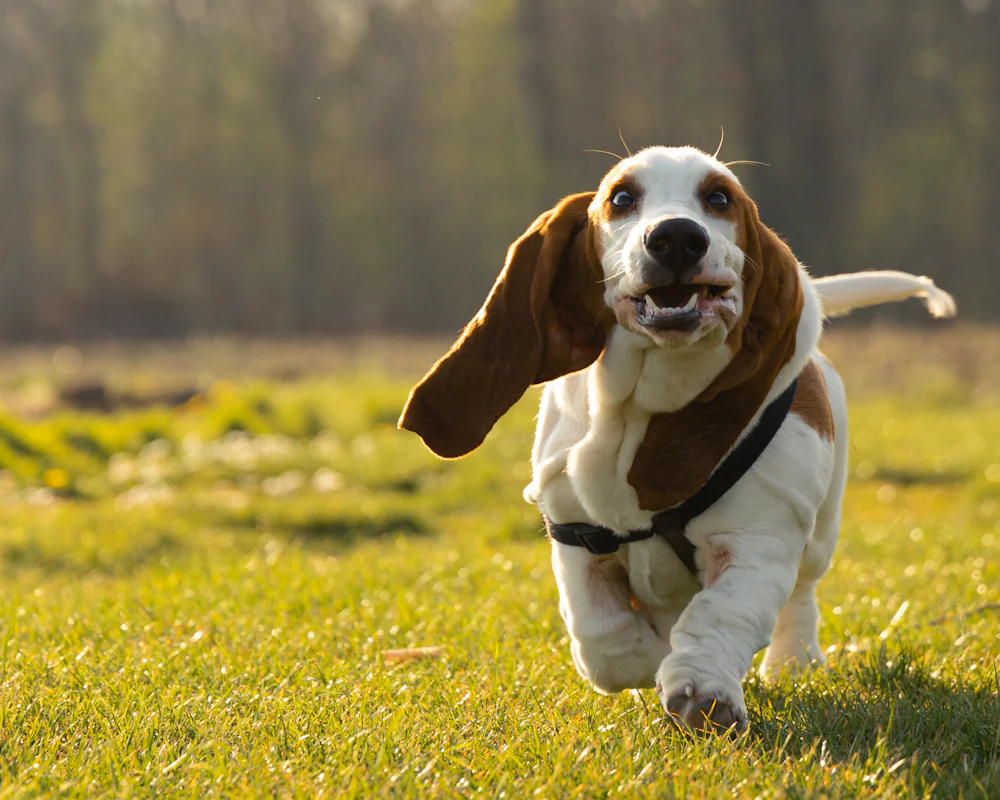
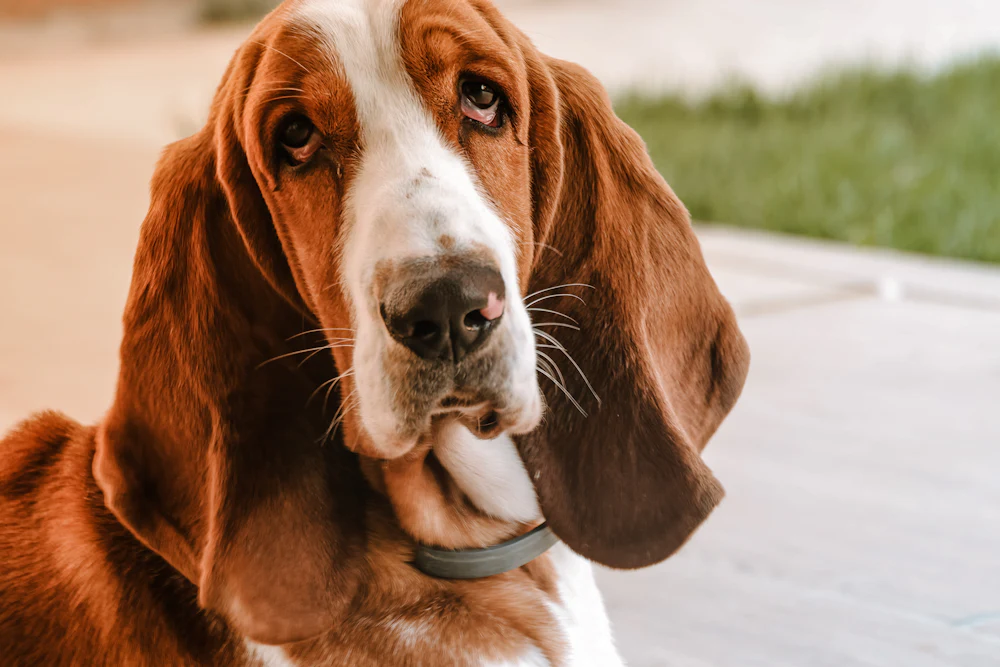
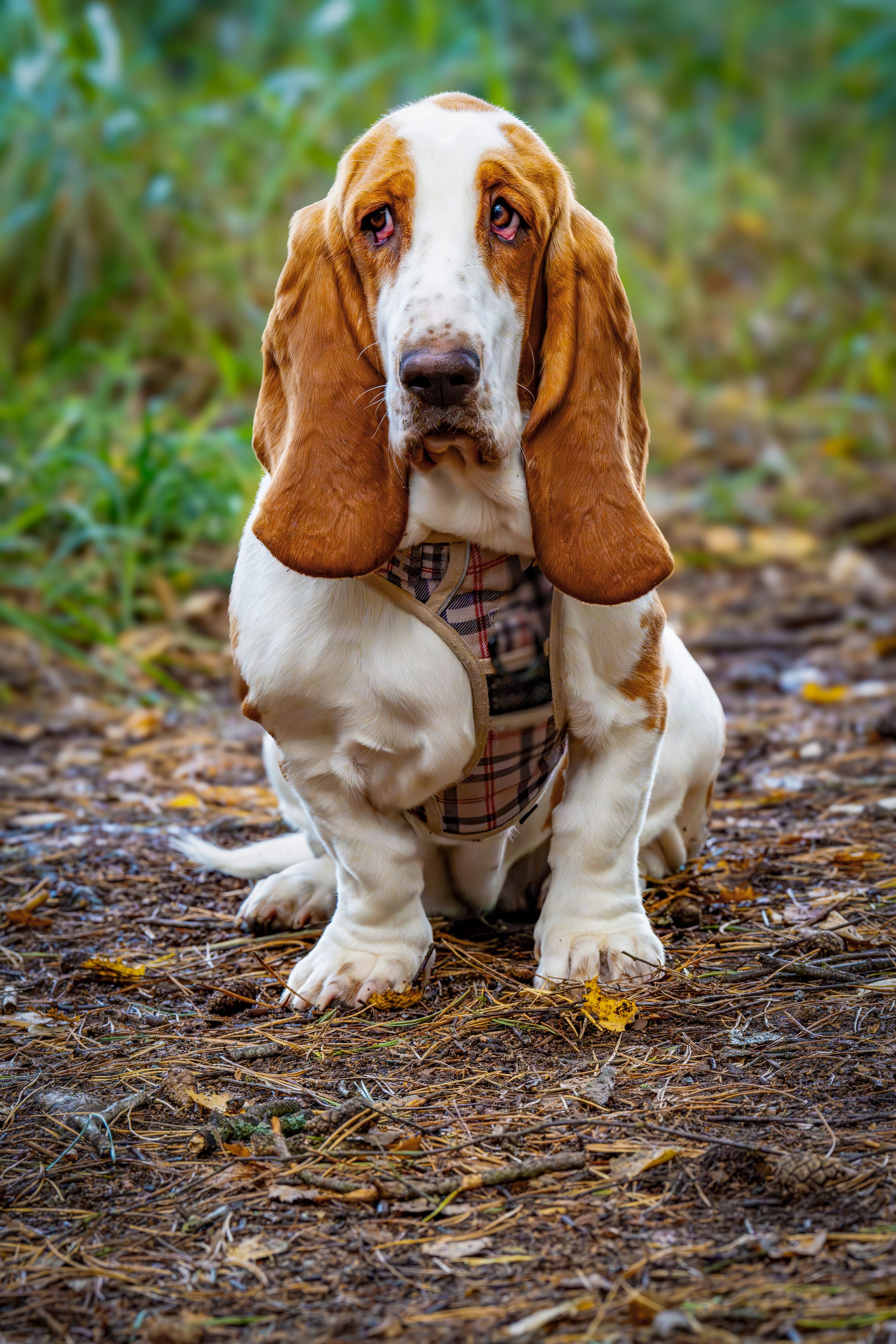
The coat is smooth, short and close without being too fine, with a clean outline free from feathering. The FCI standard says Bassets are generally black, white and tan (tricolour) or lemon and white (bicolour), but any recognised hound colour is acceptable. Shedding is moderate. A weekly brush keeps the coat in good condition, but the real work is in the ears, the skin folds and the eyelids: long, heavy ears trap moisture and debris and should be checked and cleaned regularly, and the face may need wiping after meals.
Feeding and weight
Bassets love food and gain weight easily, which places extra strain on the back and joints. Feed measured portions of a complete diet in two meals and count training treats as part of the daily ration. As a deep-chested breed, the Basset should rest for an hour or so after eating. A raised bowl or a snood helps keep the long ears out of food and water.
Work out a starting calorie figure and food weight with the calorie calculator. Not sure this is the right breed? Take the quiz.
Health
Every breed carries predispositions. These are the conditions most often discussed for the Basset Hound, not a prediction for any individual dog.
- Glaucoma (including primary angle-closure and open-angle forms)
- Elbow dysplasia
- Intervertebral disc disease (back problems)
- Ear infections (otitis externa)
- Eyelid problems (ectropion and entropion)
- Gastric dilatation-volvulus (bloat)
What to ask the breeder. Ask for current eye examinations including gonioscopy for both parents, elbow scores and DNA results for Lafora disease and POAG, as recommended by the Royal Kennel Club.
Choosing a puppy
Basset puppies are adorable, clumsy and stronger than they look. Protect the developing back and legs by limiting stairs, jumping and long walks, and carry the puppy up and down steps with support under the chest and hindquarters. Start ear cleaning and handling from day one, and begin house training with a strict routine. Socialisation with people, dogs, noises and lifts is easy with such a friendly breed, but recall training should start early and continue throughout life.
In Luxembourg the national kennel club is the Fédération Cynologique Luxembourgeoise (FCL), a member of the FCI. Many owners also buy from breeders in Germany, France or Belgium; a puppy coming from another EU country must be microchipped and vaccinated against rabies, which in practice means it cannot travel before about fifteen weeks of age. Where to get a dog in Luxembourg.
The older Basset Hound
Older Bassets often slow down and gain weight, so monitor body condition closely and keep walks regular but shorter. Joint and back problems become more common, as do eye issues such as glaucoma, so regular veterinary checks are important. Comfortable, low beds, ramps and non-slip floors help a great deal.
A realistic day
A realistic weekday for a working household in Luxembourg City, with a midday visit. Adjust it to your dog, not the other way round.
A slow 45-minute sniffing walk on a long line in the Pétrusse valley, then breakfast.
Quick ear check and wipe of the face, then a nap on a soft bed as the owner leaves for work.
PAWLY midday visit: a 40-minute walk with time to follow scents, fresh water and a quick check of ears and paws.
Scent game at home or a stroll in Parc Merl, then dinner and a quiet rest.
Short last walk and bed.
A Basset Hound in Luxembourg
A Basset can live comfortably in a Luxembourg City flat, particularly with a lift, as stairs are hard on its long back. It is calm indoors and sociable with neighbours, but its deep voice carries, and a Basset left alone for too long may howl. Parks such as Parc Merl, the Pétrusse valley and the Kinnekswiss are ideal for slow sniffing walks, while the forests at Bambësch and the Grünewald offer endless scents but require a long line.
Summer days in the 30s °C call for walks at dawn and dusk. On wet November evenings the long ears and low belly collect mud and water, so a towel by the door is part of the routine. Every dog must be microchipped, declared to the commune and insured for third-party liability.
Every dog in Luxembourg must be identified, declared to the commune and covered by liability insurance. How registration works.
When you travel
A sitter must keep the Basset on lead or a long line outside, keep food and bins out of reach and give measured meals without extra treats. The ears should be checked daily and the dog should not be allowed to jump from sofas or beds. Howling when left alone is common at first, so plan company or a midday visit. Lifting must be done with support under both chest and hindquarters.
PAWLY's holiday and overnight care takes place in your home, so your dog keeps its own bed and routine.
Myths and facts
MythBassets are lazy.
FactThey are relaxed indoors, but they are working hounds with considerable stamina outdoors and they need daily exercise.
MythThey are stupid because they ignore commands.
FactWhen a Basset ignores a recall it is usually following a scent, exactly what it was bred to do. Its intelligence is focused on its nose.
MythShort legs mean they need little exercise.
FactBassets need regular walks to stay fit and keep their weight down. Lack of exercise often leads to obesity and back problems.
Is it the right dog for you?
Suits
- Families looking for a gentle, sociable dog
- Owners who enjoy slow, sniffy walks
- Flats with a lift
- Homes with another dog for company
Think twice if
- Think twice if you need a reliable off-lead recall
- Think twice if your building has many stairs and no lift
- Think twice if neighbours are sensitive to noise
- Think twice if you cannot control treats and food access
Questions owners ask
Are Basset Hounds good in flats?
Yes, especially with a lift. They are calm indoors and need moderate exercise, but stairs are hard on the back, and a lonely Basset can howl loudly enough to bother neighbours.
How often should I clean a Basset's ears?
Check them several times a week and clean when you see wax or debris, following your vet's advice. The long ears trap moisture and dirt, so regular care helps prevent infections.
Can a Basset Hound be let off the lead?
Rarely. Once a Basset finds a scent it will follow it with total concentration and ignore its owner. Use a long line in parks and forests and only let it run free in secure areas.
Do Bassets drool?
Some do, especially after drinking or eating, because of the loose lips and skin. Keeping a cloth handy is part of living with the breed, and wiping the lips and folds helps prevent skin irritation.
Sources
Photo: Unsplash (Unsplash License) · Photo: Unsplash (Unsplash License) · Photo: Unsplash (Unsplash License) · Photo: Pexels (Pexels License) · Photo: Pexels (Pexels License)
General information for dog owners in Luxembourg, not veterinary or legal advice. Official facts (origin, size, group, history and temperament as described by the breed standard) follow the FCI standard; health and care sections reflect breed-club and veterinary guidance and are typical ranges rather than rules. For your own dog, ask your vet, the breed club or your commune. How this guide is written and checked. Last reviewed 8 October 2026.
Need someone for your Basset Hound?
PAWLY offers an individual 45-minute walk or a home visit at your dog's pace, the same walker every time, and a written report with photos after every visit, across Luxembourg City.
Read next: the journal, for the Basset Hound
All articles
Long-backed breeds, stairs and the spine
A long back makes stairs matter more than most owners think.

Building a recall you can actually rely on
Scent and movement can cancel a recall; this is the method for the Basset Hound.

Dog first aid: the six emergencies and what to do first
Bloat is an emergency in deep-chested breeds like the Basset Hound; this covers what cannot wait.
Similar breeds
All 198 breeds
Beagle
A cheerful, sociable nose on four legs. Everything about living with a Beagle follows from the nose.
EnergyGroomingFlat life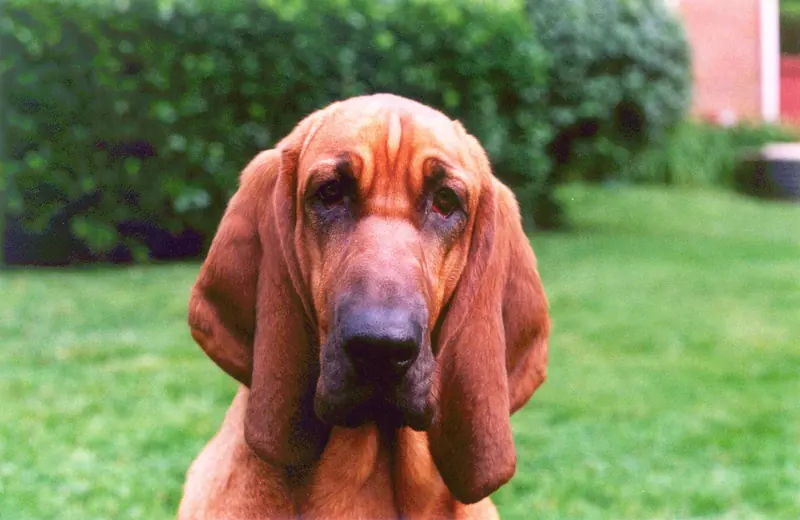
Bloodhound
A gentle giant whose nose writes the itinerary of every walk, and who follows a scent long after common sense has gone home.
EnergyGroomingFlat life
Petit Basset Griffon Vendéen
A shaggy, happy French scenthound with a big voice, a good nose and endless optimism.
EnergyGroomingFlat life

