

History
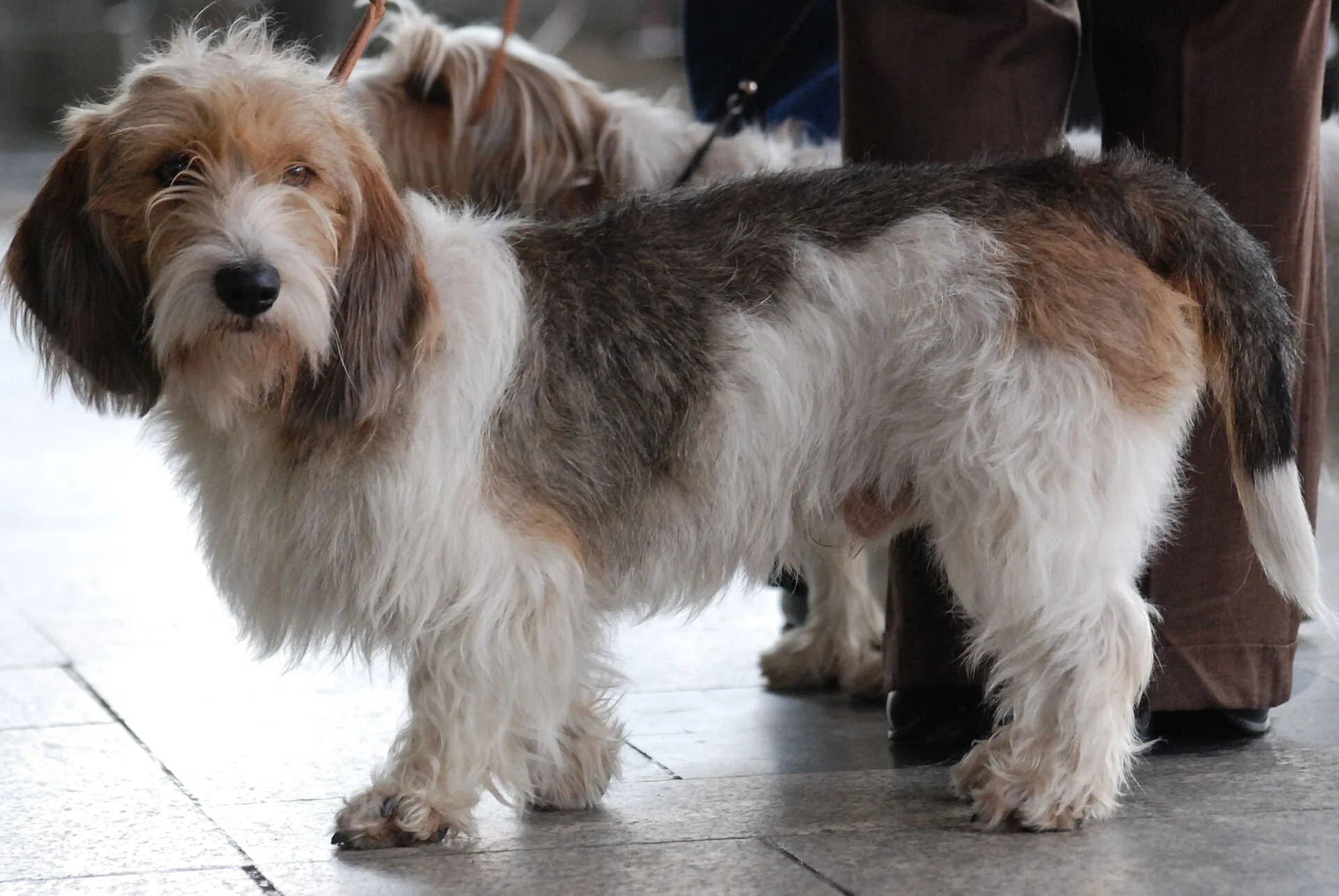
The Petit Basset Griffon Vendéen, usually shortened to PBGV, comes from the Vendée in western France. The FCI standard explains that it was once grouped with the Grand Basset, differing only in size, until Abel Dezamy wrote a separate standard to deal with poor performance in the field. Paul Daubigné's description, quoted in the standard, calls it a small Basset harmoniously reduced in all its proportions, endowed with the passion for hunting.
The dog was bred for rough, thorny country: the standard describes a passionate hunter, courageous and fond of bramble and scrub, and calls it a perfect assistant to the hunter with a gun on territories of medium size, a specialist for rabbit. Its utilisation line is memorable: devil in the country, angel in the house. The FCI classes it in Group 6, Section 1.3, among the small-sized hounds, and the standard expects working trial qualifications.
Temperament
The standard sums up the temperament as docile but wilful and passionate, and anyone who has walked a PBGV will agree on all three counts. Cheerful and outgoing, it is friendly with nearly everyone and usually good with other dogs. It is also independent, with a nose that governs much of its behaviour, so a good smell will override a request to come back.
The breed is noisy and curious, and the voice carries a long way. Hounds that hunt in brush are meant to be heard, and a PBGV left bored or alone will say so. It is a pack animal that prefers company to solitude, and the shaggy, bearded face and the cheerful tail give it an optimistic air. Behind the clowning is a hardy little hound that likes bramble and scrub, and a muddy coat is a sign of a good day.
Children and other pets
The PBGV is usually excellent with children, who enjoy its cheerful, tousled manner, and with other dogs, and is happy in a busy house. It is a pack dog that loves company and does not like being left out. Small animals such as rabbits, hamsters or the neighbour's cat may be treated as prey, since the breed was developed to hunt rabbit. Supervise young children, who may tire the dog or tug at its beard.
Exercise and the daily walk
An hour to an hour and a half a day suits an adult, with generous time for sniffing. The PBGV has stamina rather than speed, so long, varied walks beat short sprints, and it enjoys scent games, hide and seek with treats and tracking. Allow plenty of unhurried time on a long line or in a secure area, and let the dog work its nose.
A secure garden or fenced area is essential if the dog has access to one, since a PBGV will follow a trail for a long way and may ignore calls. Rough, thorny cover is where the breed is at home, so expect a muddy, bramble-covered dog after a forest walk and check the ears, paws and coat afterwards. Rest the dog after hard days to protect its long back.
Training
PBGVs are intelligent, but the nose often beats the owner. Reward-based training with plenty of food works best, since the breed is sensitive to harshness and bored by repetition. Short, upbeat sessions with high-value treats make good progress, and the standard's word for the temperament, wilful, is fair warning that patience will be needed.
Recall is the real challenge around scent. Use a long line in open areas and accept that some places are never safe off lead. Teach a quiet cue early, because the voice carries through walls, and reward silence in the lift and corridor. Practise a reliable stay, a settle on a mat and a polite lead walk, and keep sessions fun, because a PBGV that decides training is dull will go off to find something more interesting.
Coat and grooming
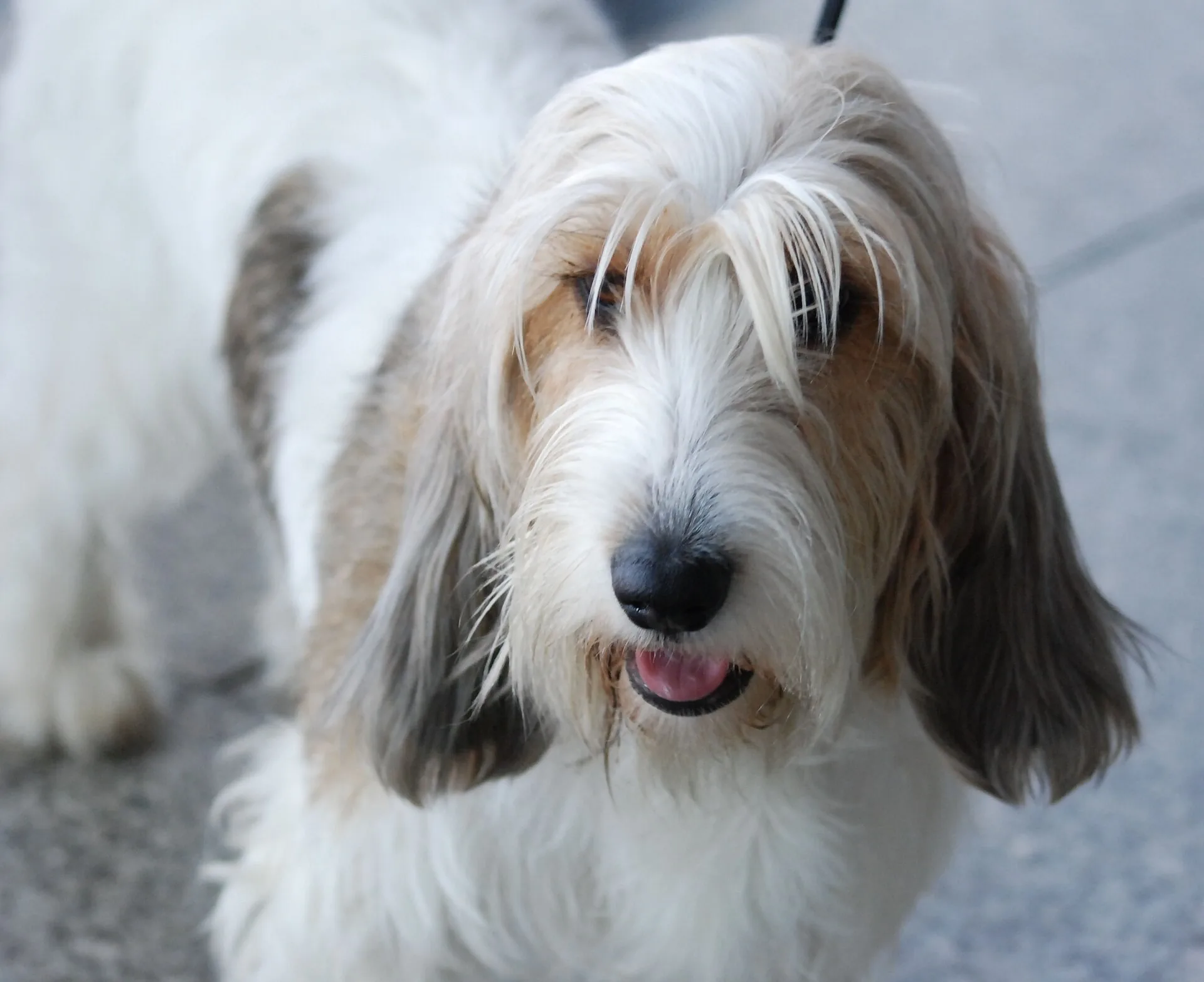
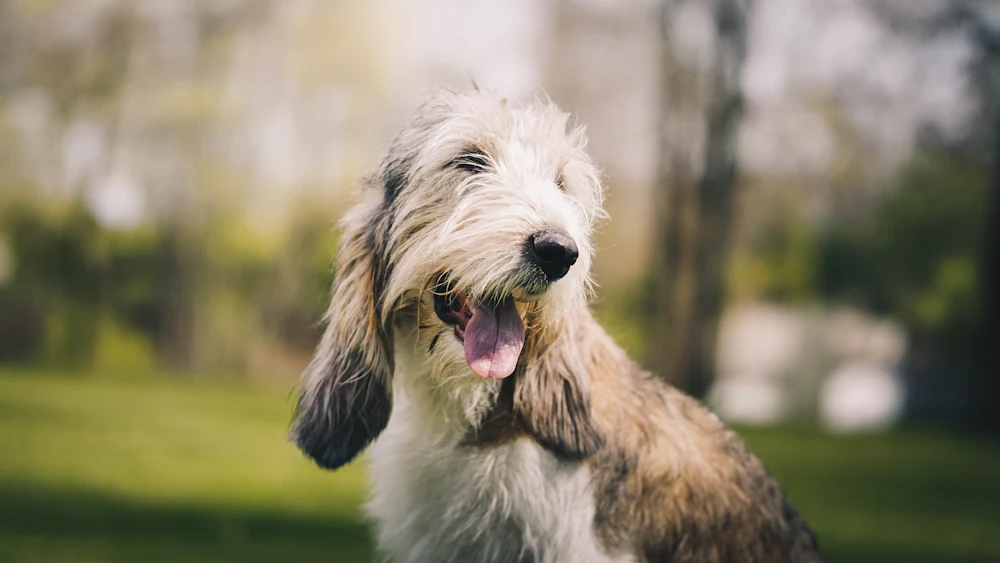
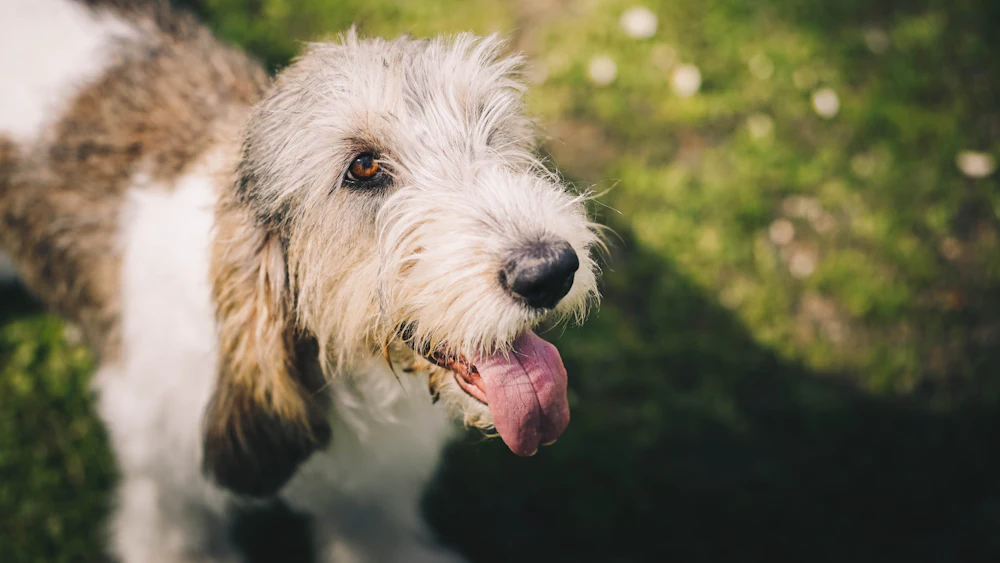
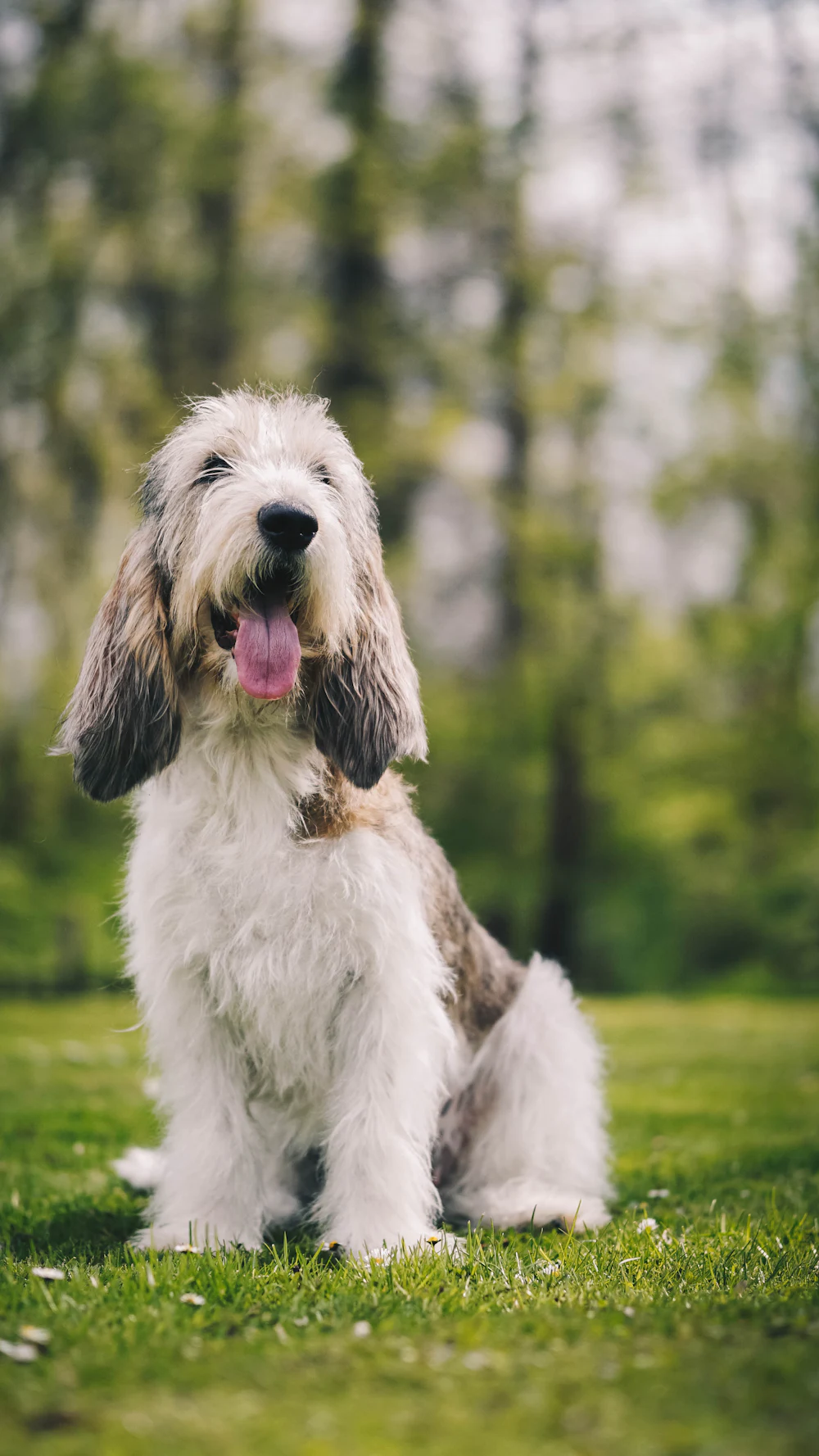
The FCI describes a harsh coat that is not too long, never silky or woolly, with eyebrows and a beard. It is weatherproof and easier to care for than many long coats. Brush weekly, tidy the eyebrows, beard and feet occasionally, and check the long, hairy ears, which trap dirt and moisture. Permitted colours are black and white, black and tan, fawn and white, tricolour, and overlays with traditional names such as hare, wolf, badger and wild boar.
Feeding and weight
PBGVs are enthusiastic eaters and gain weight easily. Measure meals, limit treats and adjust for activity, using part of the daily ration for scent games and training. Keep the dog lean to protect the long back and joints. Active dogs need more in the cold months, but the vet can advise on a target weight. Avoid feeding straight before hard exercise.
Work out a starting calorie figure and food weight with the calorie calculator. Not sure this is the right breed? Take the quiz.
Health
Every breed carries predispositions. These are the conditions most often discussed for the Petit Basset Griffon Vendéen, not a prediction for any individual dog.
- Ear infections
- Patellar luxation (slipping kneecaps)
- Hip dysplasia
- Epilepsy
- Eye conditions, including glaucoma
What to ask the breeder. Ask for kneecap and hip results and eye examinations for the parents, and whether epilepsy has appeared in the lines.
Choosing a puppy
Ask for kneecap, hip and eye results for the parents, and meet them: a happy, confident mother is a good sign. Look for a bold, friendly puppy that is curious and recovers easily from surprises. Practise ear cleaning, brushing and handling from the start, and begin lead training and a quiet cue before the stubborn adolescent months, when the nose takes over.
In Luxembourg the national kennel club is the Fédération Cynologique Luxembourgeoise (FCL), a member of the FCI. Many owners also buy from breeders in Germany, France or Belgium; a puppy coming from another EU country must be microchipped and vaccinated against rabies, which in practice means it cannot travel before about fifteen weeks of age. Where to get a dog in Luxembourg.
The older Petit Basset Griffon Vendéen
Watch for ear problems, stiffness, weight gain and eye changes, including redness, cloudiness or squinting. Gentle, regular exercise and a lean body help an older PBGV stay comfortable, and it will usually want to keep following scents even when the legs object. Shorter walks, non-slip floors and ramps for sofas help, and regular vet checks catch eye and joint problems early.
A realistic day
A realistic weekday for a working household in Luxembourg City, with a midday visit. Adjust it to your dog, not the other way round.
A long, sniffy walk on a long line before work.
Breakfast.
Midday visit with a walk or scent game.
Longer outing with plenty of sniffing time.
Final walk and an ear check.
A Petit Basset Griffon Vendéen in Luxembourg
A PBGV can live in a flat, but its voice can be a problem for neighbours, and it needs plenty of exercise and company. Teach the quiet cue early, reward calm behaviour in the lift and the corridor, and make sure the dog is not left alone for long stretches. A midday visit makes a real difference to a dog that dislikes solitude.
Forest walks suit the breed well, and the Bambësch and the Grünewald offer the rough cover and smells it loves, reached on free buses and trams. Keep the dog on a lead or long line in open areas, because recall around scent is unreliable. On warm summer days, when temperatures reach the 30s, walk early or late. Microchip, register the dog with the commune, insure it and pay the annual dog tax.
Every dog in Luxembourg must be identified, declared to the commune and covered by liability insurance. How registration works.
When you travel
PBGVs love company and settle quickly with a friendly, patient sitter. Keep them on a lead outdoors, secure any garden, and expect some vocal opinions, so warn the neighbours. Share the walking routine, the feeding amounts and the ear care, and ask the sitter to avoid letting the dog follow a scent off lead, since a PBGV can disappear quickly.
PAWLY's holiday and overnight care takes place in your home, so your dog keeps its own bed and routine.
Myths and facts
MythPBGVs are hard to train.
FactThey are trainable, but the nose and independence mean you need patience and good rewards.
MythA PBGV is a small Basset Hound.
FactThey are separate breeds: the PBGV is rougher, lighter and longer-legged. The FCI notes it was once grouped with the Grand Basset, a related French hound.
MythA hound that is happy at home is quiet.
FactThe PBGV is a cheerful dog with a loud voice, and it will use it when bored or alone.
Is it the right dog for you?
Suits
- Active, sociable households
- People who love long walks
- Families with children and other dogs
- Owners who enjoy a cheerful, shaggy dog
Think twice if
- People with noise-sensitive neighbours
- Homes with small pets
- Owners wanting an off-lead walking companion
- Long days alone
Questions owners ask
Is a PBGV noisy?
Often yes. They have a loud, carrying voice and use it, particularly when bored or left alone. Early training of a quiet cue, plenty of exercise and company help, but the breed will always have opinions.
Does a PBGV shed?
Lightly. The harsh, weatherproof coat needs brushing weekly and an occasional tidy of the eyebrows, beard and feet. Check the ears regularly, since the long, hairy leathers trap dirt.
Can a PBGV be let off the lead?
Only in a secure area. The standard describes a passionate hunter, and a PBGV that finds a scent can ignore calls and follow it for a long way. A long line is a sensible compromise.
How big is a PBGV?
The FCI gives 34 to 38 cm at the withers, with a tolerance of 1 cm, and gives no weight. Most adults are sturdy, small hounds with a slightly long body.
Sources
Photo: Unsplash (Unsplash License) · Photo: Unsplash (Unsplash License) · Photo: Lilly M real name: Małgorzata Miłaszews, CC BY-SA 3.0, via Wikimedia Commons · Photo: Unsplash (Unsplash License) · Photo: Lilly M real name: Małgorzata Miłaszews, CC BY-SA 3.0, via Wikimedia Commons
General information for dog owners in Luxembourg, not veterinary or legal advice. Official facts (origin, size, group, history and temperament as described by the breed standard) follow the FCI standard; health and care sections reflect breed-club and veterinary guidance and are typical ranges rather than rules. For your own dog, ask your vet, the breed club or your commune. How this guide is written and checked. Last reviewed 8 October 2026.
Need someone for your Petit Basset Griffon Vendéen?
PAWLY offers an individual 45-minute walk or a home visit at your dog's pace, the same walker every time, and a written report with photos after every visit, across Luxembourg City.
Read next: the journal, for the Petit Basset Griffon Vendéen
All articles
Building a recall you can actually rely on
Scent and movement can cancel a recall; this is the method for the Petit Basset Griffon Vendéen.

Ears: the three signs that mean an appointment
Ear trouble is common in the Petit Basset Griffon Vendéen; these are the three signs that mean an appointment.

What to do during a seizure
Seizures are discussed in the Petit Basset Griffon Vendéen; knowing what to do in the first minutes matters.
Similar breeds
All 198 breeds
Beagle
A cheerful, sociable nose on four legs. Everything about living with a Beagle follows from the nose.
EnergyGroomingFlat life
Basset Hound
A short-legged hound of real substance, placid and affectionate at home, single-minded once a scent reaches that long, low nose.
EnergyGroomingFlat life
Bloodhound
A gentle giant whose nose writes the itinerary of every walk, and who follows a scent long after common sense has gone home.
EnergyGroomingFlat life

