History
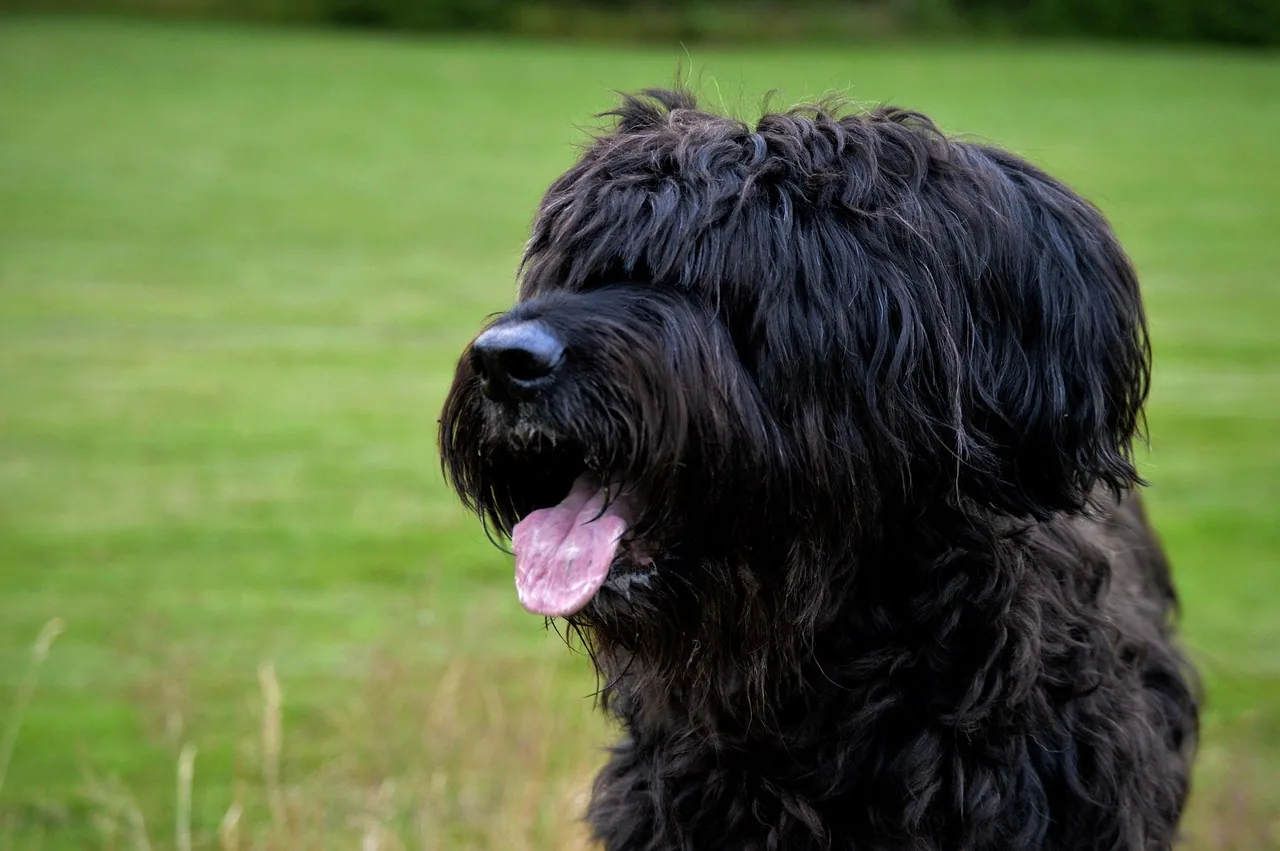
The Briard, or Berger de Brie, is a French herding and guarding dog. The FCI standard notes that it was known for a long time as the Chien de Berger français de Plaine, and that the name Briard first appeared in 1809. It belongs to Group 1, Section 1, Sheepdogs, and the standard describes a hardy, supple, muscled dog that is lively and alert, built to work livestock through a long day rather than to sprint.
The Briard also has a record outside the farm. The standard records that French armies used the breed in both world wars, as sentinels and in search and rescue. Its most distinctive structural point is the double dewclaw on each hind leg, which the standard requires; dogs with absent or single dewclaws are disqualified in the show ring. The body is slightly longer than the dog is tall, which gives it a supple, ground-covering movement.
Temperament
The standard asks for a balanced temperament, neither aggressive nor timid, and the best Briards deliver exactly that: steady, fearless and watchful without being reactive. In practice that means a dog that notices everything, from the postman to a new neighbour, and then decides for itself whether it matters. With strangers it is reserved rather than gushing, and it takes time to warm up.
With its own family a Briard is another animal altogether. It leans, follows from room to room and wants to be included, which suits people at home or working remotely and suits those who are out ten hours a day much less. It is sensitive to tone, remembers a harsh word for a long time and does not forgive unfairness. Owners who are calm, clear and consistent are rewarded with a thoughtful, deeply attached companion.
Children and other pets
A well-raised Briard is loyal and gentle with children in its own household, and it tends to treat them as part of the flock. That instinct can show up as heel-nipping or herding of running children, so teach both sides the rules and supervise visiting friends. Its protective streak means guests should be introduced calmly. With other dogs it is usually fine if socialised early, though some males can be pointed with other males. Cats are generally accepted when they grow up together.
Exercise and the daily walk
Plan on one and a half to two hours a day, and make part of it purposeful. A Briard thinks while it moves, so a plain lap of the block is less satisfying than a forest route with changes of pace, a scent trail or a few minutes of obedience on the way. Herding games, agility and long hikes all suit it. Off-lead freedom in a secure place is valuable, because the breed was built for stamina.
A bored Briard finds its own work: barking at the window, shadowing family members, or herding the other dog. Mental effort tires it faster than distance alone. Mature dogs have an off switch and will settle for hours after a proper outing, but a young dog needs more, and shorter, varied sessions are better than one marathon while the joints are still growing.
Training
Briards are intelligent, sensitive and slow to mature, often not fully settled until three years old. They learn quickly and then question why they should repeat it, so keep sessions short and varied. Calm, reward-based training with patience works; harsh correction makes a Briard shut down or become evasive. Pay attention to recall, since a herding dog will happily make its own decisions about distance.
Early and wide socialisation matters more here than in most breeds. Expose the puppy to lifts, trams, buses, crowds, other dogs and strangers handling it, always gently and at its own pace. Protective instinct needs guiding from the start with clear rules: the dog's job is to alert, not to police. A good puppy class and a calm, reliable adult routine give the best result.
Coat and grooming
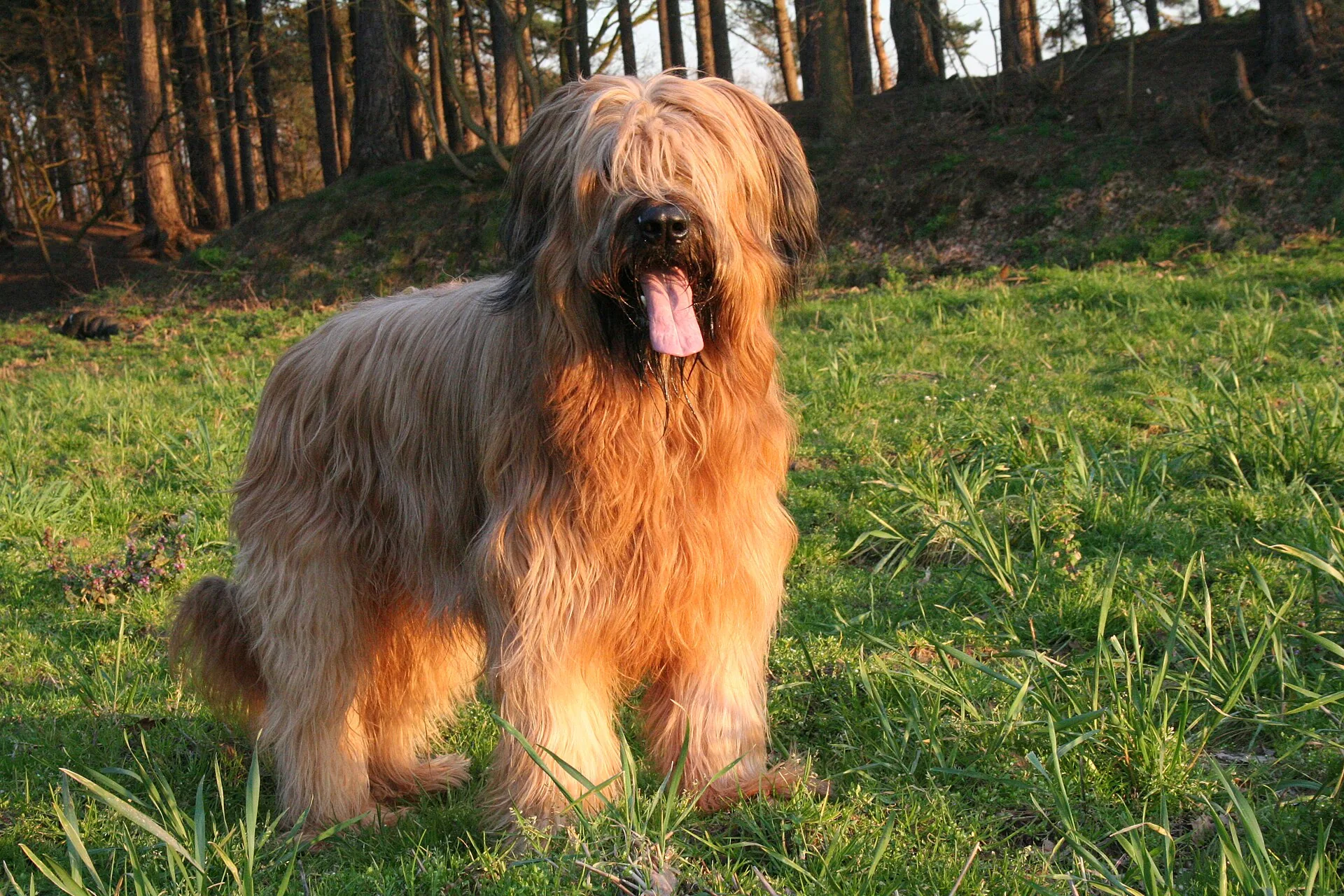
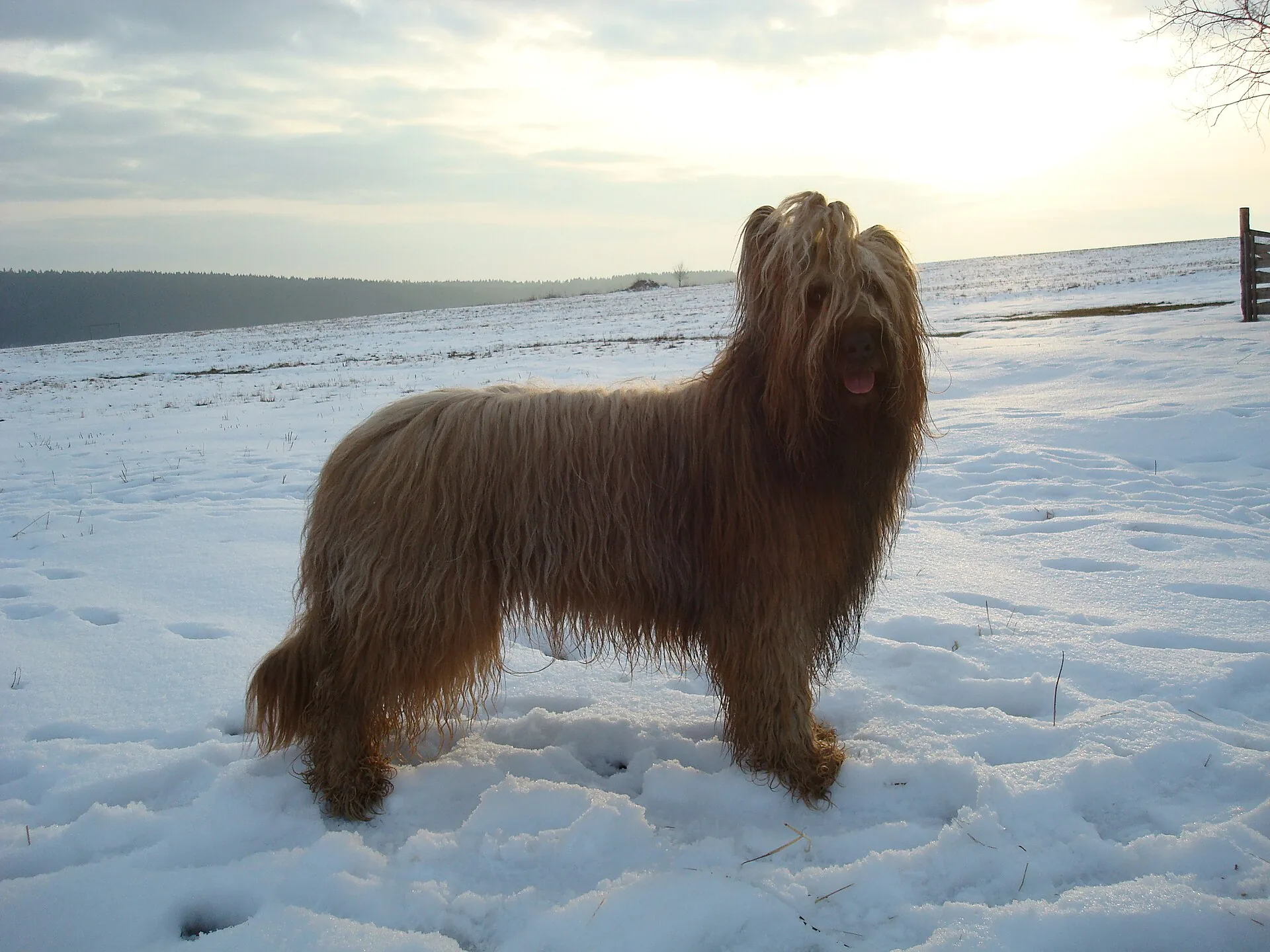
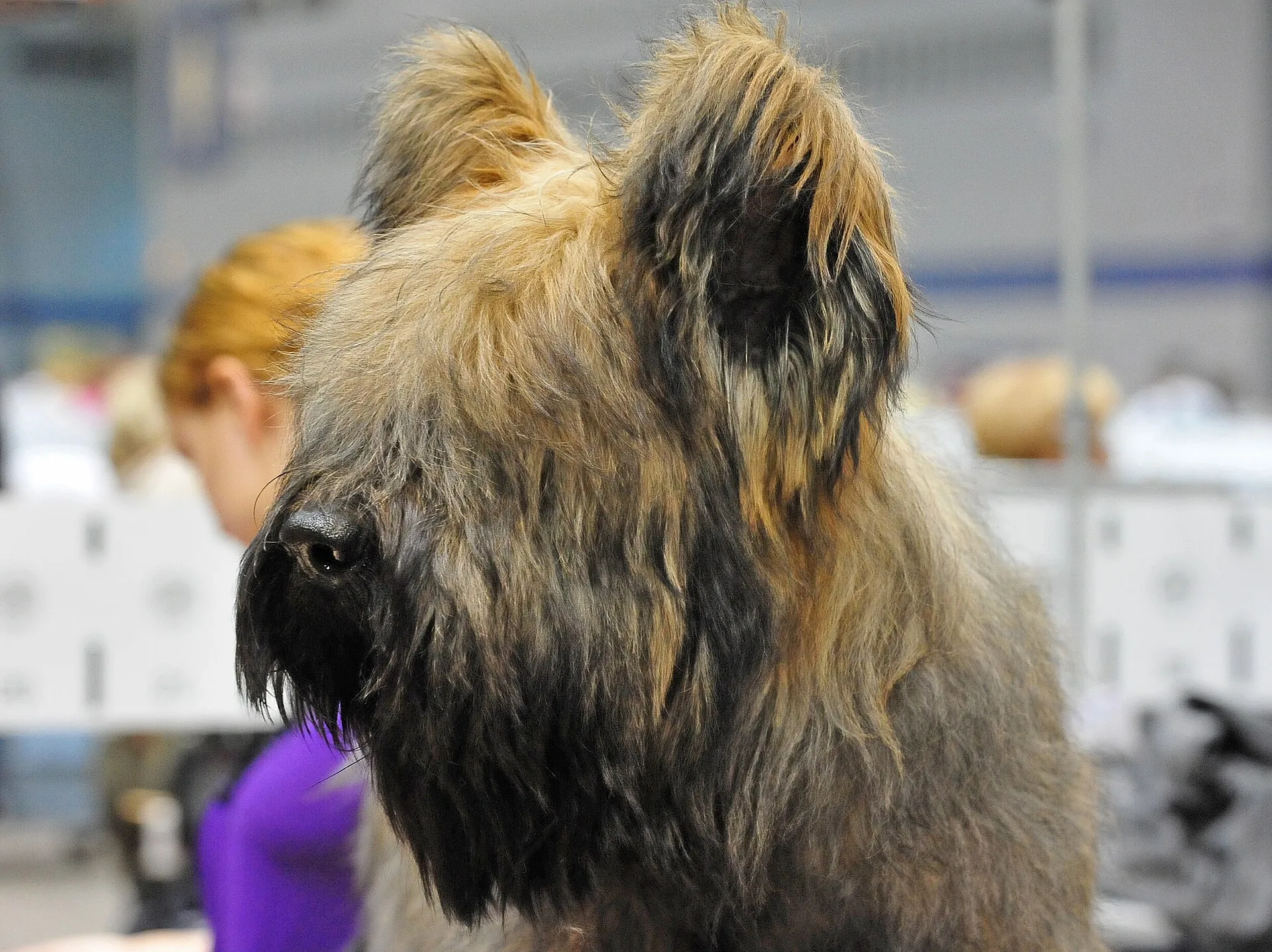
The standard asks for a long, dry coat with a goat-like texture and a slight undercoat, at least 7 cm long. The permitted colours are black, fawn, fawn with black overlay, grey and blue, sometimes with lighter shading. Brush to the skin two or three times a week, paying attention behind the ears, under the legs and on the beard, or mats form quickly. Shedding is moderate. Many pet owners keep the coat trimmed to a practical length, though show standards expect the full length.
Feeding and weight
Feed a good-quality diet in two or three measured meals rather than one large one, as deep-chested dogs carry a higher risk of bloat. Avoid hard exercise just before and after eating, and do not let the dog gulp water. Keep the dog lean, because extra weight loads the hips, and adjust portions with age and activity. Ask your vet if the dog eats very fast or seems uncomfortable after meals.
Work out a starting calorie figure and food weight with the calorie calculator. Not sure this is the right breed? Take the quiz.
Health
Every breed carries predispositions. These are the conditions most often discussed for the Briard, not a prediction for any individual dog.
- Gastric dilatation and volvulus (bloat), a life-threatening twisting of the stomach
- Hip dysplasia
- Congenital stationary night blindness, for which a DNA test exists
- Hypothyroidism (underactive thyroid)
- Cancers in older dogs
What to ask the breeder. Ask for hip scores, eye examinations and the DNA result for congenital stationary night blindness for both parents, and ask how the breeder socialises puppies.
Choosing a puppy
Ask the breeder for hip scores, eye examinations and DNA tests for the parents, and meet the mother if you can, looking for a confident, relaxed dog. Start socialisation, handling and grooming practice from the first week at home. Short, calm training sessions suit a sensitive puppy. Keep exercise gentle and on soft ground while it grows, and feed measured meals from the beginning to build good habits against bloat.
In Luxembourg the national kennel club is the Fédération Cynologique Luxembourgeoise (FCL), a member of the FCI. Many owners also buy from breeders in Germany, France or Belgium; a puppy coming from another EU country must be microchipped and vaccinated against rabies, which in practice means it cannot travel before about fifteen weeks of age. Where to get a dog in Luxembourg.
The older Briard
Briards often slow down gradually, and ageing shows first in stiff hips, a slower start after rest and a thinner appetite. Keep the dog lean, offer a firm bed and non-slip flooring, and shorten walks without cancelling them. Check the coat for lumps and mats under the legs, and have the vet look at any new swelling. Regular check-ups, including eyes and thyroid, help catch problems early.
A realistic day
A realistic weekday for a working household in Luxembourg City, with a midday visit. Adjust it to your dog, not the other way round.
A long walk on a quiet route, with a few minutes of recall and obedience on the way.
Breakfast, a short rest and a brush through the beard and legs before work.
Midday visit from a walker: a toilet break, fresh water, and a game in the park.
A longer outing in the Grünewald or Bambësch, with off-lead time where it is safe.
A calm final walk and a quick check of paws and coat.
A Briard in Luxembourg
A Briard is a big, hairy dog, and it does best with access to green space and an owner who is at home a good deal. In a flat with a lift it can manage if the exercise is truly delivered, though the long coat collects rain and mud, so keep a towel by the door. Summer days in the 30s are hard on a heavy coat; walk early and late, offer shade and do not clip it to the skin without advice.
The Grünewald and Bambësch forests give a Briard the room and scent interest it likes, and the Pétrusse valley and Parc Merl suit shorter outings. Buses and trams are free nationwide, so a calm, well-socialised dog can learn city transport early. Remember that every dog must be microchipped, declared to the commune and insured for third-party liability, and the commune charges an annual dog tax. The breed is known in neighbouring France, and the FCL can point owners to clubs and breeders.
Every dog in Luxembourg must be identified, declared to the commune and covered by liability insurance. How registration works.
When you travel
Introduce the sitter well before you travel, because Briards are wary of strangers and need time to accept a new person. Leave a written routine for walks, feeding in measured meals and brushing, since mats form quickly. Keep the dog on a secure lead outdoors, and say plainly that it should not be left alone for long stretches. A familiar bed and an item that smells of you help.
PAWLY's holiday and overnight care takes place in your home, so your dog keeps its own bed and routine.
Myths and facts
MythBriards are aggressive.
FactThe FCI standard calls for a balanced dog, neither aggressive nor timid. They are reserved and protective, but a well-socialised Briard is steady and affectionate.
MythA Briard is only a bigger, shaggier family pet.
FactIt is a working herding dog with real stamina and an independent mind, and it needs purposeful exercise and a thoughtful owner.
MythThe coat looks after itself because it is dry.
FactDry does not mean easy. Without brushing to the skin, mats form behind the ears and under the legs within days.
Is it the right dog for you?
Suits
- Active owners with some experience
- People close to woods and open country
- Households where someone is at home much of the day
- Owners who enjoy grooming and training
Think twice if
- You are a first-time owner wanting a simple dog
- You are out for long working days
- You dislike mud, hair and daily brushing
Questions owners ask
Does a Briard shed a lot?
Moderately. The long, dry coat sheds, but most loose hair is caught in the coat itself, which is why brushing to the skin two or three times a week matters. Without it, mats form quickly.
What are the double dewclaws?
The standard requires a double dewclaw on each hind leg, an unusual feature that is part of the breed's identity. A dog with absent or single dewclaws is disqualified in the show ring.
Can a Briard live in a flat?
It can, if the owner delivers around two hours of real exercise and company every day. It is a big dog, so a lift, easy access to green space and tolerant neighbours help a good deal.
Is a Briard good with children?
Generally yes, with its own family. Its herding instinct may lead to nipping at heels, so supervise play, teach the children calm rules and introduce visitors gently. That makes it a better fit for families who can keep it company than for homes where it is left alone.
Sources
Photo: Dardeche (Dutch Wikipedia), Public domain, via Wikimedia Commons · Photo: Petr Dadák, CC BY-SA 2.0, via Wikimedia Commons · Photo: State Farm, CC BY 2.0, via Wikimedia Commons · Photo: Pixabay (Pixabay Content License) · Photo: Pixabay (Pixabay Content License)
General information for dog owners in Luxembourg, not veterinary or legal advice. Official facts (origin, size, group, history and temperament as described by the breed standard) follow the FCI standard; health and care sections reflect breed-club and veterinary guidance and are typical ranges rather than rules. For your own dog, ask your vet, the breed club or your commune. How this guide is written and checked. Last reviewed 8 October 2026.
Need someone for your Briard?
PAWLY offers an individual 45-minute walk or a home visit at your dog's pace, the same walker every time, and a written report with photos after every visit, across Luxembourg City.
Read next: the journal, for the Briard
All articles
Grooming and coat care through the Luxembourg year
The Briard has a coat that needs a routine that holds through the Luxembourg seasons.

Feeding, portions and how to tell if your dog is the right weight
Large dogs suffer more from extra weight; this is how to judge the right one.

The front door: barking, deliveries and escapes
A watchful breed reacts at the door; this is how to manage it.
Similar breeds
All 198 breeds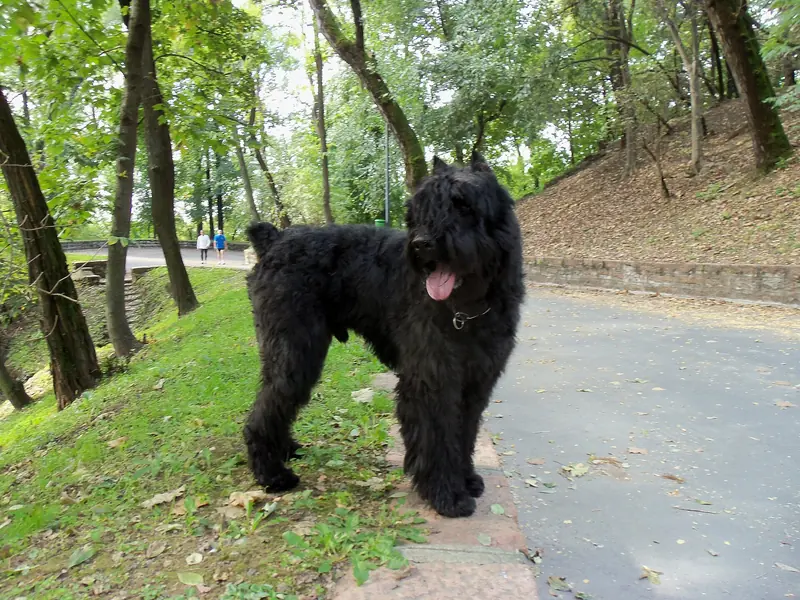
Bouvier des Flandres
Flanders' rugged cattle dog: steady, protective and powerful, with a serious face and a soft side.
EnergyGroomingFlat life
Old English Sheepdog
A big, shaggy British drover with a rolling gait and a booming bark, gentle at home and very much a dog that needs company.
EnergyGroomingFlat life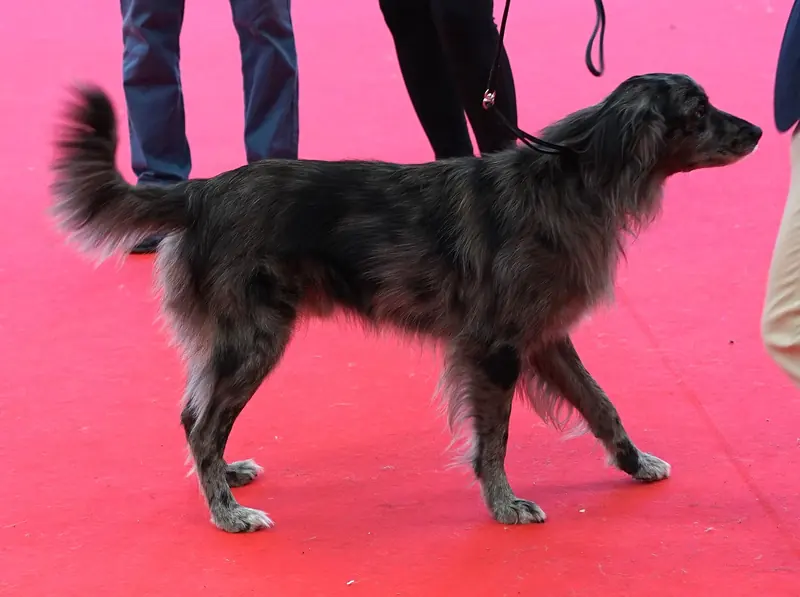
Pyrenean Shepherd
A small, wiry mountain herder with a sharp mind and a stubborn streak, intensely loyal to its own people and quietly sceptical of everyone else.
EnergyGroomingFlat life

