History
The Pyrenean Shepherd comes from the farms and high pastures of the French Pyrenees, where it worked sheep for generations. The FCI standard notes its humble beginnings: it was practically unknown to the official dog world until the early twentieth century. Its first standard was drawn up between 1921 and 1925 by Bernard Sénac-Lagrange, and later revisions were made in close collaboration with Raymond Triquet from 2001 onwards.
France is the country of origin, and the FCI places the breed in Group 1, Section 1, with a working trial. Two related standards exist. The long-haired variety described here is covered by standard No. 141, dated 26 March 2009, which includes long and semi-long coats. The smooth-faced Pyrenean Shepherd, with a shorter coat on the face, is a separate breed under its own FCI standard. Despite their size difference from the Pyrenean Mountain Dog, these herders often worked alongside the big guardians.
Temperament
The standard describes a courageous, resourceful little dog, showing initiative and totally devoted to its master. It also says the dog is headstrong by nature and that firm control is usually needed to channel its energy and bring out its intelligence and liveliness. Its general appearance is summed up memorably as a maximum of nervous energy in a minimum of size and weight.
In practice that means a quick, intense dog that bonds strongly with one person or family and is often wary or aloof with strangers. It notices everything and reacts fast, which makes it a natural watchdog but also inclined to bark. Without daily work it may invent its own jobs, from herding children to patrolling windows. With the right owner it is loyal, funny and astonishingly capable.
Children and other pets
In a family that understands herding dogs, a Pyrenean Shepherd can be a devoted companion for older children, joining games and walks with enthusiasm. It may try to herd running youngsters, nipping at heels or circling, so supervision and training are needed. Visiting children may be treated with suspicion at first. It usually gets on with other dogs it knows, and cats raised with it are often accepted, though small pets can trigger chasing.
Exercise and the daily walk
This is a high energy working breed that needs about an hour and a half to two hours of activity a day, including brisk walks, running and mental work. A short walk around the block will not satisfy it. Long hikes, trail running and herding games all suit the breed well.
Dog sports are an excellent outlet. Pyrenean Shepherds are quick and agile and often excel at agility, flyball, obedience and herding trials. Mental work, such as learning new tricks or scent games, is as important as physical exercise. Recall is usually good when trained, but a strong reaction to movement means care is needed near roads and livestock.
Training
Training a Pyrenean Shepherd is a partnership that demands patience and consistency. The dog learns very quickly but can be headstrong and may test boundaries, especially in adolescence. Positive, reward-based methods work best; harsh corrections can make a sensitive dog distrustful. Keep sessions short and varied, as repetition bores it.
Early and ongoing socialisation is essential to prevent excessive suspicion of strangers. Expose the puppy calmly to people of all ages, other dogs, traffic and city noise. Teach a quiet cue and settle exercises, since the breed can be vocal and highly reactive. An owner with experience of herding breeds will find the dog rewarding; a first-time owner should seek a good trainer.
Coat and grooming
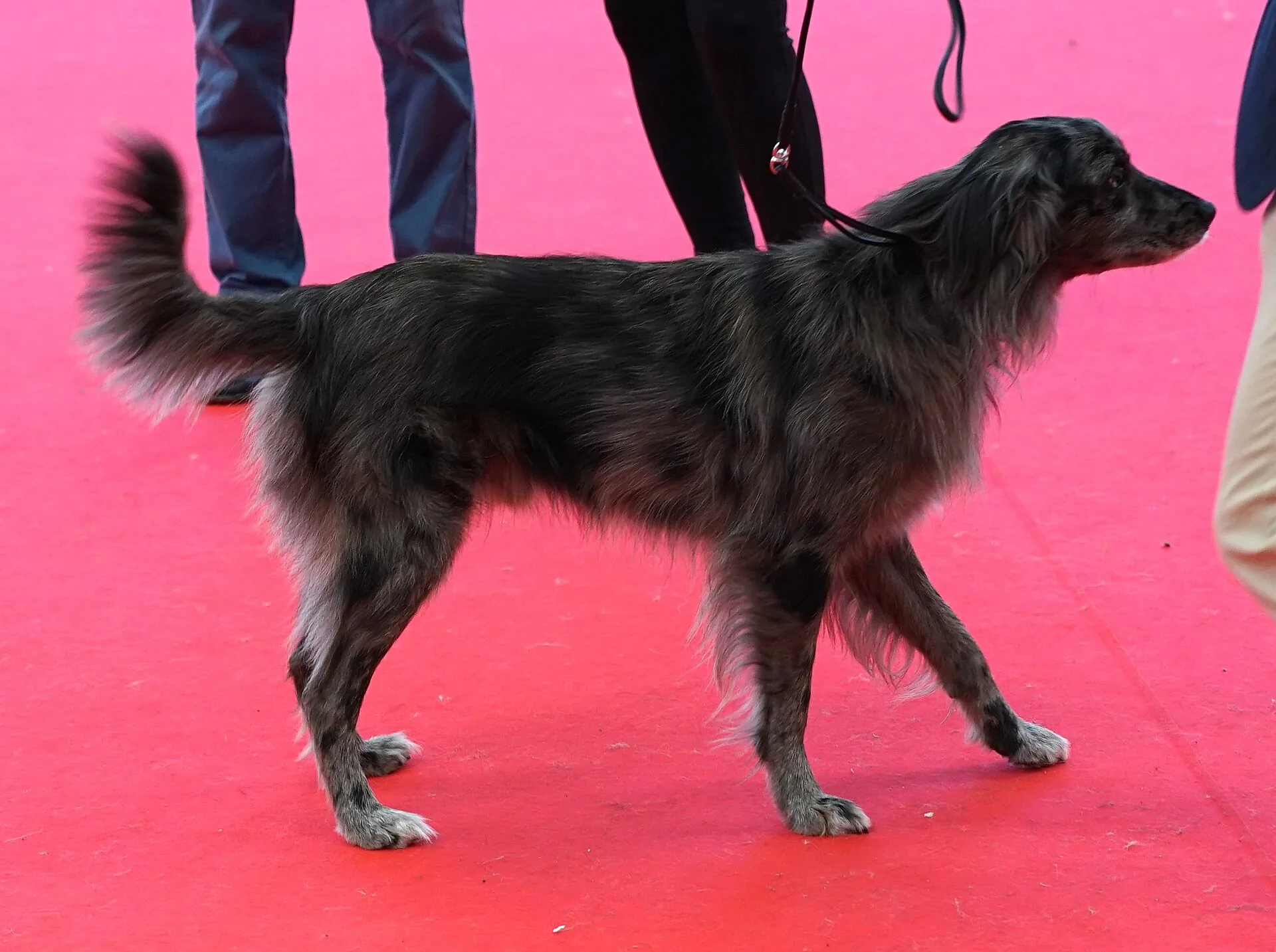
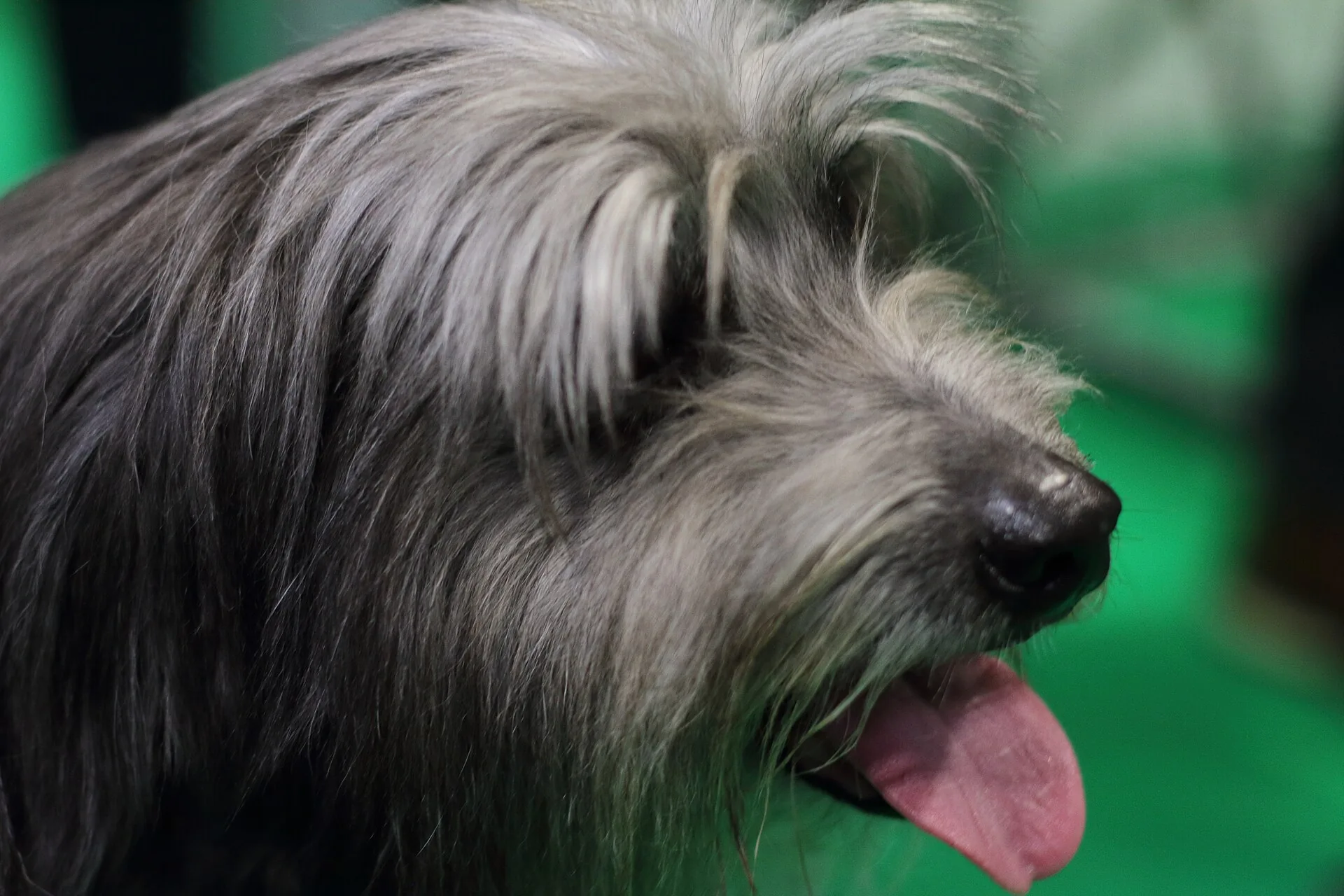
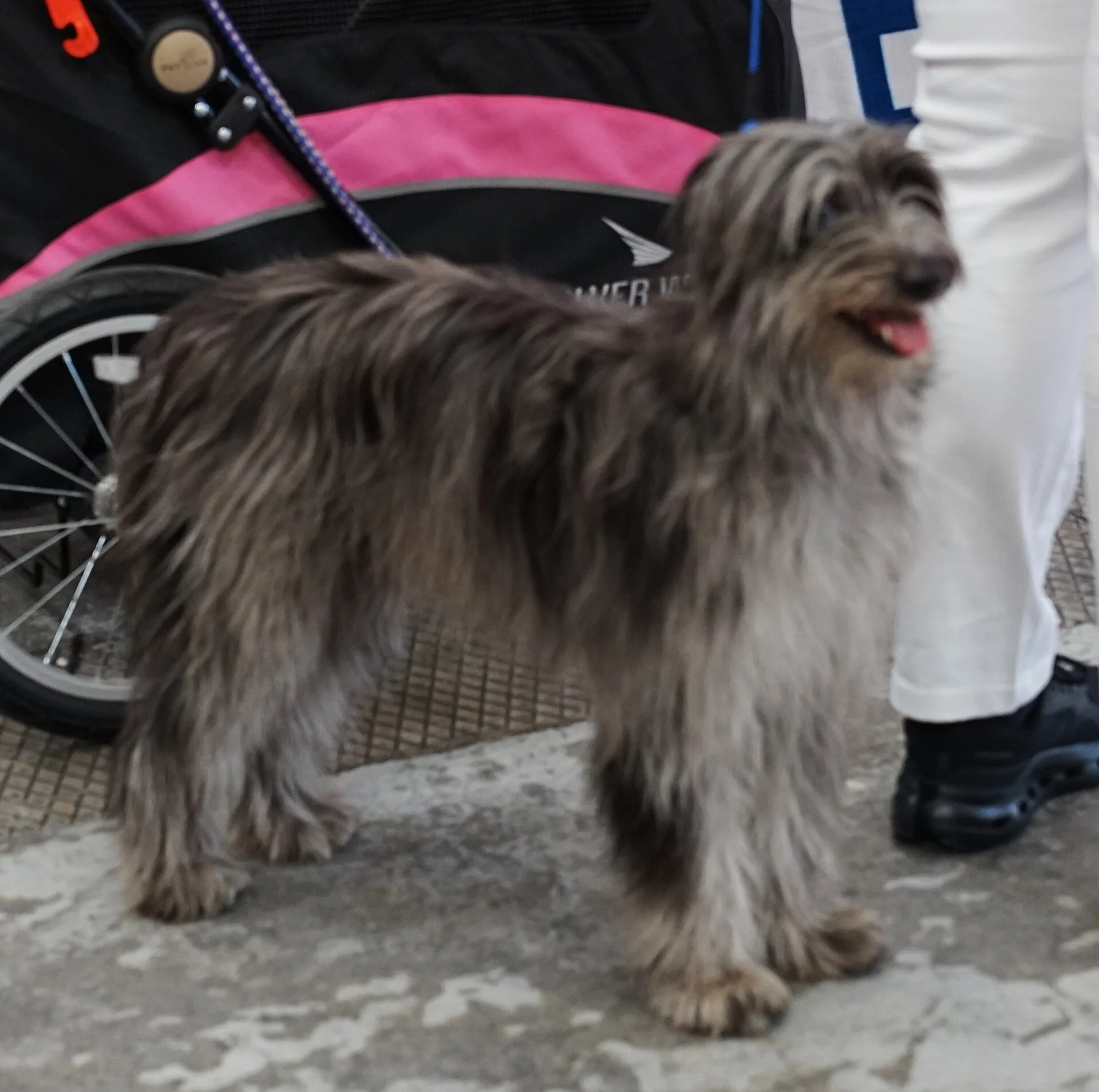
The long-haired variety has long or semi-long hair, always dense, almost flat or slightly wavy, thicker and woollier on the croup and thighs, with a texture the standard describes as somewhere between goat's hair and sheep's wool. Permitted colours include fawn, lighter or darker, with or without black overlay, grey, often with some white on head, chest and limbs, and blue with black mottling (harlequin or slate blue). The coat is fairly easy to care for: weekly brushing, with more during seasonal shedding.
Feeding and weight
A lean, active herding dog does best on a complete diet suited to its activity level, divided into two meals a day. Working or very active dogs may need more food than their size suggests, while less active ones gain weight easily. Use part of the daily ration for training and puzzle feeders. Keep the dog lean and fit, with a visible waist, to support its agility and joints.
Work out a starting calorie figure and food weight with the calorie calculator. Not sure this is the right breed? Take the quiz.
Health
Every breed carries predispositions. These are the conditions most often discussed for the Pyrenean Shepherd, not a prediction for any individual dog.
- Hip dysplasia
- Patellar luxation (slipping kneecaps)
- Inherited eye conditions (checked by eye examination)
- Epilepsy
What to ask the breeder. Ask for hip scores, kneecap checks and recent eye examinations for both parents, whether there is epilepsy in the lines, and how the breeder socialises puppies with strangers.
Choosing a puppy
A Pyrenean Shepherd puppy is quick, clever and curious. Begin socialisation immediately, introducing many people, places and sounds in a calm, positive way. Teach basic cues, a reliable recall and a settle routine, and redirect herding nips onto toys. Avoid long runs and repetitive jumping while the joints develop. A puppy class run by a trainer familiar with herding breeds is a good investment.
In Luxembourg the national kennel club is the Fédération Cynologique Luxembourgeoise (FCL), a member of the FCI. Many owners also buy from breeders in Germany, France or Belgium; a puppy coming from another EU country must be microchipped and vaccinated against rabies, which in practice means it cannot travel before about fifteen weeks of age. Where to get a dog in Luxembourg.
The older Pyrenean Shepherd
Older Pyrenean Shepherds often stay active and alert, but may become stiffer. Maintain a regular exercise routine adapted to their condition, and provide mental stimulation through scent games and gentle training. Keep weight in check to protect joints. Regular vet checks become more important, with attention to eyes and mobility.
A realistic day
A realistic weekday for a working household in Luxembourg City, with a midday visit. Adjust it to your dog, not the other way round.
Brisk 45-minute walk with a short game of fetch, then breakfast.
Owner leaves; the dog rests with a puzzle toy in a quiet room.
Midday visit: 40 minutes of walking and training, including recall and impulse control.
Evening outing in Bambësch or the Grünewald, then dinner.
Calm time, short final walk and bed.
A Pyrenean Shepherd in Luxembourg
A Pyrenean Shepherd can manage flat life in Luxembourg City only with a committed owner who provides plenty of exercise and mental work. The dog may be reactive to noises in stairwells and lifts, so early training is important. A ground floor flat or house with a garden makes life easier, but a garden is no substitute for walks and training.
Bambësch and the Grünewald offer space for long walks and runs, while the Pétrusse valley and Parc Merl are useful for daily outings. Summer heat can be challenging for an active dog with a dense coat; plan exercise for early mornings and late evenings. Free buses and trams make it easy to reach forest trails. Remember the legal basics: microchip, commune declaration, dog tax and liability insurance.
Every dog in Luxembourg must be identified, declared to the commune and covered by liability insurance. How registration works.
When you travel
A sitter should be confident with active, sensitive dogs and ready to provide two good walks plus training games each day. Introduce them before you leave, since the breed is often wary of strangers. Explain triggers, such as other dogs or cyclists, and the cues the dog knows. Check fences and doors carefully. Keep the routine as close to normal as possible to avoid stress-related barking.
PAWLY's holiday and overnight care takes place in your home, so your dog keeps its own bed and routine.
Myths and facts
MythA small herding dog needs less exercise.
FactPyrenean Shepherds are among the most energetic herders and need as much exercise as larger breeds.
MythTheir suspicion of strangers makes them aggressive.
FactWariness is typical, but a well-socialised dog is reserved, not aggressive.
MythThey are just a smaller version of a Border Collie.
FactThey are a distinct French breed with their own history, appearance and temperament.
Is it the right dog for you?
Suits
- Experienced owners of herding breeds
- Active people who enjoy hiking, running or dog sports
- Homes where the dog will be a close companion
- Owners who enjoy training a quick, clever dog
Think twice if
- Think twice if this is your first dog
- Think twice if you have little time for daily exercise and training
- Think twice if you live in a noisy building and want a quiet dog
- Think twice if you often have unfamiliar visitors
Questions owners ask
Is a Pyrenean Shepherd good for a first-time owner?
Generally not. The breed is clever, quick and headstrong, and it benefits from an owner who understands herding dogs. A determined first-time owner can succeed with professional guidance, but should be ready for a lot of training and exercise.
How much do they shed?
The coat sheds moderately, with heavier shedding during seasonal changes. Weekly brushing is usually enough to control loose hair, with extra attention during the moult. The coat is not prone to heavy matting compared with many long-haired breeds.
Are they barkers?
They can be. As alert watchdogs they react quickly to sounds and movement. Training a quiet cue, managing triggers and providing enough exercise help reduce barking.
What is the difference between the long-haired and smooth-faced varieties?
The FCI publishes separate standards for them. The smooth-faced type has shorter hair on the face and a somewhat shorter coat overall, while the long-haired type has long or semi-long hair on the body and face.
Sources
Photo: Canarian, CC BY 4.0, via Wikimedia Commons · Photo: adam w, CC BY 2.0, via Wikimedia Commons · Photo: Canarian, CC BY 4.0, via Wikimedia Commons
General information for dog owners in Luxembourg, not veterinary or legal advice. Official facts (origin, size, group, history and temperament as described by the breed standard) follow the FCI standard; health and care sections reflect breed-club and veterinary guidance and are typical ranges rather than rules. For your own dog, ask your vet, the breed club or your commune. How this guide is written and checked. Last reviewed 8 October 2026.
Need someone for your Pyrenean Shepherd?
PAWLY offers an individual 45-minute walk or a home visit at your dog's pace, the same walker every time, and a written report with photos after every visit, across Luxembourg City.
Read next: the journal, for the Pyrenean Shepherd
All articles
Working breeds in a city flat: the honest version
High-drive dogs like the Pyrenean Shepherd can live in a flat, but it takes a plan.

The front door: barking, deliveries and escapes
A watchful breed reacts at the door; this is how to manage it.

What to do during a seizure
Seizures are discussed in the Pyrenean Shepherd; knowing what to do in the first minutes matters.
Similar breeds
All 198 breeds
Border Collie
Probably the most capable working dog in the world, and for the same reason one of the hardest to keep in a city flat.
EnergyGroomingFlat life
Catalan Sheepdog
A shaggy Pyrenean herder with sedate manners at home, a hard-working mind outdoors and a long memory for strangers.
EnergyGroomingFlat life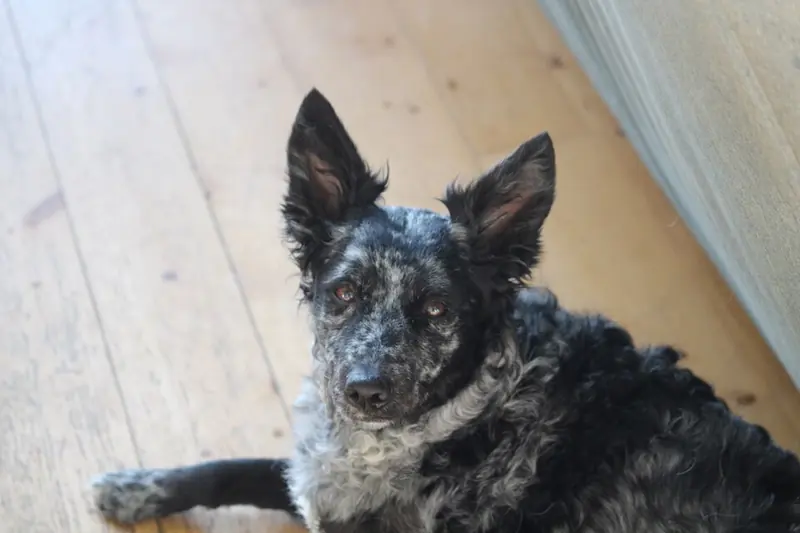
Mudi
A prick-eared Hungarian herder with a wavy coat and a restless mind, built to work all day and offer opinions all evening.
EnergyGroomingFlat life

