
History
The Catalan Sheepdog, or Gos d'Atura Català, comes from the Catalan Pyrenees and spread through the pastoral regions of Catalonia. The FCI places it in Group 1, Section 1, Sheepdogs, with Spain as its country of origin and a standard dated 2004. It was a shepherd's dog, driving flocks on difficult mountain ground and in extreme weather, and guarding the farm and the sheep.
According to the standard, the breed excels at driving flocks with initiative and intelligence, but it also serves in guard roles and makes an excellent companion because of its size, coat, intelligence and loyalty. It is a medium-sized, well-balanced dog, a little longer than tall, with a handsome coat. The breed is still more familiar in Catalonia than elsewhere, but it has a growing number of admirers in other countries.
Temperament
The standard calls it very sedate, active and intelligent, devoted to its shepherd and flocks, wary of strangers and highly vigilant. That sums up the dog well. At home it is calm and attached, often shadowing one person, and not given to constant restlessness. Outdoors it becomes keen and responsive, and with its own family it is affectionate and sometimes comical.
Wariness of strangers is part of the package. Many Catalans bark to announce visitors and prefer to be introduced slowly, but they do not need to be aggressive to be good watchdogs. The standard lists aggression as a disqualifying fault, and a well-bred dog is steady. Without work it can become bored and bark, so give it tasks, whether training, walks with a purpose or dog sports.
Children and other pets
The Catalan Sheepdog is generally loyal and gentle with its own family, including children, though as a herding dog it may try to round up running children by bumping or nipping. Teach children to be calm and the dog to settle. It usually gets on with dogs it knows and with cats it was raised with, but small animals outdoors may trigger the chase and herd reflex. Visitors need to be introduced calmly.
Exercise and the daily walk
A healthy adult needs about an hour and a half to two hours a day. This can be brisk walking, jogging, hiking and play in a safe area, ideally with some variety. The breed was developed to work on mountain slopes in all weathers, so it is robust and enjoys rain and cold more than heat.
Mental exercise counts as much as physical. Herding trials, agility, obedience, tracking and trick training suit its intelligence. Ball games can be useful but should be limited if the dog becomes obsessed. Avoid hard jumping and long runs for young dogs until growth is finished. On hot days, exercise early or late and give plenty of water, because the long coat holds heat.
Training
The Catalan is intelligent and learns quickly, and it responds best to calm, consistent, reward-based training. It can be reserved, so harsh methods may make it shut down or become defensive. Short sessions with food or toys keep it engaged. Because it is a herder, teach a reliable stop and recall early, and discourage chasing bicycles, joggers and children.
Socialisation deserves attention from the first weeks, as the natural wariness of strangers can grow into excessive barking or avoidance. Introduce the puppy to varied people, city sounds, lifts, trams and other dogs, always with positive experiences. Teach quiet on cue, a settle on a mat and relaxed handling for grooming. A dog that has a daily job, even a small one, is much easier to live with.
Coat and grooming
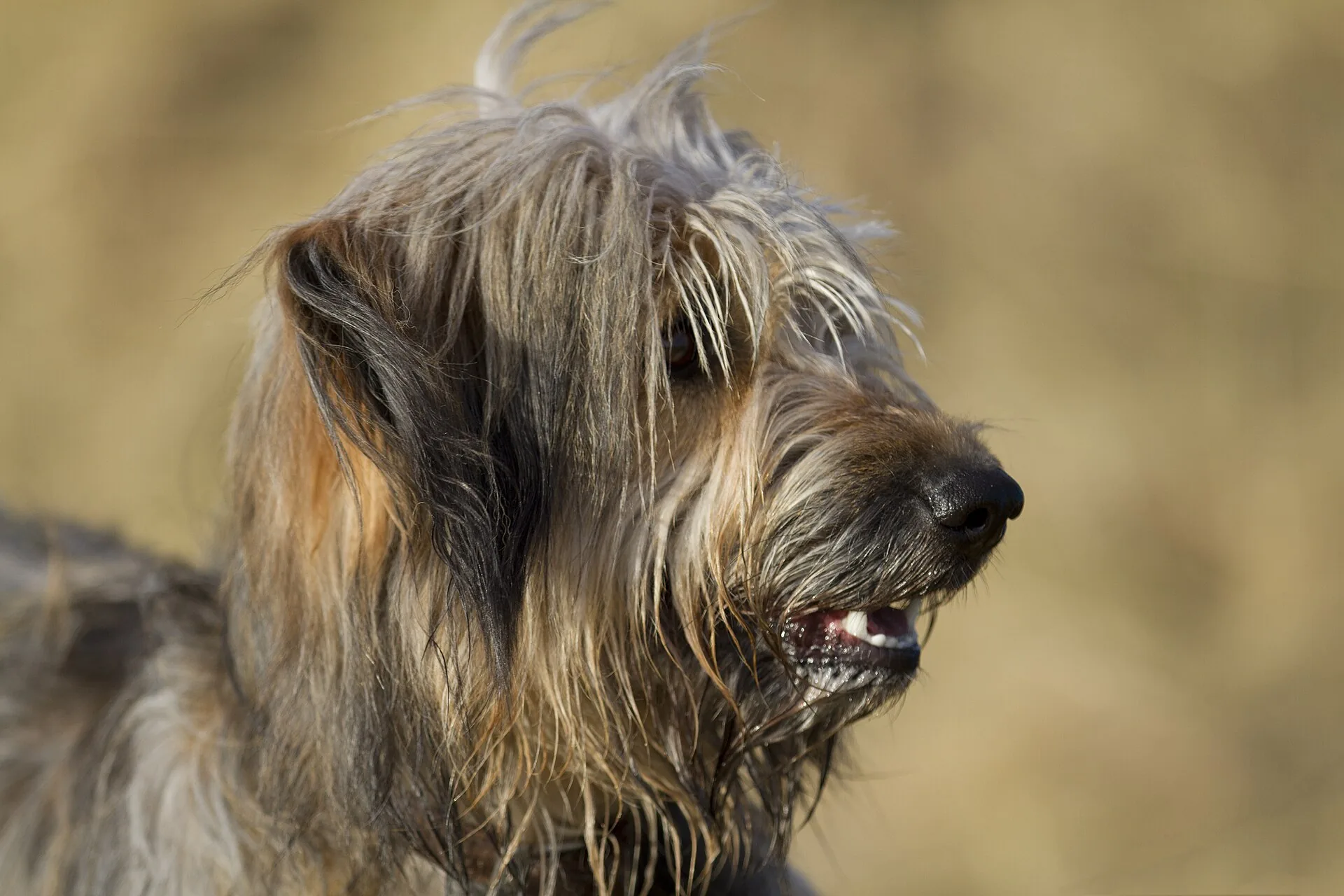
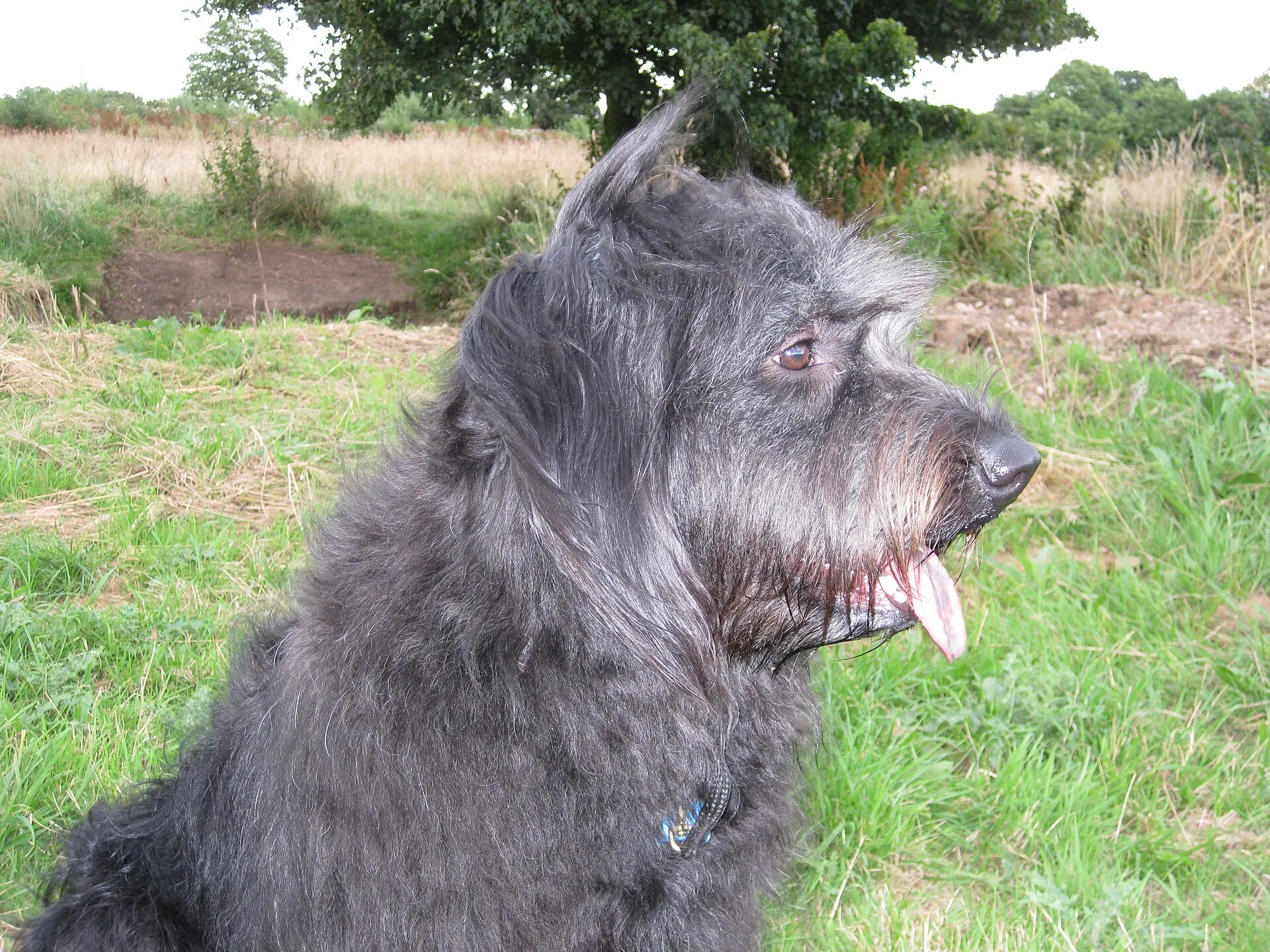
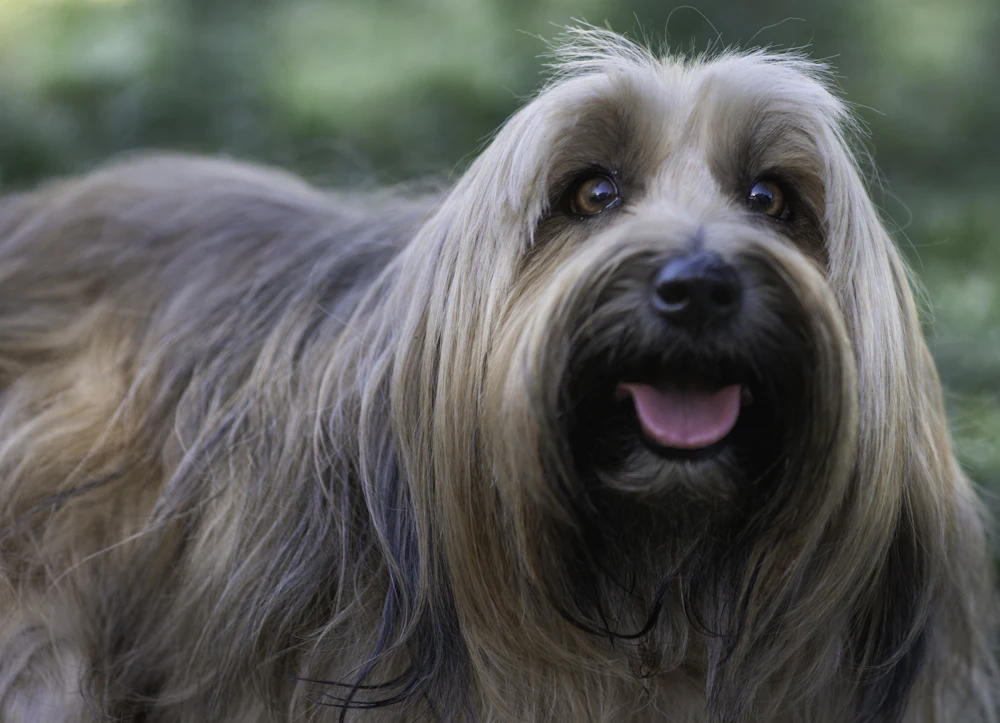
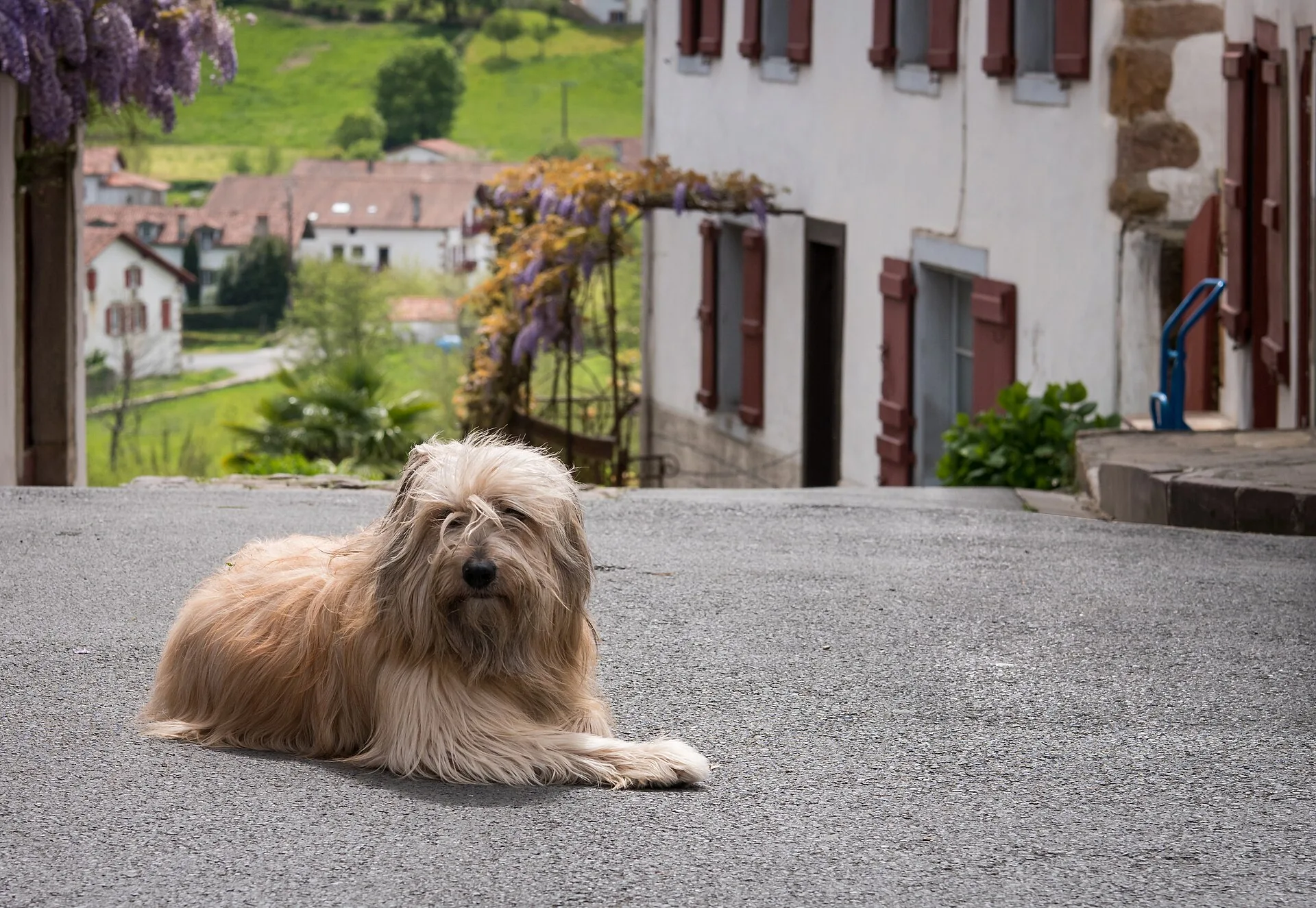
The coat is long, flat or slightly wavy, with an abundant undercoat, and is weatherproof. The colours are fawn, sable and grey, produced by mixed hair tones, and the standard does not accept white or black spots. Brush two or three times a week, and daily during the heavy moult, to avoid mats behind the ears, in the trousers and under the legs. Bathing is only occasionally needed. The beard and feet collect mud, so wipe after wet walks.
Feeding and weight
A medium-sized working dog does well on a complete, good-quality food in two meals a day. Adjust the amount to activity, age and weight, and keep the dog fit rather than plump, because extra weight stresses the hips. Use part of the daily ration for training treats. Allow a rest after eating, and provide fresh water. Dental chews can help keep teeth clean, but choose them to suit the dog's size.
Work out a starting calorie figure and food weight with the calorie calculator. Not sure this is the right breed? Take the quiz.
Health
Every breed carries predispositions. These are the conditions most often discussed for the Catalan Sheepdog, not a prediction for any individual dog.
- Hip dysplasia (malformed hip joints)
- Progressive retinal atrophy and other inherited eye conditions
- Ear infections, as hair and a drooping ear hold moisture
- Skin allergies in some lines
- Gastric dilatation (bloat), occasionally in deep-chested dogs
What to ask the breeder. Ask for hip scores and eye examination results for both parents, and whether the breeder tests for any inherited conditions recommended by the breed club. Ask to see the parents' temperament with strangers.
Choosing a puppy
A Catalan puppy is a bright, busy ball of fluff that learns fast. Begin early socialisation with strangers, other dogs and city life, keep outings short and on soft ground, and add calm games that exercise the nose and brain. Teach it to settle in a crate or bed, to be alone for short periods and to accept brushing from the first week. Discourage nipping at heels. Do not over-exercise while the joints grow.
In Luxembourg the national kennel club is the Fédération Cynologique Luxembourgeoise (FCL), a member of the FCI. Many owners also buy from breeders in Germany, France or Belgium; a puppy coming from another EU country must be microchipped and vaccinated against rabies, which in practice means it cannot travel before about fifteen weeks of age. Where to get a dog in Luxembourg.
The older Catalan Sheepdog
A Catalan stays alert and working-minded well into its senior years. Keep walks regular but gentler, add joint-friendly bedding, and watch hips, eyes and teeth. Mats form more easily in older dogs that move less, so brush often. A twice-yearly veterinary check and a lean body weight help it stay active. Mental games, such as scent work and short training sessions, keep the old dog happy.
A realistic day
A realistic weekday for a working household in Luxembourg City, with a midday visit. Adjust it to your dog, not the other way round.
A 30 to 40 minute walk with a few training games, then breakfast and a rest.
Owner leaves for work; the dog lies by the door with a chew or a stuffed toy.
Midday visit: a brisk 45-minute walk, with obedience and sniffing, fresh water and a quick brush.
Longer evening outing of an hour or more in a park or forest, with a recall and a fetch game.
Short toilet break and a calm settle on the mat.
A Catalan Sheepdog in Luxembourg
The Catalan can adapt to a Luxembourg apartment if its walks and mental tasks are reliable. It is sedate indoors, and a lift is no problem for a medium-sized dog. The main points are barking at noises in the corridor, since it is an alert watchdog, and the need for daily exercise. A house with a garden helps, but it is not a substitute for outings.
Parks such as the Pétrusse valley, Parc Merl and the Municipal Park are good for everyday walks, and the Bambësch and Grünewald forests suit longer outings and training. The long, thick coat is comfortable in cool, wet weather but warm in summer, which can reach the 30s °C, so walk early or late and keep the dog in the shade. Buses and trams are free nationwide, so train the dog to ride quietly.
Every dog in Luxembourg must be identified, declared to the commune and covered by liability insurance. How registration works.
When you travel
A sitter should know that this dog is wary of strangers and attached to its person, so introduce them calmly and let the dog approach in its own time. Maintain the routine of walks, feeding and training. Keep it on a lead in public, as the herding and chasing instinct can lead it to run after bikes or children. Brush the coat and check ears, and tell the sitter about barking habits and any commands.
PAWLY's holiday and overnight care takes place in your home, so your dog keeps its own bed and routine.
Myths and facts
MythIt is just a small Old English Sheepdog.
FactIt is a Pyrenean herding breed from Catalonia, lighter and more athletic, with fawn, sable or grey colours.
MythA sedate dog needs little exercise.
FactThe standard calls it sedate, but it also calls it active. An adult needs a good deal of exercise and mental work every day.
MythA long coat means constant grooming.
FactRegular brushing two or three times a week is enough for most dogs, with more during the moult.
Is it the right dog for you?
Suits
- Active owners who enjoy hiking and training
- People who want a loyal, watchful companion
- Households that can give daily exercise and a job
- Owners who accept coat care and moulting
Think twice if
- You want a dog that loves every stranger
- You work long hours and cannot offer exercise or company
- You dislike hair on the floor and grooming
- You have small animals that a herding dog may chase
Questions owners ask
Is the Catalan Sheepdog easy to train?
It is intelligent and learns quickly. Use calm, reward-based methods and start socialisation early, because it is wary of strangers and can be reserved.
How big is it?
The FCI standard gives 47 to 55 cm for males and 45 to 53 cm for females. The standard gives no weight.
Does it suit a flat?
Yes, if it has daily walks, mental tasks and company. It is sedate indoors but active outside, and it will bark if bored.
Is it recognised by the Fédération Cynologique Luxembourgeoise?
The breed is recognised by the FCI, of which the FCL is a member. Ask the FCL for details of local clubs, breeders and shows.
Sources
Photo: Elinandreassen, CC BY-SA 3.0, via Wikimedia Commons · Photo: Limpet j, CC BY-SA 3.0, via Wikimedia Commons · Photo: Unsplash (Unsplash License) · Photo: Basotxerri, CC BY-SA 4.0, via Wikimedia Commons
General information for dog owners in Luxembourg, not veterinary or legal advice. Official facts (origin, size, group, history and temperament as described by the breed standard) follow the FCI standard; health and care sections reflect breed-club and veterinary guidance and are typical ranges rather than rules. For your own dog, ask your vet, the breed club or your commune. How this guide is written and checked. Last reviewed 8 October 2026.
Need someone for your Catalan Sheepdog?
PAWLY offers an individual 45-minute walk or a home visit at your dog's pace, the same walker every time, and a written report with photos after every visit, across Luxembourg City.
Read next: the journal, for the Catalan Sheepdog
All articles
The itchy dog: working through it in the right order
Skin trouble is among the conditions discussed for the Catalan Sheepdog; this is the order to work through it.

Dog first aid: the six emergencies and what to do first
Bloat is an emergency in deep-chested breeds like the Catalan Sheepdog; this covers what cannot wait.

How much exercise does your dog actually need?
The Catalan Sheepdog is an active breed, so it is worth checking the exercise numbers against your actual week.
Similar breeds
All 198 breeds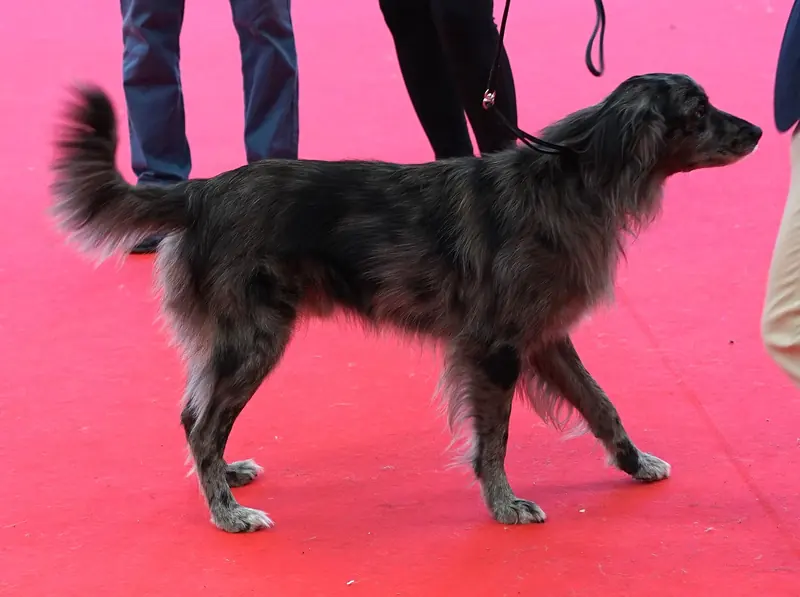
Pyrenean Shepherd
A small, wiry mountain herder with a sharp mind and a stubborn streak, intensely loyal to its own people and quietly sceptical of everyone else.
EnergyGroomingFlat life
Bearded Collie
The shaggy, bouncing Scottish herder: cheerful, clever and always ready to join in.
EnergyGroomingFlat life
Border Collie
Probably the most capable working dog in the world, and for the same reason one of the hardest to keep in a city flat.
EnergyGroomingFlat life

