History
The FCI lists the Mudi in Group 1, Section 1, as a Hungarian herding dog. The standard says it developed during the 18th and 19th centuries from crossing Hungarian herding dogs, most probably with various prick-eared German herding dogs. It was valued by shepherds for handling large and difficult livestock, and it earned a wider reputation as a farm dog that guarded and warned as well as herded.
According to the standard, the Mudi has also been used for hunting wild boar and serves as a guard and companion dog, as well as a watch and alarm dog. That list of jobs explains much of its character: it is a versatile, self-reliant working dog rather than a dog bred only for looks. It remains rare outside Hungary, where it is increasingly seen in agility and obedience as well as on the farm.
Temperament
The FCI standard describes a dog extremely able to learn, of lively temperament, courageous, watchful, keen to work, alert and adaptable. Each of those words is meant to be taken seriously. A Mudi is fast, tuned in and eager to be given something to do, and it attaches closely to its people. It tends to be wary of strangers, which makes it an effective alarm dog and a less than relaxed guest at crowded events.
At home the Mudi is affectionate and clownish with its family but never switched off. It notices changes in routine, new objects and unfamiliar sounds, and it reports them. Without enough work it can develop obsessive habits, such as shadow chasing, barking at passing traffic and herding family members. With regular tasks and calm boundaries, it settles into a thoughtful, versatile companion that is keen to learn almost anything.
Children and other pets
A Mudi raised with children and given enough exercise can be a loyal, playful family dog, but its herding instinct may lead it to circle, bark and nip at running children. Supervision and teaching children not to run and shriek around the dog are important. It can be wary of visitors, so introductions should be calm. With other dogs it is usually fine if socialised early. Small pets and cats need careful introduction, and a running animal may trigger the chase instinct.
Exercise and the daily walk
This is a working dog that needs a daily programme, not a stroll. An adult needs about an hour and a half to two hours of activity, mixing brisk walking or running with training and games. Agility, obedience, tracking, herding and canicross all suit the breed, and a Mudi that has done its work will lie quietly at your feet afterwards.
Mental exercise counts as much as physical. Scent games, trick training, puzzle feeders and learning new cues give the dog's mind something to chew on. Keep puppies to short walks and play, avoiding repeated jumping and long runs until the joints have matured, usually around a year old. Practise recall in secure places before relying on it, as a Mudi on the move is fast and determined.
Training
Mudis learn quickly and remember everything, including mistakes, so consistent, reward-based training from the first day is essential. Short, varied sessions keep a sharp mind engaged. Harsh methods are a poor fit, as the breed is sensitive and may respond with distrust. Early socialisation to people, traffic, lifts and other dogs helps the watchful temperament develop into confidence rather than suspicion.
Barking and herding behaviour need guiding. Teach a quiet cue, reward calm behaviour at windows and doors, and give the dog a legitimate herding outlet, such as chasing a ball on command. Impulse control exercises, a reliable recall and a strong settle on a mat make daily life easier. This breed suits owners who enjoy training as a hobby and have the time to keep it going.
Coat and grooming
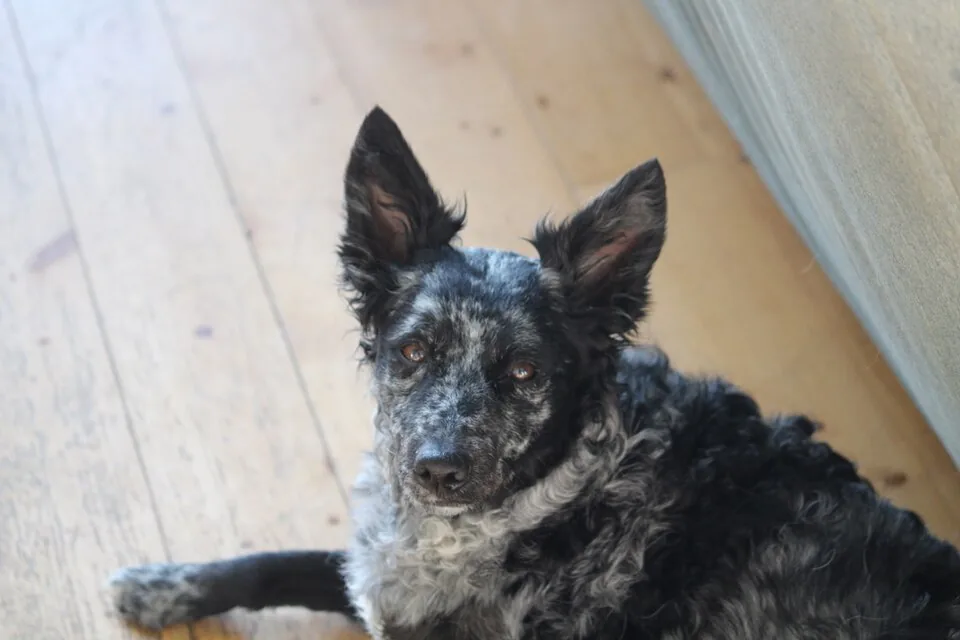
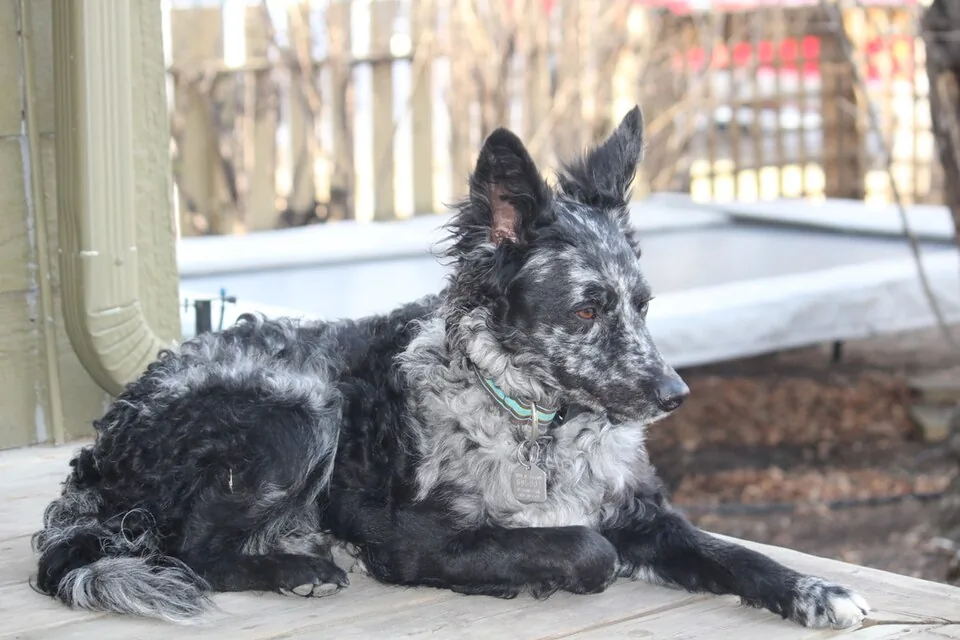
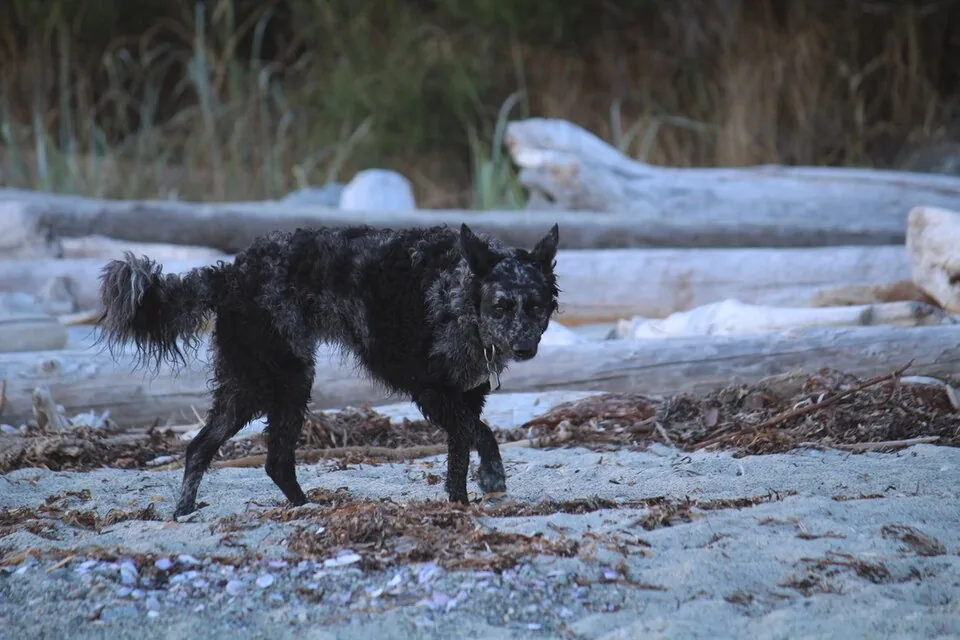
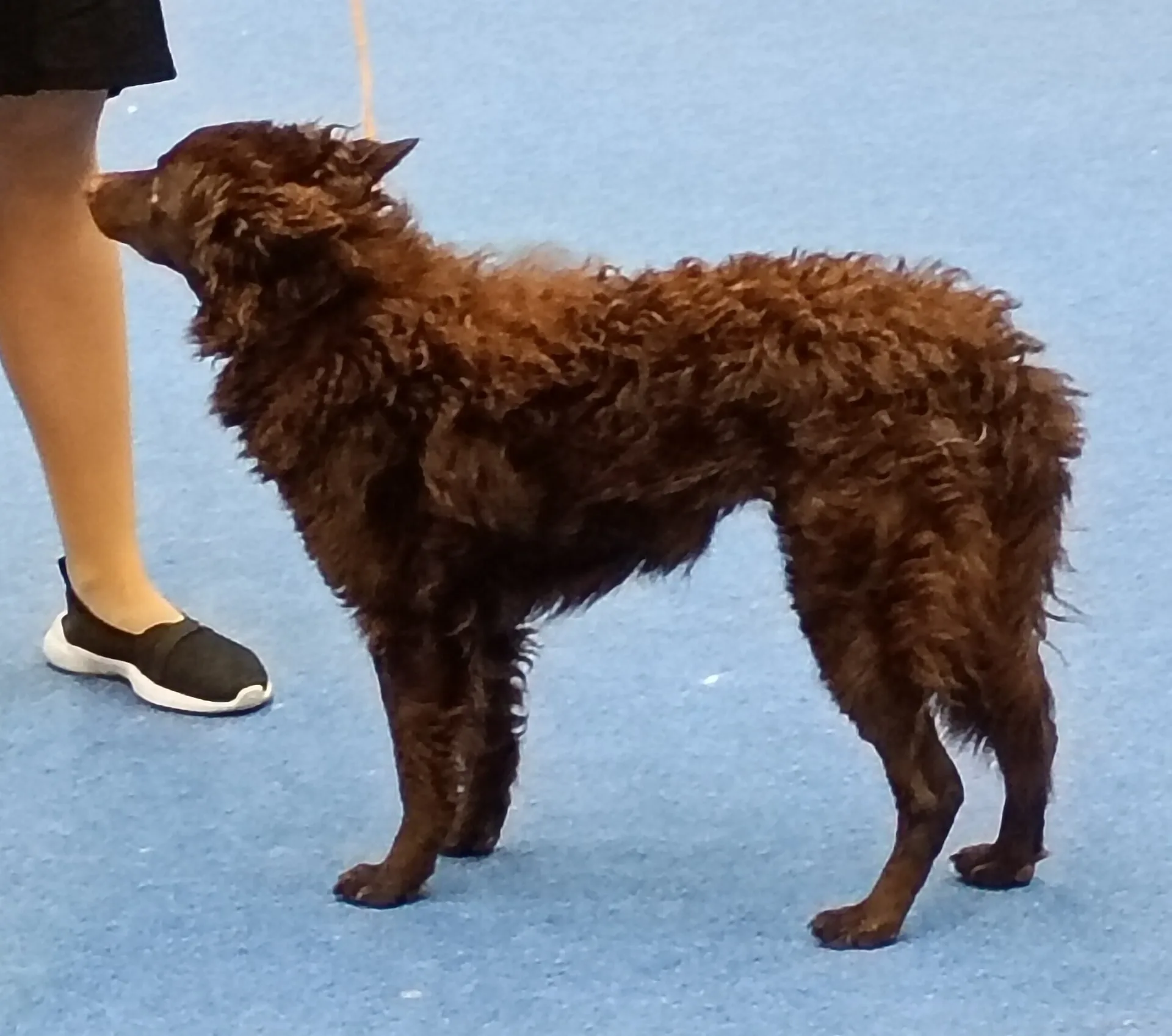
The FCI describes short, straight, smooth hair on the head and the front of the legs, with a longer, very wavy to slightly curled coat of about 3 to 7 cm on the rest of the body. Brushing once or twice a week keeps it in order and removes loose hair, and the coat sheds moderately, more heavily in season. Bathe only when needed. Permitted colours include black, white, fawn, ash, liver, ash-brown and merle, with details set out in the standard.
Feeding and weight
A complete, good-quality diet suited to a medium-sized, high-energy dog works well, usually divided into two meals. Mudis are lean, athletic dogs that burn energy quickly, but treats used in training add up, so reduce meals to compensate. Keep the dog calm around mealtimes, give fresh water at all times, and check body condition regularly, feeling the ribs under the coat rather than trusting appearance.
Work out a starting calorie figure and food weight with the calorie calculator. Not sure this is the right breed? Take the quiz.
Health
Every breed carries predispositions. These are the conditions most often discussed for the Mudi, not a prediction for any individual dog.
- Hip dysplasia
- Elbow dysplasia
- Inherited eye conditions such as cataract
- Sprains and joint injuries in very athletic dogs
What to ask the breeder. Ask to see hip and elbow results and eye examination certificates for both parents, and ask whether the breeder tests for known inherited conditions and health problems in the line.
Choosing a puppy
Mudi puppies are bright and busy, learning faster than their owners expect. Start socialisation early with people, lifts, trams, traffic and other dogs, all with treats and calm encouragement. Teach a quiet cue, a settle routine and handling of paws, ears and mouth. Provide chew toys and puzzle feeders, and keep exercise short and playful while the joints grow. Avoid repeated jumping and long runs. A tired puppy is a happy puppy, but a bored one will invent mischief.
In Luxembourg the national kennel club is the Fédération Cynologique Luxembourgeoise (FCL), a member of the FCI. Many owners also buy from breeders in Germany, France or Belgium; a puppy coming from another EU country must be microchipped and vaccinated against rabies, which in practice means it cannot travel before about fifteen weeks of age. Where to get a dog in Luxembourg.
The older Mudi
Mudis often stay fit and keen into their teens, but from about ten expect a slower pace. Shorter, more frequent walks and a supportive bed help stiff joints, while scent games and gentle training keep the mind sharp. Watch weight, check eyes and hearing regularly, and report any weakness or unsteadiness in the back legs to your vet. Older dogs still need purposeful activity, just at a gentler pace.
A realistic day
A realistic weekday for a working household in Luxembourg City, with a midday visit. Adjust it to your dog, not the other way round.
Brisk 40-minute walk with a short training game before breakfast.
Owner leaves; the Mudi settles with a food puzzle away from the window.
Midday visit: 45-minute run or walk with ball and scent games in a green area, fresh water, a short training session.
Evening outing of about an hour including training or agility practice, then dinner.
Calm toilet break, a quiet cuddle and bed.
A Mudi in Luxembourg
A Mudi can live in a Luxembourg flat only if its owner commits to daily exercise and mental work. The lift and corridors are good places to practise calm behaviour, since an alert dog will bark at neighbours. Parc Merl, the Pétrusse valley and the Kinnekswiss park are convenient for daily outings, while the Bambësch and Grünewald forests allow longer runs, ideally on a long line until recall is solid. Free buses and trams help reach them, once the dog is used to transport.
The wavy coat copes well with Luxembourg's damp winters, though paws and legs need wiping. Summer days in the 30s °C call for early and late exercise, shade and plenty of water, because a working dog may keep going past the point of comfort. Remember the usual obligations: microchip, declaration to the commune, third-party liability insurance and the annual dog tax.
Every dog in Luxembourg must be identified, declared to the commune and covered by liability insurance. How registration works.
When you travel
A sitter must be confident with a clever, active dog and ready to provide real exercise and mental work. Plan two proper outings and a midday visit, with training games and food puzzles. Keep the dog on a lead or in a secure area, as a Mudi is fast and may chase. Expect alert barking and wariness with strangers. Leave vet contacts and the usual routine in writing.
PAWLY's holiday and overnight care takes place in your home, so your dog keeps its own bed and routine.
Myths and facts
MythA Mudi is just a small Border Collie.
FactThe Mudi is a distinct Hungarian breed, with a prick-eared, wedge-headed look and a more watchful, alert character.
MythIt will settle happily with a short daily walk.
FactThe standard describes a dog keen to work and extremely able to learn, which needs regular exercise and mental tasks.
MythBarking means it is aggressive.
FactThe standard calls it watchful and alert, and a good alarm dog. Barking is a habit that training can shape.
Is it the right dog for you?
Suits
- Active owners who enjoy training and dog sports
- People with time to give daily mental work
- Households ready to socialise a watchful dog early
- Owners who want a versatile, clever companion
Think twice if
- You want a calm, low-demand dog
- You are away from home for long hours
- Your neighbours dislike barking
- You do not enjoy training
Questions owners ask
Is a Mudi a good first dog?
Only for a committed first-time owner. It is intelligent, energetic and watchful, so it needs daily exercise, early socialisation and consistent training. Plan to attend classes and give it a job.
How much does a Mudi bark?
Quite a lot if left unguided. The standard describes a watchful, alert dog used as an alarm dog. Teach a quiet cue, reward calm behaviour and avoid leaving it bored by windows.
Does a Mudi shed?
Moderately. The wavy coat sheds all year, with heavier moults in season. Brushing once or twice a week keeps it manageable, though it is not suitable for anyone seeking a non-shedding coat.
Can a Mudi live in a flat?
Yes, if the exercise and mental needs are met and noise is managed. The dog is adaptable, as the standard says, but a bored Mudi in a flat becomes a noisy one.
Sources
Photo: Qwexcxewq, CC BY 4.0, via Wikimedia Commons · Photo: Qwexcxewq, CC BY 4.0, via Wikimedia Commons · Photo: Qwexcxewq, CC BY 4.0, via Wikimedia Commons · Photo: Canarian, CC BY 4.0, via Wikimedia Commons
General information for dog owners in Luxembourg, not veterinary or legal advice. Official facts (origin, size, group, history and temperament as described by the breed standard) follow the FCI standard; health and care sections reflect breed-club and veterinary guidance and are typical ranges rather than rules. For your own dog, ask your vet, the breed club or your commune. How this guide is written and checked. Last reviewed 8 October 2026.
Need someone for your Mudi?
PAWLY offers an individual 45-minute walk or a home visit at your dog's pace, the same walker every time, and a written report with photos after every visit, across Luxembourg City.
Read next: the journal, for the Mudi
All articles
Working breeds in a city flat: the honest version
High-drive dogs like the Mudi can live in a flat, but it takes a plan.

Dogs and cats in the same flat
The Mudi can see small animals as prey; this covers living with a cat in a flat.

When a dog loses its hearing or its sight
Eye and hearing conditions are watched for in the Mudi; this covers living with them.
Similar breeds
All 198 breeds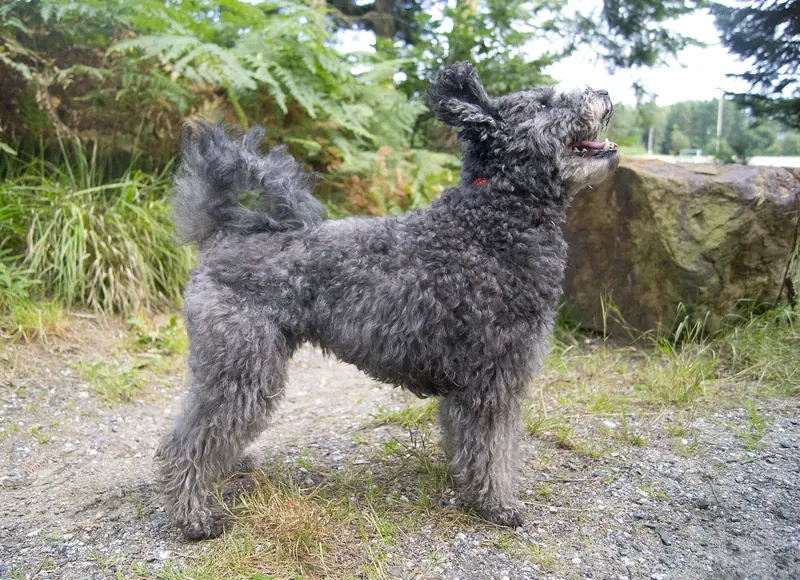
Pumi
A wiry little Hungarian herder with terrier manners, tipped ears and an opinion on everything that moves past the window.
EnergyGroomingFlat life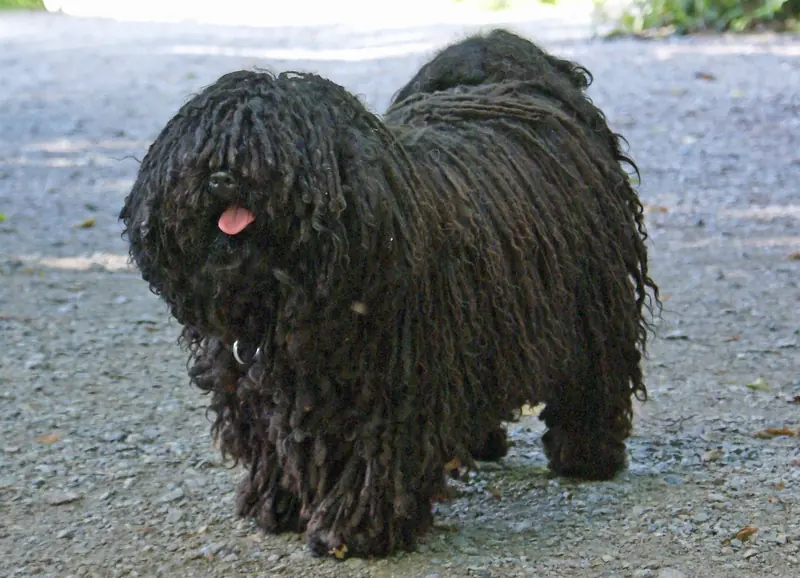
Puli
A compact Hungarian herder in a mop of cords, bouncy and alert, who treats every flat as a flock to be supervised.
EnergyGroomingFlat life
Border Collie
Probably the most capable working dog in the world, and for the same reason one of the hardest to keep in a city flat.
EnergyGroomingFlat life

