History
The FCI lists the Pumi in Group 1, Section 1, as a Hungarian herding breed. According to the standard it developed in the 17th and 18th centuries, when the primitive Puli was crossed with terrier-type dogs imported from Germany and France. The result was a herding dog with a terrier's quickness and a Puli's coat, and it was recognised as a distinct breed from around 1900.
The standard describes a herding dog of terrier type, suited to working larger animals and also skilled at keeping down vermin, which made it a useful all-round farm dog. It is today regarded as an excellent companion and sporting dog. The standard notes that the Pumi adapts well to indoor living, but it adds that the dog needs a substantial amount of exercise, a comment that every owner of a bored Pumi will recognise.
Temperament
The standard puts it plainly: a rather lively herding dog with a restless temperament, extremely bold and a little suspicious towards strangers. It adds that the breed is notably vocal and constantly active. Those are not faults to the Hungarian herders who wanted a dog that never missed anything, but in a modern home they mean a dog that comments on every sound, checks every visitor and takes a great interest in the movements of the household.
With its own family a Pumi is affectionate, funny and strikingly quick. The dog thinks fast, changes direction fast and learns routines even faster, including ones you did not intend to teach. It needs a job and a firm, fair owner. Left under-occupied, it will bark, dig, chase and herd whatever is available, from children to the vacuum cleaner. A Pumi that is exercised and challenged is a lively, cheerful and very responsive companion.
Children and other pets
A well-socialised Pumi can be a lively family dog, enjoying games and outdoor adventures with older children. Its herding instinct may show up as nipping and chasing, and its energy can be too much for toddlers, so supervision matters. The standard notes some suspicion of strangers, so teach children to greet the dog calmly. It is usually fine with other dogs when raised among them. Cats may be accepted if introduced early, though small animals that run can trigger a chase.
Exercise and the daily walk
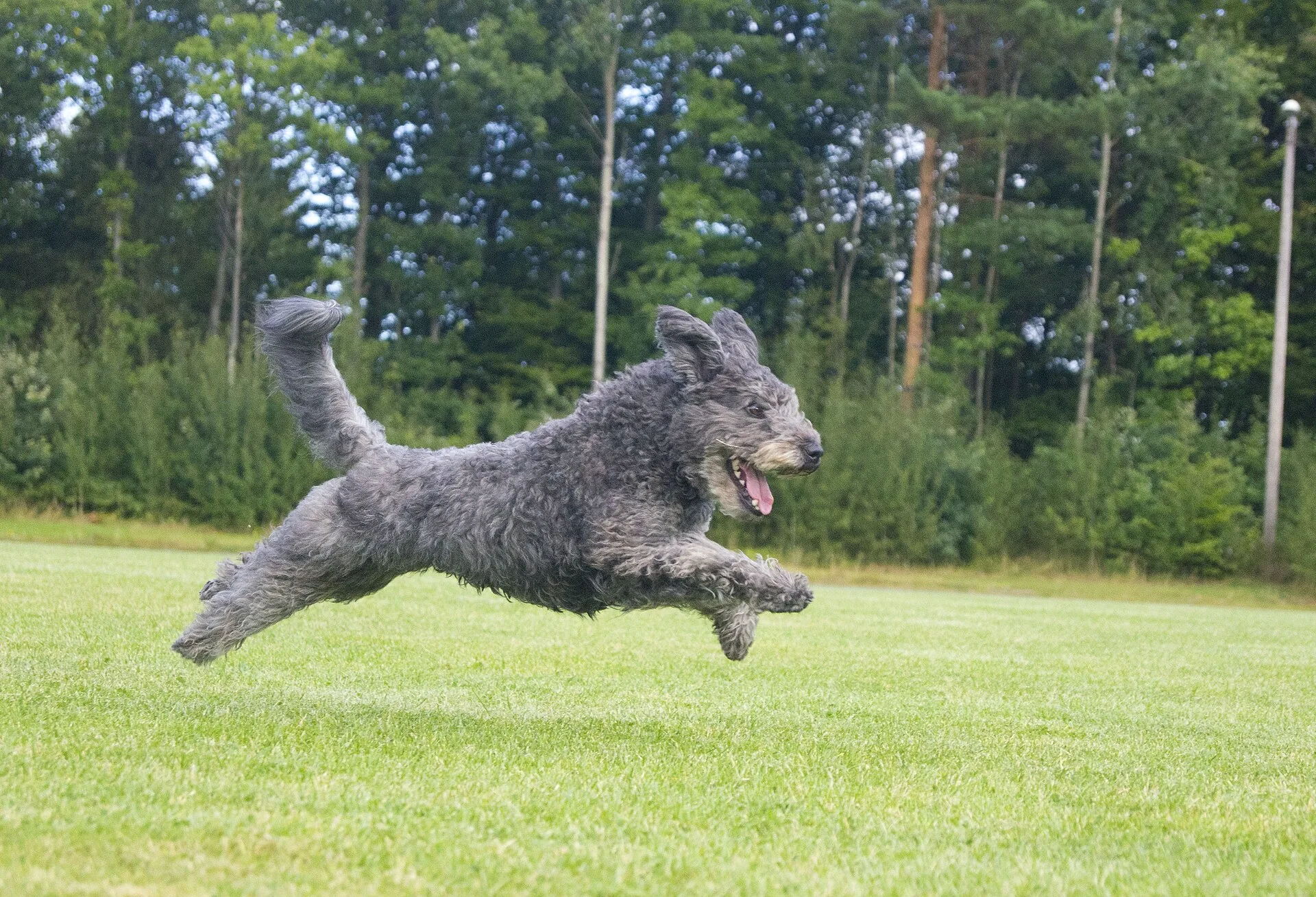
This is not a breed for the occasional stroll. An adult Pumi thrives on around an hour and a half of daily activity, ideally mixing a real walk or run with games and training. It has plenty of stamina and a quick mind, so ball games, scent games, hide-and-seek and agility all suit it. A tired Pumi is quiet for a while, though not for long.
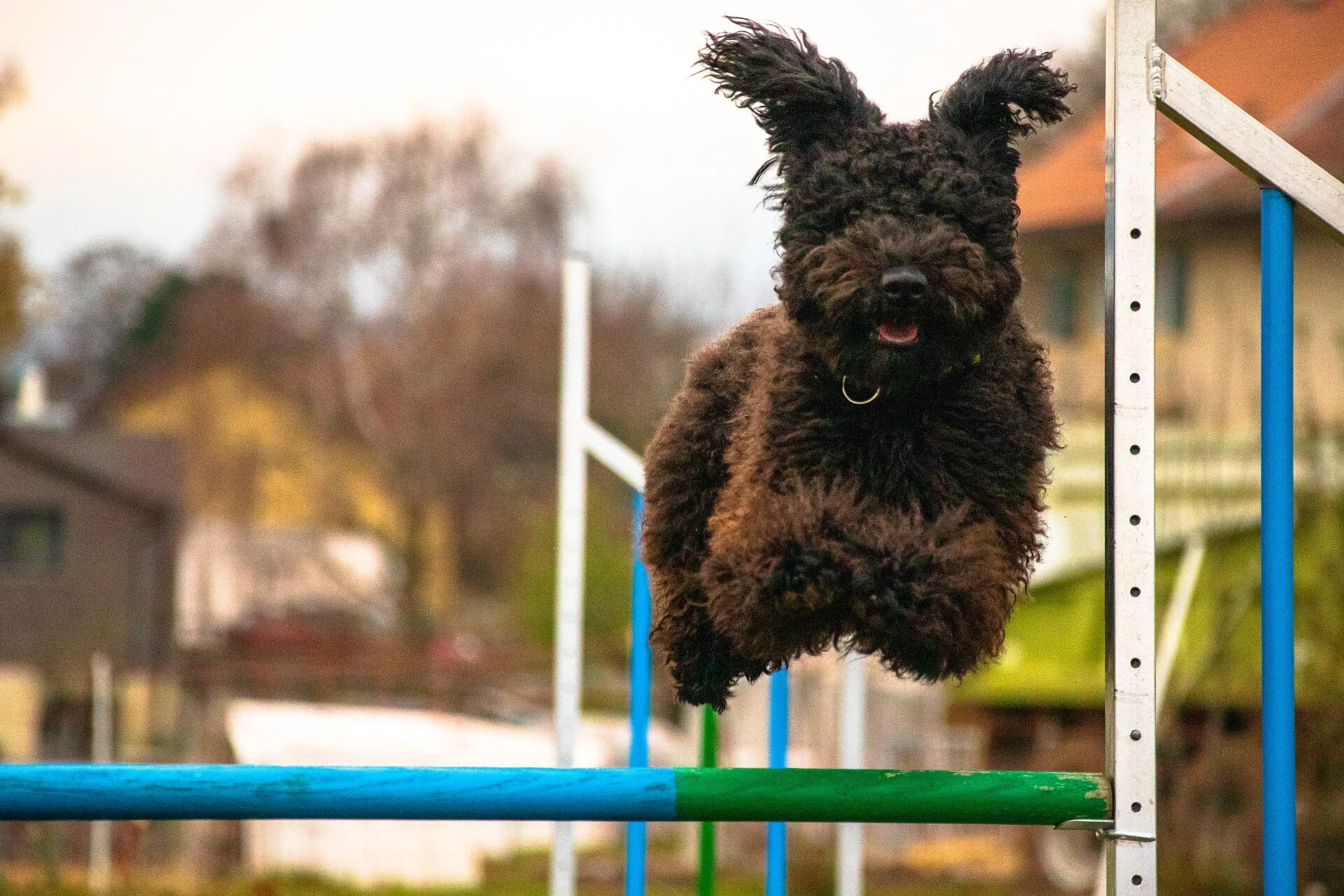
Dog sports are an excellent solution. Agility, obedience, rally, flyball and herding trials all use the breed's speed, agility and eagerness. Off-lead exercise belongs in secure places until recall is reliable, because a Pumi may dash after anything that moves. Avoid hard repetitive jumping and long runs for puppies while their joints develop; short walks, play and training games are enough until about a year old.
Training
Pumis are quick to learn and equally quick to get bored, so sessions should be short, varied and rewarding. Use food, toys and praise, and keep a calm, consistent manner. Because the dog is bold and a little suspicious of strangers, early socialisation in lifts, trams, busy streets and cafés is essential, and the owner should reward calm behaviour around new people rather than simply tolerate barking.
Barking is part of the package, so teach a quiet cue early and reward silence at the window and the door. Recall, impulse control and a reliable settle on a mat are priorities. Provide an outlet for herding behaviour, such as chasing a ball on command, to prevent chasing children, bicycles or joggers. A Pumi with clear rules and daily mental work is a delightful partner.
Coat and grooming
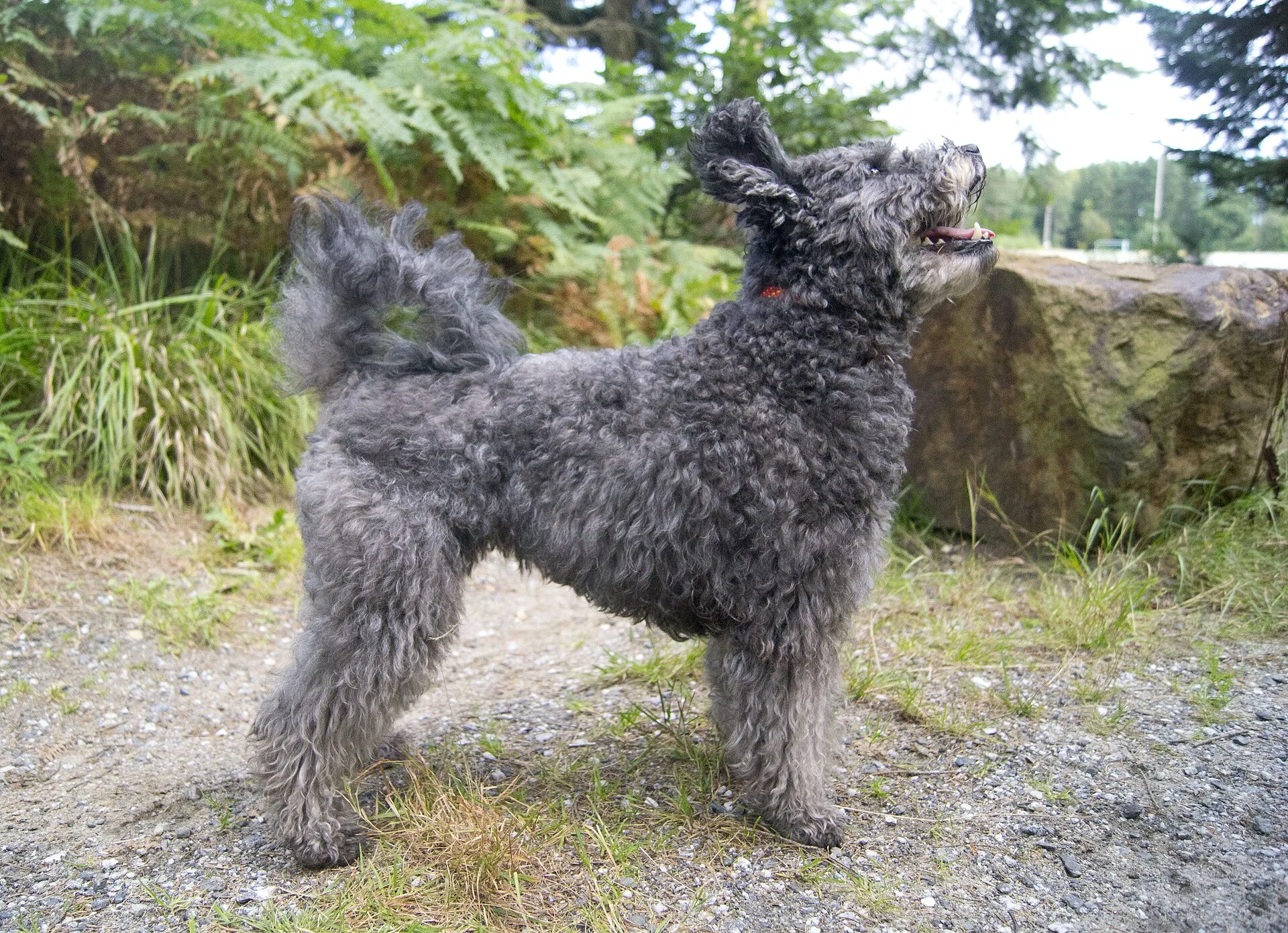
The FCI describes a wavy, curly coat that forms tufts, about 4 to 7 cm long. It is not corded like the Puli's. Brushing once or twice a week and occasional trimming keep it tidy, and the coat should not be over-groomed into a smooth shape. Shedding is light, though not absent. Permitted colours are solid grey, black, fawn and white, in various shades, without multicoloured patterns.
Feeding and weight
A complete, good-quality diet suited to a medium, very active dog works well, divided into two meals a day. Pumis burn plenty of energy, but a busy dog still gains weight if treats are generous, so count training rewards as part of the daily ration. Feel the ribs regularly under the curls rather than relying on appearance. Fresh water should always be available, and meals should be calm, since excitable dogs bolt food.
Work out a starting calorie figure and food weight with the calorie calculator. Not sure this is the right breed? Take the quiz.
Health
Every breed carries predispositions. These are the conditions most often discussed for the Pumi, not a prediction for any individual dog.
- Hip dysplasia
- Patellar luxation (slipping kneecaps)
- Degenerative myelopathy (a progressive spinal condition)
- Eye conditions such as cataract and lens luxation
- Ear infections
What to ask the breeder. Ask to see hip and patella results and current eye examination certificates for both parents, and ask whether the breeder has tested for degenerative myelopathy.
Choosing a puppy
Pumi puppies are small whirlwinds with curious minds, and they need structure from the first day. Begin socialising before about sixteen weeks with traffic, lifts, other dogs and visitors, always with treats and calm encouragement. Teach a quiet cue and a settle routine early. Provide chew toys and puzzle feeders, and keep exercise short and playful while the joints grow. Handle ears, paws and coat daily so that grooming and vet visits are no drama.
In Luxembourg the national kennel club is the Fédération Cynologique Luxembourgeoise (FCL), a member of the FCI. Many owners also buy from breeders in Germany, France or Belgium; a puppy coming from another EU country must be microchipped and vaccinated against rabies, which in practice means it cannot travel before about fifteen weeks of age. Where to get a dog in Luxembourg.
The older Pumi
Many Pumis stay fit and playful into their teens, but from about ten expect slower recovery after hard exercise. Shorter walks, a firm orthopaedic bed and a healthy weight protect the joints. Watch for changes in coordination of the back legs, mention them to your vet, and have eyes and ears checked regularly. Mental games such as scent searches keep an old Pumi cheerful and bright.
A realistic day
A realistic weekday for a working household in Luxembourg City, with a midday visit. Adjust it to your dog, not the other way round.
Brisk 40-minute walk with a short training game, then breakfast.
Owner leaves; the Pumi settles with a food puzzle away from the window.
Midday visit: 45-minute walk with ball or scent games, fresh water and a short training session.
Evening outing of about an hour, ideally with off-lead play in a secure area, then dinner.
Calm toilet break, brief brush and bed.
A Pumi in Luxembourg
A Pumi can live in a Luxembourg flat if its exercise and mental needs are met, but it is vocal and alert, so neighbours must be considered. Practise quiet behaviour in the lift and corridors from the first week. The Pétrusse valley, Parc Merl and the Kinnekswiss park offer daily outings, and the Bambësch and Grünewald forests are good for longer runs. Free buses and trams make these easy to reach, and a medium-sized Pumi travels well once used to it.
The curly coat copes with Luxembourg's wet winters, though paws and legs need drying. Summer days in the 30s °C call for early and late exercise and shade, as an active dog overheats while playing. As elsewhere in the country, the Pumi must be microchipped, declared to the commune and covered by third-party liability insurance, and the commune charges an annual dog tax.
Every dog in Luxembourg must be identified, declared to the commune and covered by liability insurance. How registration works.
When you travel
A sitter must be ready for a lively, vocal dog with real exercise needs. Provide two walks plus a midday visit, with training games and food puzzles. Keep the dog on a lead or in a secure area, as a Pumi will chase anything that moves. Expect barking at the door and window, and reward calm behaviour. Dry the dog after wet walks and leave vet contact details and the usual routine.
PAWLY's holiday and overnight care takes place in your home, so your dog keeps its own bed and routine.
Myths and facts
MythPumis are just small Pulis.
FactPumis developed from Pulis crossed with terrier-type dogs, and the standard describes a lively, bold herding dog of terrier type with a different coat.
MythA Pumi is happy in a flat without much exercise.
FactThe standard says it adapts to indoor life but needs substantial exercise.
MythPumis are aggressive because they bark.
FactThe standard calls them bold and a little suspicious of strangers, and aggressiveness is a fault. They are vocal, not vicious.
Is it the right dog for you?
Suits
- Active owners who enjoy dog sports
- People who want a lively, clever companion
- Households with older, considerate children
- Owners who will train and socialise from day one
Think twice if
- You want a quiet, undemanding dog
- You are away from home for long hours
- Your neighbours dislike barking
- You prefer a laid-back, easygoing temperament
Questions owners ask
Is a Pumi a good flat dog?
It can be, provided it gets plenty of exercise and mental work. The standard says it adapts well to indoor living but needs substantial exercise. Barking is the main challenge, so practise quiet cues early and keep the dog occupied.
Does a Pumi shed?
Only lightly. The curly, wavy coat holds some loose hair, so regular brushing once or twice a week prevents matting. It is not a guaranteed solution for allergy sufferers, as no coat is.
Are Pumis good with children?
Usually, with sensible families. They are lively and playful, but they can herd and nip, and the standard notes suspicion of strangers. Supervise young children and teach calm greetings.
How much exercise does a Pumi need?
Around an hour and a half a day for an adult, split into walks, games and training. They are quick and tireless, so mental work counts as much as distance.
Sources
Photo: Schenda, CC BY-SA 3.0, via Wikimedia Commons · Photo: Schenda, CC BY-SA 3.0, via Wikimedia Commons · Photo: Frantseï Blè, CC BY-SA 4.0, via Wikimedia Commons
General information for dog owners in Luxembourg, not veterinary or legal advice. Official facts (origin, size, group, history and temperament as described by the breed standard) follow the FCI standard; health and care sections reflect breed-club and veterinary guidance and are typical ranges rather than rules. For your own dog, ask your vet, the breed club or your commune. How this guide is written and checked. Last reviewed 8 October 2026.
Need someone for your Pumi?
PAWLY offers an individual 45-minute walk or a home visit at your dog's pace, the same walker every time, and a written report with photos after every visit, across Luxembourg City.
Read next: the journal, for the Pumi
All articles
Working breeds in a city flat: the honest version
High-drive dogs like the Pumi can live in a flat, but it takes a plan.

Long-backed breeds, stairs and the spine
A long back makes stairs matter more than most owners think.

Ears: the three signs that mean an appointment
Ear trouble is common in the Pumi; these are the three signs that mean an appointment.
Similar breeds
All 198 breeds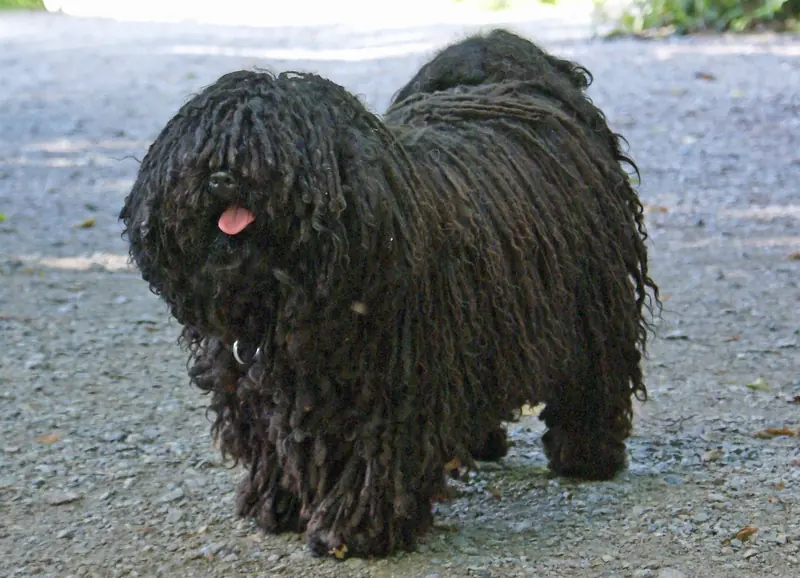
Puli
A compact Hungarian herder in a mop of cords, bouncy and alert, who treats every flat as a flock to be supervised.
EnergyGroomingFlat life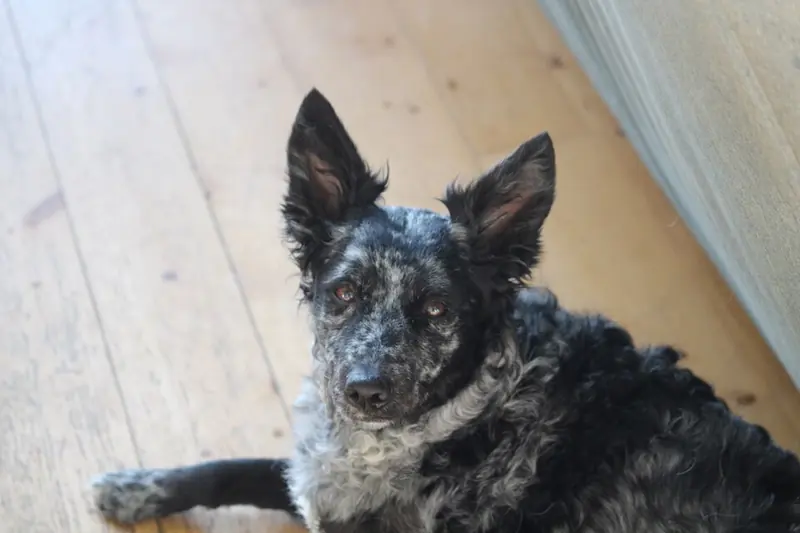
Mudi
A prick-eared Hungarian herder with a wavy coat and a restless mind, built to work all day and offer opinions all evening.
EnergyGroomingFlat life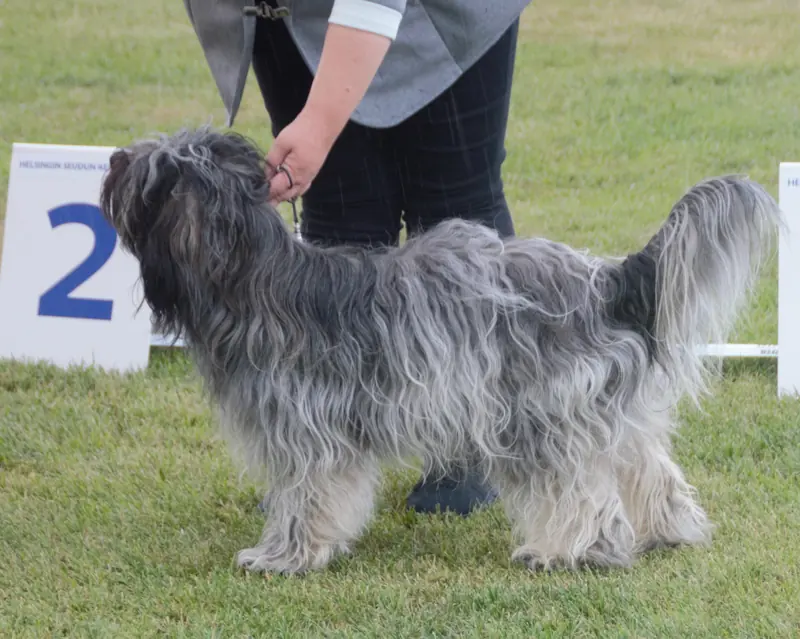
Schapendoes
A springy, shaggy Dutch herder that clears a hedge from a standing start and then looks to you for the next idea.
EnergyGroomingFlat life

