History
The Nederlandse Schapendoes comes from the heathland regions of the Netherlands, where shepherds kept lively, weather-proof sheepdogs through the late nineteenth and early twentieth centuries. The FCI standard places it in Group 1, Section 1, Sheepdogs, without a working trial, and records that the dogs were found across the Dutch heaths before the breed was formally shaped.
According to the standard, P. M. C. Toepoel founded the breed as we know it and kept interest alive during the Second World War, when the type was at risk. The breed club was founded in 1947, with provisional recognition in 1952, an official standard in 1954 and definite recognition in 1971.
Temperament
The FCI describes a normally and harmoniously built herding dog with an attentive and courageous character: intelligent, watchful, jolly, lively, friendly and high spirited. It follows from room to room, reads your mood from the doorway and arrives at the door a second before you have decided to go out. It is rarely aggressive and rarely aloof, though a new visitor may be announced with a short burst of barking.
A Schapendoes can spring straight up from standing, and on the lead it often leaps and twirls with joy at the sight of a harness. Without enough to do, that energy turns to barking, shadowing and creative redecoration. With a job, even a modest one such as a trick routine or a scent game, the dog settles into a cheerful, easy companion, cuddly on the sofa after a proper outing.
Children and other pets
Most Schapendoes enjoy children and are playful, gentle and patient, but their bounce and herding instinct can mean nudging or chasing small, running children, so early guidance matters. With other dogs the breed is usually sociable and well suited to play. Cats are normally fine when introduced young, though the herding urge may show itself as stalking or circling.
Exercise and the daily walk
An adult needs roughly an hour and a half to two hours of activity a day, split across at least two outings. Brisk walks are not quite enough for this breed: it was built to cover rough ground all day, and it thrives on running, fetch and games that mix speed with thinking. Off the lead, a Schapendoes is usually keen to stay near its person, but recall should be built gradually and rehearsed with high-value rewards.
Agility, obedience, flyball, trick training and nose games all appeal. Young dogs should not be asked to jump repeatedly or run on hard surfaces until their joints have matured, around eighteen months. Wet-weather play should include a towel afterwards; the coat holds mud and moisture in a way that surprises first-time owners.
Training
The standard calls the breed intelligent and high spirited, and trainers meet both words daily. A Schapendoes learns a new exercise in a handful of repetitions and then gets bored, so sessions should be short, varied and reward-based. Harsh corrections tend to dampen the sparkle that makes the breed appealing. Start with calm greetings, because the instinct to jump up and spring around people is deeply built in and a fully grown dog on its back legs is a handful in a lift.
Herding instincts show up in predictable ways: nipping at heels, circling bicycles, fixating on joggers and vocal excitement near moving things. Teach a reliable settle on a mat and a quick check-in cue, and reward calm reactions to movement from the first weeks. Alone-time training deserves its own plan, since a dog this attached may develop separation distress if never practised.
Coat and grooming
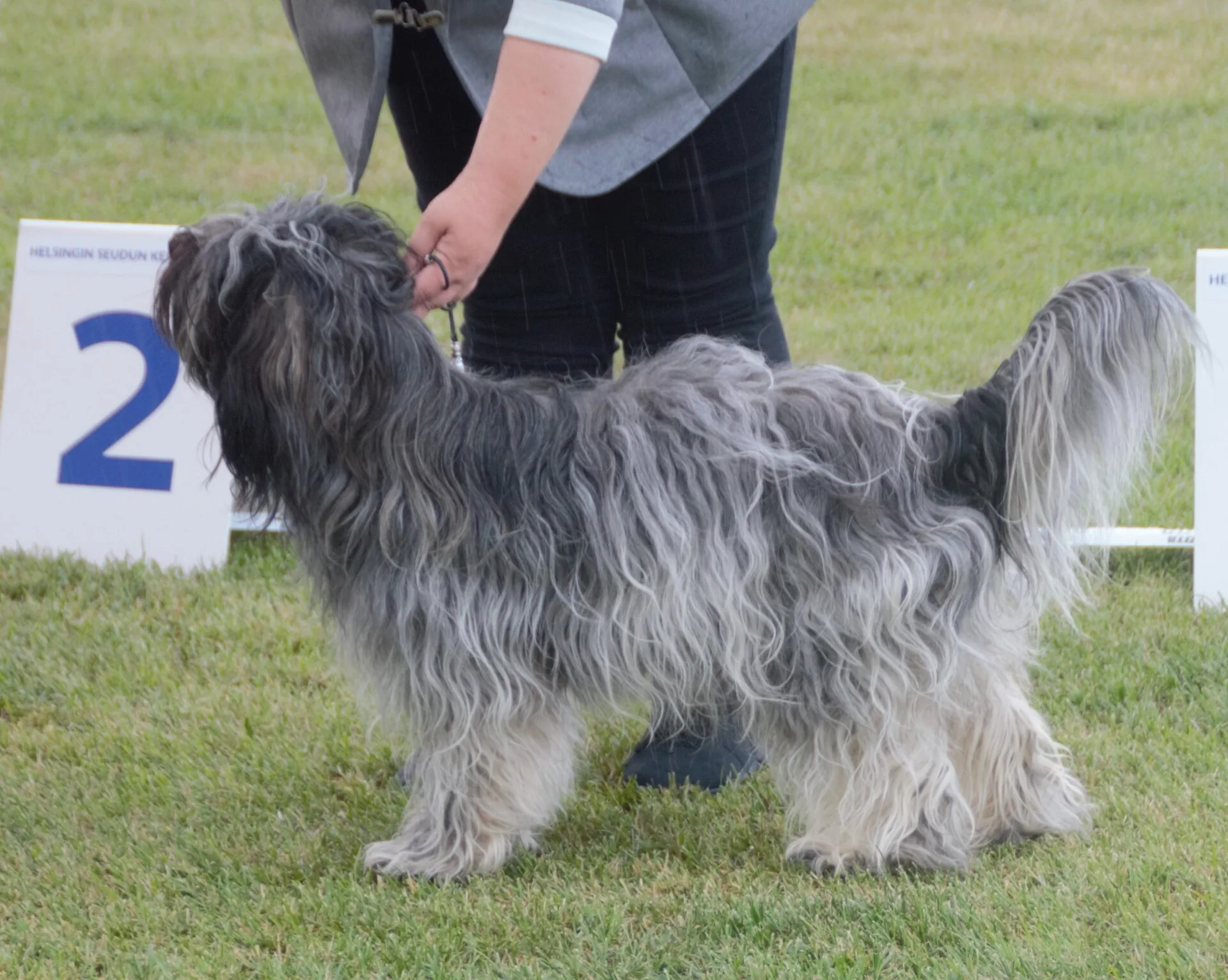
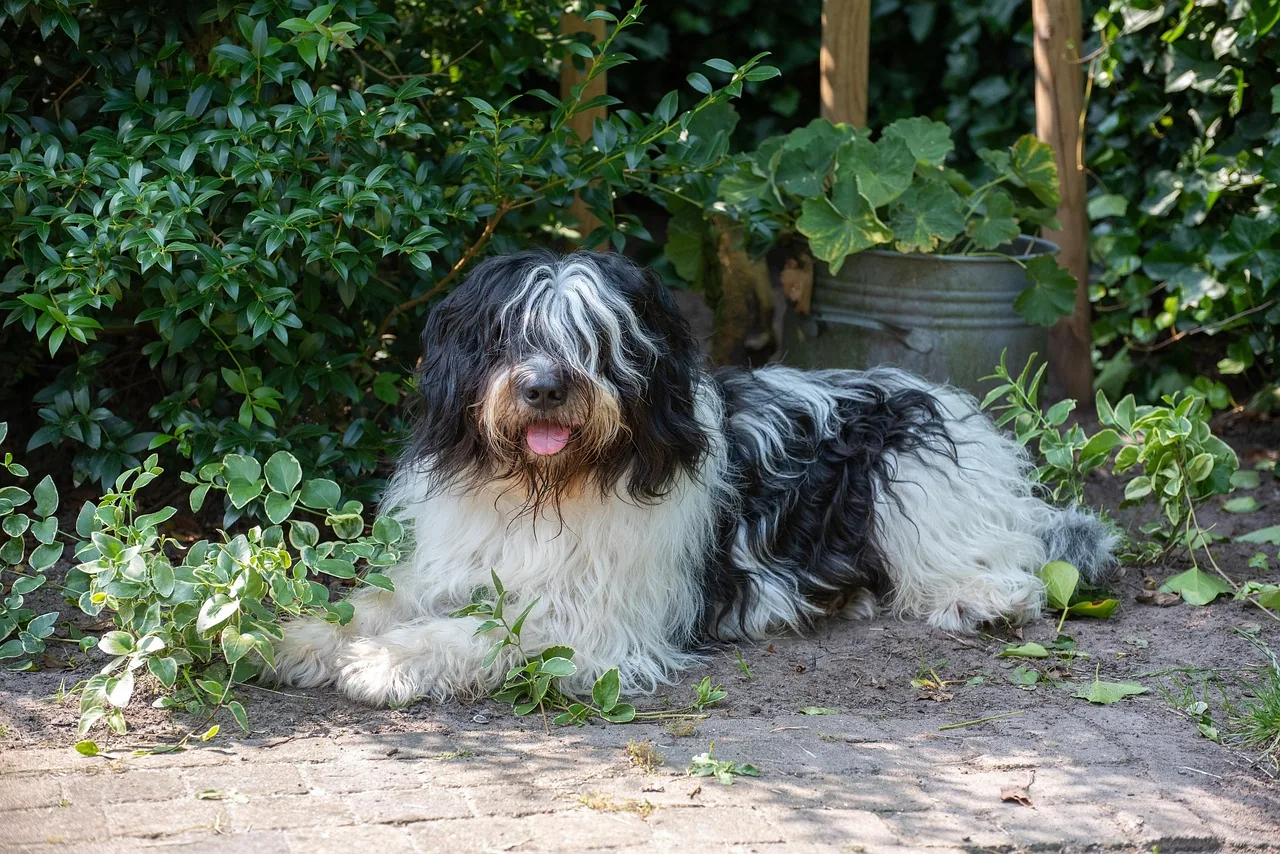
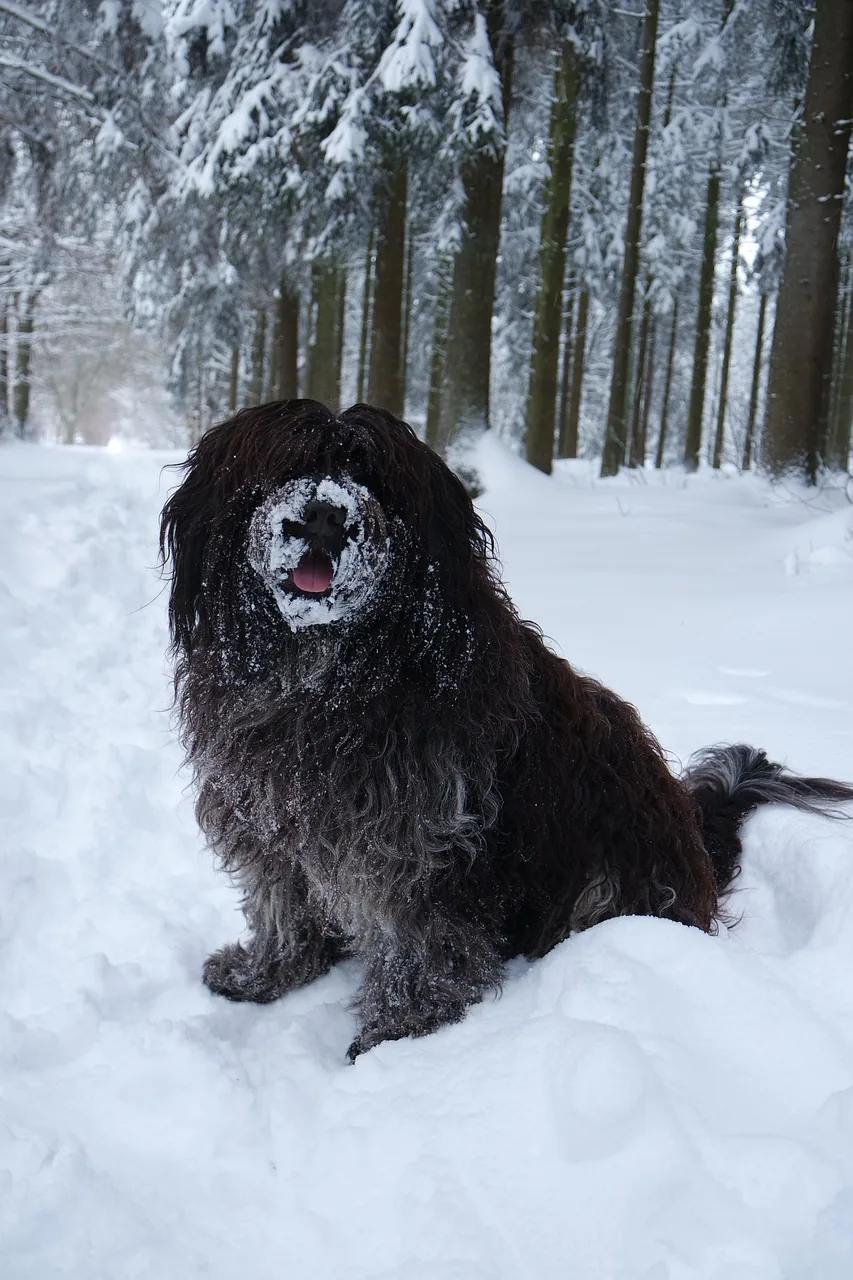
The FCI asks for a thick coat with sufficient undercoat, long, a good 7 cm or more over the hindquarters, not smooth but lightly waved. All colours are permitted, with preference for blue-grey to black. The coat is easy to manage if brushed right down to the skin two or three times a week, paying attention behind the ears, under the legs and on the trousers, where mats form. Wet weather and woodland burrs mean towelling and combing after outings.
Feeding and weight
Feed a complete, good-quality diet suited to a lively medium-sized dog, split into two meals. Adjust portions to activity, since a working-style dog on a sofa routine gains weight quickly under that thick coat, where it is easy to miss. Keep fresh water available and avoid vigorous exercise straight after a large meal.
Work out a starting calorie figure and food weight with the calorie calculator. Not sure this is the right breed? Take the quiz.
Health
Every breed carries predispositions. These are the conditions most often discussed for the Schapendoes, not a prediction for any individual dog.
- Progressive retinal atrophy (inherited eye disease leading to sight loss)
- Hip dysplasia (malformed hip joints)
- Epilepsy (seizure disorder)
- Ear infections (otitis externa, helped by hairy, well-covered ears)
What to ask the breeder. Ask for hip scores and current eye examination certificates for both parents, and whether any relatives have had seizures. A good breeder will explain openly which health checks the breed club recommends.
Choosing a puppy
Schapendoes puppies are fluffy, bouncy and quick to learn good and bad habits alike. Begin with short, frequent training moments, careful socialisation to lifts, trams, buses and city noise, and gentle handling of paws and ears. Introduce brushing early and reward calm tolerance, as a matted adolescent coat is miserable for everyone. Provide chews and puzzle toys to channel mouthiness, and teach calm alone-time in small steps from the first week.
In Luxembourg the national kennel club is the Fédération Cynologique Luxembourgeoise (FCL), a member of the FCI. Many owners also buy from breeders in Germany, France or Belgium; a puppy coming from another EU country must be microchipped and vaccinated against rabies, which in practice means it cannot travel before about fifteen weeks of age. Where to get a dog in Luxembourg.
The older Schapendoes
Many Schapendoes stay lively well into their ninth or tenth year, and the bounce fades only gradually. Shorter, more frequent outings and non-slip flooring help ageing hips. Check eyes for cloudiness or night-time hesitation and ask your vet about joint support. Keep the coat trimmed around the bottom and feet if grooming becomes harder for the dog. Keep up gentle games, as mental activity keeps the dog bright.
A realistic day
A realistic weekday for a working household in Luxembourg City, with a midday visit. Adjust it to your dog, not the other way round.
Quick toilet break and a 40-minute brisk walk, with a few minutes of recall practice and a ball game before breakfast.
Owner leaves for work; the dog settles with a stuffed toy and a window view, tired out and fed.
Midday visit: an energetic hour in Parc Merl or the Pétrusse valley, with training games and fresh water.
Evening outing of about an hour, preferably with off-lead running somewhere safe, then a brush and dinner.
Calm last toilet break, a short trick session to settle the mind, then bed.
A Schapendoes in Luxembourg
A Schapendoes can live in a Luxembourg flat if its exercise is honest. Lifts are fine once greeting manners are trained, but a dog that spins and barks on the landing is a trial for neighbours, so work on calm entries and exits. The breed likes company and does not enjoy long empty days, which matters for professionals working long hours in the city. A midday visit or daycare helps greatly.
Green space is the real asset: Parc Merl and the Pétrusse valley for daily outings, and the Bambësch and Grünewald forests for proper runs on free-flowing paths, subject to local rules and wildlife. The coat is warm in summer, when temperatures reach the 30s °C, so shift walks to early morning and late evening and watch for panting. Buses and trams are free nationwide, so excursions to quieter forests are easy once the dog is comfortable on public transport. The usual obligations apply: microchip, declaration to the commune, third-party liability insurance and the annual dog tax.
Every dog in Luxembourg must be identified, declared to the commune and covered by liability insurance. How registration works.
When you travel
A sitter needs a plan for the dog's energy more than for its needs: two proper outings a day, plus games and training, or boredom will show as barking and chewing. Brushing must continue daily, as mats form fast when the routine slips. Warn the sitter about leaping, herding of passers-by and a tendency to follow closely. Provide the usual routine, microchip details and vet contact, and keep the dog on a lead near roads.
PAWLY's holiday and overnight care takes place in your home, so your dog keeps its own bed and routine.
Myths and facts
MythA Schapendoes is just a smaller Old English Sheepdog.
FactThe two are separate breeds with different standards and origins. The Schapendoes is lighter, springier and far more athletic, with a lightly waved coat.
MythBecause of the long coat they need a professional groomer every few weeks.
FactThe standard does not call for clipping. Regular brushing to the skin at home does the job.
MythThey are only for farms.
FactWith enough exercise and mental work they adapt to flats, as long as they are not left alone for long days.
Is it the right dog for you?
Suits
- Active owners who enjoy training and dog sports
- Families with older, dog-confident children
- People who work from home or can arrange midday company
- Owners who enjoy grooming as a routine
Think twice if
- You are out of the house for long days with no midday help
- You want a low-maintenance coat
- You need a quiet dog that ignores visitors
- You cannot give daily running or training
Questions owners ask
Is the Schapendoes a good family dog?
Usually yes. The FCI describes a friendly, jolly and lively dog, and most are playful and affectionate with children. Their bounce can overwhelm toddlers, and herding instincts may lead to nudging, so supervise young children and teach calm greetings from puppyhood.
How much grooming does a Schapendoes need?
Brushing right to the skin two or three times a week keeps the coat comfortable, with extra care behind the ears and on the trousers. After wet or muddy outings a comb-through avoids mats. Plan for seasonal shedding and avoid cutting the coat short.
Can a Schapendoes live in a flat?
Yes, if it gets daily running, training and company. It is not a dog for long solitary days. Calm lift manners and consideration for neighbours matter, as a bouncy, vocal Schapendoes in a corridor can irritate others.
Are Schapendoes easy to find?
They are rare outside the Netherlands. Expect to contact breed clubs, join a waiting list and possibly travel. Be wary of sellers who offer puppies without health information about the parents.
Sources
Photo: Canarian, CC BY-SA 4.0, via Wikimedia Commons · Photo: Pixabay (Pixabay Content License) · Photo: Pixabay (Pixabay Content License)
General information for dog owners in Luxembourg, not veterinary or legal advice. Official facts (origin, size, group, history and temperament as described by the breed standard) follow the FCI standard; health and care sections reflect breed-club and veterinary guidance and are typical ranges rather than rules. For your own dog, ask your vet, the breed club or your commune. How this guide is written and checked. Last reviewed 8 October 2026.
Need someone for your Schapendoes?
PAWLY offers an individual 45-minute walk or a home visit at your dog's pace, the same walker every time, and a written report with photos after every visit, across Luxembourg City.
Read next: the journal, for the Schapendoes
All articles
Grooming and coat care through the Luxembourg year
The Schapendoes has a coat that needs a routine that holds through the Luxembourg seasons.

Choosing a groomer, and what to ask before you book
A coat like this usually means a groomer; this covers what to ask before you book.

How long can a dog really be left alone?
A sociable breed has a real limit on time alone; this is how to work it out.
Similar breeds
All 198 breeds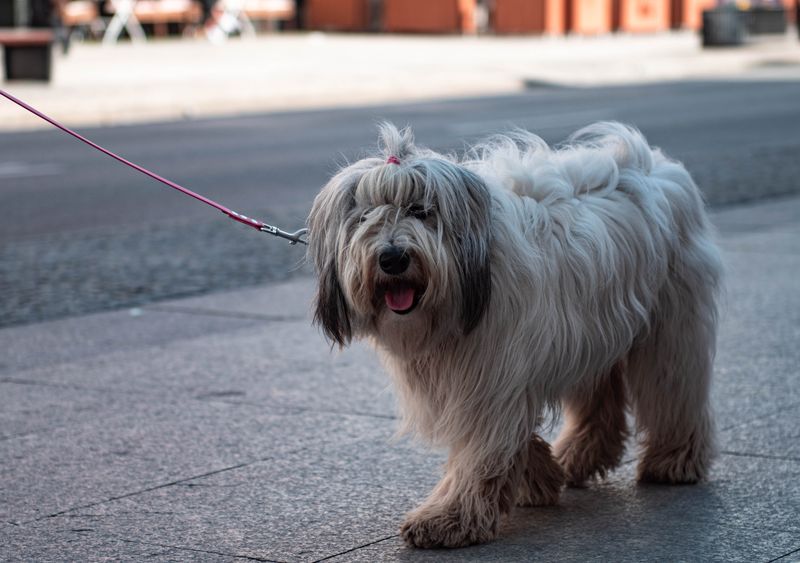
Polish Lowland Sheepdog
A shaggy, watchful Polish herder who looks through a fringe, remembers everything you taught it, and has views about how the household is run.
EnergyGroomingFlat life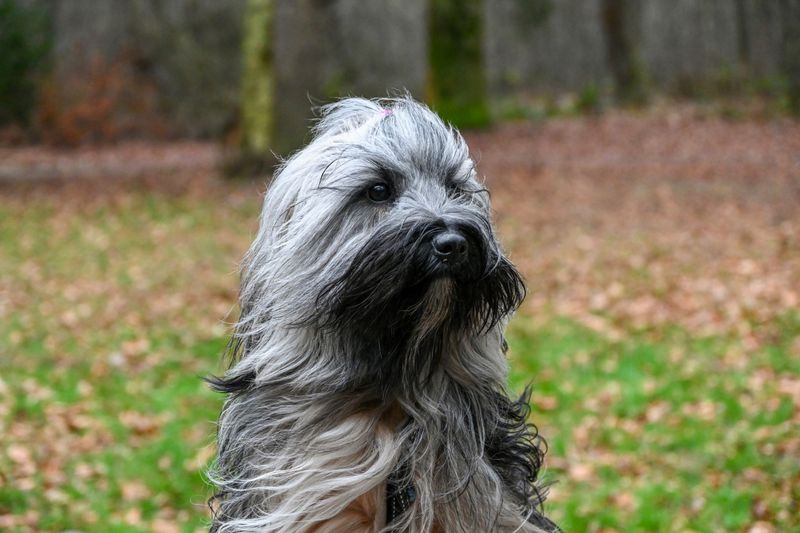
Bearded Collie
The shaggy, bouncing Scottish herder: cheerful, clever and always ready to join in.
EnergyGroomingFlat life
Border Collie
Probably the most capable working dog in the world, and for the same reason one of the hardest to keep in a city flat.
EnergyGroomingFlat life

