
History
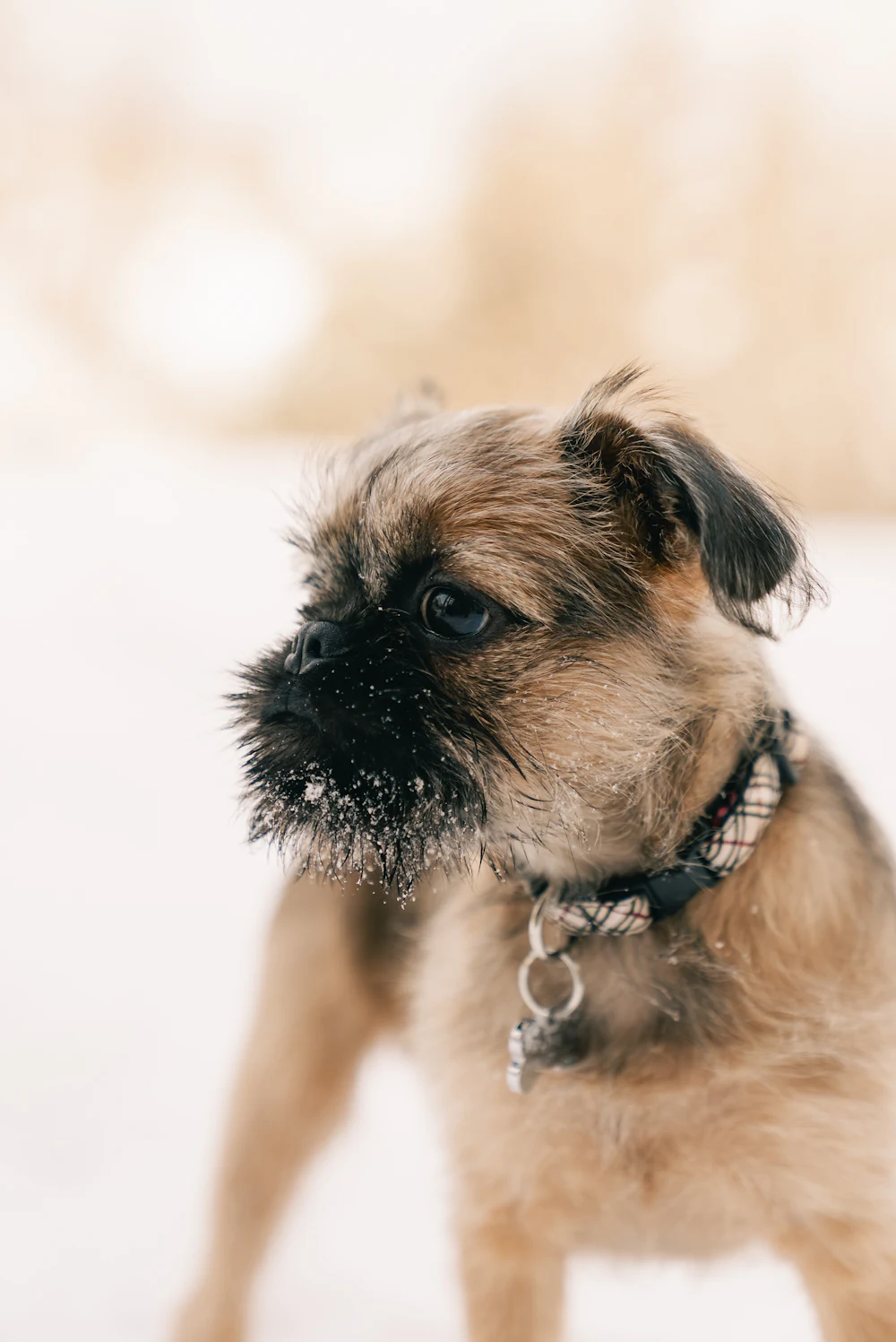
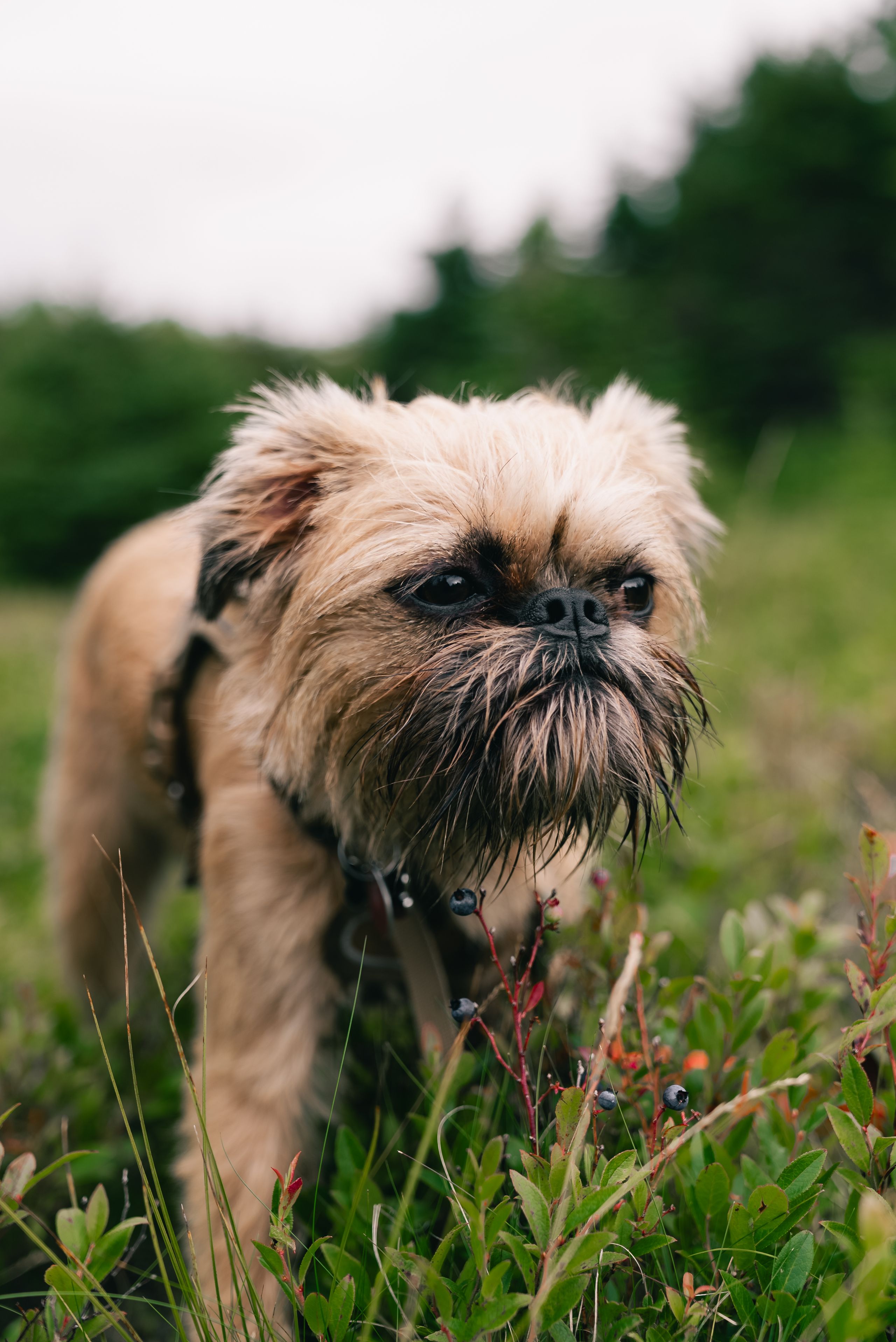
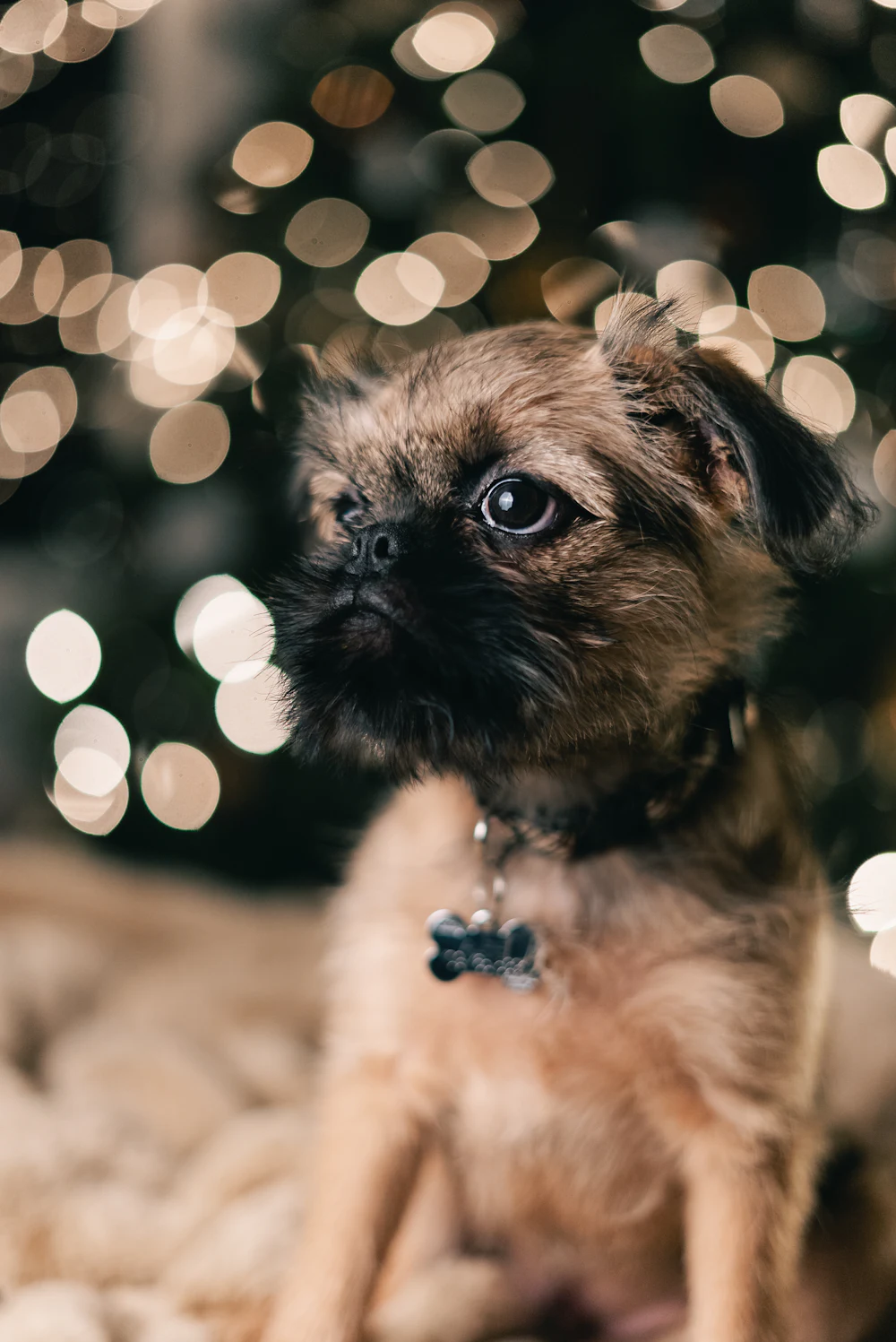
The FCI standard for the Brussels Griffon covers three types: the Griffon Bruxellois, the Griffon Belge and the Petit Brabançon. All three descend from the Smousje, a small rough-coated dog found in Brussels. During the nineteenth century breeders brought in King Charles Spaniel and Pug blood, which shaped the modern type, with its short face, large dark eyes and compact body. The standard lists the breed in Group 9, Section 3, Small Belgian Dogs.
The dogs were first registered in 1883, and the standard credits royal patronage and exports with spreading their popularity abroad. The three types differ mainly in coat and colour: the rough-coated Griffon Bruxellois is red or reddish, the Griffon Belge is black or black and tan, and the Petit Brabançon is smooth-coated, in the same colours as the Griffons with a dark mask. The standard describes a small, square dog with an intelligent, alert bearing and an almost human expression.
Temperament
The FCI describes a well-balanced little dog, alert, proud, very attached to its owner and very watchful, neither timid nor aggressive. That is a fair portrait. A Griffon is a bold, funny dog with strong opinions, and it sees itself as a full member of the household, not a lapdog. It follows its person around the flat, comments on visitors and wants to be consulted.
The same attachment has a cost. Griffons are sensitive, dislike being shut out, and some struggle with long hours alone, so a settled routine and gradual practice at being left matter from the start. They notice raised voices and unfairness, and respond badly to rough handling. A confident, humorous owner who keeps rules simple and rewards good behaviour will get a quick, charming and watchful companion.
Children and other pets
Griffons suit adults and older, gentle children who understand how to handle a very small dog. Toddlers can hurt one by accident, so supervise closely and teach children to let the dog come to them. Griffons can be touchy about rough play and resource guarding is possible. With other dogs they are usually sociable if introduced early, though they are happy to square up to a much larger dog. Cats are normally fine in a shared household.
Exercise and the daily walk
About 45 minutes a day is enough, ideally split into two or three outings plus play indoors. Griffons enjoy a brisk walk, a sniff around the park and a game of fetch or tug in the flat. They are lively rather than driven, and the exercise is as much about company and mental stimulation as about distance.
Take care in warm weather. The short face of the breed makes it harder to cool down, so walk early or late in summer, and carry water. In cold or wet weather a coat or a quick indoor session will do. Use a harness, not a collar, to protect the neck and airway, and watch for noisy or laboured breathing, which deserves a vet check.
Training
Griffons are clever and quick to learn, and they also negotiate. Training works best when it is short, upbeat and rewarded with tiny food treats or play. Housetraining can take patience in this size of dog, so keep a consistent routine, reward success at once and avoid punishment. They respond to calm leadership and soon sense a push-over.
Socialise a puppy early to people, traffic, lifts and other dogs, because a watchful dog can slide into yapping if it is not taught that the world is safe. Practise short separations from the first weeks, so the dog learns that you return. Teach a reliable recall and loose-lead walking, and avoid letting small behaviours, such as barking for attention, become habits.
Coat and grooming
The Griffon Bruxellois and Griffon Belge carry a rough, wiry coat, while the Petit Brabançon has a smooth, short coat. Colours are reddish for the Bruxellois, black or black and tan for the Belge, and the Brabançon shares those colours with a dark mask. Brush weekly, and expect the rough coat to need hand-stripping a few times a year to stay tidy; clipping changes its texture. Shedding is light. Clean the beard after meals and check the eyes, which are prominent.
Feeding and weight
Feed measured portions of a complete small-breed diet in two meals, and use treats sparingly, because a few extra biscuits matter in a dog this small. Weight gain strains the joints and the airways of a short-faced breed. Small dogs can have crowded teeth, so ask your vet about dental care, and fresh water should always be available. Adjust portions as the dog ages.
Work out a starting calorie figure and food weight with the calorie calculator. Not sure this is the right breed? Take the quiz.
Health
Every breed carries predispositions. These are the conditions most often discussed for the Brussels Griffon, not a prediction for any individual dog.
- Breathing difficulties linked to the short face (brachycephalic airway syndrome)
- Eye problems, because the large eyes are prominent and easily injured
- Patellar luxation (a slipping kneecap)
- Syringomyelia, a spinal fluid condition
- Dental crowding and early tooth loss
What to ask the breeder. Ask the breeder for the parents' eye, knee and heart checks and any screening for syringomyelia, and ask whether the dogs breathe quietly and easily.
Choosing a puppy
A toy puppy is delicate. Ask the breeder about the parents' health checks, and see the mother and her litter. Offer a warm, safe resting spot, short play periods and frequent small meals. Start handling, brushing and lift and street practice early, and teach short separations gradually. Stop the puppy jumping from sofas, which can injure small joints, and use a harness from the start.
In Luxembourg the national kennel club is the Fédération Cynologique Luxembourgeoise (FCL), a member of the FCI. Many owners also buy from breeders in Germany, France or Belgium; a puppy coming from another EU country must be microchipped and vaccinated against rabies, which in practice means it cannot travel before about fifteen weeks of age. Where to get a dog in Luxembourg.
The older Brussels Griffon
A healthy Griffon can live well into its teens. In later years watch teeth, eyes and breathing, and keep the dog lean. Stiffness, coughing, a change in appetite or a cloudy eye deserves a vet visit. Keep walks regular but shorter, and protect the dog from heat and cold. A soft bed, steps up to the sofa and a calm routine help an older Griffon stay comfortable.
A realistic day
A realistic weekday for a working household in Luxembourg City, with a midday visit. Adjust it to your dog, not the other way round.
A short toilet walk and some sniffing nearby, in good weather a longer loop.
Breakfast and a quick brush, with a toy to settle the dog before you leave.
Midday visit: a toilet break, fresh water, a cuddle and a short game.
A varied walk in the park, with a few minutes of training.
A last short outing and a calm evening on the sofa.
A Brussels Griffon in Luxembourg
A Brussels Griffon fits Luxembourg flat life well. It is small enough to be carried into any lift, content with a short walk and an indoor game, and happy to ride a free bus or tram in a bag or on a short lead. The main challenge is being alone, because many Griffons dislike an empty flat, so a midday visit is a real help for a working owner.
Heat is the other point. Summers that reach the 30s are hard on a short-faced dog, so walk early and late, keep to shade and cool flooring, and never leave the dog in a parked car. In winter a coat helps. Parks such as the Pétrusse valley, Parc Merl and the Municipal Park suit short outings. Every dog must be microchipped, declared to the commune and insured, and the commune charges an annual dog tax.
Every dog in Luxembourg must be identified, declared to the commune and covered by liability insurance. How registration works.
When you travel
Griffons bond tightly, so a sitter should be someone the dog knows or can meet in advance. Leave a written routine with feeding quantities, toilet times and any medication. Keep the dog on a harness outdoors, avoid heat, and watch for breathing changes. Many dogs fret when the owner is away, so a sitter who can stay close to the dog, with its own bed and toys, helps.
PAWLY's holiday and overnight care takes place in your home, so your dog keeps its own bed and routine.
Myths and facts
MythA Griffon is just a lapdog that needs no exercise.
FactIt is lively and curious and needs daily outings and mental stimulation, not only a sofa.
MythSmall dogs do not need training.
FactGriffons are clever and opinionated, and without clear, consistent guidance they bark, guard and refuse to settle.
MythAll three types are the same breed.
FactThe FCI standard covers three types, with different coats and colours, which share a common origin and standard.
Is it the right dog for you?
Suits
- Owners who are home often or can arrange a midday visit
- Flat dwellers wanting a compact companion
- Gentle households with older children
- People who enjoy a dog with personality
Think twice if
- You are out all day with no help at midday
- You have toddlers who will handle a tiny dog roughly
- You dislike barking or grooming a rough coat
Questions owners ask
Do Brussels Griffons bark a lot?
They are watchful and can be vocal, particularly if bored or left alone. Early training, enough exercise and a calm routine reduce it, though a Griffon will always tell you when someone is at the door.
Is the rough coat difficult to look after?
Not really, but it needs a weekly brush and hand-stripping a few times a year by a groomer who knows the breed. Clipping can change the coat's texture and colour.
Can a Brussels Griffon be left alone?
Some cope for a few hours, but many are very attached and fret. Build up absences slowly and arrange a midday visit if you work a full day. A neighbour or walker dropping in makes the day easier.
How much does a Brussels Griffon weigh?
The FCI standard gives 3.5 to 6 kg. It does not specify height. They are a small, square dog, light enough to lift easily, and a short walk in the park makes a good outing.
Sources
Photo: Unsplash (Unsplash License) · Photo: Pexels (Pexels License) · Photo: Unsplash (Unsplash License)
General information for dog owners in Luxembourg, not veterinary or legal advice. Official facts (origin, size, group, history and temperament as described by the breed standard) follow the FCI standard; health and care sections reflect breed-club and veterinary guidance and are typical ranges rather than rules. For your own dog, ask your vet, the breed club or your commune. How this guide is written and checked. Last reviewed 8 October 2026.
Need someone for your Brussels Griffon?
PAWLY offers an individual 45-minute walk or a home visit at your dog's pace, the same walker every time, and a written report with photos after every visit, across Luxembourg City.
Read next: the journal, for the Brussels Griffon
All articles
Dogs in hot weather: the Luxembourg summer guide
Flat-faced and short-nosed breeds like the Brussels Griffon overheat quickly, which matters in a Luxembourg summer.

Long-backed breeds, stairs and the spine
A long back makes stairs matter more than most owners think.

Teeth: the problem owners find least interesting and vets see most
Teeth are a known weak point in the Brussels Griffon; this is the routine that helps.
Similar breeds
All 198 breeds
Pug
An ancient Chinese companion breed, affectionate and comic, whose flat face brings real health limits.
EnergyGroomingFlat life
Pekingese
The Chinese palace lion dog: dignified, stubborn, devoted, and much sturdier in spirit than in size.
EnergyGroomingFlat life
Miniature Pinscher
A small German house dog with a high-stepping trot and a guard dog's opinion of itself, bold, quick and endlessly alert.
EnergyGroomingFlat life

