
History
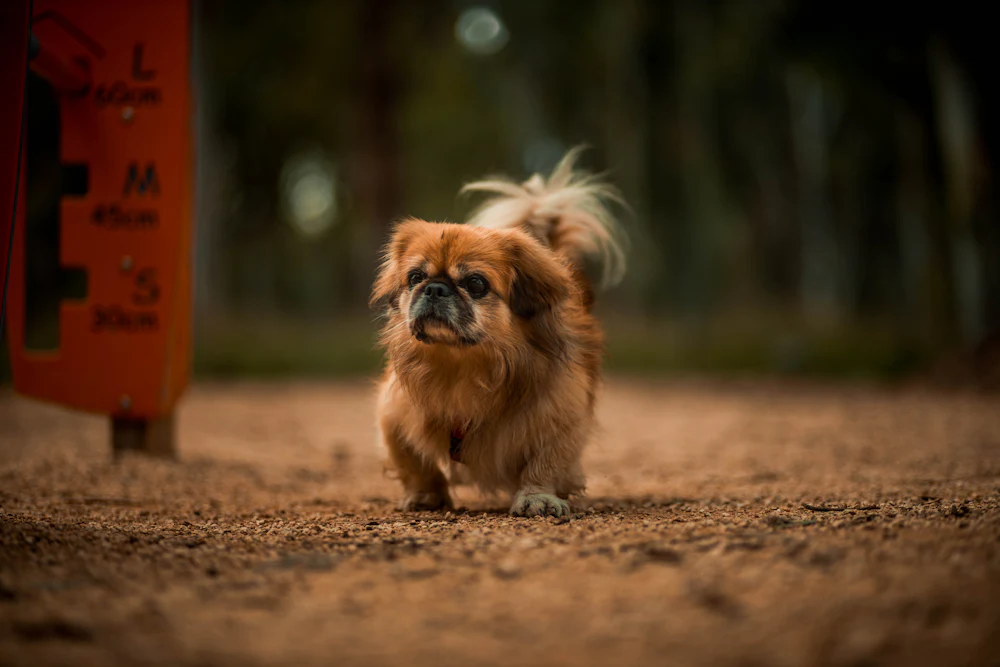
The Pekingese comes from China, where it was kept inside the imperial palaces for centuries and valued as a small lion dog. The FCI standard still describes it as leonine, with an alert and intelligent expression, and the patronage of the breed in the FCI system is held by Great Britain. Its look was shaped in palace life, where it was a companion first and never a working dog.
The breed reached the West after the British sacked the Summer Palace in Beijing in 1860. Several Pekingese were taken to England, including one presented to Queen Victoria, and the breed soon became fashionable. The FCI classes it as a companion dog in Group 9, Section 8, alongside the Japan Chin. The standard asks for dignity and quality, and it states that respiratory distress and unsound movement are unacceptable and heavily penalised.
Temperament
The FCI sums the Pekingese up in four words: fearless, loyal, aloof, and neither timid nor aggressive. Anyone who has shared a sofa with one will agree. These are proud, independent little dogs with the self-possession of a much larger animal, loyal to their own household but often indifferent to visitors, and unimpressed by commands they find pointless.
The standard asks for a dog that looks small but is surprisingly heavy when picked up, with heavy bone and a sturdy body, and the character matches the build. A Pekingese is affectionate on its own terms and often bold with larger dogs, which is the habit that gets it into trouble. It dislikes rough handling, tends to choose one favourite person, and may sulk or simply walk away when asked to do something undignified.
Children and other pets
A Pekingese suits gentle, older children who respect a small dog. It will not tolerate being squeezed, grabbed or carried roughly, and a snap is a real risk with toddlers who cannot read warning signs. Adults must supervise and teach children to let the dog approach. Most Pekingese live peacefully with calm cats and other small dogs, but they can be bold towards bigger dogs and may need protection from their own confidence.
Exercise and the daily walk
Half an hour to three-quarters of an hour a day is enough for most adults, split into short, gentle outings. A Pekingese is a flat-faced breed with a profuse coat, so it overheats easily and should not be asked to trot beside a bicycle or follow a jogger. Choose the cool hours of early morning and evening, and carry water.
Indoor play suits the breed well: a short game with a soft toy, a sniff around the garden or courtyard, a trick or two for a treat. The FCI standard penalises respiratory distress, which is a reminder that breathing comfort matters more than distance. If the dog is snoring heavily, struggling or stopping on walks, go home and ask the vet to look.
Training
Pekingese are intelligent and stubborn, and the usual rule applies: ask once, reward well, and do not repeat yourself. Reward-based training with patience works, while force and repeated drilling only produce a dog that stares politely into the middle distance. Keep sessions short, use tiny, soft treats and accept that dignity is part of the package.
Use a well-fitted harness rather than a collar, because pressure on the neck is unwise in a flat-faced breed with a delicate windpipe. Practise handling of the paws, face and ears from puppyhood so that grooming and vet checks become routine. House training can be slow, so be consistent, and teach a reliable recall in a safe, quiet space even if the dog sometimes chooses to ignore it.
Coat and grooming
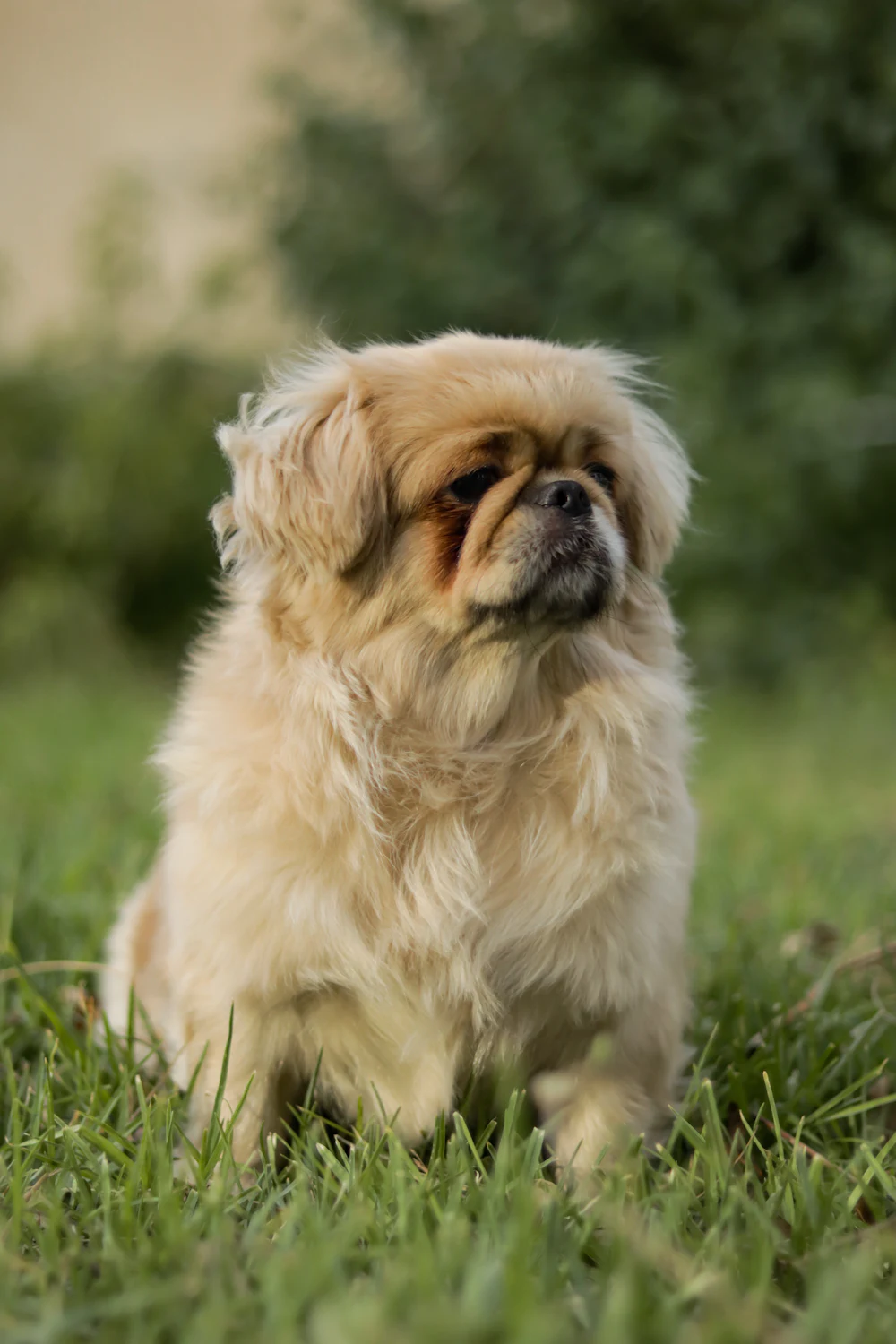
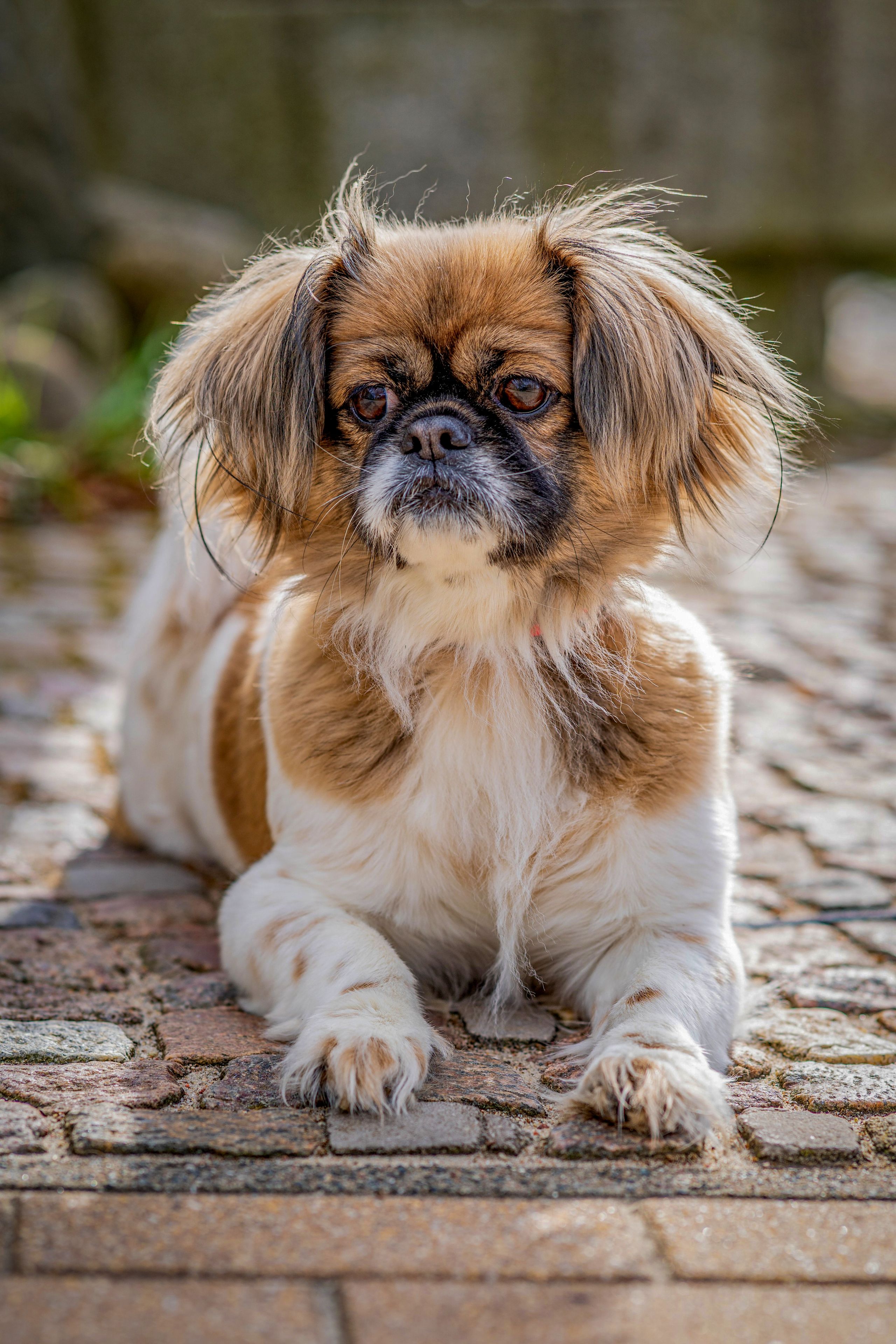
The FCI describes a moderately long, straight coat with a mane that does not extend beyond the shoulders, a coarse top coat over a thick, softer undercoat, and feathering on the ears, legs, tail and toes. An excessive coat is penalised. Brush most days, especially in the feathering and behind the ears, and clean and dry the face folds daily. All colours and markings are permitted, except albino and liver. Many owners choose a shorter trim for comfort.
Feeding and weight
Pekingese are small but gain weight easily, and extra kilos make breathing, heart and back problems worse. Measure each meal, count treats as part of the ration and weigh the dog regularly. Small kibble or softened food can suit a flat face, and a raised bowl is sometimes easier. Keep water available, particularly in summer, and ask the vet for a target weight.
Work out a starting calorie figure and food weight with the calorie calculator. Not sure this is the right breed? Take the quiz.
Health
Every breed carries predispositions. These are the conditions most often discussed for the Pekingese, not a prediction for any individual dog.
- Brachycephalic airway syndrome (noisy, laboured breathing)
- Eye injuries and corneal ulcers
- Mitral valve disease (a heart condition)
- Intervertebral disc disease (back problems)
- Skin-fold infections
- Heat stroke
What to ask the breeder. Ask whether the parents have had a breathing assessment where one is offered, a heart check and an eye examination. Ask too whether the breeder aims for open nostrils and a longer muzzle.
Choosing a puppy
Choose a breeder who puts health first. A Pekingese with open nostrils, a slightly longer muzzle and clear, dry eyes will breathe and live better, and the FCI standard itself penalises respiratory distress. Ask about heart and eye health, meet the mother, and see how the puppies cope with warm weather and play. Start handling, brushing and short car or lift trips early.
In Luxembourg the national kennel club is the Fédération Cynologique Luxembourgeoise (FCL), a member of the FCI. Many owners also buy from breeders in Germany, France or Belgium; a puppy coming from another EU country must be microchipped and vaccinated against rabies, which in practice means it cannot travel before about fifteen weeks of age. Where to get a dog in Luxembourg.
The older Pekingese
Older Pekingese slow down and snore more, and some become more stubborn still. Watch for noisy breathing, coughing, eye redness or squinting, and any reluctance to jump or climb, which can point to back pain. Keep the dog lean and cool, brush gently, and see the vet promptly for eye problems, which can worsen quickly. Soft bedding and ramps spare the spine.
A realistic day
A realistic weekday for a working household in Luxembourg City, with a midday visit. Adjust it to your dog, not the other way round.
A short, gentle walk while it is still cool, then a toilet stop.
Breakfast and a quick brush, with a wipe of the face folds.
Midday visit indoors, with water, a short toilet trip and a cuddle if the dog wants one.
Gentle evening walk, shaded in summer.
Final short walk and a last wipe of the face before bed.
A Pekingese in Luxembourg
A Pekingese is a natural flat dog for a calm owner: small enough for lifts, content with short outings and happy to survey the household from a cushion. Walks around the Pétrusse valley, Parc Merl or the Municipal Park are plenty, and many owners carry the dog on busy pavements or in a bag on trams and buses, which are free nationwide.
The real danger is summer heat. When the temperature reaches the 30s, walk only in the early morning or late evening, avoid hot pavements, keep the flat cool and never leave the dog in a parked car. In winter the coat copes well, but check the eyes after walks through undergrowth. Register and microchip the dog, take out third-party liability insurance and expect an annual dog tax.
Every dog in Luxembourg must be identified, declared to the commune and covered by liability insurance. How registration works.
When you travel
Introduce the sitter first, because Pekingese are choosy about people and may refuse to cooperate with a stranger. Keep the home cool, follow the brushing and face-cleaning routine, and avoid strenuous walks in warm weather. Leave notes on food, the vet and the dog's signals, and tell the sitter that rough handling is not tolerated.
PAWLY's holiday and overnight care takes place in your home, so your dog keeps its own bed and routine.
Myths and facts
MythPekingese are lap dogs.
FactThey enjoy a lap, but they have the personality of a much bigger dog and are bold, proud and independent.
MythShort walks mean no exercise is needed.
FactThey need gentle daily activity to stay fit, but heat and effort must be managed carefully.
MythSnoring and snorting are normal.
FactSome noise is common in flat-faced dogs, but loud, laboured breathing is a health problem and deserves a vet check.
Is it the right dog for you?
Suits
- Calm households
- Flat-dwellers
- Owners who enjoy grooming
- People who like a dignified, independent dog
Think twice if
- Homes with young children
- Hot, poorly ventilated flats
- People who want an obedient, eager dog
- Anyone who dislikes daily grooming
Questions owners ask
Can a Pekingese be left alone?
For short periods, yes, if the home is cool and the dog is used to it. They are loyal and prefer company, so a midday visit helps on long working days.
Does a Pekingese have breathing problems?
Many do, because of the flat face, and the FCI standard penalises respiratory distress. Choose a breeder who breeds for open nostrils and a longer muzzle, and keep the dog cool and lean.
Does a Pekingese need professional grooming?
Not necessarily, but the long coat needs daily care to avoid mats. Some owners use a groomer for a shorter trim, and the face folds need a daily wipe whatever the length.
How big does a Pekingese grow?
The FCI gives weight limits of about 5 kg for dogs and 5.4 kg for bitches, and no height. Most adults are small, sturdy and surprisingly heavy for their size.
Sources
Photo: Unsplash (Unsplash License) · Photo: Unsplash (Unsplash License) · Photo: Pexels (Pexels License)
General information for dog owners in Luxembourg, not veterinary or legal advice. Official facts (origin, size, group, history and temperament as described by the breed standard) follow the FCI standard; health and care sections reflect breed-club and veterinary guidance and are typical ranges rather than rules. For your own dog, ask your vet, the breed club or your commune. How this guide is written and checked. Last reviewed 8 October 2026.
Need someone for your Pekingese?
PAWLY offers an individual 45-minute walk or a home visit at your dog's pace, the same walker every time, and a written report with photos after every visit, across Luxembourg City.
Read next: the journal, for the Pekingese
All articles
Dogs in hot weather: the Luxembourg summer guide
Flat-faced and short-nosed breeds like the Pekingese overheat quickly, which matters in a Luxembourg summer.

Long-backed breeds, stairs and the spine
A long back makes stairs matter more than most owners think.

Getting weight off a dog, and keeping it off
Extra weight is hard on a long spine.
Similar breeds
All 198 breeds
Shih Tzu
The little lion dog of the Chinese court: calm, friendly and made for companionship.
EnergyGroomingFlat life
Pug
An ancient Chinese companion breed, affectionate and comic, whose flat face brings real health limits.
EnergyGroomingFlat life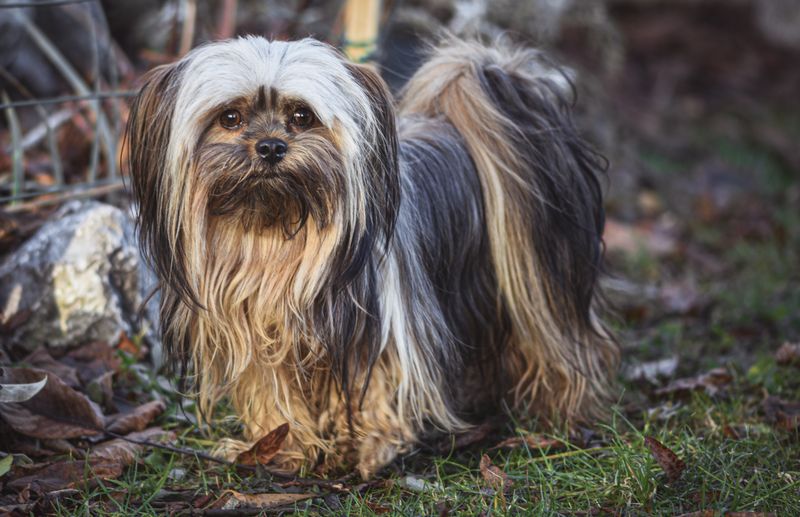
Lhasa Apso
A small Tibetan watchdog in a long coat, confident and a little aloof, who decides for itself who deserves its attention.
EnergyGroomingFlat life

