


History
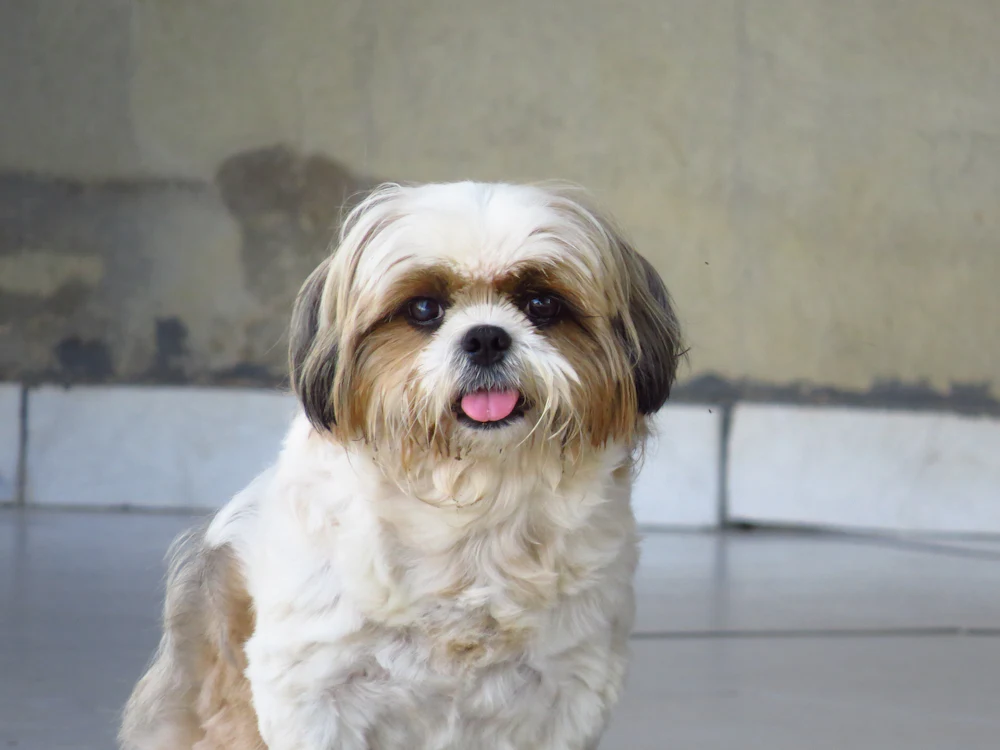
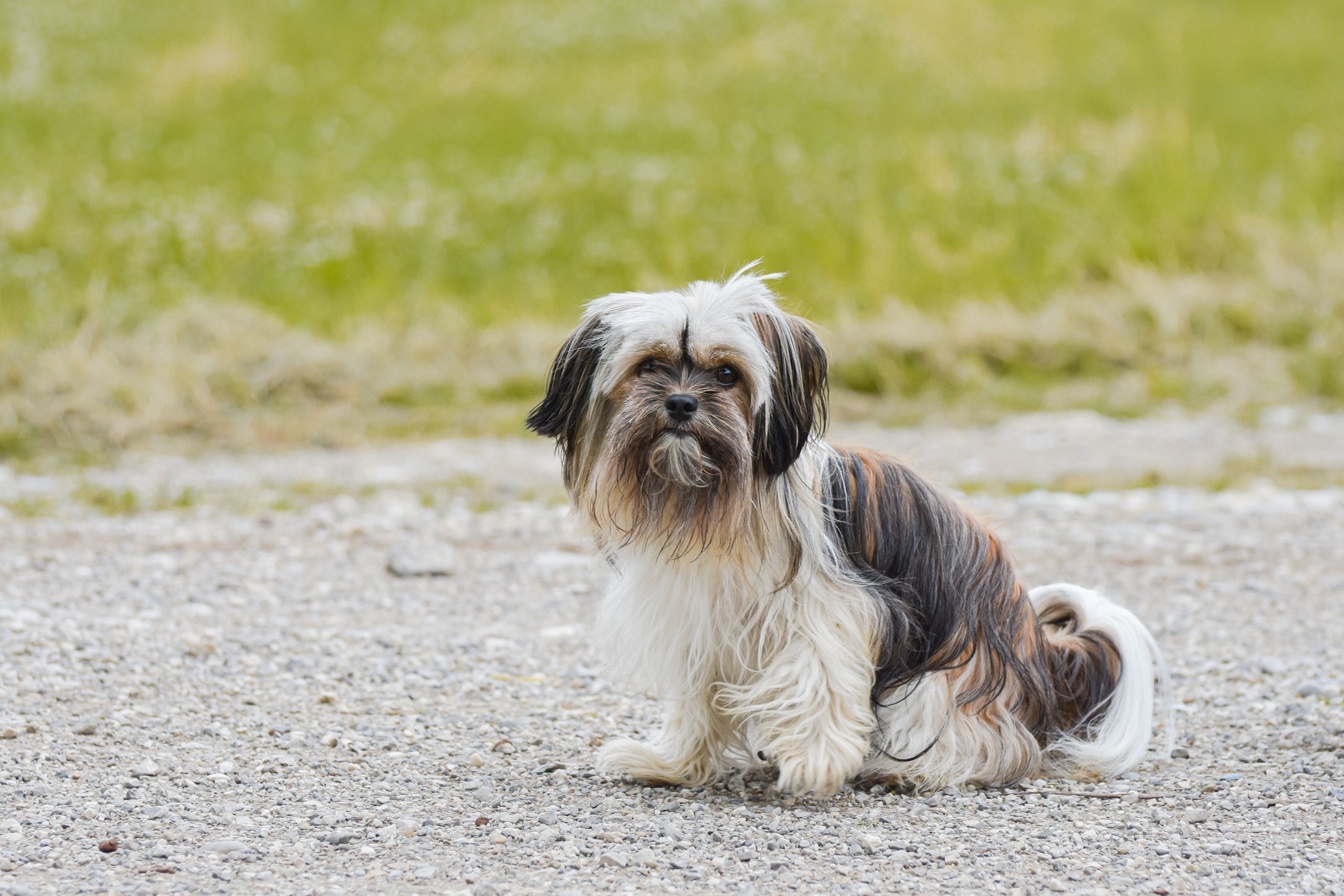
The FCI gives the origin as Tibet (China) with Great Britain holding the patronage of the standard. The Shih Tzu developed in China from Tibetan roots and lived in the imperial palaces, where it was a companion rather than a worker. The name is usually translated as lion dog. The standard lists its use simply as companion dog, and describes a sturdy, abundantly but not excessively coated dog with a distinctly arrogant carriage and a chrysanthemum-like face.
After China became a republic in 1912, examples of the breed reached the West. The FCI records Britain's first recorded import in 1931, official recognition of the breed in 1934, separate registration with the Kennel Club in 1940 and challenge certificates from 1949. The chrysanthemum look comes from hair on the bridge of the nose growing upwards. The FCI places the breed in Group 9, Section 5, Tibetan breeds, and the current standard is dated August 2017.
Temperament
The FCI describes the Shih Tzu as intelligent, active and alert, friendly and independent. That mixture explains the breed better than the lapdog label does. A Shih Tzu is cheerful and outgoing, and it enjoys company, but it also has a mind of its own and will decide when it has had enough of a game or a cuddle. The carriage is the one the standard calls arrogant, with the plumed tail carried gaily over the back.
Compared with many small breeds, Shih Tzus are less terrier-like, which is to say less sharp, less noisy and less interested in confrontation. They are generally good with strangers, children and other dogs, and happy to settle once the household routine is clear. Independence shows in house training, which can be slow, and in a polite refusal to do things that seem pointless. Most are not guard dogs, though many will announce visitors with a short bark.
Children and other pets
Shih Tzus are usually patient with children and friendly with other dogs and cats, which makes them a good choice for mixed households. Teach children to lift and handle the dog gently, and protect the large, round eyes from pokes and from boisterous play with bigger dogs. A Shih Tzu is small enough to be injured by an accidental fall, so supervise toddlers.
Exercise and the daily walk
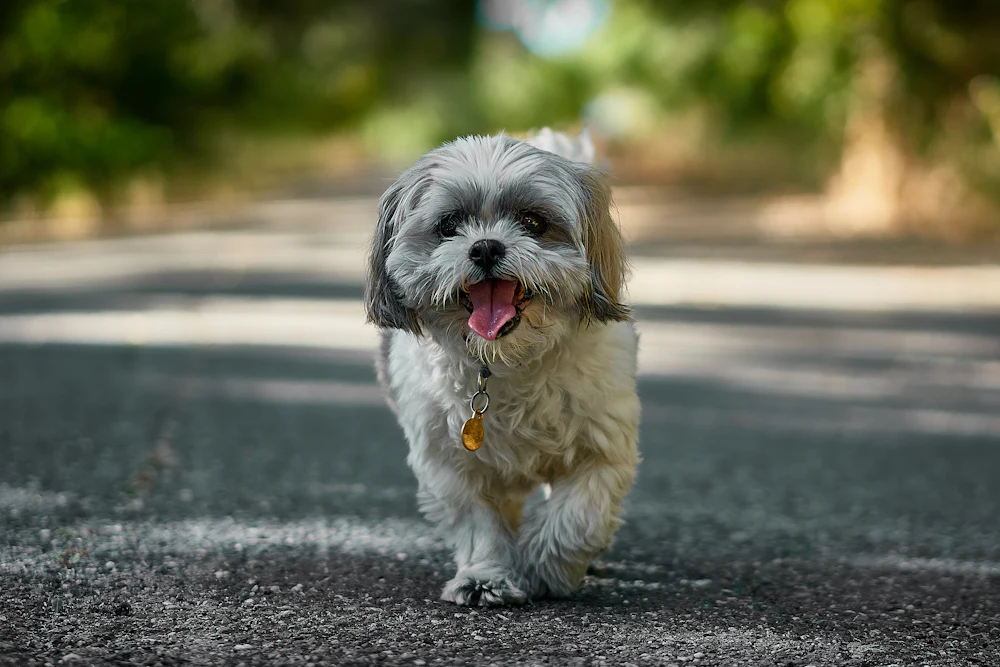
Short, relaxed walks and play, about 30 to 60 minutes a day in total, are enough. The Shih Tzu was bred as a palace companion, and its idea of exercise is a stroll, some sniffing and a game, followed by a long sleep. A lively chase with a toy or a few minutes of trick training add variety on days when the weather is poor.
The face is short, so the breed can struggle in heat and humidity. Keep summer walks gentle, in the cool of early morning or evening, and carry water. Use a harness rather than a collar to protect the neck. Watch the eyes on windy days and in long grass, where seeds and scratches can cause trouble, and wipe the face after outings.
Training
Shih Tzus are friendly and generally cooperative, but house training can be slow. Consistency, frequent outings and praise do the job, and a regular routine matters more than any trick. They respond poorly to harshness: a scolded Shih Tzu sulks rather than learns. Short sessions with small treats suit the breed's attention span.
Get them used to grooming, eye cleaning and tooth brushing early. A Shih Tzu that enjoys being handled is far easier to care for over a long life, and the coat gives you plenty of chances to practise. Socialise with different people, dogs and noises, and teach a calm greeting so that a small dog does not become a pavement tyrant.
Coat and grooming
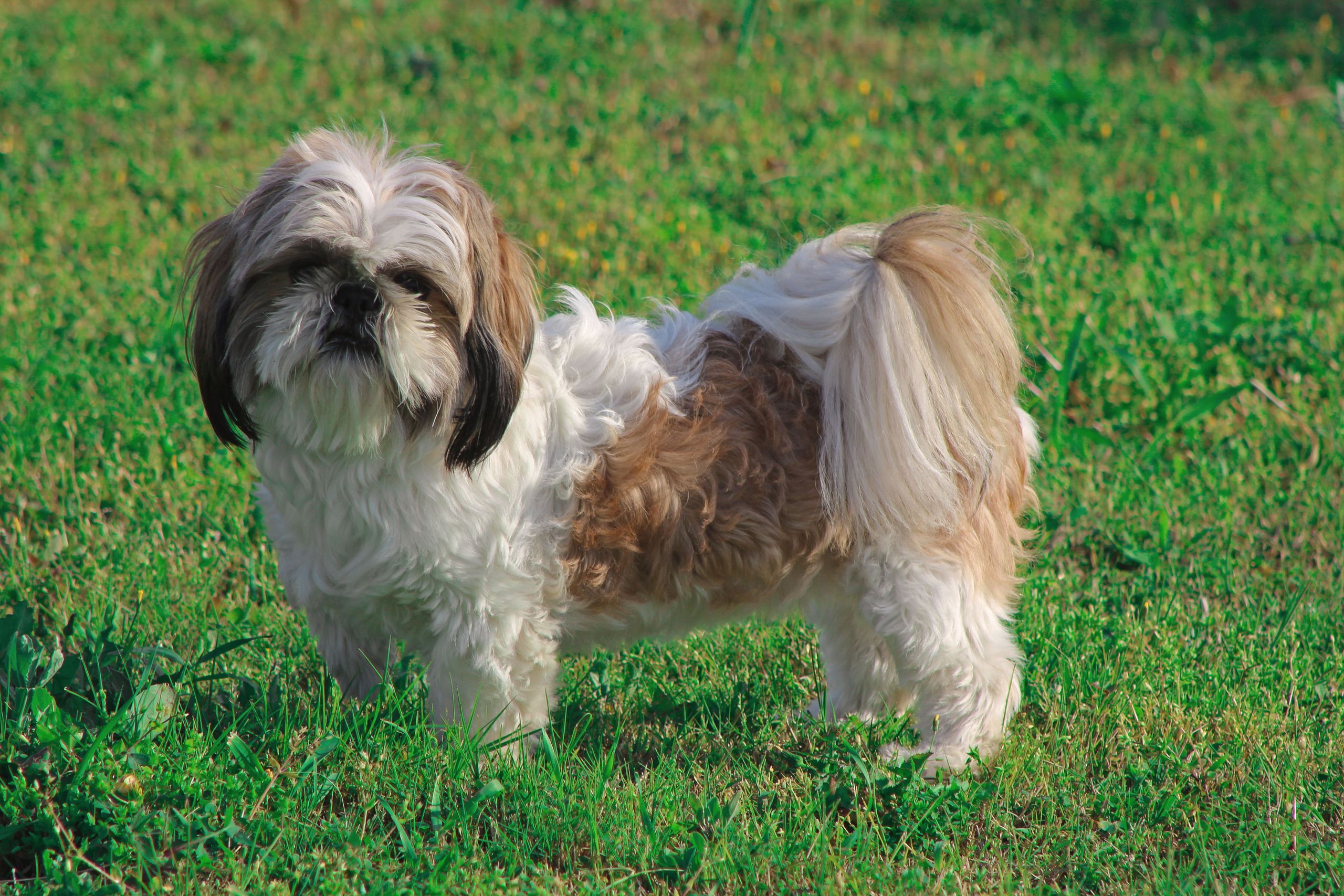
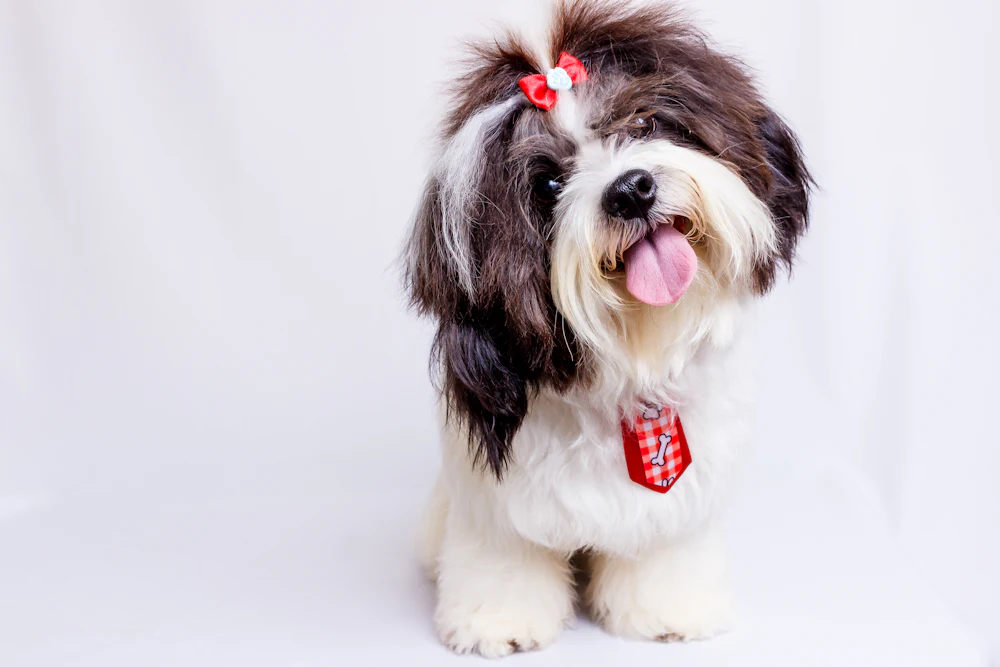
The FCI describes an outer coat that is long, dense and not curly, with a moderate undercoat, and all colours are permitted. The coat is the main commitment. A full coat needs daily brushing down to the skin to avoid mats. Most owners keep a short puppy cut with a professional groom every four to eight weeks. Tie up or trim hair around the eyes, and keep the face clean. Shedding is light.
Feeding and weight
Measured meals suit the breed, which gains weight easily, and excess weight makes breathing harder. Small kibble or small pieces help dogs with short jaws and crowded teeth. Some Shih Tzus have sensitive stomachs, so change food gradually and keep treats modest. Clean the beard after meals, since food collects in the long hair. Fresh water should always be available, particularly in summer.
Work out a starting calorie figure and food weight with the calorie calculator. Not sure this is the right breed? Take the quiz.
Health
Every breed carries predispositions. These are the conditions most often discussed for the Shih Tzu, not a prediction for any individual dog.
- Brachycephalic airway problems (noisy breathing and heat intolerance in short-faced dogs)
- Eye problems, as the large eyes are prone to ulcers and dryness
- Dental disease (crowding in a short jaw)
- Patellar luxation (slipping kneecaps)
- Renal dysplasia in some lines (a kidney developmental disorder)
What to ask the breeder. Ask for an eye examination and patella checks for both parents, and about breathing and kidney problems in the lines.
Choosing a puppy
Ask for eye and patella checks of the parents, and about breathing and kidney problems in the lines. Choose a puppy with open nostrils and clear, healthy eyes, and meet the mother. Begin grooming practice, eye cleaning and short, positive house training straight away, and keep the coat short while the puppy is small and learning to enjoy being brushed.
In Luxembourg the national kennel club is the Fédération Cynologique Luxembourgeoise (FCL), a member of the FCI. Many owners also buy from breeders in Germany, France or Belgium; a puppy coming from another EU country must be microchipped and vaccinated against rabies, which in practice means it cannot travel before about fifteen weeks of age. Where to get a dog in Luxembourg.
The older Shih Tzu
Eyes and teeth need extra attention with age, so book regular dental checks and have the vet look at the eyes. Keep walks gentle and regular, maintain a healthy weight and provide steps for the sofa and bed to protect the back and knees. A short clip makes grooming easier for an older dog, and warm, quiet rest areas suit a breed that likes company.
A realistic day
A realistic weekday for a working household in Luxembourg City, with a midday visit. Adjust it to your dog, not the other way round.
A gentle walk and a toilet break, with a coat check.
Breakfast and eye cleaning.
Midday visit with a short walk, a brush and a play.
Short evening walk in the park.
Brush and sleep.
A Shih Tzu in Luxembourg
An excellent flat dog. A Shih Tzu is small, adaptable and content with a lift ride and a short walk, and it copes well with a working day when a midday visit breaks it. Budget for grooming, since a professional groom every few weeks is part of the cost of ownership. The Pétrusse valley, Parc Merl and Kinnekswiss are all close and gentle enough for short outings.
Heat is the one real difficulty. Luxembourg summers can reach the 30s, and a short-faced dog with a full coat should walk only early and late, with shade and water, and no hot pavements. Many owners keep a short clip in summer. Free buses and trams make it easy to take a small dog across the city, and a travel bag or harness helps in crowded vehicles.
Every dog in Luxembourg must be identified, declared to the commune and covered by liability insurance. How registration works.
When you travel
Shih Tzus adapt well to a sitter in their own home and usually settle quickly with a kind, calm person. Daily eye cleaning and brushing should continue while you are away, or the coat will mat within days. Keep the walks short and cool in summer, watch the breathing in heat and give the sitter your vet's number and a note on food.
PAWLY's holiday and overnight care takes place in your home, so your dog keeps its own bed and routine.
Myths and facts
MythShih Tzus are high-maintenance divas.
FactThe coat is high-maintenance. The dog is usually easygoing, friendly and adaptable.
MythThey do not need to go outside much.
FactThey need less exercise than many breeds, but daily walks, sniffing time and play remain important.
MythA Shih Tzu must keep a long coat.
FactThe standard describes a long, dense coat, but many pet owners choose a short puppy cut, which is easier to care for and kinder in summer.
Is it the right dog for you?
Suits
- Flat-dwellers and city households
- Families and older owners
- People wanting a calm, sociable dog
- Owners who will groom regularly
Think twice if
- You will not groom or pay for grooming
- You plan hot-weather activities
- You want a jogging partner
- You want a watchdog or a very robust small dog
Questions owners ask
Do Shih Tzus shed?
Very little, but the coat mats quickly without brushing. Daily brushing to the skin, or a short clip and regular grooming visits, keeps it healthy and comfortable, and makes it much easier to spot skin problems early.
Are they good with children?
Usually, with gentle children. Their eyes are vulnerable to accidental pokes, and the dog is small and easy to injure, so supervise toddlers and teach the household to lift it carefully, with one hand under the chest and one supporting the hindquarters.
How big does a Shih Tzu get?
The FCI asks for not more than 27 cm at the withers and a weight of 4.5 to 8 kg, with 4.5 to 7.5 kg ideal, so it is a true toy-sized dog that still has a sturdy build.
Are Shih Tzus hard to house train?
Often slower than other breeds. Frequent outings, a fixed routine, praise and patience work; scolding does not. A regular schedule, a rewarded spot outside and quick, calm clean-up of any accidents indoors bring results.
Sources
Photo: Unsplash (Unsplash License) · Photo: Unsplash (Unsplash License) · Photo: Pexels (Pexels License) · Photo: Unsplash (Unsplash License) · Photo: Pexels (Pexels License)
General information for dog owners in Luxembourg, not veterinary or legal advice. Official facts (origin, size, group, history and temperament as described by the breed standard) follow the FCI standard; health and care sections reflect breed-club and veterinary guidance and are typical ranges rather than rules. For your own dog, ask your vet, the breed club or your commune. How this guide is written and checked. Last reviewed 8 October 2026.
Need someone for your Shih Tzu?
PAWLY offers an individual 45-minute walk or a home visit at your dog's pace, the same walker every time, and a written report with photos after every visit, across Luxembourg City.
Read next: the journal, for the Shih Tzu
All articles
Dogs in hot weather: the Luxembourg summer guide
Flat-faced and short-nosed breeds like the Shih Tzu overheat quickly, which matters in a Luxembourg summer.

Teeth: the problem owners find least interesting and vets see most
Teeth are a known weak point in the Shih Tzu; this is the routine that helps.

Grooming and coat care through the Luxembourg year
The Shih Tzu has a coat that needs a routine that holds through the Luxembourg seasons.
Similar breeds
All 198 breeds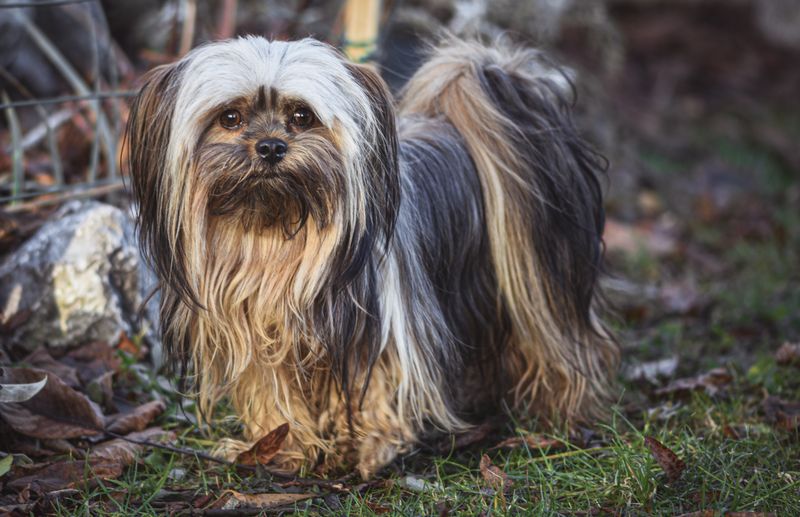
Lhasa Apso
A small Tibetan watchdog in a long coat, confident and a little aloof, who decides for itself who deserves its attention.
EnergyGroomingFlat life
Maltese
One of the oldest companion breeds in Europe, gentle and devoted, with a white coat that shows everything.
EnergyGroomingFlat life
Havanese
Cuba's national dog: a cheerful, sociable little bichon that loves people, learns tricks quickly and hates being left alone.
EnergyGroomingFlat life

