

History
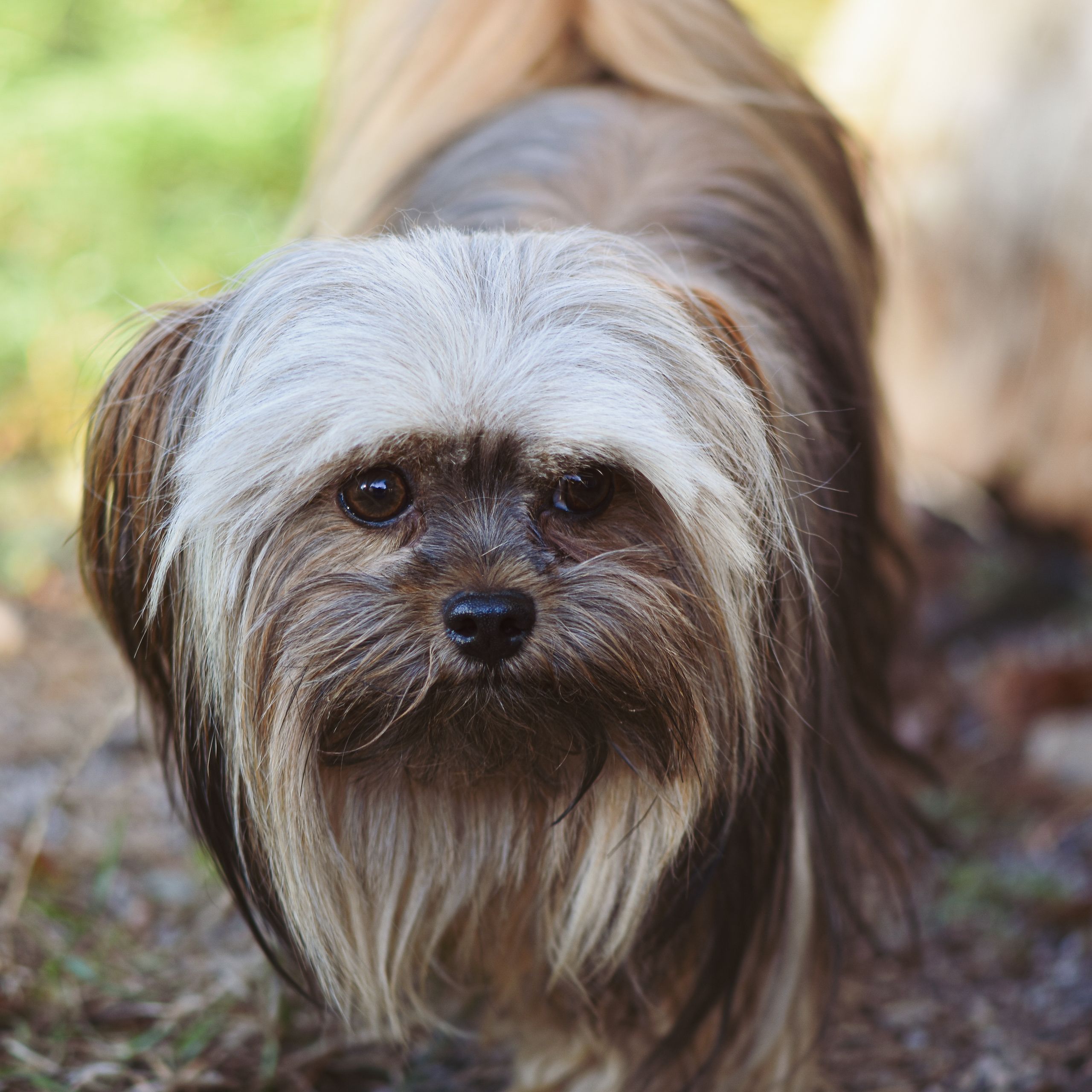
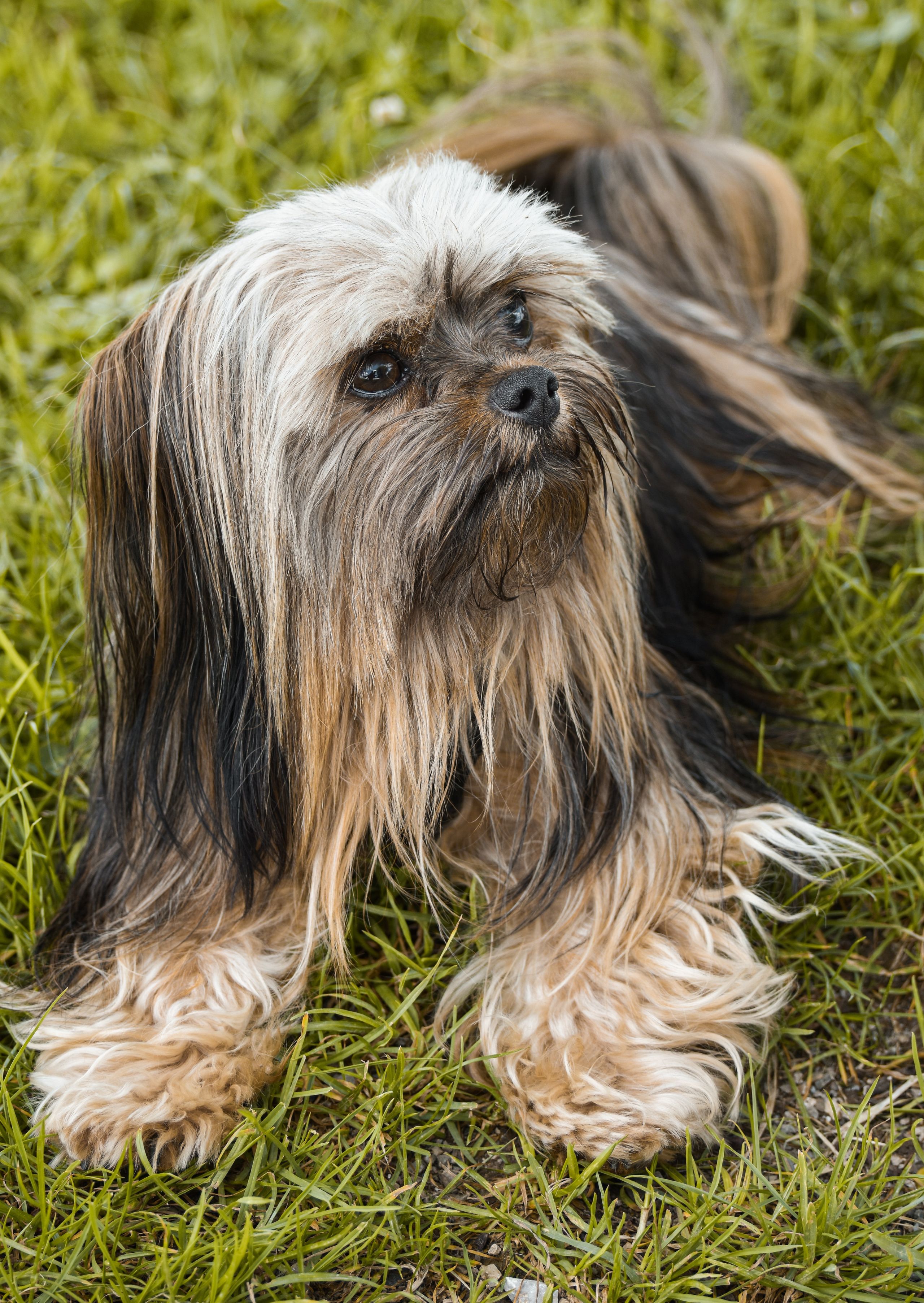
The Lhasa Apso developed in Tibet, and the FCI lists Tibet as the country of origin, with China as patronage. According to the standard, the breed took shape in harsh mountain conditions, and its coat is a product of that setting: the long, hard coat with its dense undercoat insulates against winter cold, while the fall of hair over the eyes protects them from wind, dust and glare.
Examples reached Britain in the early 1920s. At first they were confused with other shaggy Oriental dogs and were called Lhasa Terriers, and it took time before they were properly separated from the Tibetan Terrier. A British breed club was founded in 1933. The FCI places the breed in Group 9, Section 5, Tibetan breeds, with the utilisation of companion dog, and it is a sturdy, well-balanced little dog that is longer than it is tall.
Temperament
The FCI standard describes the Lhasa Apso as gay and assertive, alert and steady, and somewhat aloof with strangers. That fits the dogs we meet. They are cheerful and affectionate with their own people, but they are not the dog that throws itself at every visitor. A Lhasa will study a new person from across the room before deciding whether to approve.
Behind the small size is a watchdog temperament. Expect an alert bark at the lift, at footsteps in the corridor and at anything unusual outside the window, which neighbours will notice. They are independent, sometimes stubborn, and can be quite proud, so they respond to humour, patience and rewards much better than to pressure. Shyness and aggression are both faults, and good breeding and early socialisation make a real difference.
Children and other pets
A Lhasa Apso can live well with considerate older children who respect its space. It is less suited to toddlers, who may grab the coat or the tail, and a dog that feels pestered will warn first and may snap. Teach children to let the dog approach. With other dogs, many are confident to the point of cheek, and with cats most cope well when raised together. Some resource guarding of toys, beds or food can appear, so manage it early.
Exercise and the daily walk
This is a small dog with a surprising amount of stamina, but it does not need much. Around 45 minutes a day split into two or three outings suits most adults, with time to sniff and explore. Many enjoy a short game in the flat or garden. They like routine, and they enjoy being part of a walk with their person more than any structured activity.
Keep an eye on the coat during outings: wet weather, burrs and mud collect in the long hair, so a towel and a brush are part of the kit. A dog with the full coat will overheat in summer, so walk in the cool of the morning and evening. Off-lead freedom is best in enclosed spaces, as many Lhasas are independent and will not always come when called.
Training
Lhasa Apsos are bright but not eager to please in the way a retriever is. They need a reason to do what you ask, so use small treats, short sessions and plenty of variety. Harsh correction produces a sulky, stubborn dog. House training can take patience in small breeds, so keep to a strict routine and reward every success.
Socialisation is crucial for a breed that is naturally wary of strangers. Expose the puppy to people, children, other dogs, lifts, buses and traffic in a calm, positive way, and teach it that a quiet moment after the doorbell earns a reward. Handling practice is essential: get the puppy used to brushing, bathing, nail trimming and having its face and feet touched from the start.
Coat and grooming
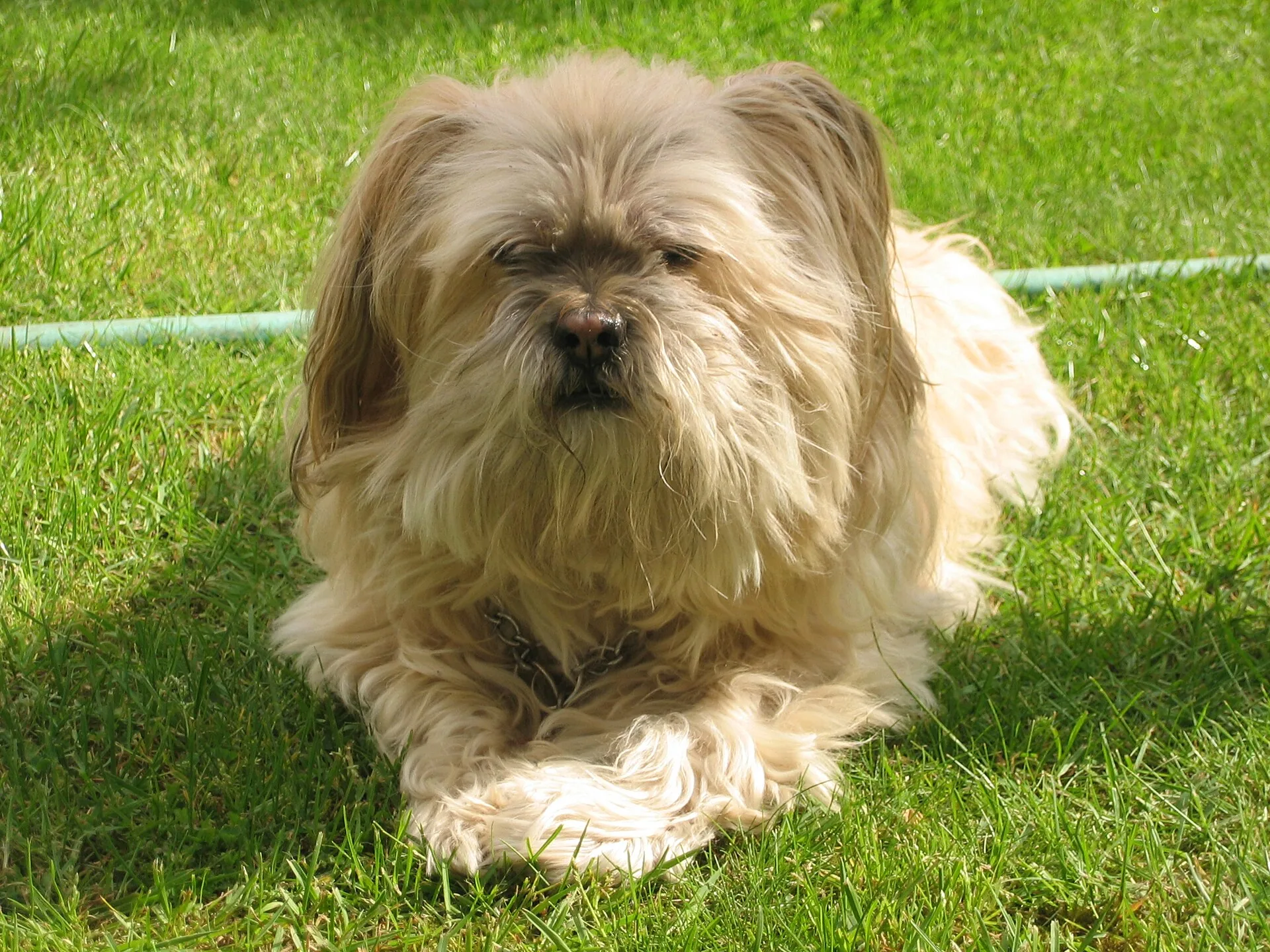
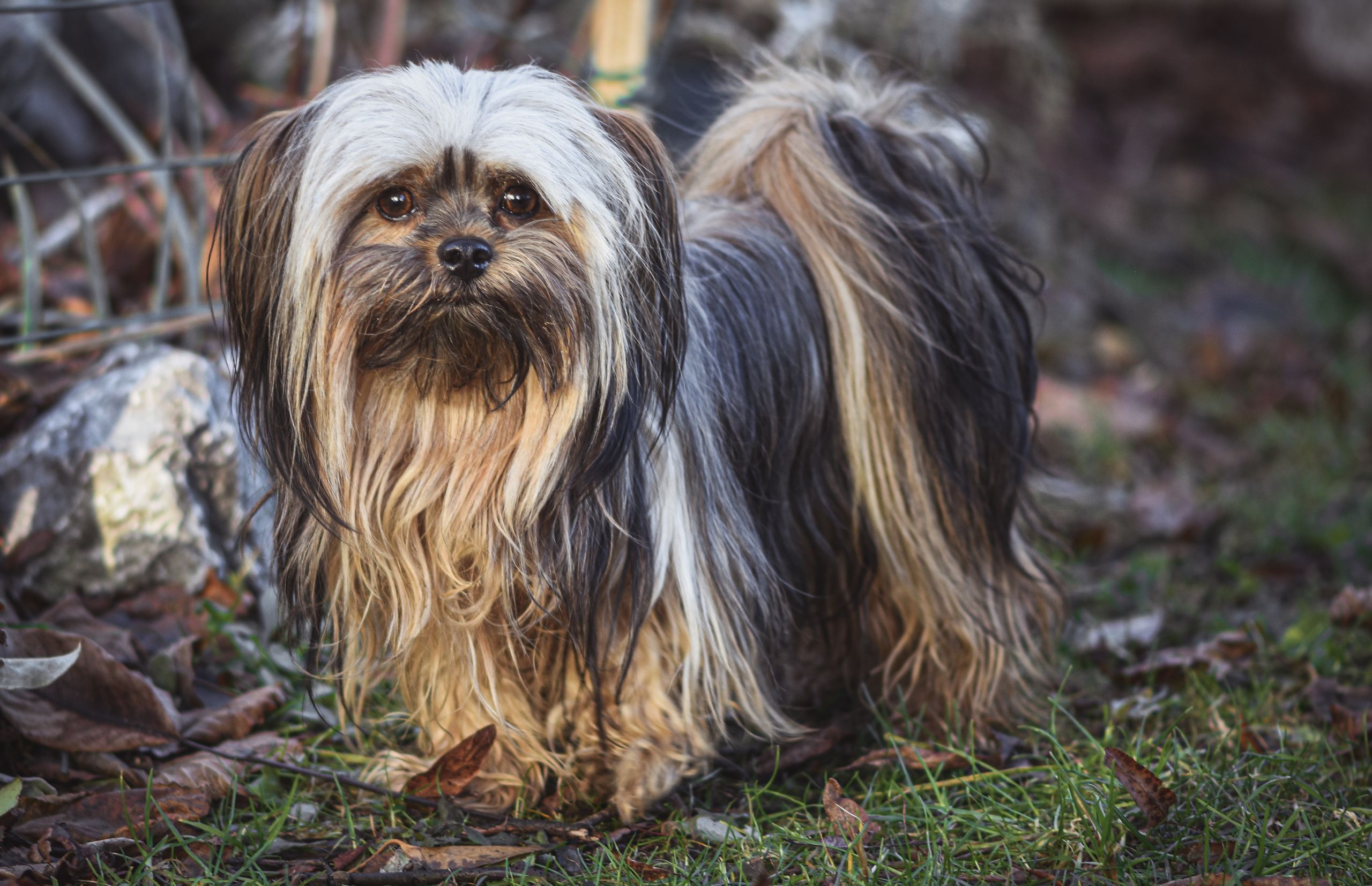
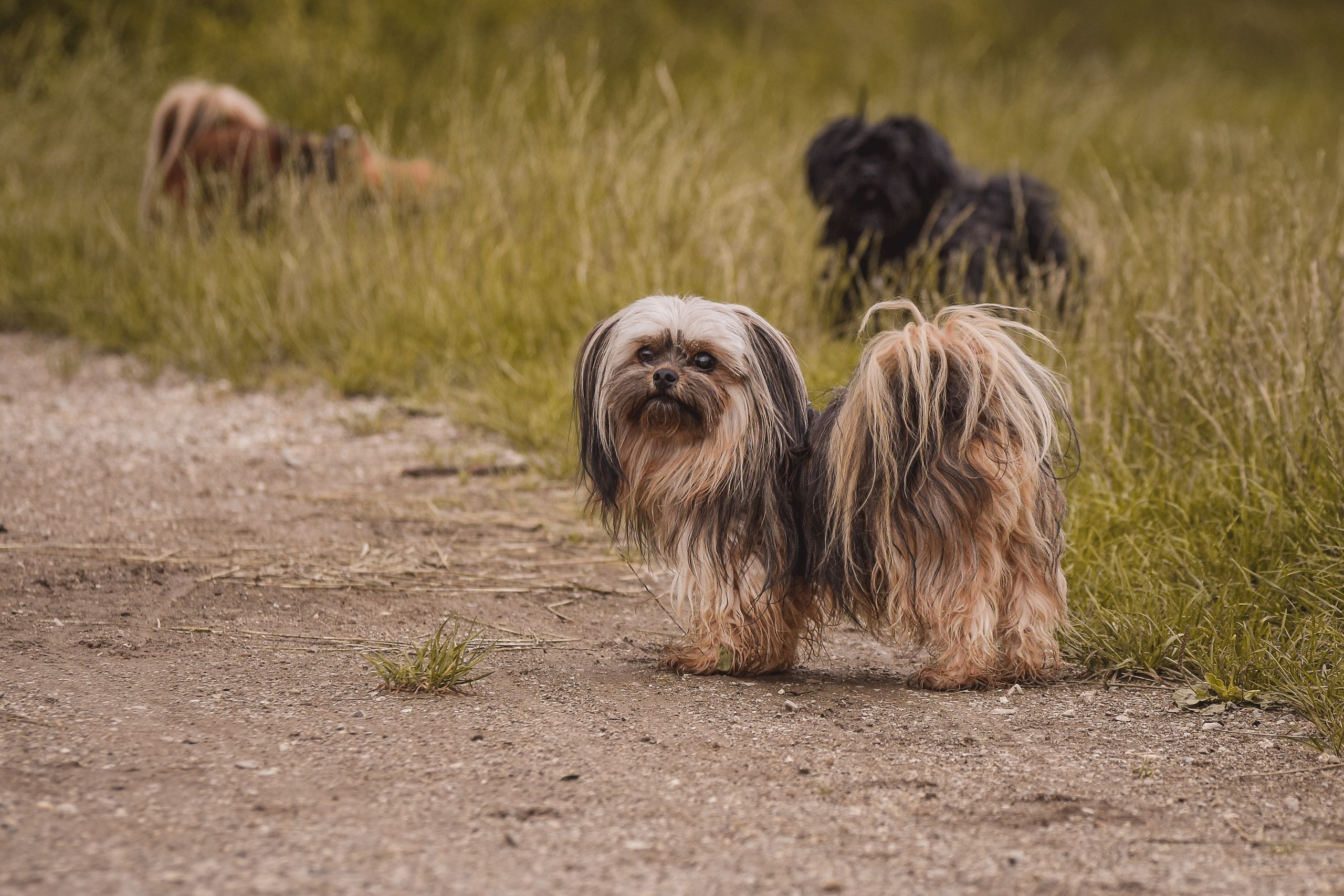
The FCI standard asks for a long, heavy, straight top coat that is hard, neither woolly nor silky, over a moderate undercoat, and it should not impede movement. All colours are equally acceptable: golden, sandy, honey, dark grizzle, slate, smoke, particolour, black, white or brownish. A full coat needs brushing to the skin several times a week and a bath every few weeks, or it mats quickly. Many pet owners keep the coat clipped shorter, which is far easier. Shedding is light, but loose hair stays in the coat until brushed out.
Feeding and weight
A good-quality complete diet in measured portions, given in two meals, suits most adults. Lhasa Apsos are small and enjoy their food, and weight gain is easy, so count treats in the daily ration and check the waist by feel through the coat. Keep the beard clean and dry after eating and drinking. Small breeds are prone to dental problems, so hard chews or tooth brushing help. Always provide fresh water.
Work out a starting calorie figure and food weight with the calorie calculator. Not sure this is the right breed? Take the quiz.
Health
Every breed carries predispositions. These are the conditions most often discussed for the Lhasa Apso, not a prediction for any individual dog.
- Progressive retinal atrophy (inherited eye disease)
- Dry eye (keratoconjunctivitis sicca)
- Patellar luxation (slipping kneecaps)
- Juvenile kidney disease (renal dysplasia)
- Skin allergies and ear problems
- Dental disease
What to ask the breeder. Ask for eye examination results for both parents, patella assessment, and whether the breeder has had cases of kidney disease in the line. A reputable breeder will also tell you about temperament and how the puppies have been socialised.
Choosing a puppy
A Lhasa puppy is a bold, funny little character that quickly learns how to get its own way. Start routines early: house training, short alone periods, lift and street sounds, and daily brushing with a soft brush. Keep walks short while joints develop and avoid jumping from furniture. Check the eyes and coat daily and book dental and vet checks. Positive, gentle training now prevents a barky, stubborn adult.
In Luxembourg the national kennel club is the Fédération Cynologique Luxembourgeoise (FCL), a member of the FCI. Many owners also buy from breeders in Germany, France or Belgium; a puppy coming from another EU country must be microchipped and vaccinated against rabies, which in practice means it cannot travel before about fifteen weeks of age. Where to get a dog in Luxembourg.
The older Lhasa Apso
Lhasa Apsos often live into their teens and stay cheerful. Older dogs may show cloudy eyes, stiffer knees, dental problems or reduced hearing. Keep up with twice-yearly vet checks, brush teeth, and consider a shorter coat for easier care. Gentle walks, a warm bed and steady routine keep the dog comfortable. Watch weight, thirst and eye changes, and report them early.
A realistic day
A realistic weekday for a working household in Luxembourg City, with a midday visit. Adjust it to your dog, not the other way round.
Short toilet walk and a sniff round the block, then breakfast.
Quick comb through the face, feet and trousers, fresh water and a chew before the owner leaves.
Midday visit from a PAWLY walker: 30 minutes outdoors, a drink, and a gentle comb if the coat is wet.
Evening walk in Parc Merl or along the Pétrusse valley, with time to investigate every corner.
Last short outing, a few minutes of brushing, then to bed in a basket by the sofa.
A Lhasa Apso in Luxembourg
The Lhasa Apso suits Luxembourg flat life well. It is small enough for lifts and tram journeys, content with moderate exercise and happy to sleep on the sofa. The main issue is noise: its watchdog instinct means it may bark at corridor sounds, so teach a calm response early, and speak to neighbours if the dog is new in the building. Parks such as Parc Merl and the Pétrusse valley provide ample room for the daily walks.
Weather matters for the coat. In wet autumn and winter weeks the long hair collects mud and moisture, so dry the dog thoroughly or keep the coat trimmed. In summer, when temperatures reach the 30s °C, a full coat is warm, so walk early or late and carry water. The free buses and trams make weekend trips to the Bambësch or Grünewald easy, and a small dog can go along comfortably.
Every dog in Luxembourg must be identified, declared to the commune and covered by liability insurance. How registration works.
When you travel
A sitter should know the dog's routine, its feeding amounts and that it can be wary of strangers, so a slow, calm introduction before the owner leaves is useful. Brush the coat at least every other day to prevent mats, and keep the face and beard clean. Check that doors and gates are secure. Leave the vet's details and the microchip number, and note any barking habits that neighbours might notice.
PAWLY's holiday and overnight care takes place in your home, so your dog keeps its own bed and routine.
Myths and facts
MythLhasa Apsos are just lap dogs.
FactThey are companions, but the FCI standard describes an alert, assertive dog, and they were bred as watchdogs in Tibet. They like being close to their people but are not passive.
MythThe long coat means constant grooming.
FactA full show coat does need daily care, but many pet owners keep it clipped shorter, which makes grooming simple.
MythSmall dogs don't need training.
FactA Lhasa that is not taught manners can bark, guard and ignore you. Early socialisation and training are worthwhile at any size.
Is it the right dog for you?
Suits
- Flat dwellers who want a small, characterful companion
- Owners who like routine and moderate daily walks
- Households of adults or older children
- People who are happy to brush regularly or have the coat clipped
Think twice if
- Think twice if neighbours are sensitive to barking
- Think twice if you have toddlers who may grab the coat
- Think twice if you will not brush or visit a groomer regularly
- Think twice if you want a very obedient, eager-to-please dog
Questions owners ask
Does a Lhasa Apso bark a lot?
It is a natural watchdog, so it will alert you to visitors and sounds. Most can learn to stop after a bark or two if you start early and reward quiet. Exercise, company and routine reduce unnecessary barking, but a completely silent Lhasa is unusual.
How big is a Lhasa Apso?
The FCI standard gives about 25 cm at the withers for males, with females slightly smaller. It does not specify a weight. The dog is longer than it is tall, and sturdy for its size.
Do they need professional grooming?
A full coat needs brushing to the skin several times a week and regular baths, and many owners use a groomer for trims. Keeping the coat shorter reduces the work. Either way, comb the face, ears, feet and trousers frequently.
Is it a good first dog?
It can be, for a patient owner. The breed is small and adaptable, but it is independent, wary of strangers and can be stubborn. Choose a well-bred puppy, socialise early and use reward-based training.
Sources
Photo: Pexels (Pexels License) · Photo: Arnold C, Attribution (Wikimedia Commons, free licence), via Wikimedia Commons · Photo: Pexels (Pexels License) · Photo: Pexels (Pexels License) · Photo: Pexels (Pexels License)
General information for dog owners in Luxembourg, not veterinary or legal advice. Official facts (origin, size, group, history and temperament as described by the breed standard) follow the FCI standard; health and care sections reflect breed-club and veterinary guidance and are typical ranges rather than rules. For your own dog, ask your vet, the breed club or your commune. How this guide is written and checked. Last reviewed 8 October 2026.
Need someone for your Lhasa Apso?
PAWLY offers an individual 45-minute walk or a home visit at your dog's pace, the same walker every time, and a written report with photos after every visit, across Luxembourg City.
Read next: the journal, for the Lhasa Apso
All articles
Teeth: the problem owners find least interesting and vets see most
Teeth are a known weak point in the Lhasa Apso; this is the routine that helps.

Grooming and coat care through the Luxembourg year
The Lhasa Apso has a coat that needs a routine that holds through the Luxembourg seasons.

The dog that is afraid of people
The Lhasa Apso is often reserved with strangers; early, patient handling of that matters.
Similar breeds
All 198 breeds
Shih Tzu
The little lion dog of the Chinese court: calm, friendly and made for companionship.
EnergyGroomingFlat life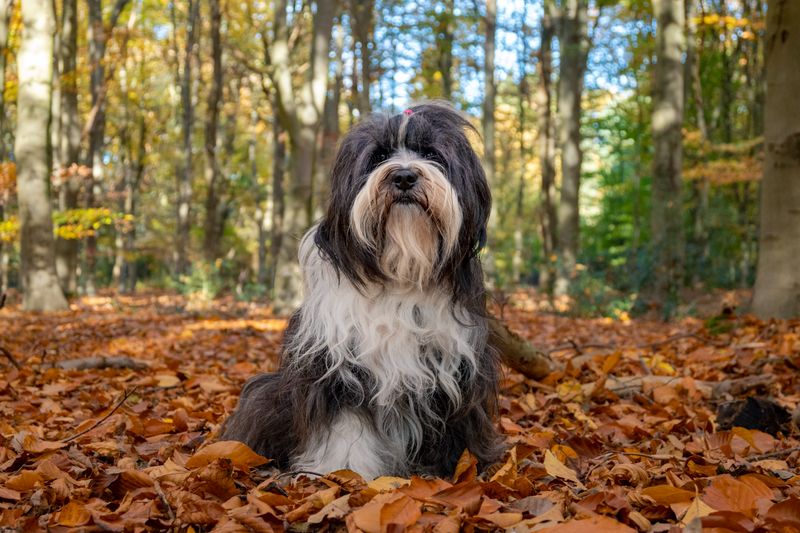
Tibetan Terrier
A mountain herder in a shaggy overcoat, merry and sure-footed, more athletic than its lap-dog looks suggest and quietly watchful of strangers.
EnergyGroomingFlat life
Tibetan Spaniel
A small, self-assured companion from the Himalayas that likes a high vantage point, keeps strangers at arm's length and adores its own people.
EnergyGroomingFlat life

