


History
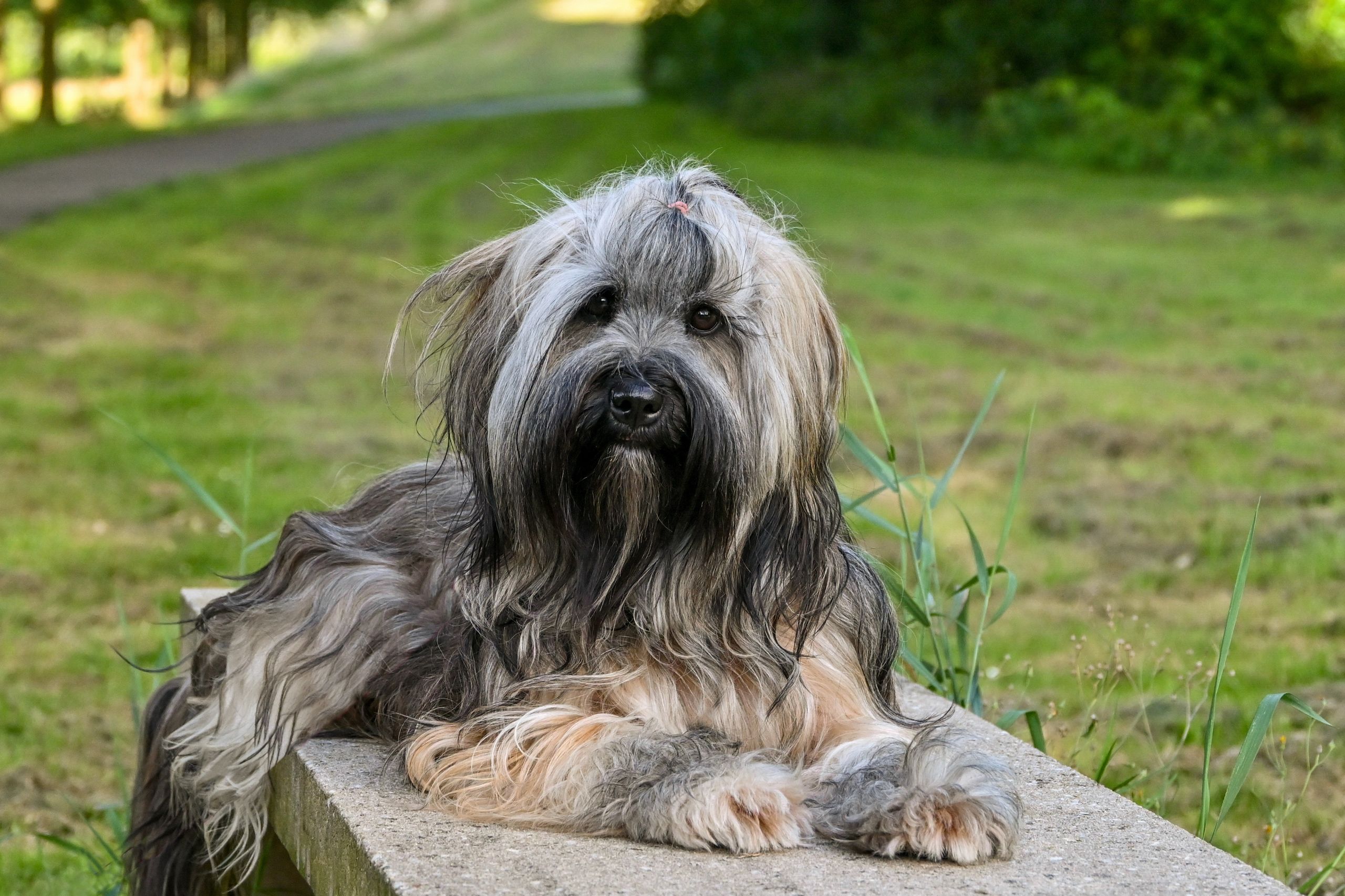
Despite the name, this is not a terrier at all. The FCI standard is explicit that the breed was a herding dog in Tibet, which also served as a guard for traders travelling to and from China. It also describes the breed as believed to be the original Holy Dog of Tibet, livelier than the other Tibetan breeds, and likens it to a small guard dog along the lines of a miniature Old English Sheepdog.
The breed came to the West in the 1920s through Dr Agnes Greig, an English surgeon working in a hospital on the border between India and Tibet, and the Kennel Club in Britain recognised it in 1937. Today the FCI places it in Group 9, Section 5, alongside the Lhasa Apso, Shih Tzu, Tibetan Spaniel and Tibetan Mastiff, with Tibet (China) given as country of origin. The current standard dates from 2017 and lists its use simply as companion dog, though the herding build is still very visible.
Temperament
The standard calls the Tibetan Terrier lively and good-natured, outgoing, alert, intelligent and game, neither fierce nor pugnacious, and sparing of affection to strangers. With its own family it is cheerful and playful, often clownish, and keen to be involved in whatever is going on. With a new visitor in the hallway it tends to hang back, watch, and decide in its own time.
There is a strong streak of independence, inherited from dogs that had to think for themselves on mountain pastures. A Tibetan Terrier will usually cooperate if it sees the point, and politely ignore you if it does not.
Children and other pets
A well-socialised Tibetan Terrier is usually a sturdy, good-humoured companion for children who play kindly, and it is robust enough for family life in a way that many toy breeds are not. It will not appreciate having its coat pulled or being cornered, so teach children to let it come to them. Most live happily with other dogs and, if raised with them, with the household cat.
Exercise and the daily walk
An adult needs roughly an hour a day, split into two or three outings, plus some play. The breed is more athletic than it looks: Tibetan Terriers are agile, nimble jumpers, and the standard asks for large, round feet, heavily furnished with hair and standing well down on the pads, made for rough mountain ground. They enjoy woodland walks, uneven paths and games that involve thinking, and many do well in agility or rally once trained.
Recall is usually reasonable but not guaranteed, especially in adolescence or when something more interesting appears. Use a long line in unfenced areas until the dog proves reliable. Wet and muddy walks are the practical challenge: the long coat collects leaves, burrs and grit, so a short towel session and a check of the feet and underside after each outing will save a lot of brushing later.
Training
Tibetan Terriers are intelligent and quick to learn, but they are not eager to repeat the same exercise ten times. Keep sessions short and varied, reward generously, and stay calm and consistent. Teach a solid recall, settling on a mat, and quiet behaviour at the door early, since alert barking can become a habit in a flat.
Socialisation matters because of the natural reserve with strangers. A puppy that meets many friendly people, sees trams and buses, rides in lifts and hears everyday city noise grows into a confident adult. Equally important is handling: teach the puppy to stand calmly for brushing, to have its feet, ears and eyes checked, and to accept the hairdryer.
Coat and grooming
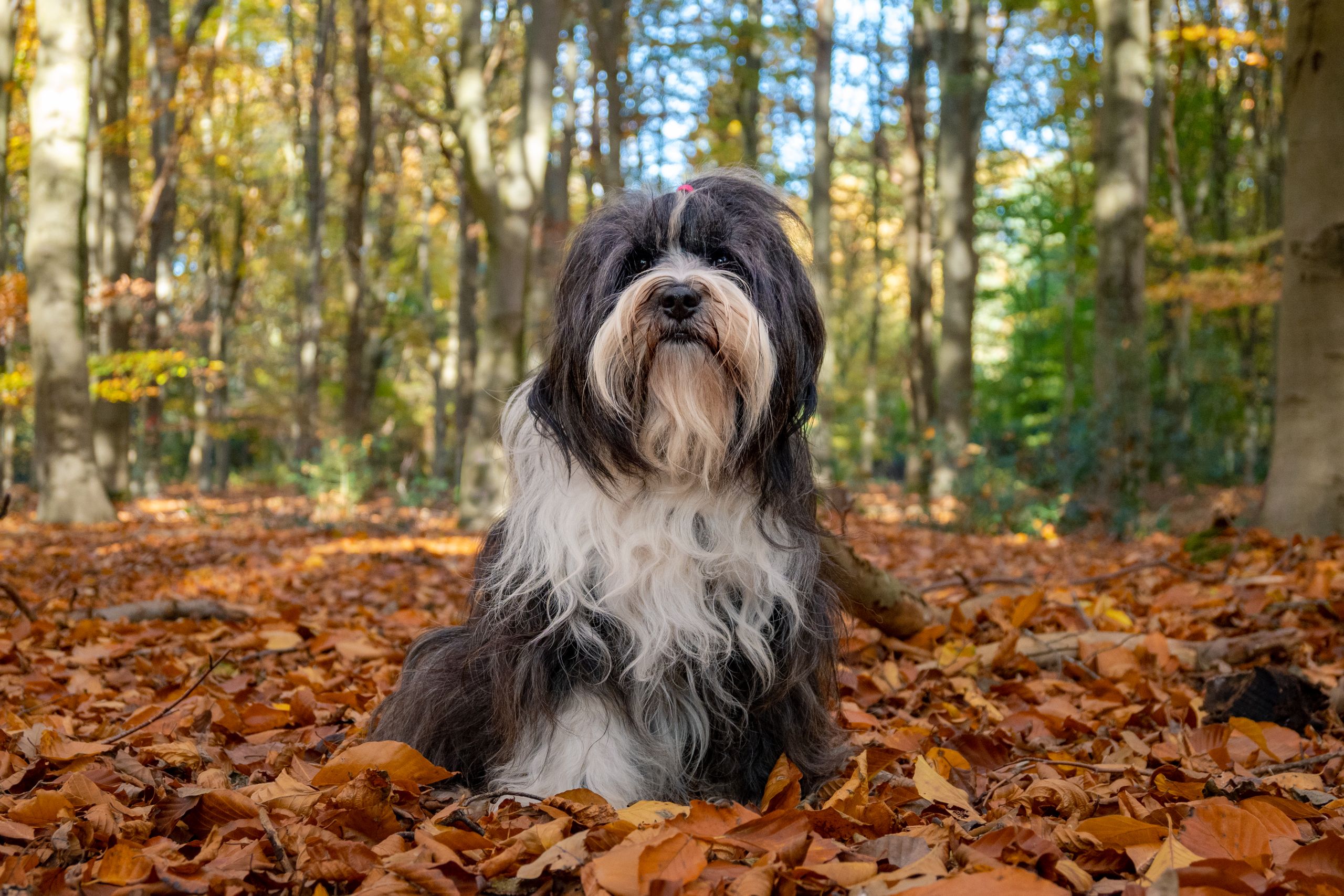
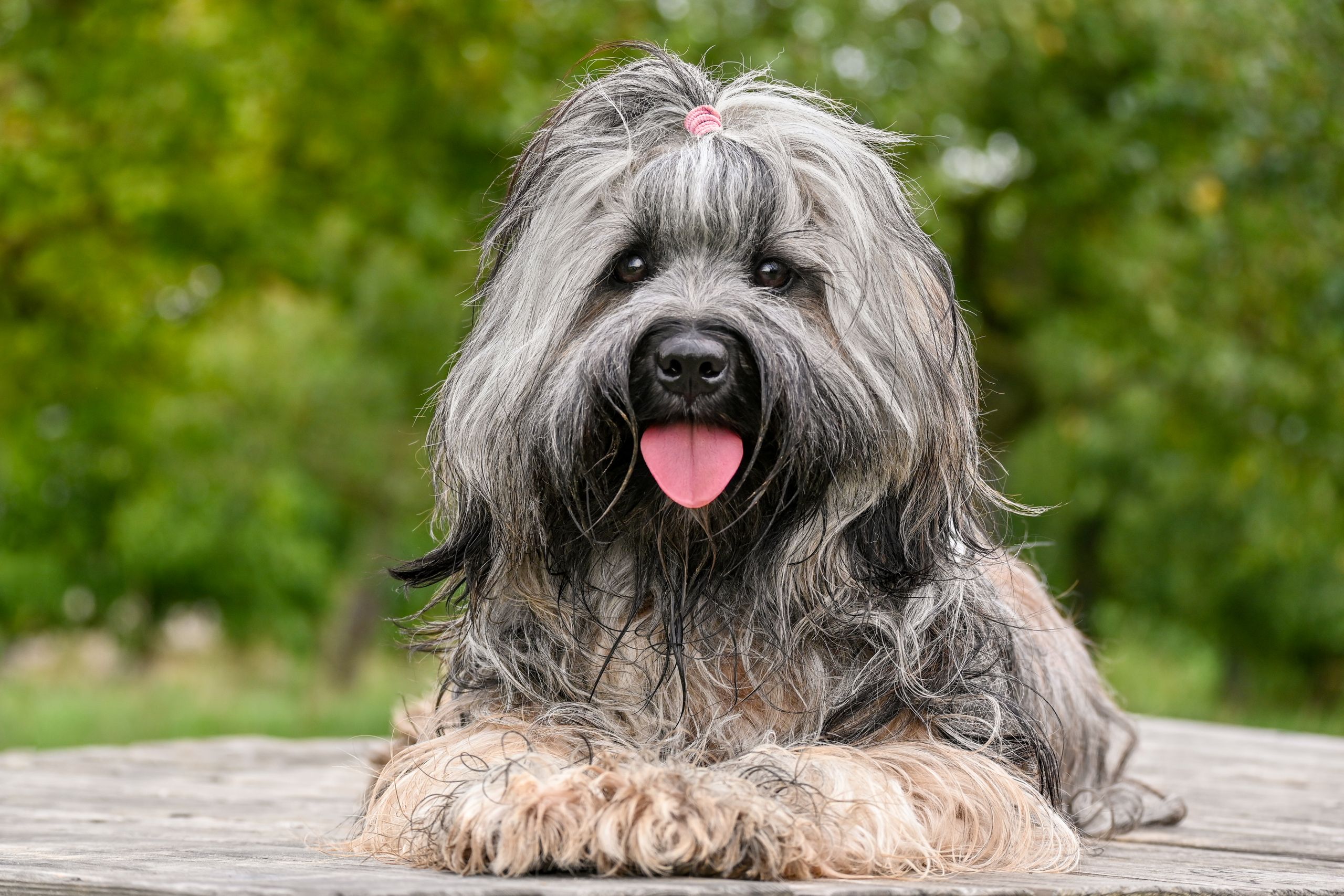
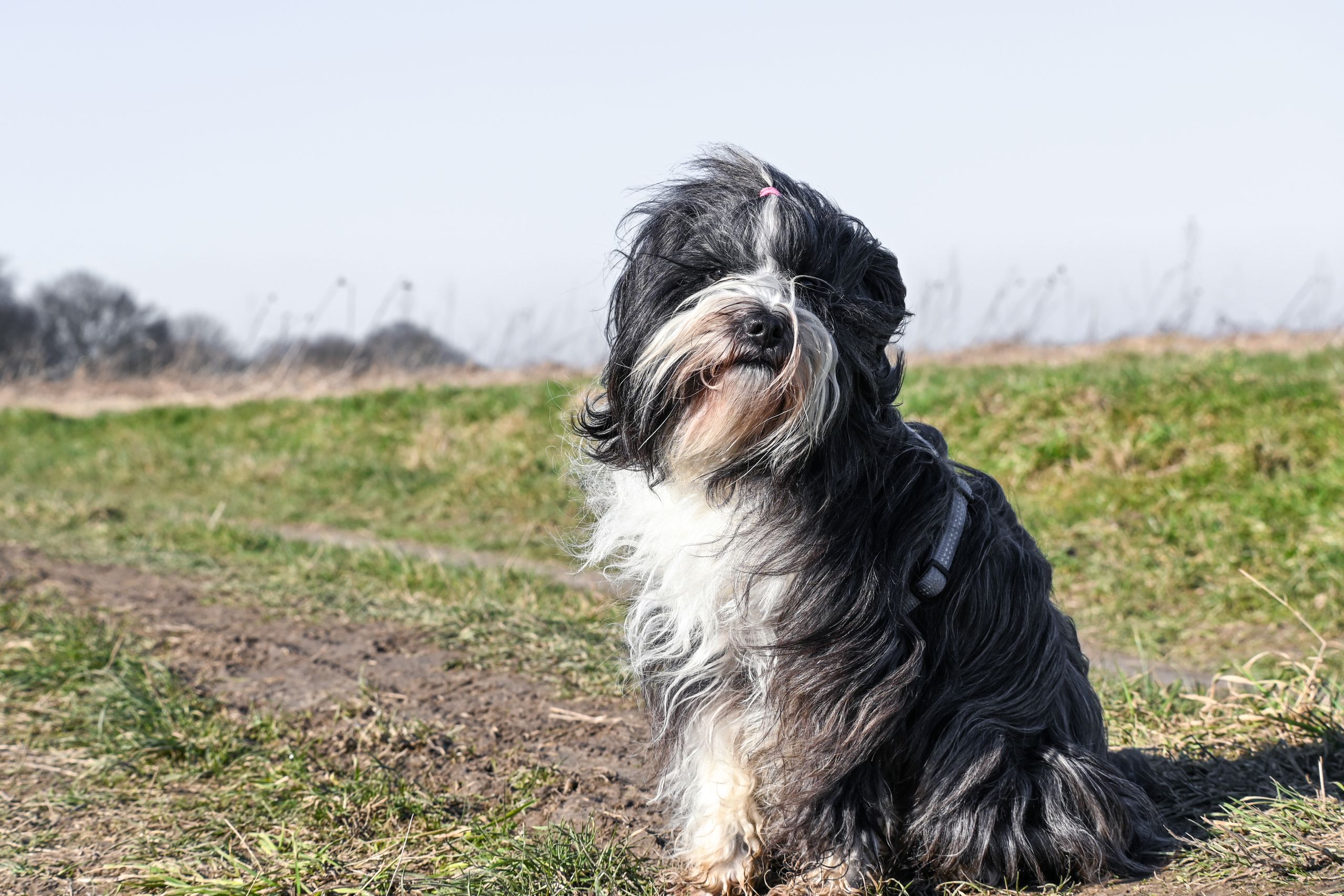
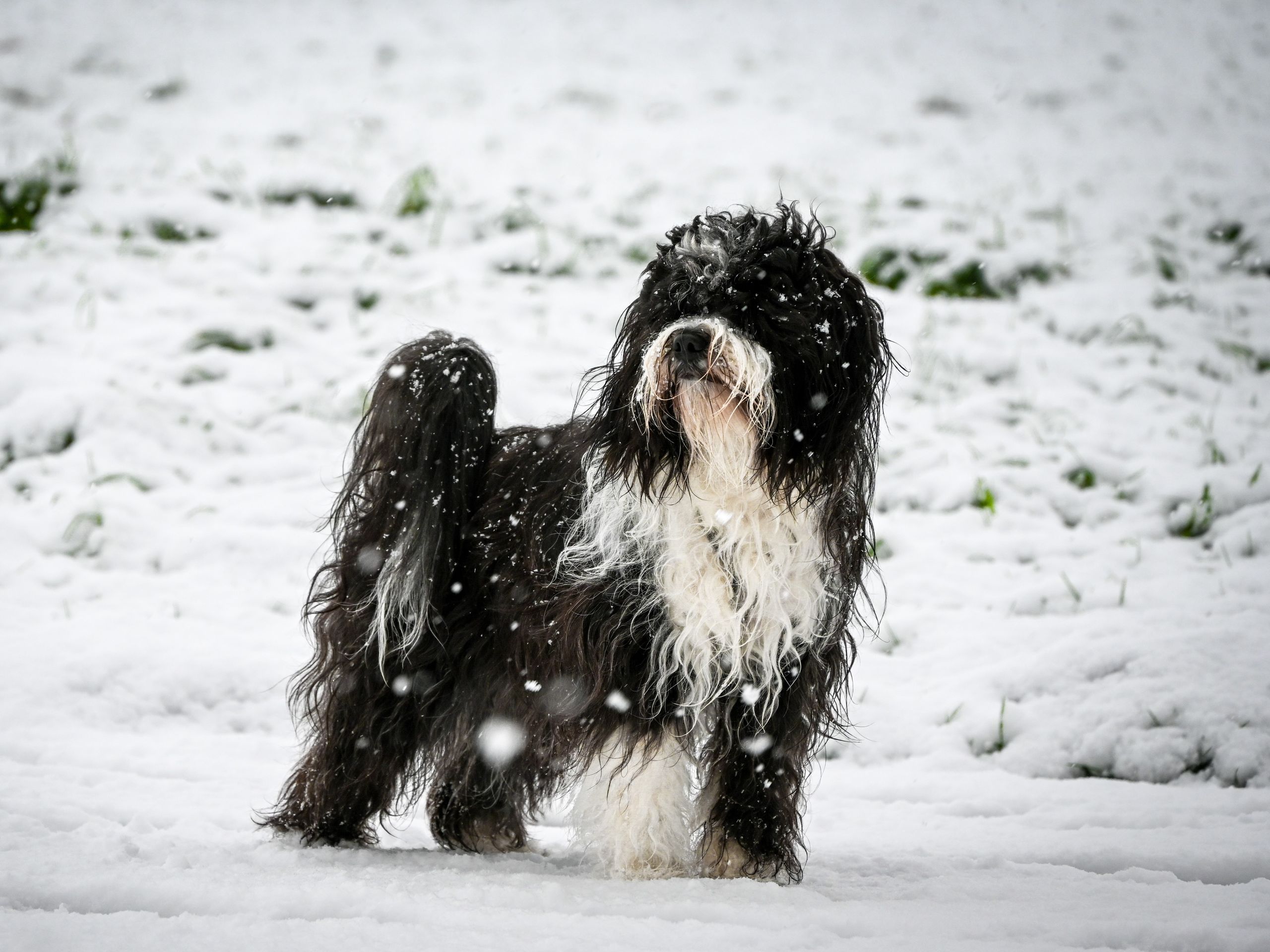
The coat is double, with a fine woolly undercoat and a profuse top coat that is long and straight or waved, but never curled. The standard asks for it to be fine, neither silky nor woolly. Shedding is light, yet the coat mats easily, especially during the change from puppy to adult coat. Plan on thorough brushing to the skin two or three times a week, regular baths, and trimming of the feet. Permitted colours include white, golden, cream, grey or smoke, black, parti-colour and tricolours; chocolate, liver and merle are not accepted.
Feeding and weight
Feed a complete diet in two meals and adjust the amount to the dog's activity and body condition rather than the packet guide. Because the coat hides the outline, check weight by feeling the ribs regularly.
Work out a starting calorie figure and food weight with the calorie calculator. Not sure this is the right breed? Take the quiz.
Health
Every breed carries predispositions. These are the conditions most often discussed for the Tibetan Terrier, not a prediction for any individual dog.
- Primary lens luxation (PLL)
- Progressive retinal atrophy (PRA)
- Neuronal ceroid lipofuscinosis (a form of Batten disease)
- Hip dysplasia
- Pituitary dwarfism (DNA test available)
What to ask the breeder. Ask for DNA test results for primary lens luxation, progressive retinal atrophy and neuronal ceroid lipofuscinosis, hip scores and a recent eye examination for both parents, as recommended by the Royal Kennel Club.
Choosing a puppy
Puppies are bold, bouncy and curious, with a coat that looks easy at first and becomes more demanding month by month. Start daily handling and short grooming sessions straight away, using treats so the puppy learns to enjoy them. Keep exercise moderate while the dog grows and avoid lots of jumping from heights.
In Luxembourg the national kennel club is the Fédération Cynologique Luxembourgeoise (FCL), a member of the FCI. Many owners also buy from breeders in Germany, France or Belgium; a puppy coming from another EU country must be microchipped and vaccinated against rabies, which in practice means it cannot travel before about fifteen weeks of age. Where to get a dog in Luxembourg.
The older Tibetan Terrier
Many Tibetan Terriers stay sprightly well into old age. Keep walks regular but shorter, watch the eyes closely, since lens problems can appear at any age, and have teeth checked often. A shorter trim makes coat care easier for an older dog, and a non-slip rug helps on smooth floors. Keep weight steady; extra kilos hide under the coat and put strain on ageing joints.
A realistic day
A realistic weekday for a working household in Luxembourg City, with a midday visit. Adjust it to your dog, not the other way round.
A 25-minute walk around the neighbourhood with time to sniff, followed by breakfast and a quick wipe of muddy feet.
Owner leaves for work; the dog settles on a favourite perch by the window or on its bed.
PAWLY midday visit: a 40-minute walk in Parc Merl or along the Pétrusse valley, fresh water, and a check of the coat for burrs and knots.
Longer evening outing or a play session with a puzzle toy, then dinner and a short brushing session.
Brief last walk before bed, then quiet time with the family.
A Tibetan Terrier in Luxembourg
A Tibetan Terrier fits flat life in Luxembourg City well: it is medium-sized, light on its feet and comfortable in lifts. The main point to manage is barking, since the breed tends to announce footsteps on the landing and doors closing in the stairwell. Early training and a calm routine help keep neighbours on side. The coat also brings a lot of the outdoors in, so keep a towel and a brush by the door through the wet autumn months.
The breed's mountain heritage makes it good in cold and damp weather, less so in the heat. When summer reaches the 30s °C, walk early in the morning and late in the evening, keep the dog in the shade and consider a shorter clip. Bambësch and the Grünewald forest are pleasant for longer weekend walks on a long line. As for every dog, the Tibetan Terrier must be microchipped, declared to the commune, insured and registered for the annual dog tax.
Every dog in Luxembourg must be identified, declared to the commune and covered by liability insurance. How registration works.
When you travel
A sitter should know the brushing routine and which areas mat first, usually behind the ears, under the legs and around the collar. Some Tibetan Terriers are reserved with new people for the first day, so let the dog approach in its own time. Keep feeding and walk times the same, check the feet after each walk, and be aware that the dog may bark at unfamiliar noises in the building. Daily photos reassure owners that all is well.
PAWLY's holiday and overnight care takes place in your home, so your dog keeps its own bed and routine.
Myths and facts
MythIt is a terrier, so it will dig and fight like one.
FactIt is a herding and guard breed from Tibet. The FCI standard describes it as neither fierce nor pugnacious.
MythA long coat means it sheds everywhere.
FactShedding is light. The real work is preventing mats, which requires regular brushing to the skin.
MythIt is a lap dog that needs little exercise.
FactIt is an agile, athletic dog that enjoys long walks, rough ground and games that make it think.
Is it the right dog for you?
Suits
- Active owners who want a medium-sized, robust companion
- Families with children who play gently
- People who enjoy grooming or will budget for a groomer
- Flat dwellers willing to train quiet behaviour at the door
Think twice if
- Think twice if you have no time for brushing several times a week
- Think twice if you need a dog that greets every stranger warmly
- Think twice if a watchful barker would bother your neighbours
- Think twice if you expect instant, unquestioning obedience
Questions owners ask
Is the Tibetan Terrier hypoallergenic?
No dog is fully hypoallergenic. The Tibetan Terrier sheds lightly, which some people with mild allergies find easier, but reactions vary from person to person. Spend time with adult dogs of the breed before committing, and remember that dander and saliva, not only hair, cause allergies.
How often does it need a groomer?
Many owners book a professional groom every six to ten weeks, especially if they keep the coat long. Between visits the coat still needs home brushing two or three times a week. A shorter pet clip reduces the work but does not remove it.
Does it bark a lot?
It is an alert watchdog and usually barks at the door and at unusual noises. It is not typically a nuisance barker when exercised and kept company, but in a flat building it helps to teach a quiet cue from puppyhood.
Can it cope with being left alone during the working day?
An adult can manage a few hours alone once it is used to the routine, but a full office day is too long. A midday walk or visit breaks the day, gives the dog exercise and company, and makes barking and boredom much less likely.
Sources
- FCI breed standard No. 209 (Tibetan Terrier)
- The Royal Kennel Club, Tibetan Terrier
- AKC Tibetan Terrier standard
Photo: Pexels (Pexels License) · Photo: Pexels (Pexels License) · Photo: Pexels (Pexels License) · Photo: Pexels (Pexels License) · Photo: Pexels (Pexels License)
General information for dog owners in Luxembourg, not veterinary or legal advice. Official facts (origin, size, group, history and temperament as described by the breed standard) follow the FCI standard; health and care sections reflect breed-club and veterinary guidance and are typical ranges rather than rules. For your own dog, ask your vet, the breed club or your commune. How this guide is written and checked. Last reviewed 8 October 2026.
Need someone for your Tibetan Terrier?
PAWLY offers an individual 45-minute walk or a home visit at your dog's pace, the same walker every time, and a written report with photos after every visit, across Luxembourg City.
Read next: the journal, for the Tibetan Terrier
All articles
Grooming and coat care through the Luxembourg year
The Tibetan Terrier has a coat that needs a routine that holds through the Luxembourg seasons.

Dogs in hot weather: the Luxembourg summer guide
The Tibetan Terrier carries a heavy coat or a heavy frame, which makes a Luxembourg summer the hard season.

Choosing a groomer, and what to ask before you book
A coat like this usually means a groomer; this covers what to ask before you book.
Similar breeds
All 198 breeds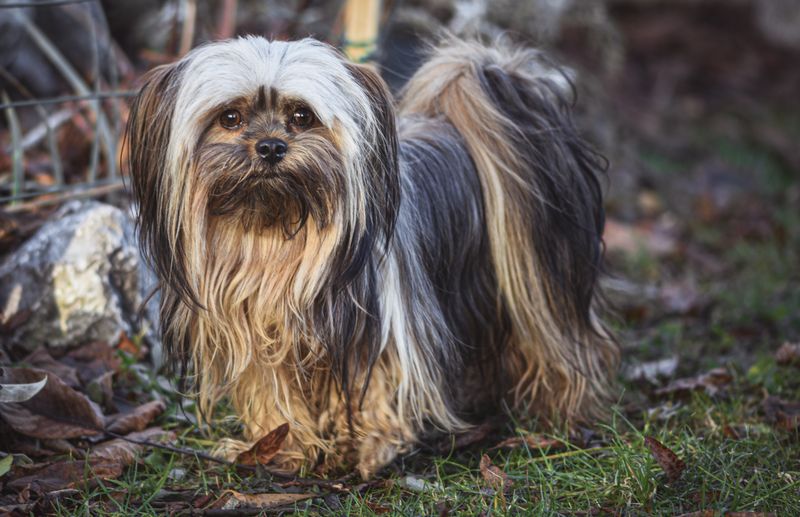
Lhasa Apso
A small Tibetan watchdog in a long coat, confident and a little aloof, who decides for itself who deserves its attention.
EnergyGroomingFlat life
Tibetan Spaniel
A small, self-assured companion from the Himalayas that likes a high vantage point, keeps strangers at arm's length and adores its own people.
EnergyGroomingFlat life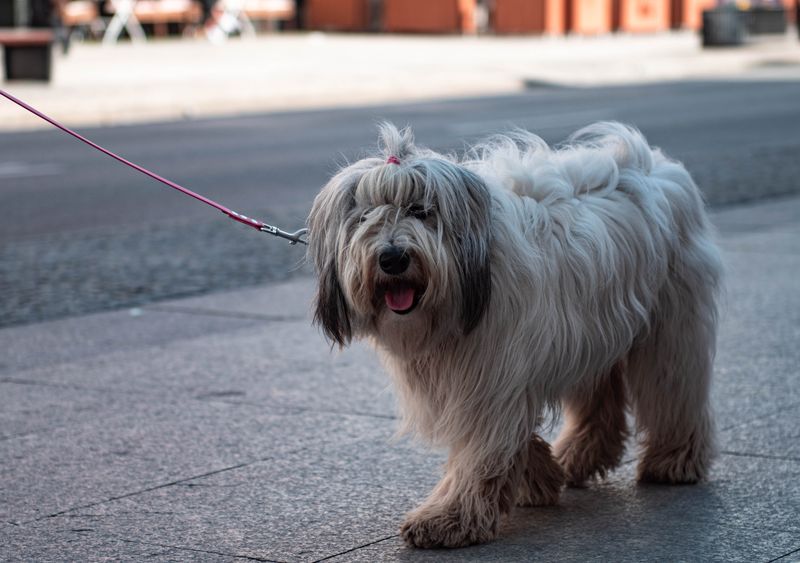
Polish Lowland Sheepdog
A shaggy, watchful Polish herder who looks through a fringe, remembers everything you taught it, and has views about how the household is run.
EnergyGroomingFlat life

