


History
The Tibetan Spaniel is not a spaniel in the sporting sense. It belongs to the family of small Tibetan dogs, and the FCI classes it with the other Tibetan breeds in the Companion and Toy group. Breed histories describe it as a dog kept in Tibetan monasteries and villages, where small dogs served as companions and alert watchdogs, and were sometimes given as gifts. The FCI standard itself gives no detailed history, and many traditional stories cannot be verified.
Because Tibet is part of China and the breed's modern development took place mainly in Britain, the FCI standard lists Tibet (China) as the country of origin and Great Britain as the country of patronage. The breed became established in Britain in the twentieth century. The standard describes a small, active, alert dog, slightly longer than tall, and its use as a companion. The current version is dated 18 March 2015.
Temperament
The standard describes the Tibetan Spaniel as gay and assertive, highly intelligent, aloof with strangers, alert, loyal but independent. That sums up the breed neatly. With its family it is affectionate and playful, often following its people from room to room. With strangers it is reserved, observing quietly rather than seeking attention.
Tibbies, as owners call them, love to sit high and watch: the back of a sofa, a windowsill or the top of a cushion pile. They alert to visitors with a few barks but are not usually persistent barkers. Their independence means they decide for themselves whether an instruction is worth following, and many have a cat-like dignity that makes them entertaining companions.
Children and other pets
Tibetan Spaniels are usually gentle with respectful children and enjoy family life, but they are small and dislike rough handling, so they suit homes with older children or careful younger ones. They often live happily with other dogs and with cats, especially if raised together. Their chase instinct is mild, though small pets should still be supervised. Visitors are tolerated politely but the dog may keep its distance.
Exercise and the daily walk
Daily walks totalling about 30 to 45 minutes, plus play at home, are enough for most adults. Tibbies enjoy exploring and sniffing, and many will happily walk further at the weekend. They are not built for long runs, but they can be surprisingly agile and enjoy games and gentle dog sports.
Recall can be unreliable because of their independent nature, so off-lead walks should be in secure areas. In warm weather, walks should be early or late, as the short muzzle and dense coat make heat less comfortable. Cold and rain are generally tolerated better, though many prefer to stay indoors in heavy weather.
Training
Tibetan Spaniels are intelligent but independent, so training works best with short sessions, gentle encouragement and food rewards. They respond poorly to pressure or repetition. House training is usually straightforward with a consistent routine, though some take a little longer in wet weather.
Socialisation helps keep the natural reserve with strangers from turning into nervousness. Introduce the puppy to visitors, children, other dogs and the sounds of a city calmly and positively. Handling of feet, ears and mouth should be practised early. Teaching a reliable recall and calm behaviour on lead makes walks pleasant for both dog and walker.
Coat and grooming
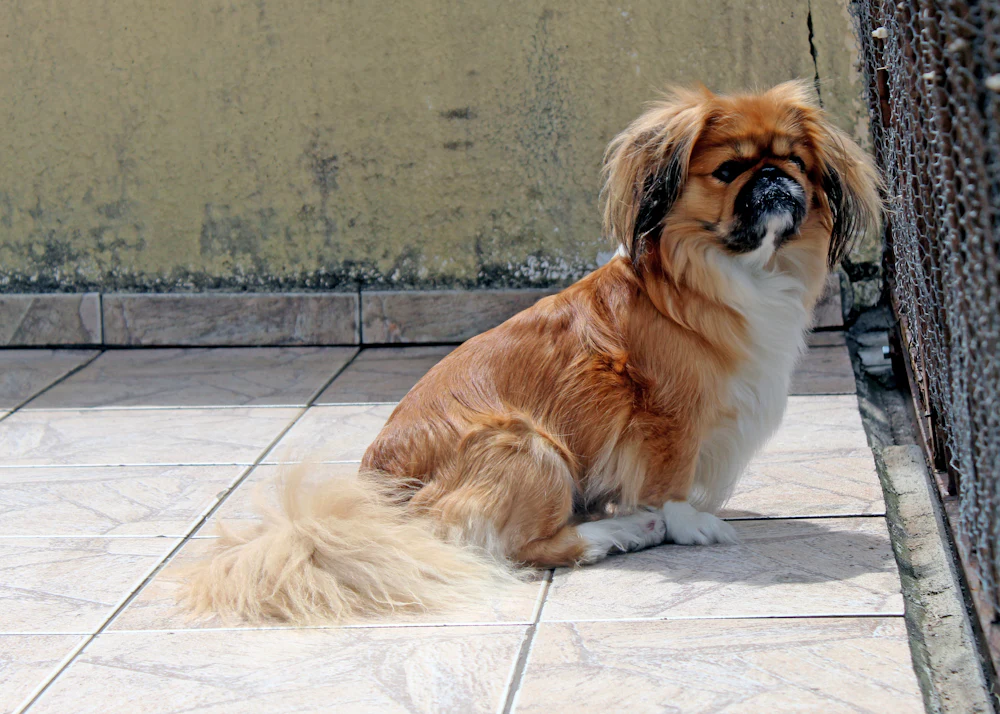
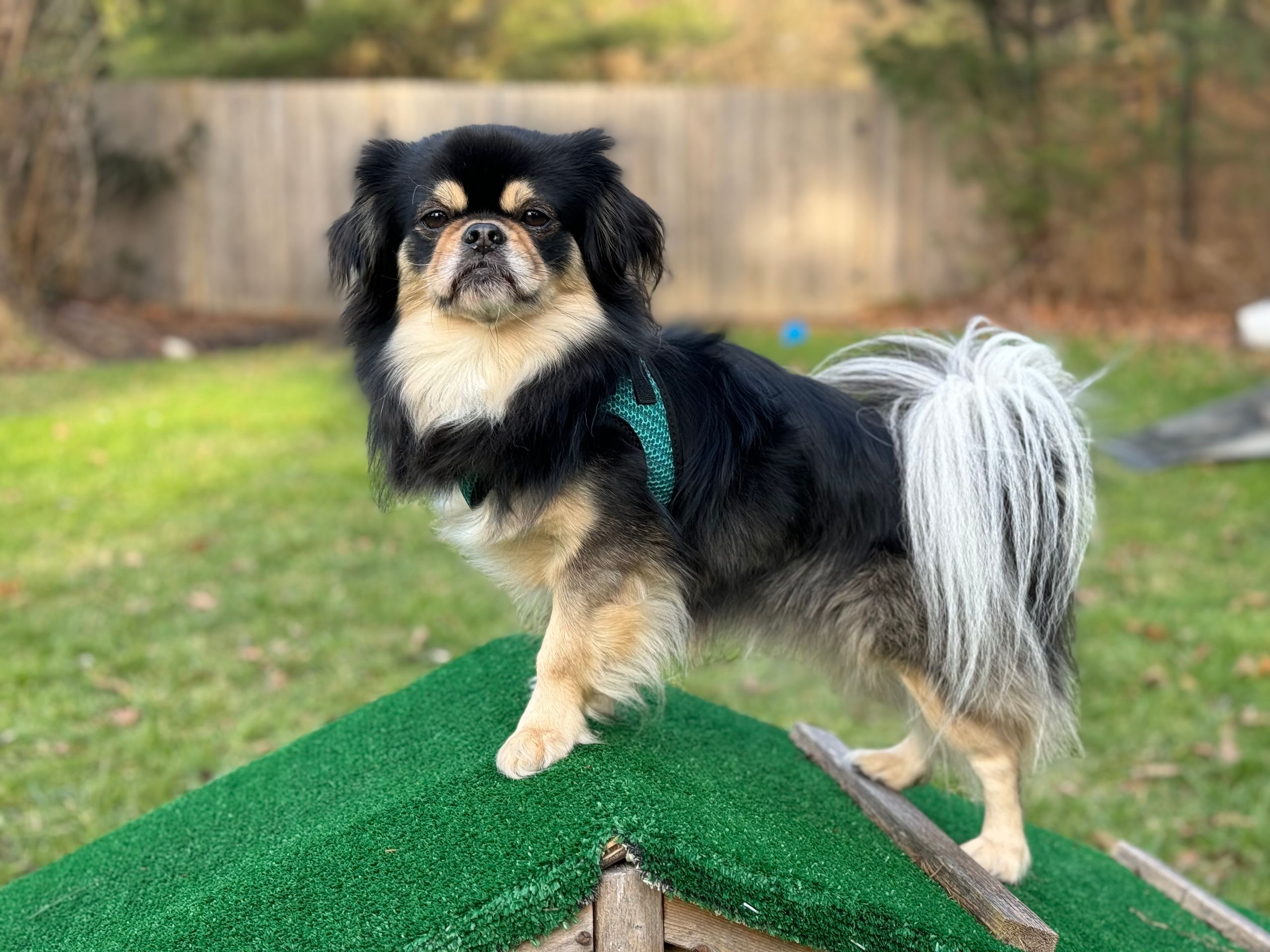
The FCI standard describes a silky topcoat that is smooth on the face and front of the legs and of moderate length on the body, lying rather flat, with a fine, dense undercoat. The ears, backs of the forelegs, tail and buttocks are well feathered. Brushing once or twice a week prevents tangles, particularly behind the ears. Shedding is moderate, with seasonal increases. The standard permits all colours and mixtures of colours.
Feeding and weight
Feed a complete diet suited to a small breed, divided into two meals. Tibbies can be choosy, but many become overweight if treats are frequent, which adds strain to the knees and back. Weigh the dog regularly and adjust portions. Daily tooth brushing or dental chews help, since small dogs are prone to dental disease. Avoid feeding from the table, which encourages fussy habits.
Work out a starting calorie figure and food weight with the calorie calculator. Not sure this is the right breed? Take the quiz.
Health
Every breed carries predispositions. These are the conditions most often discussed for the Tibetan Spaniel, not a prediction for any individual dog.
- Progressive retinal atrophy (PRA)
- Patellar luxation (slipping kneecaps)
- Cataracts
- Portosystemic shunt (liver shunt)
- Dental disease
What to ask the breeder. Ask for eye examination results and PRA DNA test results for both parents, and whether the parents have had their knees checked for patellar luxation.
Choosing a puppy
Tibetan Spaniel puppies are bright, confident and curious. Start socialising early with calm visitors, children and other dogs, and practise handling and grooming daily. House training is usually quick with a routine. Keep walks short and playful while the puppy grows, and protect it from jumping off high furniture. Teach the puppy to be comfortable alone for short periods from the start.
In Luxembourg the national kennel club is the Fédération Cynologique Luxembourgeoise (FCL), a member of the FCI. Many owners also buy from breeders in Germany, France or Belgium; a puppy coming from another EU country must be microchipped and vaccinated against rabies, which in practice means it cannot travel before about fifteen weeks of age. Where to get a dog in Luxembourg.
The older Tibetan Spaniel
Many Tibbies live long lives and stay alert in old age. Regular vet checks should include eyes, teeth and knees. Keep the dog lean and walks gentle, and provide steps or ramps to favourite high spots. Older dogs may feel the cold more and appreciate a warm bed. Dental care becomes increasingly important.
A realistic day
A realistic weekday for a working household in Luxembourg City, with a midday visit. Adjust it to your dog, not the other way round.
Twenty-minute walk with time to sniff, then breakfast.
Owner leaves; the dog settles on a favourite perch by the window.
Midday visit: 15 to 20 minutes outside, fresh water and some play.
Evening walk of about 30 minutes in a park or along quiet streets.
Short toilet walk and a quiet evening on the sofa with the family.
A Tibetan Spaniel in Luxembourg
A Tibetan Spaniel is very well suited to life in a Luxembourg City flat. It is small, clean and generally quiet, and it rides easily in lifts and on buses and trams, which are free nationwide. It may bark briefly at noises in the stairwell, but it usually settles quickly. A window seat with a view of the street keeps it content between walks.
Walks in Parc Merl, the Kinnekswiss or the Pétrusse valley suit its needs, and the forests nearby provide variety. In summer heat, walk early or late and avoid hot pavements. Like every dog in Luxembourg, it must be microchipped, declared to the commune, insured for third-party liability and covered by the annual dog tax.
Every dog in Luxembourg must be identified, declared to the commune and covered by liability insurance. How registration works.
When you travel
A sitter should be introduced beforehand, as the Tibetan Spaniel is reserved with strangers and may take time to accept a new person. Keep the routine familiar, with short walks, regular meals and a favourite high spot available. The sitter should keep the dog on lead outside secure areas, check its eyes and coat, and avoid hot walks in summer.
PAWLY's holiday and overnight care takes place in your home, so your dog keeps its own bed and routine.
Myths and facts
MythThe Tibetan Spaniel is a type of hunting spaniel.
FactDespite the name, it is a companion dog of Tibetan origin, classified by the FCI with other Tibetan breeds in Group 9.
MythSmall dogs need no training.
FactTibbies are intelligent and independent, and they benefit from consistent, positive training and socialisation.
MythThey bark constantly.
FactThey are alert and will announce visitors, but most are not persistent barkers when well socialised and given enough to do.
Is it the right dog for you?
Suits
- Owners in flats who want a small, quiet companion
- People who appreciate an independent, dignified dog
- Households with older children or adults
- First-time owners who want a manageable size
Think twice if
- You want a dog that loves every stranger
- You need reliable off-lead recall
- Young children may handle the dog roughly
- You want a jogging or hiking partner
Questions owners ask
Why is it called a spaniel?
The name is a Western label and does not mean it is related to sporting spaniels. It is a Tibetan companion breed, classed by the FCI with other Tibetan breeds.
Is a Tibetan Spaniel good for a flat?
Yes. It is small, clean, adaptable and usually quiet, needing only moderate exercise. It enjoys a window perch and family company.
Are Tibetan Spaniels good with other pets?
Generally yes. Many live happily with other dogs and cats, especially if raised together. Small pets should still be supervised.
How much grooming does it need?
Brushing once or twice a week is usually enough, with extra attention behind the ears and on the feathering. Bathing is needed only occasionally.
Sources
Photo: Unsplash (Unsplash License) · Photo: Pexels (Pexels License) · Photo: Unsplash (Unsplash License) · Photo: Pexels (Pexels License)
General information for dog owners in Luxembourg, not veterinary or legal advice. Official facts (origin, size, group, history and temperament as described by the breed standard) follow the FCI standard; health and care sections reflect breed-club and veterinary guidance and are typical ranges rather than rules. For your own dog, ask your vet, the breed club or your commune. How this guide is written and checked. Last reviewed 8 October 2026.
Need someone for your Tibetan Spaniel?
PAWLY offers an individual 45-minute walk or a home visit at your dog's pace, the same walker every time, and a written report with photos after every visit, across Luxembourg City.
Read next: the journal, for the Tibetan Spaniel
All articles
Dogs in hot weather: the Luxembourg summer guide
Flat-faced and short-nosed breeds like the Tibetan Spaniel overheat quickly, which matters in a Luxembourg summer.

Teeth: the problem owners find least interesting and vets see most
Teeth are a known weak point in the Tibetan Spaniel; this is the routine that helps.

Dogs and cats in the same flat
The Tibetan Spaniel can see small animals as prey; this covers living with a cat in a flat.
Similar breeds
All 198 breeds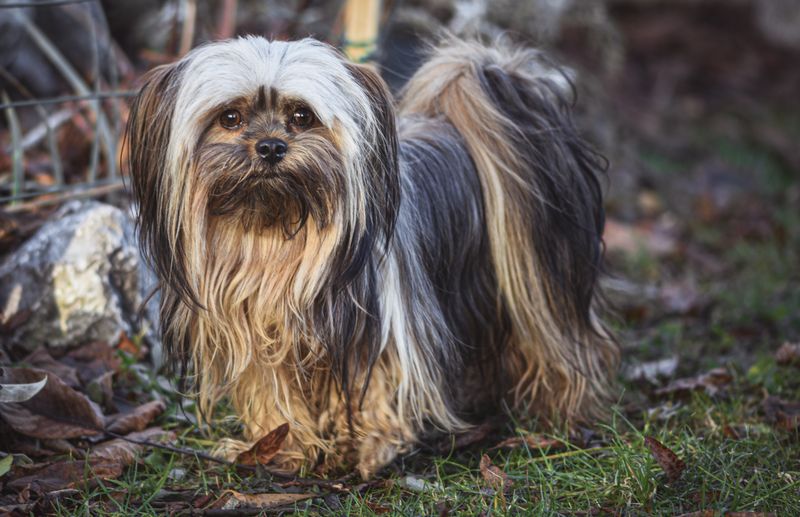
Lhasa Apso
A small Tibetan watchdog in a long coat, confident and a little aloof, who decides for itself who deserves its attention.
EnergyGroomingFlat life
Pekingese
The Chinese palace lion dog: dignified, stubborn, devoted, and much sturdier in spirit than in size.
EnergyGroomingFlat life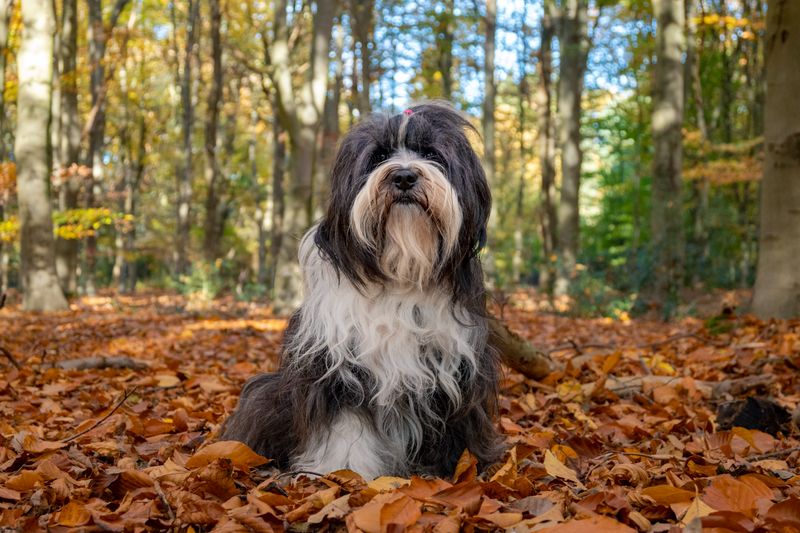
Tibetan Terrier
A mountain herder in a shaggy overcoat, merry and sure-footed, more athletic than its lap-dog looks suggest and quietly watchful of strangers.
EnergyGroomingFlat life

