


History
The Caucasian Shepherd Dog, known in its homeland as the Kavkazskaïa Ovtcharka, comes from the Caucasus range and the steppes of southern Russia. The FCI lists the country of origin as the USSR, with patronage held by Russia. Its ancestors were the dogs of local shepherds, kept to guard herds, flocks and dwellings from predators.
Systematic selection began in the Soviet Union in the 1920s. The standard names the qualities breeders cultivated: physical power, self-confidence, fearlessness, sharp hearing, good sight and a dense, waterproof coat. The FCI classifies the breed in Group 2, Section 2.2, among the Molossian dogs of mountain type, without a working trial, and gives its use as a guard and watchdog.
Temperament
The FCI standard describes a steady, active, self-confident, fearless and independent dog, with devoted attachment to its master and an excellent guarding instinct. In practice that means a dog that is calm and rather aloof inside the family circle and watchful about everything outside it.
It chooses its people, bonds deeply with them and expects consistency in return. Visitors may be tolerated once the owner has made it clear that they are welcome, but a pushy guest, a delivery driver at the gate or a stranger reaching over the dog's head are situations the owner must manage. The standard rules out aggression and excessive shyness; reliable temperament is the result of careful breeding, early socialisation and sensible handling, not of luck.
Children and other pets
With its own family the breed is typically gentle and protective, but its size alone makes it a poor match for toddlers and boisterous visiting children, who can be knocked over without any ill intent. Other dogs are tolerated best when raised together; unfamiliar dogs, especially of the same sex, can be a problem. Cats and small animals in the home are usually accepted if introduced very young, but every outing needs close control and no meeting with strangers should be left to chance.
Exercise and the daily walk
A healthy adult is generally content with an hour to an hour and a half of steady walking, split across the day, plus time to patrol a secure garden or yard if one is available.
Off-lead freedom is rarely wise outside an enclosed area, since the dog's urge to protect territory can shift to a stranger or another dog on a path. Use a strong, well-fitted harness or collar and a lead that you can hold with confidence. Puppies grow fast and their joints are vulnerable, so avoid forced running, long hikes and stair marathons until well into the second year.
Training
These dogs are intelligent but independent, and they were selected to make their own decisions when a predator appeared. Harsh correction tends to be answered with resistance or withdrawal. Short sessions, clear rules and rewards that matter to the individual dog build the cooperation you will need when it weighs more than you do.
From the first weeks the puppy should meet many calm people, surfaces, sounds, lifts and other dogs, always in a controlled way. Teach loose-lead walking, a reliable sit and down, and a settled wait at the door from day one, because a guardian of this size that learns to surge through a doorway is a serious problem. First-time owners are not the natural audience; an experienced handler, ideally with help from a qualified trainer, is strongly recommended.
Coat and grooming
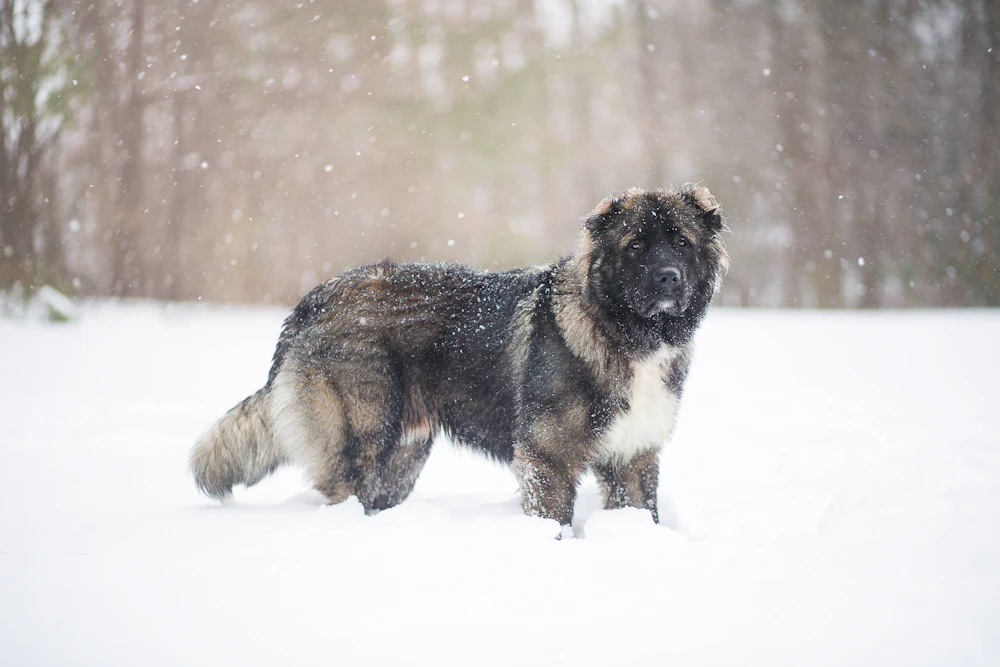
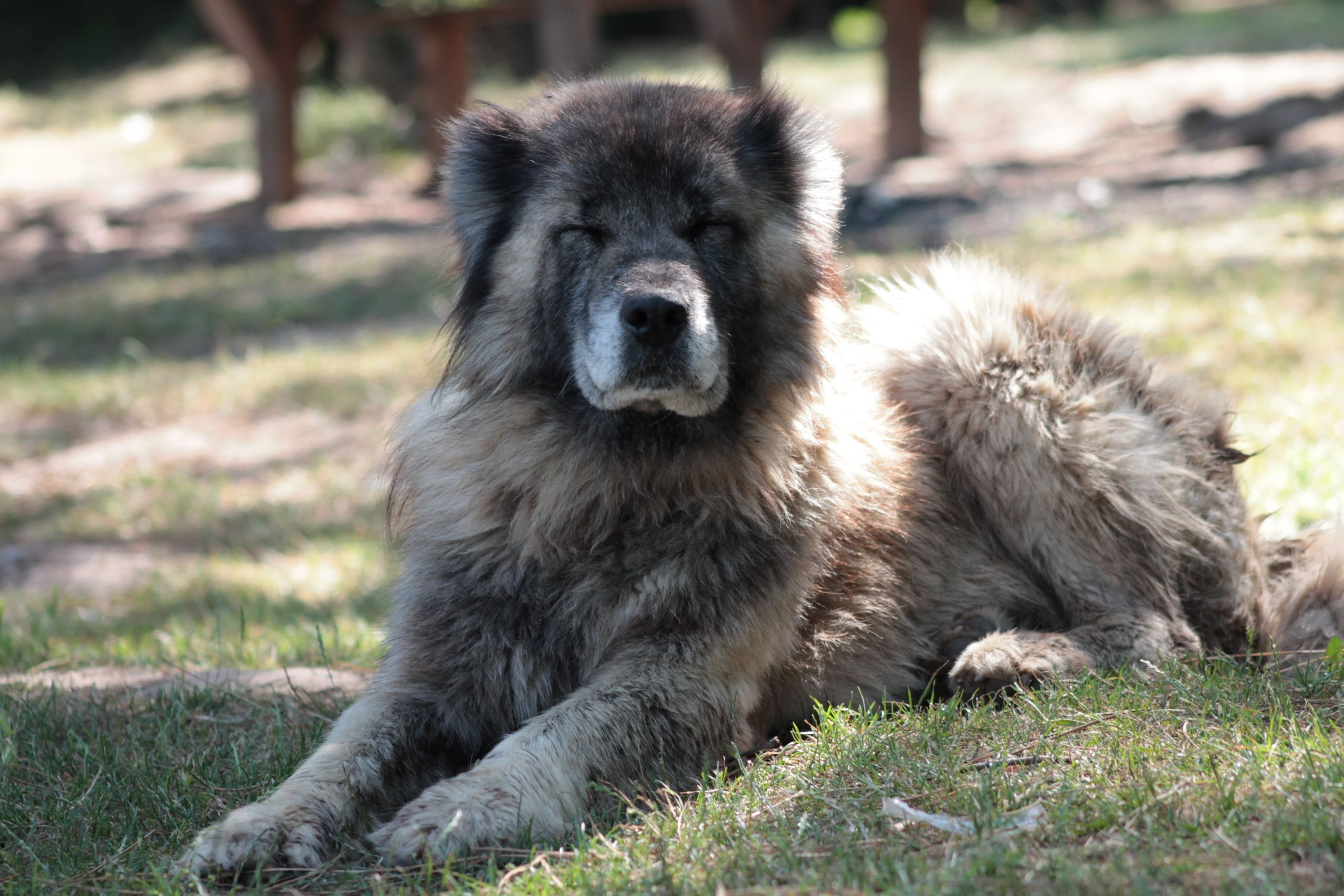
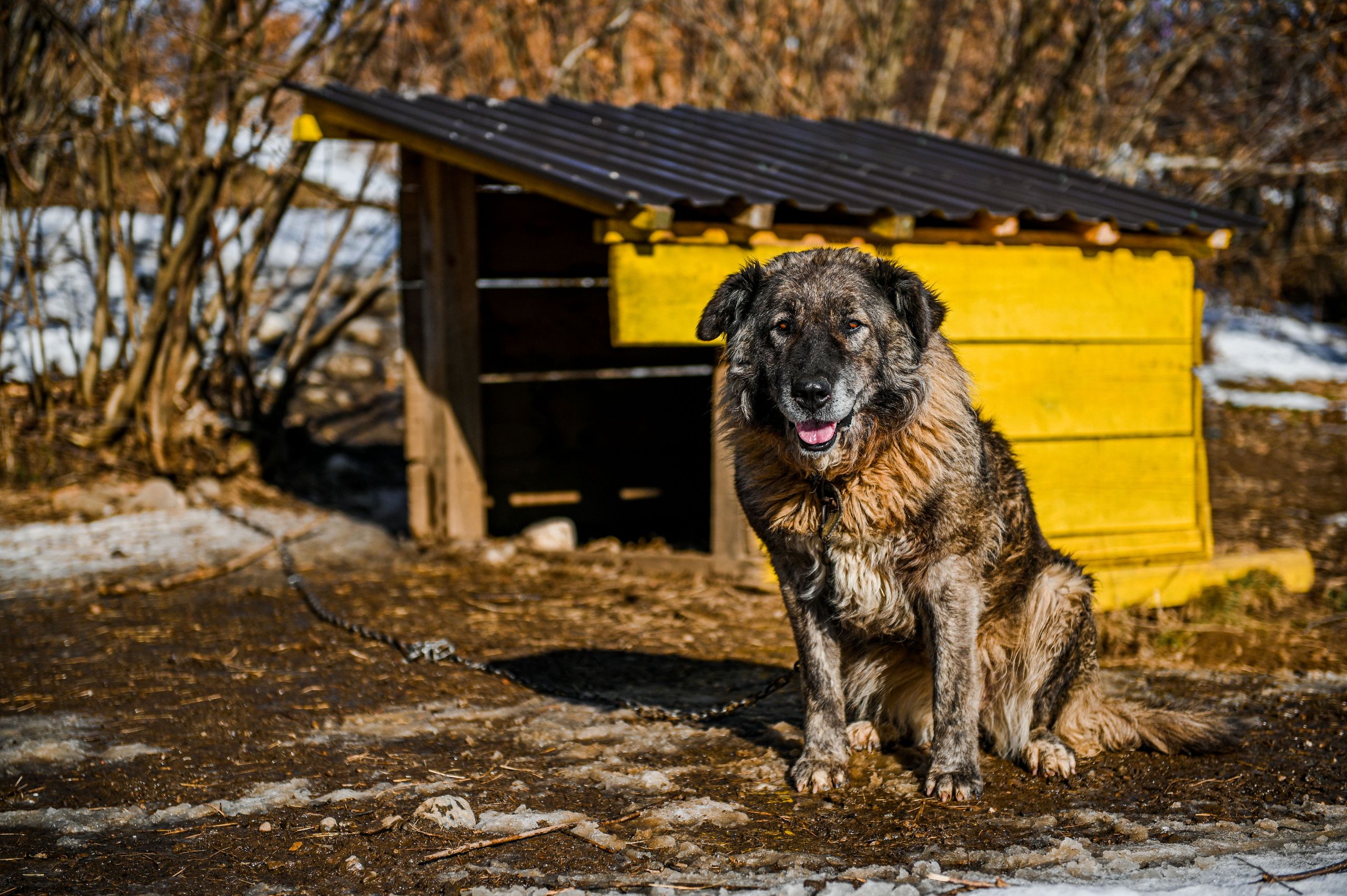
The standard calls for a straight, coarse, stand-off coat with a well developed undercoat, at least 5 cm long and shorter and thicker on the head and forelegs, forming a mane, brushes and trousers. Brush two or three times a week, and daily during the heavy seasonal moult, when great quantities of undercoat come out. Bathing is rarely needed. Any solid, piebald or spotted colour is permitted, but the standard excludes solid black, diluted black, genetic blue and liver brown.
Feeding and weight
Giant breeds need a complete diet suited to large, slow-maturing dogs, with controlled energy so that puppies do not grow too quickly. Feed two or three smaller meals rather than one large one, and avoid vigorous exercise around mealtimes because of the bloat risk. Keep an adult lean enough that you can feel the ribs, as extra weight punishes the hips and elbows.
Work out a starting calorie figure and food weight with the calorie calculator. Not sure this is the right breed? Take the quiz.
Health
Every breed carries predispositions. These are the conditions most often discussed for the Caucasian Shepherd Dog, not a prediction for any individual dog.
- Hip dysplasia and elbow dysplasia, common in large and giant breeds
- Gastric dilatation and volvulus (bloat), a sudden emergency in deep-chested dogs
- Developmental joint and bone problems in fast-growing puppies
- Overheating in warm weather because of the dense double coat
- Excess weight, which magnifies every joint problem
What to ask the breeder. Ask the breeder for hip and elbow scores for both parents, and about any bloat in the family line. Ask to meet the parents and see how they behave with strangers.
Choosing a puppy
A Caucasian Shepherd puppy looks like a teddy bear and grows with remarkable speed, so plan for the adult from the first day. Protect the joints: non-slip floors, no jumping from cars or sofas, short walks and plenty of rest. Begin socialisation immediately, with calm exposure to people, lifts, buses and city noise before the dog is full size. Practise handling of paws, mouth and coat, and teach manners at doors while the puppy is still easy to steer.
In Luxembourg the national kennel club is the Fédération Cynologique Luxembourgeoise (FCL), a member of the FCI. Many owners also buy from breeders in Germany, France or Belgium; a puppy coming from another EU country must be microchipped and vaccinated against rabies, which in practice means it cannot travel before about fifteen weeks of age. Where to get a dog in Luxembourg.
The older Caucasian Shepherd Dog
By seven or eight years the breed often slows down, and giant dogs age earlier than medium ones. Keep walks short and regular, use a thick orthopaedic bed and non-slip mats, and watch weight closely. Stiffness on rising, reluctance on stairs or a change in appetite deserve a vet visit.
A realistic day
A realistic weekday for a working household in Luxembourg City, with a midday visit. Adjust it to your dog, not the other way round.
Calm lead walk of about 30 minutes on quiet streets, then breakfast and a rest well away from any vigorous play.
Owner leaves for work; the dog settles by the front door or in its usual spot with water and a chew.
Midday visit: a steady 40-minute walk with a trusted handler, water, a toilet break and a check that the dog is calm and cool.
Evening walk of about an hour in a quiet green area, with training practice in the middle, then dinner after a rest.
Last short toilet break, a gentle brush if it is moulting, and quiet time before bed.
A Caucasian Shepherd Dog in Luxembourg
Many residents live in flats with lifts, and while a very large calm adult can cope with an apartment, the dog's natural reaction to every footstep on the landing, every doorbell and every neighbour in the corridor is to watch and perhaps to bark. A house with a secure garden, in the suburbs or the surrounding countryside, suits the breed far better than a third floor in the centre.
The Pétrusse valley and Parc Merl are busy at peak times, and a big guardian dog meeting joggers, buggies and unfamiliar dogs at close quarters is stressful for everyone. Quieter hours, forest edges at Bambësch or in the Grünewald and a firm lead are the sensible approach. Summer heat in the 30s °C is hard on a dog with a thick double coat, so walk early and late and offer shade and water. Every dog must be microchipped, declared to the commune, insured for third-party liability and subject to the annual dog tax. The law of 9 May 2008 names certain types, so check with the commune if you have any doubt about a dog of molossoid build.
Every dog in Luxembourg must be identified, declared to the commune and covered by liability insurance. How registration works.
When you travel
A sitter must be experienced with large guardian dogs and meet the dog several times before the owner leaves. Keep doors and gates secured, never let the dog off the lead outside a closed area and avoid unplanned visitors. Stick to the usual routine, feed in small portions, keep the dog cool and know the signs of bloat.
PAWLY's holiday and overnight care takes place in your home, so your dog keeps its own bed and routine.
Myths and facts
MythA guardian dog needs to be aggressive to do its job.
FactThe FCI standard asks for a steady, self-confident dog and rules out aggression. Good guardians are calm and discriminating, not nervous or hostile.
MythBecause they are large they need many hours of running.
FactThe breed is built for steady watchfulness. Moderate daily walks, security and mental calm matter more than speed or distance.
MythWith enough love a Caucasian Shepherd will accept anyone.
FactAffection helps, but the breed is reserved with strangers by design. Training, socialisation and management are needed throughout the dog's life.
Is it the right dog for you?
Suits
- Experienced owners of large guardian or molossoid breeds
- Homes with a secure garden and space to spare
- People who want a calm, watchful companion rather than a sporty one
- Households with older, sensible children and a settled routine
Think twice if
- You live in a small flat with thin walls
- This would be your first dog
- You want a dog that greets every visitor warmly
- You cannot manage 50 kg or more of strong, stubborn dog on a lead
Questions owners ask
Can a Caucasian Shepherd Dog live in a flat?
It is possible only for a calm adult with experienced owners and a lift, but it is rarely ideal. The breed watches and guards by instinct, which means barking and tension in shared buildings. A house with a secure garden suits it much better.
Is the breed good with children?
It is usually gentle and protective with its own family but very large and wary of strangers. Young children and their friends need close supervision, and the dog should not be left to manage games by itself.
Does it need lots of exercise?
Not extreme amounts. An hour to an hour and a half of steady walking each day is typical for a healthy adult, along with security, calm routine and mental stimulation.
How much does it shed?
A good deal. The coat is dense with a thick undercoat, and a heavy moult comes at least once a year.
Sources
Photo: Unsplash (Unsplash License) · Photo: Pexels (Pexels License) · Photo: Pexels (Pexels License) · Photo: Unsplash (Unsplash License)
General information for dog owners in Luxembourg, not veterinary or legal advice. Official facts (origin, size, group, history and temperament as described by the breed standard) follow the FCI standard; health and care sections reflect breed-club and veterinary guidance and are typical ranges rather than rules. For your own dog, ask your vet, the breed club or your commune. How this guide is written and checked. Last reviewed 8 October 2026.
Need someone for your Caucasian Shepherd Dog?
PAWLY offers an individual 45-minute walk or a home visit at your dog's pace, the same walker every time, and a written report with photos after every visit, across Luxembourg City.
Read next: the journal, for the Caucasian Shepherd Dog
All articles
Dogs in hot weather: the Luxembourg summer guide
The Caucasian Shepherd Dog carries a heavy coat or a heavy frame, which makes a Luxembourg summer the hard season.

Arthritis: the pain owners file under old age
Giant breeds tend to have joint trouble early; this is what to look for.

Growing a large-breed puppy without wrecking its joints
A giant puppy grows fast on soft bones; how it grows decides its joints for life.
Similar breeds
All 198 breeds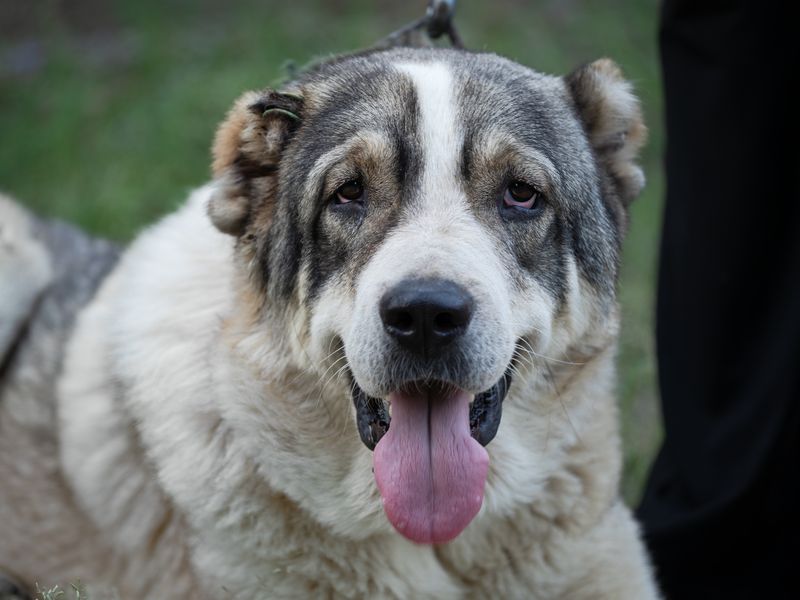
Central Asian Shepherd Dog
An ancient caravan and flock guardian, quietly proud, unhurried indoors and unimpressed by anything that is not a genuine threat.
EnergyGroomingFlat life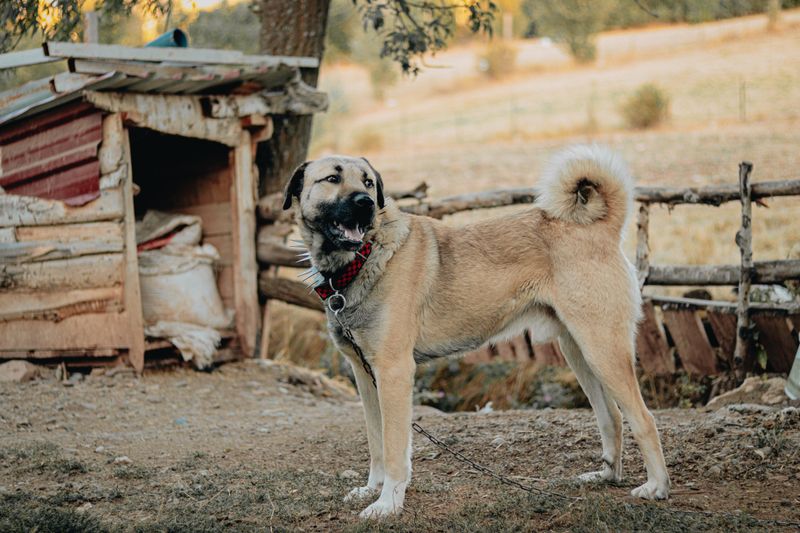
Kangal Shepherd Dog
A Turkish flock guardian with a black mask and a calm, measuring gaze, bred to make its own decisions at night on an empty hillside.
EnergyGroomingFlat life
Great Pyrenees
A white mountain guardian from the Pyrenees, gentle with its own people, independent by design and happiest keeping quiet watch over everything.
EnergyGroomingFlat life

