


History
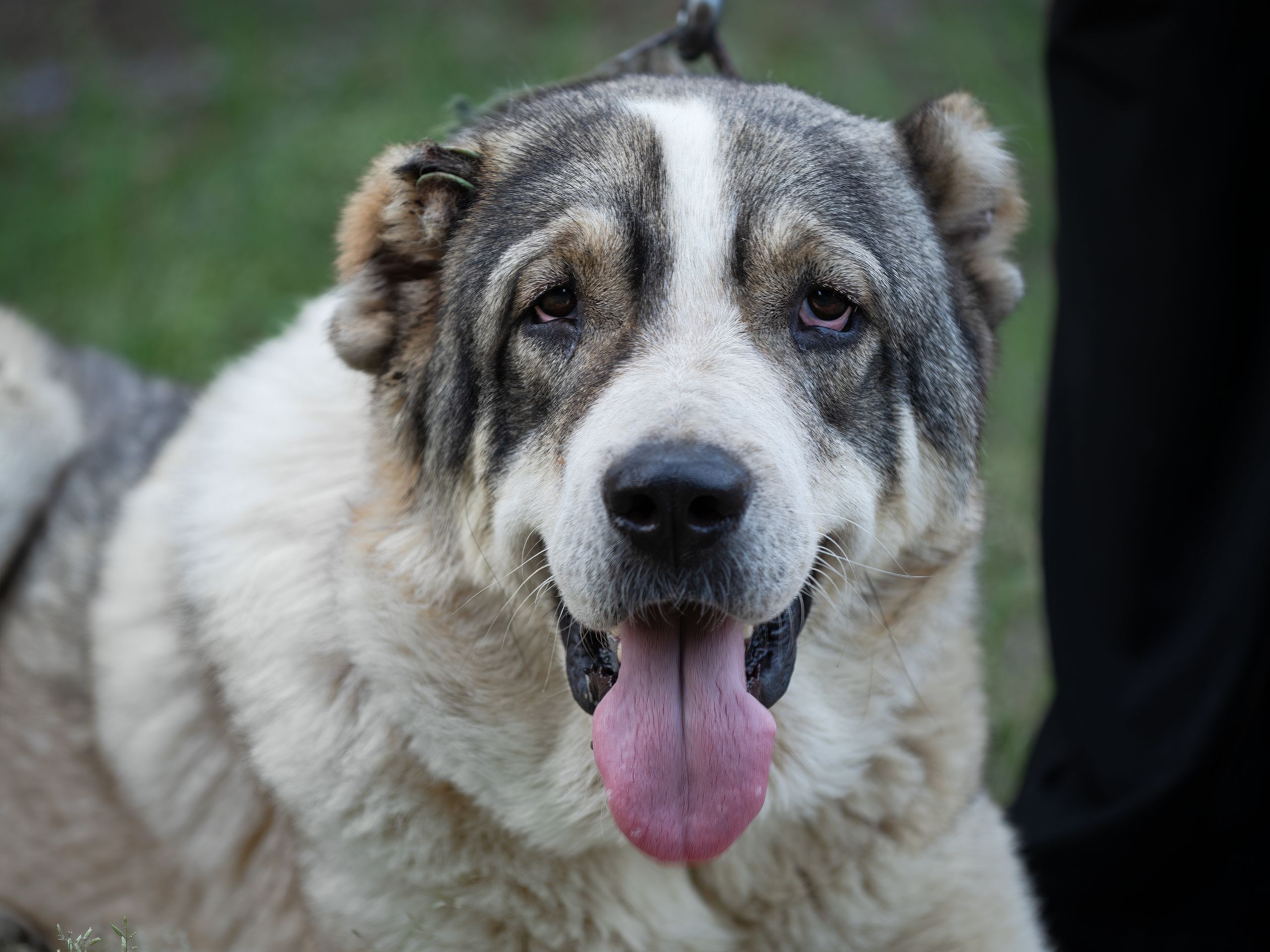
The Central Asian Shepherd Dog is described in the FCI standard as one of the most ancient dog breeds, formed over some 4,000 years by natural selection across Central Asia, from the Caspian Sea to the borders of China. Its heritage goes back to ancient Tibetan dogs and the livestock guardians of nomadic tribes, and the standard links it to the Mongolian Shepherd Dogs and the Tibetan Mastiff. The FCI gives the country of origin as the USSR, regions of Central Asia, with patronage held by Russia.
These dogs lived with nomads and were used to protect cattle, caravans and the owner's dwellings under harsh natural conditions, which is why toughness, endurance and independence were selected over everything else. Systematic breeding began in the USSR in the 1930s. The FCI classifies the breed in Group 2, Section 2.2, Molossoid breeds of mountain type, without a working trial, and describes its use as a guard and watch dog.
Temperament
The standard describes a self-assured, balanced, quiet, proud and independent dog, marked by courage, working capacity, endurance and a territorial instinct. It also notes a fearlessness towards large predators that sets the breed apart. In daily life this translates into a dog that is steady and rather calm in the house, undemonstrative with strangers and very much in charge of whatever it considers its patch.
A Central Asian Shepherd Dog was bred to make decisions alone, far from a handler, and it will not obey on the strength of enthusiasm alone. It is loyal to its family and watchful of outsiders, and a calm, confident owner who sets clear boundaries is far more successful than one who shouts. Early, careful socialisation is essential, so that the natural wariness does not harden into suspicion of everyone.
Children and other pets
With its own people the breed is generally loyal and tolerant, and many adults are patient with respectful children. Size remains the issue: a dog of this weight can flatten a toddler without meaning to, and its protective instinct may misread a noisy playground scuffle. Other dogs are best accepted when raised together, and same-sex tension between adults is common in guardian breeds. Cats and small pets in the household may be accepted if introduced very young, but outdoors the dog's response to anything that runs is unpredictable.
Exercise and the daily walk
The breed needs steady, purposeful movement more than speed. An hour to an hour and a half of walking each day, split into two or three outings, is usually enough for a healthy adult, with time in a secure yard or garden if there is one.
A strong lead and a reliable harness or collar are essential, since the dog's weight and reaction to perceived threats make control on the street a safety matter. Off-lead exercise should be limited to fully enclosed spaces. Puppies grow rapidly and their joints are at risk, so avoid long runs, jumping and slippery stairs during the first eighteen months or more.
Training
Training works through respect. The Central Asian Shepherd Dog is intelligent and quick to understand, but it questions every instruction that does not seem to have a purpose. Clear, consistent rules, calm correction and meaningful rewards give the best result, and repeated drills usually give boredom.
Begin socialisation early and keep it going through adolescence and adulthood: other dogs, strangers in controlled settings, lifts, traffic, buses and busy pavements. Teach loose-lead walking, a solid settle and a polite door routine long before the dog is full size. Because the breed's guarding instinct matures with age, owners should expect behaviour to change around the second and third year.
Coat and grooming
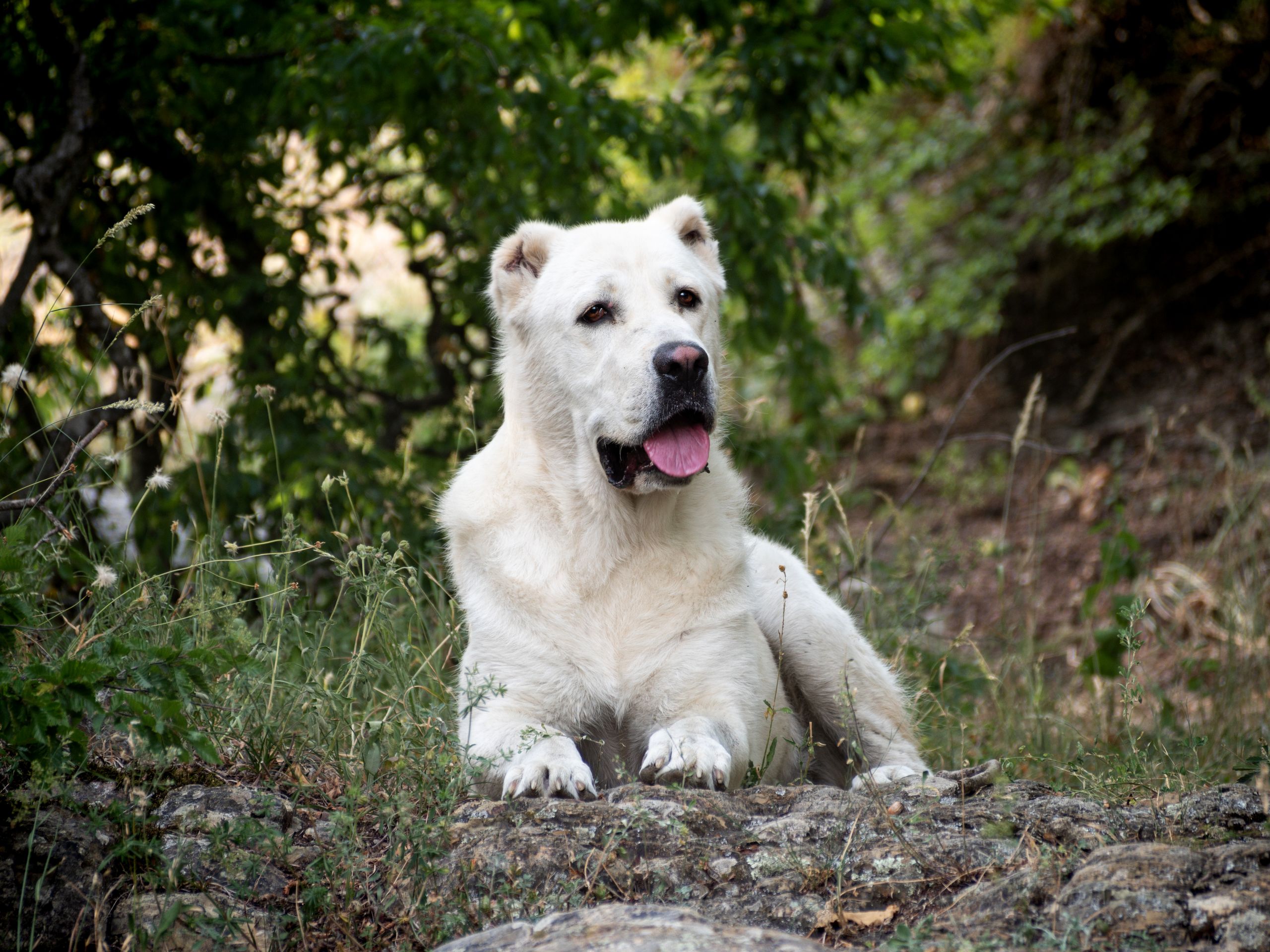
The standard describes an abundant, straight, coarse coat with a well developed undercoat, from short (3 to 5 cm) to longer (7 to 10 cm) hair that forms a mane and feathering. Brush weekly, and daily during the seasonal moult when the undercoat comes out in large amounts. Any colour is permitted except genetic blue, genetic brown in any combination and black mantle on tan.
Feeding and weight
A giant dog needs a complete food formulated for large breeds, with measured energy during growth so that bones and joints are not rushed. Divide the day's ration into two or three meals, avoid exercise just before and after eating, and keep an adult lean so that the ribs can be felt under the coat.
Work out a starting calorie figure and food weight with the calorie calculator. Not sure this is the right breed? Take the quiz.
Health
Every breed carries predispositions. These are the conditions most often discussed for the Central Asian Shepherd Dog, not a prediction for any individual dog.
- Hip dysplasia and elbow dysplasia, common in large and giant breeds
- Gastric dilatation and volvulus (bloat), a life-threatening emergency
- Developmental bone and joint problems in fast-growing puppies
- Overheating in warm weather because of the dense coat and large size
- Obesity, which accelerates arthritis and shortens active life
What to ask the breeder. Ask for hip and elbow scores for both parents and for any history of bloat in the line. Meet the parents and see how they behave with strangers and other dogs.
Choosing a puppy
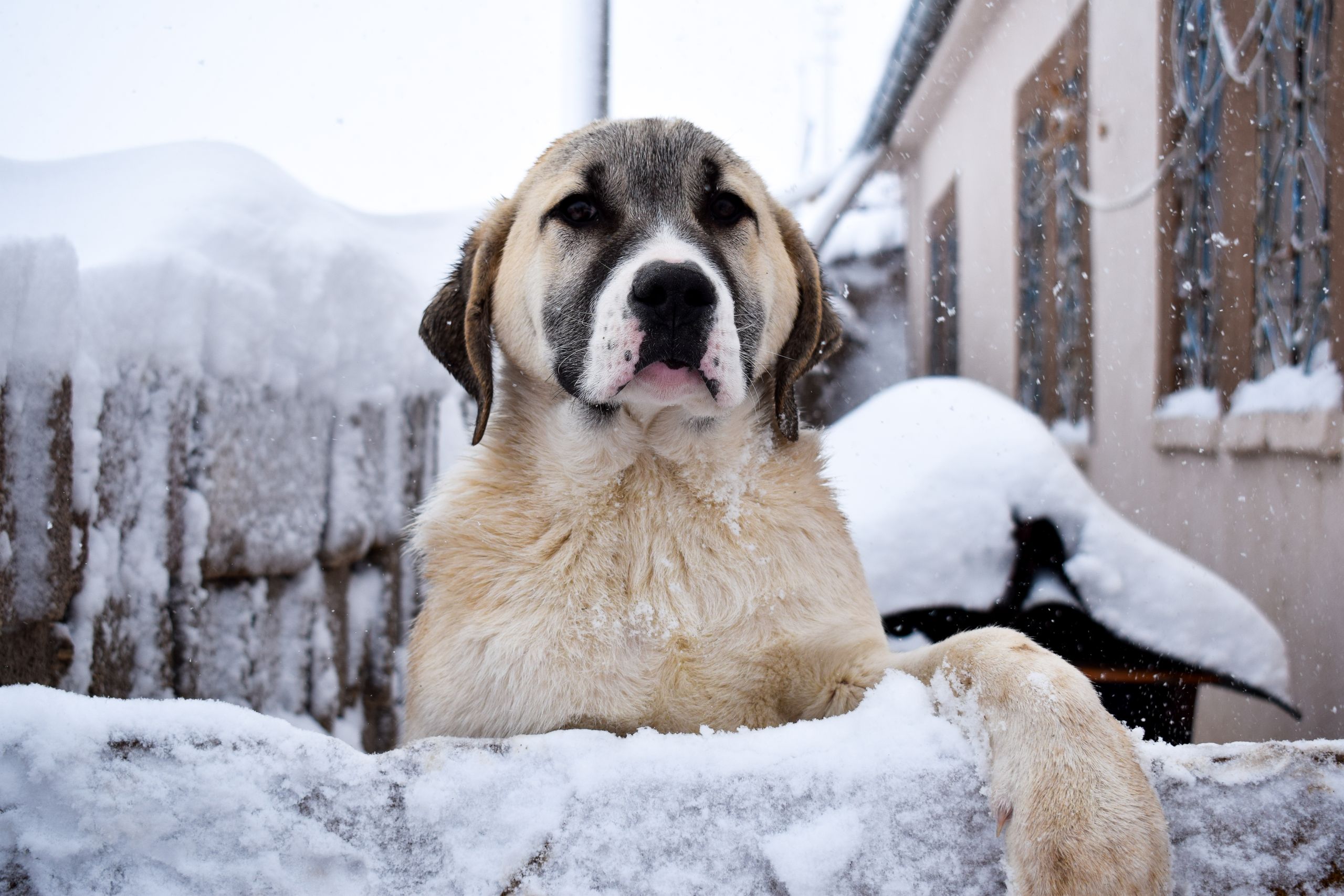
Puppies are sturdy but grow quickly, and the standard notes that full maturity is not reached until around three years. Keep walks short and surfaces non-slip, avoid forced running and stairs, and let the puppy sleep as much as it wants. Socialise gently and systematically: lifts, buses, pavement noise, strangers and calm dogs. Practise handling of paws and mouth, and teach door manners from the beginning.
In Luxembourg the national kennel club is the Fédération Cynologique Luxembourgeoise (FCL), a member of the FCI. Many owners also buy from breeders in Germany, France or Belgium; a puppy coming from another EU country must be microchipped and vaccinated against rabies, which in practice means it cannot travel before about fifteen weeks of age. Where to get a dog in Luxembourg.
The older Central Asian Shepherd Dog
From seven or eight years the breed often moves more slowly, and joint stiffness is the usual first sign. Keep exercise regular but gentle, provide an orthopaedic bed and non-slip mats, and watch weight and teeth. Think ahead about access, as a large senior dog that cannot manage steps is difficult to move.
A realistic day
A realistic weekday for a working household in Luxembourg City, with a midday visit. Adjust it to your dog, not the other way round.
Steady 30-minute lead walk on quiet streets, then breakfast and rest.
Owner leaves for work; the dog settles in a cool spot with water and a chew.
Midday visit: 40 minutes of calm walking with an experienced handler, water and a check that the dog is relaxed.
Evening walk of about an hour in a quiet area, with short training exercises, then dinner after a rest.
Final toilet break, a brush if it is moulting, and an early night.
A Central Asian Shepherd Dog in Luxembourg
Luxembourg City is not an easy home for a dog bred to watch over caravans and flocks. The breed does best with a house and a secure garden, in the countryside or the suburbs, where it can patrol its own space. In a flat, even with a lift, the dog's instinct to monitor the corridor and the street can lead to barking and tension with neighbours, and a lift ride with a 50 kg guardian needs planning around other residents.
The Pétrusse valley and Parc Merl are busy at weekends, while the edges of the Bambësch and Grünewald forests allow longer, calmer outings on a firm lead. Buses and trams are free, but travelling with a giant dog should be rehearsed gradually and avoided at peak hours. Summer days in the 30s °C are a serious risk for a thickly coated dog, so keep to early mornings and late evenings. Every dog must be microchipped, declared to the commune, insured and subject to the annual dog tax. The 2008 law names certain types, including dogs of similar morphology to a Mastiff, so ask the commune if you are unsure about a molossoid dog.
Every dog in Luxembourg must be identified, declared to the commune and covered by liability insurance. How registration works.
When you travel
Choose a sitter who has real experience with large guardian breeds and arrange several introductions before departure. The dog should never be off the lead outside an enclosed area, and nobody unfamiliar should enter the home unannounced. Keep to the normal routine and ration, provide cool shade and water, and know the signs of bloat.
PAWLY's holiday and overnight care takes place in your home, so your dog keeps its own bed and routine.
Myths and facts
MythA big guardian breed is simply a dog that bites strangers.
FactThe standard describes a balanced, self-assured dog and rules out aggression. A good guardian is calm, and it reacts to real threats, not to every passer-by.
MythIt will protect you without any training.
FactThe instinct is natural, but control, socialisation and clear rules are the owner's work.
MythGiant dogs are fine in flats because they sleep all day.
FactMany are calm indoors, but their size, barking at noises and the need for steady daily outings make small flats and thin walls a poor fit.
Is it the right dog for you?
Suits
- Experienced owners of livestock guardian or molossoid breeds
- Homes with a secure garden and tolerant neighbours
- People who prefer a calm, independent dog to an eager one
- Owners who can commit to training and socialisation for life
Think twice if
- You have little dog experience
- You live in a small flat or a block with thin walls
- You want a dog that is friendly to everyone it meets
- Your summers are spent in warm, unshaded places
Questions owners ask
Is the Central Asian Shepherd Dog good for beginners?
Not usually. It is independent, large and protective, and it needs experienced handling and careful early socialisation.
How big does it get?
The FCI standard gives minimum heights of 70 cm for males and 65 cm for females, and minimum weights of 50 kg and 40 kg. Many dogs are larger, and the breed reaches full maturity at around three years.
Can it cope with warm summers?
With care. The dense coat and big frame make heat a risk, so exercise should be limited to early and late hours, with shade, cool surfaces and plenty of water always available.
Does it bark a lot?
It is not a constant barker, but it watches closely and will give voice to perceived intruders. In a shared building, the sounds of a corridor can trigger it, so training and a calm routine are important.
Sources
Photo: Pexels (Pexels License) · Photo: Pexels (Pexels License) · Photo: Pexels (Pexels License)
General information for dog owners in Luxembourg, not veterinary or legal advice. Official facts (origin, size, group, history and temperament as described by the breed standard) follow the FCI standard; health and care sections reflect breed-club and veterinary guidance and are typical ranges rather than rules. For your own dog, ask your vet, the breed club or your commune. How this guide is written and checked. Last reviewed 8 October 2026.
Need someone for your Central Asian Shepherd Dog?
PAWLY offers an individual 45-minute walk or a home visit at your dog's pace, the same walker every time, and a written report with photos after every visit, across Luxembourg City.
Read next: the journal, for the Central Asian Shepherd Dog
All articles
Dogs in hot weather: the Luxembourg summer guide
The Central Asian Shepherd Dog carries a heavy coat or a heavy frame, which makes a Luxembourg summer the hard season.

Arthritis: the pain owners file under old age
Giant breeds tend to have joint trouble early; this is what to look for.

Growing a large-breed puppy without wrecking its joints
A giant puppy grows fast on soft bones; how it grows decides its joints for life.
Similar breeds
All 198 breeds
Caucasian Shepherd Dog
A mountain guardian built to protect flocks from wolves, and a dog that treats your front door with the same seriousness.
EnergyGroomingFlat life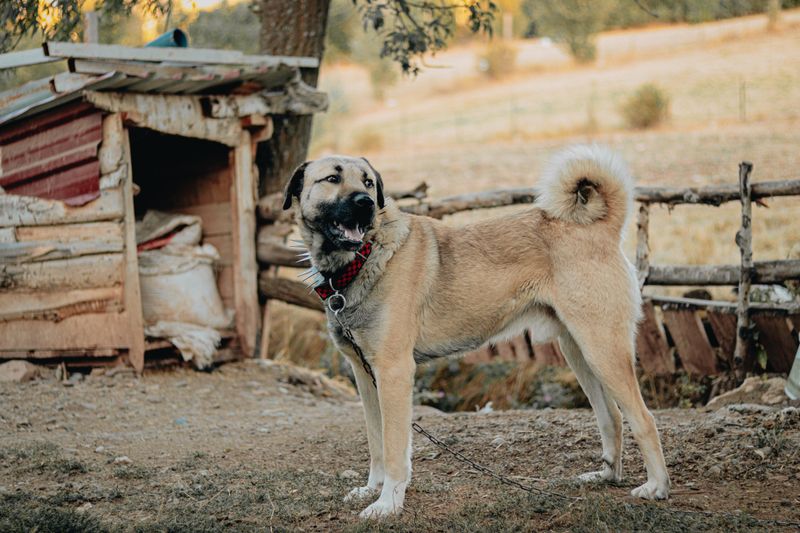
Kangal Shepherd Dog
A Turkish flock guardian with a black mask and a calm, measuring gaze, bred to make its own decisions at night on an empty hillside.
EnergyGroomingFlat life
Tibetan Mastiff
The great guardian of the Himalayas: independent, nocturnal, watchful and impressive, and a serious commitment.
EnergyGroomingFlat life

