


History
The Tibetan Mastiff, known in its homeland as the Do-Khyi, was kept by Himalayan nomads and Tibetan monasteries as a guardian of flocks, tents and religious houses. It is one of the oldest breeds in the world, and the FCI standard notes that it was mentioned by Aristotle and by Marco Polo. Remote geography kept the type fairly uniform for centuries, shaped by function rather than fashion.
The breed reached the West in the nineteenth century. The standard records a male sent to Queen Victoria by Lord Hardinge in 1847, and the first recorded Western litter was born at Berlin Zoo in 1898. The current FCI standard, published on 18 March 2015, gives Tibet (China) as the country of origin and places the breed in Group 2, Section 2.2, molossoid breeds of mountain type.
Temperament
The standard sums the character up in a handful of words: independent, protective, commanding respect and most loyal to family and territory. A Tibetan Mastiff is not a dog that waits for instructions. It was bred to judge a situation alone, often at night and far from its owner, and it will quietly weigh your request before deciding whether it makes sense.
That watchfulness shows as reserve with strangers and a serious, solemn expression. Tradition has the dog resting by day and patrolling after dark, and many are vocal in the evening and the small hours. The breed is slow to mature, reaching its best at two to three years in females and at least four in males, so adolescence lasts a long time.
Children and other pets
Tibetan Mastiffs are devoted to their own family and often gentle with children they know, but a huge, independent, protective dog needs supervision around visiting friends. They are wary of visitors and unsuited to a busy social household. Same-sex dogs can be a problem, and the breed's guarding instinct means small pets and unfamiliar dogs should be introduced with great care.
Exercise and the daily walk
About an hour of moderate exercise a day is enough, ideally in cool weather. Tibetan Mastiffs are not built for running, jogging or cycling beside a bicycle. They enjoy walking at their own pace, sniffing, and patrolling a secure garden. A slow morning walk and a gentle evening one suit them far better than a single marathon.
Heat is hard on this breed, with its thick double coat and heavy build. On warm Luxembourg days, keep walks short, in shade, and in the coolest hours, and provide cool floors and fresh water indoors. Never leave the dog in a car. Because it is slow to mature, avoid hard exercise and stairs for a growing puppy.
Training
Tibetan Mastiffs are intelligent and independent, and they do not obey for the sake of it. Early, consistent, calm, reward-based training with clear rules works best. Harsh handling can make a dog of this temperament defensive, and a defensive dog of 60 kilos is a problem for everyone. Keep sessions short and make sure the dog sees a reason to cooperate.
Socialise extensively and early, with people, dogs, lifts, trams and city noise, while the puppy is still small enough to manage. Strong fencing matters, since the breed wanders and protects its territory. Practise handling, nail trimming and vet visits from the start, because you will not be able to restrain an adult that decides it has had enough.
Coat and grooming
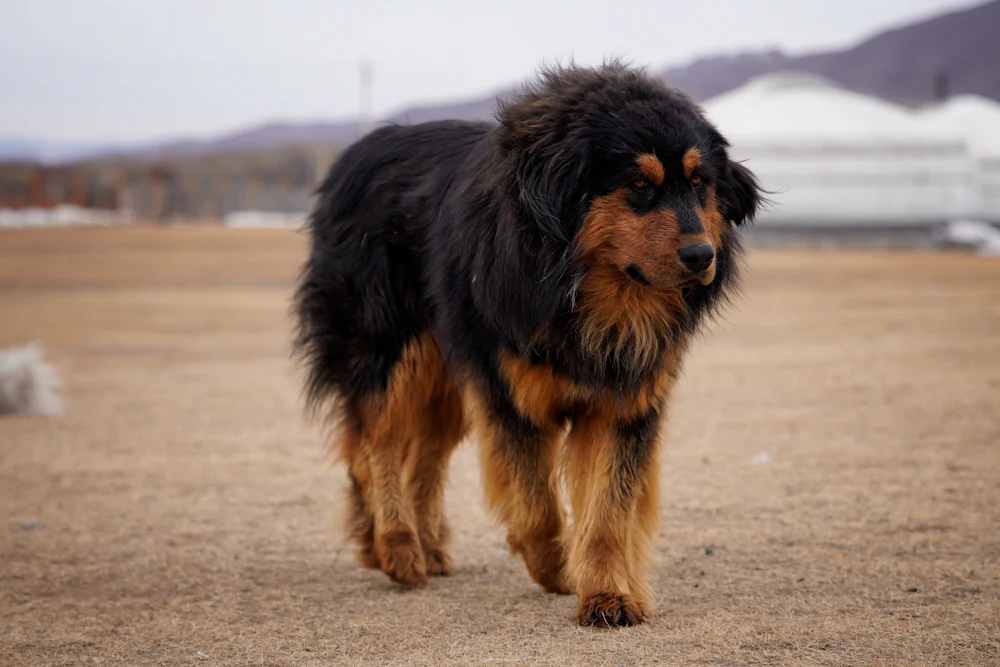
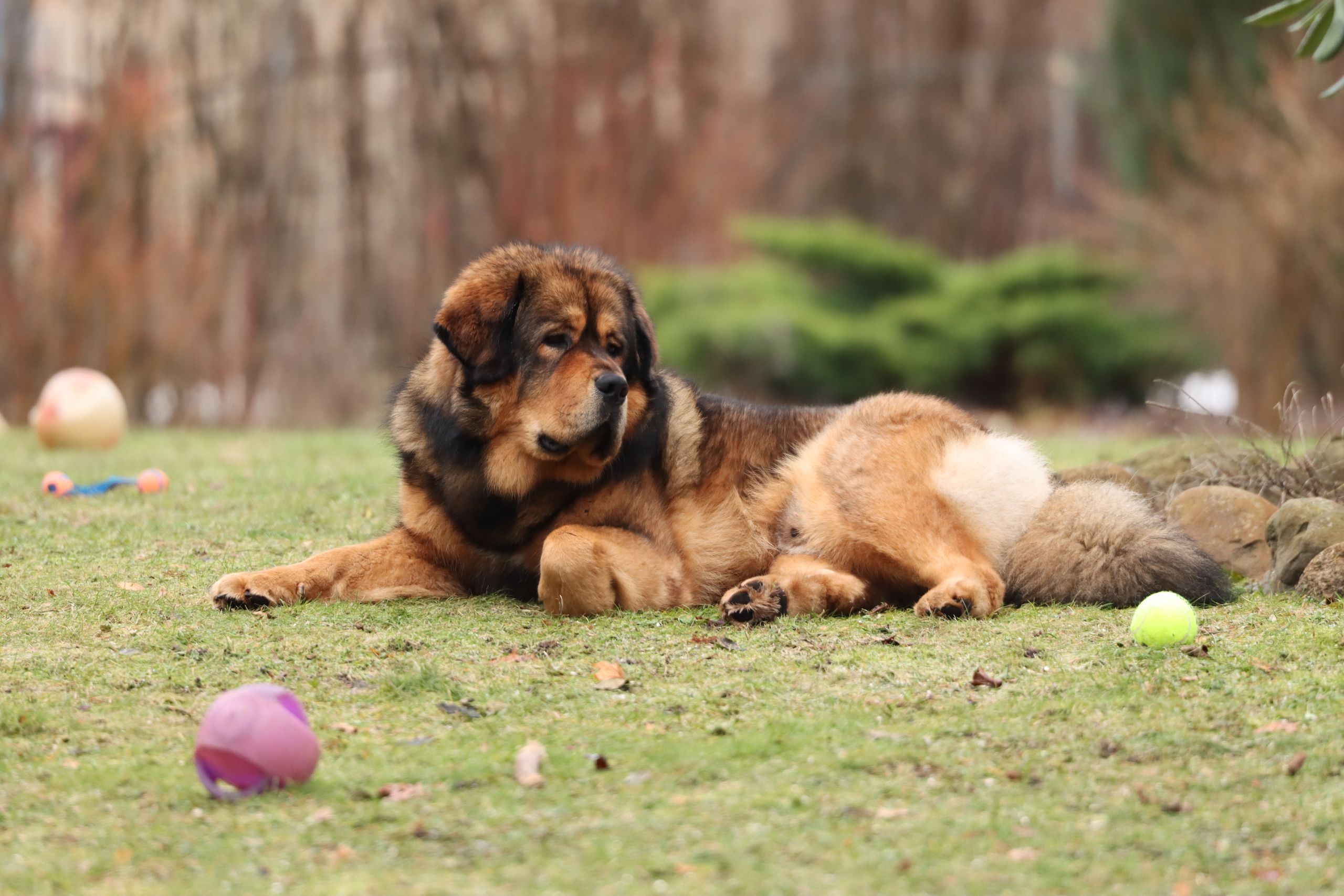
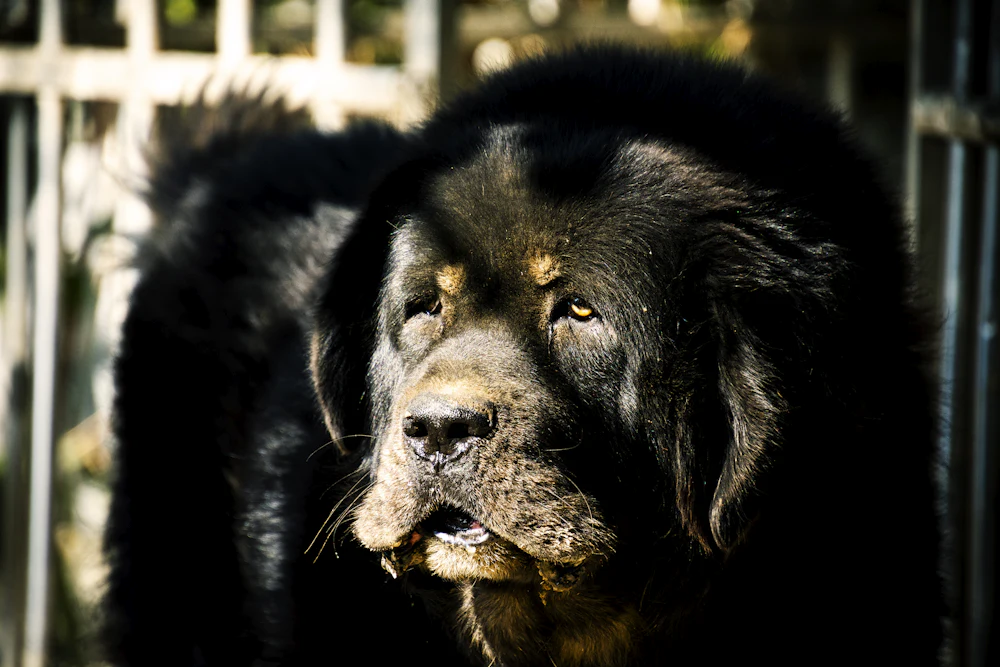
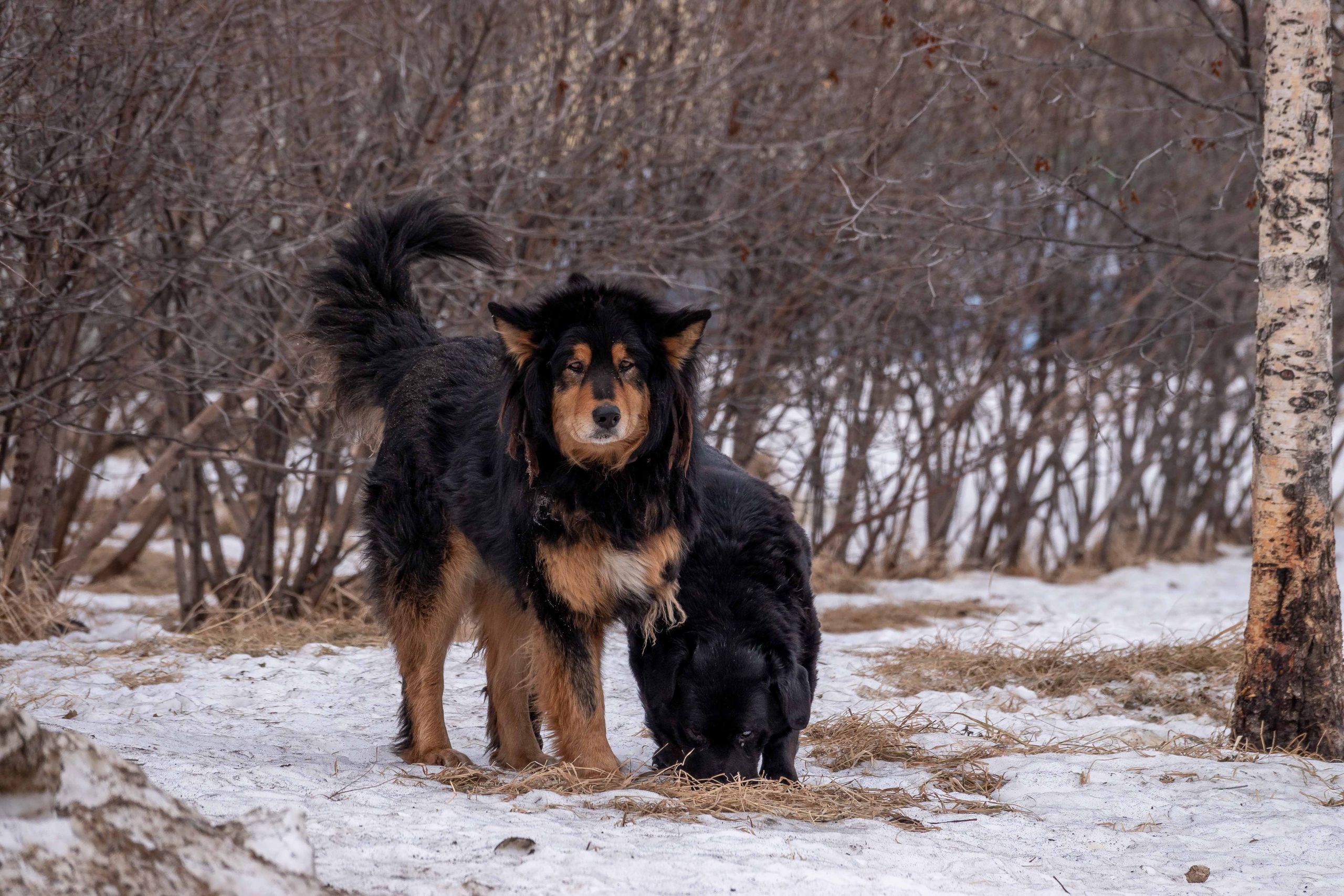
The coat is harsh and thick, with a dense, rather woolly undercoat and a top coat that is never silky, curly or wavy. It is easier to manage than it looks for most of the year, with brushing two or three times a week. The annual shed is huge, with the undercoat coming out in clumps, and daily brushing then prevents mats. The FCI standard accepts black, blue, gold and sable, with or without tan markings.
Feeding and weight
A giant breed needs a measured, good-quality large-breed diet. Feed in two or three meals, avoid exercise around mealtimes, and keep the dog lean, because extra weight loads the joints. Puppies should grow slowly rather than quickly, so ask your vet and breeder about portions. Fresh water must always be available, especially in warm weather.
Work out a starting calorie figure and food weight with the calorie calculator. Not sure this is the right breed? Take the quiz.
Health
Every breed carries predispositions. These are the conditions most often discussed for the Tibetan Mastiff, not a prediction for any individual dog.
- Hip and elbow dysplasia
- Hypothyroidism (underactive thyroid)
- Canine inherited demyelinative neuropathy (a nerve disease of puppies)
- Entropion and ectropion (eyelid problems)
- Autoimmune skin disease
What to ask the breeder. Hip and elbow scores, thyroid and eye results for the parents, and DNA testing where available.
Choosing a puppy
Ask for hip and elbow scores and other health tests for the parents, and meet them to see temperament. Choose a breeder who socialises puppies widely with people and different surfaces and sounds. Be realistic about size, noise and independence: an eight-week-old puppy looks manageable, but the adult can weigh as much as a grown person. Visit more than once.
In Luxembourg the national kennel club is the Fédération Cynologique Luxembourgeoise (FCL), a member of the FCI. Many owners also buy from breeders in Germany, France or Belgium; a puppy coming from another EU country must be microchipped and vaccinated against rabies, which in practice means it cannot travel before about fifteen weeks of age. Where to get a dog in Luxembourg.
The older Tibetan Mastiff
Watch for stiffness, weight changes, skin problems and lumps. Keep the dog lean and cool, and adapt the home with ramps and non-slip rugs if needed. Giant breeds age earlier than small ones, so regular vet checks from about seven years help catch problems early. Keep gentle walks going, because muscle loss makes mobility problems worse.
A realistic day
A realistic weekday for a working household in Luxembourg City, with a midday visit. Adjust it to your dog, not the other way round.
A slow walk while it is cool, with time to sniff.
Breakfast, then a long rest.
Midday visit, indoors or in shade, with fresh water and a short garden check.
Gentle longer walk as the temperature drops.
Final walk and a check of the garden, since the dog is awake and alert at night.
A Tibetan Mastiff in Luxembourg
A Tibetan Mastiff is a poor fit for a flat: it barks at night, needs space, dislikes heat and is wary of strangers. Lifts and stairs are an ordeal for a dog of this weight. A house with a high-fenced garden is essential, and the neighbours should be considered before the puppy is, since night barking carries. Budget for vet costs and insurance, which scale with size.
With summers that can reach the 30s, plan for cool rooms and early walks. The Grünewald and Bambësch forests are good for slow outings in shade, and quiet paths suit better than busy parks. Buses and trams are free nationwide, but a giant, wary dog on public transport needs rehearsal and a confident handler. Every dog must be microchipped, declared to the commune and insured.
Every dog in Luxembourg must be identified, declared to the commune and covered by liability insurance. How registration works.
When you travel
Introduce the sitter beforehand, more than once, because Tibetan Mastiffs are wary of strangers. Agree the rules for gates, doors and night noise, and make sure the sitter can physically handle a very large dog and keep it cool. A sitter staying in the home is better than a kennel. Leave your vet's details, written instructions and a spare lead and collar.
PAWLY's holiday and overnight care takes place in your home, so your dog keeps its own bed and routine.
Myths and facts
MythTibetan Mastiffs are lazy.
FactThey are calm by day but alert at night, when they are guarding. Calm is not the same as inactive.
MythThey are suited to any family.
FactThey suit experienced owners with space, not busy households or flats.
MythTheir thick coat means they love cold and snow.
FactThey tolerate cold well, but heat is the real problem, and a Luxembourg summer needs careful management.
Is it the right dog for you?
Suits
- Experienced owners with a large, secure garden
- People who want a serious guardian
- Owners who can handle a huge, independent dog
- Households that can accept some noise at night
Think twice if
- Flat-dwellers
- First-time owners
- People sensitive to noise at night
- Anyone who wants a dog that obeys instantly
Questions owners ask
Do Tibetan Mastiffs bark at night?
Often, yes. The breed was developed to guard at night and many are vocal after dark. Training and exercise help, but it is part of the character, so consider your neighbours before choosing.
Does a Tibetan Mastiff shed?
Lightly most of the year and heavily once a year, when the undercoat comes out in large clumps. Daily brushing during that period keeps mats away and keeps your home manageable.
How big does a Tibetan Mastiff get?
The FCI standard asks for at least 66 cm for dogs and 61 cm for bitches, with no weight given. Many weigh between 40 and 70 kg. They also mature slowly, often not until three or four years.
Can a Tibetan Mastiff live in a flat?
It is a poor fit. Size, night barking, heat sensitivity and wariness of strangers all suit a house with a high-fenced garden much better than a lift and a shared corridor.
Sources
Photo: Unsplash (Unsplash License) · Photo: Pexels (Pexels License) · Photo: Unsplash (Unsplash License) · Photo: Pexels (Pexels License)
General information for dog owners in Luxembourg, not veterinary or legal advice. Official facts (origin, size, group, history and temperament as described by the breed standard) follow the FCI standard; health and care sections reflect breed-club and veterinary guidance and are typical ranges rather than rules. For your own dog, ask your vet, the breed club or your commune. How this guide is written and checked. Last reviewed 8 October 2026.
Need someone for your Tibetan Mastiff?
PAWLY offers an individual 45-minute walk or a home visit at your dog's pace, the same walker every time, and a written report with photos after every visit, across Luxembourg City.
Read next: the journal, for the Tibetan Mastiff
All articles
Dogs in hot weather: the Luxembourg summer guide
The Tibetan Mastiff carries a heavy coat or a heavy frame, which makes a Luxembourg summer the hard season.

Arthritis: the pain owners file under old age
Giant breeds tend to have joint trouble early; this is what to look for.

Growing a large-breed puppy without wrecking its joints
A giant puppy grows fast on soft bones; how it grows decides its joints for life.
Similar breeds
All 198 breeds
Leonberger
A lion-coloured giant with a black mask and a surprisingly gentle manner, happiest as an unhurried companion who is never left out of anything.
EnergyGroomingFlat life
Great Pyrenees
A white mountain guardian from the Pyrenees, gentle with its own people, independent by design and happiest keeping quiet watch over everything.
EnergyGroomingFlat life
Saint Bernard
The legendary Alpine rescue dog: gentle, calm and enormous.
EnergyGroomingFlat life

