


History
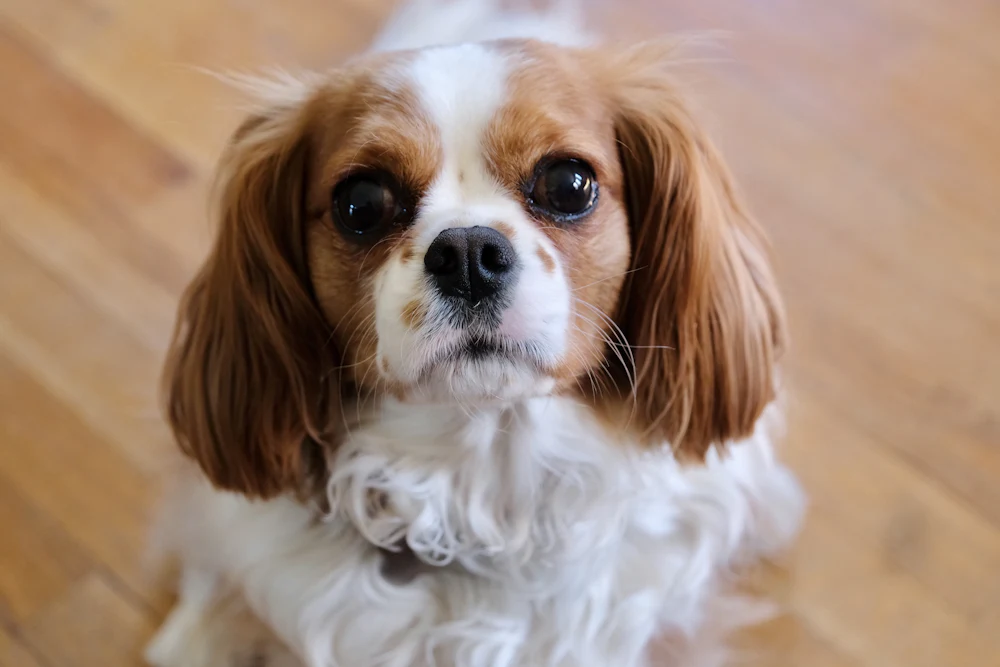
The Cavalier King Charles Spaniel comes from Great Britain and is listed by the FCI in Group 9, Section 7, English Toy Spaniels. The standard, dated 04.11.2008, does not include a history, so the breed's story has to be read from what it asks for. It describes an active, graceful and well balanced dog with a gentle expression, and a small dog meant to be a companion that is still sporting enough to enjoy a walk.
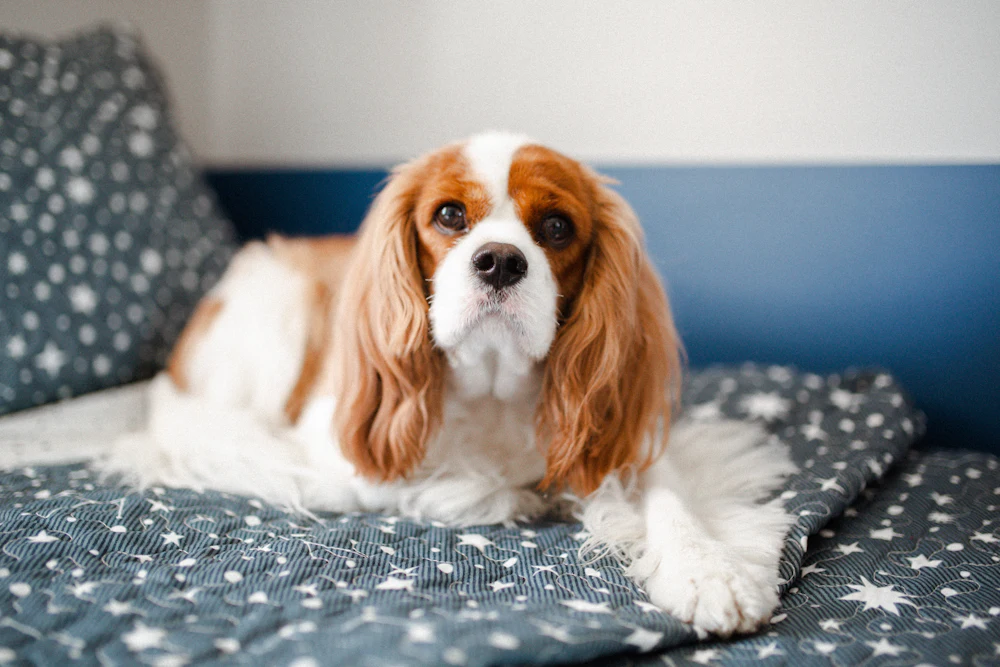
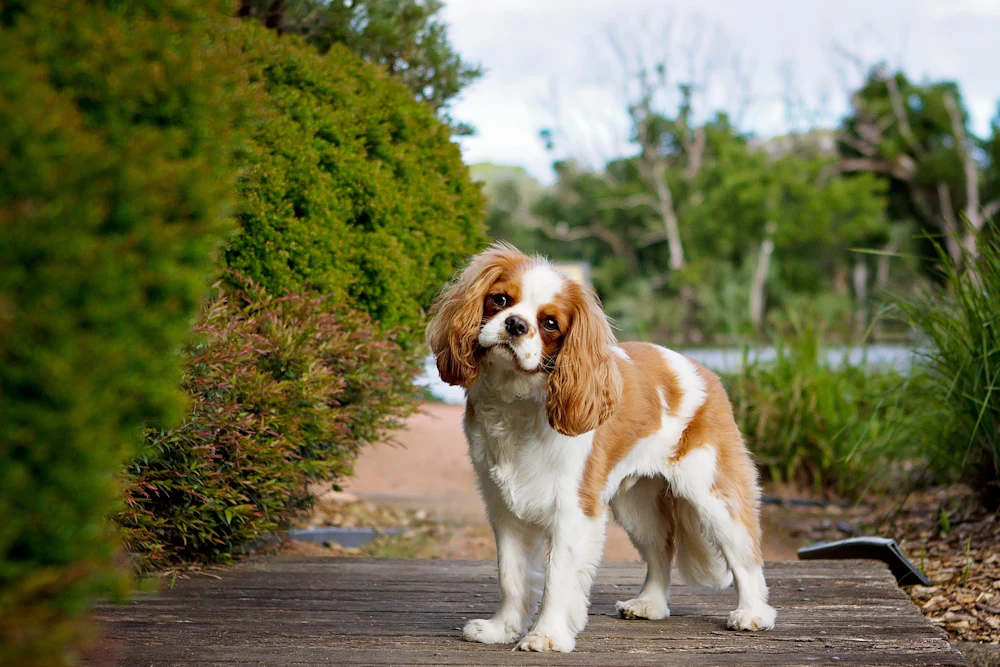
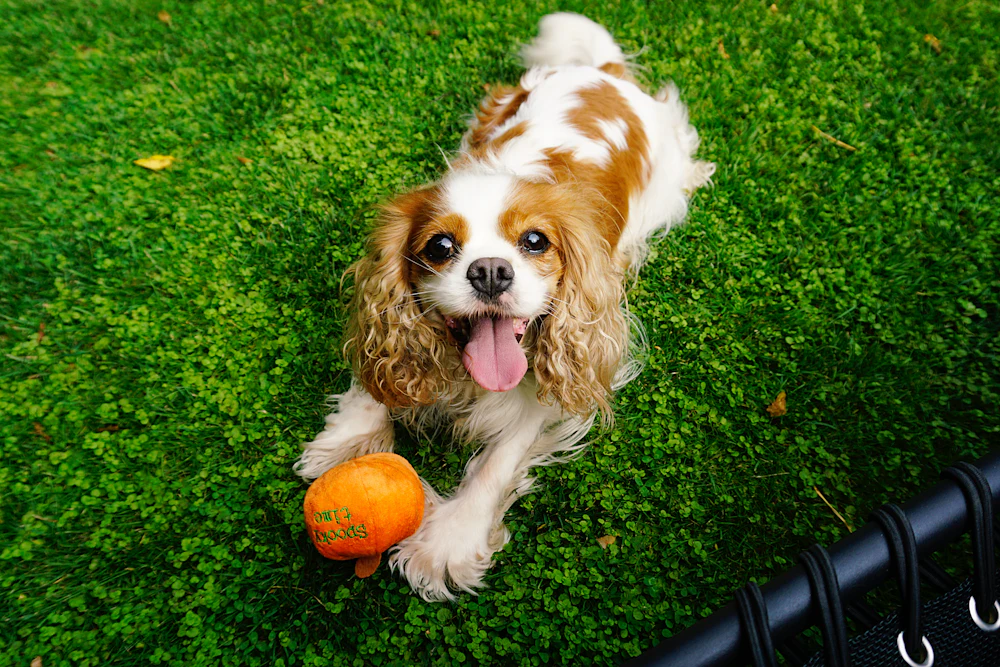
The standard gives a weight of 5.4 to 8 kg, about 12 to 18 lbs, and says that a small, well-balanced dog within that range is desirable. It lists four recognised colours: Black and Tan with bright tan markings, Ruby, a solid rich red, Blenheim, chestnut on a pearly white ground with a distinctive lozenge mark, and Tricolour, black, white and tan. Aggressive or overly shy temperament, and physical or behavioural abnormalities, are disqualifying faults.
Temperament
The FCI describes the Cavalier as sporting, affectionate and absolutely fearless, gay and friendly, non-aggressive, with no tendency toward nervousness. Few breeds live up to their standard so well. A typical Cavalier greets everyone, from visiting relatives to the courier, as a long-lost friend and expects the feeling to be shared. It is soft, gentle and easily led, which makes it an easy dog to love.
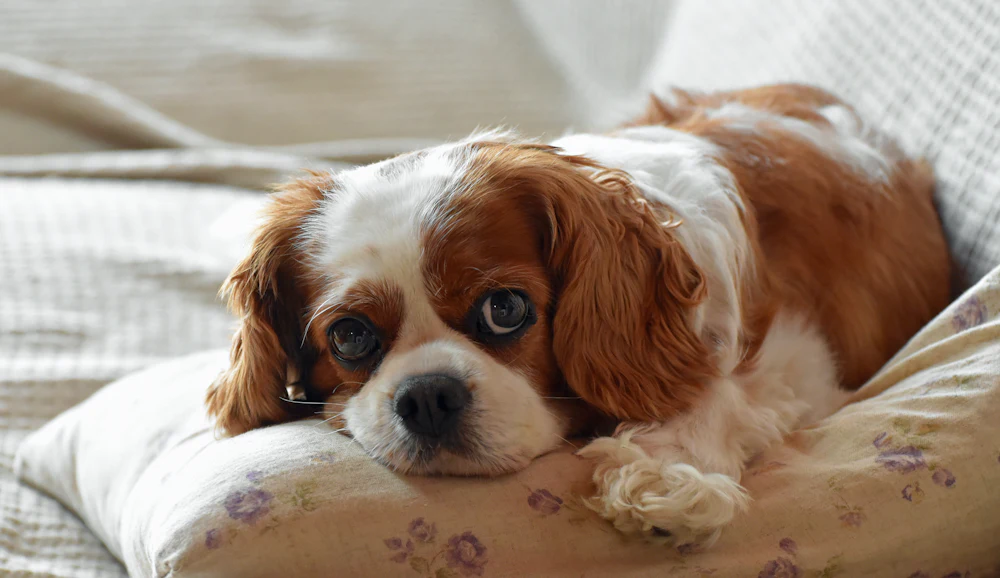
This sociability has two edges. A Cavalier is a poor guard dog and a poor loner: it wants company, and many struggle if left for long hours. It is also a spaniel, so a spaniel's nose is never far off, and a bird or a squirrel can pull it away from its owner. It is sensitive to a raised voice, so gentle handling and plenty of affection produce a happy, adaptable and loyal companion.
Children and other pets
Cavaliers are among the most dependable breeds with children, gentle, tolerant and playful, though a very small dog is easily hurt by a toddler's grip, so supervise and teach children how to hold and approach it. They usually get on well with other dogs and with cats, and rarely show aggression. They are happy to join a busy household and prefer to be in the middle of things.
Exercise and the daily walk
About an hour a day suits a healthy adult: a couple of walks, a game and some time sniffing. A Cavalier can walk a long way if invited and then settle on the sofa for the rest of the day, which makes it flexible for different lifestyles. It enjoys fetch, scent games and exploring new places, but it is not a dog that needs constant work.
Take care in warm weather. The breed has a short muzzle and a full coat and can overheat, so walk early or late in summer and carry water. Keep it lean, since extra weight is hard on the heart and joints. Recall needs work, as a spaniel following a scent forgets everything else, so use a long line or a fenced space until it is reliable.
Training
Cavaliers are eager to please and quick to learn, and they respond well to gentle, reward-based training. Their appetite makes food a powerful motivator, but watch the calories. Keep sessions short and cheerful, as harsh words upset a sensitive dog. Housetraining may need patience in a small dog, so be consistent with timing and reward every success.
Their biggest training challenge is separation. A Cavalier that has never been left may panic, so begin short absences in the first weeks and build up slowly. Socialise widely to traffic, lifts, other dogs and people, though most need little encouragement. Teach a recall, loose-lead walking and polite greeting, as a friendly dog can still jump up on strangers and pull towards every passer-by.
Coat and grooming
The standard calls for a long, silky coat, free from curl, with a slight wave permissible and abundant feathering, and it states that the breed requires no trimming. Colours are Black and Tan, Ruby, Blenheim and Tricolour. Brush several times a week, paying attention to the ears, chest and legs, where tangles form, and keep the feet and ears clean. Shedding is moderate. Bath when needed. Check the ears regularly, because the long, heavy ears trap moisture.
Feeding and weight
Feed a good-quality diet in measured meals, usually twice a day. Cavaliers love food and gain weight quickly, which is particularly hard on a breed prone to heart disease, so keep treats small and count them in the daily allowance. Weigh the dog regularly and keep it lean. Ask your vet about portions and about a diet suited to a dog with any heart condition.
Work out a starting calorie figure and food weight with the calorie calculator. Not sure this is the right breed? Take the quiz.
Health
Every breed carries predispositions. These are the conditions most often discussed for the Cavalier King Charles Spaniel, not a prediction for any individual dog.
- Mitral valve disease, a common heart condition
- Syringomyelia, a painful spinal fluid condition linked to skull shape
- Episodic falling and other neurological problems
- Eye conditions, including cataracts
- Ear infections
What to ask the breeder. Ask for heart examinations by a specialist, and for MRI screening for syringomyelia, on both parents, and be wary of any breeder who cannot show current results.
Choosing a puppy
Choose the breeder with great care: heart and neurological health in this breed depend heavily on the parents' screening results, so ask to see them, and meet the mother. Begin handling, brushing and short separations early, and offer a safe, warm resting place. Feed measured meals, keep exercise gentle while the puppy grows, and use a harness rather than a collar.
In Luxembourg the national kennel club is the Fédération Cynologique Luxembourgeoise (FCL), a member of the FCI. Many owners also buy from breeders in Germany, France or Belgium; a puppy coming from another EU country must be microchipped and vaccinated against rabies, which in practice means it cannot travel before about fifteen weeks of age. Where to get a dog in Luxembourg.
The older Cavalier King Charles Spaniel
Many Cavaliers live well into their teens, though heart disease is common in later life. Watch for a cough, tiring quickly, faster breathing at rest or fainting, and see the vet at once. Regular heart checks are sensible from middle age. Keep the dog lean, shorten walks as needed, and provide a soft bed and a calm, warm home. Keep teeth and ears clean.
A realistic day
A realistic weekday for a working household in Luxembourg City, with a midday visit. Adjust it to your dog, not the other way round.
A gentle walk with plenty of sniffing and a toilet break.
Breakfast from a measured portion, then a brush through the ears and feathering.
Midday visit: a toilet break, water, and a cuddle and a short game.
A longer walk in a park, on a lead or a long line, with a little training.
A short final outing, then a quiet evening on the sofa.
A Cavalier King Charles Spaniel in Luxembourg
The Cavalier is a natural flat dog in Luxembourg. It is small enough to travel in any lift, happy to walk to the park and happy to ride free buses and trams, where its good manners make it popular. Its need for company is the main challenge for a working owner, so a midday visit or a person at home helps a great deal, and the low barking tendency keeps neighbours content.
Summer heat is the weather concern. When temperatures reach the 30s, a Cavalier needs early and late walks, shade, water and cool floors, and it should never be left in a car. The Pétrusse valley, Parc Merl and the Municipal Park suit short outings, and the Bambësch or Grünewald forests give a good ramble. Every dog must be microchipped, declared to the commune and insured, and the commune charges an annual dog tax. The FCL can help to find a responsible breeder.
Every dog in Luxembourg must be identified, declared to the commune and covered by liability insurance. How registration works.
When you travel
Choose a sitter who will give constant company, since a Cavalier fretting alone is miserable. Leave a written routine, including measured meals, walk times and any heart medication, and your vet's contact. Use a secure harness and lead outdoors, because a Cavalier can bolt after a scent. Watch for coughing or tiredness, and keep the dog cool in warm weather.
PAWLY's holiday and overnight care takes place in your home, so your dog keeps its own bed and routine.
Myths and facts
MythCavaliers are healthy because they are so cheerful.
FactThe breed is prone to serious conditions, particularly heart and neurological ones, so health screening of the parents matters a great deal.
MythA Cavalier makes a good guard dog.
FactThe standard describes a friendly, non-aggressive dog. It greets everyone as a friend.
MythThe silky coat needs clipping.
FactThe standard states that the breed requires no trimming. Regular brushing is what the coat needs.
Is it the right dog for you?
Suits
- First-time owners who will choose a breeder carefully
- Flat dwellers wanting a gentle companion
- Families with children
- People who are home much of the day
Think twice if
- You are away for long working days
- You cannot afford vet bills for heart or spine problems
- You want a guard dog or a high-energy athlete
Questions owners ask
How big is a Cavalier King Charles Spaniel?
The FCI standard gives a weight of 5.4 to 8 kg, with a small, well-balanced dog preferred. It does not specify height, but most stand about 30 to 33 cm.
Why is health screening so important in Cavaliers?
The breed is prone to mitral valve disease and syringomyelia. Screening both parents and choosing a breeder who shares results reduces, though does not remove, the risk. Ask to see the parents' heart and MRI results before you commit to any puppy.
Can a Cavalier be left alone?
Only briefly. Many fret and bark when left for long hours. Build absences slowly and arrange a midday visit for a working day. Without that, a Cavalier may fret, bark and become destructive, and it does best with someone close by.
Do Cavaliers shed a lot?
Moderately. The long silky coat sheds and tangles in the ears, chest and legs, so brush several times a week. The standard says the breed needs no trimming. Warmth also matters, so check the ears and chest after walks.
Sources
Photo: Unsplash (Unsplash License) · Photo: Unsplash (Unsplash License) · Photo: Unsplash (Unsplash License) · Photo: Unsplash (Unsplash License) · Photo: Unsplash (Unsplash License)
General information for dog owners in Luxembourg, not veterinary or legal advice. Official facts (origin, size, group, history and temperament as described by the breed standard) follow the FCI standard; health and care sections reflect breed-club and veterinary guidance and are typical ranges rather than rules. For your own dog, ask your vet, the breed club or your commune. How this guide is written and checked. Last reviewed 8 October 2026.
Need someone for your Cavalier King Charles Spaniel?
PAWLY offers an individual 45-minute walk or a home visit at your dog's pace, the same walker every time, and a written report with photos after every visit, across Luxembourg City.
Read next: the journal, for the Cavalier King Charles Spaniel
All articles
Dogs in hot weather: the Luxembourg summer guide
Flat-faced and short-nosed breeds like the Cavalier King Charles Spaniel overheat quickly, which matters in a Luxembourg summer.

Long-backed breeds, stairs and the spine
A long back makes stairs matter more than most owners think.

Ears: the three signs that mean an appointment
Ear trouble is common in the Cavalier King Charles Spaniel; these are the three signs that mean an appointment.
Similar breeds
All 198 breeds
English Cocker Spaniel
A merry, busy spaniel with a permanently wagging tail, and very different depending on working or show lines.
EnergyGroomingFlat life
Papillon
A toy dog with the brain of a working breed, quick to learn, keen to join in, and far tougher than its butterfly ears suggest.
EnergyGroomingFlat life
Havanese
Cuba's national dog: a cheerful, sociable little bichon that loves people, learns tricks quickly and hates being left alone.
EnergyGroomingFlat life

