



History
The English Cocker Spaniel takes its early name from the woodcock. The FCI standard explains that the breed was originally called the cocking spaniel because of its skill in flushing that bird from cover. The standard dates its emergence as a distinct type to the years after the Kennel Club was established in 1873, when it developed separately from the Field and Springer Spaniels, as spaniels of different sizes and jobs were sorted into their own breeds.
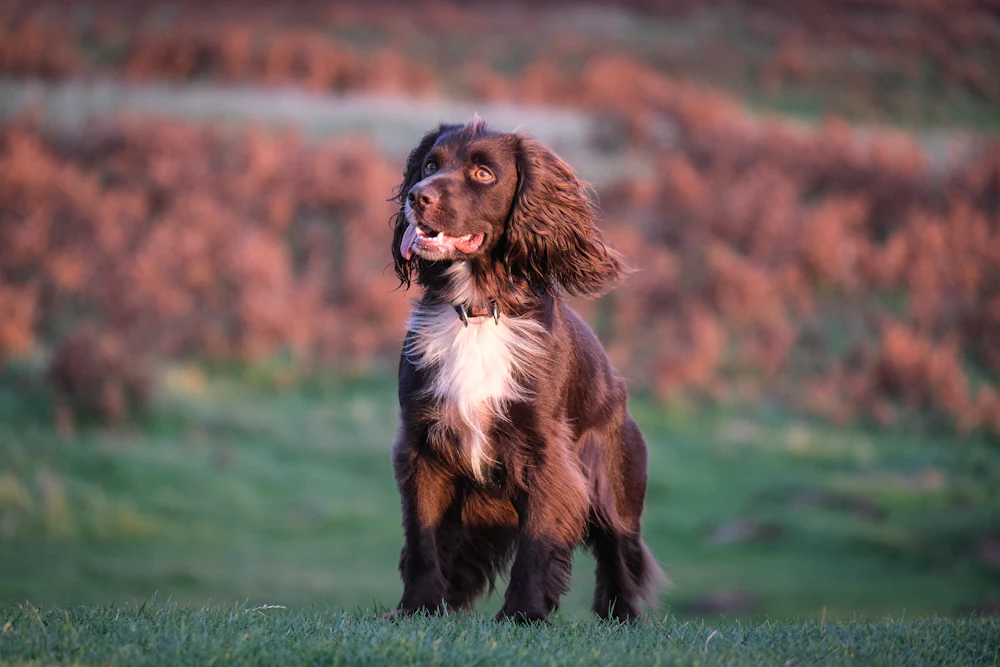
The FCI standard also points to a notable distinction between working lines and show lines, with the exhibition dogs being more robust and substantial than their working counterparts. For anyone choosing a puppy this is the central fact about the breed: two dogs of the same name can differ sharply in build, coat and energy. The American Cocker Spaniel, incidentally, is a separate breed with its own standard, and should not be confused with it.
Temperament
The standard calls the English Cocker merry, sturdy and sporting, and describes a typical bustling movement, especially when following scent, with no fear of heavy cover. Dogs are gentle and affectionate yet full of life and exuberance, with an ever-wagging tail. Anyone who has met one on a wet November field, nose down and tail going, will recognise the portrait.
Working-line dogs are intensely busy and demand a great deal of activity and a job. Show-line dogs are heavier in coat and body and usually calmer, though still cheerful. Both want company, and a Cocker left alone for long days can become noisy or destructive. Sensitivity is part of the package, so harsh words wound more than they correct. At seven in the morning in a lift, expect a wriggling, delighted dog rather than a dignified one.
Children and other pets
Cockers are usually cheerful and gentle with children and friendly with other dogs, which makes them a natural choice for an active family. Their gundog instinct remains, so birds and small pets can trigger the chase and introductions matter. Teach children to leave the long ears alone and to respect the dog's bed, and the Cocker will repay it with patient games.
Exercise and the daily walk
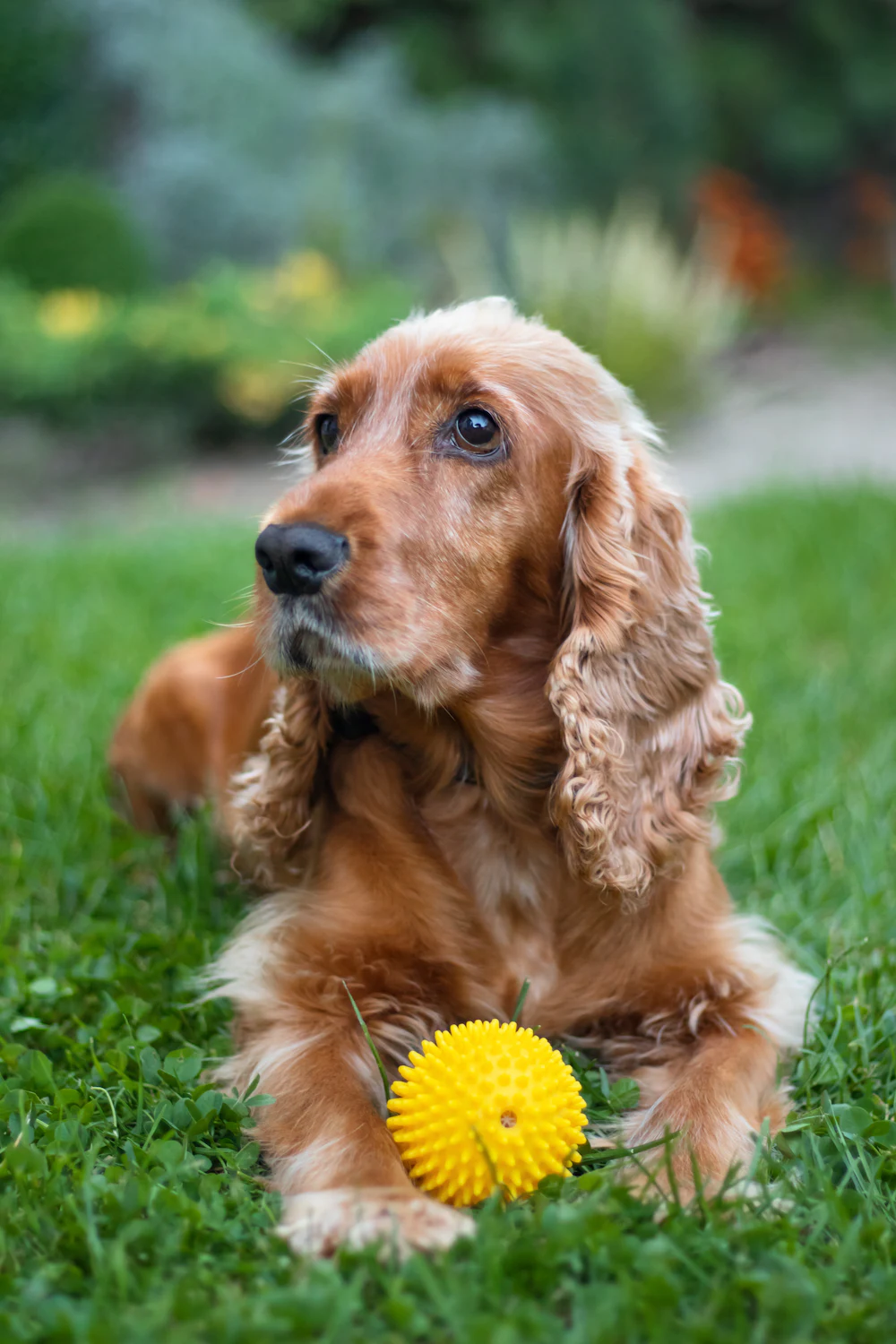
Plan on an hour to an hour and a half a day, with plenty of sniffing and searching rather than simple pavement miles. Retrieving and scent games channel the instinct to hunt, and a Cocker that has used its nose comes home calmer than one that has only walked.
Working-line dogs need considerably more, and benefit from gundog training, tracking or scent work. Show-line dogs are content with less, but still need real outings. Check ears, paws and coat after every walk in long grass or woodland, and let a wet dog dry properly before it settles on the sofa. On wet days, ten minutes of hide-and-seek with treats or a scent trail in the flat can take the edge off a working dog.
Training
Cockers are eager, merry and sensitive, and reward-based training works beautifully. Keep sessions brief and cheerful and use food and play. Build a strong recall early, because the nose and the instinct to hunt birds can take over, and practise it on a long line before trusting the dog off lead.
Retrieving games and nose work make the most of the breed's instincts. Teach calm greetings, since many Cockers wriggle with joy, and accept handling of ears, paws and coat from puppyhood so that grooming and vet visits are easy.
Coat and grooming
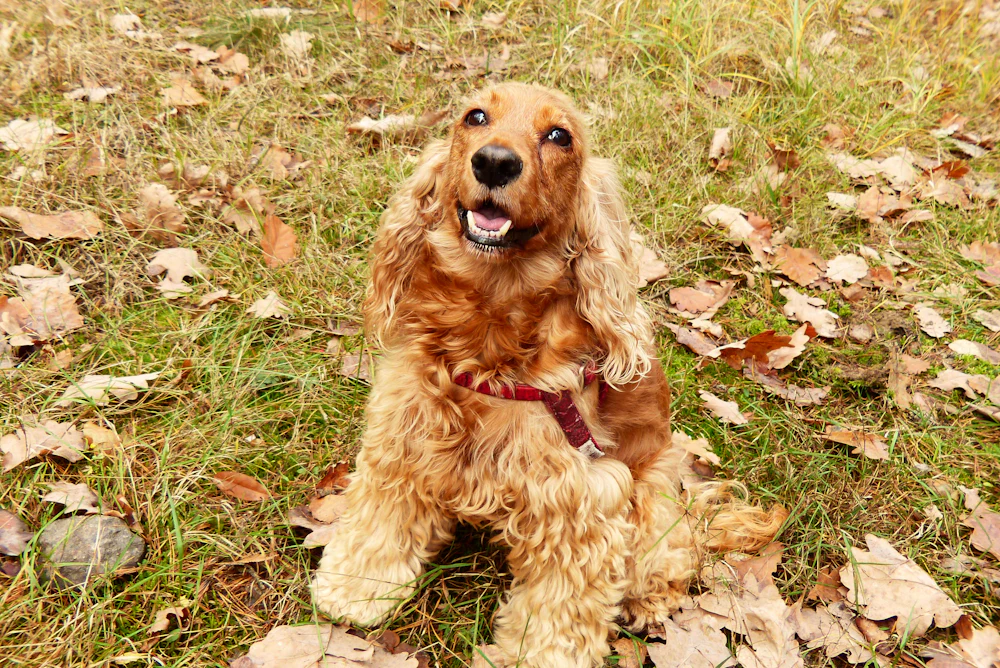
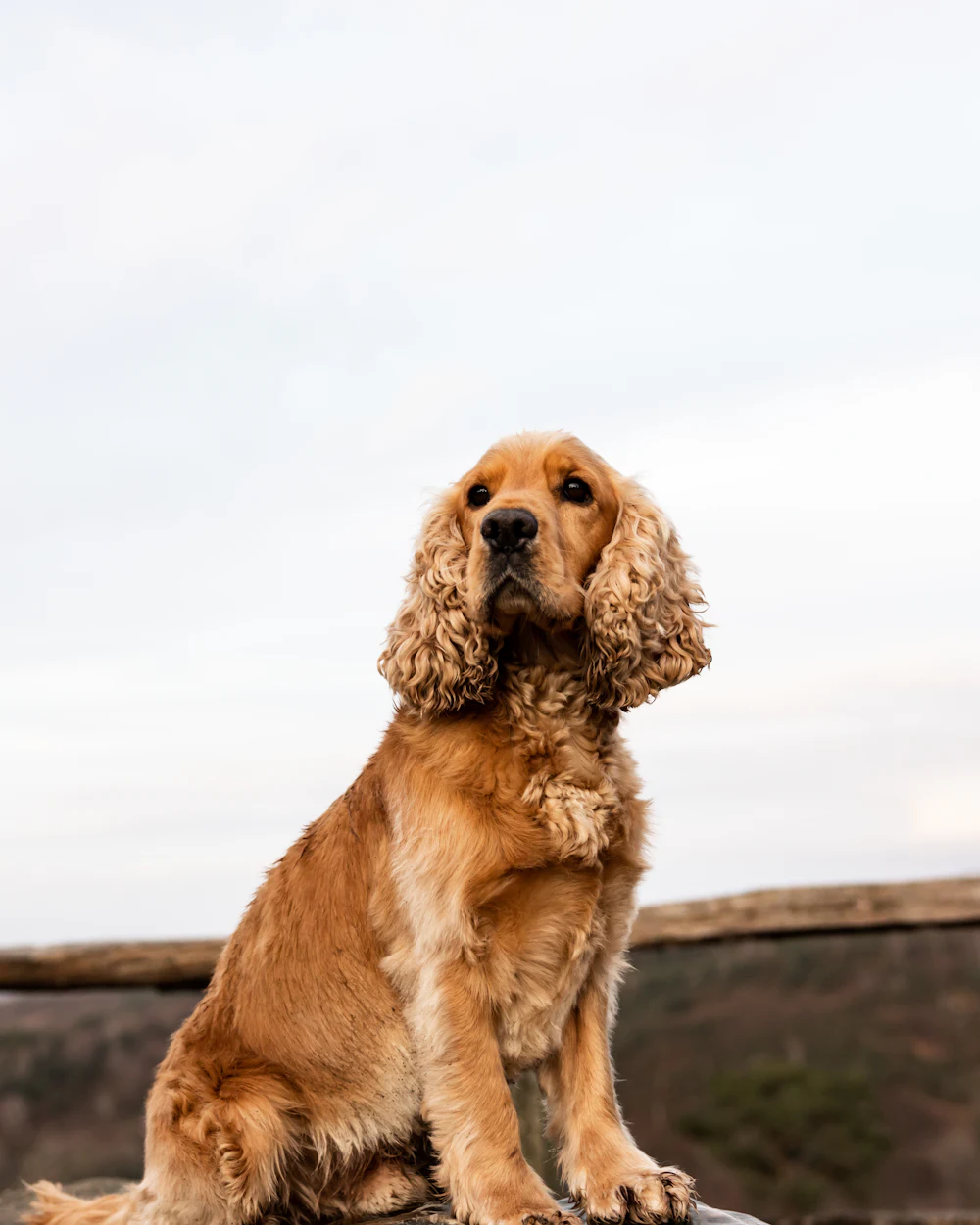
The FCI describes a flat, silky coat, never wiry or wavy. Accepted colours include black, red, golden and liver, bicolours and tricolours, and several roans. Long ears and feathering mean regular brushing several times a week and trims every six to eight weeks. Check and dry the ears often because they are prone to infection, and trim hair between the pads to reduce mud and grass seeds.
Feeding and weight
Cockers love food and gain weight easily, which strains the back and joints. Measure meals, keep treats modest and count them in the daily ration. Two meals a day suit most adults, and a Cocker will happily convince you it needs a third. Resist, and use part of the ration for training rewards instead. A wide, shallow bowl or a snuffle mat slows fast eaters, and ears are best kept clear of the dish. Discuss persistent skin or ear trouble with your vet, since diet is sometimes involved.
Work out a starting calorie figure and food weight with the calorie calculator. Not sure this is the right breed? Take the quiz.
Health
Every breed carries predispositions. These are the conditions most often discussed for the English Cocker Spaniel, not a prediction for any individual dog.
- Ear infections
- Progressive retinal atrophy (a DNA test exists)
- Familial nephropathy (a DNA test exists)
- Hip dysplasia
- Autoimmune conditions
What to ask the breeder. Ask for DNA test results for progressive retinal atrophy and familial nephropathy, hip scores and an eye examination for both parents.
Choosing a puppy
Decide between show and working lines before you visit, and meet the mother. Ask for DNA tests for progressive retinal atrophy and familial nephropathy, hip scores and eye examinations. A puppy should be bright and curious, with clean ears and eyes, and used to household noise, visitors and being handled all over. Be wary of a litter offered without any health information.
In Luxembourg the national kennel club is the Fédération Cynologique Luxembourgeoise (FCL), a member of the FCI. Many owners also buy from breeders in Germany, France or Belgium; a puppy coming from another EU country must be microchipped and vaccinated against rabies, which in practice means it cannot travel before about fifteen weeks of age. Where to get a dog in Luxembourg.
The older English Cocker Spaniel
Ear and eye problems can increase with age, and joints stiffen. Keep grooming and ear care going, keep the weight down and ask your vet to check eyes, teeth and heart yearly. Many Cockers stay cheerful into their teens, with greying muzzles and the same wagging tail, and shorter, more frequent walks with plenty of sniffing keep them content.
A realistic day
A realistic weekday for a working household in Luxembourg City, with a midday visit. Adjust it to your dog, not the other way round.
Walk with sniffing and retrieves.
Breakfast and ear check.
Midday walk.
Longer walk in the park or forest.
Final walk and ears dried if wet.
An English Cocker Spaniel in Luxembourg
Cockers are good city dogs if walked properly. A flat with a lift is fine, and the dog will be happy as long as the day has a midday break. Parc Merl, the Pétrusse valley and the Bambësch forest give plenty of scent to follow, and the Grünewald forest suits longer weekend outings.
In late summer grass seeds are a real risk to spaniel ears and paws, so check after every walk in long grass. A thick-coated show-line dog suffers in the heat of a Luxembourg summer, which can reach the 30s °C, so walk early and late. Dog tax, insurance and microchipping apply as with any dog, and buses and trams are free, so a weekend trip to a wooded edge of the country is easy without a car.
Every dog in Luxembourg must be identified, declared to the commune and covered by liability insurance. How registration works.
When you travel
They adapt well to a sitter, but they need their walks, sniffing time and ear care to continue. A working Cocker needs a sitter able to give it real exercise, not only toilet breaks. Leave notes on the feeding routine and recall, and keep the dog on a long line near woods and fields.
PAWLY's holiday and overnight care takes place in your home, so your dog keeps its own bed and routine.
Myths and facts
MythCockers are always calm family pets.
FactWorking Cockers are energetic, driven dogs. Show lines are usually calmer.
MythEar problems are unavoidable.
FactRegular cleaning, drying and trimming prevent many of them.
MythThe English and American Cocker are the same breed.
FactThey are separate breeds, with different standards and appearance.
Is it the right dog for you?
Suits
- Active families
- Owners who enjoy walking in the countryside
- People wanting a cheerful, medium-sized dog
Think twice if
- Owners wanting minimal grooming
- Long days alone for a working-line dog
- Anyone who dislikes muddy ears
Questions owners ask
Working or show Cocker?
For most families a show-line or pet Cocker is easier, being calmer and heavier. Working Cockers are superb dogs for owners who can give them a job and a great deal of exercise every single day.
Why does my Cocker get ear infections?
Long, heavy ears reduce airflow, and moisture stays trapped. Keep them clean and dry, trim excess hair as advised and see your vet at the first sign of smell, redness or scratching.
How often should a Cocker be groomed?
Brush several times a week to prevent mats in the feathering, and expect a trim every six to eight weeks. Many owners use a professional groomer, but the daily check of ears and paws is yours.
Do Cockers bark a lot?
They can be vocal when bored, excited or left alone. Enough exercise, mental work and a gradual introduction to time alone help considerably. Consistent, kind training works better than scolding, and a midday visit helps.
Sources
Photo: Unsplash (Unsplash License) · Photo: Unsplash (Unsplash License) · Photo: Unsplash (Unsplash License) · Photo: Unsplash (Unsplash License) · Photo: Unsplash (Unsplash License)
General information for dog owners in Luxembourg, not veterinary or legal advice. Official facts (origin, size, group, history and temperament as described by the breed standard) follow the FCI standard; health and care sections reflect breed-club and veterinary guidance and are typical ranges rather than rules. For your own dog, ask your vet, the breed club or your commune. How this guide is written and checked. Last reviewed 8 October 2026.
Need someone for your English Cocker Spaniel?
PAWLY offers an individual 45-minute walk or a home visit at your dog's pace, the same walker every time, and a written report with photos after every visit, across Luxembourg City.
Read next: the journal, for the English Cocker Spaniel
All articles
Grooming and coat care through the Luxembourg year
The English Cocker Spaniel has a coat that needs a routine that holds through the Luxembourg seasons.

How much exercise does your dog actually need?
The English Cocker Spaniel is an active breed, so it is worth checking the exercise numbers against your actual week.

Ears: the three signs that mean an appointment
Ear trouble is common in the English Cocker Spaniel; these are the three signs that mean an appointment.
Similar breeds
All 198 breeds
English Springer Spaniel
A tireless, merry gundog that lives for hedges, water and a job, and brings the same enthusiasm to the family kitchen.
EnergyGroomingFlat life
Cavalier King Charles Spaniel
One of the sweetest companion dogs there is, and a breed where choosing the breeder matters more than almost anywhere else.
EnergyGroomingFlat life
Labrador Retriever
The most popular family dog in Europe for good reasons, and with one well-known weakness: food.
EnergyGroomingFlat life

