

History
The Labrador did not come from Labrador. Its ancestor was the St John's water dog of Newfoundland, a working dog that hauled nets and retrieved fish for the island's fishermen. The FCI standard records that the breed reached Britain in the late nineteenth century, brought in by Colonel Peter Hawker and the Earl of Malmesbury, and rose to prominence in field trials. It names a dog called Malmesbury Tramp as one of the tap roots of the modern Labrador.
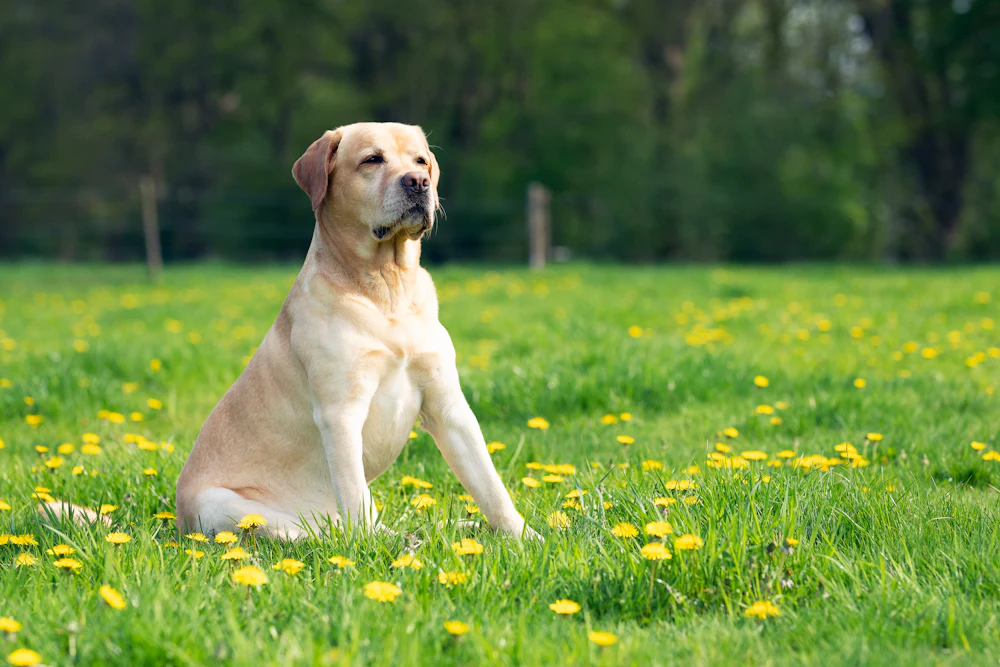
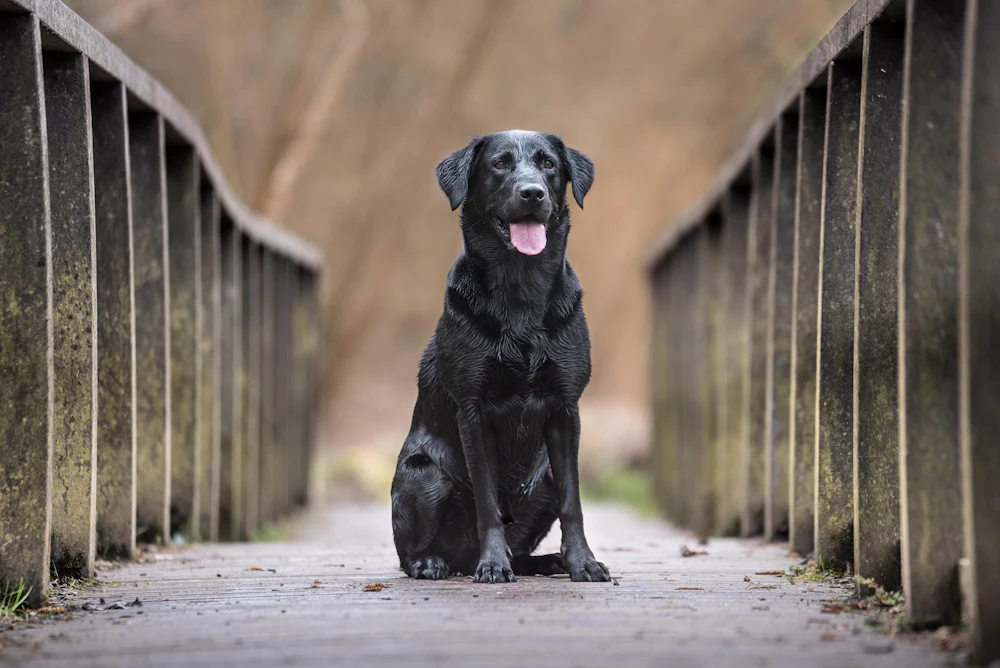
The Kennel Club recognised the breed in 1903, the breed club followed in 1916 and the Yellow Labrador Club in 1925. The standard allows three colours, black, yellow and liver or chocolate. Today the Labrador splits informally into two types: working lines, lighter, faster and more driven, and show lines, heavier, broader in the head and usually calmer. Ask which one you are looking at, because the difference in daily life is real.
Temperament
The FCI standard asks for a good-tempered, very agile dog with an excellent nose, a soft mouth and a keen love of water, and it calls the ideal intelligent, keen and biddable. Aggression and excessive shyness are listed as disqualifying faults. That biddable streak is why Labradors take so readily to training and why they are among the most widely used guide and assistance dogs.
The friendliness has a side effect: a young Labrador greets everyone at full speed, and a dog bred to like people has no natural suspicion of them. That makes it a poor guard dog and an excellent family member. Teaching a calm greeting early is one of the most useful things an owner can do, especially in a city of lifts, narrow pavements and neighbours in suits.
Children and other pets
Labradors are usually excellent with children and tolerant of noise and chaos, which is much of their reputation. The risks are enthusiasm and size: a young Labrador can knock over a toddler and steal a sandwich in the same movement. Most live happily with other dogs, and many with cats if raised with them. Teach children not to feed from the table, because every Labrador will remember who does.
Exercise and the daily walk
A healthy adult Labrador needs real exercise, not just toilet breaks: a long walk with off-lead running where it is safe and legal, plus retrieving and sniffing games. The FCI standard calls the breed strongly built and very active, and the dog that sleeps all day on a short walk is usually either old or bored. Most Labradors love water, and a dog that can swim in summer is a happier dog.
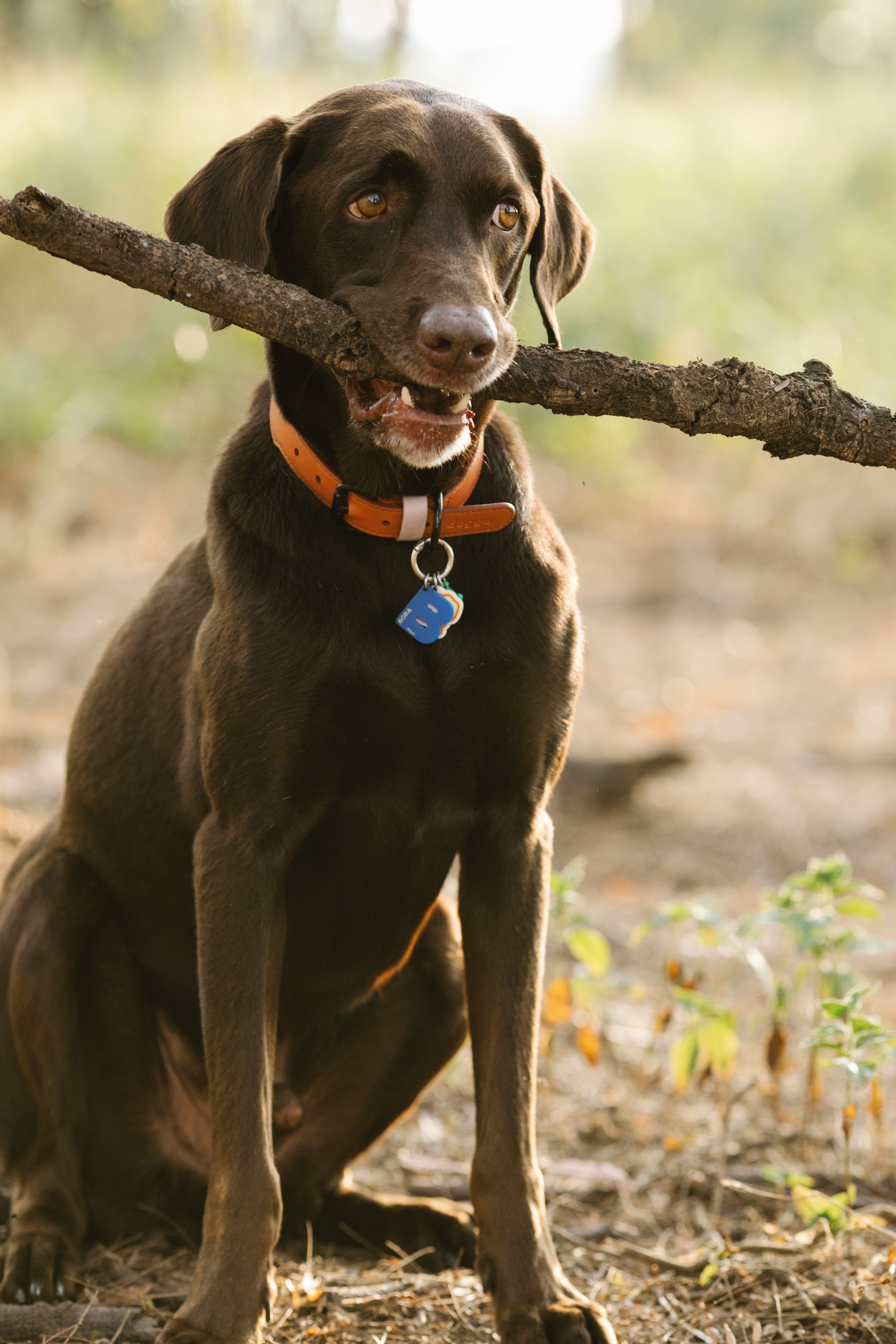
Retrieving is the breed's job. Structured fetch with a pause and a sit between throws is far better for the dog than endless ball-launching, which winds dogs up and loads the joints. Hide toys or treats in grass for a nose-led search and you will tire the brain as well as the legs. Growing puppies need short, soft-ground outings rather than long runs.
Training
Labradors learn quickly because they want the reward, and food is the reward they want most. That makes them easy to train and easy to overfeed. Use part of the daily ration as training treats rather than adding extras on top. Lessons of a few minutes, several times a day, work better than one long session, and a keen young dog will happily work for kibble.
The skills that matter most in a city are a calm greeting, walking on a loose lead past other dogs, and a leave-it that works on a discarded sandwich. A retrieve with a clean delivery to hand is the breed's natural talent and a superb way to tire a young dog without running it into the ground. Expect an adolescent phase around the second year when the manners wobble, and keep the routine steady.
Coat and grooming
The FCI standard describes a short, dense coat without wave or feathering, over a weather-resistant undercoat. It is a true double coat and Labradors shed a great deal, most heavily in spring and autumn. A rubber curry brush once or twice a week keeps it manageable. They do not need clipping and should not be shaved. Permitted colours are black, yellow and liver or chocolate, with a small white spot on the chest allowed.
Feeding and weight
Weigh the food. A Labrador at a healthy weight has a visible waist from above and ribs you can feel easily under a thin layer. Studies of Labradors fed to stay lean found that they lived longer and developed arthritis later than littermates allowed to eat more. Count treats in the daily ration, slow the eating with a puzzle feeder, and do not trust the begging face. Large-breed puppy food controls growth speed.
Work out a starting calorie figure and food weight with the calorie calculator. Not sure this is the right breed? Take the quiz.
Health
Every breed carries predispositions. These are the conditions most often discussed for the Labrador Retriever, not a prediction for any individual dog.
- Hip and elbow dysplasia
- Obesity: a variant of the POMC gene linked to stronger food motivation is common in the breed
- Exercise-induced collapse (a DNA test exists)
- Progressive retinal atrophy (PRA)
- Ear infections, especially in dogs that swim often
What to ask the breeder. Hip and elbow scores for both parents, an eye examination, and DNA tests for EIC and PRA are the usual minimum from a responsible breeder.
Choosing a puppy
Choose between working and show lines before you look at puppies. Meet the mother, ask for hip and elbow scores for both parents and eye test certificates, and expect a good breeder to ask you as many questions as you ask them. Labrador puppies are chewers: plan puppy-proofing and plenty of legal chew items. Socialise gently with lifts, trams, buses and other dogs from the start, and teach the settle on a mat early.
In Luxembourg the national kennel club is the Fédération Cynologique Luxembourgeoise (FCL), a member of the FCI. Many owners also buy from breeders in Germany, France or Belgium; a puppy coming from another EU country must be microchipped and vaccinated against rabies, which in practice means it cannot travel before about fifteen weeks of age. Where to get a dog in Luxembourg.
The older Labrador Retriever
Arthritis is the common companion of an ageing Labrador. Shorter, more frequent walks, non-slip rugs on smooth floors, a firm orthopaedic bed and staying lean all help. Swimming, where possible, remains excellent exercise into old age. Greying muzzles, slower stairs and a deeper sleep are normal, but sudden collapse, a new cough or a lump deserves a prompt vet visit rather than waiting.
A realistic day
A realistic weekday for a working household in Luxembourg City, with a midday visit. Adjust it to your dog, not the other way round.
Forty minutes of walking and sniffing before work, with a few retrieves.
Breakfast, weighed, some of it in a puzzle feeder.
A midday walk or visit: toilet, water, a short training game.
The long walk of the day, ideally off lead in a safe area or on a long line.
A last short toilet walk, then sleep.
A Labrador Retriever in Luxembourg
Labradors cope well with apartment life if the exercise is real, and they are generally quiet dogs. The Pétrusse valley, the Parc de Merl and the forest paths of Bambësch and the Grünewald all suit them. Watch the weight through the winter, when walks shorten and the treats do not. A dog of this size fits a lift easily, but teach it to wait at the door rather than surge out.
Summers that reach the thirties call for early and late walks, shade and water, because a thick-coated Labrador overheats faster than it looks. Free buses and trams make days out simple, and a calm dog can travel with you. Every dog must be microchipped, declared to the commune and insured, and the commune charges an annual dog tax. Dry them after rain before they climb onto anything, because a wet Labrador will find the sofa.
Every dog in Luxembourg must be identified, declared to the commune and covered by liability insurance. How registration works.
When you travel
Labradors do well with a sitter who keeps the routine, and they bond with almost anyone who has food. Leave a written ration and tell the sitter exactly what counts as treats, because a sitter's kindness is the usual route to weight gain. Ask for two real walks daily, with a retrieve, and warn them about scavenging: Labradors eat socks, bones and bin contents. Provide chews for the hours alone.
PAWLY's holiday and overnight care takes place in your home, so your dog keeps its own bed and routine.
Myths and facts
MythLabradors are born calm.
FactWorking lines in particular are energetic and need years to mature. Calm adults are usually the product of exercise, training and age.
MythA Labrador is a guard dog.
FactThe standard asks for a kindly dog with no aggression, so most will greet a burglar with a toy.
MythLabradors cannot be overweight if they are active.
FactMany are food driven enough to gain weight regardless. Measured meals matter more than the number of walks.
Is it the right dog for you?
Suits
- First-time owners who will train and exercise daily
- Families with children
- Active people who like water and outdoor walks
- Anyone wanting a sociable, trainable dog
Think twice if
- You are out for long hours without a dog walker
- You cannot manage a dog that eats everything
- You want a watchful guard dog
- You dislike hair on clothes and furniture
Questions owners ask
How much exercise does a Labrador need?
Roughly an hour and a half to two hours a day for a healthy adult, split into walks, sniffing and a retrieve or swim. Puppies need less and older dogs need shorter, more frequent outings. A dog that is under-exercised often becomes a chewer.
Do Labradors shed a lot?
Yes. The double coat sheds all year and heavily in spring and autumn. A brush once or twice a week and a good vacuum cleaner help. Shaving does not reduce shedding and spoils the coat's protective function.
Which colour is best?
None is better for temperament or health. The standard permits black, yellow and liver or chocolate. The type, working or show line, tells you more about energy than the colour does.
Are Labradors good in flats?
Yes, provided they get real exercise outside and are trained to settle indoors. They are generally quiet, and size is rarely a problem with lifts. Weight control matters more in a flat, where it is easy to stay put.
Sources
Photo: Unsplash (Unsplash License) · Photo: Unsplash (Unsplash License) · Photo: Unsplash (Unsplash License) · Photo: Pexels (Pexels License)
General information for dog owners in Luxembourg, not veterinary or legal advice. Official facts (origin, size, group, history and temperament as described by the breed standard) follow the FCI standard; health and care sections reflect breed-club and veterinary guidance and are typical ranges rather than rules. For your own dog, ask your vet, the breed club or your commune. How this guide is written and checked. Last reviewed 8 October 2026.
Need someone for your Labrador Retriever?
PAWLY offers an individual 45-minute walk or a home visit at your dog's pace, the same walker every time, and a written report with photos after every visit, across Luxembourg City.
Read next: the journal, for the Labrador Retriever
All articles
Getting weight off a dog, and keeping it off
Weight is a recurring issue for the Labrador Retriever; this is how to take it off and keep it off.

Water, rivers and the algae that kills dogs every summer
Dogs that love water need to know which water is safe, including the summer algae that kills dogs.

How much exercise does your dog actually need?
The Labrador Retriever is an active breed, so it is worth checking the exercise numbers against your actual week.
Similar breeds
All 198 breeds
Golden Retriever
Gentle, biddable and endlessly patient with children, with a coat that needs more work than most people expect.
EnergyGroomingFlat life
Nova Scotia Duck Tolling Retriever
The smallest retriever, a fox-coloured Canadian bird dog with a unique hunting technique and a famous scream.
EnergyGroomingFlat life
English Cocker Spaniel
A merry, busy spaniel with a permanently wagging tail, and very different depending on working or show lines.
EnergyGroomingFlat life

