


History
The FCI standard records that the Nova Scotia Duck Tolling Retriever was developed in Nova Scotia in the early nineteenth century, and the tradition places it in Yarmouth County. Its job was to toll, which means to lure, and then to retrieve waterfowl. The dog runs and plays along the shoreline, and the curiosity of passing ducks draws them within range before the hunter shoots and the dog fetches the fallen birds.
The playful antics are the whole point, so the breed was selected for a very particular mix of showiness and obedience: a dog that can act the fool on cue, then switch to steady, tenacious retrieving from land or water. The Canadian Kennel Club recognised the breed in 1945. The FCI places it in Group 8, Section 1, with the retrievers, and the standard expects working trial qualifications, a reminder that this is still a gundog first and a companion second.
Temperament
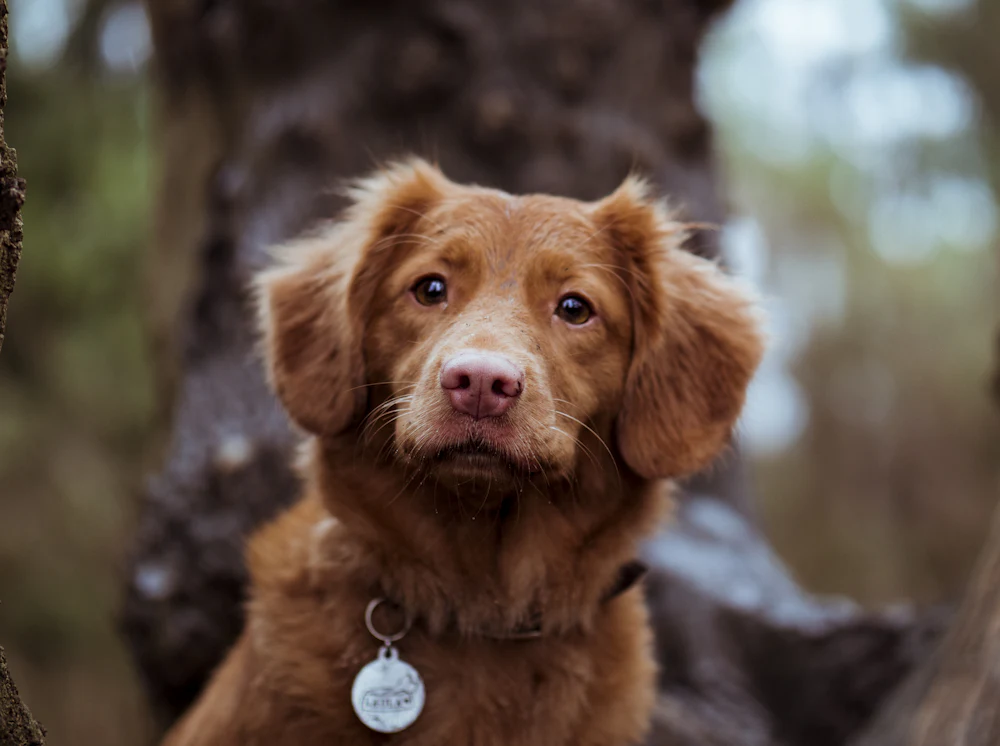
The standard calls the Toller highly intelligent, easy to train and possessed of great endurance, a strong and able swimmer and a natural, tenacious retriever on land and from water. It also notes that many have a slightly sad expression until they go to work, when the look changes to intense concentration and excitement. Anyone who has watched one spot a ball at the far end of a field will recognise the switch.
At home the picture is warmer and noisier. Tollers are affectionate, playful and attached to their people, but many are reserved with strangers, and the FCI treats aggression and overly shy temperament as disqualifying faults. Excitement has a voice: the high-pitched Toller scream, produced when the lead comes out or a toy appears, can startle visitors and neighbours alike. It is a breed trait, not a sign of pain, and it responds best to calm, consistent handling.
Children and other pets
Tollers are usually good with the children in their own family and enjoy active games, particularly anything that involves fetching. They can be boisterous, so supervise small children and teach everyone to keep greetings calm. Most live happily with other dogs, and many are reserved with strangers, so visitors may need to be introduced without fuss. Cats can be accepted if raised together, although a retriever's instinct to chase and carry things persists, so introduce small pets with care.
Exercise and the daily walk
A Toller wants one and a half to two hours of activity a day, and a walk alone rarely satisfies it. The breed was built for bursts of running and retrieving, followed by steady work, so a mix of lead walking, ball or dummy retrieves and a few minutes of training suits best. Mental effort tires a Toller as quickly as miles do.
Swimming is a natural pleasure, since the standard stresses the breed is a strong swimmer, but only in safe, clean water with an easy exit. Dog sports such as agility, obedience, scent work and flyball all suit the breed. Without an outlet the energy turns into barking, shredding cushions or inventing games that the owner does not enjoy.
Training
The FCI describes the breed as easy to train, and most Tollers learn quickly, often too quickly, picking up habits you did not mean to teach. Retrieving is the best reward you have: a dummy or favourite toy will often beat food. Keep sessions short, varied and cheerful, because a bored Toller will improvise, and harsh correction tends to dampen an otherwise willing dog.
Teach calm early. Practise settling on a mat, waiting at doors and keeping four paws on the floor while the lead is fetched, which reduces the scream that excitement produces. Socialise widely from puppyhood, since many Tollers stay reserved with strangers, and reward relaxed behaviour around new people, lifts and busy pavements. Recall is usually good, but a Toller that spots ducks may focus entirely on them.
Coat and grooming
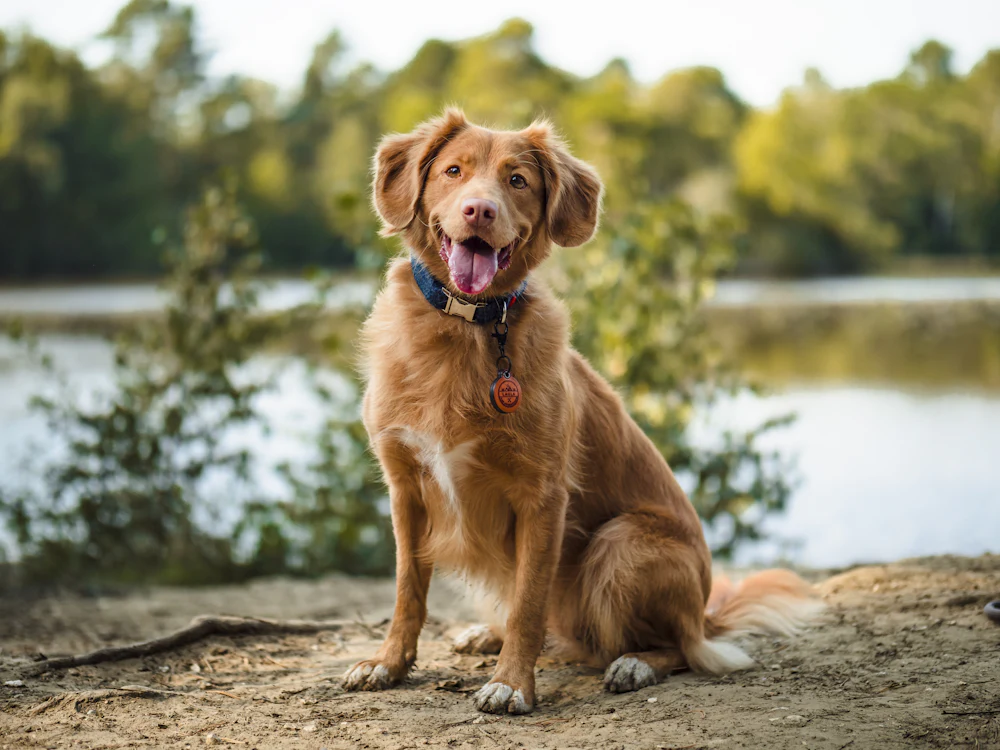
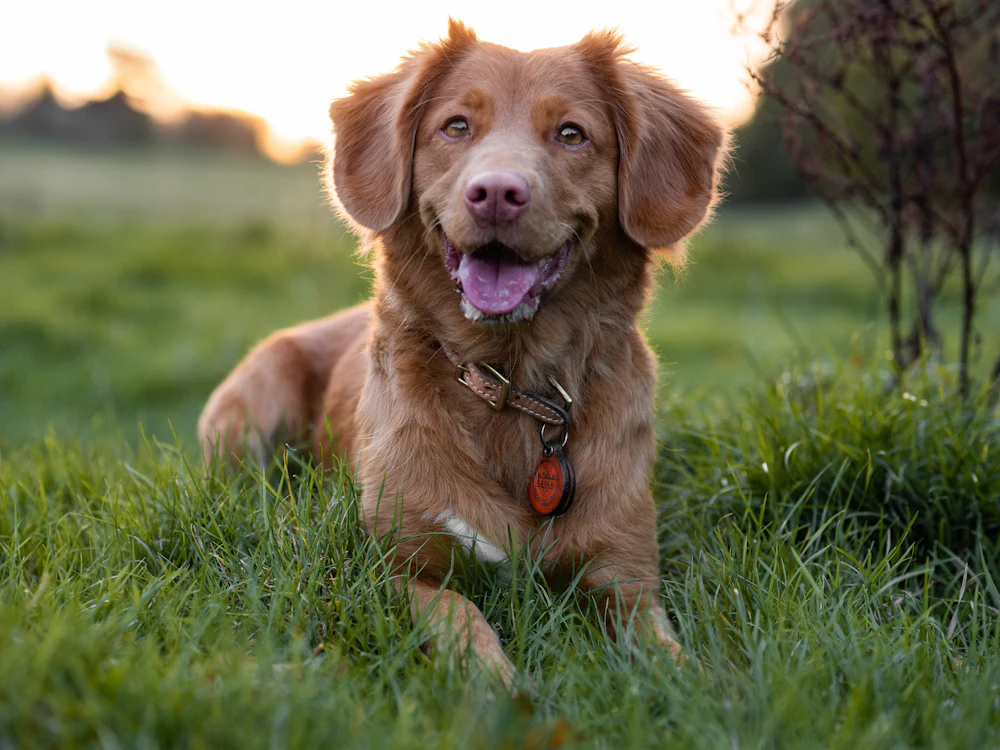
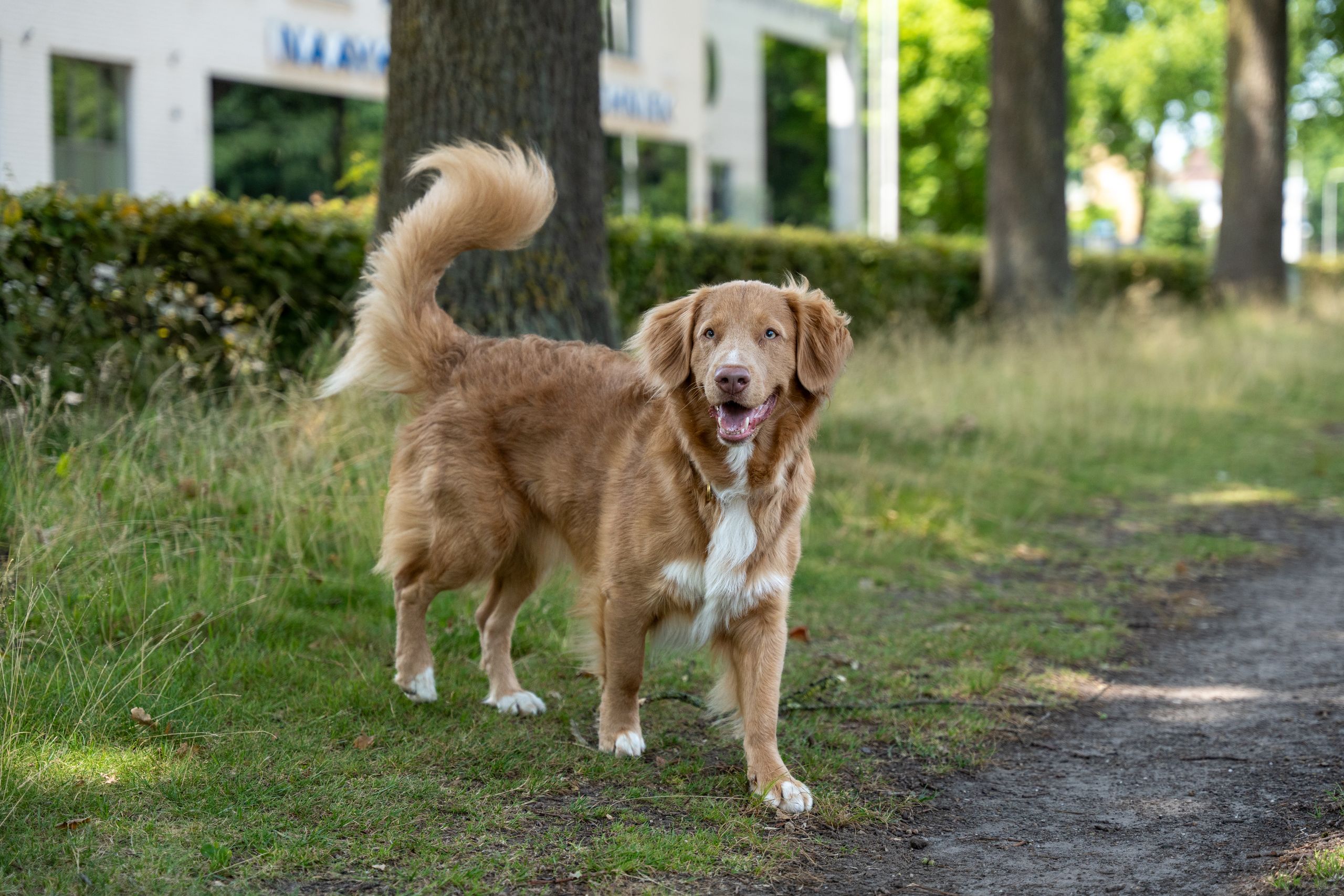
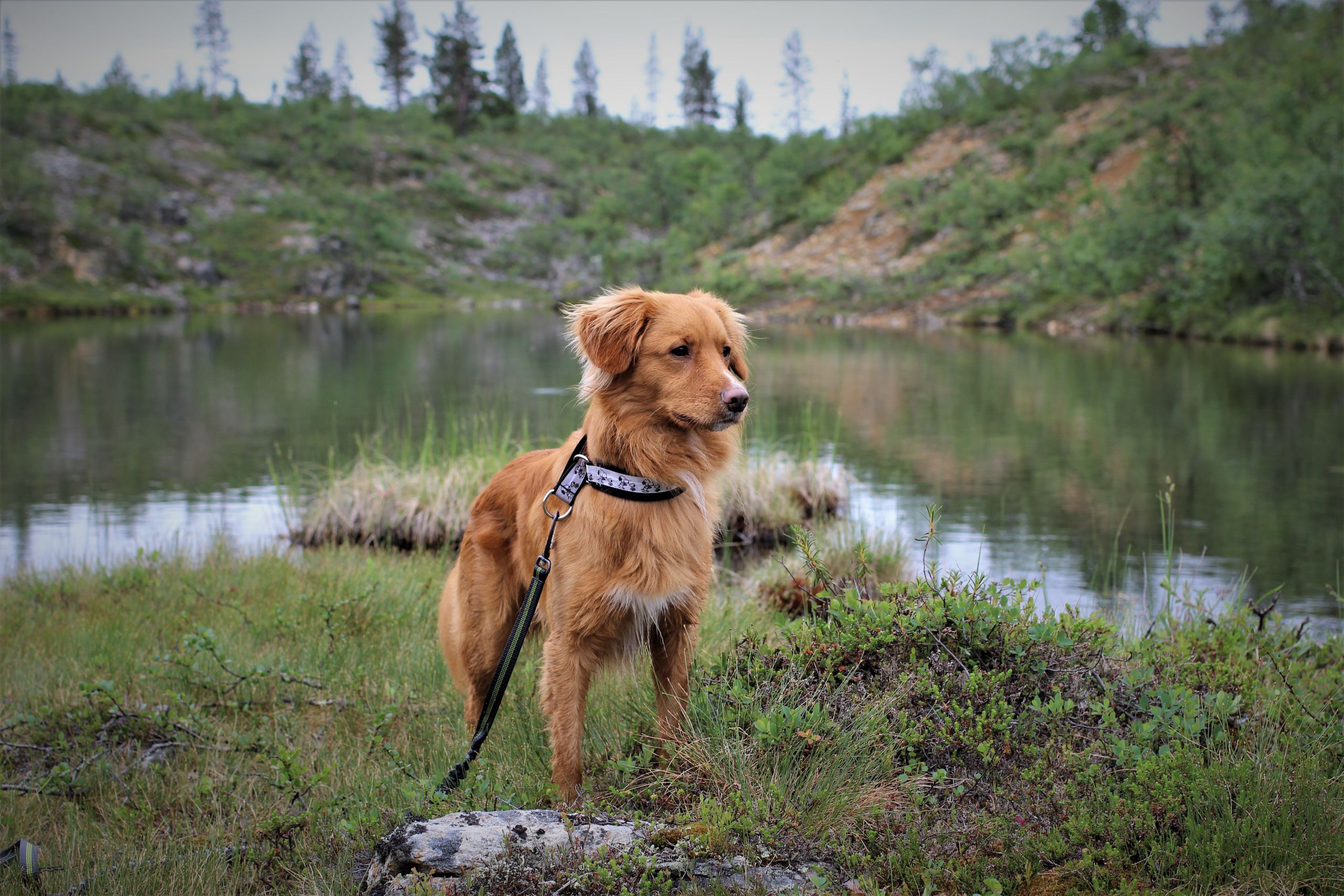
The coat is a water-repellent double coat of medium length with a dense undercoat, perhaps with a slight wave on the back and moderate feathering on the forelegs. A weekly brush keeps it in order, and you will need more during the heavy seasonal shed. Wash only when necessary, since frequent bathing strips its natural water resistance. The FCI describes shades of red or orange with lighter feathering, usually with white on the tail tip, feet, chest or as a blaze.
Feeding and weight
Tollers are athletic dogs and their appetite should match their activity. Feed measured meals of a complete food suited to age and workload, and use part of the ration for training so treats do not add extra weight. A lean, fit Toller is easier on joints and moves better. Avoid hard exercise straight after a large meal, and ask the vet about meal sizes if you add a lot of sport.
Work out a starting calorie figure and food weight with the calorie calculator. Not sure this is the right breed? Take the quiz.
Health
Every breed carries predispositions. These are the conditions most often discussed for the Nova Scotia Duck Tolling Retriever, not a prediction for any individual dog.
- Immune-mediated rheumatic disease and other autoimmune conditions, including SLE-like disease
- Steroid-responsive meningitis-arteritis (inflammation causing neck pain and fever)
- Addison's disease (an adrenal hormone deficiency)
- Progressive retinal atrophy and collie eye anomaly, both with DNA tests
- Hip dysplasia
What to ask the breeder. Ask for hip scores, an eye examination and DNA test results for PRA, CEA and any other conditions offered by the breed club. Ask too whether autoimmune disease or Addison's disease has appeared in the lines.
Choosing a puppy
Choose a breeder who tests, shares the results and lets you meet at least the mother. Ask about hip scores, eye examinations and DNA tests, and about autoimmune disease and Addison's disease in the pedigree. Look for a puppy that is curious and bouncy but recovers quickly from surprises. Start socialising at once, include lifts, trams and busy streets, and teach settling before the adolescent months arrive and energy peaks.
In Luxembourg the national kennel club is the Fédération Cynologique Luxembourgeoise (FCL), a member of the FCI. Many owners also buy from breeders in Germany, France or Belgium; a puppy coming from another EU country must be microchipped and vaccinated against rabies, which in practice means it cannot travel before about fifteen weeks of age. Where to get a dog in Luxembourg.
The older Nova Scotia Duck Tolling Retriever
Older Tollers often keep their enthusiasm after their joints begin to complain. Shorten the walks rather than cutting them out, and replace fast retrieves with scent games and gentle swimming. Watch for joint pain, lethargy, changes in appetite or drinking, and unexplained weight loss, which can point to autoimmune or hormonal disease. Twice-yearly vet checks help, and a lean body protects the hips.
A realistic day
A realistic weekday for a working household in Luxembourg City, with a midday visit. Adjust it to your dog, not the other way round.
Long walk with retrieves in the park before work.
Breakfast, with part of the ration used for a short training game.
Midday visit from a walker: toilet break, a brisk walk and a retrieve.
Evening exercise, with a swim in summer if safe water is within reach.
Final short walk and a calm settle on the mat.
A Nova Scotia Duck Tolling Retriever in Luxembourg
Tollers can live in a flat if their owners are active, and the lift is rarely a problem for a dog this size, provided the scream is kept under control in the corridor. Weekday mornings are the key: a long walk and some retrieving in the Pétrusse valley, Parc Merl or the Municipal Park before the working day sets the tone for the evening.
At weekends the Bambësch and the Grünewald forests give room for longer outings, and buses and trams being free nationwide makes it easy to reach them without a car. Summers can reach the 30s, and a Toller with a medium double coat should work in the early morning or evening. Register the dog with the commune, have it microchipped and insured for third-party liability, and expect to pay the annual dog tax.
Every dog in Luxembourg must be identified, declared to the commune and covered by liability insurance. How registration works.
When you travel
A Toller needs real exercise and mental work while you are away, so book a sitter who can give proper walks and retrieving games, not just a toilet visit. Share the routine, the signals for fetch and settle, and the dog's reaction to strangers. Warn about the scream, keep the dog on a lead near water and ducks, and provide a few puzzle toys for the quiet hours.
PAWLY's holiday and overnight care takes place in your home, so your dog keeps its own bed and routine.
Myths and facts
MythA Toller is a small Golden Retriever.
FactIt is a separate Canadian breed, with more drive, a more reserved nature and its own hunting method.
MythThe scream means the dog is in pain.
FactUsually it is pure excitement and a breed trait, though a sudden scream with limping or sensitivity deserves a vet visit.
MythTollers are easy because they are eager to please.
FactThey learn fast, but they also get bored fast, and an under-exercised Toller can be noisy and destructive.
Is it the right dog for you?
Suits
- Active owners who want a medium-sized retriever
- Families who enjoy the outdoors
- Dog sport enthusiasts
- People who can offer a dog a job
Think twice if
- Sedentary households
- Thin walls and an excitable dog
- Long days alone
- Owners who dislike barking and screaming
Questions owners ask
What is the Toller scream?
A high-pitched vocalisation produced when the dog is thrilled, such as when the lead or a ball appears. It is normal for the breed. Teaching calm greetings and rewarding quiet behaviour reduces it but rarely removes it.
Toller or Golden Retriever?
The Toller is smaller, faster to excitement and more reserved with strangers. A Golden is generally larger and more openly sociable. Both need exercise, but the Toller usually needs more mental work.
How much exercise does a Toller need?
Plan for one and a half to two hours a day, including retrieving or training. A short lead walk is not enough. Adult dogs that are fit and well exercised settle well indoors.
Why is it called a tolling retriever?
Tolling means luring. The dog plays along the shore to draw the curiosity of ducks within range, then retrieves the fallen birds after the hunter shoots.
Sources
Photo: Unsplash (Unsplash License) · Photo: Unsplash (Unsplash License) · Photo: Pexels (Pexels License) · Photo: Pexels (Pexels License) · Photo: Unsplash (Unsplash License)
General information for dog owners in Luxembourg, not veterinary or legal advice. Official facts (origin, size, group, history and temperament as described by the breed standard) follow the FCI standard; health and care sections reflect breed-club and veterinary guidance and are typical ranges rather than rules. For your own dog, ask your vet, the breed club or your commune. How this guide is written and checked. Last reviewed 8 October 2026.
Need someone for your Nova Scotia Duck Tolling Retriever?
PAWLY offers an individual 45-minute walk or a home visit at your dog's pace, the same walker every time, and a written report with photos after every visit, across Luxembourg City.
Read next: the journal, for the Nova Scotia Duck Tolling Retriever
All articles
Building a recall you can actually rely on
Scent and movement can cancel a recall; this is the method for the Nova Scotia Duck Tolling Retriever.

Working breeds in a city flat: the honest version
High-drive dogs like the Nova Scotia Duck Tolling Retriever can live in a flat, but it takes a plan.
The dog that is afraid of people
The Nova Scotia Duck Tolling Retriever is often reserved with strangers; early, patient handling of that matters.
Similar breeds
All 198 breeds
Golden Retriever
Gentle, biddable and endlessly patient with children, with a coat that needs more work than most people expect.
EnergyGroomingFlat life
Flat-Coated Retriever
A black or liver gundog with a permanently wagging tail, an adolescence that lasts for years and a talent for carrying things.
EnergyGroomingFlat life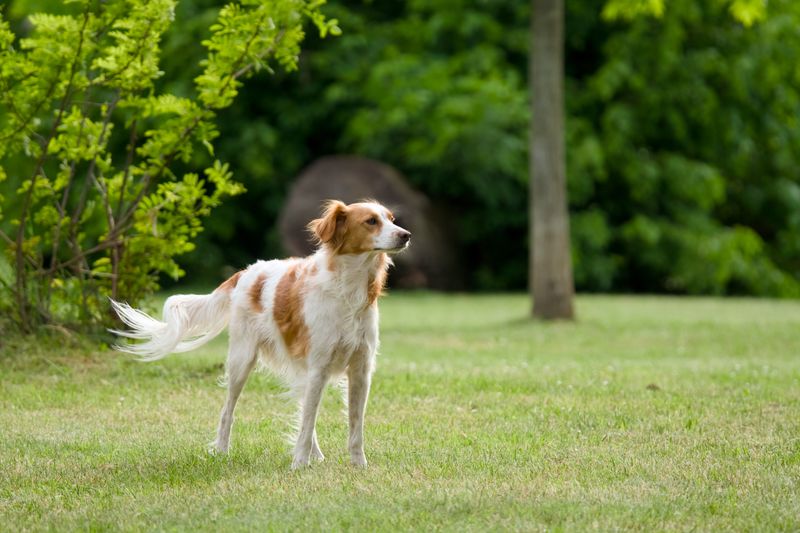
Nederlandse Kooikerhondje
A small orange and white Dutch decoy dog with black-tipped ears, bright, sensitive and happiest with a job and a familiar face.
EnergyGroomingFlat life

