

History
The Kooikerhondje takes its name from the eendenkooi, the duck decoy of the Dutch countryside, a pond with curving, netted channels into which wild ducks were lured. The kooiker, the man who worked the decoy, used a small dog whose lively white-plumed tail drew curious ducks along the channel and into the trap. The FCI standard lists the breed's use as a sporting and companion dog used for duck decoy, and dogs of this type appear in Dutch paintings of the seventeenth century.
By the twentieth century the breed had nearly vanished. The standard tells how, during the Second World War, Baroness van Hardenbroeck van Ammerstol began to rebuild it from a bitch named Tommy, found on a farm in Friesland. An interim standard was adopted in 1966 and the breed was officially recognised in 1971. The Netherlands is the country of origin, and the current FCI standard, dated 13 October 2010, places it in Group 8, Section 2, among the flushing dogs, without a working trial.
Temperament
The standard describes a lively and agile dog, self-confident and with enough perseverance and stamina, good-natured and alert, but not noisy. It also speaks of faithfulness, friendliness and sporting enthusiasm. Owners recognise a dog that is cheerful and affectionate with its family, quick to learn and genuinely interested in what its people are doing. It is not a breed that likes to be left out.
With strangers many Kooikers are reserved, sometimes wary, and they prefer to approach in their own time rather than be handled by every admirer in the street. They are sensitive to tone of voice and atmosphere, and a noisy, chaotic household can make them anxious. This sensitivity is also what makes them so responsive and pleasant to train, as long as their need for predictability is respected.
Children and other pets
In a calm family the Kooikerhondje is a devoted companion, playful and gentle with children who respect its space. It may dislike being chased, hugged or picked up by visiting children, and it needs a quiet retreat. Families with toddlers should supervise closely. It usually gets on well with other dogs, and many live happily with cats. Birds and small pets may tempt it, given its sporting background, so introductions should be careful and supervised.
Exercise and the daily walk
An hour to an hour and a half of daily activity suits most adults, including at least one longer walk with time to explore. Kooikers love water and the edges of ponds and streams, and they enjoy retrieving, tracking and agility. They are agile and quick, and they need both physical exercise and mental work to be settled at home.
Off-lead running is possible once recall is trained, but beware of ducks: this breed was literally made to attract them. Forest paths and open fields away from roads are ideal. Mix walks with short training sessions, scent games and fetch. On days when walks are shorter, a puzzle feeder or a few new tricks prevent restlessness.
Training
Kooikers are bright and willing, and they learn quickly with positive reinforcement. Harsh corrections, shouting or frustration quickly erode their trust and can make them shut down. Keep sessions short and fun, finishing on a success. They are well suited to dog sports such as agility, obedience, rally and scent work, which channel their energy and deepen the bond with their owner.
Early socialisation is the key to a confident adult. Introduce the puppy gradually to people, children, traffic, trams and household noises, letting it observe before engaging. Never force contact with strangers. A well-socialised Kooiker is friendly but discreet; one kept in isolation may become fearful and reactive. Teach a calm settle on a mat as early as possible.
Coat and grooming
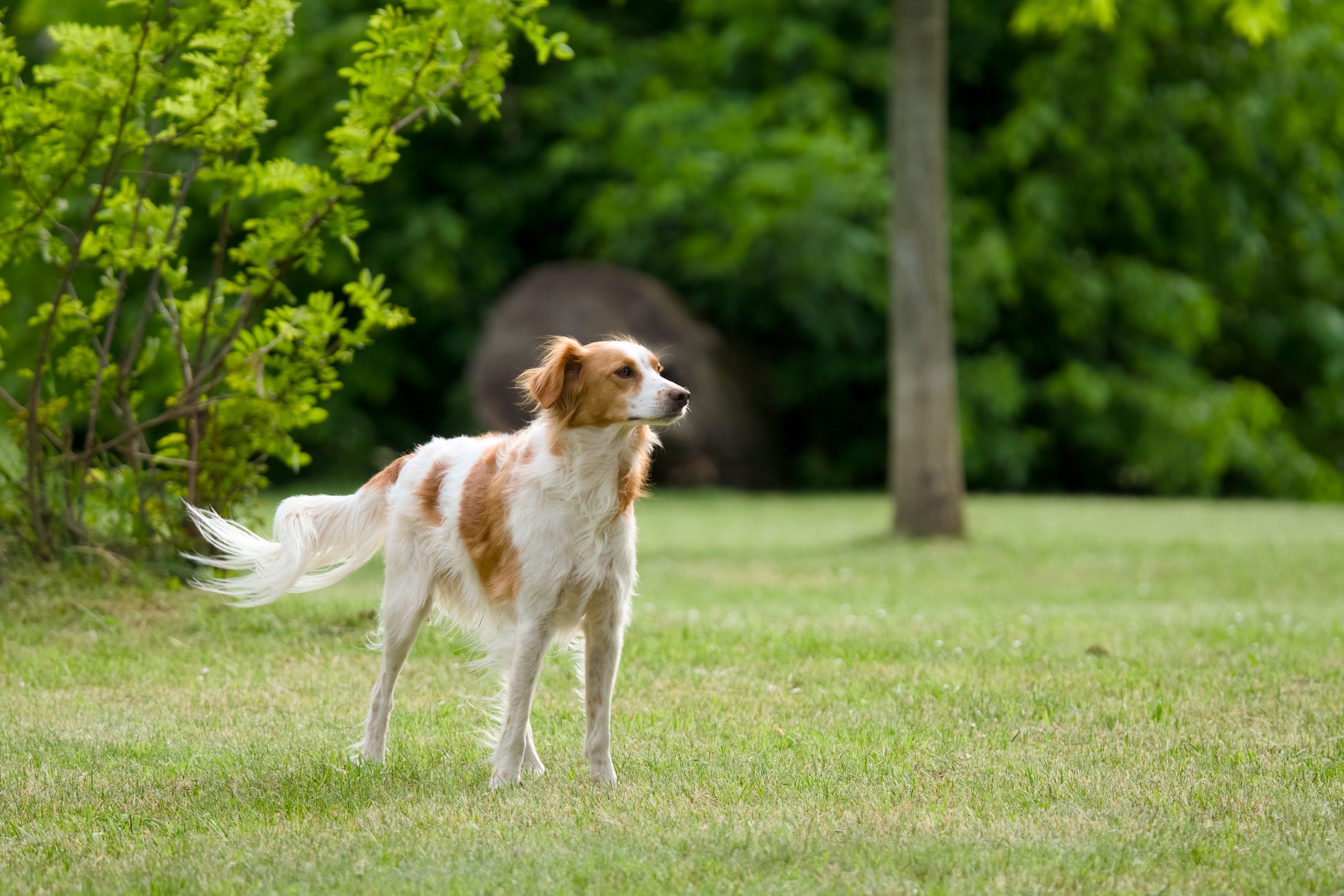
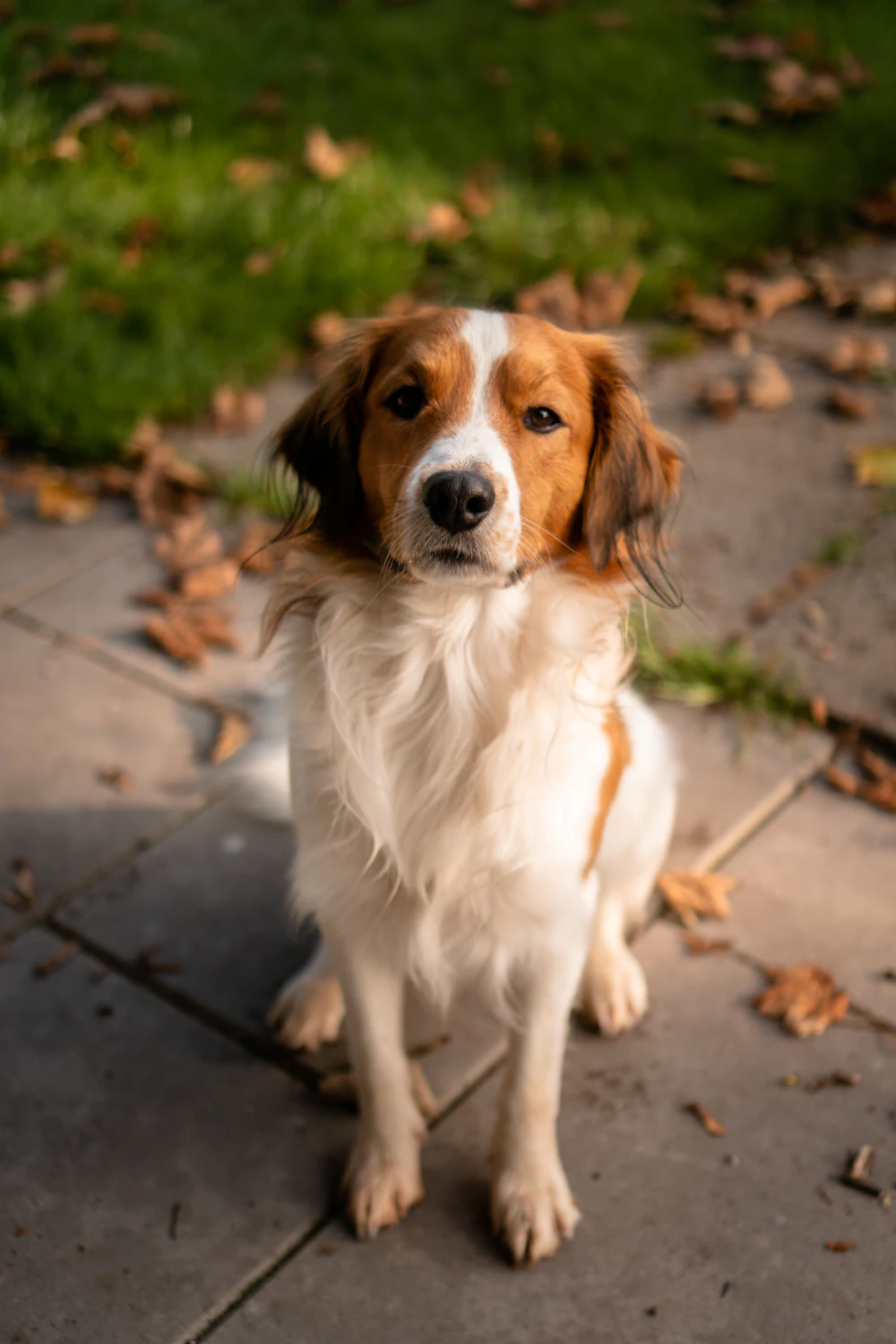
The FCI standard describes a medium-length coat, slightly wavy or straight, soft but not too fine, with a well-developed undercoat, feathering on the front legs, longer breeches on the hind legs and a well-plumed tail. Colour is distinct patches of clear orange-red on pure white, with orange-red predominating; black tips on the ears, the so-called earrings, are desirable. The coat is shown untrimmed. Brush once or twice a week, more during seasonal shedding, and keep the hair between the pads short.
Feeding and weight
An active Kooiker needs a complete diet appropriate for a small to medium-sized, sporty dog, divided into two meals. Adjust portions to activity level and body condition, as some individuals gain weight once neutered or during quieter periods. Use part of the daily food for training and scent games. Fresh water should always be available, especially after swimming or long walks in summer.
Work out a starting calorie figure and food weight with the calorie calculator. Not sure this is the right breed? Take the quiz.
Health
Every breed carries predispositions. These are the conditions most often discussed for the Nederlandse Kooikerhondje, not a prediction for any individual dog.
- Von Willebrand disease (an inherited bleeding disorder, DNA test available)
- Hereditary necrotising myelopathy (a neurological disease, DNA test available)
- Polyneuropathy (an inherited nerve disease, DNA test available)
- Patellar luxation (slipping kneecap)
- Hereditary cataract and other eye conditions
- Epilepsy
What to ask the breeder. Ask for DNA results on both parents for von Willebrand disease, hereditary necrotising myelopathy and polyneuropathy, plus recent eye and knee examinations, and ask about epilepsy in the wider family.
Choosing a puppy
A Kooiker puppy is curious, quick and sensitive. Give it time to settle, with a predictable routine and a quiet place to sleep. Socialise gently and frequently, letting it watch the world before meeting it. Begin recall, name recognition and handling exercises from the first days, always with rewards. Avoid overwhelming outings and rough play with large dogs. Short training games and a few minutes of brushing every day build a strong bond.
In Luxembourg the national kennel club is the Fédération Cynologique Luxembourgeoise (FCL), a member of the FCI. Many owners also buy from breeders in Germany, France or Belgium; a puppy coming from another EU country must be microchipped and vaccinated against rabies, which in practice means it cannot travel before about fifteen weeks of age. Where to get a dog in Luxembourg.
The older Nederlandse Kooikerhondje
Kooikers often stay active and sharp into old age, though they may slow down from about ten. Watch for weight gain, stiffness and changes in sight. Adapt exercise with shorter but regular walks and keep the mind busy with scent games and simple tricks. Annual or twice-yearly veterinary checks, dental care and a soft, warm bed keep an older dog comfortable.
A realistic day
A realistic weekday for a working household in Luxembourg City, with a midday visit. Adjust it to your dog, not the other way round.
Morning walk of 30 to 40 minutes, with some sniffing and a few minutes of training.
Breakfast in a puzzle toy, then rest while the household leaves.
Midday visit: a 30-minute walk, a short game of fetch and fresh water.
Longer walk in a park or forest, ideally with water nearby and recall practice.
Short last outing, a brief brush, then bed.
A Nederlandse Kooikerhondje in Luxembourg
The Kooikerhondje suits Luxembourg City well. It is compact, clean and generally quiet, which makes it a good neighbour in a flat with a lift. The Pétrusse valley offers green walks near the centre, while the Bambësch forest and the Grünewald provide space for longer outings. Its interest in ducks makes ponds and park lakes an exciting but challenging training ground, so keep a long line handy.
In the summer heat, when temperatures reach the 30s °C, walk early or late and let the dog swim where it is allowed and safe. Free buses and trams make it easy to reach forests and the countryside, and a calm Kooiker usually travels well once accustomed. Microchipping, declaration to the commune, third-party liability insurance and the annual dog tax apply as for any dog.
Every dog in Luxembourg must be identified, declared to the commune and covered by liability insurance. How registration works.
When you travel
Kooikers attach strongly to their people and may be unsettled by changes. A sitter should meet the dog beforehand, keep the routine of walks, meals and play, and avoid forcing contact. Patience and gentleness are essential, as the breed can be wary of strangers. Watch the dog near ducks and water. In-home care is usually less stressful than a kennel for this sensitive breed.
PAWLY's holiday and overnight care takes place in your home, so your dog keeps its own bed and routine.
Myths and facts
MythIt is a small spaniel.
FactIt is a Dutch decoy dog with its own history, classed by the FCI among the flushing dogs, but bred for luring ducks rather than flushing game.
MythA small dog needs little exercise.
FactKooikers are active sporting dogs that need at least an hour of daily exercise and mental work.
MythIts shyness is a temperament fault.
FactReserve with strangers is typical. Fearfulness is not, and good breeding and socialisation make the difference.
Is it the right dog for you?
Suits
- Active owners who enjoy training and dog sports
- Calm households in flats or houses
- People who want a medium-energy dog of manageable size
- Families with older, respectful children
Think twice if
- Your household is noisy and unpredictable
- The dog would be left alone for long periods
- You want a dog that loves meeting every stranger
- You cannot commit to daily exercise and mental work
Questions owners ask
Are Kooikerhondjes good with children?
Usually yes, with children who are calm and respectful. The breed is affectionate but sensitive, and it may avoid noisy or grabby play. Teach children to let the dog come to them, and give the dog a quiet space where it is never disturbed.
Do they bark a lot?
No, the FCI standard describes a dog that is alert but not noisy. Most Kooikers bark to signal something unusual and then stop. Excessive barking usually reflects boredom, anxiety or too much time alone.
Do they shed?
Yes, moderately throughout the year and more heavily during seasonal moults. Brushing once or twice a week keeps the coat tidy and reduces hair in the home. The coat should not be clipped, but trimming the feet is acceptable.
Are they easy to train?
Generally yes. They are intelligent and eager to work with their owner, but they respond best to positive, gentle methods. Harsh handling can make them insecure and withdrawn. Many excel at agility, obedience and scent work.
Sources
Photo: Pexels (Pexels License) · Photo: Unsplash (Unsplash License) · Photo: Unsplash (Unsplash License)
General information for dog owners in Luxembourg, not veterinary or legal advice. Official facts (origin, size, group, history and temperament as described by the breed standard) follow the FCI standard; health and care sections reflect breed-club and veterinary guidance and are typical ranges rather than rules. For your own dog, ask your vet, the breed club or your commune. How this guide is written and checked. Last reviewed 8 October 2026.
Need someone for your Nederlandse Kooikerhondje?
PAWLY offers an individual 45-minute walk or a home visit at your dog's pace, the same walker every time, and a written report with photos after every visit, across Luxembourg City.
Read next: the journal, for the Nederlandse Kooikerhondje
All articles
Building a recall you can actually rely on
Scent and movement can cancel a recall; this is the method for the Nederlandse Kooikerhondje.

What to do during a seizure
Seizures are discussed in the Nederlandse Kooikerhondje; knowing what to do in the first minutes matters.

Water, rivers and the algae that kills dogs every summer
Dogs that love water need to know which water is safe, including the summer algae that kills dogs.
Similar breeds
All 198 breeds
Nova Scotia Duck Tolling Retriever
The smallest retriever, a fox-coloured Canadian bird dog with a unique hunting technique and a famous scream.
EnergyGroomingFlat life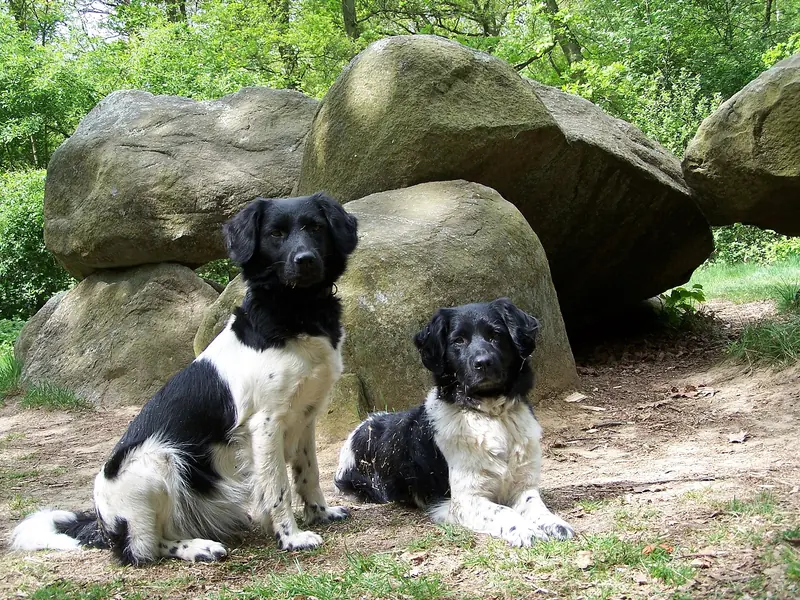
Stabyhoun
A calm, independent Frisian farm dog whose name means stand by me, though it will often decide the route itself.
EnergyGroomingFlat life
English Cocker Spaniel
A merry, busy spaniel with a permanently wagging tail, and very different depending on working or show lines.
EnergyGroomingFlat life

