History
The Stabyhoun, written Stabijhoun in the FCI standard, is from the Netherlands, in particular the northern province of Friesland. The standard explains that the name comes from Frisian words meaning stand by me. It sits in Group 7, Section 1.2, Continental pointing dogs of spaniel type, with a working trial, and it has long been valued as an all-round farm and hunting companion.
In the early twentieth century crossbreeding threatened both the Stabyhoun and the related Wetterhoun. Enthusiasts began purifying the type in 1938, and in 1942 both breeds were officially recognised. The first standard dates from 10 February 1944, and the Dutch association for Stabij and Wetterhounen was created in 1947. The FCI notes a worldwide population of just over 6,000 dogs in 2013, so this is a rare breed with a small gene pool, which is relevant to anyone looking for a puppy.
Temperament
The FCI says the Stabyhoun is very independent and likes to go its own way, affectionate but sometimes very headstrong, so patience and a consistent education are essential. That is a fair summary. It is not a dog that hangs on every word. It will happily stay near you, check in with a glance and then continue investigating the hedge, which makes it a pleasant, low-drama companion on a country walk and a challenge in a crowded street.
Indoors it is usually gentle, quiet and rather undemonstrative, more of a fond companion than a clinging one. Many are reserved with strangers at first and warm up on their own terms. They like to be involved in the household and can be sensitive to harsh tones, which is where the independence meets a soft heart. A bored Stabyhoun is more likely to dig, sniff out food or wander than to bark all day.
Children and other pets
Stabyhouns are traditionally farm companions and are usually patient and affectionate with children in the family, though they are sturdy dogs that can knock a toddler over in excitement and do not enjoy rough handling. Teach children to respect the dog's space. With other dogs they are normally friendly. Cats and small pets in the household are often accepted if introduced early, but a hunting background means a dog outdoors may chase birds and small animals, so supervise.
Exercise and the daily walk
An adult needs around an hour and a half of activity a day. Because it was developed to work at a measured pace and stay within reach of a hunter, a Stabyhoun is usually content with long walks, fetch and exploration rather than flat-out running. Spaniel-type scent drive means off-lead time should be in safe, enclosed or very quiet places, at least until recall is proven under distraction.
Retrieving games, hide-and-seek with toys and scent trails satisfy the breed's working instincts. Many enjoy swimming and splashing in water. Keep growing dogs away from repetitive jumping and long hard-surface runs until joints have matured. Because the coat collects burrs, mud and ticks, check the dog thoroughly after woodland walks, paying attention to ears and feathering.
Training
Training a Stabyhoun is a partnership, not a drill. The independent streak means commands that seem pointless are quietly declined, whereas rewards, calm repetition and consistent rules produce a willing, thoughtful dog. Punishment backfires, as the standard warns about a headstrong nature. Start recall early using food and a long line, and practise it in dull places before attempting it in exciting ones.
Lead manners, settling when visitors arrive and not taking food from counters deserve early attention. Because the breed can be wary of the unfamiliar, wide socialisation in the first months is worthwhile: lifts, trams, bicycles, children, other dogs. Nose work and retrieving are ideal ways to give the dog a task, and may bring out the cooperative side of an independent mind.
Coat and grooming
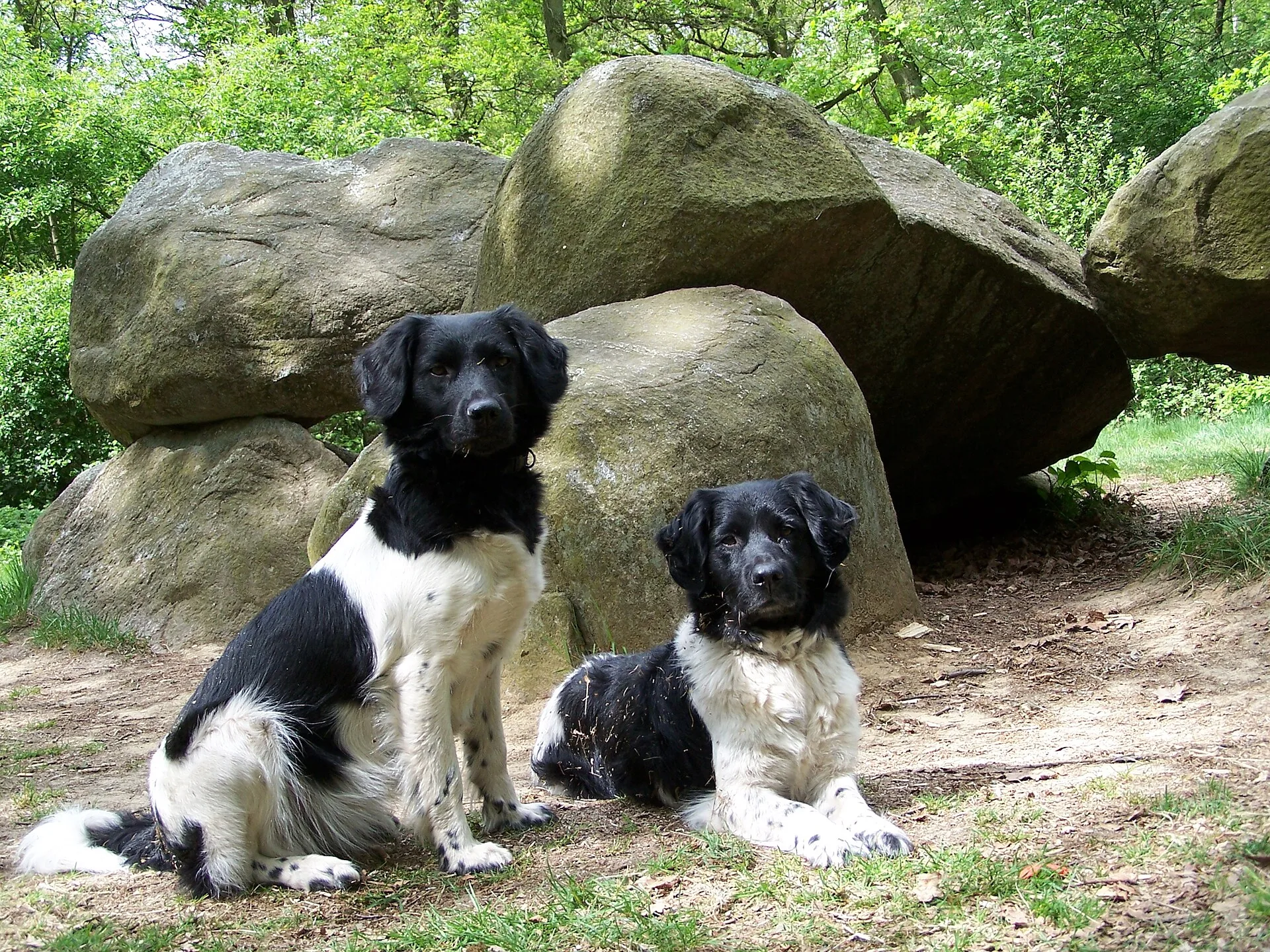
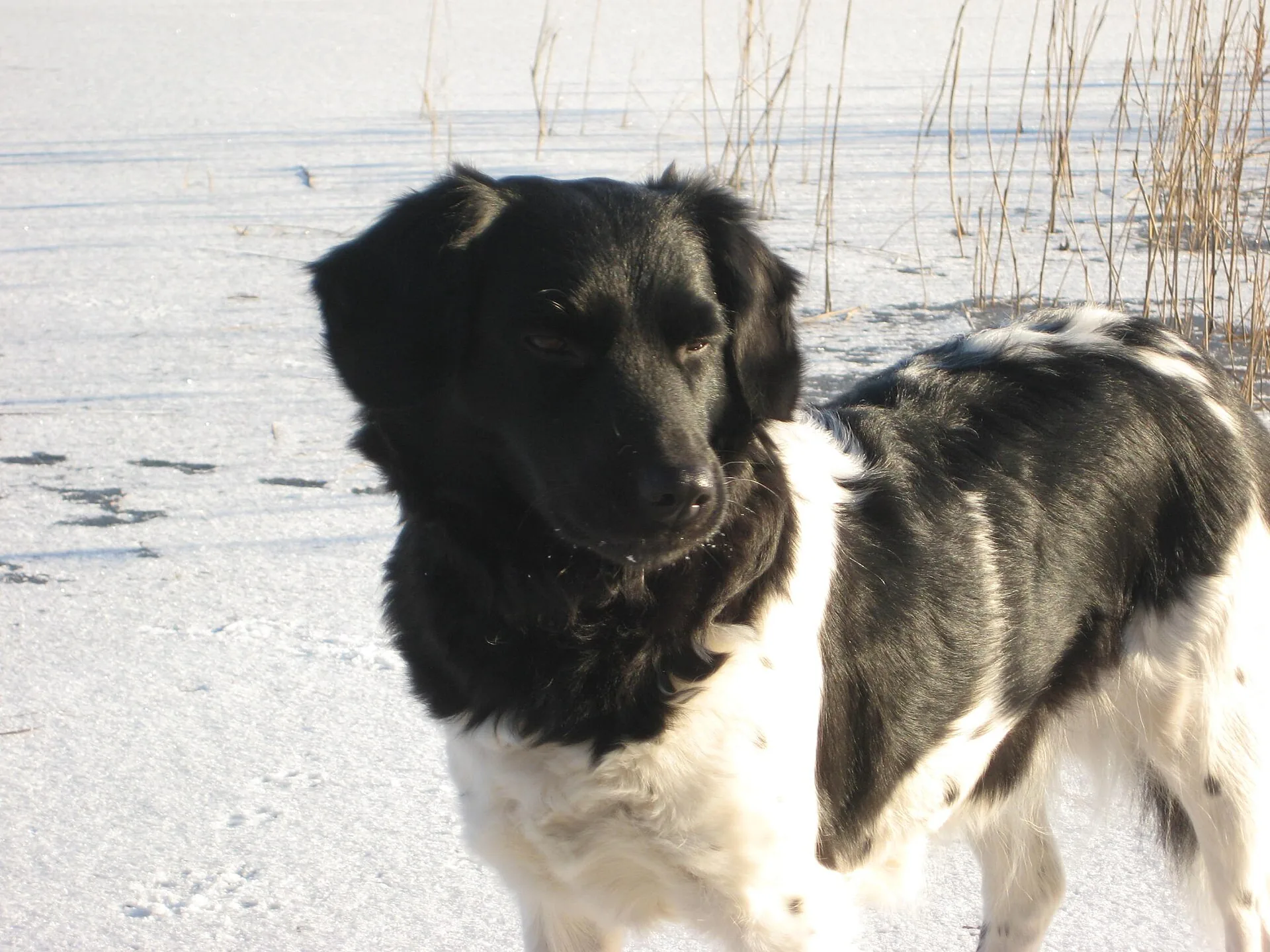
The FCI describes a coat of medium length and straight on the body, with a weather-resistant undercoat, bushy rather than feathered on the trousers and tail. Permitted colours are pied in black or brown with white markings, and black or brown roans are also accepted. Brush once or twice a week, more during the seasonal moult, and comb the feathering behind the ears and legs after muddy walks. Check and dry the ears regularly. Bathing is rarely needed. Expect hair on furniture, especially at the change of seasons.
Feeding and weight
A complete diet for a medium-sized, active dog suits the Stabyhoun, fed in two meals. Some individuals are keen on food and will gain weight if tidbits are not counted, so use part of the daily ration for training. Adjust amounts to activity and season, and watch the waistline under the coat. Keep fresh water available, especially after swimming and warm-weather walks. Avoid vigorous exercise directly after eating.
Work out a starting calorie figure and food weight with the calorie calculator. Not sure this is the right breed? Take the quiz.
Health
Every breed carries predispositions. These are the conditions most often discussed for the Stabyhoun, not a prediction for any individual dog.
- Hip dysplasia (malformed hip joints)
- Elbow dysplasia (developmental joint disease)
- Inherited neuropathy (nerve disease reported in the breed)
- Epilepsy (seizure disorder)
- Ear infections (otitis externa)
What to ask the breeder. Ask for hip and elbow scores for both parents and which DNA or health tests the breeder uses, especially for inherited nerve disease. Given the small population, ask how closely related the parents are.
Choosing a puppy
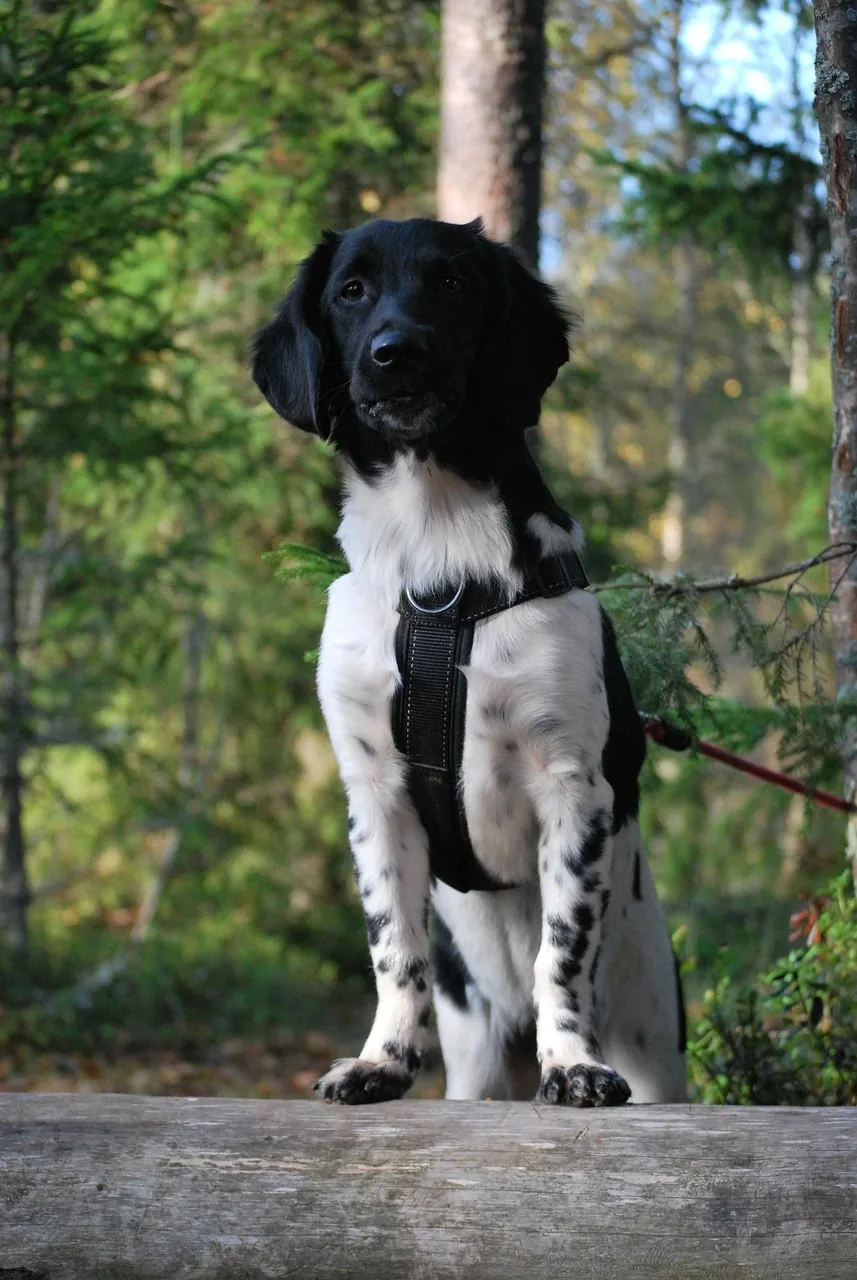
Stabyhoun puppies are sturdy, curious and quietly stubborn. Begin with gentle socialisation to city life, such as lifts, trams and other dogs, and handle ears, paws and mouth daily. Keep walks short and let the puppy sniff at its own pace. Teach alone-time in small steps and a clear name-and-reward recall from the first week. Avoid stairs and jumping while growing, and provide chews, as mouthing and gnawing are typical until adolescence ends.
In Luxembourg the national kennel club is the Fédération Cynologique Luxembourgeoise (FCL), a member of the FCI. Many owners also buy from breeders in Germany, France or Belgium; a puppy coming from another EU country must be microchipped and vaccinated against rabies, which in practice means it cannot travel before about fifteen weeks of age. Where to get a dog in Luxembourg.
The older Stabyhoun
Most Stabyhouns age gracefully. Expect a slower start to the morning, softer play and perhaps stiffness on cold days. Keep walks regular but shorter, provide an orthopaedic bed and manage weight. Check ears, eyes and teeth more often and ask your vet about joint care. Any unsteadiness, weakness in the legs or change in gait deserves an examination.
A realistic day
A realistic weekday for a working household in Luxembourg City, with a midday visit. Adjust it to your dog, not the other way round.
Lead walk with a long sniff along quiet streets or the edge of a park, then breakfast.
Owner leaves for work; the dog settles on its bed with a chew.
Midday visit: a 45-minute walk in Parc Merl or the Pétrusse valley with fetch or scent games, water and a comb of the feathering.
Evening outing of about an hour, ideally in woodland on a long line, then dinner.
Short toilet break, ears checked, quiet evening and bed.
A Stabyhoun in Luxembourg
The Stabyhoun is a good fit for people who want a medium-sized, unflashy dog in a Luxembourg flat, provided that exercise is regular. It is generally quiet indoors and calm in lifts after some practice. A midday visit helps, as it is a companionable breed that will not enjoy a ten-hour day alone, though it copes with a normal working day better than many herding or sporting dogs.
Luxembourg City suits it well: Parc Merl and the Pétrusse valley for daily walks, and the Bambësch and Grünewald forests for longer sniff-led outings on a long line, bearing in mind roe deer and other wildlife. The coat is weather-resistant, so rain is not a problem, but summer temperatures in the 30s °C call for early and late walks and plenty of water. Free buses and trams make weekend trips to the countryside simple. Remember the standard obligations: microchip, declaration to the commune, insurance and the annual dog tax.
Every dog in Luxembourg must be identified, declared to the commune and covered by liability insurance. How registration works.
When you travel
A sitter should know the dog's independent streak: it may choose its own route and be slow to return, so a long line or secure area is wise. Provide the usual routine of two or three outings, feeding times and where the lead and towels are kept. Check ears and coat for burrs after woodland walks. The dog does not like long hours alone and benefits from company, so make sure it is not left unattended all day.
PAWLY's holiday and overnight care takes place in your home, so your dog keeps its own bed and routine.
Myths and facts
MythStabyhouns are stubborn, so they cannot be trained.
FactThe FCI itself calls them headstrong, yet patient, consistent and reward-based training works well. They think before they obey.
MythA pointing dog needs a hunter to be happy.
FactMany live as pets, as long as they have walks, scent games and company.
MythThey are a common Dutch breed.
FactThe FCI cites only around 6,000 dogs worldwide in 2013, so puppies can mean waiting lists.
Is it the right dog for you?
Suits
- Calm, patient owners who enjoy long country-style walks
- Families with respectful children
- People who value an independent, low-drama dog
- Those who can provide midday company
Think twice if
- You want a dog that obeys instantly and off lead anywhere
- You are away from home all day with no help
- You need a hypoallergenic or non-shedding dog
- You are unwilling to wait for a rare breed puppy
Questions owners ask
Is the Stabyhoun a good family dog?
Generally yes. It is affectionate, steady and often patient with children, though independent and headstrong in character, according to the FCI. It does best in a calm home where children understand how to handle a dog gently.
Does a Stabyhoun need a lot of exercise?
Around an hour and a half a day is usual, preferably with sniffing and retrieving rather than only pavement walking. The breed is not frantic, but it needs regular outings and purposeful activity to stay content.
Can a Stabyhoun live in a flat?
Yes, if it gets daily exercise and company. It is usually calm indoors. A quiet, tidy routine, with a lift and a midday walk, suits it well. Expect some shedding.
Is a Stabyhoun easy to train?
It is intelligent but independent. Consistent, patient, reward-based training works best, while shouting or repetition causes resistance. Recall in particular needs long-term work.
Sources
Photo: Mjk23, CC BY-SA 3.0, via Wikimedia Commons · Photo: Mjk23, CC BY-SA 3.0, via Wikimedia Commons · Photo: Ghostcrow / Pixabay (Pixabay Content License) · Photo: AlkeMade / Pixabay (Pixabay Content License)
General information for dog owners in Luxembourg, not veterinary or legal advice. Official facts (origin, size, group, history and temperament as described by the breed standard) follow the FCI standard; health and care sections reflect breed-club and veterinary guidance and are typical ranges rather than rules. For your own dog, ask your vet, the breed club or your commune. How this guide is written and checked. Last reviewed 8 October 2026.
Need someone for your Stabyhoun?
PAWLY offers an individual 45-minute walk or a home visit at your dog's pace, the same walker every time, and a written report with photos after every visit, across Luxembourg City.
Read next: the journal, for the Stabyhoun
All articles
Building a recall you can actually rely on
Scent and movement can cancel a recall; this is the method for the Stabyhoun.

Dogs and cats in the same flat
The Stabyhoun can see small animals as prey; this covers living with a cat in a flat.

Ears: the three signs that mean an appointment
Ear trouble is common in the Stabyhoun; these are the three signs that mean an appointment.
Similar breeds
All 198 breeds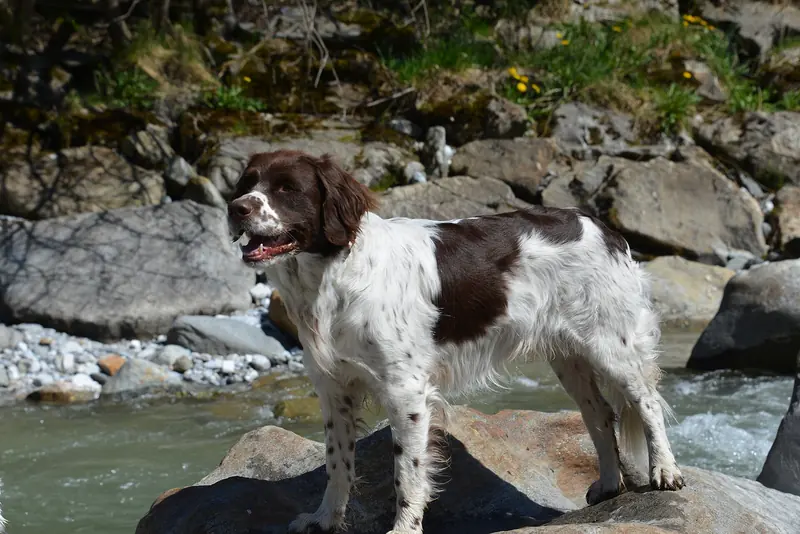
Drentsche Patrijshond
The Dutch partridge dog is a gentle, white-and-brown spaniel descendant that works close to the gun and sulks if shouted at.
EnergyGroomingFlat life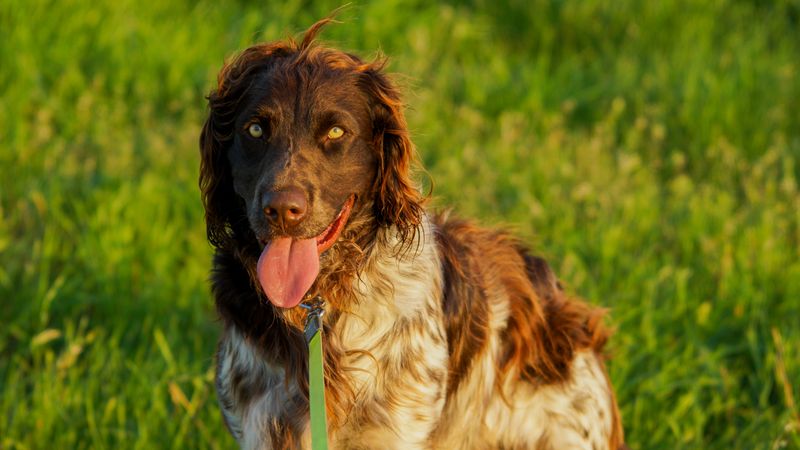
Small Münsterländer
A brown-and-white German gundog with a spaniel's charm and a pointer's focus, happiest when its nose and brain are both employed.
EnergyGroomingFlat life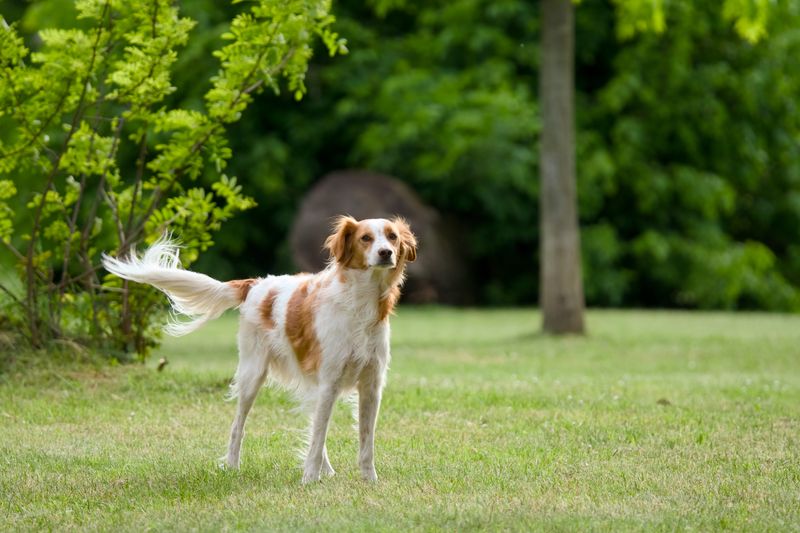
Brittany
A compact French pointer with a spaniel's coat and an athlete's engine, happiest when its nose and legs are working together.
EnergyGroomingFlat life

