History
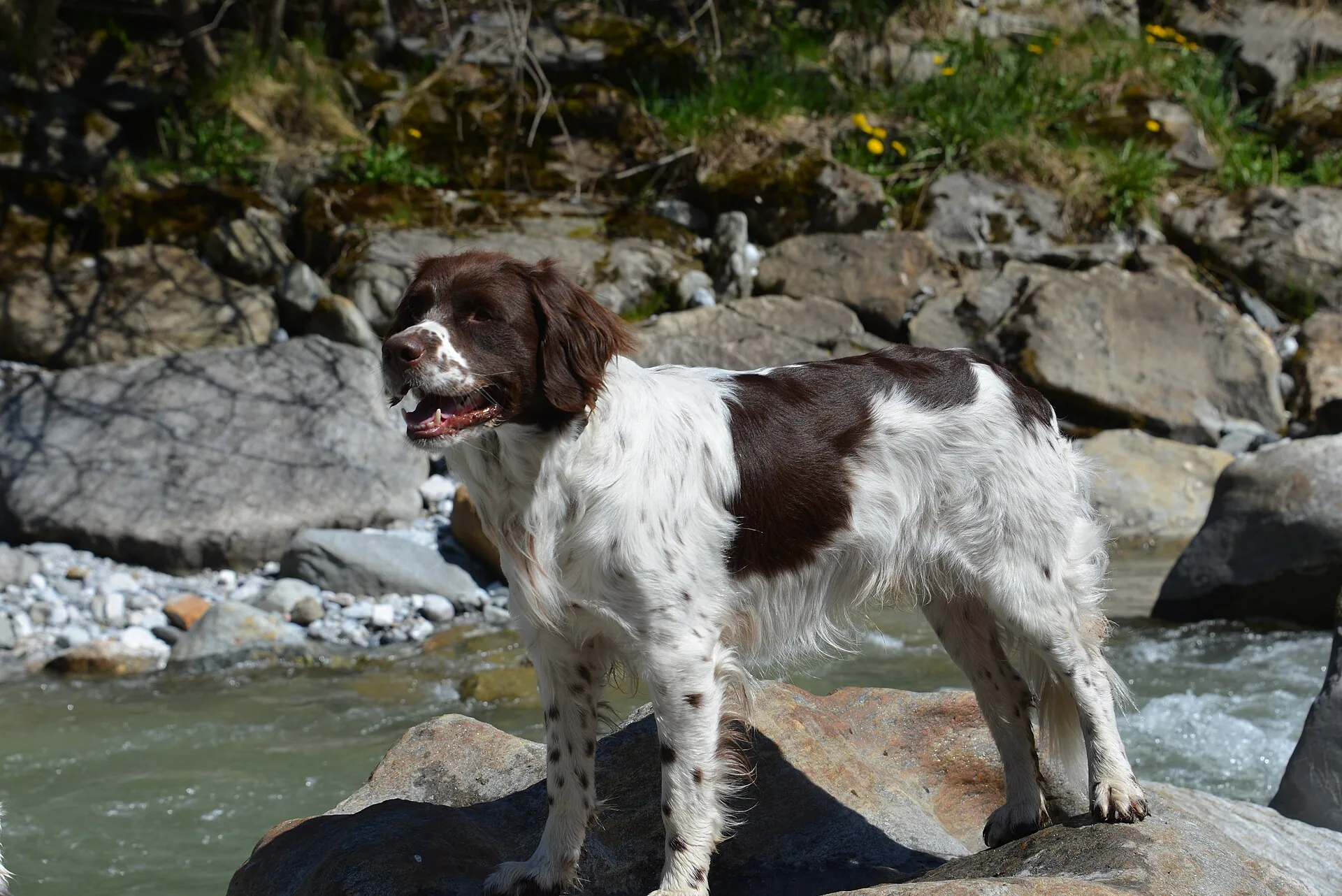
The Drentsche Patrijshond, literally the Drenthe partridge dog, is a Dutch breed that the FCI classes in Group 7, Section 1.2, Continental pointing dogs of spaniel type, with a working trial. The standard traces it to Spanish spaniels that arrived in the Netherlands via France in the sixteenth century. It was in the eastern province of Drenthe that the breed's purity was best maintained.
Official recognition came on 15 May 1943, promoted by Baroness van Hardenbroek and others, and the breed club was founded in 1948. The standard describes a dog designed to work within gunshot range, with an innate ability to keep in touch with the hunter, and to point game solid as a rock. That close-working style is a large part of why the breed is so easy company today, but the hunting instinct is still very much part of the package.
Temperament
The FCI describes loyal and intelligent dogs with a gentle character, unsuited to forceful training, and reserved at times but never fearful. In the home, that means a soft, attentive, rather sensitive dog that wants to be near its people and responds to praise much more than to pressure. It is generally calm indoors and has a gift for reading the room.
Out of doors, the working dog emerges. A Drentsche Patrijshond is alert to every bird and rabbit, and its nose and eyes will pull it into hedges and reeds. The close-working habit means it tends to check back, but a fresh scent or a flushed pheasant can overrule even good habits. Many are cautious with strangers, polite rather than effusive, and some are slow to settle in noisy or chaotic environments.
Children and other pets
The breed is known as a gentle, affectionate family dog and is usually patient with children, though at 25 to 35 kg it can knock over a toddler in an enthusiastic moment. It enjoys company and generally gets on well with other dogs. Cats are often accepted if introduced from puppyhood, but a hunting dog will pursue small animals and birds outdoors, so rabbits, rodents and birds in the home need securing and supervision.
Exercise and the daily walk
This is a working gundog of substantial size, so a daily routine of one and a half to two hours is a reasonable minimum. Mixed walks work well: some on-lead, some in safe places for running, and some with a task, such as retrieving a dummy or following a scent trail. A Drentsche Patrijshond is built to work steadily rather than to sprint, and many are happy to cover long distances on a hike.
Water is a favourite. The coat is water-resistant and many dogs swim happily. Off-lead freedom should be earned through reliable recall practice, because the pointing instinct and the nose can carry the dog into hedges and across fields. Do not overdo hard running or repetitive jumping until the dog is around 18 months old. After walks in woods or long grass, check ears, feathering and paws for ticks and grass seeds.
Training
The standard states that the breed is unsuited to forceful training, and this is the key to the whole thing. A harsh word can shut a Drentsche Patrijshond down, while patient, reward-based sessions build a thoughtful partner. Keep exercises short, quiet and positive, and finish on a success. Some dogs are slow to mature mentally, so expect adolescence to last until two years or so.
Priority areas are recall, polite lead walking and calm behaviour around other dogs and people. Socialise widely from an early age, as reserved dogs benefit from varied, pleasant experiences. Retrieving, scent games and dummy work provide a sense of purpose; those who like field activities might join a gundog club. Alone-time must be built up gradually, as a dog so attached to its people can become anxious.
Coat and grooming
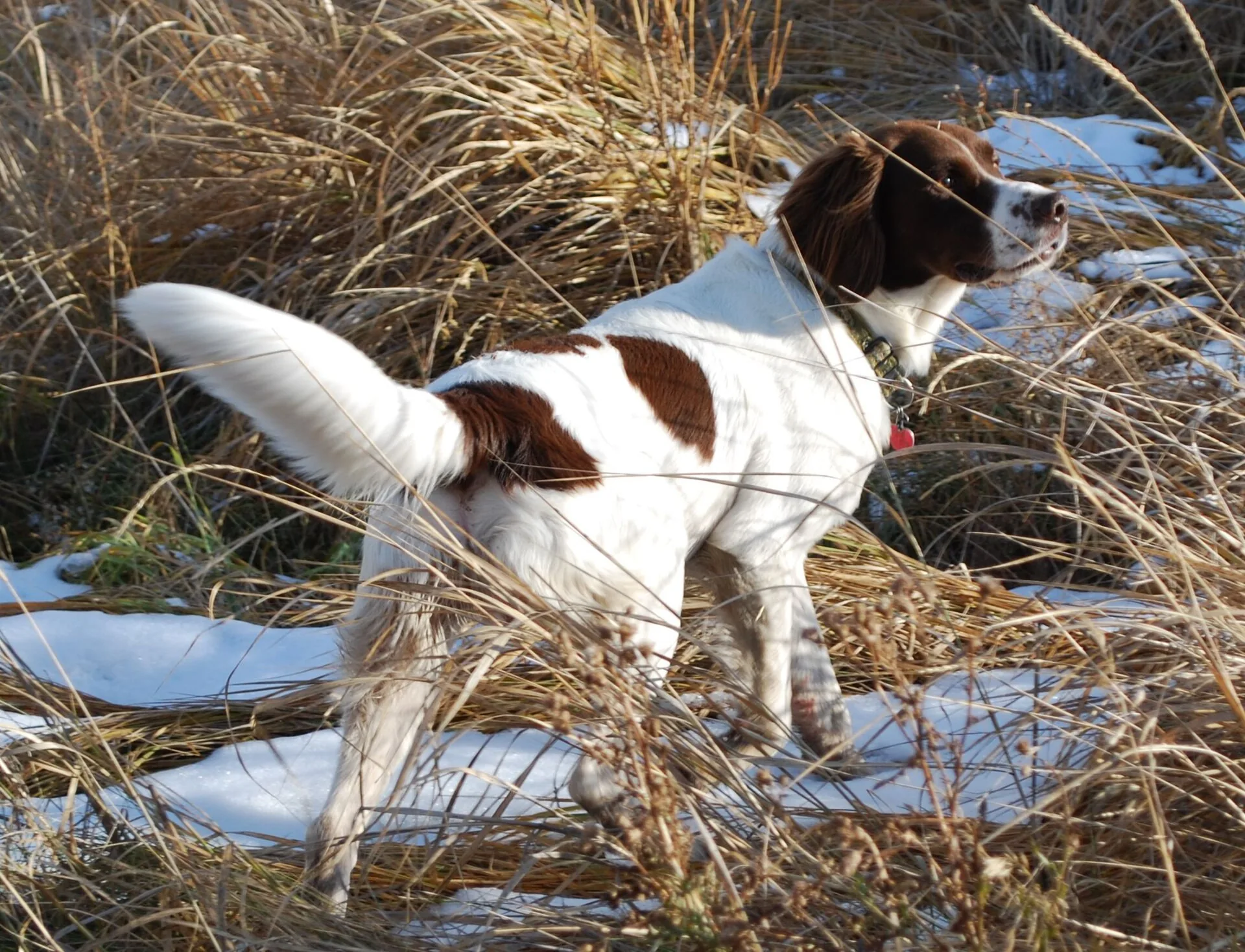
The FCI asks for a dense coat covering the body, not curly but rather straight, with a water-resistant undercoat, and visible feathering on ears, neck, chest and legs. Permitted colours are white with brown markings, with or without spots or ticking; roan is not accepted. Brushing once or twice a week removes loose hair and prevents tangles in the feathering, with extra attention behind the ears. Shedding is moderate and heavier in spring and autumn. Check ears often and dry them after swimming.
Feeding and weight
A complete diet suited to a large, active working breed is right, fed in two meals rather than one large one, with a rest period around mealtimes. Keep a watch on weight, because a dog that is less active in winter easily puts on extra kilos. Use treats from the daily ration. Fresh water should always be available, especially after swimming or on warm days. Growing puppies need measured portions to avoid too-rapid growth.
Work out a starting calorie figure and food weight with the calorie calculator. Not sure this is the right breed? Take the quiz.
Health
Every breed carries predispositions. These are the conditions most often discussed for the Drentsche Patrijshond, not a prediction for any individual dog.
- Hip dysplasia (malformed hip joints)
- Elbow dysplasia (developmental joint disease)
- Von Willebrand disease (inherited bleeding disorder)
- Epilepsy (seizure disorder)
- Ear infections (otitis externa)
What to ask the breeder. Ask for hip and elbow scores for both parents and which DNA tests have been carried out, including for von Willebrand disease. Ask also about any history of seizures in the line.
Choosing a puppy
Puppies are cuddly, soft and sensitive. Keep training gentle, with plenty of food rewards and no raised voices. Socialise carefully to city sounds, lifts, other dogs and children, since a reserved puppy may need time to approach new things. Avoid stairs and long walks while growing, and use short sessions of sniffing games. Practise recall and being alone in small, successful steps from the first weeks.
In Luxembourg the national kennel club is the Fédération Cynologique Luxembourgeoise (FCL), a member of the FCI. Many owners also buy from breeders in Germany, France or Belgium; a puppy coming from another EU country must be microchipped and vaccinated against rabies, which in practice means it cannot travel before about fifteen weeks of age. Where to get a dog in Luxembourg.
The older Drentsche Patrijshond
Older Drentsche Patrijshonden often continue to enjoy their walks into their tenth year, although at a gentler pace. Provide a soft, supportive bed, keep weight in check and ask your vet about joint health. Pay attention to ears, eyes and teeth, and any change in energy. Shorter, more frequent outings and non-slip floors help with stiffness. A quieter dog still appreciates scent games at home.
A realistic day
A realistic weekday for a working household in Luxembourg City, with a midday visit. Adjust it to your dog, not the other way round.
A 40-minute lead walk with sniffing along quiet streets or park edges; breakfast.
Owner leaves for work; the dog settles on its bed with a chew toy.
Midday visit: an hour in the Pétrusse valley or Parc Merl, with a retrieve game, water and a quick brush of the feathering.
Evening outing of 60 to 75 minutes, ideally in woodland on a long line; dinner after a rest.
Short toilet break, ears checked, then bed.
A Drentsche Patrijshond in Luxembourg
At 25 to 35 kg, the Drentsche Patrijshond is a sizeable dog for a flat, but it is usually quiet and relaxed indoors, and with a lift and a good daily routine it can manage well. It dislikes being left alone for long periods, so a midday visit or daycare is valuable for those who work in the city. Be prepared for hair on furniture and muddy feathering after wet days.
Luxembourg has the right setting. The Pétrusse valley and Parc Merl serve for daily walks, and the Bambësch and Grünewald forests provide the long, scent-rich outings that suit a gundog, though the wildlife there means a long line is wiser than free running until recall is excellent. Rain is no issue for the coat, but a dog of this size can struggle with the heat of a summer in the 30s °C, so walks should be early and late. Free buses and trams help with weekend trips. Microchip, commune declaration, insurance and the annual dog tax apply as for every dog.
Every dog in Luxembourg must be identified, declared to the commune and covered by liability insurance. How registration works.
When you travel
A sitter should know the dog is gentle but sensitive: calm praise works, shouting does not. Provide a daily routine of two or three good walks with time to sniff, and keep the dog on a lead or long line in woodland, since a flushed bird may tempt it away. Brush the feathering and check ears after muddy outings. Because the breed bonds closely, expect it to seek company and avoid leaving it alone for long stretches.
PAWLY's holiday and overnight care takes place in your home, so your dog keeps its own bed and routine.
Myths and facts
MythA pointing dog is too wild for a flat.
FactThe standard describes a gentle, loyal dog, and many Drentsche Patrijshonden are calm indoors if exercised well.
MythGundogs always come back when called.
FactTraining helps, but scent and prey can override recall. Use a long line until recall is robust.
MythThey need strict training.
FactThe FCI explicitly says the breed is unsuited to forceful training. Patience and rewards produce better results.
Is it the right dog for you?
Suits
- Gentle, patient owners who like long country walks
- Families with calm children
- People who can offer company and daily outings
- Those who enjoy gundog activities or scent work
Think twice if
- You expect a dog to cope with long solitary days
- You want a guard dog
- You like a shorter, low-shedding coat
- You use a raised voice or heavy corrections
Questions owners ask
Is the Drentsche Patrijshond good with children?
Usually, yes. It is described as loyal, intelligent and gentle, and many are patient family companions. As a large, bouncy dog it can knock small children over, so supervision and calm greetings are needed.
How much exercise does it need?
Plan around one and a half to two hours a day, including some free movement in safe areas and a task such as retrieving or scent work. It enjoys long walks and swimming and does not do well on short, bored outings.
Does it shed a lot?
Moderately. The straight coat with feathering sheds more in spring and autumn. Brushing once or twice a week helps a great deal.
Can it be left alone while I work?
A normal working day is possible with a midday visit, but it is a people-loving dog and struggles with long absences. Build up alone-time gradually and give it a chew or puzzle toy.
Sources
Photo: Stefanie Joksch, CC BY-SA 4.0, via Wikimedia Commons · Photo: DutchID, CC BY-SA 3.0, via Wikimedia Commons · Photo: Томасина, CC BY-SA 3.0, via Wikimedia Commons
General information for dog owners in Luxembourg, not veterinary or legal advice. Official facts (origin, size, group, history and temperament as described by the breed standard) follow the FCI standard; health and care sections reflect breed-club and veterinary guidance and are typical ranges rather than rules. For your own dog, ask your vet, the breed club or your commune. How this guide is written and checked. Last reviewed 8 October 2026.
Need someone for your Drentsche Patrijshond?
PAWLY offers an individual 45-minute walk or a home visit at your dog's pace, the same walker every time, and a written report with photos after every visit, across Luxembourg City.
Read next: the journal, for the Drentsche Patrijshond
All articles
Ears: the three signs that mean an appointment
Ear trouble is common in the Drentsche Patrijshond; these are the three signs that mean an appointment.

Building a recall you can actually rely on
Scent and movement can cancel a recall; this is the method for the Drentsche Patrijshond.

How long can a dog really be left alone?
A sociable breed has a real limit on time alone; this is how to work it out.
Similar breeds
All 198 breeds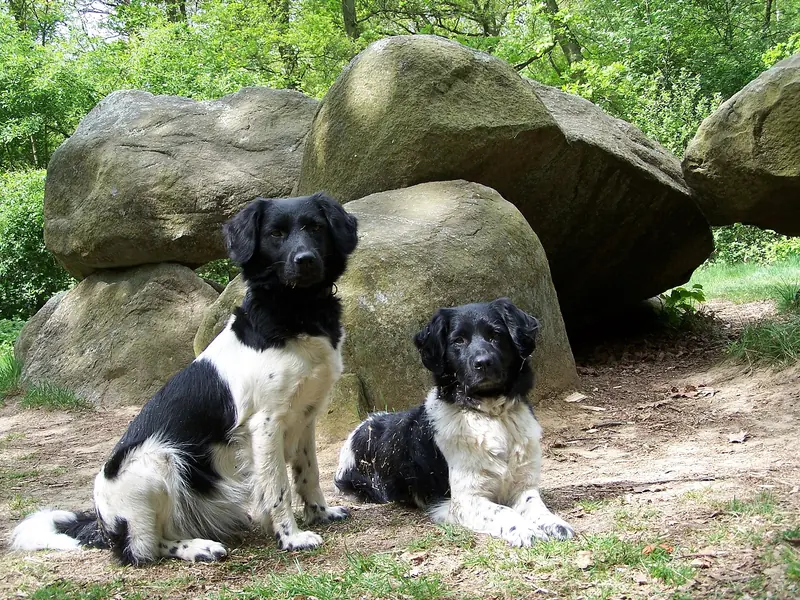
Stabyhoun
A calm, independent Frisian farm dog whose name means stand by me, though it will often decide the route itself.
EnergyGroomingFlat life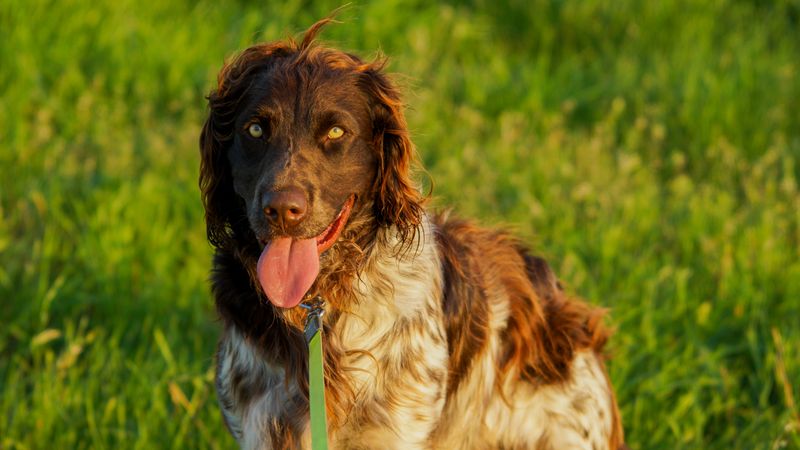
Small Münsterländer
A brown-and-white German gundog with a spaniel's charm and a pointer's focus, happiest when its nose and brain are both employed.
EnergyGroomingFlat life
English Setter
A gentle, speckled bird dog that ranges wide in the field and then folds itself, surprisingly neatly, onto the nearest sofa.
EnergyGroomingFlat life

