


History
The Flat-Coated Retriever is a British gundog, developed in the nineteenth century when shooting estates wanted a dog that would wait quietly by the gun, mark falling game and bring it back to hand from land or water. It took shape before the Labrador and the Golden became fashionable, and for several decades it was the retriever most often seen working on British shoots, a particular favourite of gamekeepers, who needed a dog that worked all day without fuss.
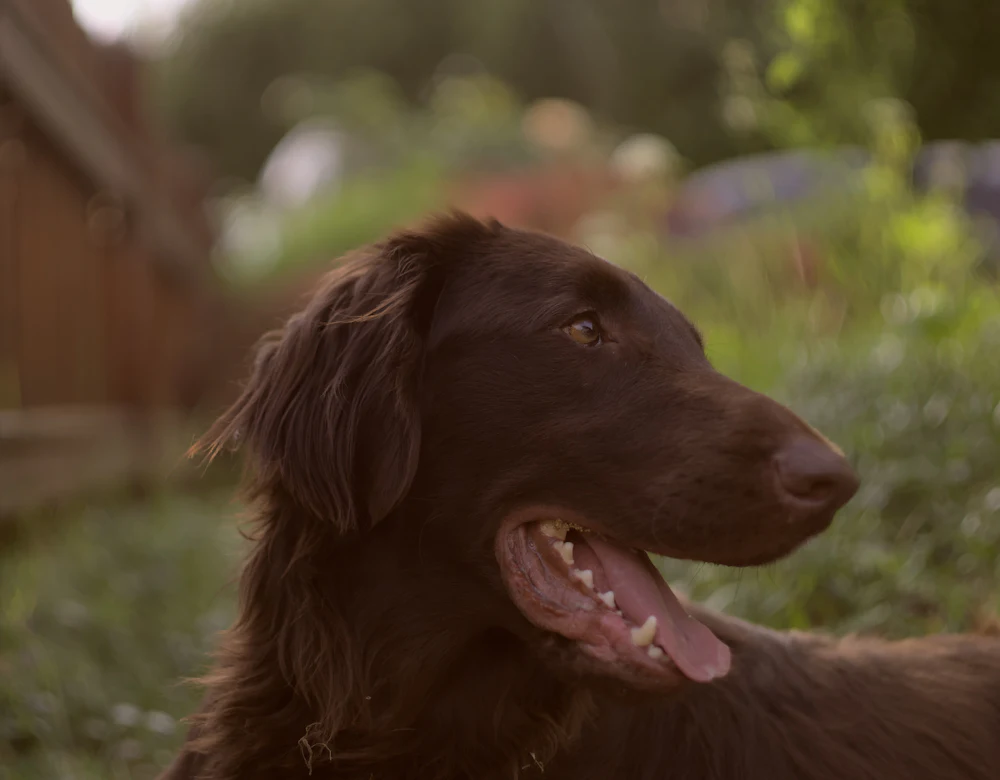
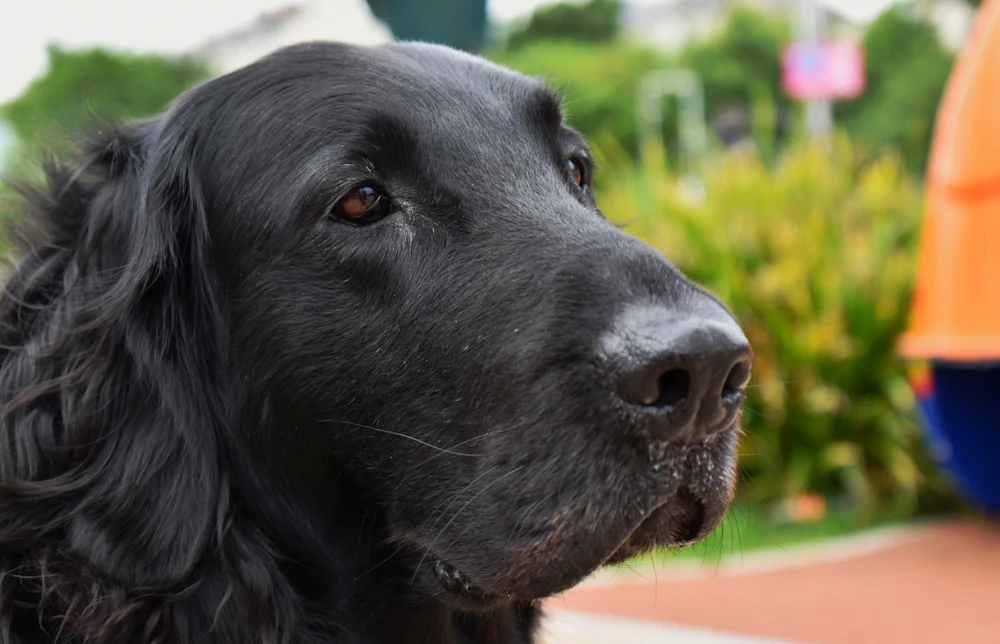
The FCI standard, published in 2009 under British patronage, places the breed in Group 8, Section 1, among the retrievers, with a working trial. It asks for a bright, active dog of medium size showing power without lumber and raciness without weediness, a precise way of describing an athlete rather than a heavyweight. Only two colours are allowed, black and liver. The breed later lost ground to the Labrador and remains far less common, which has helped it keep a strong working character.
Temperament
The standard sums up the temperament in a few words: natural gundog ability, optimism and friendliness, shown by enthusiastic tail action, confident and kindly. That description is accurate. Flat-coats greet almost everyone as a long-lost friend, recover quickly from setbacks and tend to treat life as an invitation. They are not guard dogs in any useful sense, although many will bark once when someone arrives.
Owners often call the breed the Peter Pan of retrievers, and in daily life that means a dog that stays playful, bouncy and a little silly well past its second birthday. Under the exuberance they are sensitive, and harsh handling makes them anxious rather than obedient. They like to have something in their mouths, so expect shoes, gloves and the post to be carried around the flat and presented proudly at the door.
Children and other pets
With children a well-raised flat-coat is gentle, tolerant and endlessly willing to play, but its enthusiasm and swinging tail can flatten a toddler or sweep a coffee table clear. Supervision and calm greetings matter far more than any risk of temper. Most live happily with other dogs and are rarely quarrelsome. With cats they usually settle if raised together, although a fleeing cat may be followed with interest. Rabbits and other small pets are best kept separate.
Exercise and the daily walk
This is a working retriever and it needs real exercise: around two hours a day for a healthy adult, split between a long walk and something that uses its head and its mouth. Retrieving a dummy, short scent games and swimming suit it far better than repetitive ball throwing, which tends to wind a flat-coat up rather than tire it.
Water is a strong pull, and most will head for any pond or stream they can find, so plan routes with that in mind and carry a towel. An under-exercised flat-coat does not go quiet; it finds its own projects, often involving the bin, the sofa cushions or the post. Young dogs should not be taken on long runs before their joints have finished growing.
Training
Flat-coats are eager to please and learn quickly, but they mature slowly and can be scatty in their first two years. Short, cheerful sessions with food and play as rewards work best. The breed responds badly to shouting or physical correction, and a flat-coat that has been frightened tends to shut down rather than comply.
Recall and loose-lead walking need the most work, because a friendly flat-coat will happily cross a park to greet a stranger or another dog. Teaching a reliable retrieve, a steady sit while something moves and a calm greeting at the door pays off for the rest of the dog's life. Gundog training classes, or any activity built on retrieving and scent, give the breed a job it understands.
Coat and grooming
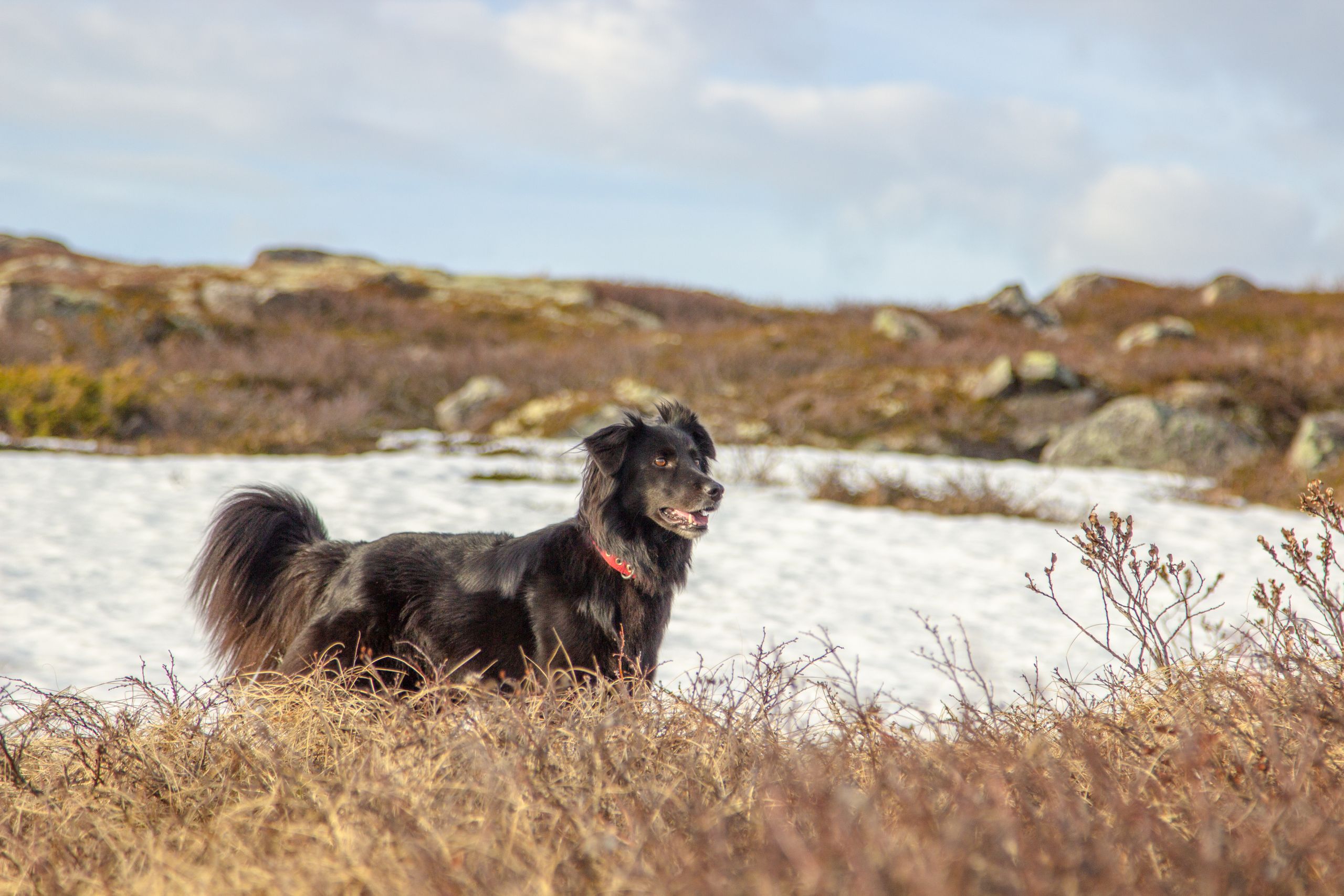
The coat is dense, of fine to medium texture and lies as flat as possible, with good feathering on the legs and tail. It is not hard to care for: a thorough brush two or three times a week, with extra attention to the feathering behind the ears and on the hindquarters, where tangles form. Shedding is moderate year round with heavier seasonal moults. Tidy the feet and ear hair neatly. The FCI standard allows black or liver only.
Feeding and weight
A good-quality complete diet suited to an active large dog, fed in two meals rather than one, is the usual approach. Many flat-coats are enthusiastic eaters, so weigh portions and count training treats as part of the daily ration. Keep the dog lean, with ribs easy to feel, which protects the joints. Because of the deep chest, avoid strenuous exercise for an hour or so either side of a large meal.
Work out a starting calorie figure and food weight with the calorie calculator. Not sure this is the right breed? Take the quiz.
Health
Every breed carries predispositions. These are the conditions most often discussed for the Flat-Coated Retriever, not a prediction for any individual dog.
- Cancers, notably histiocytic sarcoma
- Hip dysplasia
- Patellar luxation (slipping kneecaps)
- Glaucoma linked to goniodysgenesis
- Gastric dilatation-volvulus (bloat)
What to ask the breeder. Ask to see hip scores for both parents, a gonioscopy (glaucoma) eye examination and a patella assessment, and ask openly how long the dogs in the pedigree lived and what they died of.
Choosing a puppy
Flat-coat puppies are busy, mouthy and fond of carrying anything left within reach, so a puppy-proofed flat and a good supply of chew toys are essential. Socialise widely, including lifts, trams, cyclists and children, while keeping experiences calm. Keep exercise short and varied while the joints grow, with no long runs or repeated jumping. Start retrieve games early and reward the dog for bringing things to you; that is easier than trying to stop it carrying things altogether.
In Luxembourg the national kennel club is the Fédération Cynologique Luxembourgeoise (FCL), a member of the FCI. Many owners also buy from breeders in Germany, France or Belgium; a puppy coming from another EU country must be microchipped and vaccinated against rabies, which in practice means it cannot travel before about fifteen weeks of age. Where to get a dog in Luxembourg.
The older Flat-Coated Retriever
Many flat-coats stay playful into old age, which can mask stiffness or illness. Shorter, gentler walks, a soft bed and non-slip rugs on smooth floors help. Because the breed has a well-known tendency to cancer, any new lump, lameness or change in appetite deserves a prompt visit to the vet rather than a wait-and-see approach. Gentle swimming and nose work keep an older dog engaged.
A realistic day
A realistic weekday for a working household in Luxembourg City, with a midday visit. Adjust it to your dog, not the other way round.
Forty-five minute walk with a few retrieves before the owner leaves for work
Breakfast, a chew toy and a settled rest in a quiet room
Midday visit: an hour's walk with scent games in the Pétrusse valley, then fresh water
Evening walk or swim, followed by dinner and a short training session
Last short stroll round the block and lights out
A Flat-Coated Retriever in Luxembourg
A flat-coat can live well in a Luxembourg City flat, provided the exercise is genuinely met every day. Expect an excited greeting in the lift and in the hallway, so teach a calm sit before the doors open. The wooded paths of the Bambësch and the Grünewald suit the breed, as do the streams and ponds it will inevitably find. Bring towels for the car or the bus home.
The black coat absorbs heat, so on summer days in the 30s °C walk early and late, carry water and avoid hot pavements. Neighbours rarely complain about barking, but a bored flat-coat can be noisy and destructive. As everywhere in the country, the dog needs a microchip, registration with the commune, third-party liability insurance and the annual dog tax.
Every dog in Luxembourg must be identified, declared to the commune and covered by liability insurance. How registration works.
When you travel
A sitter should know that a flat-coat is sociable and dislikes long hours alone, so the routine needs at least two good outings plus company in between. Keep shoes, food and bins out of reach. Check paws and ears after walks in wet woodland, dry the coat properly and watch for restless pacing, retching or a swollen belly after meals, which needs an immediate vet visit.
PAWLY's holiday and overnight care takes place in your home, so your dog keeps its own bed and routine.
Myths and facts
MythA Flat-Coated Retriever is just a black Golden Retriever.
FactIt is a separate breed with its own history and build: lighter, racier and generally slower to mature, with only black or liver accepted.
MythRetrievers are calm by nature.
FactA flat-coat is cheerful and usually biddable, but young dogs are bouncy and need a lot of exercise before they are calm indoors.
MythA friendly dog does not need training.
FactTheir friendliness is exactly why training matters; an untrained flat-coat will greet every person and dog in the park at full speed.
Is it the right dog for you?
Suits
- Active owners who enjoy long walks in woodland and near water
- Families with older children who want a playful, affectionate dog
- People interested in gundog work, scent games or retrieving
- Homes where someone is around for part of the day
Think twice if
- You want a dog that is calm and mature within its first year
- The dog would be alone for most of a long working day
- You cannot face mud, water and a damp dog on most walks
- A breed with a relatively short average lifespan would be hard to bear
Questions owners ask
Is a Flat-Coated Retriever good for a first-time owner?
It can be, if the owner is active, patient and willing to attend training classes. The breed is kind and forgiving, but its slow maturity and energy surprise many first-time owners. Expect to put steady work into recall and lead manners during the first two years, and to exercise properly every single day.
Do flat-coats shed much?
They shed moderately all year, with heavier moults once or twice a year. Brushing two or three times a week keeps hair on the floor under control and stops the feathering from matting. They do not need clipping, only tidying of the feet and ears. A dog that swims often also needs thorough drying to keep the coat and skin healthy.
Why do people say the breed has a short lifespan?
Cancer is a well-recognised problem in flat-coats and contributes to an average lifespan that is shorter than that of many retrievers. Responsible breeders track longevity in their lines. Owners should have any new lump or lameness checked promptly and keep the dog lean and fit.
Can a flat-coat be left alone during the working day?
Not for a full day without a break. The breed is sociable and becomes bored and destructive when left too long. A midday walk or visit, plenty of exercise before work and chew toys make a working household far more realistic for a flat-coat.
Sources
Photo: Unsplash (Unsplash License) · Photo: Unsplash (Unsplash License) · Photo: Pexels (Pexels License)
General information for dog owners in Luxembourg, not veterinary or legal advice. Official facts (origin, size, group, history and temperament as described by the breed standard) follow the FCI standard; health and care sections reflect breed-club and veterinary guidance and are typical ranges rather than rules. For your own dog, ask your vet, the breed club or your commune. How this guide is written and checked. Last reviewed 8 October 2026.
Need someone for your Flat-Coated Retriever?
PAWLY offers an individual 45-minute walk or a home visit at your dog's pace, the same walker every time, and a written report with photos after every visit, across Luxembourg City.
Read next: the journal, for the Flat-Coated Retriever
All articles
Feeding, portions and how to tell if your dog is the right weight
Large dogs suffer more from extra weight; this is how to judge the right one.

Dog first aid: the six emergencies and what to do first
Bloat is an emergency in deep-chested breeds like the Flat-Coated Retriever; this covers what cannot wait.

Building a recall you can actually rely on
Scent and movement can cancel a recall; this is the method for the Flat-Coated Retriever.
Similar breeds
All 198 breeds
Golden Retriever
Gentle, biddable and endlessly patient with children, with a coat that needs more work than most people expect.
EnergyGroomingFlat life
Labrador Retriever
The most popular family dog in Europe for good reasons, and with one well-known weakness: food.
EnergyGroomingFlat life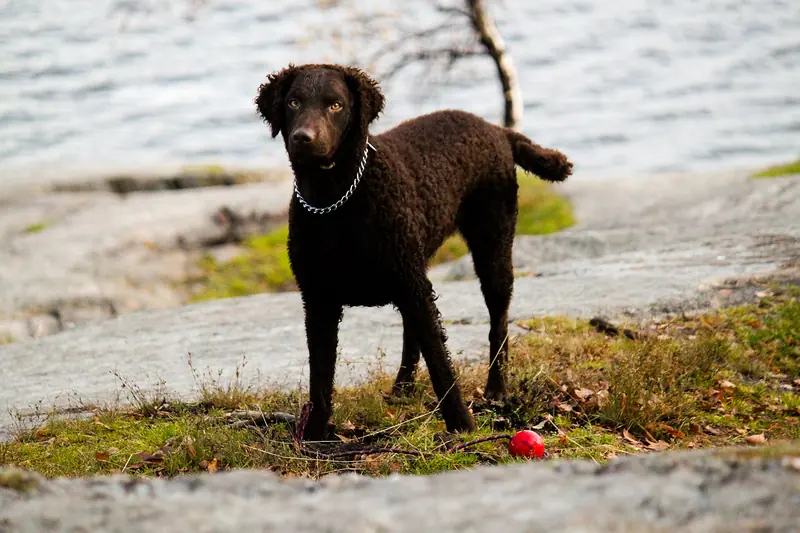
Curly-Coated Retriever
The tallest and most independent of the retrievers, a self-assured water dog whose coat of tight curls sheds rain like a waxed jacket.
EnergyGroomingFlat life

