


History
The Golden Retriever was developed in the Scottish Highlands in the second half of the nineteenth century by Dudley Marjoribanks, later Lord Tweedmouth, on his Guisachan estate near Glen Affric. His breeding records survive. The foundation was a yellow retriever called Nous, crossed with a Tweed Water Spaniel called Belle, and later additions probably included setter and bloodhound blood. The FCI lists the breed under Great Britain, where the standard is held.
The aim was a retriever that could work in the wet, cold and rough country of the Highlands and deliver shot game gently to hand, which is the origin of the famous soft mouth. The FCI places the Golden in Group 8, Section 1, Retrievers, as a gundog with working trial requirements, and its standard still asks for a dog that is sound, active and powerful, with a kindly expression.
Temperament
The standard calls the Golden biddable, intelligent and possessing natural working ability, and it asks for a dog that is kindly, friendly and confident. That is a fair summary of what owners see. Goldens are affectionate and eager to please, and they greet visitors as old friends. Like Labradors they are widely used as assistance and therapy dogs, and like Labradors they make hopeless guard dogs.
They mature slowly and often stay puppyish until two or three years old, with plenty of bounce and a habit of picking up everything within reach. They are also sensitive. Harsh handling makes them anxious rather than obedient, and many dislike being left out of family life. A Golden that is bored or lonely may turn to chewing, digging or a great deal of barking.
Children and other pets
Goldens are among the best breeds with children, gentle and patient, though a young one is bouncy and can knock over a toddler. Teach children not to pull the feathered ears and tail, and never leave small children unsupervised with any dog. Goldens generally get on well with other dogs, and most live peacefully with cats if introduced calmly.
Exercise and the daily walk
A working retriever needs plenty of exercise. Plan on an hour and a half to two hours a day for an adult, with at least one outing that includes fetching, swimming or a game of searching for a hidden toy. Field lines are especially energetic. Show lines are often a little steadier, but still need real walks, not a lap of the block.
Mental work matters as much as miles. Retrieving games, scent trails and trick training suit the breed, and a Golden that carries something in its mouth is often a happier dog. Keep a growing puppy to short outings and avoid long runs or repetitive jumping until the joints have matured, usually after the first year.
Training
Goldens are sensitive, cooperative learners and do best with reward based training and a calm voice. Harsh corrections make them worried rather than obedient. Food is a very effective reward, so measure it out of the daily ration. Short, cheerful sessions in many different places build a dog that behaves well everywhere.
Many are mouthy as puppies and like to carry things, so give that instinct a job by teaching them to carry a toy when greeting, which also solves jumping up. Their long adolescence calls for patience between six months and two years, when recall and lead manners often wobble. Keep practising, and do not mistake exuberance for stubbornness.
Coat and grooming
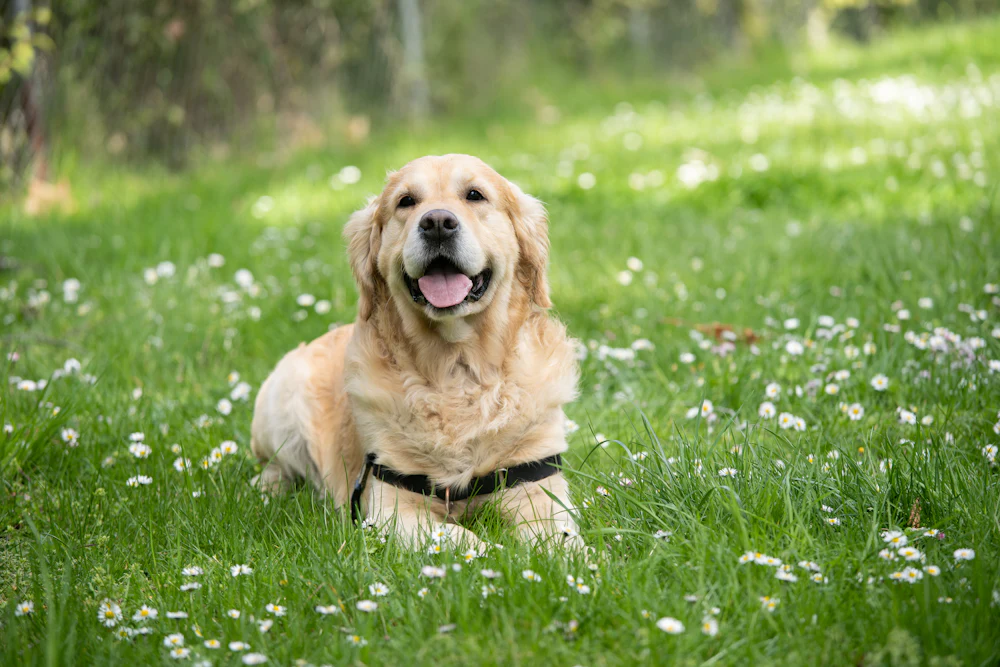
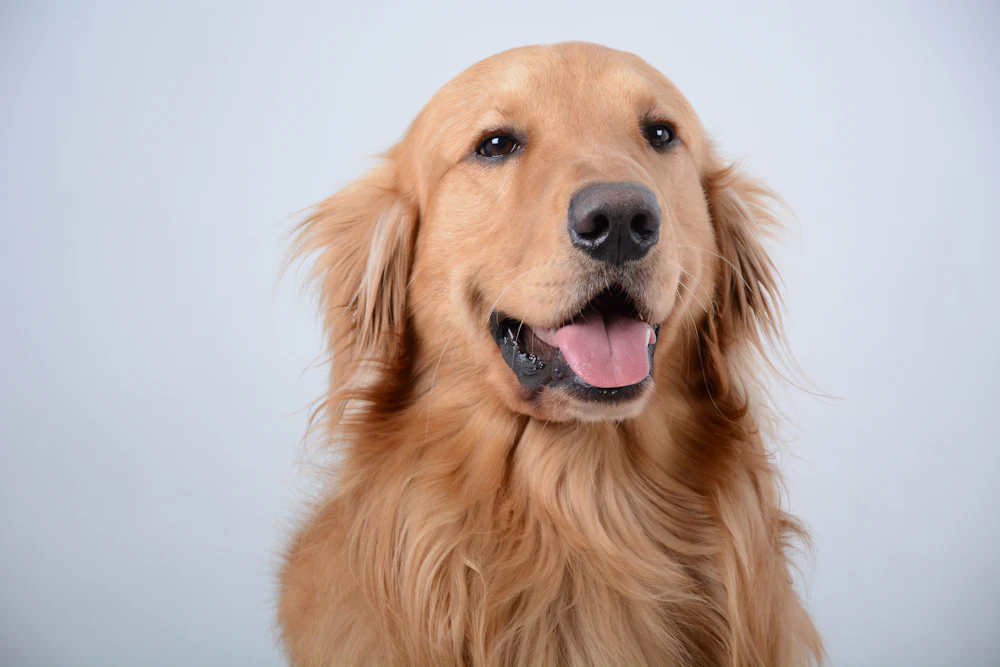
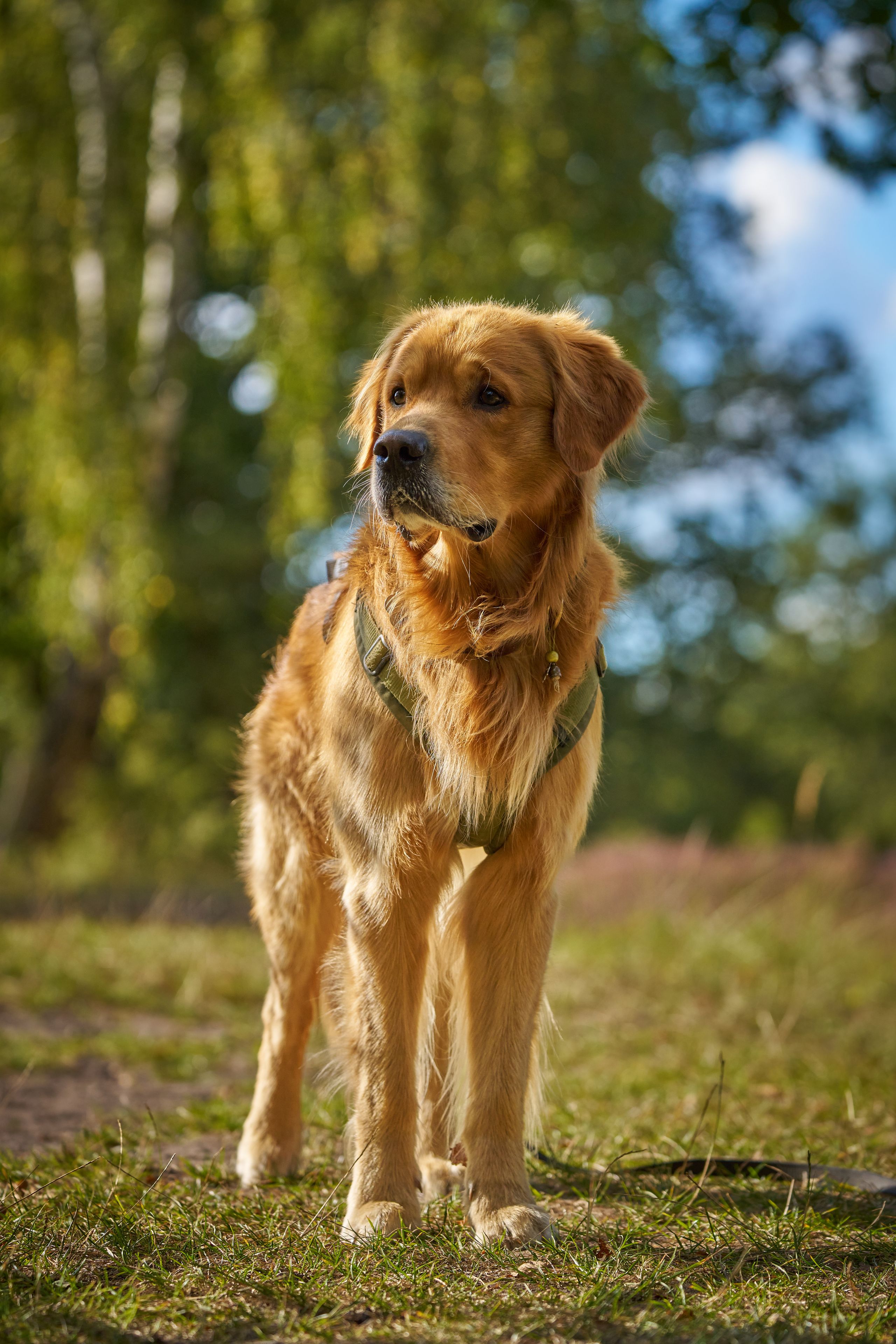
The coat is the practical cost of the breed. The standard describes a flat or wavy coat with good feathering and a dense, water resisting undercoat, in any shade of gold or cream, neither red nor mahogany. Feathering on the legs, chest, tail and ears tangles, especially behind the ears, and the undercoat sheds heavily twice a year. Brush several times a week. Do not shave a Golden for summer, because the coat also insulates against heat.
Feeding and weight
Keep Goldens lean, because extra weight speeds up joint problems in a breed already prone to them. Many Goldens will eat anything, so measure meals and count treats. A large breed puppy food helps growth stay steady. Some have food related skin allergies, and if your dog itches, a vet guided elimination diet is more useful than switching brands at random.
Work out a starting calorie figure and food weight with the calorie calculator. Not sure this is the right breed? Take the quiz.
Health
Every breed carries predispositions. These are the conditions most often discussed for the Golden Retriever, not a prediction for any individual dog.
- Cancer, notably haemangiosarcoma and lymphoma, which affect the breed at a high rate
- Hip and elbow dysplasia (malformed joints)
- Skin allergies and hot spots
- Ichthyosis (flaky skin, for which a DNA test exists)
- Eye conditions including pigmentary uveitis and cataracts
What to ask the breeder. Ask for hip and elbow scores, an annual eye examination for the parents, and DNA tests for ichthyosis and PRA, plus what the breeder knows about cancer in the lines.
Choosing a puppy
A Golden puppy is a soft, cuddly, relentlessly chewing whirlwind. Puppy proof the flat, offer plenty of appropriate chews and start short training sessions at once. Socialise carefully with people, dogs and city noises, and keep stair climbing and jumping to a minimum while the joints form. Choose a breeder who shows you health results and raises litters indoors.
In Luxembourg the national kennel club is the Fédération Cynologique Luxembourgeoise (FCL), a member of the FCI. Many owners also buy from breeders in Germany, France or Belgium; a puppy coming from another EU country must be microchipped and vaccinated against rabies, which in practice means it cannot travel before about fifteen weeks of age. Where to get a dog in Luxembourg.
The older Golden Retriever
Goldens often slow down from around eight or nine years. Watch for stiffness, weight gain, lumps and changes in appetite, and book a senior check-up at least once a year. Keep them lean and moving with shorter, more frequent walks and swimming if available. Prompt attention to any new lump is especially important in this breed.
A realistic day
A realistic weekday for a working household in Luxembourg City, with a midday visit. Adjust it to your dog, not the other way round.
A 40 minute walk with sniffing time and a retrieve game before the streets fill up.
Breakfast from a slow feeder, then a rest while you get ready for work.
Midday visit from a walker for a toilet break, a 30 minute walk and a short training game.
A longer walk in a park or forest, with fetch and some off lead freedom where safe.
A final toilet stroll, a brush and a chew, then bed.
A Golden Retriever in Luxembourg
Goldens cope well with flat life provided they are exercised, and most settle happily on a rug once the walking is done. Lifts rarely worry them, though a wet Golden in a shared hall will shake all over the neighbours. Keep a towel by the door. They love company, so a long working day with no midday visit is hard on them.
Luxembourg suits the breed. The Pétrusse valley and Parc Merl are good for morning walks, and the Bambësch and the Grünewald give room for longer outings and a chance to swim where water is safe. Summers reach the 30s, and a thick double coat makes midday walks unpleasant, so go early or late. Buses and trams are free, which makes outings further afield easy for a well mannered dog.
Every dog in Luxembourg must be identified, declared to the commune and covered by liability insurance. How registration works.
When you travel
A sitter will find a Golden easy to love, but must watch for scavenging and food stealing. Stick to measured meals, and keep walks on a secure lead because the dog will happily greet everyone. Provide a retrieve toy and a towel, and keep the routine steady. Goldens miss company, so extra visits are better than longer gaps.
PAWLY's holiday and overnight care takes place in your home, so your dog keeps its own bed and routine.
Myths and facts
MythShaving a Golden keeps it cool in summer.
FactThe double coat insulates and protects from sun. Shaving can damage regrowth and does not help the dog cope with heat.
MythGoldens are always calm.
FactMany are, eventually. Young Goldens, especially from field lines, are energetic and need real exercise, and they are slow to mature.
MythGoldens do not need training because they are friendly.
FactA friendly dog that jumps up, pulls and mouths is still a problem. They are eager learners, and they need training to become polite adults.
Is it the right dog for you?
Suits
- Active families with children
- Owners who enjoy daily walks and some swimming
- First-time owners willing to train
- People who are home or can arrange a midday visit
Think twice if
- You dislike hair on the floor and furniture
- You want a guard dog
- You work long hours with nobody home
- You cannot spend time brushing the coat each week
Questions owners ask
Golden or Labrador?
Similar temperaments. The Golden is usually a little softer and more sensitive, and the coat needs noticeably more work. The Labrador is more food driven and has a shorter coat, which many flat owners find easier.
Do Golden Retrievers shed a lot?
Yes. Expect hair all year and heavy shedding in spring and autumn. Brushing several times a week and a vacuum cleaner you trust are part of the deal.
Are Golden Retrievers good guard dogs?
No. They are friendly and welcoming to almost everyone, which is why they excel as assistance and therapy dogs. They may bark at a doorbell, but few will deter anyone.
When do Golden Retrievers calm down?
Most mature slowly and remain playful until two or three years old. Regular exercise, training and a steady routine make the adolescent months easier, and many then settle into relaxed adults.
Sources
Photo: Unsplash (Unsplash License) · Photo: Pexels (Pexels License) · Photo: Unsplash (Unsplash License) · Photo: Unsplash (Unsplash License) · Photo: Pexels (Pexels License)
General information for dog owners in Luxembourg, not veterinary or legal advice. Official facts (origin, size, group, history and temperament as described by the breed standard) follow the FCI standard; health and care sections reflect breed-club and veterinary guidance and are typical ranges rather than rules. For your own dog, ask your vet, the breed club or your commune. How this guide is written and checked. Last reviewed 8 October 2026.
Need someone for your Golden Retriever?
PAWLY offers an individual 45-minute walk or a home visit at your dog's pace, the same walker every time, and a written report with photos after every visit, across Luxembourg City.
Read next: the journal, for the Golden Retriever
All articles
Lumps and bumps: what to check and when
Early checks on lumps matter in a breed prone to tumours.

The itchy dog: working through it in the right order
Skin trouble is among the conditions discussed for the Golden Retriever; this is the order to work through it.

What actually tires a dog indoors
Walks alone rarely tire a busy breed like the Golden Retriever; this covers what works indoors.
Similar breeds
All 198 breeds
Labrador Retriever
The most popular family dog in Europe for good reasons, and with one well-known weakness: food.
EnergyGroomingFlat life
Nova Scotia Duck Tolling Retriever
The smallest retriever, a fox-coloured Canadian bird dog with a unique hunting technique and a famous scream.
EnergyGroomingFlat life
Bernese Mountain Dog
A gentle Swiss giant, beautiful and good-natured, with a sadly short life expectancy.
EnergyGroomingFlat life

