


History
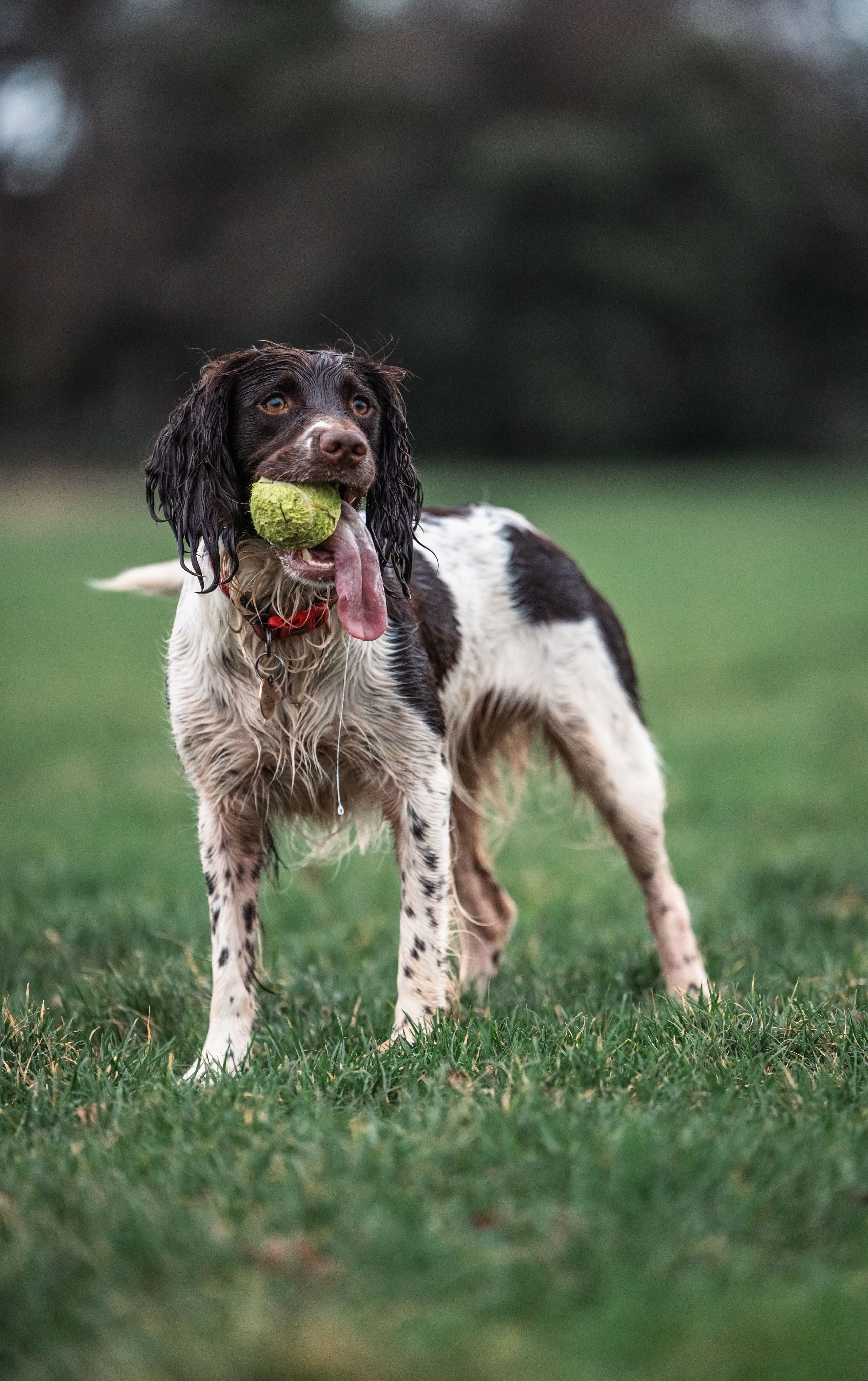
The FCI standard calls the English Springer Spaniel an ancient breed of pure origin and the oldest of the sporting gundogs. Its original job was to find game and 'spring' it, flushing birds and rabbits into nets, towards falcons or into the path of greyhounds. The name comes directly from that work. In early times springing and smaller cocking spaniels were often told apart mainly by size, and a dog that could push into thick cover, find hidden game and drive it out at the right moment was valued on estates across Britain.
With the arrival of shotguns, its role became finding, flushing and retrieving game for the guns, which it still does today. The standard describes it as the highest on leg and raciest in build of the British land spaniels. It is placed in FCI Group 8, Section 2 with the flushing dogs, under a 2009 standard with a working trial, and Great Britain as its country of origin. Today there is a noticeable difference between working lines and show lines in build, coat and energy.
Temperament
The standard asks for a friendly, happy disposition and a biddable dog, with timidity or aggression highly undesirable. That is the springer most people know: cheerful, keen and eager to join in. Springers love people, generally like other dogs, and approach life with a wagging tail and a busy nose.
That enthusiasm is the trade-off. A springer that does not get enough exercise and mental work can become restless, noisy or destructive, and working-line dogs in particular may never really switch off without a job. They tend to be sensitive and do not cope well with long days alone. In the right home, though, they are among the most rewarding and trainable companions.
Children and other pets
Springers are usually excellent with children, playful, tolerant and happy to join every game. Their bounce can knock over small children, so manners and supervision matter. Most get on well with other dogs. Many accept a cat they are raised with, but outdoors, birds, rabbits and squirrels will be of great interest, and small pets kept in garden hutches should be secure.
Exercise and the daily walk
An adult springer needs around two hours of exercise a day, with off-lead running in safe places, swimming where permitted, and retrieving or searching games. Working-line dogs may need even more activity, especially mental work. A short lead walk around the block will not satisfy this breed.
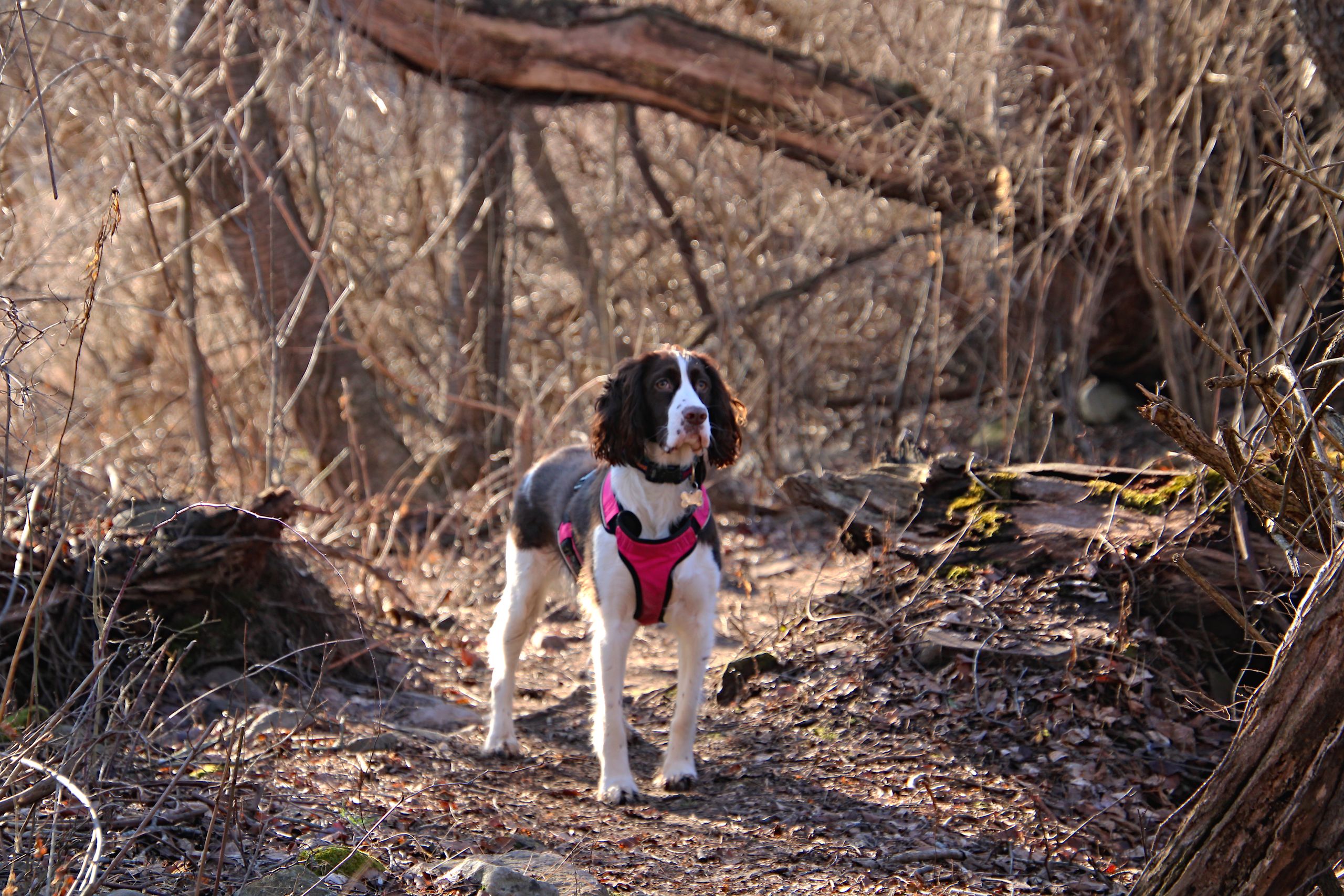
Forest walks in Bambësch or the Grünewald are ideal, as is scent work or gundog training. Springers love water and mud, which means plenty of towelling in winter, and ear checks after swimming. In hot weather, keep walks early and late and avoid hard running in the midday sun; springers will keep going long after they should stop.
Training
Springers are quick learners and generally keen to please, which makes them a good choice for a committed first-time owner. Reward-based training with food, toys and retrieves works very well. The main challenges are distraction by scent and a tendency to hunt independently, so recall and a reliable 'stop' should be taught early and practised often.
Give the dog a job: searching for hidden toys, retrieving, scent work, agility or gundog classes all channel its energy. Teaching calm behaviour at home, such as settling on a mat, is equally important. Without guidance, a bright springer quickly learns to steal socks, raid bins or bark for attention.
Coat and grooming
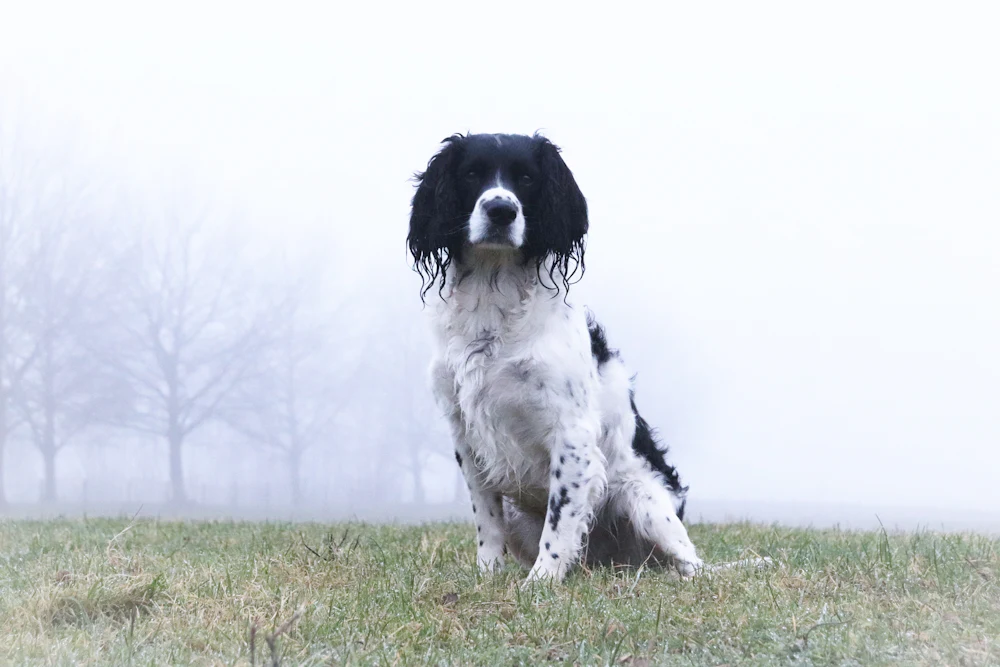
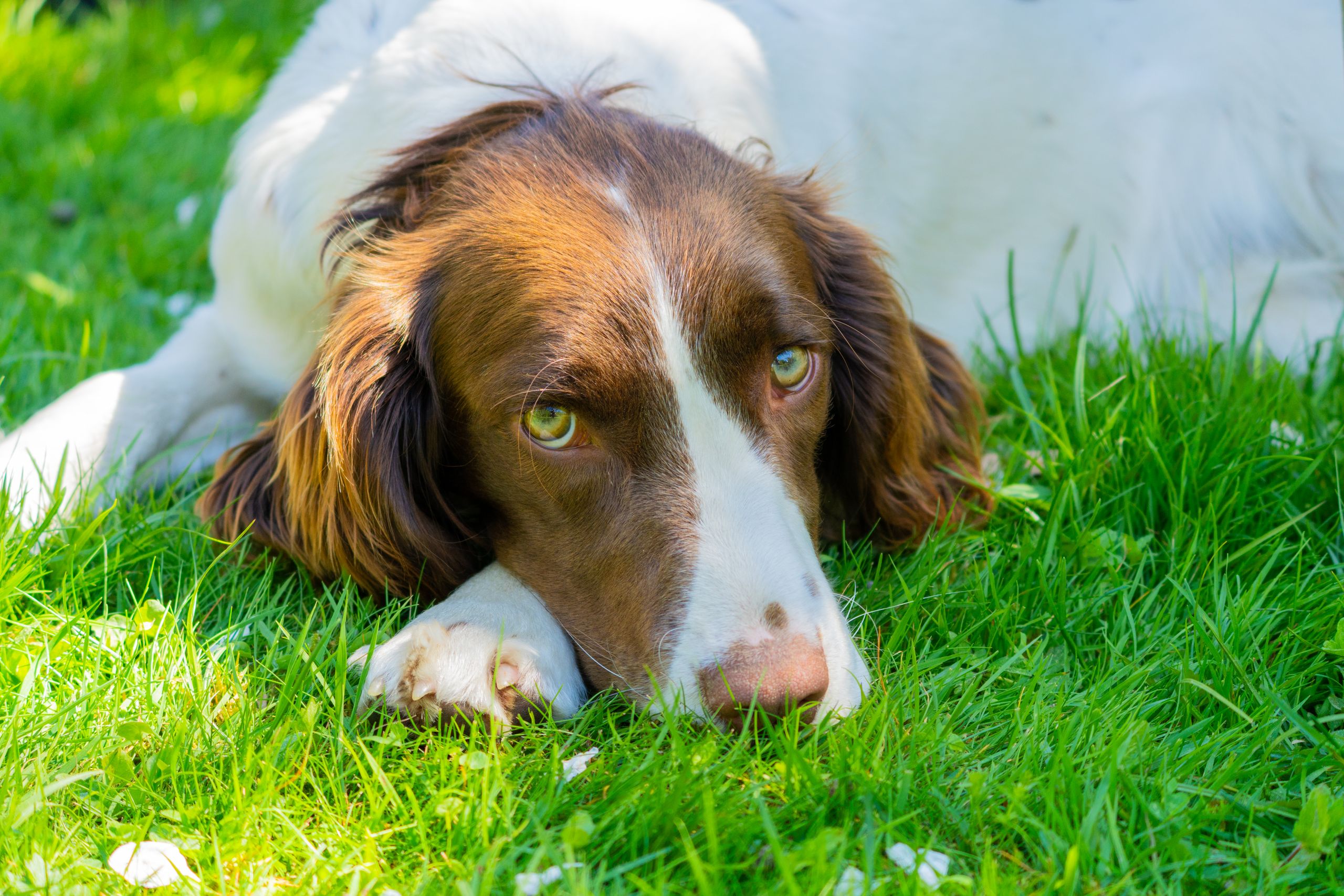
The FCI standard describes a close, straight, weather-resisting coat, never coarse, with moderate feathering on the ears, forelegs, body and hindquarters. Brush two or three times a week, more for show lines with heavier feathering, and trim the feet and ears. After walks, check for burrs and seeds, and keep ears clean and dry, as the long ear flaps can trap moisture. Shedding is moderate. Permitted colours are liver and white, black and white, or either with tan markings.
Feeding and weight
Feed a good quality complete food appropriate to the dog's activity level. Working springers may need more energy than show-line pets, but many springers love food and gain weight easily if exercise slips. Use part of the daily ration for training rewards, keep counters clear, and adjust portions by feeling the ribs. Puzzle feeders and scatter feeding add useful mental work.
Work out a starting calorie figure and food weight with the calorie calculator. Not sure this is the right breed? Take the quiz.
Health
Every breed carries predispositions. These are the conditions most often discussed for the English Springer Spaniel, not a prediction for any individual dog.
- Hip and elbow dysplasia
- Progressive retinal atrophy (PRA-cord1), for which a DNA test exists
- Fucosidosis, an inherited nervous system disease for which a DNA test exists
- Phosphofructokinase deficiency (PFK), for which a DNA test exists
- Glaucoma linked to goniodysgenesis
- Ear infections (otitis externa)
What to ask the breeder. Ask for hip and elbow scores, a current eye examination including gonioscopy, and DNA results for PRA-cord1, fucosidosis and PFK deficiency for both parents.
Choosing a puppy
Springer puppies are bright, busy and bold. Start training at once with recall, gentle handling and settling. Expose the puppy to lifts, trams, traffic, visitors and other dogs. Provide chew items and plenty of short sleeps, as an overtired springer puppy becomes nippy. Keep exercise moderate while joints develop, and handle the ears and feet daily so grooming is easy later.
In Luxembourg the national kennel club is the Fédération Cynologique Luxembourgeoise (FCL), a member of the FCI. Many owners also buy from breeders in Germany, France or Belgium; a puppy coming from another EU country must be microchipped and vaccinated against rabies, which in practice means it cannot travel before about fifteen weeks of age. Where to get a dog in Luxembourg.
The older English Springer Spaniel
Older springers often keep their enthusiasm, which means owners sometimes have to slow things down for them. Shorter, gentler walks, swimming and scent games maintain fitness without strain. Keep weight under control, check ears and eyes regularly, and watch for stiffness or lumps. Many remain playful and affectionate well into old age.
A realistic day
A realistic weekday for a working household in Luxembourg City, with a midday visit. Adjust it to your dog, not the other way round.
Toilet break and a quick search game in the flat before breakfast.
A 45-minute walk in Bambësch forest with retrieving and free running in a safe area.
Midday visit: a 40-minute walk with scent work or recall practice, then water and a chew.
Evening outing with training and play, then a check of ears and paws and dinner.
Last short walk and a settle on the mat before bed.
An English Springer Spaniel in Luxembourg
A springer can live in a flat, but it needs an owner who will spend real time outdoors every day. Proximity to the Pétrusse valley, Bambësch or the Grünewald makes this much easier. Free buses and trams help reach forests, and a well-mannered springer adapts quickly to public transport.
The breed's love of water and mud means plenty of towelling in Luxembourg's wet months, along with regular ear checks. In summer heat, walk early and late and offer water often. Neighbours may hear a bored springer, so a midday walk on working days makes a real difference. As for all dogs, a microchip, commune declaration, liability insurance and annual dog tax are required.
Every dog in Luxembourg must be identified, declared to the commune and covered by liability insurance. How registration works.
When you travel
A sitter must provide real exercise and mental work, not just quick toilet breaks. Explain recall cues, safe off-lead areas and any tendency to chase. Check ears after swims or wet walks and dry them properly. Springers dislike long periods alone, so multiple visits or overnight care at home suit them best. Keep food secure, as many springers are skilled thieves.
PAWLY's holiday and overnight care takes place in your home, so your dog keeps its own bed and routine.
Myths and facts
MythSpringers are hyperactive.
FactThey are energetic, but a well-exercised and trained springer settles calmly indoors.
MythShow and working springers are the same.
FactBoth are English Springers, but working lines are often lighter, more driven and need more activity.
MythA garden replaces walks.
FactA garden helps, but springers still need varied walks, scent work and training every day.
Is it the right dog for you?
Suits
- Active families with children
- Owners interested in dog sports or gundog work
- People who walk in all weathers
- Homes with access to forests or parks
Think twice if
- You want a calm dog with minimal exercise
- You are out all day with no help
- You dislike mud and wet dogs
- You keep loose pet birds or rabbits
Questions owners ask
Are English Springer Spaniels good for first-time owners?
They can be, if the owner is active and willing to train. Springers are friendly and trainable, but they need a lot of exercise and mental stimulation. A first-time owner who wants a quiet dog would be better with a calmer breed.
What is the difference between working and show springers?
Working lines are usually lighter in build, with less feathering and more drive, and they need more activity. Show lines tend to be heavier, with more coat. Both make good companions when their needs are met, but the choice should match your lifestyle.
Do springers bark a lot?
Not usually, though a bored or lonely springer may bark or whine. Plenty of exercise, training and company prevents most noise problems. They will announce visitors, but they are not guard dogs.
How do I prevent ear infections?
Check and clean the ears weekly, dry them after swimming or wet walks, and keep the hair under the ear flap tidy. Watch for redness, smell or head shaking, and see a vet promptly if they appear.
Sources
Photo: Unsplash (Unsplash License) · Photo: Pexels (Pexels License) · Photo: Unsplash (Unsplash License) · Photo: Pexels (Pexels License) · Photo: Pexels (Pexels License)
General information for dog owners in Luxembourg, not veterinary or legal advice. Official facts (origin, size, group, history and temperament as described by the breed standard) follow the FCI standard; health and care sections reflect breed-club and veterinary guidance and are typical ranges rather than rules. For your own dog, ask your vet, the breed club or your commune. How this guide is written and checked. Last reviewed 8 October 2026.
Need someone for your English Springer Spaniel?
PAWLY offers an individual 45-minute walk or a home visit at your dog's pace, the same walker every time, and a written report with photos after every visit, across Luxembourg City.
Read next: the journal, for the English Springer Spaniel
All articles
Working breeds in a city flat: the honest version
High-drive dogs like the English Springer Spaniel can live in a flat, but it takes a plan.

Ears: the three signs that mean an appointment
Ear trouble is common in the English Springer Spaniel; these are the three signs that mean an appointment.

What actually tires a dog indoors
Walks alone rarely tire a busy breed like the English Springer Spaniel; this covers what works indoors.
Similar breeds
All 198 breeds
Welsh Springer Spaniel
The red-and-white spaniel of Wales: a tireless, affectionate worker that is often overlooked and never dull.
EnergyGroomingFlat life
English Cocker Spaniel
A merry, busy spaniel with a permanently wagging tail, and very different depending on working or show lines.
EnergyGroomingFlat life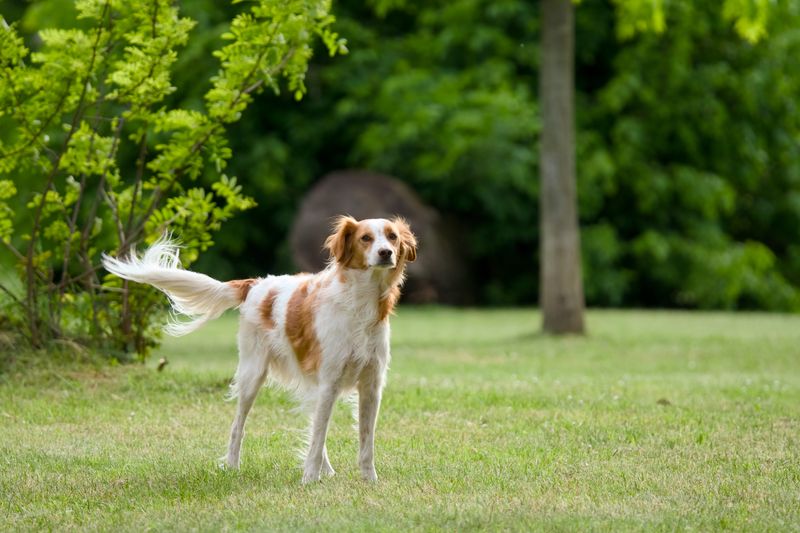
Brittany
A compact French pointer with a spaniel's coat and an athlete's engine, happiest when its nose and legs are working together.
EnergyGroomingFlat life

