


History
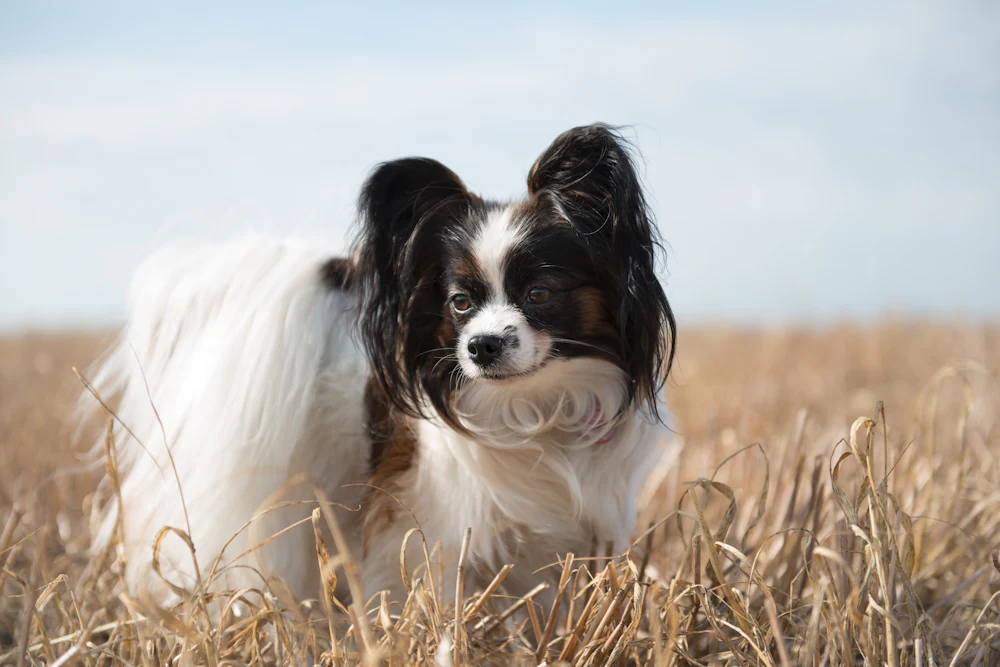
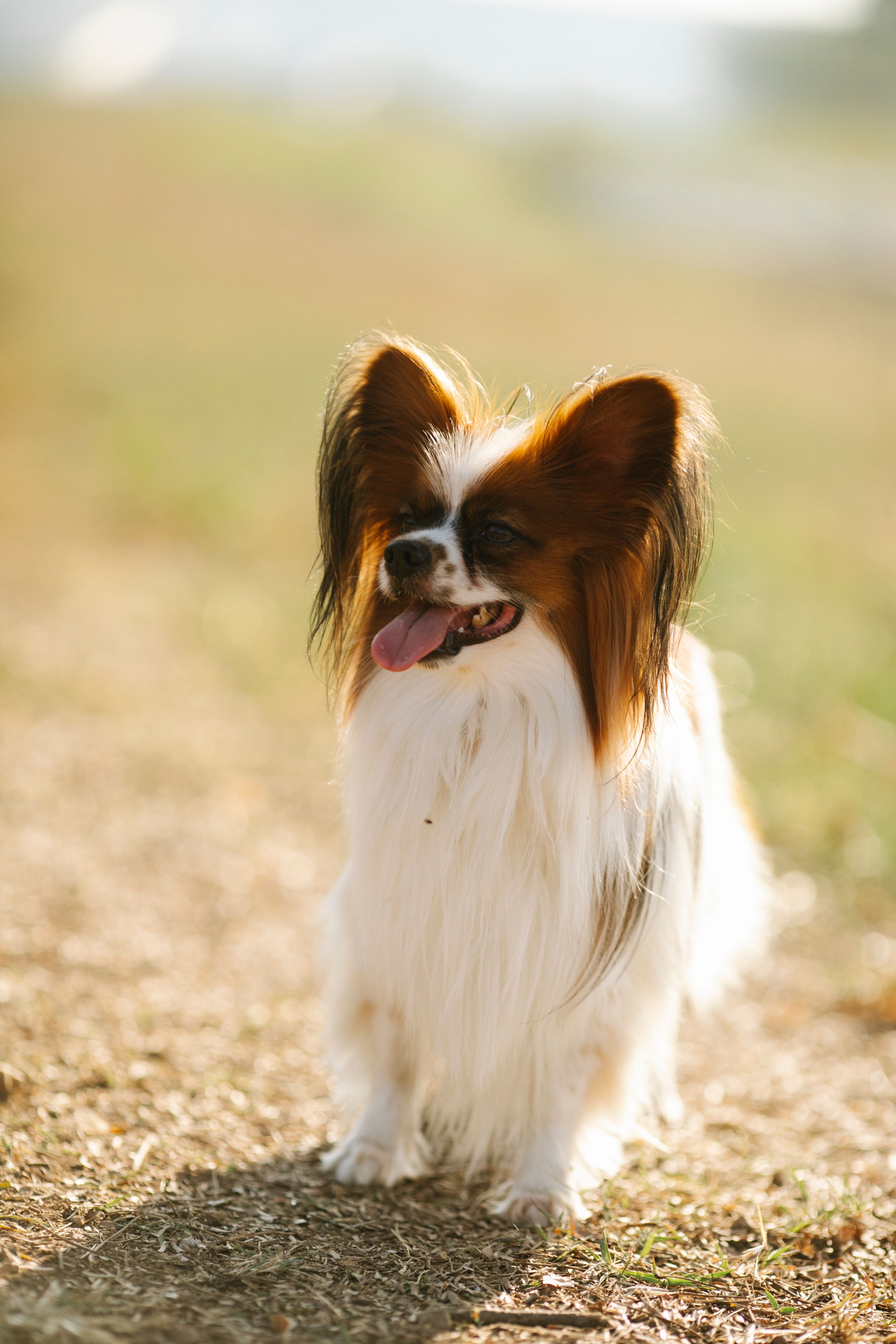
The Papillon is one of two varieties of the Continental Toy Spaniel, a breed the FCI attributes to France and Belgium. The variety with large, erect ears set like the open wings of a butterfly is the Papillon; its sister with drooping ears is the Phalène, the French word for moth. Both are judged under the same standard and differ only in ear carriage. Small spaniels of this kind appear in European paintings from the Renaissance onwards, often sitting on the laps of ladies at court.
The FCI accepted the breed on a definitive basis on 1 January 1954, and the current standard, dated 17 September 1990, places it in Group 9, Section 9. The standard itself carries no historical summary, but it describes exactly what centuries of selection produced: a small de luxe toy spaniel of normal, harmonious build, graceful yet robust, with a proud carriage and an easy, elegant gait. The Papillon variety has long been the more widespread of the two, and in many countries the name is used loosely for both.
Temperament
The standard speaks of a lively personality, and anyone who has walked a Papillon will recognise it. This is an alert, inquisitive little dog that wants to know what is happening in every room and on every street corner. Most are affectionate and cheerful with their own people, curious rather than nervous with visitors, and remarkably sturdy in spirit. They tend to bounce back quickly from a startle and get on with the day.
Intelligence is the trait owners mention first. Papillons learn routines quickly, notice when the lead is picked up, and can become demanding if they are bored. Some are vocal, announcing the post, the neighbours and the lift arriving on the landing. A Papillon that is carried everywhere and never asked to think can become clingy or yappy; one that is given small jobs, games and walks of its own is usually a confident, easy companion.
Children and other pets
Papillons enjoy calm, considerate children and will happily join gentle games, but they are fine boned and can be injured by a fall from arms or a sofa, or by an excited toddler. Families with very young children should supervise closely. With other dogs they are often bold, sometimes too bold with large breeds, so introductions need care. Cats in the household are usually accepted, while small rodents may trigger some chasing interest.
Exercise and the daily walk
Size misleads people here. An adult Papillon in good health will happily walk for an hour, explore woodland paths and come home asking for more. Two or three outings a day, one of them a proper walk with time to sniff, suit most dogs, along with play at home. In wet November weather a shorter walk plus a training game indoors is a fair substitute.
Many Papillons excel at agility, scent games and trick training, and these activities tire the mind as much as the body. Off lead, a well-trained Papillon can have a good recall, but remember that a dog of this size is vulnerable near birds of prey, traffic and unfriendly large dogs. A harness is kinder than a collar for a small neck and a delicate trachea.
Training
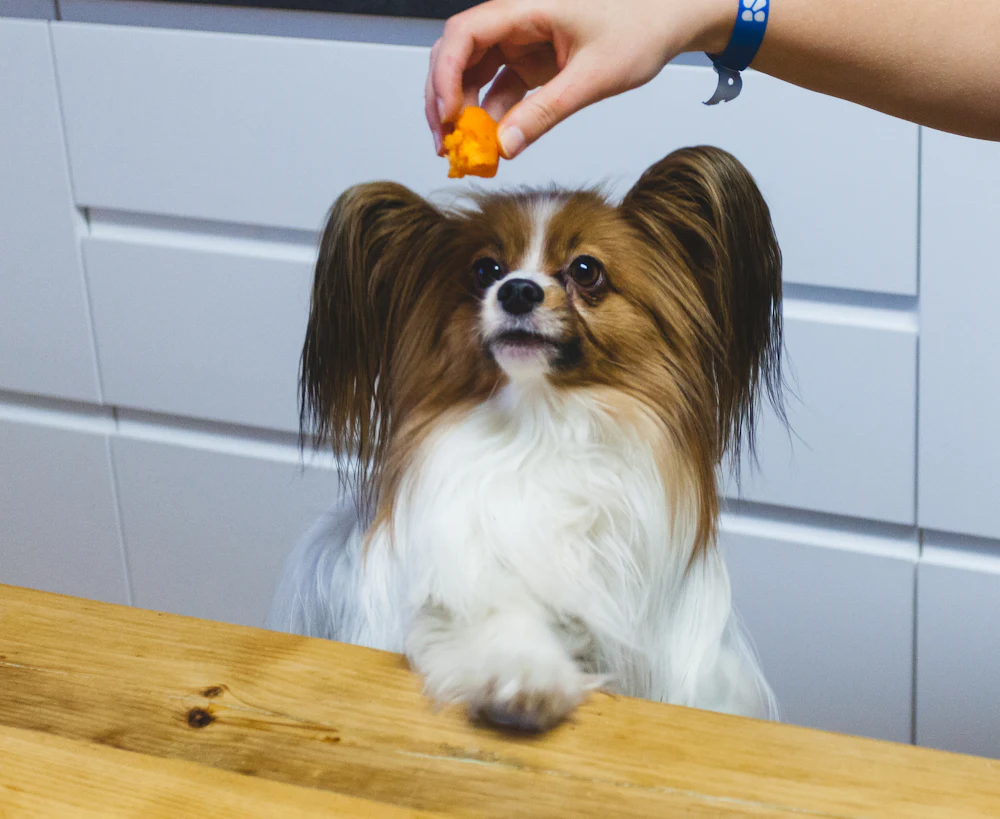
Training is a pleasure with this breed if sessions are short, varied and rewarding. Papillons respond well to food rewards and praise and quickly pick up sit, down, wait and recall, plus a long list of tricks. Harsh corrections are unnecessary and counterproductive. The common mistake is to excuse a small dog from rules that would apply to a larger one, which leads to jumping up, barking and guarding the sofa.
House training can take longer than in bigger breeds, especially in flats and in bad weather, so a consistent routine and an indoor fallback for the first months help. Teach the dog to be handled, groomed and examined from puppyhood, including teeth and feet. Early, gentle exposure to lifts, trams, crowds and other dogs builds the confidence that makes a Papillon easy to take anywhere.
Coat and grooming
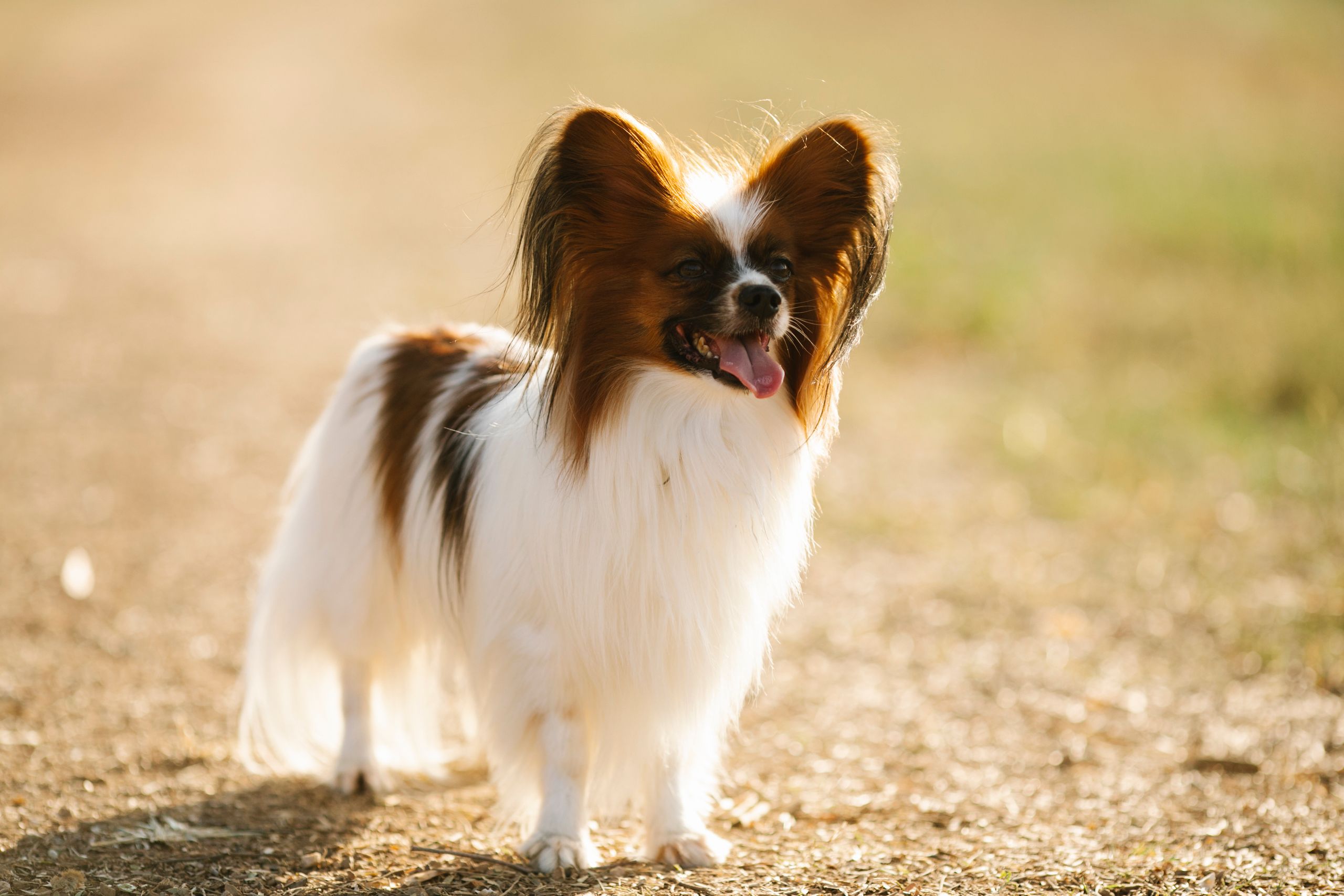
The coat is abundant, glossy and wavy but not curly, with no undercoat, and it forms a frill on the chest and long fringes on the ears, the backs of the legs and the plumed tail. All colours are admitted on a white background, and white must dominate on the body and legs. Without an undercoat the breed sheds less than many dogs of its size and mats less, although the fringes behind the ears need regular attention. Brush two or three times a week and keep nails short.
Feeding and weight
A toy breed burns energy quickly but needs very little food, so measure every meal and count treats used in training as part of the daily ration. Two meals a day suit most adults; small puppies need three or four to keep their blood sugar steady. Choose a complete diet formulated for small breeds with appropriately sized kibble. Extra weight is easy to hide under the coat, so check the ribs with your hands regularly.
Work out a starting calorie figure and food weight with the calorie calculator. Not sure this is the right breed? Take the quiz.
Health
Every breed carries predispositions. These are the conditions most often discussed for the Papillon, not a prediction for any individual dog.
- Patellar luxation (slipping kneecaps)
- Progressive retinal atrophy (PRA)
- Dental disease and retained puppy teeth
- Neuroaxonal dystrophy (NAD)
- Von Willebrand's disease (a bleeding disorder)
What to ask the breeder. Ask for DNA results for progressive retinal atrophy, neuroaxonal dystrophy and von Willebrand's disease, a recent eye examination and a kneecap check for both parents.
Choosing a puppy
A Papillon puppy is tiny, quick and fearless, which is a risky combination. Puppy-proof the flat, block stairs and balconies, and teach children to sit on the floor when holding the dog. Short training games several times a day suit its attention span. Expect house training to need patience. Introduce grooming, nail clipping and tooth brushing early, and arrange calm meetings with vaccinated, gentle adult dogs so the puppy learns manners without being frightened or flattened.
In Luxembourg the national kennel club is the Fédération Cynologique Luxembourgeoise (FCL), a member of the FCI. Many owners also buy from breeders in Germany, France or Belgium; a puppy coming from another EU country must be microchipped and vaccinated against rabies, which in practice means it cannot travel before about fifteen weeks of age. Where to get a dog in Luxembourg.
The older Papillon
Many Papillons stay active well into their teens, though they slow down gradually. Watch the teeth closely, because dental disease is a common reason for weight loss and discomfort in older toy dogs. Keep walks regular but shorter, provide a warm bed away from draughts, and consider ramps or steps to the sofa. Clouding eyes, stiffness or new hesitation on stairs deserve a visit to the vet.
A realistic day
A realistic weekday for a working household in Luxembourg City, with a midday visit. Adjust it to your dog, not the other way round.
Quick trip outside, then breakfast measured to the gram and a few minutes of trick practice.
Owner leaves for the office; the Papillon settles on a familiar bed with a chew.
Midday visit: a 30-minute walk with plenty of sniffing, fresh water and a short training game.
Evening walk of 30 to 40 minutes, perhaps along the Pétrusse valley paths, then dinner.
Brief last outing, a quick brush of the ear fringes and bed.
A Papillon in Luxembourg
A Papillon is about as flat friendly as dogs get. It fits easily into a lift, a tram or a café, and many owners carry it in a bag on busy days, which is easy now that buses and trams are free nationwide. The main issue in apartment buildings is noise: a Papillon that barks at every footstep on the landing will not win friends among the neighbours, so teach quiet early.
The Pétrusse valley, Parc Merl and the Kinnekswiss are all good for daily walks, and an adult will enjoy the trails of Bambësch or the Grünewald on weekends. On hot summer days walk early and late, as small dogs warm up quickly on sunny pavements. In winter a light coat helps on wet days, since there is no undercoat. Remember that the dog must be microchipped, declared to the commune and insured, like any other.
Every dog in Luxembourg must be identified, declared to the commune and covered by liability insurance. How registration works.
When you travel
A sitter should know the exact food quantities, because a little extra soon shows on a three kilo dog. The Papillon will want company and routine, so frequent visits or an overnight sitter are better than long empty days. Check doors and balconies before letting the dog loose, and warn guests that it may slip through gaps. Report any skipped meals promptly, as small dogs can become weak quickly when they do not eat.
PAWLY's holiday and overnight care takes place in your home, so your dog keeps its own bed and routine.
Myths and facts
MythPapillons are lapdogs that do not need walks.
FactThey enjoy laps but are active, athletic dogs that need daily walks and something to think about.
MythSmall dogs cannot be trained properly.
FactPapillons are among the most trainable toy breeds and often do well in obedience and agility.
MythPapillons and Phalènes are different breeds.
FactThe FCI treats them as two varieties of the Continental Toy Spaniel, differing only in ear carriage.
Is it the right dog for you?
Suits
- Flat dwellers who want an active, portable companion
- First-time owners willing to train consistently
- People interested in agility, tricks or scent games
- Households with older, gentle children
Think twice if
- Think twice if you have toddlers or a very boisterous household
- Think twice if the dog would be left alone for long days
- Think twice if barking would cause problems with neighbours
- Think twice if you want a dog for long, rough mountain hikes in all weather
Questions owners ask
Does a Papillon shed a lot?
Less than many dogs, because it has no undercoat, but it does shed some hair year round. Regular brushing two or three times a week keeps loose hair under control and stops the fringes behind the ears from tangling. It is not a hypoallergenic breed, so allergy sufferers should spend time with one before committing.
Can a Papillon live with a large dog?
Often yes, if the larger dog is gentle and introductions are careful. The risk is physical: a playful paw or a collision can injure a toy dog. Supervise play, give the Papillon places to retreat, and avoid mixing it with unfamiliar big dogs in boisterous dog parks.
Is a Papillon a good first dog?
It can be an excellent first dog for someone who enjoys training and walks. It is intelligent, adaptable and usually eager to please. The pitfalls are overprotection, which leads to a demanding dog, and underestimating its need for exercise and mental work.
How much exercise does a Papillon really need?
Most adults are happy with about 45 minutes to an hour a day, split into two or three outings, plus play and short training games. Many will go further if asked. Puppies and seniors need shorter, gentler sessions.
Sources
- FCI breed standard No. 77 (Continental Toy Spaniel)
- FCI breed page No. 77
- The Royal Kennel Club, Papillon
- American Kennel Club, Papillon
Photo: Unsplash (Unsplash License) · Photo: Pexels (Pexels License) · Photo: Pexels (Pexels License) · Photo: Unsplash (Unsplash License) · Photo: Pexels (Pexels License)
General information for dog owners in Luxembourg, not veterinary or legal advice. Official facts (origin, size, group, history and temperament as described by the breed standard) follow the FCI standard; health and care sections reflect breed-club and veterinary guidance and are typical ranges rather than rules. For your own dog, ask your vet, the breed club or your commune. How this guide is written and checked. Last reviewed 8 October 2026.
Need someone for your Papillon?
PAWLY offers an individual 45-minute walk or a home visit at your dog's pace, the same walker every time, and a written report with photos after every visit, across Luxembourg City.
Read next: the journal, for the Papillon
All articles
Teeth: the problem owners find least interesting and vets see most
Teeth are a known weak point in the Papillon; this is the routine that helps.

Dogs in apartment buildings: the rules, the neighbours and the noise
Flat life is one of the Papillon's strengths, but building rules and neighbours still count.

Separation anxiety: the signs owners miss and what actually helps
The Papillon bonds closely with its people; this covers the signs owners miss.
Similar breeds
All 198 breeds
Chihuahua
The smallest pedigree dog in the world, with an apple-shaped head, a big personality and a courage that far outruns its size.
EnergyGroomingFlat life
Pomeranian
A tiny spitz with a lion's mane and a big voice.
EnergyGroomingFlat life
Cavalier King Charles Spaniel
One of the sweetest companion dogs there is, and a breed where choosing the breeder matters more than almost anywhere else.
EnergyGroomingFlat life

