


History
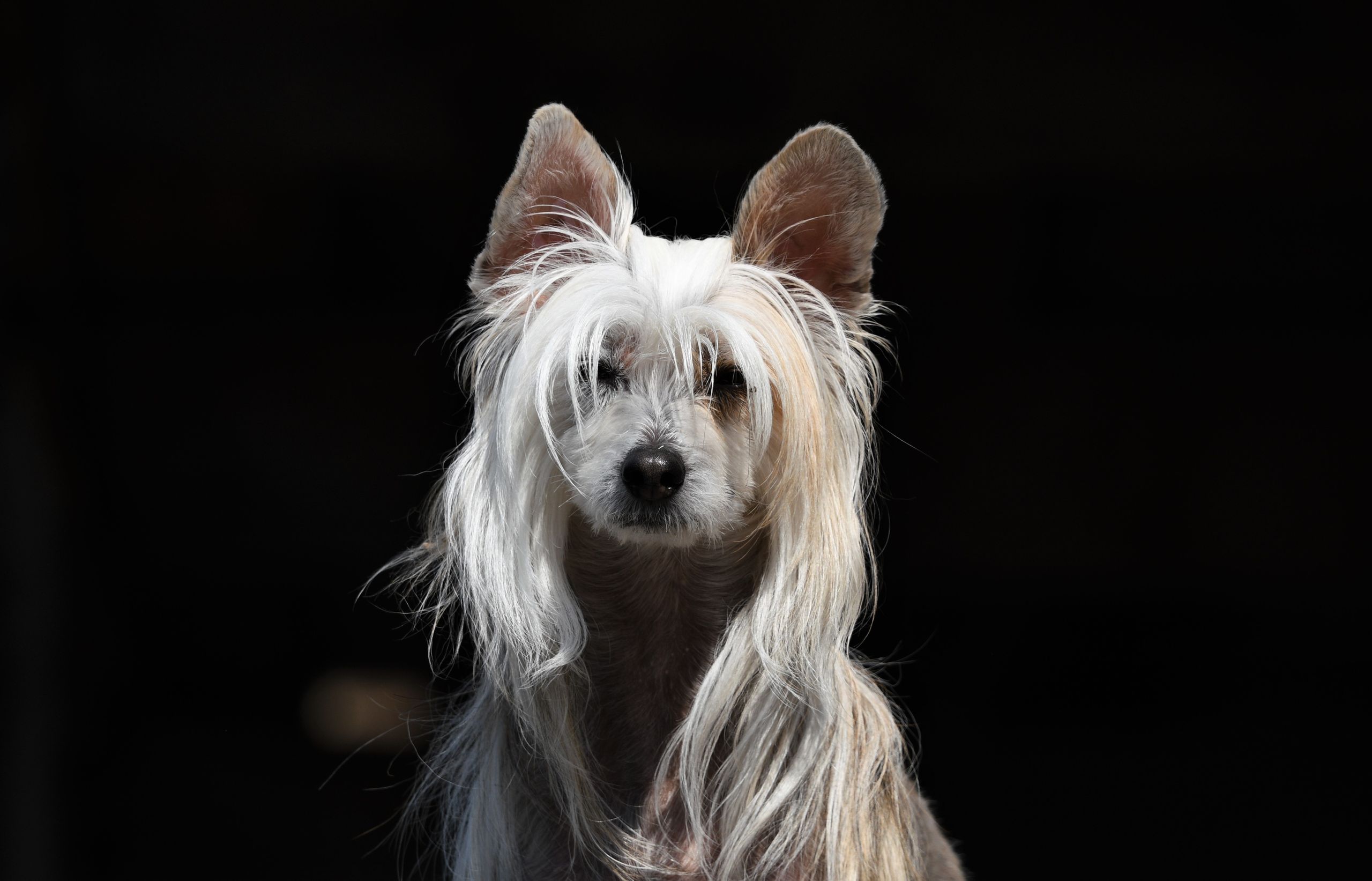
The FCI gives China as the country of origin of the Chinese Crested Dog, with Great Britain holding the patronage of the standard. The standard states that the breed is believed to have been kept during the Han Dynasty, when such dogs served as guardians of treasure houses and, in larger forms, as hunting dogs. Its precise ancestry is uncertain, and hairless dogs have appeared in several parts of the world.
In the West the breed was shown in the United States between 1885 and 1926, after which it almost disappeared for about fifty years before a revival. Today the FCI classifies it in Group 9 among the hairless breeds, as a companion dog without working trial. The standard recognises two varieties, the Hairless and the Powder Puff, and two body types, the fine-boned deer type and the heavier cobby type.
Temperament
The FCI standard describes the breed in a few words: happy, never vicious. Owners would add affectionate, playful and strongly attached. Most Chinese Cresteds follow their person everywhere, seek warmth and physical contact, and enjoy being part of every activity at home. Many are gentle with visitors once they have had time to observe, though some are shy at first.
This attachment has a cost: many Cresteds dislike long periods alone and may vocalise or become anxious if left without preparation. They are sensitive dogs that react to tension at home, and rough handling makes them withdrawn. With gradual training in calm alone time and plenty of affection, they are cheerful, adaptable companions that fit urban life well.
Children and other pets
Chinese Cresteds can be lovely with considerate children, but they are small and fine-boned, and a fall from a child's arms can cause injury. They suit families with older, gentle children better than homes with toddlers. They are usually peaceful with other dogs and cats, though large, boisterous dogs should be introduced carefully. Prey drive is generally low.
Exercise and the daily walk
Thirty to forty-five minutes of daily activity, in one or two walks plus play at home, is enough for most adults. Many Cresteds are lively and enjoy short sprints, ball games and agility at their own scale. They also enjoy exploring new places with their owners, which keeps them mentally engaged.
Weather shapes exercise more than for most breeds. The Hairless variety needs a coat or jumper in cold or wet weather and sun protection on bright days, as the exposed skin can burn. The Powder Puff tolerates cold better but collects burrs and mud. Keep outings short in extreme temperatures in either direction.
Training
Cresteds are intelligent and responsive to gentle, reward-based training. Short, playful sessions work best. Housetraining can take patience, especially in cold or rainy weather, when a small, lightly coated dog sees little reason to go outside; a sheltered routine and warm clothing help.
Practise alone time early, in small steps, to prevent separation problems. Socialise the puppy with people of all ages, other dogs, lifts and public transport, using a carrier where appropriate. Teach the dog to accept handling of the skin, teeth and paws, as regular care will be part of its life.
Coat and grooming
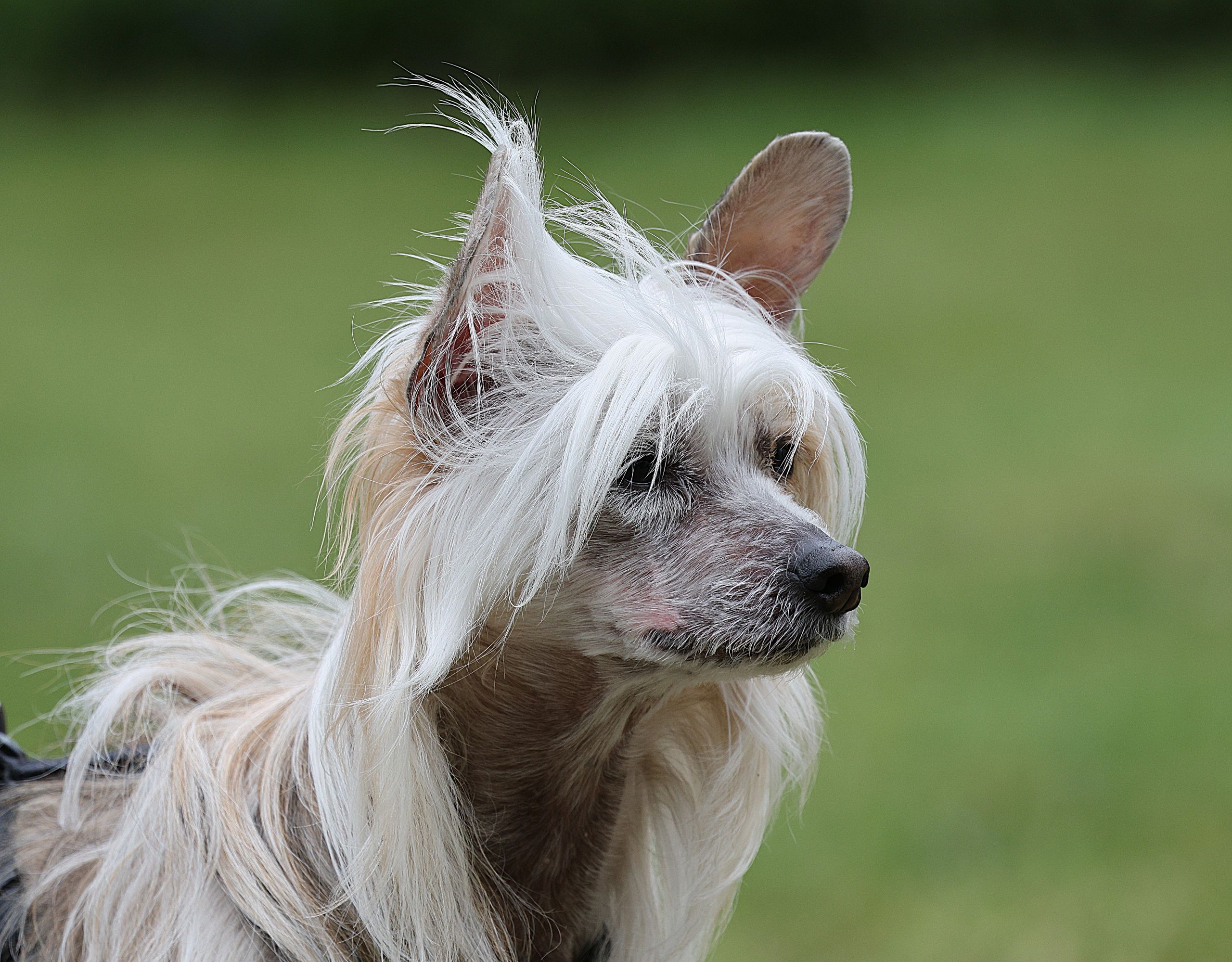
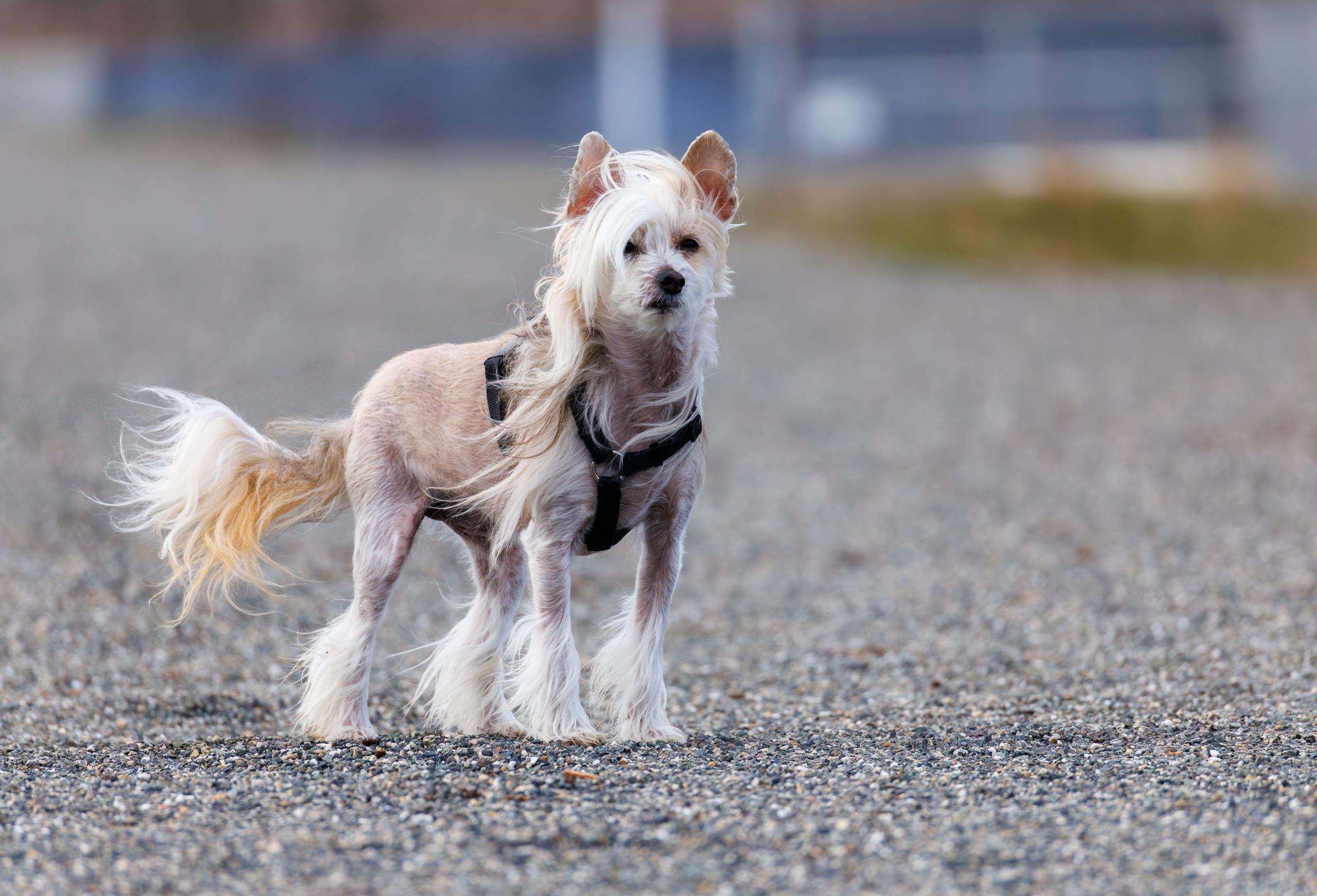
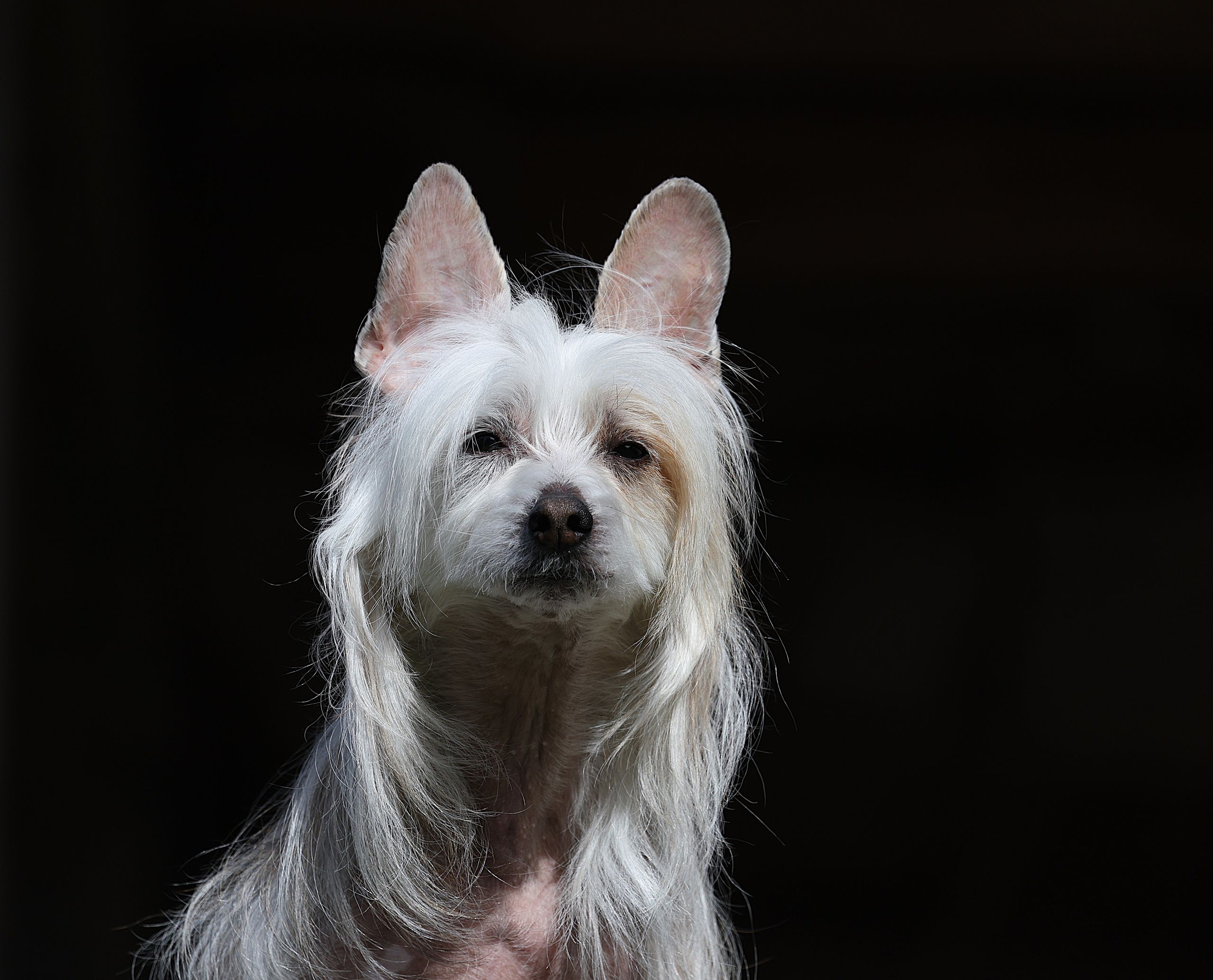
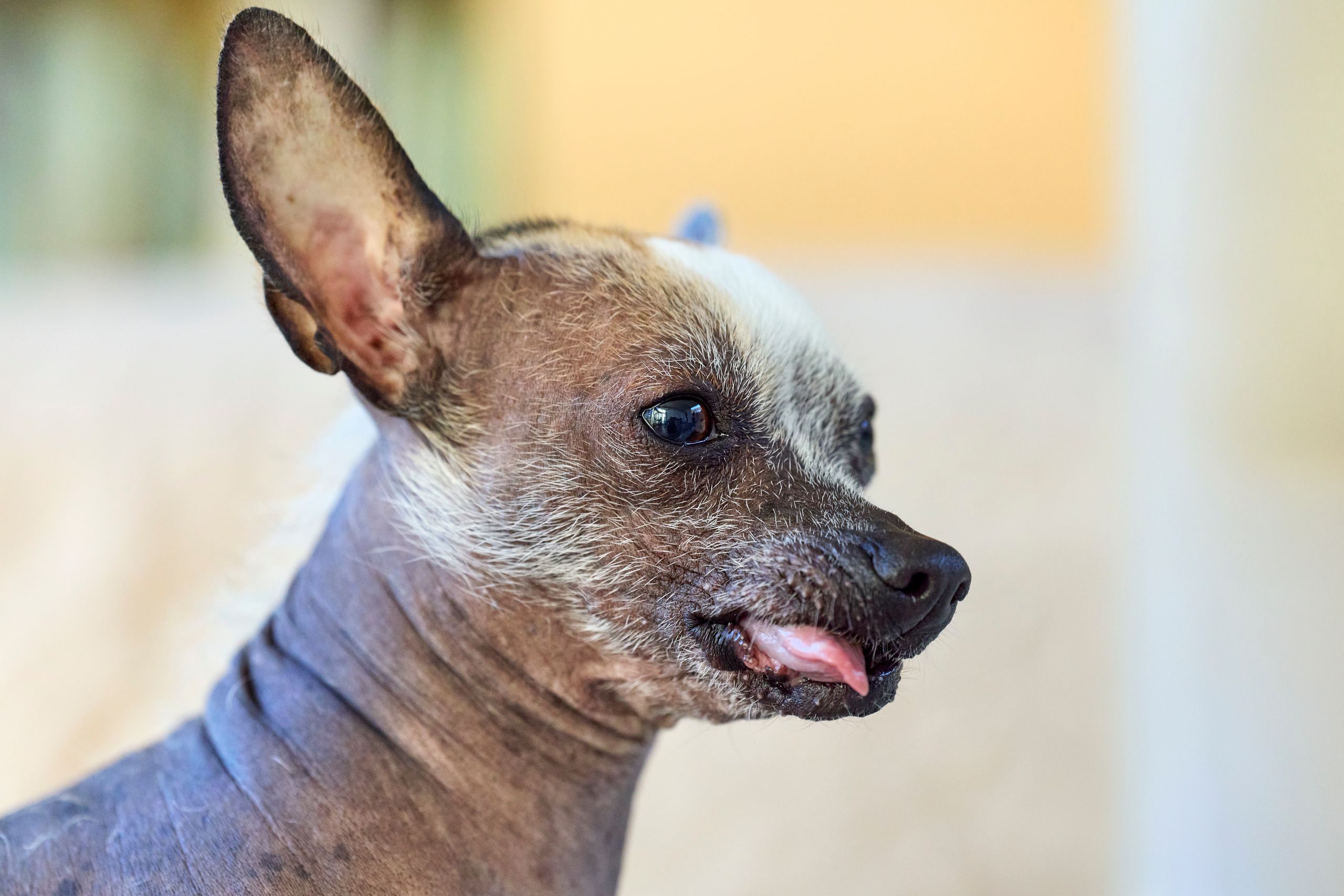
The Hairless has hair only on the head (the crest), the feet (socks) and the tail (plume); its skin needs regular washing, moisturising with suitable products and sun protection, and some dogs are prone to blackheads. The Powder Puff is entirely covered with a soft, veil-like coat that needs brushing several times a week to prevent mats; shedding is light. The FCI permits any colour or combination of colours in both varieties.
Feeding and weight
A complete diet for small breeds, divided into two meals, suits most adults. Hairless dogs often have missing or weak teeth, which the FCI standard accepts, so kibble size and texture may need adjusting. Daily tooth brushing is particularly important. Small dogs gain weight quickly from treats, so count them as part of the daily ration.
Work out a starting calorie figure and food weight with the calorie calculator. Not sure this is the right breed? Take the quiz.
Health
Every breed carries predispositions. These are the conditions most often discussed for the Chinese Crested, not a prediction for any individual dog.
- Primary lens luxation (PLL), for which a DNA test exists
- Progressive retinal atrophy (prcd-PRA), for which a DNA test exists
- Patellar luxation
- Dental problems, including missing teeth in the Hairless
- Skin problems in the Hairless, including sunburn and blackheads
What to ask the breeder. Ask for DNA test results for PLL and prcd-PRA for both parents, plus a recent eye examination and knee check.
Choosing a puppy
Chinese Crested puppies are tiny, bold and curious. Protect them from falls from sofas and arms, and use a carrier on busy streets and on public transport. Begin skin care and tooth brushing routines early, and introduce clothing gradually so that the dog accepts it. Teach brief periods alone from the first week. Socialisation should be gentle but varied, as a well-adjusted Crested is far less anxious as an adult.
In Luxembourg the national kennel club is the Fédération Cynologique Luxembourgeoise (FCL), a member of the FCI. Many owners also buy from breeders in Germany, France or Belgium; a puppy coming from another EU country must be microchipped and vaccinated against rabies, which in practice means it cannot travel before about fifteen weeks of age. Where to get a dog in Luxembourg.
The older Chinese Crested
Many Cresteds live long lives. In older age, dental care becomes even more important, and joints may stiffen. Keep walks shorter and keep the dog warm, as older dogs feel the cold more. Regular vet checks for eyes, teeth and heart help catch problems early. A soft, warm bed and a predictable routine keep an older Crested comfortable.
A realistic day
A realistic weekday for a working household in Luxembourg City, with a midday visit. Adjust it to your dog, not the other way round.
Short walk in a coat or jumper, depending on the weather, followed by breakfast.
Owner leaves; the dog naps in a warm bed with a familiar blanket.
Midday visit: company, a 20-minute walk, play and a check that the dog is warm and comfortable.
Evening walk and play at home; skin moisturised or coat brushed as needed, then dinner.
Brief toilet break and bed, often in or near the owner's room.
A Chinese Crested in Luxembourg
A Chinese Crested is one of the easiest breeds for a Luxembourg City flat: small, generally quiet once settled and happy with short walks in Parc Merl or the Kinnekswiss. Lifts and free buses and trams are simple with a dog this size, often in a carrier. The main local challenge is the weather. Wet, cold winters call for a waterproof coat for the Hairless, while summer days in the 30s °C require shade and dog-safe sun protection on pale skin.
Neighbours rarely notice a Crested unless it is left alone for long hours, when some vocalise. Standard obligations apply: microchip, declaration to the commune, third-party liability insurance and the annual dog tax.
Every dog in Luxembourg must be identified, declared to the commune and covered by liability insurance. How registration works.
When you travel
A sitter must understand that this dog needs company and warmth. Leave clothing for each type of weather, skin care products or brushes, and dental supplies. Explain that the Hairless can burn in strong sun and feel the cold quickly. Ask the sitter to keep the dog close, avoid long periods alone and watch appetite, as some Cresteds eat less when their owner is away.
PAWLY's holiday and overnight care takes place in your home, so your dog keeps its own bed and routine.
Myths and facts
MythHairless dogs need no grooming.
FactThe Hairless needs regular skin care and sun protection, and the Powder Puff needs frequent brushing.
MythEvery Chinese Crested is hairless.
FactThe FCI recognises two varieties: the Hairless and the fully coated Powder Puff, which can appear in the same litter.
MythThey are hypoallergenic.
FactSome people with allergies react less to them, but no dog is guaranteed to be allergen-free. Spend time with the breed before deciding.
Is it the right dog for you?
Suits
- Flat dwellers and busy city professionals with company at home
- Owners who enjoy close contact with their dog
- Families with older, gentle children
- People who prefer a dog that sheds little
Think twice if
- The dog would be alone for long working days
- You have very young children who may drop or squeeze a small dog
- You dislike daily skin or coat care
- You want a robust dog for long hikes in all weather
Questions owners ask
Does a Hairless Chinese Crested get cold in Luxembourg winters?
Yes. In cold, wet or windy weather it needs a coat or jumper, and many owners keep walks shorter. Indoors, a warm bed and blanket are appreciated. The Powder Puff copes better but still benefits from a waterproof layer in rain.
Can a Chinese Crested get sunburnt?
The Hairless can, especially pale or spotted skin. Use shade, light clothing and a sunscreen suitable for dogs on bright days, and avoid midday walks in summer. Ask your vet which products are safe.
Is a Chinese Crested good for a first-time owner?
Generally yes. It is small, affectionate and easy to train with gentle methods. The challenges are skin or coat care, sensitivity to temperature and a tendency to dislike being left alone.
What is the difference between the Hairless and the Powder Puff?
Both are the same breed under the FCI standard. The Hairless has hair only on the head, feet and tail; the Powder Puff has a full, soft coat. Temperament is the same, but care routines differ.
Sources
Photo: Pexels (Pexels License) · Photo: Pexels (Pexels License) · Photo: Pexels (Pexels License) · Photo: Pexels (Pexels License) · Photo: Pexels (Pexels License)
General information for dog owners in Luxembourg, not veterinary or legal advice. Official facts (origin, size, group, history and temperament as described by the breed standard) follow the FCI standard; health and care sections reflect breed-club and veterinary guidance and are typical ranges rather than rules. For your own dog, ask your vet, the breed club or your commune. How this guide is written and checked. Last reviewed 8 October 2026.
Need someone for your Chinese Crested?
PAWLY offers an individual 45-minute walk or a home visit at your dog's pace, the same walker every time, and a written report with photos after every visit, across Luxembourg City.
Read next: the journal, for the Chinese Crested
All articles
Teeth: the problem owners find least interesting and vets see most
Teeth are a known weak point in the Chinese Crested; this is the routine that helps.

The itchy dog: working through it in the right order
Skin trouble is among the conditions discussed for the Chinese Crested; this is the order to work through it.

Separation anxiety: the signs owners miss and what actually helps
The Chinese Crested bonds closely with its people; this covers the signs owners miss.
Similar breeds
All 198 breeds
Xoloitzcuintle
An ancient Mexican dog, naked or sleekly coated, that watches the world calmly and attaches itself to one household with great devotion.
EnergyGroomingFlat life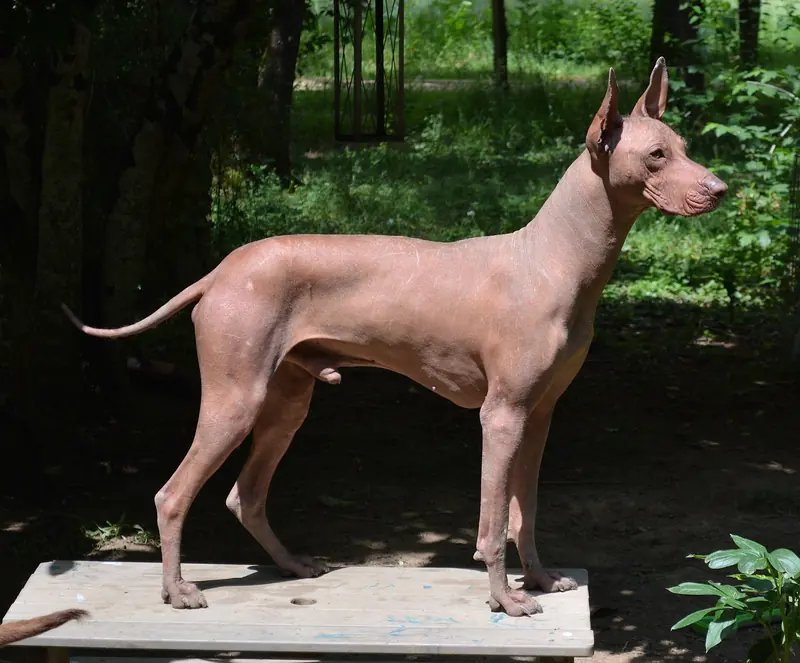
Peruvian Hairless Dog
An elegant, watchful companion that has lived beside people in Peru for two thousand years and still prefers to sit on someone's lap.
EnergyGroomingFlat life
Italian Greyhound
A miniature sighthound of Renaissance courts: elegant, affectionate, fond of warm laps and rather more fragile than it looks.
EnergyGroomingFlat life

