
History
The Peruvian Hairless Dog, known in Peru as the Perro Sin Pelo del Perú and in the Andes as the viringo, is the national breed of Peru. According to the FCI standard, dogs of this type appear in pre-Inca ceramics from the Mochica and Chancay cultures, a span running from roughly 300 BC to 1460 AD, which makes it one of the few breeds with a visible record that long. The FCI classes it in Group 5 among dogs of primitive type and lists it as a companion dog.
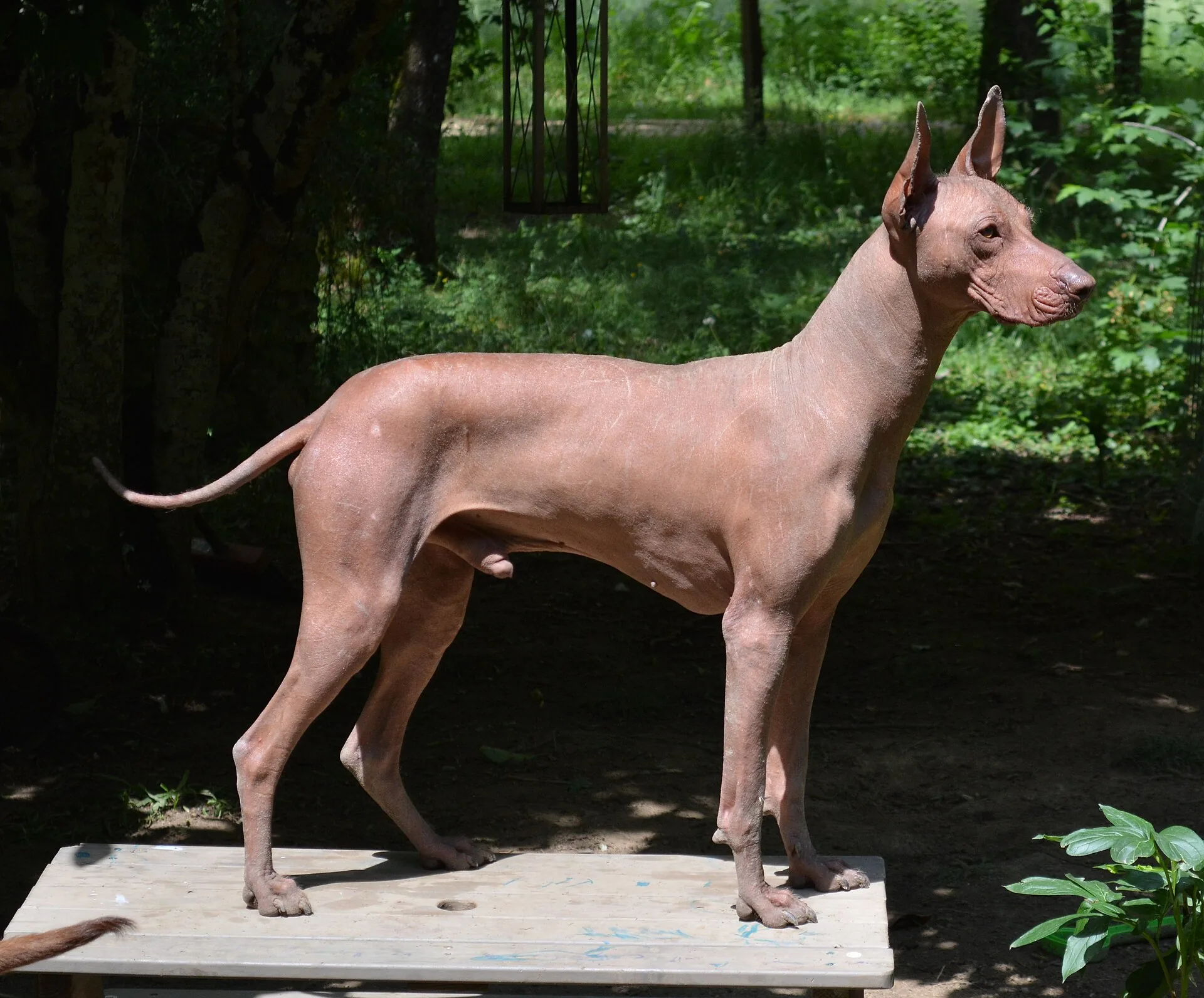
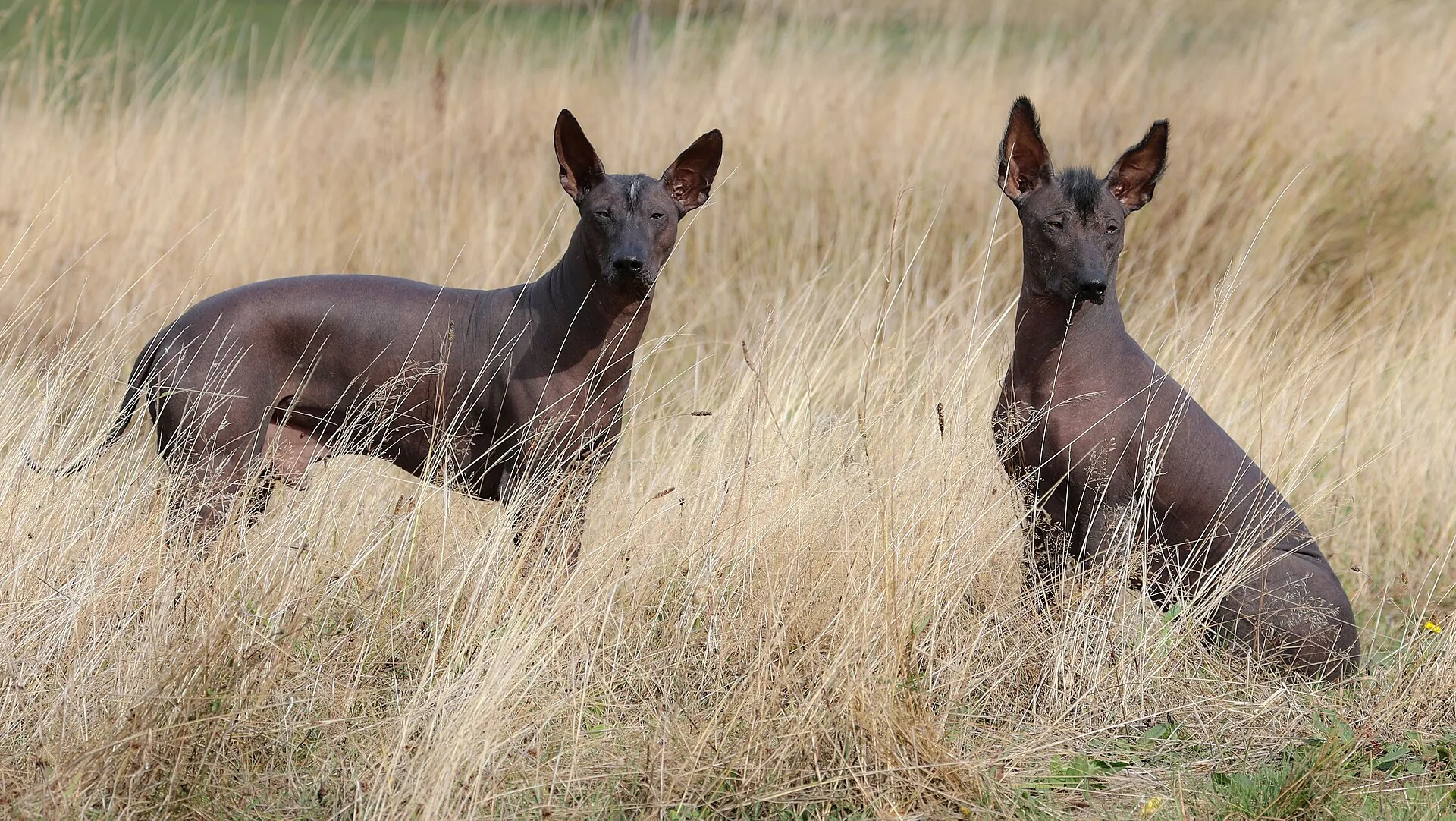
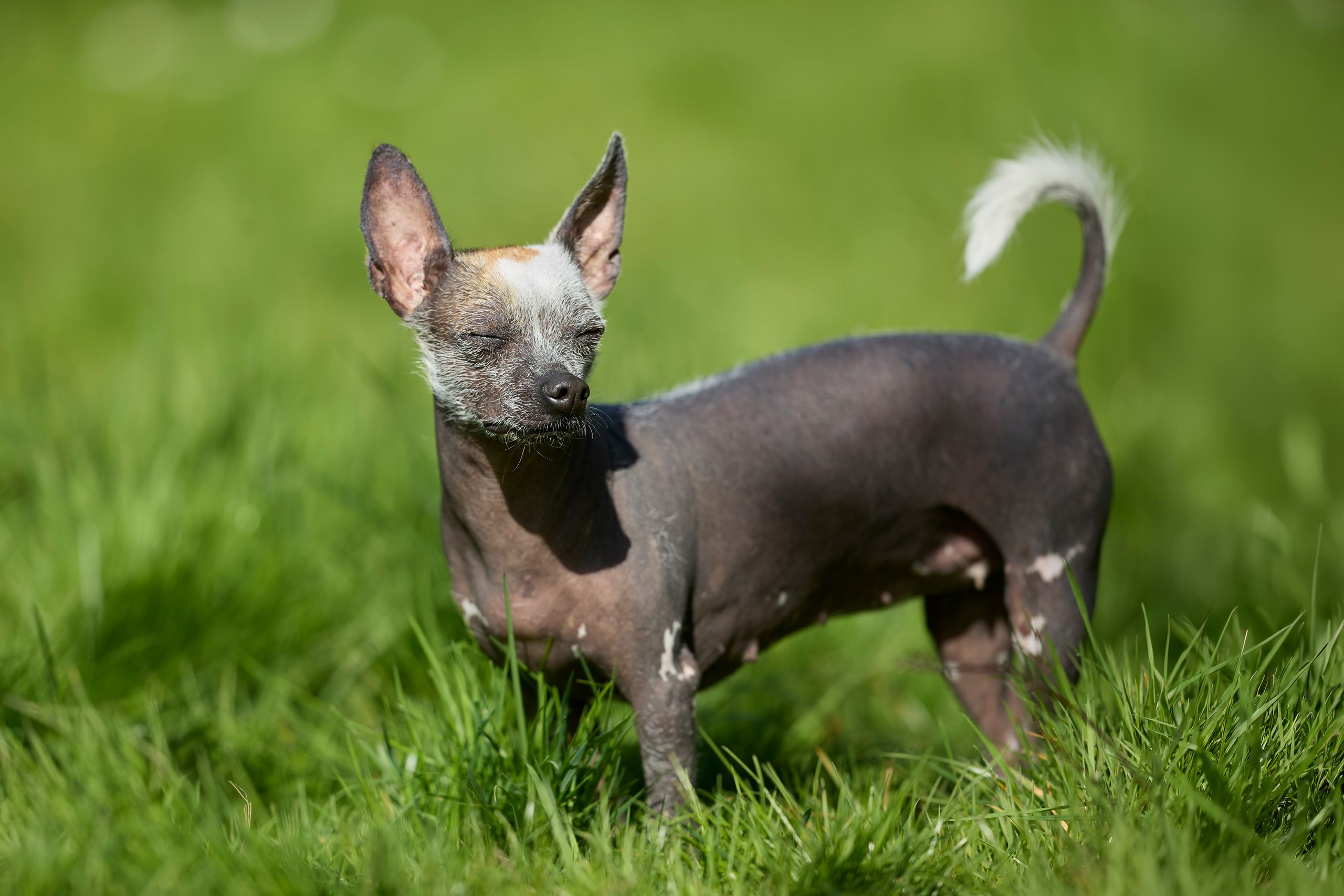
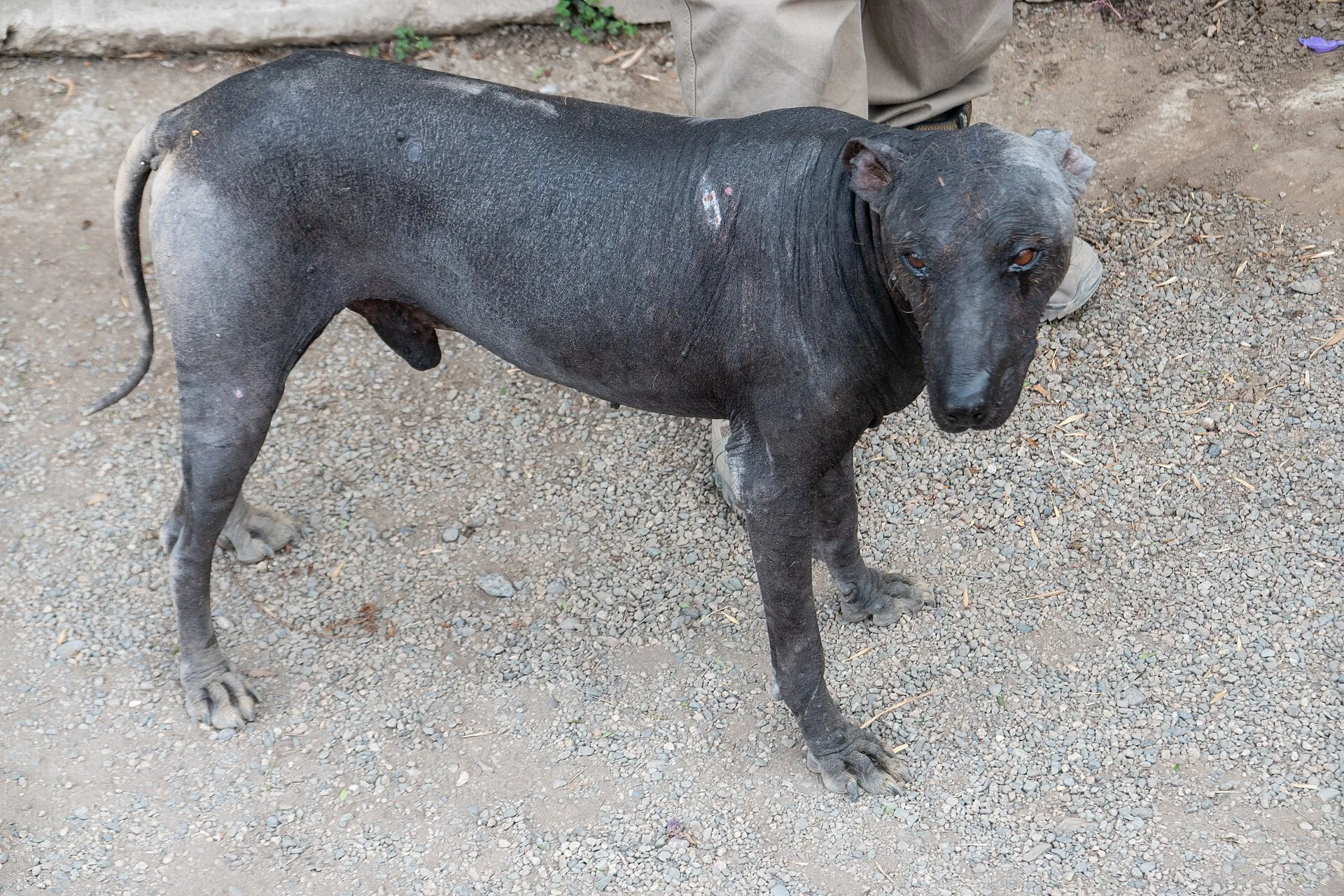
The breed was recognised by the FCI in 1985, at the general assembly in Amsterdam, and the standard in use today dates from 2021. Two varieties exist and both are fully accepted: the hairless, with bare skin and sparse hair only on the head, the ends of the legs and the tail, and the coated, with a smooth, short, tight coat. The standard also allows three sizes, small, medium and large, so two adult Peruvian Hairless Dogs can differ enormously in size.
Temperament
The standard describes a noble and affectionate dog at home, lively and alert, and wary of strangers with the instincts of a watchdog. In practice the breed is quietly devoted to its own household, often choosing one person as its favourite and following them from room to room. Visitors are watched before they are accepted, and a few barks announce the arrival of the postman or the neighbour.
They pick up tension in a home, dislike shouting and can become anxious or shy if poorly socialised as puppies. They are also athletic and quick, capable of sudden bursts across a park and of jumping onto furniture you thought was safe.
Children and other pets
With considerate older children the breed is affectionate and playful, though the smaller sizes are delicate and should not be carried about, squeezed or dressed up by toddlers. Established dogs are usually fine with other dogs, particularly when raised with them. The breed has a modest prey drive and will chase squirrels and sometimes the family cat, so introductions to small pets should be gradual and supervised.
Exercise and the daily walk
Most adults are content with about an hour of activity a day, split into two outings, plus some play indoors. The standard speaks of an elegant, slim dog, and that build is made for short sprints and brisk walking, not for endless plodding. A good session might be a purposeful forty-minute walk followed by a few minutes of ball or tug in an enclosed space.
In cold, wet weather a hairless dog needs a well-fitting coat and often boots, and the walk may be shorter. In bright sun the exposed skin can burn, so on a summer day it is better to walk early or late, or to apply a dog-safe sun protection on the back and ears. Keep young dogs off hard jumping until their bones have matured, and use a harness that does not rub bare skin.
Training
The breed is intelligent and keen to please its own person, and it responds well to gentle, reward-based training. Short sessions with small treats, plenty of praise and a calm tone produce good results. Early, patient socialisation matters because natural wariness can turn into nervous barking at strangers, other dogs or unfamiliar noises if left alone.
Housetraining is usually manageable, though small dogs dislike going out in the rain and cold, so a covered route and a warm coat help. Teach calm greetings at the door, as the watchdog habit can become loud in a building where footsteps echo in the corridor.
Coat and grooming
The hairless variety has bare, warm skin, with sparse hair permitted on the head, the ends of the legs and the tail. The coated variety has a smooth, short and tight coat. All colours are accepted by the standard, except merle in the coated type. Hairless skin needs real care: mild cleansing, moisturiser when it dries, protection from sun and from cold, and attention to blackheads and spots in adolescence.
Feeding and weight
A lean, athletic dog does best on a measured diet of good-quality complete food, fed in two meals. These dogs can gain weight quickly once they are neutered or indoors in winter, and extra weight hides the elegant outline the standard asks for. Dental care matters, since the breed is known for missing teeth in some lines and for tartar in the small sizes.
Work out a starting calorie figure and food weight with the calorie calculator. Not sure this is the right breed? Take the quiz.
Health
Every breed carries predispositions. These are the conditions most often discussed for the Peruvian Hairless Dog, not a prediction for any individual dog.
- Missing or poorly formed teeth, especially premolars, which is common in the hairless variety
- Skin problems in the hairless type, such as dryness, acne-like spots and sunburn
- Dental disease and tartar build-up, especially in the smaller sizes
- Kneecaps that slip out of place (patellar luxation) in small dogs
- Sensitivity to cold, and to chemicals or fabrics that irritate bare skin
What to ask the breeder. Ask whether the parents have been examined for patellar luxation and had their teeth checked, and how the breeder manages skin care in the hairless line. Ask to meet the mother and, if possible, both varieties.
Choosing a puppy
A Peruvian Hairless puppy is a small, quick, curious animal that needs a warm, draught-free bed and a gentle introduction to the world. Hairless puppies chill easily, so keep them out of cold floors and use a soft jumper outdoors in winter. Start short, positive socialisation visits with people, other dogs and city noises from the first weeks after vaccination.
In Luxembourg the national kennel club is the Fédération Cynologique Luxembourgeoise (FCL), a member of the FCI. Many owners also buy from breeders in Germany, France or Belgium; a puppy coming from another EU country must be microchipped and vaccinated against rabies, which in practice means it cannot travel before about fifteen weeks of age. Where to get a dog in Luxembourg.
The older Peruvian Hairless Dog
Seniors tend to remain active and affectionate well into their teens. Teeth need regular checks, and the hairless type may develop dry or fragile skin, so a vet-approved moisturiser and a soft bed matter. Joints and kneecaps may stiffen, and gentle shorter walks replace hard play.
A realistic day
A realistic weekday for a working household in Luxembourg City, with a midday visit. Adjust it to your dog, not the other way round.
Quick comfort break with a coat on in cool weather, then breakfast and a few minutes of calm play.
Owner leaves for work; the dog settles on a warm blanket near a sunny window with a chew.
Midday visit: a brisk 30 to 40 minute walk in a quiet green area, fresh water, a skin check and a short training game.
Evening outing of about 40 minutes, with a sprint on a long line in a safe area and a wipe-down afterwards.
Short toilet break, a warm cuddle on the sofa and lights out.
A Peruvian Hairless Dog in Luxembourg
It is clean, compact and generally quiet indoors, and it travels easily in a lift. The small and medium sizes suit apartments in Kirchberg, Bonnevoie or Belair, while the large variety wants a little more space. Winters in the city can be cold and wet, so a good coat, a dry towel at the door and a warm bed are not optional for the hairless type.
Parks such as the Pétrusse valley, Parc Merl and the Municipal Park give plenty of room for a controlled run, and the Bambësch and Grünewald forests are good for longer weekend outings. Summers can reach the 30s °C, and hairless skin burns, so go early and stay in the shade at midday.
Every dog in Luxembourg must be identified, declared to the commune and covered by liability insurance. How registration works.
When you travel
A sitter should know the dog's skin and warmth needs before anything else: keep the home comfortably warm, bring a coat for every outing in cool weather and apply sun protection in bright weather. This dog bonds closely with its person and can fret in an empty flat, so visits should be generous and calm. Check the mouth and skin daily, keep to the usual two meals, and never leave the dog unattended in a garden. Share the vet's number and the owner's microchip details.
PAWLY's holiday and overnight care takes place in your home, so your dog keeps its own bed and routine.
Myths and facts
MythHairless dogs are hypoallergenic and never cause allergies.
FactThe coat is not the only source of allergens. Skin cells and saliva can still affect sensitive people, so spend time with the breed before you commit.
MythThey need no grooming at all.
FactThe hairless type needs regular skin care, moisturising and sun protection. Only the coated type is very low maintenance.
MythAll Peruvian Hairless Dogs are small lap dogs.
FactThe standard recognises three sizes, up to 65 cm and 30 kg. The large variety is a lean, athletic dog.
Is it the right dog for you?
Suits
- Owners who want a quiet, affectionate companion in a flat
- People who are home often and enjoy a dog on the sofa
- Households that can offer warmth, a coat and sun protection
- Walkers who like a short brisk outing twice a day
Think twice if
- You are away from home for long stretches every day
- You are not willing to care for bare skin, or to dress a dog for the cold
- You want a dog that greets every stranger with enthusiasm
- You have a lot of small pets that the dog may chase
Questions owners ask
Do Peruvian Hairless Dogs need coats and sun cream?
The hairless variety usually does. A coat helps in cold or wet weather, and sun protection on the back and ears helps in bright weather. Coated dogs are much more robust. Ask a vet for a dog-safe product, as human sun cream is not always suitable.
Is the breed noisy?
They are watchful and will bark at unfamiliar sounds, but many are fairly quiet at home. In a building with echoing corridors, teach the dog to settle after a warning bark and reward calm behaviour.
Can the Peruvian Hairless Dog be left alone?
Short periods are fine once trained, but the breed is devoted and can become anxious if left for long hours every day. A midday visit from a sitter is a great help.
Is it the same as a Xoloitzcuintle?
No. They are separate FCI breeds with different countries of origin, Peru and Mexico. They look alike because both are hairless dogs of primitive type, and both have coated and hairless forms.
Sources
Photo: Luna capreza, CC BY-SA 4.0, via Wikimedia Commons · Photo: Ferjuschin, CC BY-SA 4.0, via Wikimedia Commons · Photo: Pexels (Pexels License) · Photo: PsamatheM, CC BY-SA 4.0, via Wikimedia Commons
General information for dog owners in Luxembourg, not veterinary or legal advice. Official facts (origin, size, group, history and temperament as described by the breed standard) follow the FCI standard; health and care sections reflect breed-club and veterinary guidance and are typical ranges rather than rules. For your own dog, ask your vet, the breed club or your commune. How this guide is written and checked. Last reviewed 8 October 2026.
Need someone for your Peruvian Hairless Dog?
PAWLY offers an individual 45-minute walk or a home visit at your dog's pace, the same walker every time, and a written report with photos after every visit, across Luxembourg City.
Read next: the journal, for the Peruvian Hairless Dog
All articles
Building a recall you can actually rely on
Scent and movement can cancel a recall; this is the method for the Peruvian Hairless Dog.

What a proper meet and greet actually involves
A reserved dog needs slow introductions to a new walker or sitter.

Dogs and cats in the same flat
The Peruvian Hairless Dog can see small animals as prey; this covers living with a cat in a flat.
Similar breeds
All 198 breeds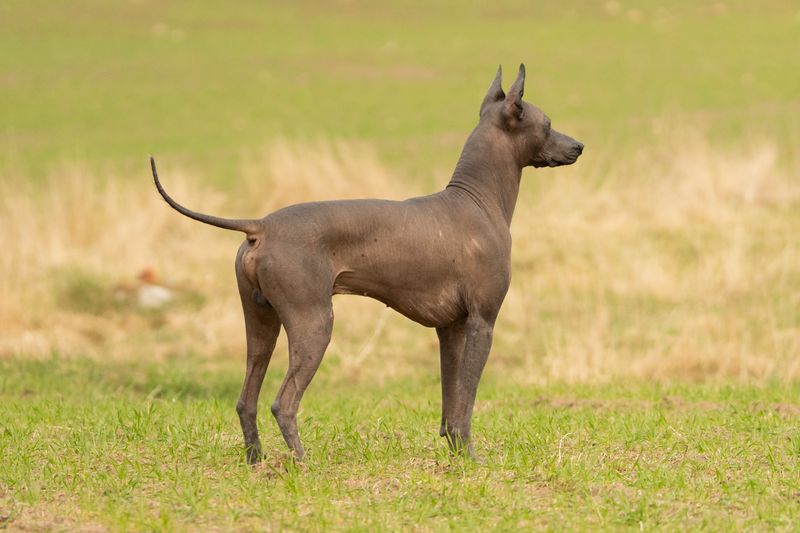
Xoloitzcuintle
An ancient Mexican dog, naked or sleekly coated, that watches the world calmly and attaches itself to one household with great devotion.
EnergyGroomingFlat life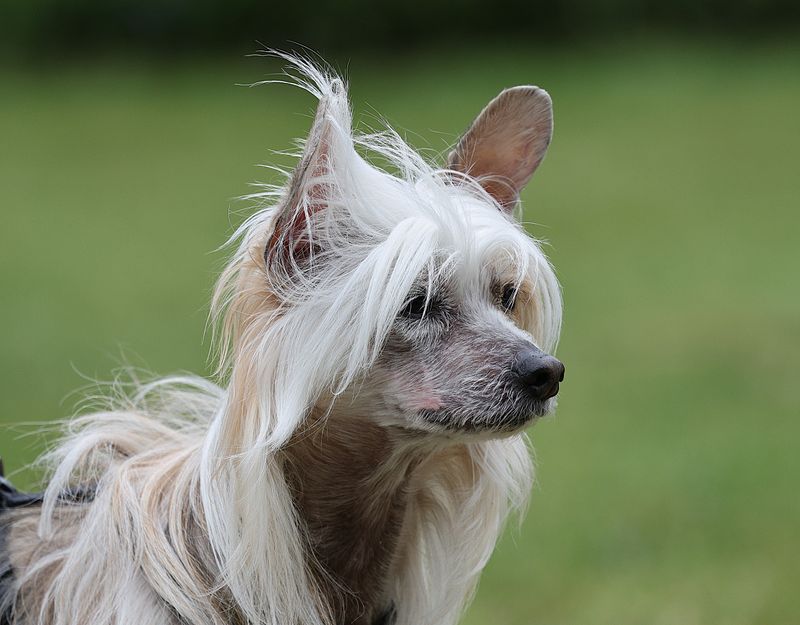
Chinese Crested
A small, elegant companion in two versions, nearly naked or softly veiled, that treats its owner's lap as home territory.
EnergyGroomingFlat life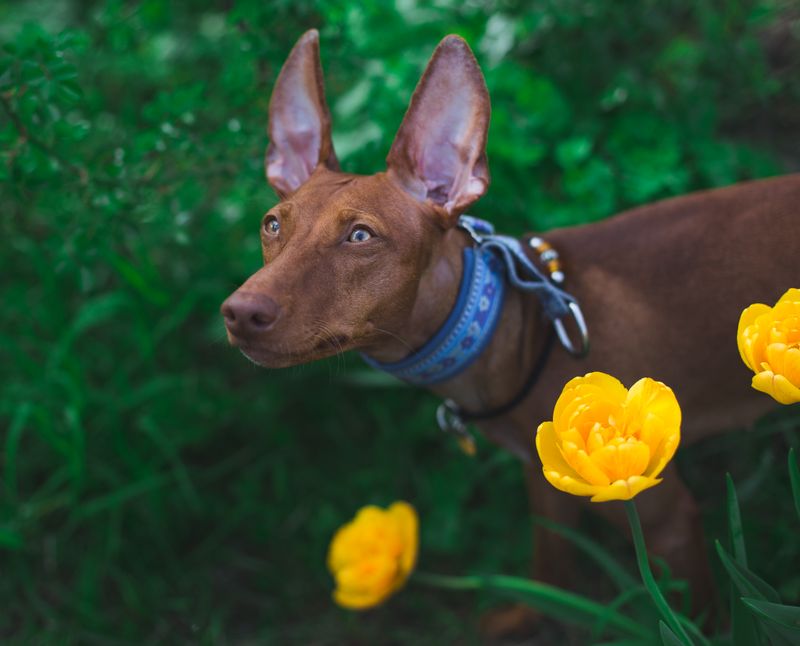
Pharaoh Hound
Malta's elegant tan hunting dog, which blushes when it is happy and hunts by sight, scent and hearing.
EnergyGroomingFlat life

