History
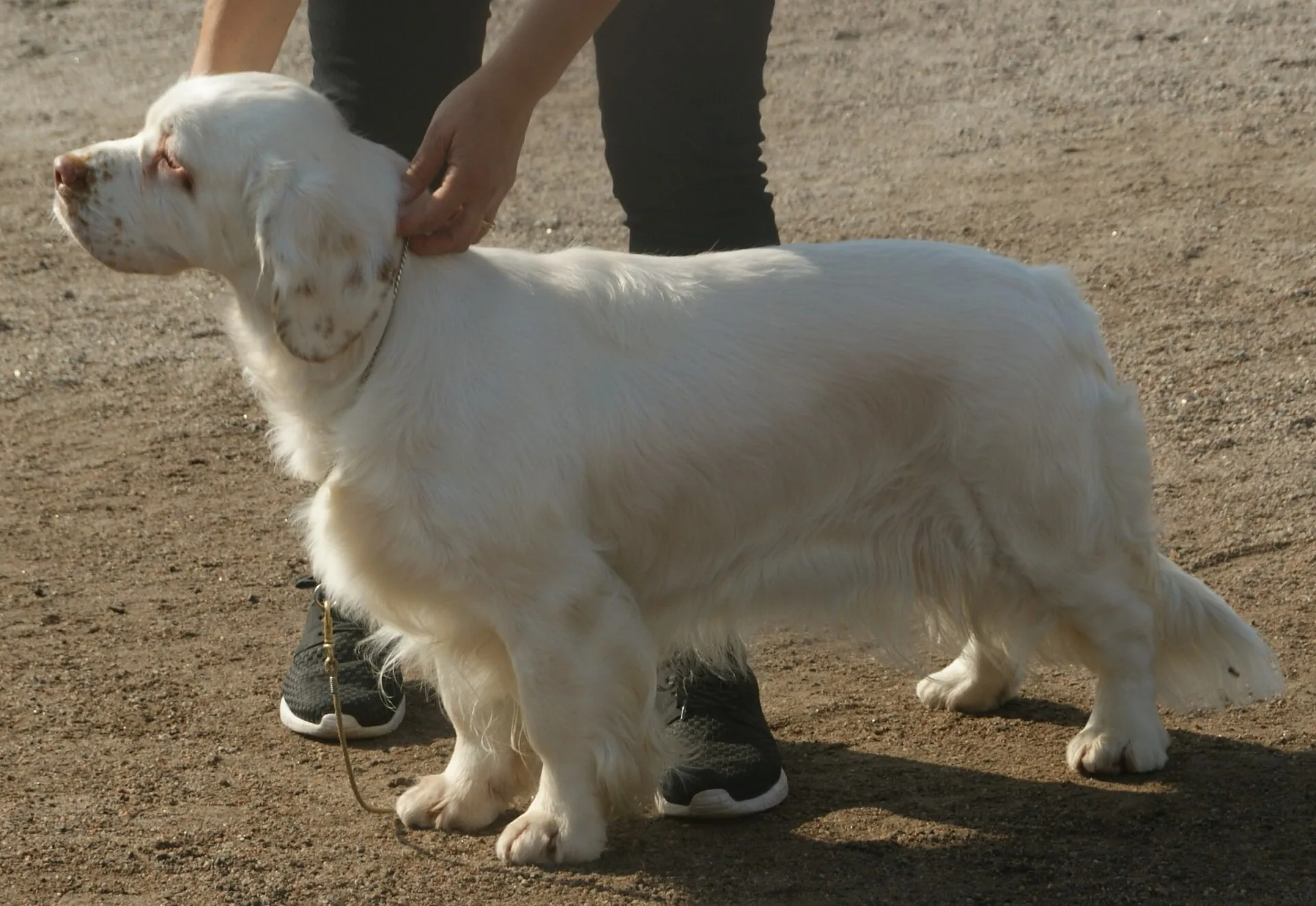
The FCI standard says the Clumber Spaniel originated in France more than two centuries ago and was brought to Great Britain by the Duke of Newcastle. It was then developed at Clumber Park in Nottinghamshire, which gave the breed its name. For that reason the FCI lists the country of origin as Great Britain, though the French beginning is part of the story, and the breed is most often thought of as English.
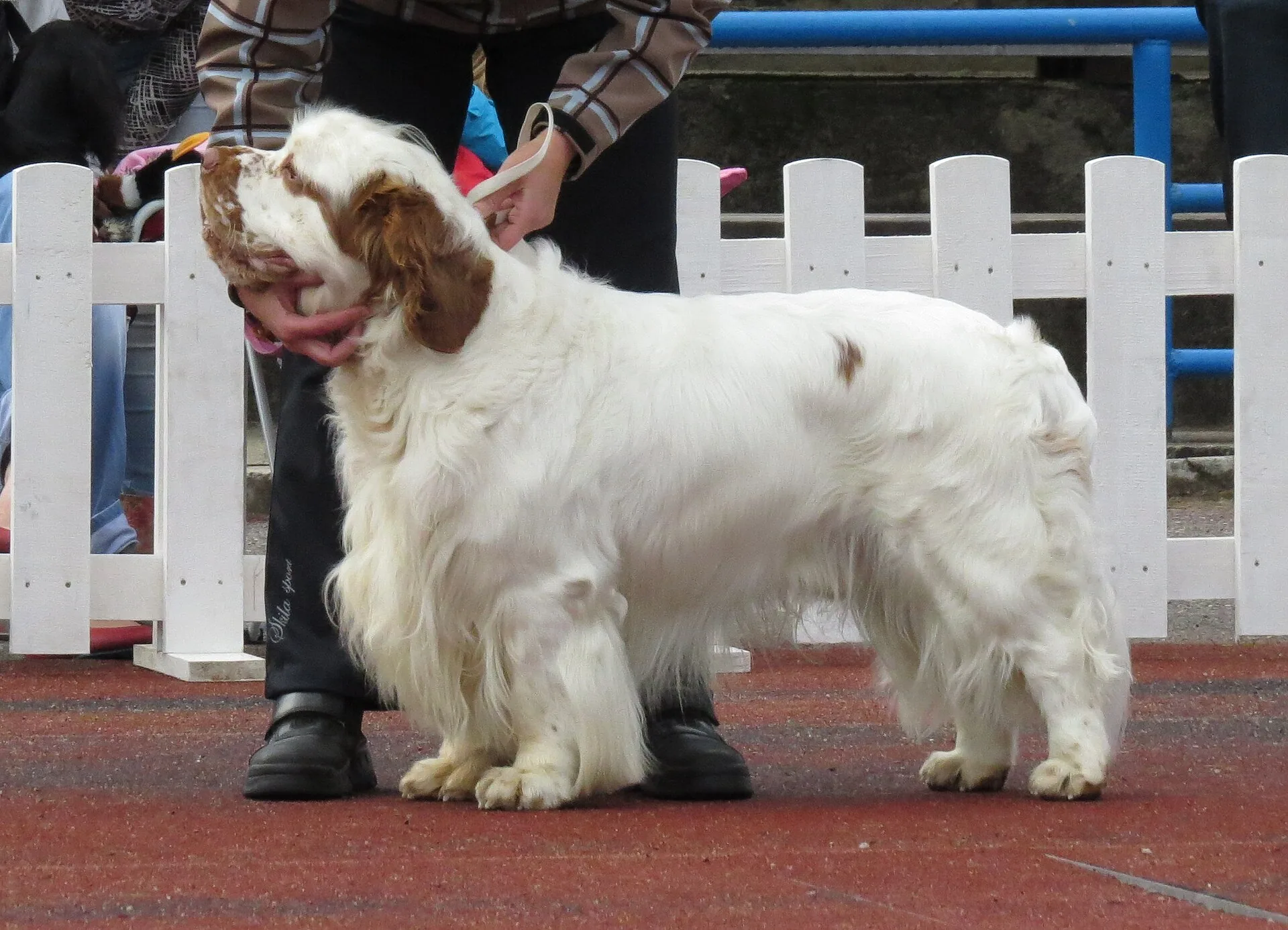
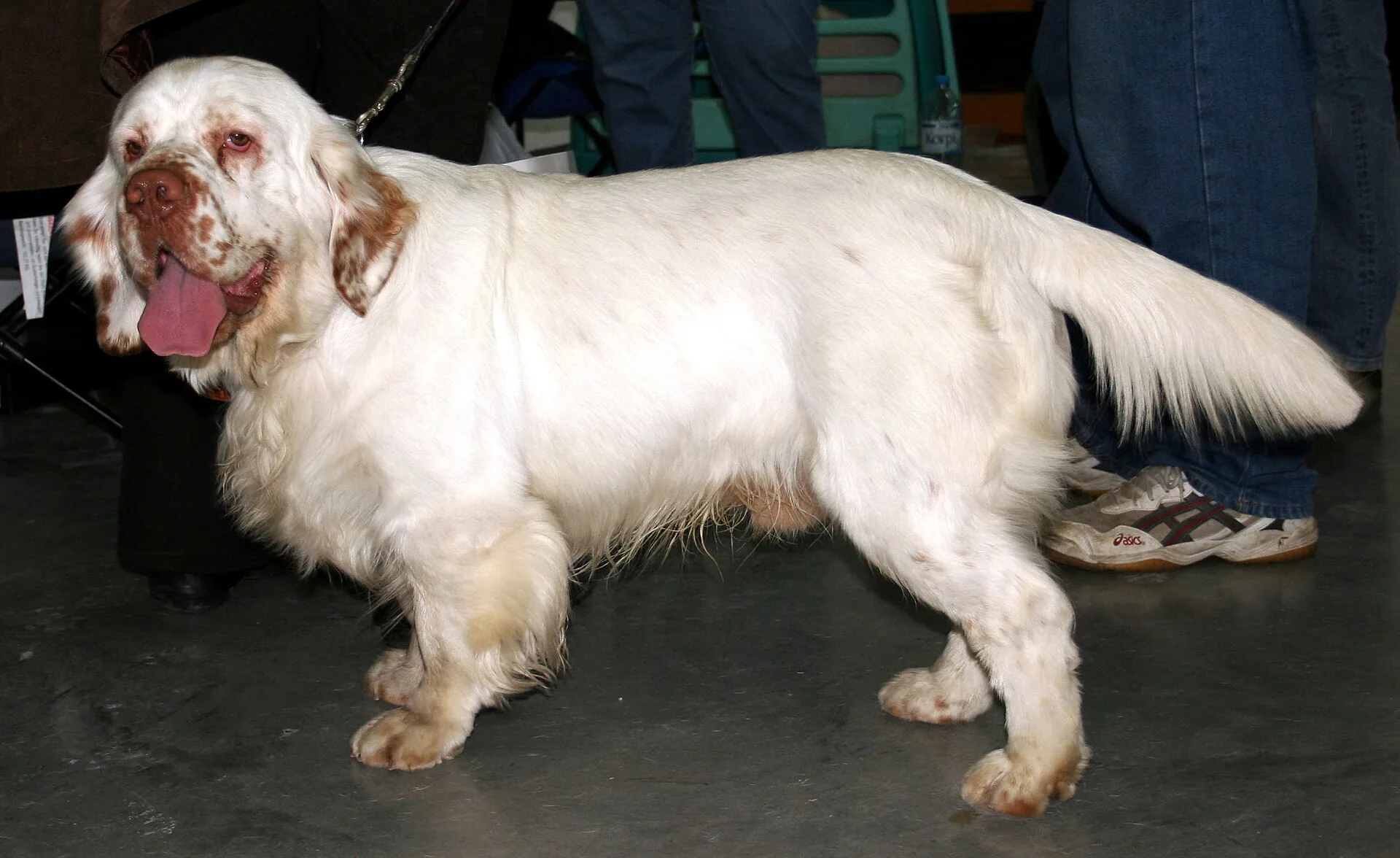
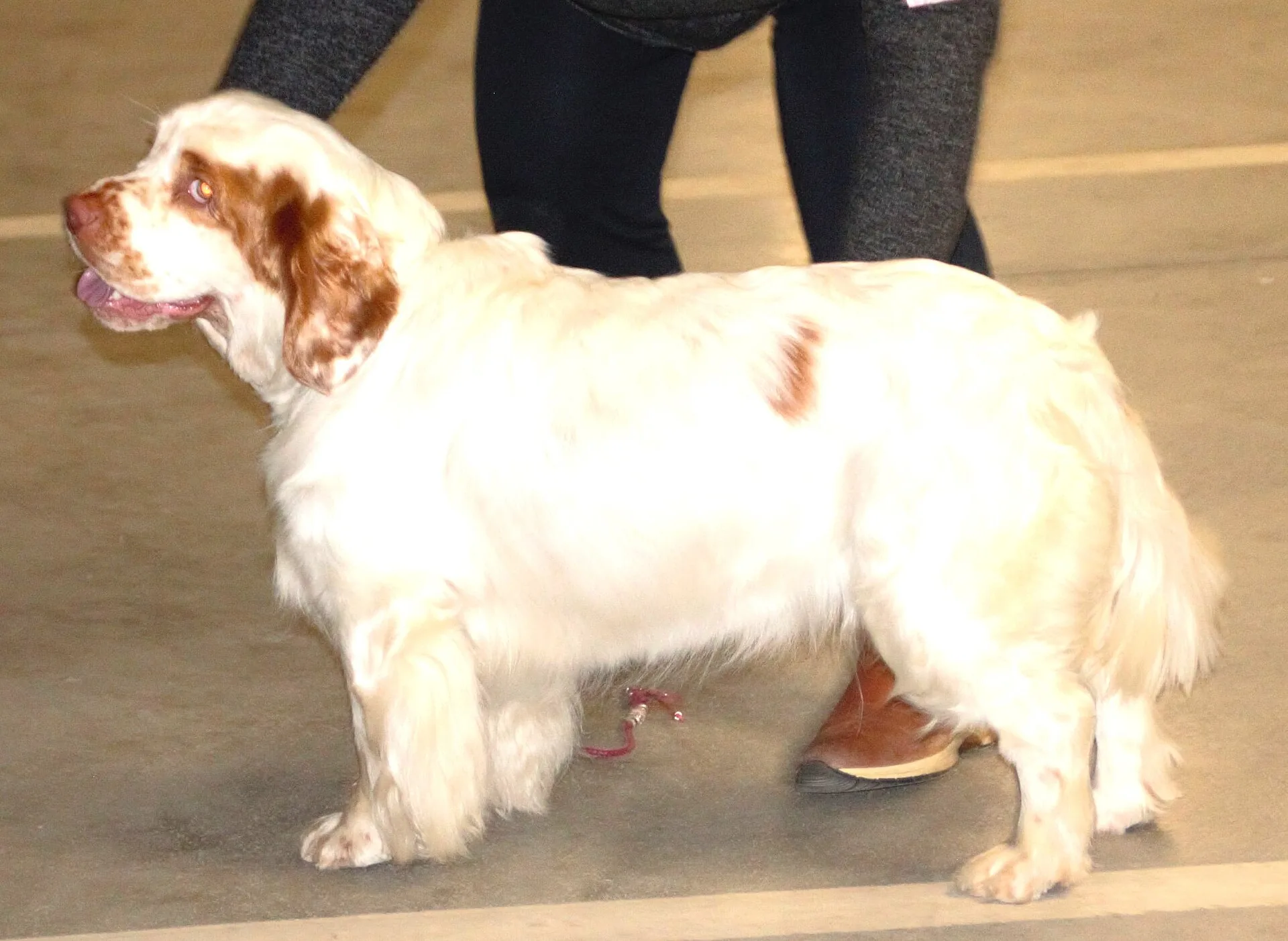
It belongs to FCI Group 8, Section 2, Flushing Dogs, and was built to work through thick cover quietly and steadily. The standard stresses that it is notably heavy and works at a more leisurely pace than other spaniels. It asks for a balanced, well-boned, active dog with a thoughtful expression, firm, fit and capable of a day's work in the field. The standard gives weight but no height, with males at 29.5 to 34 kg and females at 25 to 29.5 kg.
Temperament
The standard calls the Clumber stoical, great-hearted and highly intelligent, with a determined attitude, and adds that it is steady, reliable, kind and dignified. It is more aloof than other spaniels, and it works silently. Most Clumbers are gentle, amiable dogs who attach strongly to their household and show little interest in drama. The standard states clearly that there should be no tendency to aggression.
Determination has a flip side. A Clumber that has decided to stop, perhaps on a wet pavement, will do so, and no amount of cheerful coaxing helps. They are slower to mature and slower to hurry than most gundogs, and they often follow their owner from room to room, then flop at their feet with a deep sigh. The breed is dignified, but it also has a gift for comic timing.
Children and other pets
Clumbers are patient and gentle, and many are good companions for considerate children. Their weight and strength still matter: a 30 kg dog can knock a toddler over without malice, so supervise young children. They usually get on well with other dogs and with cats if introduced calmly. They are not guard dogs, but they will announce visitors with a measured woof before welcoming them.
Exercise and the daily walk
About an hour a day suits an adult, usually split into two relaxed walks with time to sniff and potter. A Clumber is not built for speed, and it will not keep pace with a running partner, but it enjoys a steady, purposeful walk through woodland and fields. The breed has real endurance at a slow rate, and a good day out may end with a very sleepy dog.
Do not push exercise in hot weather. The heavy build and thick coat make summer walks tiring, and the breed overheats more easily than a lean spaniel. Avoid jumping from heights, rough play and long stair climbs for young dogs, since the long back and heavy frame can strain the joints. Scent work, retrieving and short training sessions give the mind a share of the daily exercise.
Training
Clumbers are intelligent but not eager to please in the manner of a Labrador. They respond to patient, positive training with plenty of repetition and a treat that excites them. Pushing or raising your voice makes a determined dog dig in. Keep sessions brief, finish on a success and reward good manners such as walking on a loose lead, which is a particular challenge for a dog this size.
Basic obedience, recall and calm greetings should begin early, because it is much easier to teach manners to a small puppy than a 30 kg adult. Use food rewards with care, since the breed gains weight easily. Teach a reliable leave command, as a Clumber with a strong nose will drift towards anything edible, and practise handling of the ears, eyes and feet so that routine care is easy.
Coat and grooming
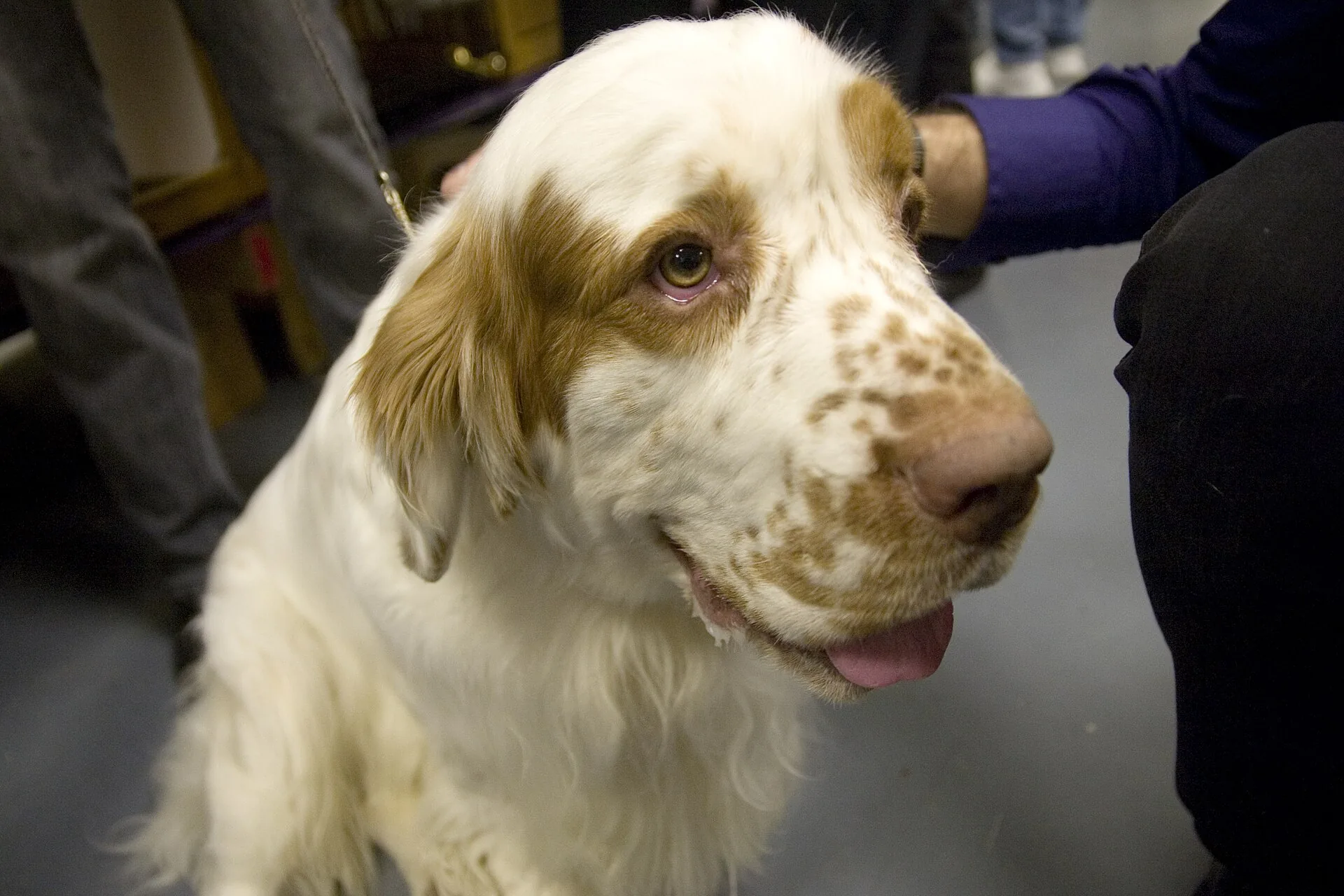
The coat is abundant, close, silky and straight, with generous feathering on the legs and chest. The FCI prefers plain white with lemon markings, with orange permitted when the head markings are slight and the muzzle freckled. Brush several times a week, and check the eyes and ears often, as folds and drooping lids trap dirt. Expect regular shedding and the occasional trim of the feathering and between the toes.
Feeding and weight
Clumbers love food and put on weight easily, which stresses the back and joints. Feed a quality complete diet in two measured meals and weigh the portions rather than guessing. Count treats within the daily allowance, and keep the bin and counters out of reach. Avoid heavy exercise just after meals, and feed from a raised bowl only if your vet advises it.
Work out a starting calorie figure and food weight with the calorie calculator. Not sure this is the right breed? Take the quiz.
Health
Every breed carries predispositions. These are the conditions most often discussed for the Clumber Spaniel, not a prediction for any individual dog.
- Hip dysplasia, a joint malformation that can cause pain and arthritis
- Ectropion and entropion, eyelid problems that irritate the eye
- Intervertebral disc disease, a back problem linked to the long, heavy body
- Exercise-induced collapse related to a PDP1 gene mutation, with a DNA test
- Ear infections, because the ears are heavy and poorly ventilated
What to ask the breeder. Ask for hip scores, eye examinations and the PDP1 DNA test result for both parents, and ask how the breeder manages weight and backs in the lines.
Choosing a puppy
Clumber puppies are sturdy and slow to mature, with a good appetite. Choose a breeder who shows you the parents and their hip, eye and DNA results. Keep puppy exercise gentle, avoid stairs and jumping, and begin lead walking early. Check the ears and eyes weekly from the start. Expect a comfortable, rather lazy puppy who is easy to keep happy, but who will also be easy to overfeed.
In Luxembourg the national kennel club is the Fédération Cynologique Luxembourgeoise (FCL), a member of the FCI. Many owners also buy from breeders in Germany, France or Belgium; a puppy coming from another EU country must be microchipped and vaccinated against rabies, which in practice means it cannot travel before about fifteen weeks of age. Where to get a dog in Luxembourg.
The older Clumber Spaniel
Older Clumbers slow down and sleep more. Watch for stiffness, reluctance to climb stairs or jump, and eye or ear irritation. Keep weight under control, as extra kilos make joint and disc problems worse. Shorter, more frequent walks, a thick bed and non-slip mats help, and regular vet checks should include the eyes, the ears and the hips.
A realistic day
A realistic weekday for a working household in Luxembourg City, with a midday visit. Adjust it to your dog, not the other way round.
Toilet break and an unhurried 30 minute walk with time to sniff. Breakfast is measured, not generous.
Settle on a thick bed with a chew. A Clumber alone is usually calm, and often asleep before you reach the lift.
Midday visit: toilet break, water, a short shaded stroll or sniffing game, and a wipe of the eyes and ears if needed.
The main walk, 40 to 45 minutes, in woodland or a quiet park at an easy pace, then dinner.
Last toilet break, a brush and a check of eyes and ears. The dog sleeps soundly on a bed, not a cold floor.
A Clumber Spaniel in Luxembourg
A Clumber can live in a flat if the lift is spacious and the walks are regular, though a ground floor or a flat with a short route outside is easier for a heavy dog. The breed is calm indoors, but it sheds and drools a little, so expect white hair and some mess. Parks such as Parc Merl and the municipal park suit its pace, while the Pétrusse valley and the Grünewald forest give longer, shaded walks.
Summer is the main challenge. A heavy white-coated dog finds temperatures in the 30s hard, so exercise in the early morning and evening, provide shade and water, and rest indoors at midday. Free buses and trams make the forests accessible, though a 30 kg dog takes up space in a rush-hour carriage. Legal basics apply: microchip, declaration to the commune, third-party liability insurance and the annual dog tax.
Every dog in Luxembourg must be identified, declared to the commune and covered by liability insurance. How registration works.
When you travel
A sitter should know that a Clumber is calm but determined, loves food and gains weight easily, so follow the feeding plan exactly. Maintain the walking routine at a gentle pace, avoid hot hours, and check the eyes and ears daily. Keep the dog off stairs where possible, supply a thick bed and remember that a stubborn dog may simply sit down and refuse to move.
PAWLY's holiday and overnight care takes place in your home, so your dog keeps its own bed and routine.
Myths and facts
MythClumbers are lazy dogs that need no exercise.
FactThey work at a leisurely pace, but they need about an hour of walking daily. Without it, weight gain and joint trouble follow quickly.
MythAll spaniels are lively and easy to train.
FactThe standard describes a more aloof, determined and steady dog than other spaniels, and one that will not hurry. Training needs patience.
MythWhite coats are always high maintenance.
FactThe coat needs regular brushing, but it is silky and fairly easy once routine care is built into the week. Eyes and ears need more attention.
Is it the right dog for you?
Suits
- Calm households that enjoy a steady, companionable walker
- Owners who like a dignified, quiet dog with some humour
- People who can manage weight and routine care carefully
- Families with considerate children and space for a large dog
Think twice if
- You want a quick, eager-to-please dog for sport
- You dislike hair, drool or regular ear and eye care
- You live in a high floor flat with no reliable lift
- You spend long hours in hot weather outdoors
Questions owners ask
Is a Clumber Spaniel a good family dog?
Often yes. It is gentle, patient and loyal, and it usually enjoys children. Its size and weight need supervision with toddlers, and it should have a calm place to rest. Choose a breeder who health tests.
How much does a Clumber Spaniel weigh?
The FCI standard gives 29.5 to 34 kg for males and 25 to 29.5 kg for females. It sets no height, though many sit at roughly 43 to 50 cm at the shoulder.
Do Clumbers drool and shed?
They shed regularly and may drool a little, particularly around food. Brushing several times a week helps, and wiping the mouth and face keeps things tidy. Wipe the lips after meals and keep a cloth handy.
Can a Clumber cope in hot weather?
Not easily. The heavy build and dense coat make heat tiring, so walk early or late, offer shade and water, and rest in a cool room during the day. Heat is a real risk in summer.
Sources
Photo: Томасина, CC BY-SA 3.0, via Wikimedia Commons · Photo: Pleple2000, CC BY-SA 3.0, via Wikimedia Commons · Photo: Canarian, CC BY-SA 4.0, via Wikimedia Commons · Photo: audrey_sel, CC BY-SA 2.0, via Wikimedia Commons · Photo: Canarian, CC BY-SA 4.0, via Wikimedia Commons
General information for dog owners in Luxembourg, not veterinary or legal advice. Official facts (origin, size, group, history and temperament as described by the breed standard) follow the FCI standard; health and care sections reflect breed-club and veterinary guidance and are typical ranges rather than rules. For your own dog, ask your vet, the breed club or your commune. How this guide is written and checked. Last reviewed 8 October 2026.
Need someone for your Clumber Spaniel?
PAWLY offers an individual 45-minute walk or a home visit at your dog's pace, the same walker every time, and a written report with photos after every visit, across Luxembourg City.
Read next: the journal, for the Clumber Spaniel
All articles
Long-backed breeds, stairs and the spine
A long back makes stairs matter more than most owners think.

Ears: the three signs that mean an appointment
Ear trouble is common in the Clumber Spaniel; these are the three signs that mean an appointment.

Water, rivers and the algae that kills dogs every summer
Dogs that love water need to know which water is safe, including the summer algae that kills dogs.
Similar breeds
All 198 breeds
English Springer Spaniel
A tireless, merry gundog that lives for hedges, water and a job, and brings the same enthusiasm to the family kitchen.
EnergyGroomingFlat life
English Cocker Spaniel
A merry, busy spaniel with a permanently wagging tail, and very different depending on working or show lines.
EnergyGroomingFlat life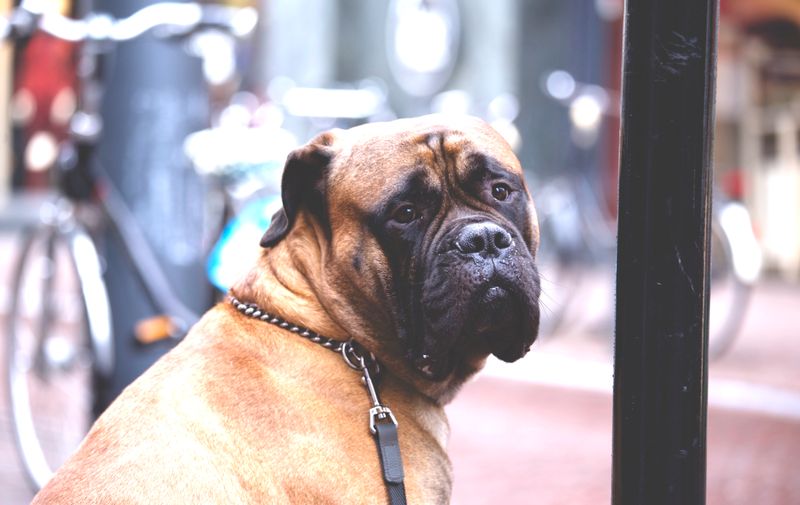
Bullmastiff
A quiet, heavyweight guardian bred to stop poachers, now more likely to lean its whole bulk against your knees on the sofa.
EnergyGroomingFlat life

