History
The FCI lists the Dandie Dinmont Terrier as a breed from Great Britain, in Group 3, Section 2, small-sized terriers, without working trial. The current standard is dated 2017 and, unusually, contains no history section, so the story here rests on the breed's well-known literary connection. The name comes from a farmer called Dandie Dinmont in Sir Walter Scott's novel Guy Mannering, published in 1814, who kept a team of short-legged terriers; the dogs were later named after him.
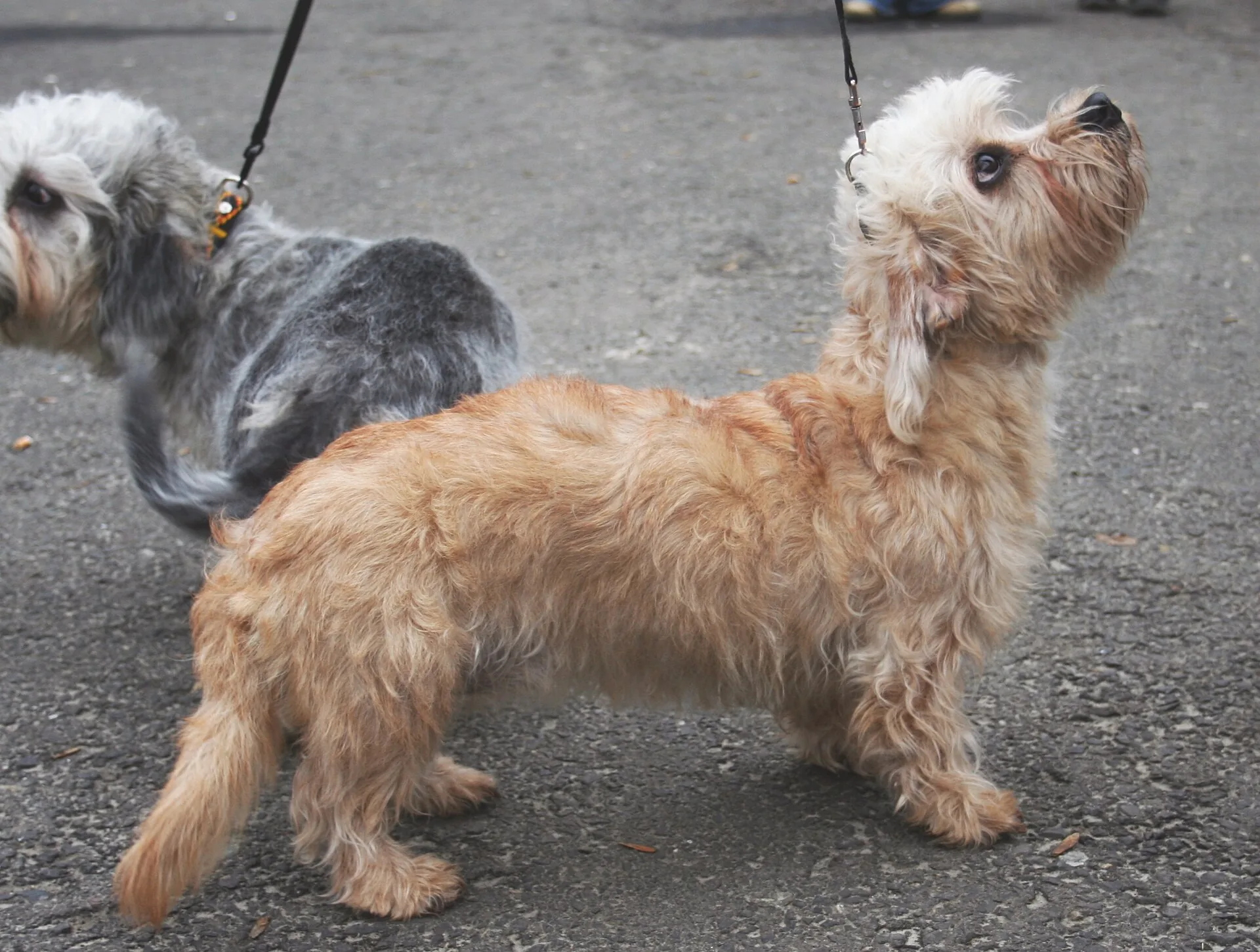
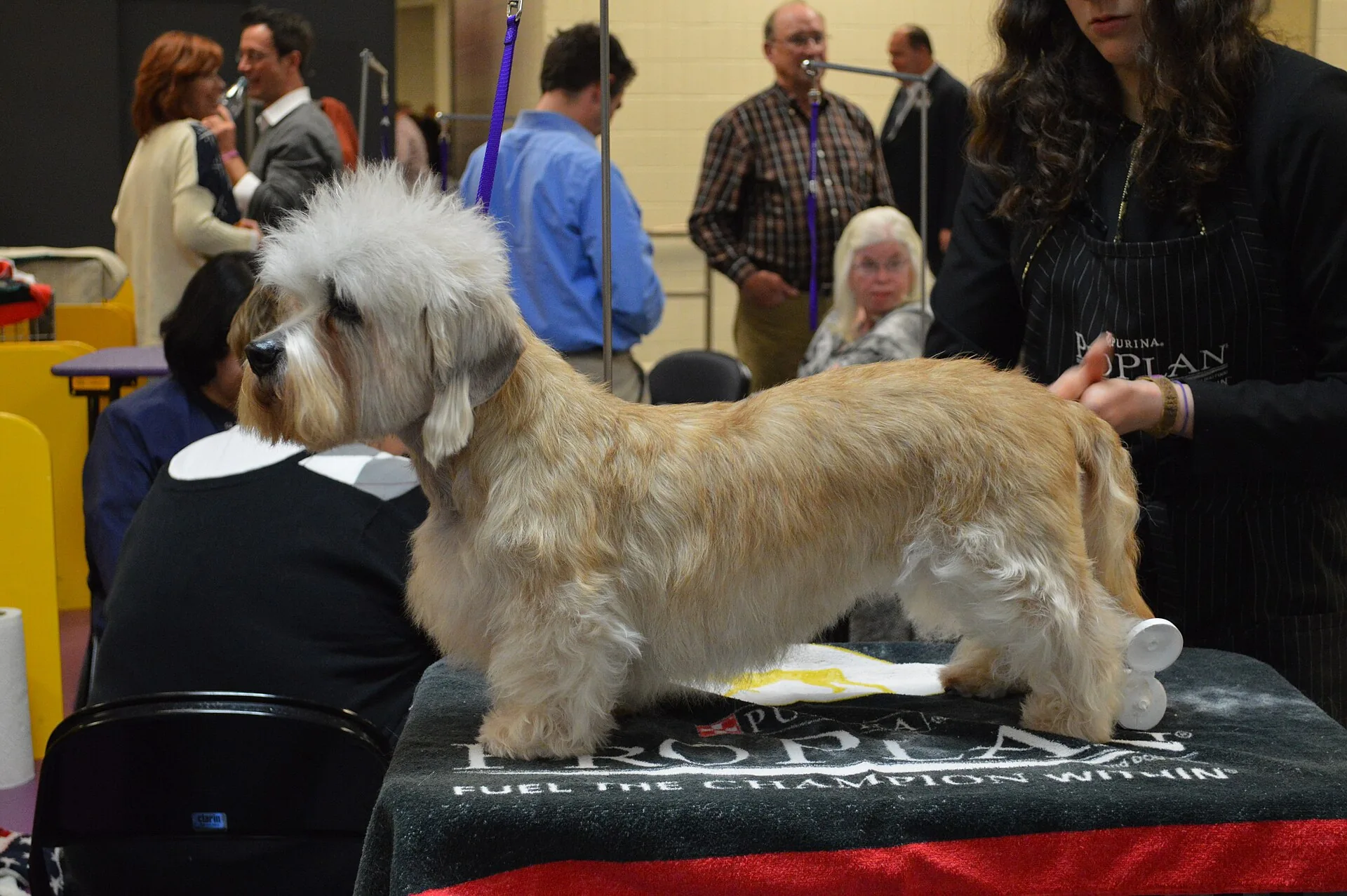
The standard's utilisation is simply terrier, and the shape explains the job: a long, low, weasel-like body on short, muscular legs, built to follow vermin underground. It is one of the few breeds named after a fictional character. Today it is a rare and distinctive companion, and the Kennel Club in Britain has listed it among its vulnerable native breeds, so puppies are few and waiting lists are normal.
Temperament
The FCI standard describes the Dandie as game and workmanlike, independent, highly intelligent, determined and persistent, and also sensitive, affectionate and dignified. That mixture is accurate. Indoors it is a quiet, rather grave companion which attaches itself to the household and chooses a favourite chair. Outside it can become a different animal, bold in the face of a rabbit hole and quite certain that it knows best.
It is not a yappy terrier, though it has a surprisingly deep bark for its size and will use it at the door. Dandies are reserved with strangers and take time to warm up, and they are sensitive to sharp words. A sulking Dandie is a real thing. Humour, consistency and a gentle manner bring out the best, and the dog repays it with a dry, dignified sense of fun.
Children and other pets
A Dandie can do well with considerate older children who respect its dignity, but it is not a rough-and-tumble playmate and its long back needs protecting from being picked up carelessly or jumped on. Introduce toddlers calmly and supervise. With other dogs it can be firm, and some males are keen to settle matters themselves. Cats are usually tolerated if raised together, but small pets are quarry to a terrier and should never be left within reach.
Exercise and the daily walk
For a short-legged dog the Dandie has respectable stamina, and a healthy adult is happy with 45 minutes to an hour a day, split into two or three outings. A steady walk through a park or woodland, with time to sniff and investigate, suits it well. It enjoys a good game in the garden, and many love a hunt for hidden treats indoors on a wet day.
The terrier instinct makes safe free running a question of location. A Dandie that spots a squirrel or a hole may dig or disappear after it, so recall can be unreliable. Keep to a lead or long line outside enclosed spaces. Avoid very long jumps and steep stairs, which stress the long back, and take care in hot weather, since the thick coat can be warm work in summer.
Training
The Dandie is intelligent and learns quickly, but its independence means it will assess whether an exercise is worthwhile. Short, upbeat sessions with tasty rewards work far better than repetition or force. Sensitive dogs shut down under harsh correction, so keep calm, patient and clear. Use a clicker or food lure for tricks and basic obedience, and finish while the dog is still interested.
Early socialisation matters because of the breed's reserve with strangers and its readiness to quarrel with other dogs. Introduce the puppy to people, other dogs, traffic and the lift in the first months. Teach a reliable recall in a safe place and expect it to remain conditional. Settling alone should be taught gently and early. Teach the dog to use a ramp or steps to the sofa, to spare its back.
Coat and grooming
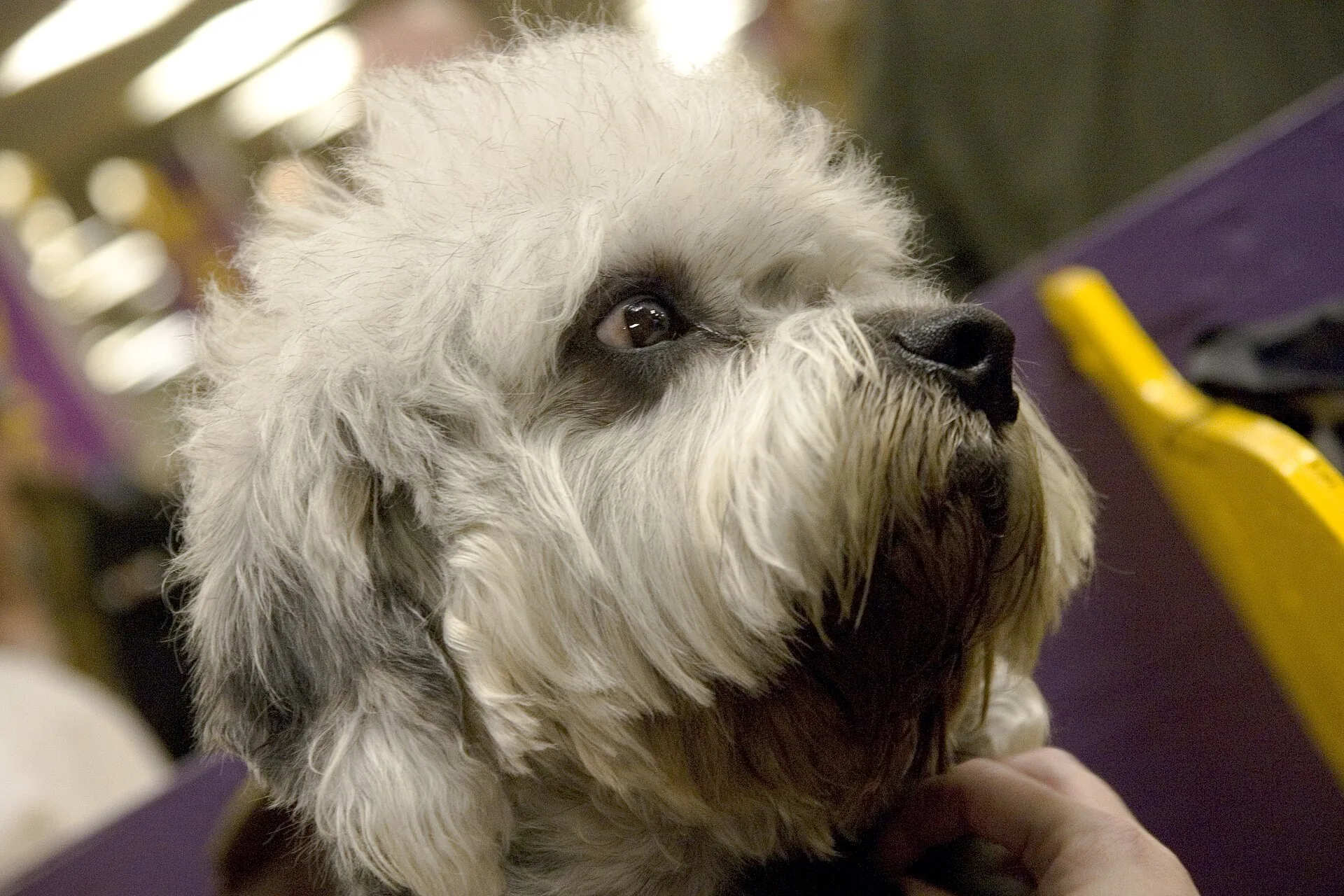
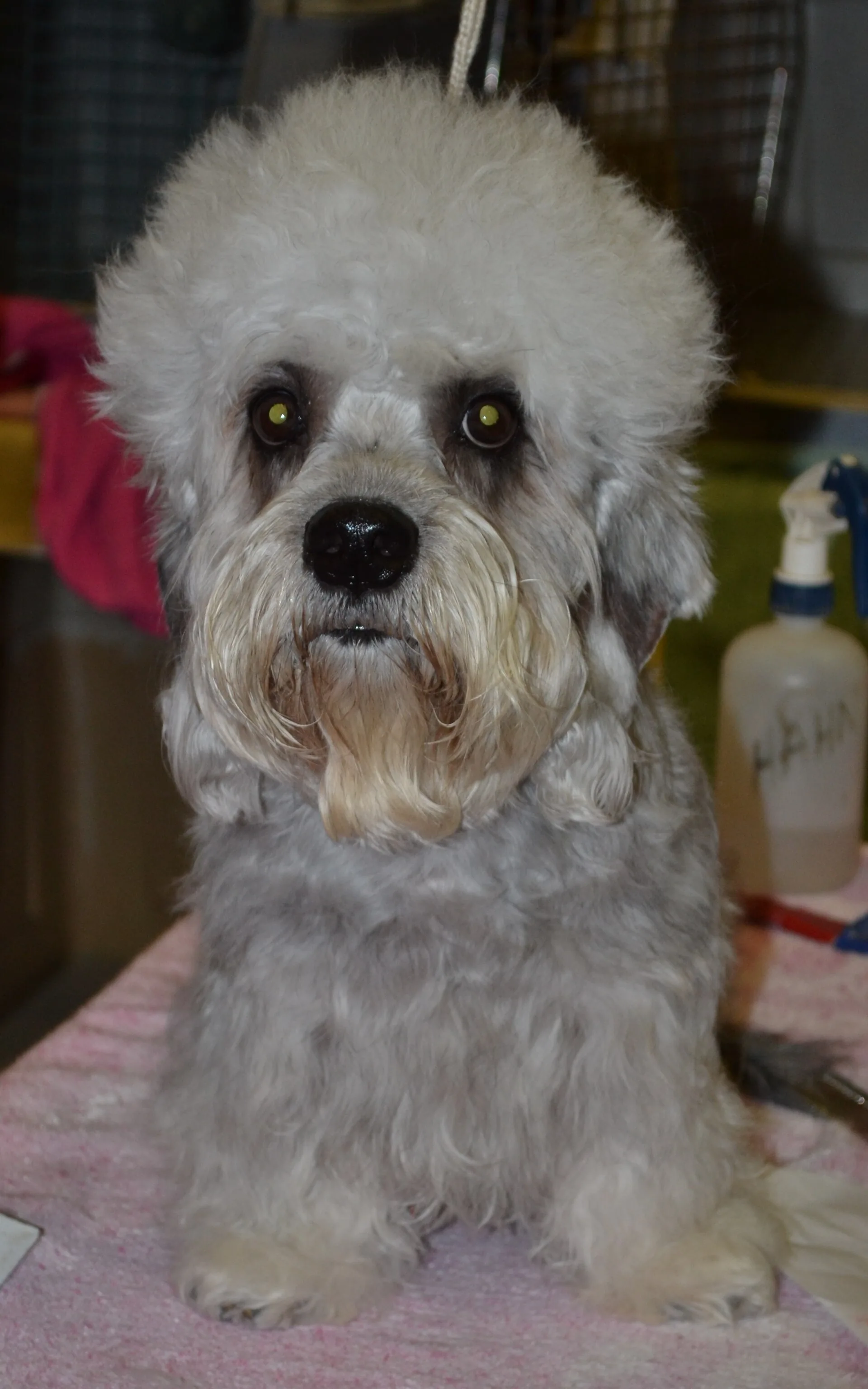
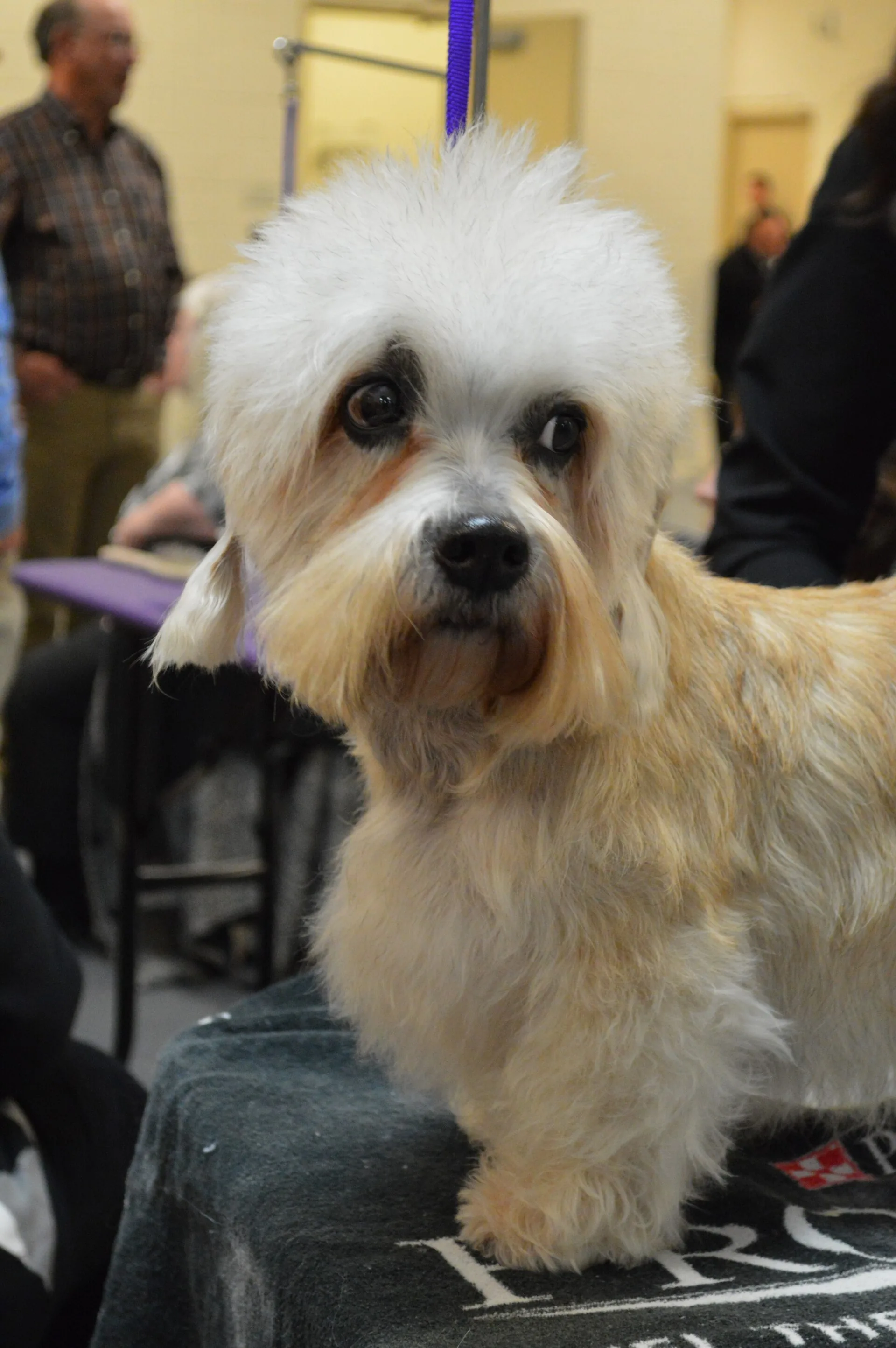
The FCI describes a double coat about 5 cm long, made up of a soft undercoat and a harder, crisp topcoat that forms the typical pencilled look, with feathering on the forelegs and a silky topknot on the head. Brush two or three times a week and keep the topknot and feathering free of tangles. Many owners have the coat hand-stripped or trimmed a few times a year. It sheds little. The standard allows two colours: pepper, bluish-black to silvery grey, and mustard, reddish-brown to pale fawn.
Feeding and weight
Feed a good complete diet suited to a small dog, in two measured meals. Dandies enjoy their food and put on weight easily, and excess weight is dangerous for such a long back, so weigh portions and count training treats. Keep the dog at a visible waist. Offer fresh water and avoid feeding straight before or after hard exercise. A healthy weight is one of the most useful things an owner can do for the spine.
Work out a starting calorie figure and food weight with the calorie calculator. Not sure this is the right breed? Take the quiz.
Health
Every breed carries predispositions. These are the conditions most often discussed for the Dandie Dinmont Terrier, not a prediction for any individual dog.
- Intervertebral disc disease (back problems linked to the long spine)
- Glaucoma (raised pressure in the eye)
- Hypothyroidism (underactive thyroid)
- Dental disease
- Obesity, which worsens spinal and joint trouble
What to ask the breeder. Ask whether the parents have had recent eye tests, including for glaucoma, and about any history of back problems and thyroid disease in the line, and how the breeder keeps puppies lean and protects their backs.
Choosing a puppy
A Dandie puppy is a delightful, solemn little creature with a big head and a very long back. Protect the spine from the start: use a ramp or steps instead of letting the puppy jump off furniture, lift it with support under the chest and hindquarters, and avoid repetitive stairs. Begin gentle socialisation with calm adults, other dogs and city noises early. Start grooming sessions in the first weeks, getting the dog used to being brushed and having the topknot handled.
In Luxembourg the national kennel club is the Fédération Cynologique Luxembourgeoise (FCL), a member of the FCI. Many owners also buy from breeders in Germany, France or Belgium; a puppy coming from another EU country must be microchipped and vaccinated against rabies, which in practice means it cannot travel before about fifteen weeks of age. Where to get a dog in Luxembourg.
The older Dandie Dinmont Terrier
Many Dandies reach their early teens in good form, but the back and eyes deserve attention from about eight years. Keep to shorter, steadier walks, use ramps, and watch for reluctance to jump, a hunched posture or yelps when picked up, which need a vet. Eye examinations, weight control and dental care matter. A firm, warm bed and a non-slip floor surface help older dogs stay comfortable and mobile.
A realistic day
A realistic weekday for a working household in Luxembourg City, with a midday visit. Adjust it to your dog, not the other way round.
Gentle 20-minute walk on a lead, with sniffing time, then breakfast.
Owner leaves; the Dandie settles in a favourite bed with a chew or a food puzzle.
Midday visit: a 35-minute walk in a park, fresh water, a short brush of the topknot and legs.
Evening walk of 40 minutes through the Pétrusse valley or a quiet street, with a game of find-the-treat.
Short toilet break, a calm cuddle and bed on a low, supportive cushion.
A Dandie Dinmont Terrier in Luxembourg
A Dandie Dinmont fits a Luxembourg flat well. It is small, quiet indoors and content with moderate exercise, and it is light enough to be carried through the lift or in a crowded entrance hall when needed. Avoid long flights of stairs where possible, for the sake of its back. A sensible harness rather than a collar is kinder to a long-bodied dog. The thick coat can make a 30 °C day uncomfortable, so shorten midday outings in summer.
Parc Merl, the Pétrusse valley and the municipal park offer plenty of green for the daily walk, and the Bambësch forest gives more room to sniff on a weekend. Keep the dog on a lead near roads and rabbit holes. Wet autumn walks leave the leg feathering muddy, so keep a towel by the door. Every dog must be microchipped, declared to the commune, insured and covered by the annual dog tax. The Fédération Cynologique Luxembourgeoise lists the breeders and clubs.
Every dog in Luxembourg must be identified, declared to the commune and covered by liability insurance. How registration works.
When you travel
A sitter should know that the Dandie is sensitive, a little reserved at first and rather stubborn. Keep to the usual routine, and lift the dog or use steps rather than letting it jump from furniture. Use a harness on walks, keep it on a lead near holes and rabbits, and brush the coat gently. Watch weight, keep feeding to measure, and leave a note on back warning signs and vet contact details.
PAWLY's holiday and overnight care takes place in your home, so your dog keeps its own bed and routine.
Myths and facts
MythIt is a small, lap-style companion that does not need walking.
FactIt is a working terrier with real stamina and stubbornness, and it needs daily exercise and mental stimulation.
MythA long back is just a cute feature.
FactThe body shape makes the spine vulnerable, so jumping, stairs and obesity need managing.
MythTerriers are all noisy and snappy.
FactThe Dandie is more dignified, though it may bark at the door and can be quarrelsome with other dogs if not socialised.
Is it the right dog for you?
Suits
- Owners who like a characterful, independent small dog
- Flat dwellers with access to a park
- Calm households with older children
- People happy to learn simple grooming at home
Think twice if
- You want a dog that obeys instantly
- You have many flights of stairs and no lift
- You keep small pets such as rabbits or hamsters
- You are looking for a rough-and-tumble playmate for toddlers
Questions owners ask
Do Dandie Dinmont Terriers shed?
Very little. The coat sheds lightly, and the crisp hair needs brushing and occasional stripping or trimming rather than constant vacuuming. The topknot and feathering tangle easily without regular attention.
Is the Dandie Dinmont good for a first-time owner?
It can be, for someone patient and attentive to the back, grooming and training. Its stubborn, sensitive character and the breed's rarity make research important, and a good breeder will help.
Can a Dandie Dinmont be left alone?
Short periods are usually fine when the dog has been taught gradually, but this affectionate breed is happier with a midday visit than with a long unbroken day. Give it a chew and a routine.
Are Dandie Dinmonts good with other dogs?
Often they live happily with dogs from their own household, but some are firm and quarrelsome with strange dogs. Early, calm socialisation and a lead in unfamiliar situations are sensible.
Sources
Photo: audrey_sel, CC BY-SA 2.0, via Wikimedia Commons · Photo: Pleple2000, CC BY-SA 4.0, via Wikimedia Commons · Photo: Pets Adviser from Brooklyn, USA, CC BY 2.0, via Wikimedia Commons · Photo: spilltojill from Boynton Beach, FL, USA, CC BY-SA 2.0, via Wikimedia Commons · Photo: Pets Adviser from Brooklyn, USA, CC BY 2.0, via Wikimedia Commons
General information for dog owners in Luxembourg, not veterinary or legal advice. Official facts (origin, size, group, history and temperament as described by the breed standard) follow the FCI standard; health and care sections reflect breed-club and veterinary guidance and are typical ranges rather than rules. For your own dog, ask your vet, the breed club or your commune. How this guide is written and checked. Last reviewed 8 October 2026.
Need someone for your Dandie Dinmont Terrier?
PAWLY offers an individual 45-minute walk or a home visit at your dog's pace, the same walker every time, and a written report with photos after every visit, across Luxembourg City.
Read next: the journal, for the Dandie Dinmont Terrier
All articles
Long-backed breeds, stairs and the spine
A long back makes stairs matter more than most owners think.

Teeth: the problem owners find least interesting and vets see most
Teeth are a known weak point in the Dandie Dinmont Terrier; this is the routine that helps.

Barking in an apartment: six causes, six different answers
Terriers are quick to sound the alarm; this sorts out the causes and the answers.
Similar breeds
All 198 breeds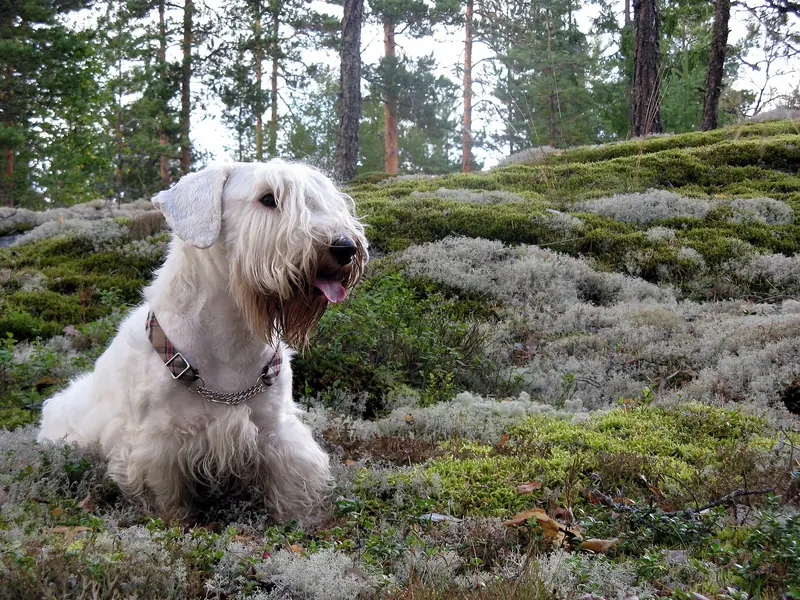
Sealyham Terrier
A low, square-jawed white terrier bred to follow badgers underground, with a big dog's confidence and no sense of scale.
EnergyGroomingFlat life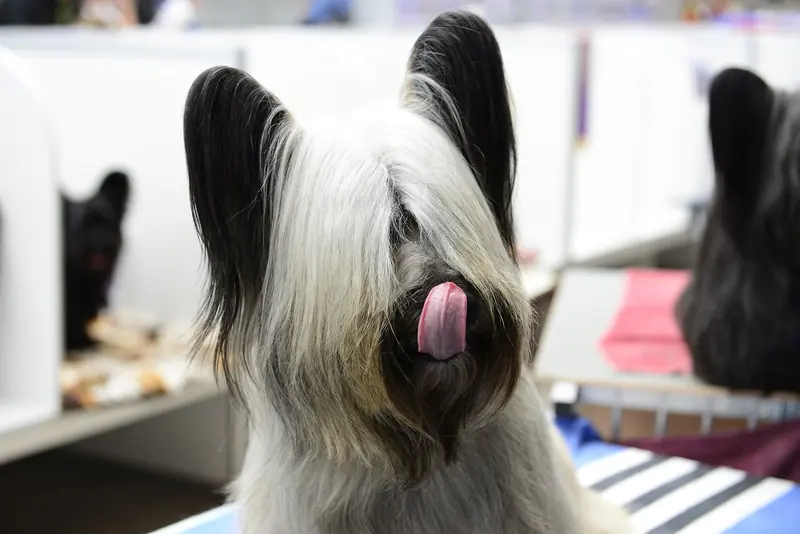
Skye Terrier
A long, low Scottish terrier under a curtain of hair, devoted to one person and politely unconvinced by everyone else.
EnergyGroomingFlat life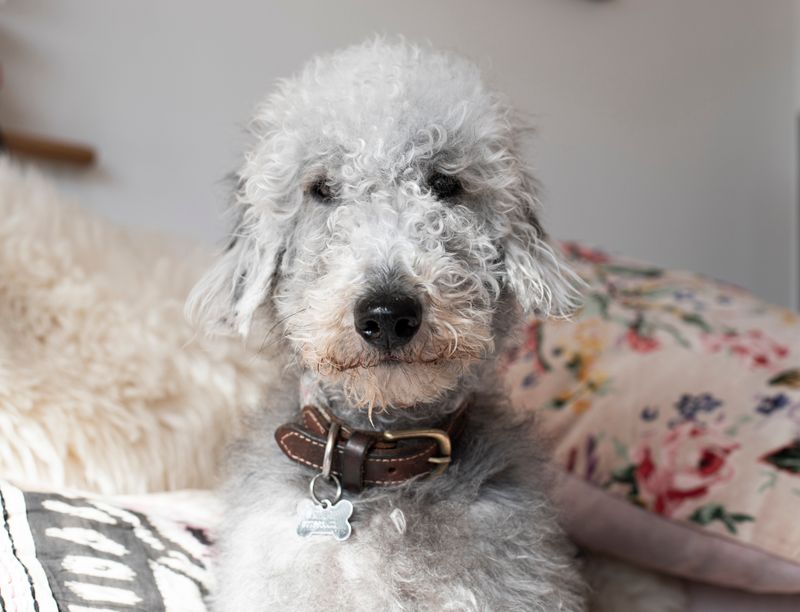
Bedlington Terrier
A lamb in outline and a terrier in spirit, built with a sighthound's curves and the speed to match.
EnergyGroomingFlat life

