History
The FCI places the Skye Terrier in Group 3, Section 2, small-sized terriers without working trial, with Great Britain as the country of origin. The standard describes it as one of the oldest Scottish breeds, the result of a mixture of breeds that included early Cairn Terrier types.
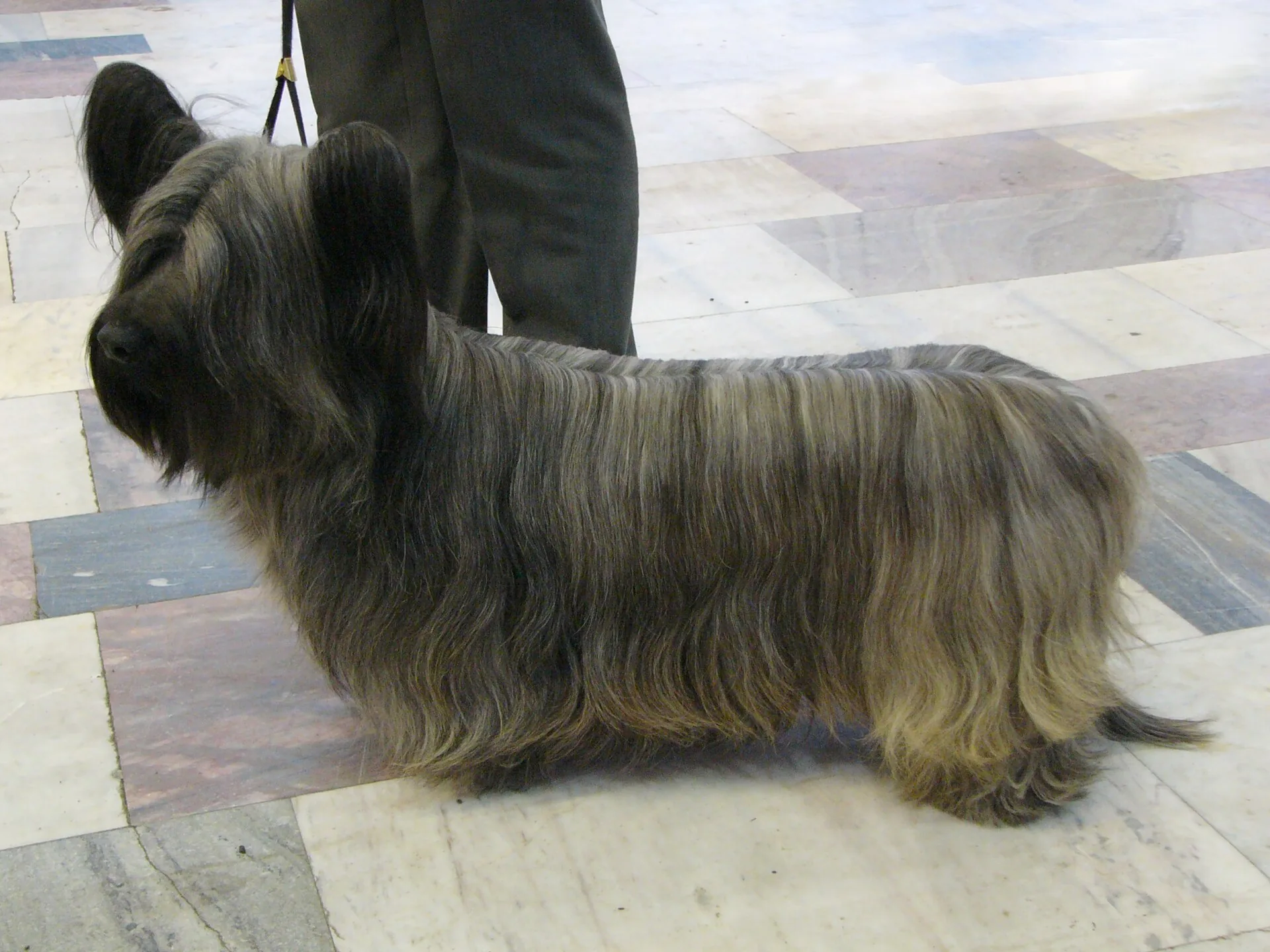
The standard also mentions Greyfriars Bobby, the dog said to have kept watch at his master's grave in Greyfriars Churchyard in Edinburgh from around 1858. The breed was developed to hunt fox, badger and otter among rocks, which explains its long, strong body, powerful jaw and short legs. It is now rare, and in Britain it is counted among the vulnerable native breeds, so puppies can be scarce and waiting lists long.
Temperament
The FCI describes the Skye as elegant and dignified, a one-man dog, distrustful of strangers but never vicious. That is a useful summary of what to expect: a dog that gives its heart to a small number of people and keeps visitors at a courteous distance.
At home the Skye is quiet, dignified and affectionate with its own people, sometimes with a dry sense of humour. Outdoors it still has the hunting terrier's courage, so it does not back down from larger dogs, and it can be very protective. Early, calm exposure to strangers, handling and city life keeps wariness from becoming fear. A Skye that is shouted at or handled roughly is likely to withdraw, so patience and consistency produce the best companion.
Children and other pets
The Skye Terrier is best suited to calm households with considerate older children. It has little patience with rough handling, grabbing or noisy games, and a long back means it should never be picked up carelessly. It is reserved with visitors, so friends' children need to be introduced gently and taught to let the dog approach. Other dogs are accepted if raised with them, though it can be assertive with unfamiliar dogs, and its terrier instincts make small pets such as rodents unsafe.
Exercise and the daily walk
An adult needs roughly an hour a day, usually one good walk and a couple of shorter outings. The Skye is not built for speed or long distances, and the long coat and short legs make steep or rough ground harder work than for a leggy terrier.
A harness is better than a collar, since it spreads the load and protects the neck and back. Keep it on a lead near roads and in woodland, as the hunting instinct is real and a Skye is quite capable of vanishing after a scent. Rather than constant running and jumping, which strain the long back, choose varied walking, scent games and short training sessions.
Training
Skyes are intelligent and sensitive, and they respond to calm, consistent guidance. Because the breed is independent and can be stubborn, training should be rewarding and not repetitive. Harsh methods tend to make the dog shut down, and a Skye that decides something is pointless will simply sit down and refuse.
Take time to introduce the puppy to lifts, traffic, other dogs, strangers and veterinary handling during the first months, always at the dog's pace. Teach a quiet cue, lead manners and a reliable settle. The long coat means that routine grooming must be taught as a pleasant activity, so start brushing and nail trimming in the first week.
Coat and grooming
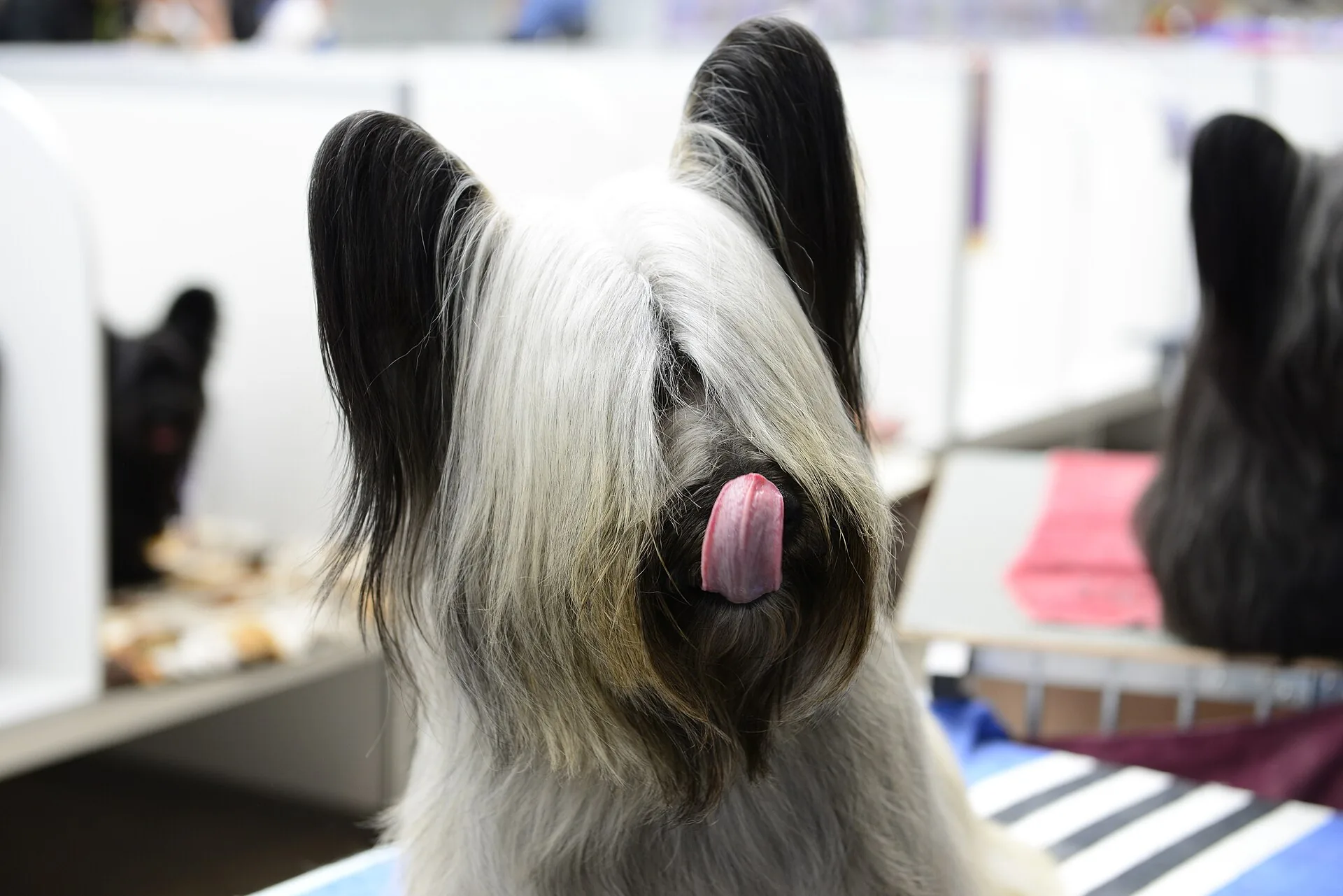
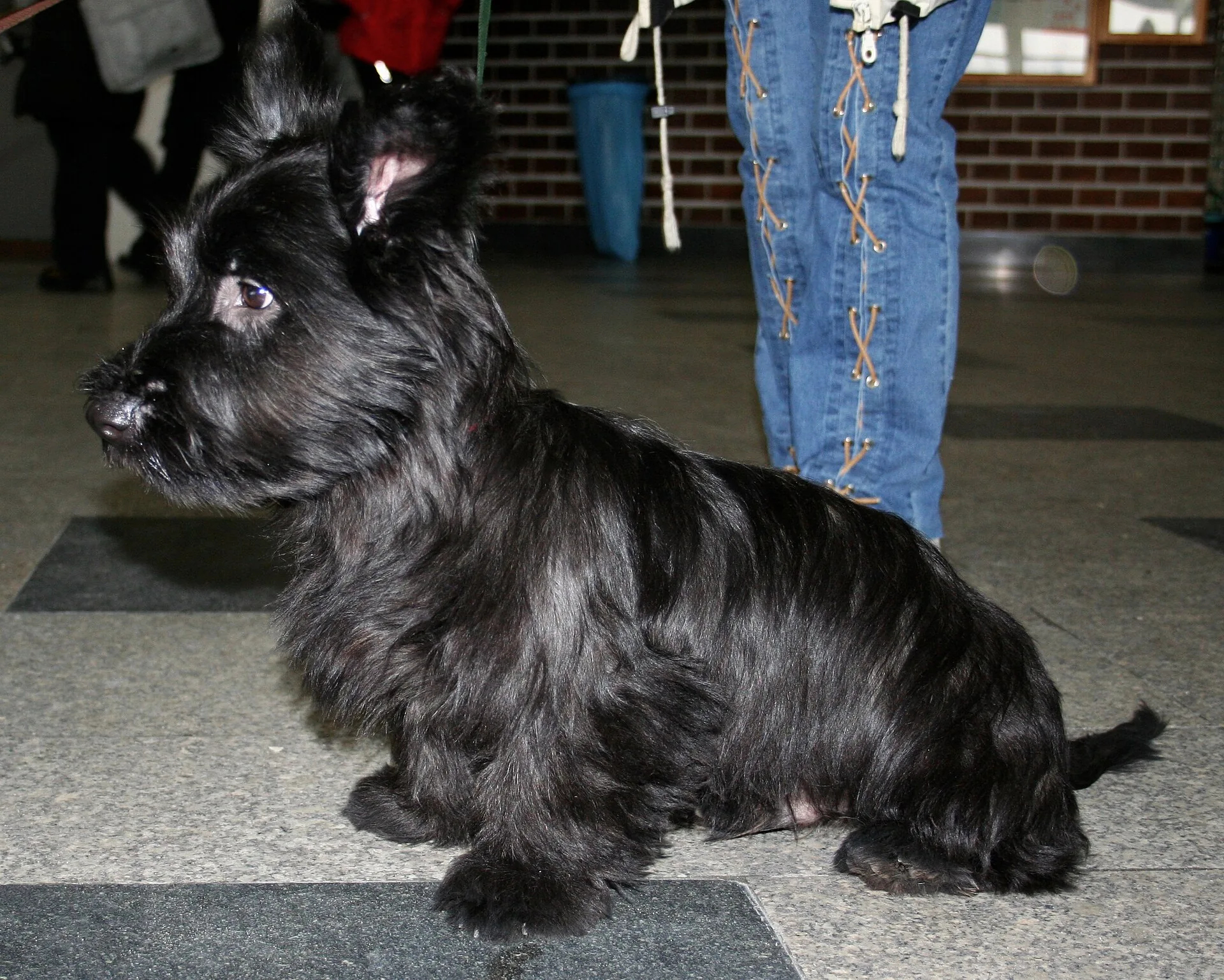
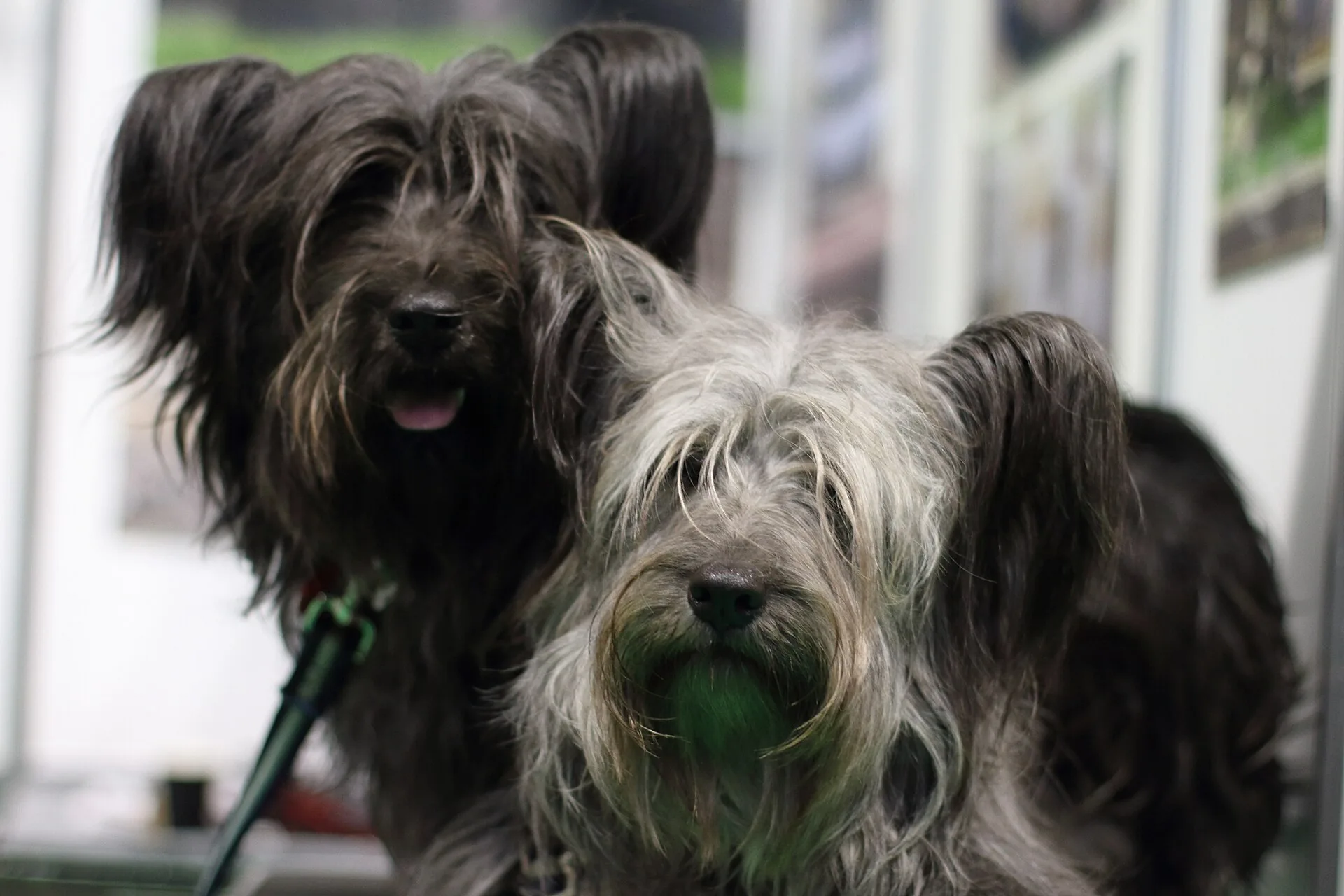
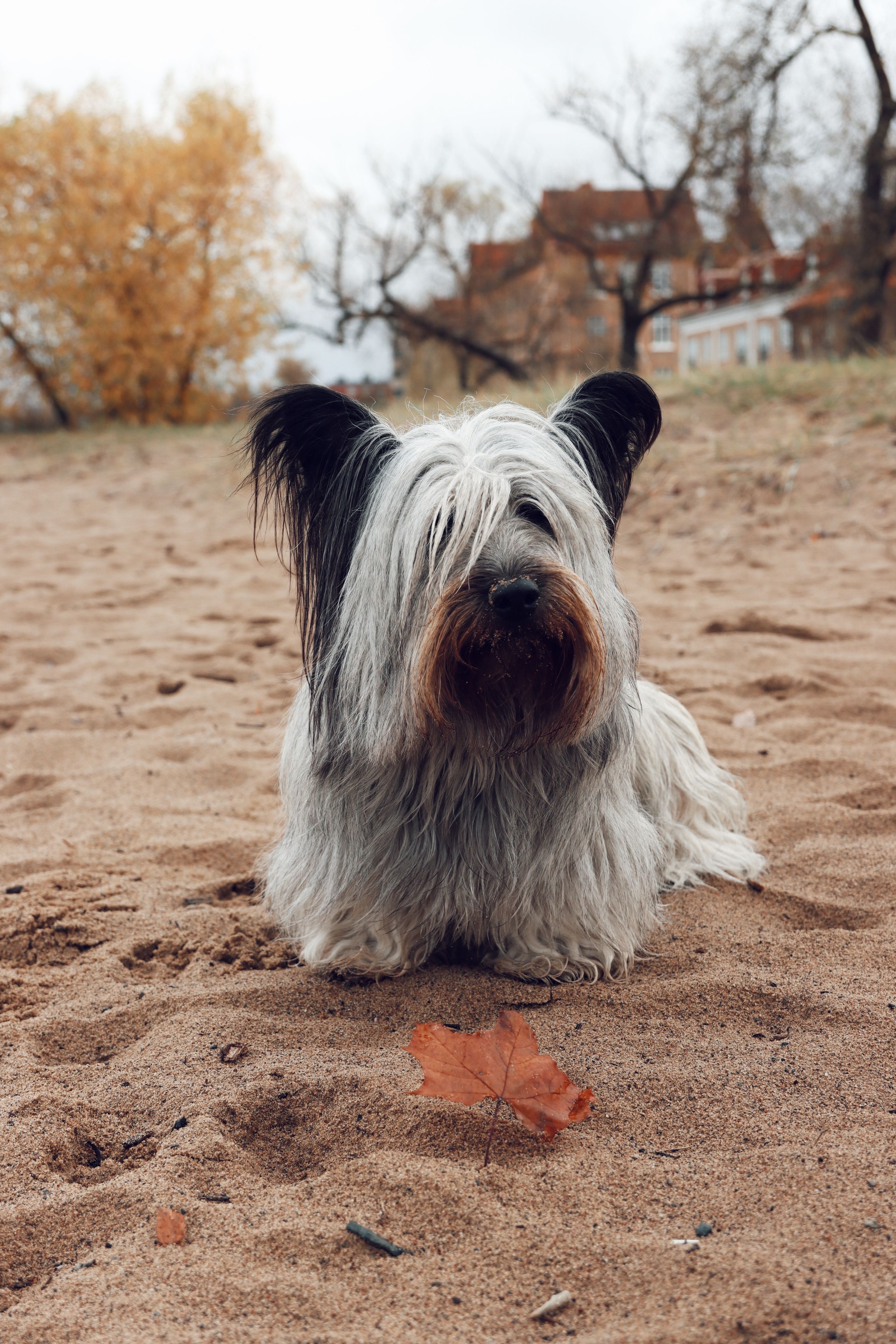
The Skye has a double coat: a short, soft, woolly undercoat and a hard, straight, flat outer coat free from curl, which falls long on each side of the body. The FCI permits black, dark or light grey, fawn and cream, all with black points, and self-colours with black nose and ears, with a small white chest spot allowed. Brushing and combing several times a week prevent tangles, especially behind the ears and under the body.
Feeding and weight
A long, low dog should stay lean, because excess weight loads the spine and joints. Use a good-quality complete food in measured portions and adjust it by body condition, which is not easy to judge under a long coat, so feel the ribs and waist regularly. Avoid jumping for food or treats, and keep fresh water available after walks.
Work out a starting calorie figure and food weight with the calorie calculator. Not sure this is the right breed? Take the quiz.
Health
Every breed carries predispositions. These are the conditions most often discussed for the Skye Terrier, not a prediction for any individual dog.
- Back problems, including intervertebral disc disease, linked to the long body and short legs
- Hip and elbow joint problems in some lines
- Skin and coat problems, including allergies and itching
- Ear infections, particularly in the drop-eared type
- Weight gain, which aggravates spinal and joint disease
What to ask the breeder. Ask the breeder about back and joint health in the parents and wider family, whether hips have been scored, and for any breed-specific health screening recommended by the breed club. Because the breed is rare, also ask about inbreeding levels and the number of unrelated lines used.
Choosing a puppy
A Skye puppy is a small, long-bodied dog under a lot of hair, and it needs protecting from its own enthusiasm. Limit stairs, jumping from sofas and rough play with older dogs, and teach lifting with a hand under the chest and another under the hindquarters. Begin short, positive grooming and nail care straight away. Introduce strangers and city sounds slowly, with the dog free to retreat. Toilet training usually takes consistency and patience. Offer chews, a safe bed and short, frequent outings until the body has matured.
In Luxembourg the national kennel club is the Fédération Cynologique Luxembourgeoise (FCL), a member of the FCI. Many owners also buy from breeders in Germany, France or Belgium; a puppy coming from another EU country must be microchipped and vaccinated against rabies, which in practice means it cannot travel before about fifteen weeks of age. Where to get a dog in Luxembourg.
The older Skye Terrier
Many Skyes stay dignified and alert into old age, though the back deserves close attention. Keep them lean, provide non-slip flooring and ramps instead of jumps, and use a harness for lifting. Joints may stiffen, so shorter, more frequent walks suit better than one long outing. Teeth, ears and skin should be checked regularly, and any hind-leg weakness, reluctance to climb or crying out when lifted needs a vet visit promptly. A twice-yearly check for senior health is sensible.
A realistic day
A realistic weekday for a working household in Luxembourg City, with a midday visit. Adjust it to your dog, not the other way round.
Toilet break and breakfast, followed by a calm 20 minute walk on a harness, with a quick brush to catch tangles.
Settled in a favourite bed with a chew; the dog is usually content to nap while the household leaves.
Midday visit: toilet break, a gentle sniffing walk, water, and a short grooming of ears and feet.
Main walk of about 40 minutes in Parc Merl or the Pétrusse valley, then a towel dry if it has rained.
Last toilet break, a brush and a quiet evening beside its person.
A Skye Terrier in Luxembourg
The Skye Terrier is well suited to Luxembourg flat life. It is compact, calm indoors and happy with a steady daily routine, and it needs no great open spaces. A lift is no problem, though a dog this low and long is best carried through crowded entrances and across wet pavements. Free buses and trams make it easy to reach quieter parks, where a leisurely walk matters more than speed.
The coat needs thought in a damp climate. After wet autumn walks the long fall holds mud and water, so towels and a comb by the door are essential, and the hair around the feet and underside may need trimming. In summer, the double coat can be heavy in the 30s, so walk early or late, offer shade and water, and never leave the dog in a parked car. For forest walks in the Bambësch or Grünewald, keep the Skye on a lead because its hunting instinct can override recall.
Every dog in Luxembourg must be identified, declared to the commune and covered by liability insurance. How registration works.
When you travel
A sitter should know that a Skye is a one-person dog and may be reserved at first, so meet and greet calmly, and let the dog come to you. Keep meals, walks and brushing times the same. Use a harness, lift with two hands supporting the body, and avoid stairs and jumping where possible. Check that the coat is dry after walks, particularly under the legs and behind the ears. Make sure the dog cannot slip out of doors, and keep the vet's contact details handy.
PAWLY's holiday and overnight care takes place in your home, so your dog keeps its own bed and routine.
Myths and facts
MythA Skye Terrier is just a Scottish lap dog.
FactIt is a genuine hunting terrier of ancient lineage, with courage, a strong jaw and a will of its own. It is also a loyal companion, but not a toy.
MythBecause the coat is long it must be impractical.
FactThe coat is hard and flat and, with regular brushing, is manageable. It does need a routine, and the owner must expect mud after wet walks.
MythShort legs mean little exercise.
FactThey need daily walks and mental stimulation, though they are not suited to long hikes or repeated jumping. Steady, varied outings suit the breed best.
Is it the right dog for you?
Suits
- Calm households that value a devoted one-person dog
- Owners ready to groom a long coat regularly
- Flat dwellers who enjoy steady daily walks
- People who can socialise a puppy carefully and patiently
Think twice if
- You have small children who play roughly
- You want a dog that greets every visitor with enthusiasm
- You cannot commit to regular grooming
- You expect a dog to hike long distances or jump on and off furniture
Questions owners ask
Are Skye Terriers rare?
Yes. In the UK they are counted among the vulnerable native breeds, and they are uncommon elsewhere too. That means waiting lists, careful breeder research and a particular interest in genetic diversity.
Do Skye Terriers bark a lot?
They bark to announce visitors and unusual sounds, and a bored dog can bark more. Early training, a settled routine and enough exercise keep it manageable.
Do they have prick or drop ears?
Both are described in the FCI standard. Prick ears are gracefully feathered and slant inward, while drop ears are larger, hang straight and lie flat. Both types are accepted.
Is a Skye Terrier good with children?
It suits considerate older children better than boisterous toddlers. The breed tolerates calm, gentle handling but dislikes being grabbed, and its long back needs careful lifting.
Sources
Photo: Chris Phutully from Australia, CC BY 2.0, via Wikimedia Commons · Photo: Pleple2000, CC BY-SA 4.0, via Wikimedia Commons · Photo: adam w, CC BY 2.0, via Wikimedia Commons · Photo: Pexels (Pexels License) · Photo: Michal Maňas, CC BY 3.0, via Wikimedia Commons
General information for dog owners in Luxembourg, not veterinary or legal advice. Official facts (origin, size, group, history and temperament as described by the breed standard) follow the FCI standard; health and care sections reflect breed-club and veterinary guidance and are typical ranges rather than rules. For your own dog, ask your vet, the breed club or your commune. How this guide is written and checked. Last reviewed 8 October 2026.
Need someone for your Skye Terrier?
PAWLY offers an individual 45-minute walk or a home visit at your dog's pace, the same walker every time, and a written report with photos after every visit, across Luxembourg City.
Read next: the journal, for the Skye Terrier
All articles
Long-backed breeds, stairs and the spine
A long back makes stairs matter more than most owners think.

Getting weight off a dog, and keeping it off
Weight is a recurring issue for the Skye Terrier; this is how to take it off and keep it off.

The front door: barking, deliveries and escapes
A watchful breed reacts at the door; this is how to manage it.
Similar breeds
All 198 breeds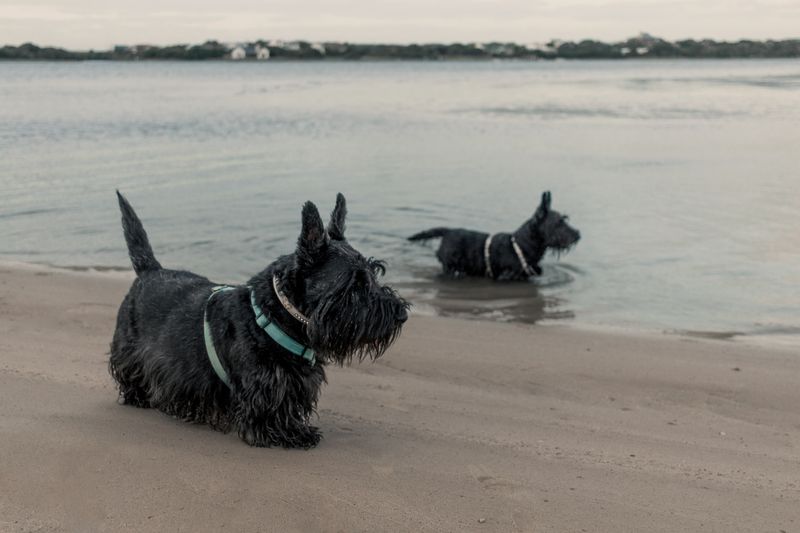
Scottish Terrier
A compact, dignified Highland terrier with a long beard, a stubborn streak and great self-respect.
EnergyGroomingFlat life
Cairn Terrier
A small, scruffy Highland terrier, bred to bolt foxes from the rocks and still cheerful, busy and unimpressed by its size.
EnergyGroomingFlat life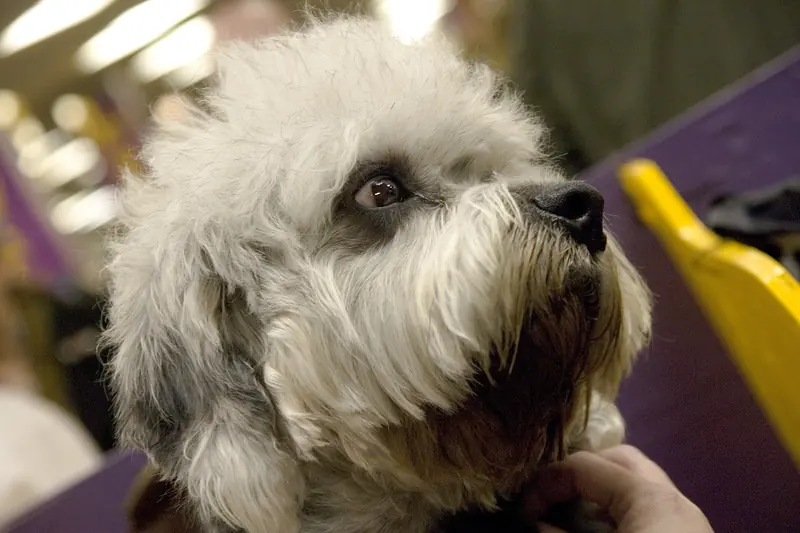
Dandie Dinmont Terrier
A long, low, dignified terrier with a silky topknot and big dark eyes, equally ready to hunt a badger or demand your sofa.
EnergyGroomingFlat life

