History
The FCI lists the Sealyham Terrier under Great Britain, in Group 3, Section 2, small-sized terriers without working trial. The FCI text concentrates on the dog as it should be today and gives no long historical account, so the background here comes from widely published breed histories. These credit Captain John Edwardes, who from the 1850s built up a working terrier at his Sealyham estate in Pembrokeshire, Wales, and the breed takes its name from that house.
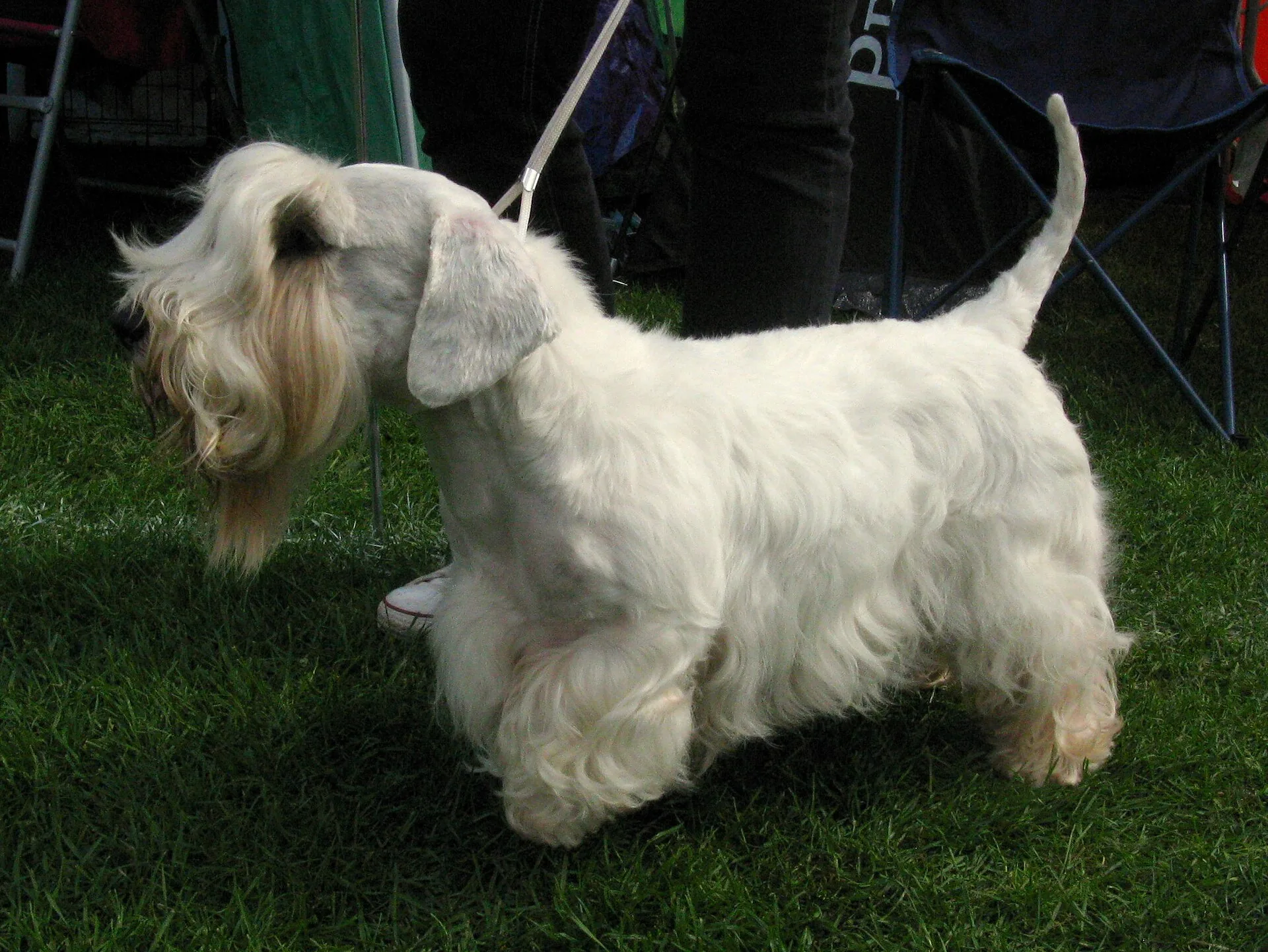
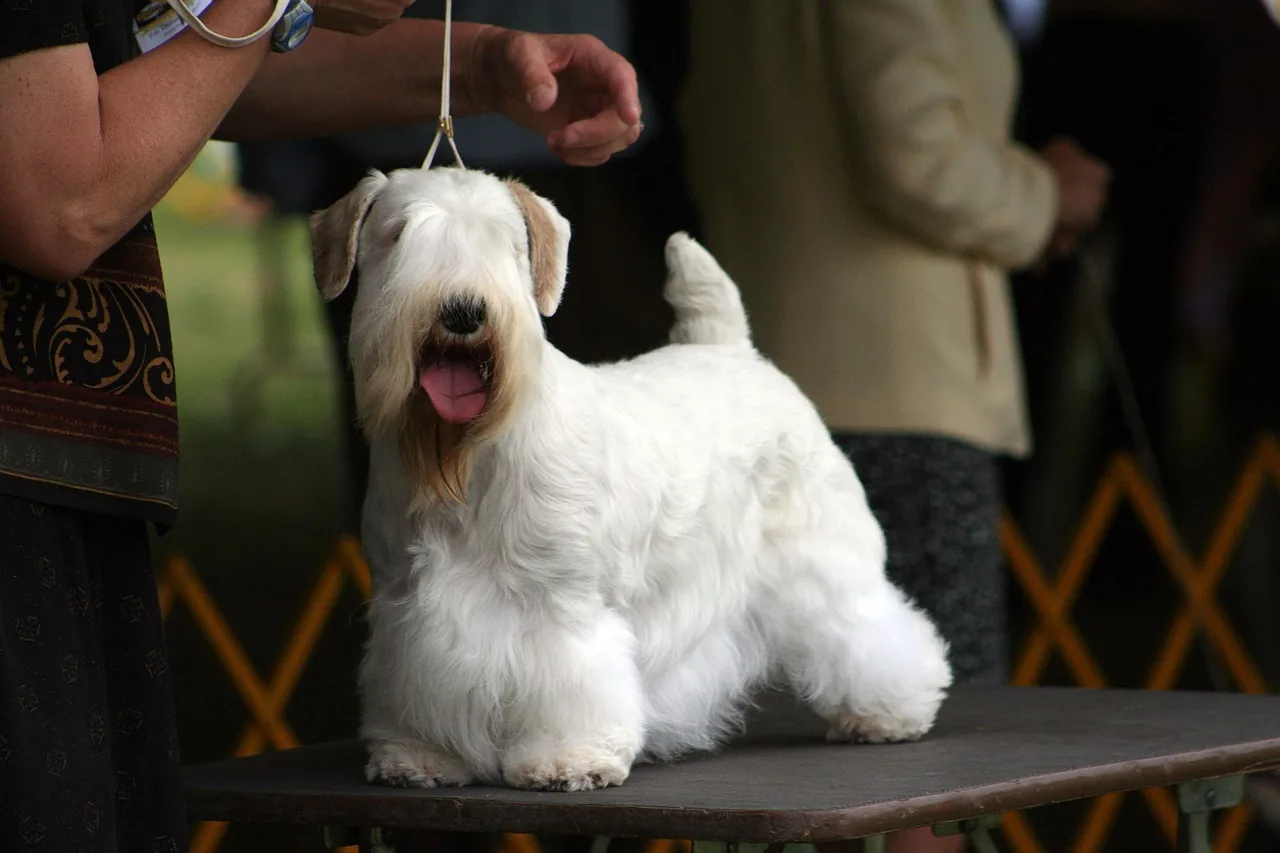
The aim was a short-legged, game and weather-resistant terrier that could work with hounds and go to ground after badger, fox and otter, and a good deal of the breed's boldness comes from that job. Its white coat was reportedly chosen so that the dog could be told from quarry in poor light. The FCI standard describes a free-moving, active, balanced dog of great substance in small compass, with an oblong outline and not a square one.
Temperament
The FCI describes the Sealyham as sturdy, game and workmanlike, with an alert and fearless but friendly disposition. In practice that means a cheerful, sociable dog at home, often clownish with people it knows, with a loud, self-assured bark for the doorbell and a willingness to take on any dog that looks at it the wrong way.
It will weigh up a request before agreeing to it, and it is perfectly capable of selective deafness when something interesting appears at ground level. It bonds closely with its household and generally dislikes being ignored. Shy or aggressive temperaments are listed as faults in the standard, so a well-bred dog should meet strangers with polite interest.
Children and other pets
Sealyhams are usually good with sensible older children who play with them gently and respect their space, and they enjoy a game of ball in the garden. They are sturdy, but a long-backed small dog should not be picked up awkwardly or used as a toy, and very young children need supervision. Dog-to-dog behaviour needs attention: many Sealyhams will stand their ground with other dogs, especially of the same sex. Cats in the household are often accepted if introduced early, but hamsters, rabbits and other small animals should be considered prey.
Exercise and the daily walk
An adult needs roughly an hour of exercise a day, split into a proper morning walk and a shorter evening outing, plus a little play. This is not a marathon breed, and a Sealyham will happily cover a few kilometres at a steady trot, but it also likes to investigate every hedge.
The hunting instinct is intact, and a squirrel, rabbit or fox scent can take the dog out of earshot. Use enclosed spaces for recall practice and keep a long line for woodland. Puppies should not be asked for long walks or repeated stair climbing while growing.
Training
Sealyhams are intelligent and can learn quickly, but they are not eager to please in the way a retriever is. Reward-based training with small treats, brief sessions and plenty of variety gets the best results, and heavy-handed correction usually meets a sulk or a stand-off.
Socialisation with a wide range of dogs, people, pushchairs and city noises should be done carefully and early. Recall should be taught and maintained but never relied on near roads. Calm handling for grooming, nail trimming and tooth cleaning is worth practising from the first week, as the breed needs regular coat work throughout its life.
Coat and grooming
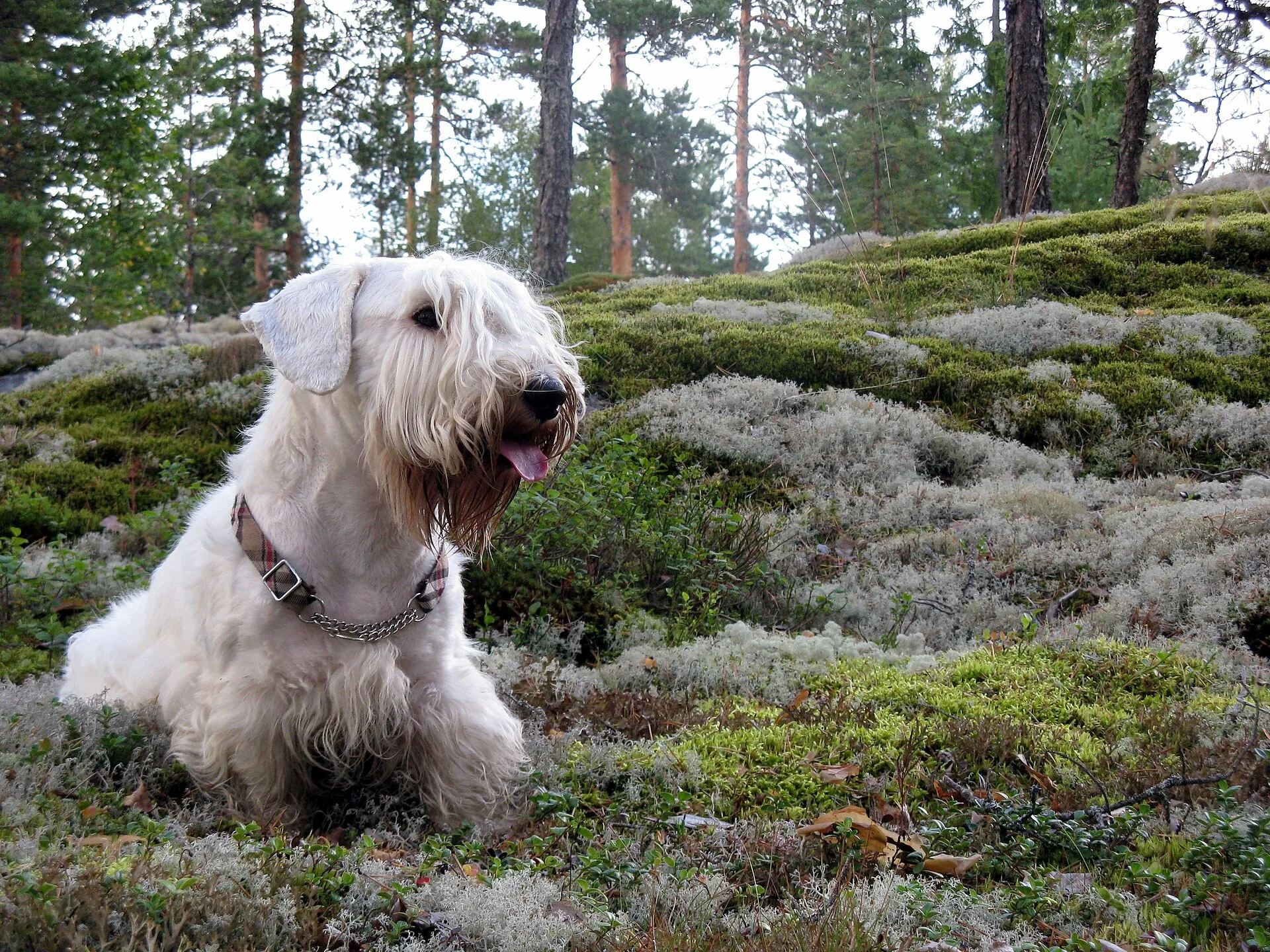
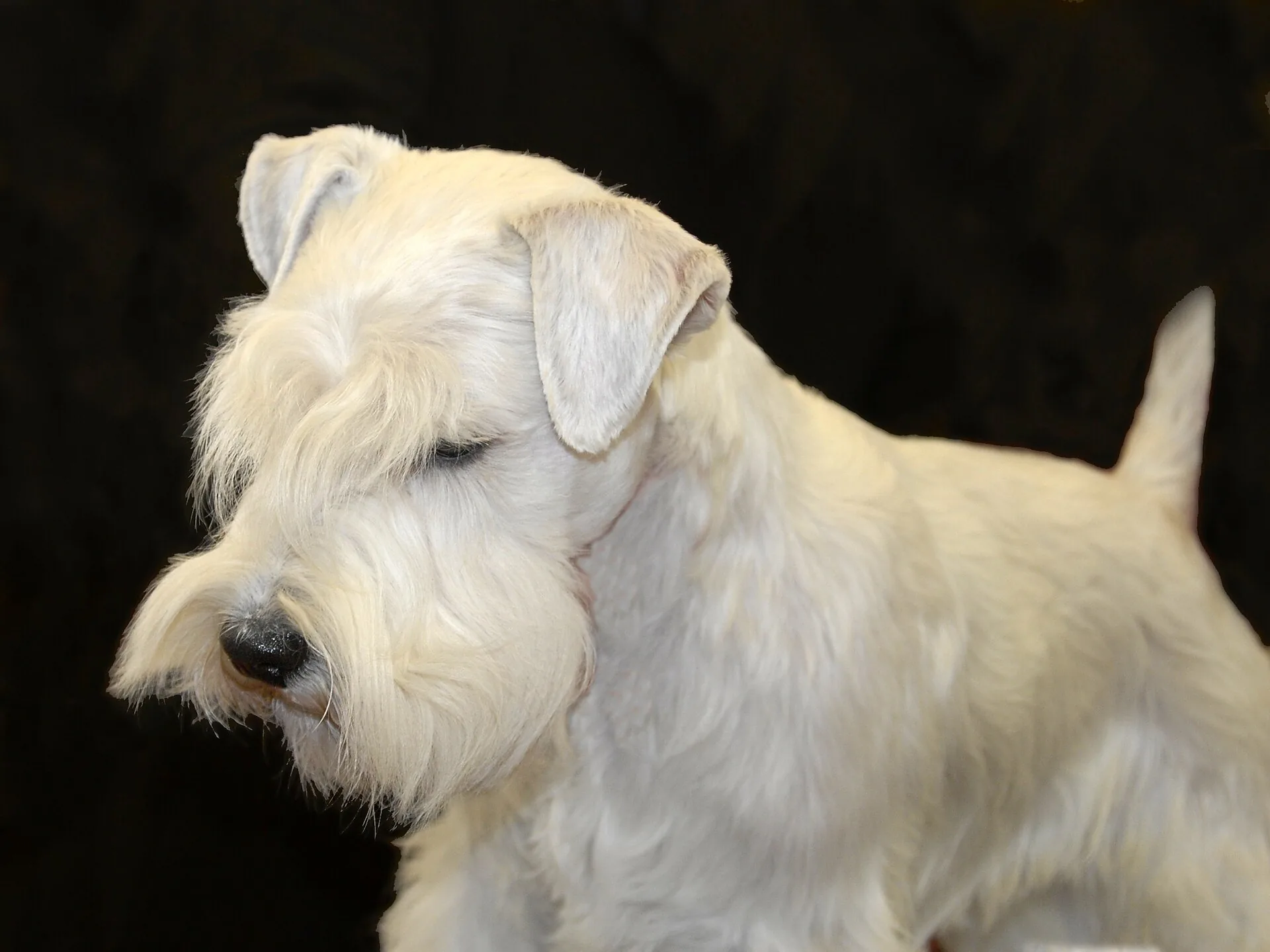
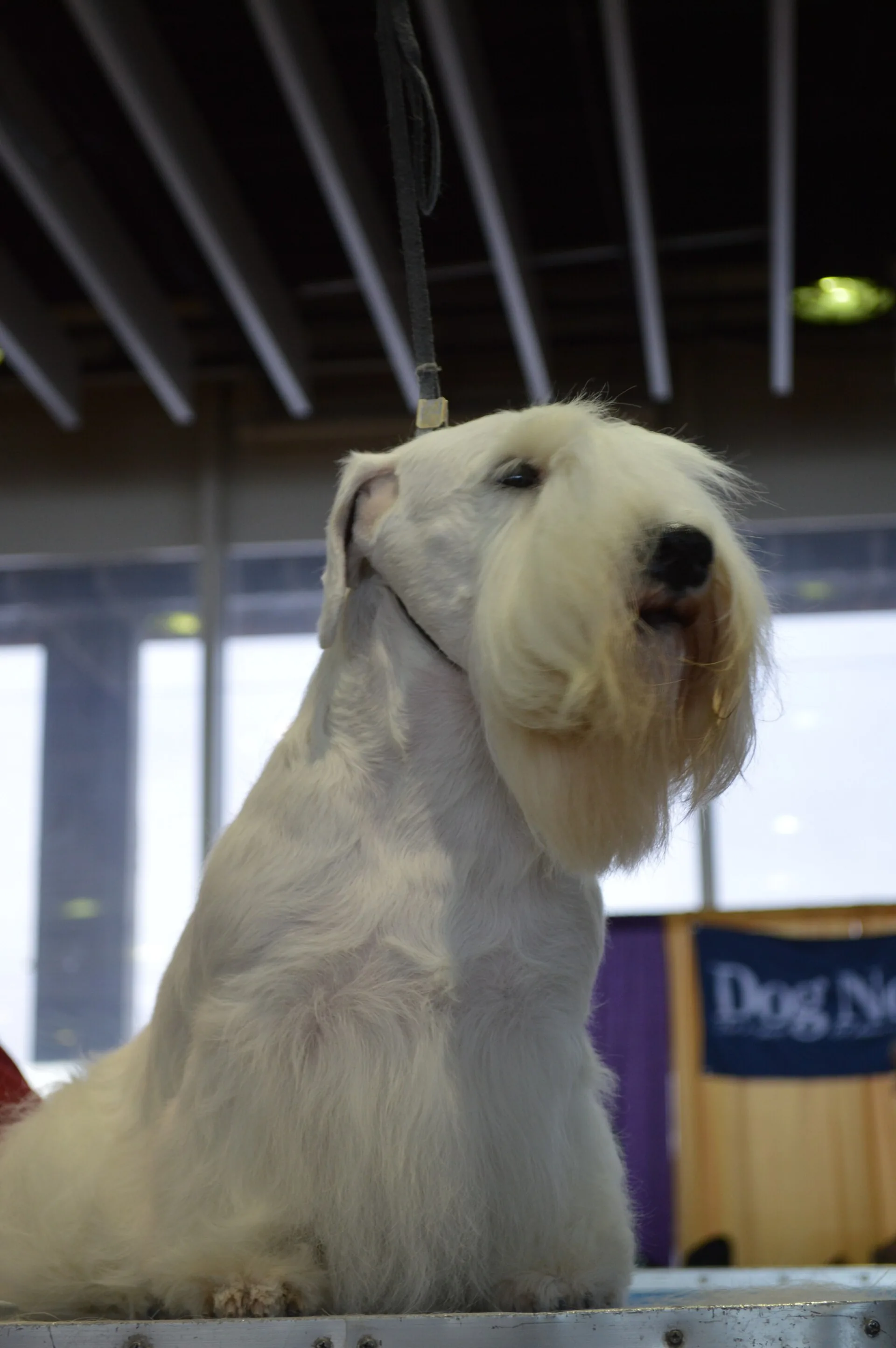
The coat is long, hard and wiry over a weather-resistant undercoat, as described in the FCI standard. It sheds little, but it does not look after itself: a properly kept Sealyham is hand-stripped or professionally trimmed every few months, and the beard and leg furnishings need combing several times a week to prevent mats. The FCI permits all white, or white with lemon, brown, blue or badger pied markings on the head and ears; heavy black markings and ticking are undesirable.
Feeding and weight
A small, short-legged dog gains weight quickly, and extra kilos put strain on the back. Feed a good-quality complete food in measured portions, adjusted to age and activity, and count treats used in training as part of the daily ration.
Work out a starting calorie figure and food weight with the calorie calculator. Not sure this is the right breed? Take the quiz.
Health
Every breed carries predispositions. These are the conditions most often discussed for the Sealyham Terrier, not a prediction for any individual dog.
- Primary lens luxation (the lens of the eye slips out of position, which can lead to pain and loss of sight)
- Hereditary deafness, which can occur in white-coated breeds
- Skin problems and allergies, with itching and recurrent ear or skin infections
- Back problems, including intervertebral disc disease, linked to the long body and short legs
- Other inherited eye conditions, so regular eye examinations are advised
What to ask the breeder. Ask for evidence of DNA testing of both parents for primary lens luxation, current eye examination certificates and hearing (BAER) test results for the litter or parents. A reputable breeder will also discuss the breed's small gene pool openly.
Choosing a puppy
A Sealyham puppy is a small, white, determined creature that will chew, dig and test boundaries from the first week. Begin toilet training immediately and keep to a routine, since terriers can be slow to be reliable. Do not allow jumping off furniture or climbing long staircases repeatedly, to protect the spine.
In Luxembourg the national kennel club is the Fédération Cynologique Luxembourgeoise (FCL), a member of the FCI. Many owners also buy from breeders in Germany, France or Belgium; a puppy coming from another EU country must be microchipped and vaccinated against rabies, which in practice means it cannot travel before about fifteen weeks of age. Where to get a dog in Luxembourg.
The older Sealyham Terrier
Seniors usually remain bright and bold well into their teens, but the back, eyes and teeth deserve closer attention. Keep weight lean, offer a non-slip surface at home, and use a ramp or lifting rather than letting an older dog leap from furniture. Report any cloudy, red or painful-looking eye at once, since lens problems are urgent. Shorter, more frequent walks suit stiffer joints, and a twice-yearly vet check helps catch dental, thyroid and skin changes early.
A realistic day
A realistic weekday for a working household in Luxembourg City, with a midday visit. Adjust it to your dog, not the other way round.
Quick garden or pavement break, breakfast, and a brisk 20 minute walk before the lift fills up with commuters.
Settled with a chew or food puzzle while the owner leaves; a window view is welcome, but a quiet corner prevents barking at the corridor.
Midday visit: toilet break, a sniff round the block, a short training game and fresh water.
Longer walk in the Pétrusse valley or Parc Merl, with a wipe of paws and beard afterwards.
Final toilet break, supper settled, then sleep on a bed near the family.
A Sealyham Terrier in Luxembourg
A Sealyham fits a Luxembourg flat well. It is compact, does not shed heavily and is quiet for most of the day provided it is exercised, though a bold bark at the lift or neighbours' footsteps needs early management. Most buildings have lifts, and a dog this size is easily carried through a crowded entrance. Free buses and trams are convenient for longer outings, and a small terrier is welcome in the calm of the Pétrusse valley or the Municipal Park.
The coat is the main practical cost. Wet, muddy winters leave a long white beard and furnishings that need drying and combing after every outing, and a groomer who understands wiry coats is worth finding early. In summer, heat in the 30s is rarely a danger for a healthy Sealyham, but walk early and late and avoid hot pavements for the short legs. In the Bambësch and Grünewald forests, a lead or long line is wise because the dog's prey drive is strong.
Every dog in Luxembourg must be identified, declared to the commune and covered by liability insurance. How registration works.
When you travel
A sitter needs to know that this dog will test boundaries, so consistency matters more than strictness. Keep to the usual meals and walking times, use a harness and double-check doors and gates, because a Sealyham can slip through small gaps in pursuit of a smell. Keep it away from unfamiliar dogs, and keep the grooming routine, especially after wet walks. Note the vet's number and the owner's instructions on any eye medication. Provide chews, as boredom leads to barking and digging.
PAWLY's holiday and overnight care takes place in your home, so your dog keeps its own bed and routine.
Myths and facts
MythA small white terrier is a lap dog.
FactIt is small, but it is a working terrier with the stamina and courage to match. It enjoys cuddles, but it also needs real walks and mental work.
MythTerriers cannot be trained.
FactSealyhams learn well when training is short, varied and rewarding. They simply need to understand what is in it for them.
MythIt does not need grooming because it hardly sheds.
FactLow shedding is the result of a coat that must be stripped or trimmed regularly. Without that, it mats and becomes uncomfortable.
Is it the right dog for you?
Suits
- Owners who want a characterful small dog with a robust attitude
- People happy to maintain a wiry coat or pay a groomer
- Active households with a garden or good nearby parks
- Those with the patience for gentle, humorous training
Think twice if
- You want a dog that is guaranteed friendly with every other dog
- You cannot tolerate barking or digging
- You have rabbits, hamsters or other small pets at home
- You are away from home for long stretches every day
Questions owners ask
Is a Sealyham Terrier good for a first-time owner?
It can be, if the owner is realistic. The dog is small and sturdy, but it has terrier independence and a coat that needs regular care. First-time owners who commit to early training and grooming usually do well.
Do Sealyham Terriers bark a lot?
They are alert and will announce visitors, and some bark when bored. In a flat, early training and enough exercise matter. A Sealyham that is occupied and settled is usually no more vocal than other small terriers.
How often does a Sealyham need grooming?
The coat should be combed or brushed two or three times a week, with attention to the beard and legs. Professional hand-stripping or trimming every few months keeps the texture correct, while a quick wipe after muddy walks helps.
Are they good with other dogs?
Often they are sociable but not submissive. Many are quick to defend themselves, especially with other males. Good early socialisation and calm, controlled introductions give the best chance of relaxed adult behaviour.
Sources
Photo: Tuomas Palonen, CC BY-SA 3.0, via Wikimedia Commons · Photo: Tuomas Palonen, CC BY-SA 3.0, via Wikimedia Commons · Photo: Ettore Balocchi, CC BY 2.0, via Wikimedia Commons · Photo: Pets Adviser from Brooklyn, US, CC BY 2.0, via Wikimedia Commons · Photo: Pixabay (Pixabay Content License)
General information for dog owners in Luxembourg, not veterinary or legal advice. Official facts (origin, size, group, history and temperament as described by the breed standard) follow the FCI standard; health and care sections reflect breed-club and veterinary guidance and are typical ranges rather than rules. For your own dog, ask your vet, the breed club or your commune. How this guide is written and checked. Last reviewed 8 October 2026.
Need someone for your Sealyham Terrier?
PAWLY offers an individual 45-minute walk or a home visit at your dog's pace, the same walker every time, and a written report with photos after every visit, across Luxembourg City.
Read next: the journal, for the Sealyham Terrier
All articles
Long-backed breeds, stairs and the spine
A long back makes stairs matter more than most owners think.

Grooming and coat care through the Luxembourg year
The Sealyham Terrier has a coat that needs a routine that holds through the Luxembourg seasons.

Barking in an apartment: six causes, six different answers
Terriers are quick to sound the alarm; this sorts out the causes and the answers.
Similar breeds
All 198 breeds
West Highland White Terrier
A cheerful, confident little Scottish terrier, white by design, with a big opinion of itself and a worker's stamina.
EnergyGroomingFlat life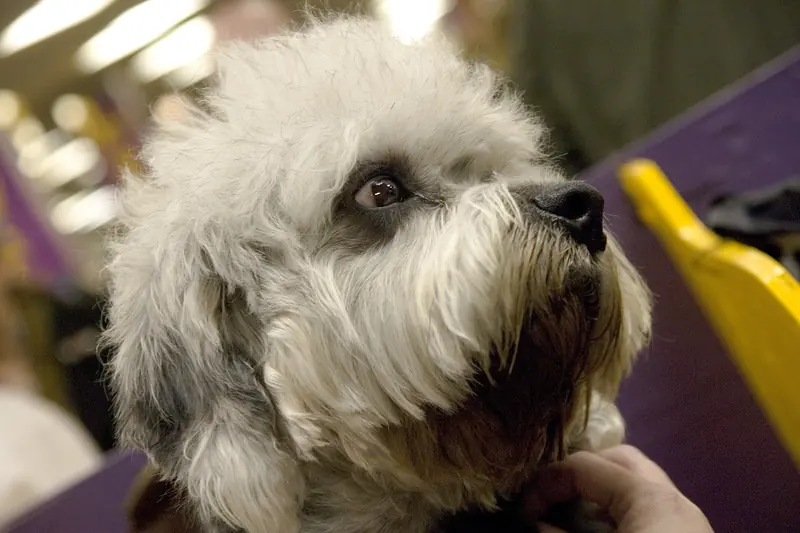
Dandie Dinmont Terrier
A long, low, dignified terrier with a silky topknot and big dark eyes, equally ready to hunt a badger or demand your sofa.
EnergyGroomingFlat life
Cairn Terrier
A small, scruffy Highland terrier, bred to bolt foxes from the rocks and still cheerful, busy and unimpressed by its size.
EnergyGroomingFlat life

