


History
The Dogo Argentino was created in the province of Córdoba, Argentina, by Dr Antonio Nores Martinez (1907 to 1956). According to the FCI standard he built the breed by systematically crossing the old Fighting Dog of Córdoba with several breeds, among them the English Bulldog, Great Dane, Pyrenean Mastiff, Bull Terrier, Boxer, Dogue de Bordeaux and Irish Wolfhound. The aim was a courageous, athletic dog able to hunt large game.
The standard says the breed was stabilised by 1947, recognised in Argentina in 1964 and accepted by the FCI in 1973. Its stated utilisation is as a big-game hunting dog, used against wild boar, peccary, puma and other predators on farmland. It sits in Group 2, Section 2.1, Molossian dogs of the Dogue type, without working trial. The current standard dates from 2012. In some countries the breed is restricted or banned, which every prospective owner should check carefully.
Temperament
The FCI standard requires a dog that is courageous and robust, silent on the trail, with an excellent nose, and never aggressive towards humans. With its own family the Dogo is affectionate, loyal and demonstrative, a leaning, devoted shadow. It is a fearless, physical dog with strong protective instincts, and it responds with great energy to everything that happens around it.
That intensity is the point to understand. A Dogo has a strong will, high pain tolerance and a hunter's drive, and it can be dominant with other dogs, particularly of the same sex. It needs an owner who is calm, consistent and physically capable, and who sees socialisation as a lifelong job. A bored, under-exercised or poorly led Dogo is a serious management problem. A well-raised one is a steady, deeply bonded companion.
Children and other pets
With its own family, including considerate older children, the Dogo can be devoted and gentle, but its strength and exuberance mean it can knock over small children and play very physically, so supervise carefully and never leave children and dog alone together. Many are difficult with unfamiliar dogs, and some will not accept another dog in the house. The hunting heritage means cats and small pets are at real risk, even if some individuals learn to accept a cat raised alongside them.
Exercise and the daily walk
An adult Dogo needs around two hours of activity a day, and it needs the right sort. Fast walking, running at the side of a bicycle on quiet tracks, swimming where safe, and structured games like tug with rules all burn energy. A dog bred for big-game hunting has stamina to spare, and a half-hour stroll will leave it frustrated.
Free running is only for secure, empty areas, because a Dogo that sees an animal will go. Strong, well-fitted harness and lead work, a long line in woodland and exercise sessions that include obedience give both mental and physical work. Scent games take advantage of its excellent nose. Avoid hard exercise in hot weather, since the short white coat gives little protection from sun or cold.
Training
The Dogo is intelligent and wants to work for its person, but it is also strong-willed. Training should begin in puppyhood and be consistent, calm and positive, using rewards and clear rules. Heavy-handed or angry methods can provoke a stubborn, powerful dog, and they add nothing. Impulse control, such as waiting at doors, sitting for the lead and leaving things on command, is worth more than tricks.
Socialisation is not optional. Meet many people, calm dogs, vehicles and city sounds in the first months, and keep exercising these skills into adulthood. A good trainer with experience of powerful molossoid or working breeds is a sound investment. Practise calm greetings, recall in secure spaces and tolerance of handling by the vet. This is a dog for an experienced and committed owner, not for a first-time buyer who has simply admired the look.
Coat and grooming
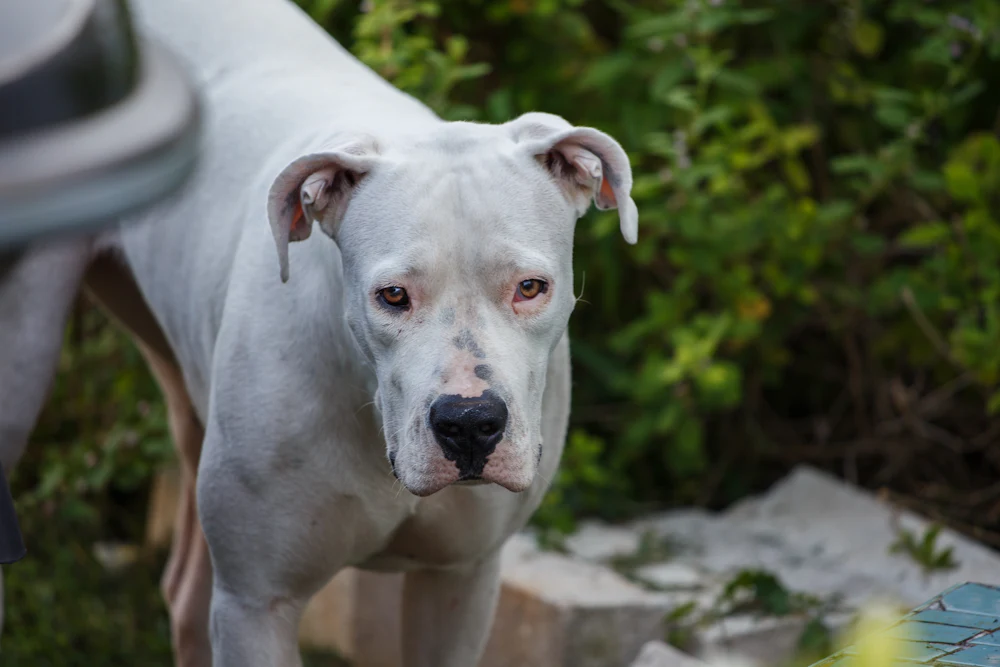
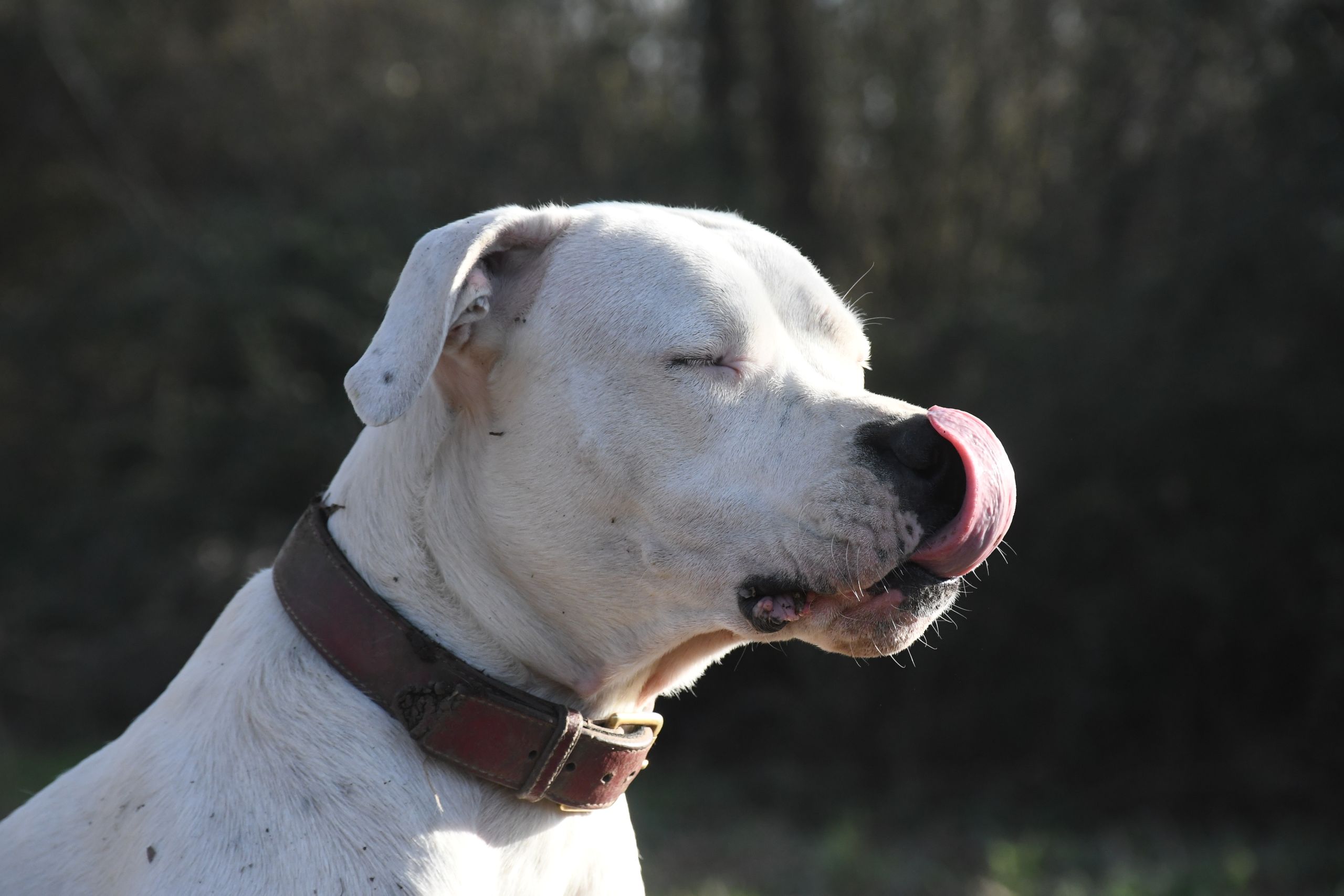
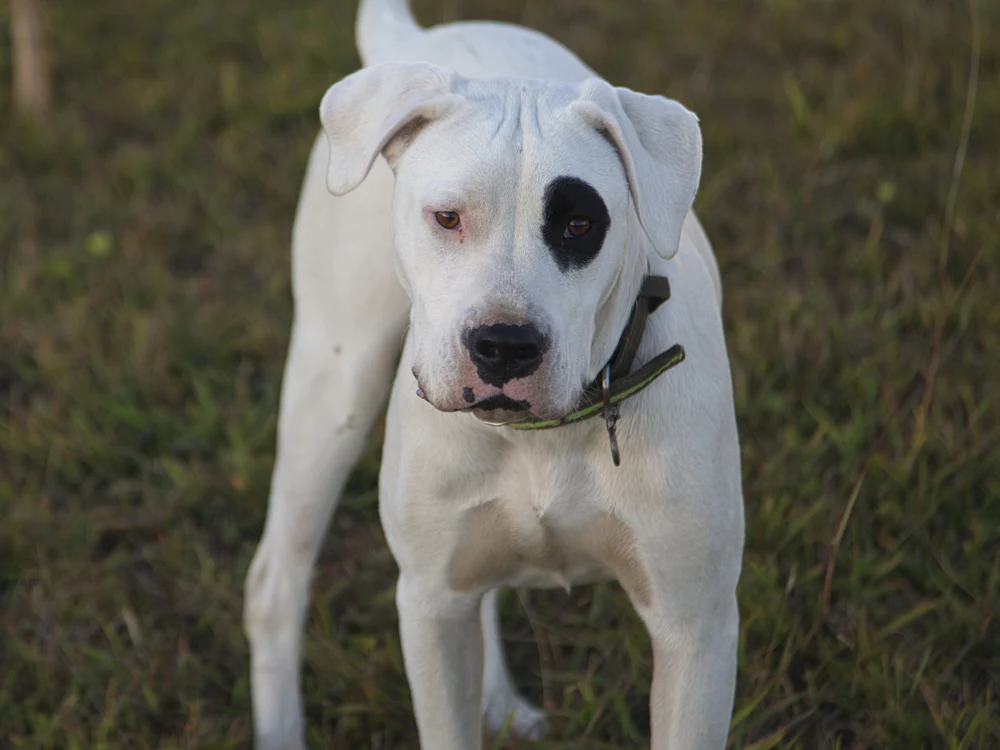
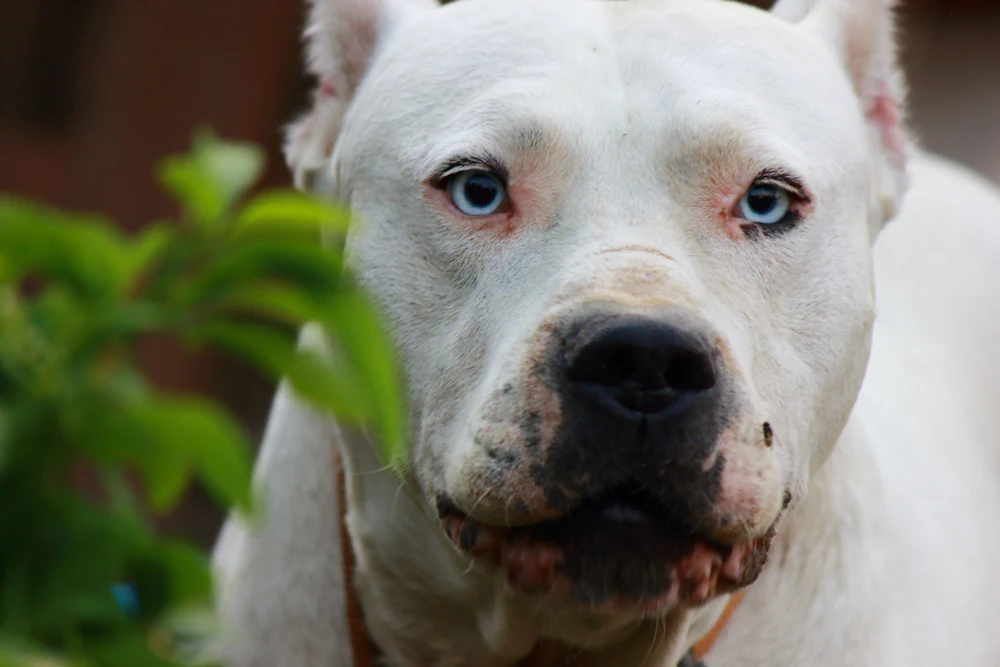
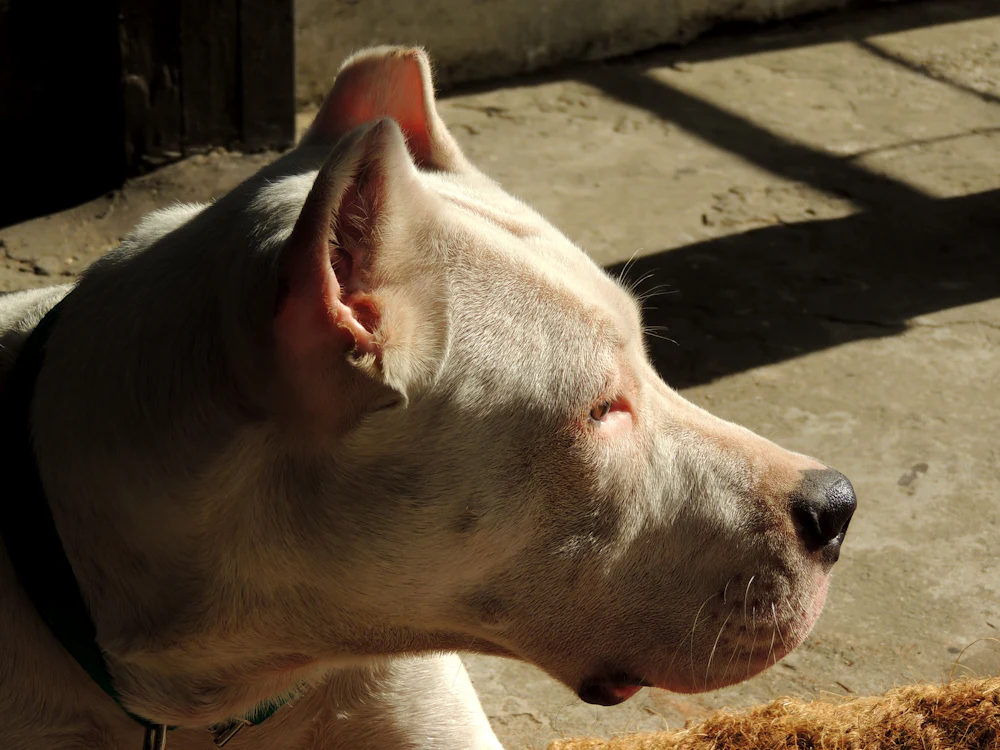
The FCI describes a uniform, short, smooth coat of about 1.5 to 2 cm. It is easy to maintain: a weekly rub with a rubber mitt removes loose hair, and shedding is moderate. The standard requires an all-white coat, with at most a single dark patch on the skull not exceeding 10 per cent of the head. White skin burns in strong sun, so shade and care are needed in summer, and cold wet weather calls for a coat. Hearing and skin should be checked regularly.
Feeding and weight
Feed a high-quality complete diet suited to a large, muscular dog, divided into two meals a day. A growing puppy needs a diet suitable for large breeds so that growth stays steady, not rapid. Rest the dog for an hour before and after meals, because deep-chested dogs can suffer bloat. Keep the dog lean, as extra weight strains hips and joints. Provide fresh water at all times, especially after exercise or in warm weather.
Work out a starting calorie figure and food weight with the calorie calculator. Not sure this is the right breed? Take the quiz.
Health
Every breed carries predispositions. These are the conditions most often discussed for the Dogo Argentino, not a prediction for any individual dog.
- Congenital deafness (common in white-coated breeds, tested by BAER)
- Hip dysplasia
- Skin problems and sunburn on the white coat
- Gastric dilatation and volvulus (bloat)
- Hypothyroidism (underactive thyroid)
What to ask the breeder. Ask for BAER hearing test results for the puppies and both parents, hip scores for the parents and any history of skin problems, and ask how the litter has been socialised and what kind of home the breeder will accept.
Choosing a puppy
A Dogo puppy is a solid, boisterous bundle that grows quickly, so protect the joints by limiting stairs, jumping and long forced walks. Socialise from the first days at home: people of all kinds, calm adult dogs, traffic, lifts and city noise. Teach the lead, a calm settle, a gentle bite and handling of paws and ears early. Insist on rules from the beginning, since an adolescent Dogo is a strong animal. Ask your vet about hearing and arrange early training classes.
In Luxembourg the national kennel club is the Fédération Cynologique Luxembourgeoise (FCL), a member of the FCI. Many owners also buy from breeders in Germany, France or Belgium; a puppy coming from another EU country must be microchipped and vaccinated against rabies, which in practice means it cannot travel before about fifteen weeks of age. Where to get a dog in Luxembourg.
The older Dogo Argentino
From about eight years many Dogos slow down and stiffen, with arthritis and weight gain common. Choose shorter, gentler walks and keep the dog lean. An orthopaedic bed, non-slip floors and pain relief prescribed by the vet help. Check skin lumps, hearing and eyes regularly, and keep up dental care. Watch for restlessness or a swollen abdomen, which can mean bloat, a true emergency at any age.
A realistic day
A realistic weekday for a working household in Luxembourg City, with a midday visit. Adjust it to your dog, not the other way round.
Brisk 30-minute lead walk with some structured obedience, then breakfast and a rest.
Owner leaves; the Dogo rests on a sturdy bed with a durable chew.
Midday visit: a 60-minute energetic walk, a training game, fresh water and a calm cool-down.
Evening outing of 60 to 90 minutes in a quiet forest on a long line, with tug and recall practice.
Short toilet break, a calm treat and bed, always at least an hour after the evening meal.
A Dogo Argentino in Luxembourg
Living with a Dogo in a Luxembourg flat is possible only for a very committed, experienced owner. The dog is large and strong, and lift encounters with neighbours or their dogs need management: wait for an empty lift, keep the dog close and short on the lead, and practise calm behaviour from puppyhood. A short white coat offers little warmth in winter, and summers that reach the 30s °C mean sun protection and shade. Many city residents are wary of large molossoid dogs, so manners matter.
The Dogo is not one of the four types named in the law of 9 May 2008, but a powerful dog attracts attention and you should confirm any requirement with your commune. Every dog must be microchipped, declared to the commune and insured, and the commune charges an annual dog tax. The Grünewald and Bambësch forests suit the long walks, and the Pétrusse valley or Parc Merl suit the quieter daily outing, with the dog on a lead. Ask the Fédération Cynologique Luxembourgeoise about training clubs.
Every dog in Luxembourg must be identified, declared to the commune and covered by liability insurance. How registration works.
When you travel
A sitter needs to be experienced with large, strong dogs and must meet the dog several times before the owner leaves. Keep the dog on a strong harness and lead outdoors, avoid dog parks and any mixing with unfamiliar dogs, and never leave it unsupervised with children or small animals. Keep up the usual substantial exercise and rules. Protect the dog from sun and cold, and leave the vet's contact and signs of bloat.
PAWLY's holiday and overnight care takes place in your home, so your dog keeps its own bed and routine.
Myths and facts
MythIt is an aggressive fighting dog.
FactThe breed was developed as a big-game hunting dog, and the FCI standard says it must never be aggressive towards humans, though it is a strong, driven dog that needs management.
MythWhite dogs are albinos and always deaf.
FactThe coat is simply white, and not all are deaf. Hearing should still be tested, since deafness is documented in the breed.
MythA garden is enough exercise.
FactThe breed needs hours of purposeful exercise and training, and a garden alone produces a bored, destructive dog.
Is it the right dog for you?
Suits
- Experienced owners who are physically strong and calm
- Active people with time for long daily exercise
- Homes with a secure garden and understanding neighbours
- Owners committed to lifelong socialisation and training
Think twice if
- You are a first-time dog owner
- You have cats, small pets or a busy household with toddlers
- You live in a small flat with thin walls
- You are away from home for long hours
Questions owners ask
Is the Dogo Argentino legal in Luxembourg?
It is not one of the four types named in the law of 9 May 2008, but you should confirm any requirements with your commune. Every dog must be microchipped, declared to the commune and insured, and an annual tax applies.
Are Dogos good family dogs?
In the right hands they are devoted and affectionate, but they are powerful, intense and not suited to unsupervised contact with young children or unfamiliar dogs. They suit experienced households with strong routines.
Do white Dogos have more health problems?
Congenital deafness and skin sensitivity to sun are the main concerns linked to the white coat. Responsible breeders test hearing and avoid breeding deaf dogs, so ask for the results.
How much exercise does a Dogo need?
Plan about two hours a day, with structured work as well as walks. Hard exercise should be avoided in warm weather. An under-exercised Dogo often becomes destructive or frustrated.
Sources
Photo: Unsplash (Unsplash License) · Photo: Pexels (Pexels License) · Photo: Unsplash (Unsplash License) · Photo: Unsplash (Unsplash License) · Photo: Unsplash (Unsplash License)
General information for dog owners in Luxembourg, not veterinary or legal advice. Official facts (origin, size, group, history and temperament as described by the breed standard) follow the FCI standard; health and care sections reflect breed-club and veterinary guidance and are typical ranges rather than rules. For your own dog, ask your vet, the breed club or your commune. How this guide is written and checked. Last reviewed 8 October 2026.
Need someone for your Dogo Argentino?
PAWLY offers an individual 45-minute walk or a home visit at your dog's pace, the same walker every time, and a written report with photos after every visit, across Luxembourg City.
Read next: the journal, for the Dogo Argentino
All articles
Feeding, portions and how to tell if your dog is the right weight
Large dogs suffer more from extra weight; this is how to judge the right one.

Working breeds in a city flat: the honest version
High-drive dogs like the Dogo Argentino can live in a flat, but it takes a plan.

The dog that barks and lunges on the lead
Some Dogo Argentino dogs are selective with other dogs; this is the plan for lunging and barking on the lead.
Similar breeds
All 198 breeds
Cane Corso
An athletic Italian guardian with a working dog's mind, devoted to its family and quietly certain about who belongs at the gate.
EnergyGroomingFlat life
Dogue de Bordeaux
An ancient French guardian with a huge head and a soft heart, calm at home, vigilant at the door and demanding of careful ownership.
EnergyGroomingFlat life
Boxer
A clown with a guardian's heart: playful, loyal and slow to grow up.
EnergyGroomingFlat life

