


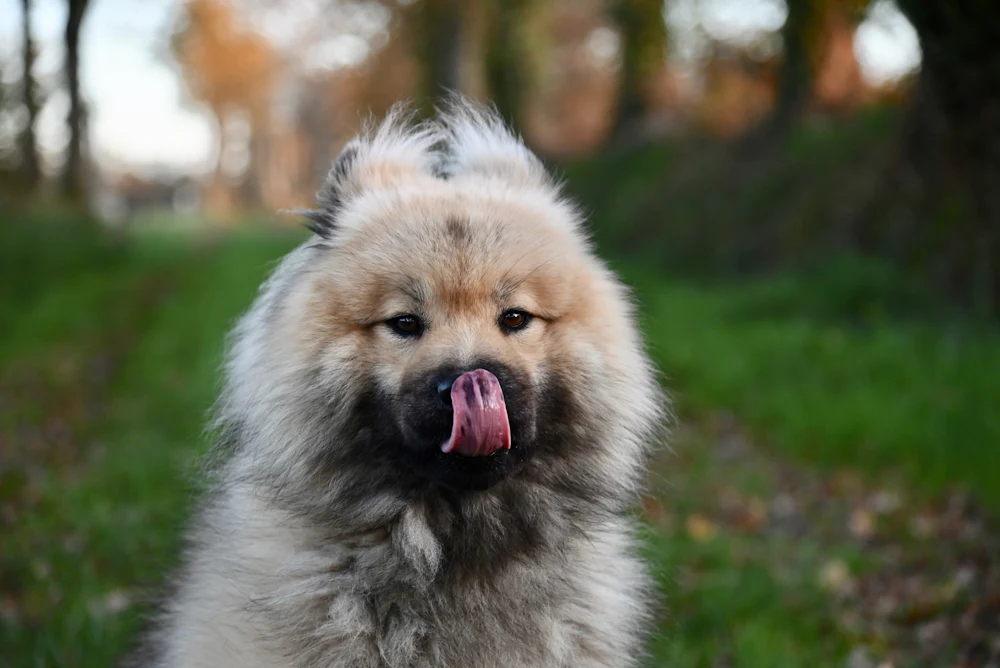
History
According to the FCI standard, it emerged in Germany in 1960 from a cross between a Chow Chow and a Wolfspitz, and was at first known as the Wolf-Chow. A further cross with the Samoyed gave the breed its final character and its name, Eurasier, a nod to the European and Asian ancestors. The standard credits Julius Wipfel as the founder of the breed.
The Eurasier is classified in Group 5, Section 5, Asiatic spitz and related breeds, and its stated use is simply companion dog, with no working trial. Breeding clubs have long placed weight on temperament and on close contact with the family, and that purpose shows in the dogs.
Temperament
The FCI describes a self-assured, calm and even-tempered dog with high resistance to provocation, alert without being noisy, and very strongly bonded to its family. Towards strangers it is relaxed and not obtrusive. Many are reserved with new people for the first few minutes and then politely indifferent, which suits a household with a steady flow of visitors.
The standard states that the dog needs close contact with its family and consistent training, and walkers see the result: a Eurasier left to its own devices for long hours can become withdrawn, fretful or destructive. It is sensitive to tone and to household mood. Harsh correction tends to make it shut down, while calm consistency makes it biddable.
Children and other pets
Eurasiers are generally patient and gentle with children in their own household, and their calm nature makes them easy to live with around a toddler. As with any medium-sized dog, supervise young children and teach them not to hug or hover over a dog that wants to withdraw. Most get on with other dogs, though some are aloof. The hunting instinct is modest, so cats are often accepted, particularly when introduced in puppyhood, but a running squirrel can still trigger a chase.
Exercise and the daily walk
An adult needs roughly an hour to an hour and a half daily, split into two or three outings. That is a moderate amount for a dog of this size, and a Eurasier is content with a mix of lead walks, a run in a safe area and some time on the terrace or balcony.
A Eurasier that walks alone with a stranger for an hour is a quieter, less engaged dog than the one walking beside its owner. Mental work counts too: short training games, scent searches and simple tricks. Puppies should not be over-exercised while the joints develop, and heavily coated dogs should avoid hard exercise in summer heat.
Training
Eurasiers learn readily when training is calm, fair and consistent. They are intelligent enough to detect inconsistencies, and the breed standard's call for consistent training is no accident. Reward-based methods work best, with short sessions and plenty of praise. Raised voices and heavy hands tend to produce a dog that simply looks away and shuts down, which is not the same as obedience.
Early socialisation matters because natural reserve with strangers can harden into wariness if the dog is never exposed to variety. Puppy classes, trips on the tram, the lift, busy pavements and friendly visitors all help. Recall is usually good in a bonded dog, but it is not guaranteed, so use a long line in unfamiliar places. Teach the dog to be alone for short periods from the start, as this is the area most families underestimate.
Coat and grooming
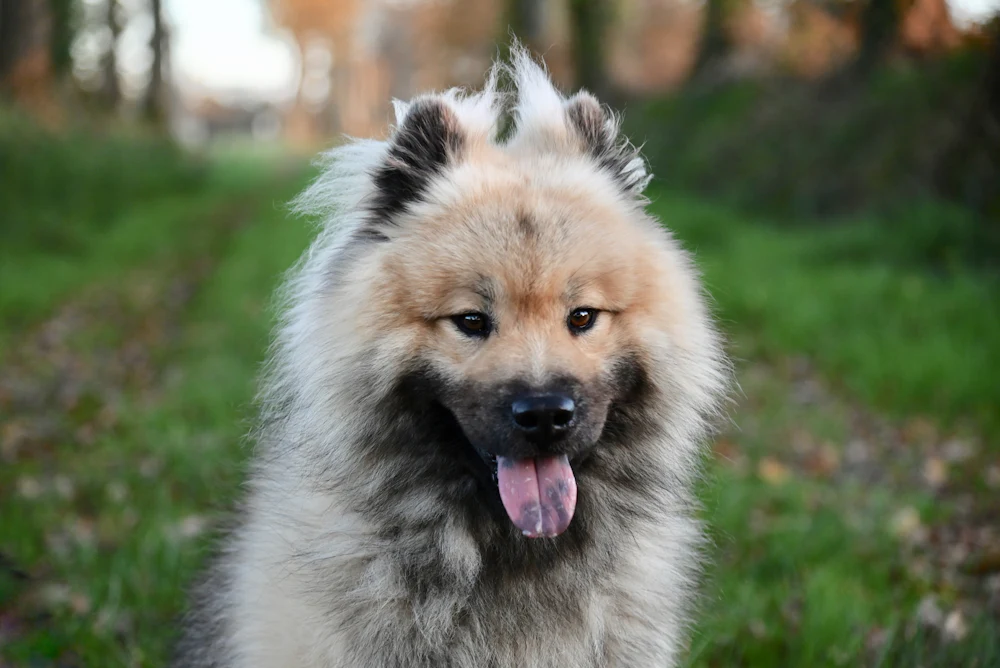
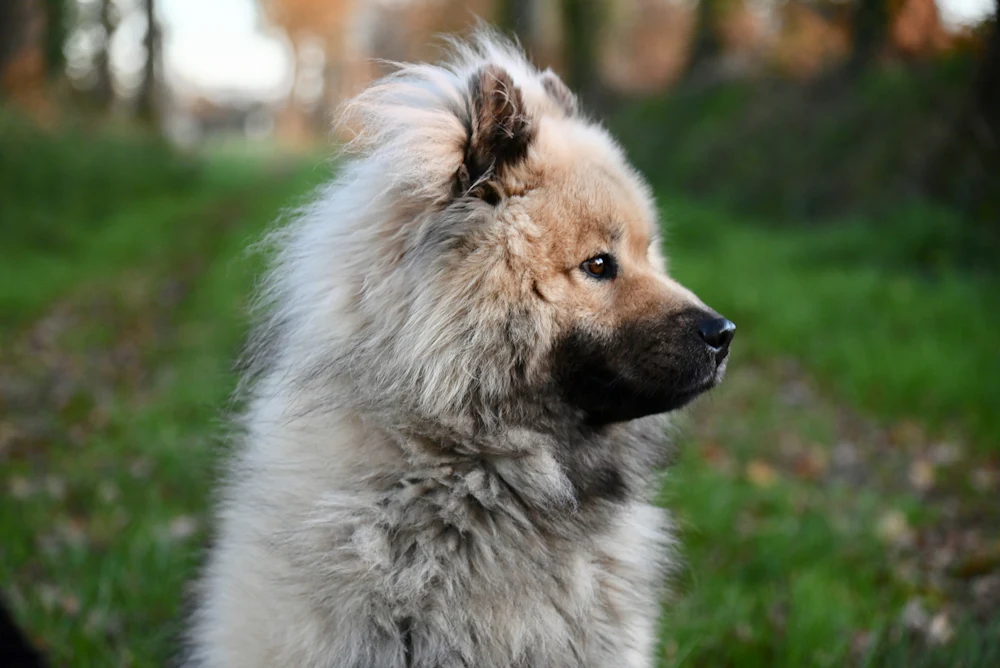
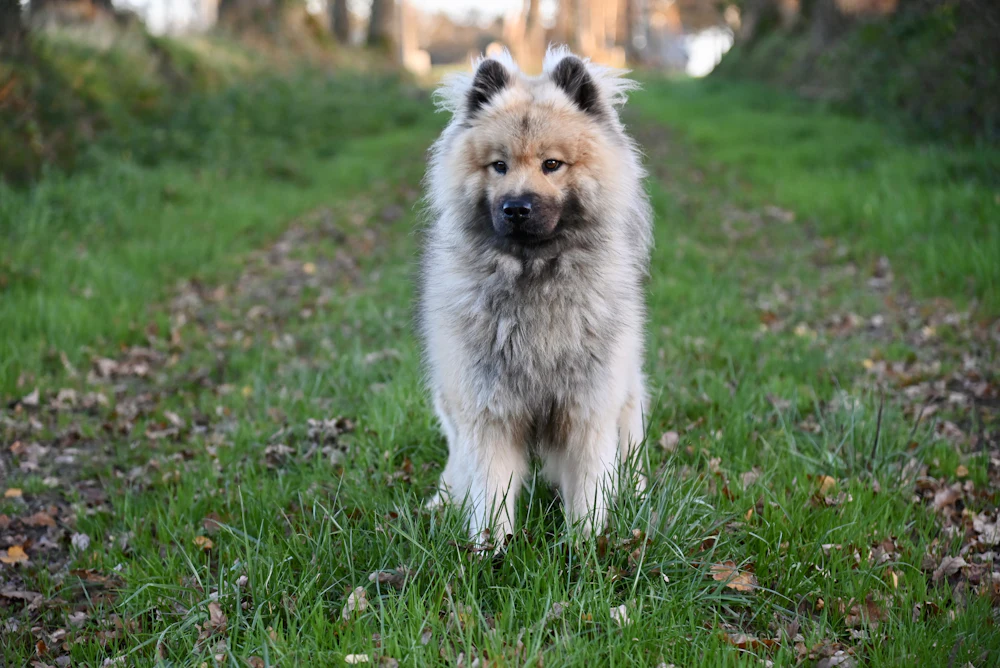
The standard asks for a thick undercoat with medium-long, straight, loosely lying guard hair, shorter on the muzzle, face and ears, with feathering on the legs and tail and breeches behind. It sheds steadily and heavily twice a year, when daily brushing is needed to avoid mats behind the ears and in the breeches. Two or three sessions a week suffice otherwise. All colours and combinations are permitted except pure white, white patches (piebald) and liver. Do not clip the coat, as it protects against both cold and sun.
Feeding and weight
Feed a good complete diet for a medium-sized dog, in two meals a day. Eurasiers are not usually fussy, but they can gain weight easily if treats are not counted, which their thick coat conveniently hides. Introduce changes in diet gradually, and keep fresh water available after walks, especially in summer.
Work out a starting calorie figure and food weight with the calorie calculator. Not sure this is the right breed? Take the quiz.
Health
Every breed carries predispositions. These are the conditions most often discussed for the Eurasier, not a prediction for any individual dog.
- Hip dysplasia (poor hip joint formation)
- Patellar luxation (slipping kneecaps)
- Eyelid abnormalities such as entropion, where the lid rolls inwards
- Hypothyroidism (underactive thyroid)
- Skin and ear problems, often linked to the thick coat and allergies
What to ask the breeder. Ask to see hip, patella, eye and thyroid results for both parents, and whether the breeder is registered with a recognised Eurasier club that tests and monitors its dogs.
Choosing a puppy
Eurasier puppies are soft, round and quiet, and they bond quickly. Begin handling paws, ears and mouth in the first weeks, and start short periods of separation in the first days at home so that alone time never becomes a shock. Socialise gently and widely, without forcing contact with every dog or person. Keep stairs and long walks limited while the joints are growing, and use the lift where there is one.
In Luxembourg the national kennel club is the Fédération Cynologique Luxembourgeoise (FCL), a member of the FCI. Many owners also buy from breeders in Germany, France or Belgium; a puppy coming from another EU country must be microchipped and vaccinated against rabies, which in practice means it cannot travel before about fifteen weeks of age. Where to get a dog in Luxembourg.
The older Eurasier
Eurasiers often keep their calm charm well into old age, but from about nine or ten years joints stiffen and the coat thins. Keep walks shorter and more frequent, watch for weight gain and ask your vet about regular checks of thyroid, eyes and teeth. Older dogs are often more anxious when their person is away, so keep routines gentle and predictable.
A realistic day
A realistic weekday for a working household in Luxembourg City, with a midday visit. Adjust it to your dog, not the other way round.
Unhurried lead walk of 30 minutes with the owner, then breakfast and a brush of the feathering if it is moult season.
Owner leaves for work; the dog settles on its own bed with a chew toy, having had its main walk first.
Midday visit from a walker: 40 minutes in a quiet park, fresh water, a short training game and some company.
Evening walk with the owner of about an hour, including a safe off-lead run if the area is quiet.
Short final outing, a few minutes of cuddling on the sofa, then bed.
An Eurasier in Luxembourg
A Eurasier can do well in a flat provided the lift works, the walks are regular and someone is around for much of the day. It is a clean, quiet dog that does not bark without cause, which neighbours appreciate. Luxembourg City suits it: the Pétrusse valley, Parc Merl and the Municipal Park give variety close to home, and the Bambësch and Grünewald forests are good for weekend outings. Free buses and trams make those outings simple, though a calm dog will still need a little practice on the platform.
With its dense double coat, the breed suffers when temperatures reach the 30s °C, so walk early and late, bring water and never leave the dog in a parked car. Never shave the coat, which insulates against heat as well as cold. Remember the standard obligations of dog ownership here: a microchip, declaration to the commune, third-party liability insurance and the annual dog tax.
Every dog in Luxembourg must be identified, declared to the commune and covered by liability insurance. How registration works.
When you travel
A sitter must understand that this breed is strongly attached to its family and may be subdued or anxious without them. Keep the usual walk timings and feeding routine, and plan for company rather than a visit to a shut-in dog. Brush the coat daily in moult season, offer water often in warm weather, and avoid hard play in the heat. Leave the vet's number and tell the sitter the dog may be wary with strangers at first.
PAWLY's holiday and overnight care takes place in your home, so your dog keeps its own bed and routine.
Myths and facts
MythEurasiers are just Chow Chows in a nicer coat.
FactThe breed does include Chow Chow, Wolfspitz and Samoyed ancestry, but the standard asks for a calm, family-focused companion, and the character is generally much softer and more open than a typical Chow.
MythA calm dog can be left alone all day.
FactThe standard stresses the very strong bond with the family and the need for close contact. A Eurasier left alone for long hours often becomes withdrawn or destructive.
MythThe thick coat means they love the cold and cope with heat.
FactThe coat insulates in both directions, but a dense double coat is a burden at 30 °C. Exercise is best in the cool of the morning and evening.
Is it the right dog for you?
Suits
- Families who are home a good deal of the day
- Owners who want a calm, quiet companion
- People who like a dog that is reserved, not clingy to strangers
- Households ready for regular brushing and seasonal moulting
Think twice if
- The dog would be alone for most of the working day
- You want a social dog that makes friends at every park
- You dislike loose hair on clothes and furniture
- You cannot manage walks in the early morning during hot summers
Questions owners ask
Is a Eurasier a good first dog?
It can be, for a thoughtful owner. The breed is intelligent, gentle and not especially demanding physically. The challenges are sensitivity, the need for companionship and early socialisation, so research the breeder carefully and plan for time at home.
Does a Eurasier bark a lot?
No. The FCI standard describes the breed as watchful without excessive vocalisation, and most Eurasiers bark only to announce something unusual. They are generally good neighbours in a flat.
How much does a Eurasier shed?
Moderately through the year, then heavily during the twice-yearly moult, when the undercoat comes out in clumps. Daily brushing for a couple of weeks keeps the flat manageable and the coat healthy.
Can a Eurasier cope with Luxembourg summers?
With care, yes. Walk early and late, offer shade and water, avoid exertion at midday and never shave the coat.
Sources
Photo: Unsplash (Unsplash License) · Photo: Unsplash (Unsplash License) · Photo: Unsplash (Unsplash License) · Photo: Unsplash (Unsplash License) · Photo: Unsplash (Unsplash License)
General information for dog owners in Luxembourg, not veterinary or legal advice. Official facts (origin, size, group, history and temperament as described by the breed standard) follow the FCI standard; health and care sections reflect breed-club and veterinary guidance and are typical ranges rather than rules. For your own dog, ask your vet, the breed club or your commune. How this guide is written and checked. Last reviewed 8 October 2026.
Need someone for your Eurasier?
PAWLY offers an individual 45-minute walk or a home visit at your dog's pace, the same walker every time, and a written report with photos after every visit, across Luxembourg City.
Read next: the journal, for the Eurasier
All articles
Dogs in hot weather: the Luxembourg summer guide
The Eurasier carries a heavy coat or a heavy frame, which makes a Luxembourg summer the hard season.

Dogs and cats in the same flat
The Eurasier can see small animals as prey; this covers living with a cat in a flat.

The itchy dog: working through it in the right order
Skin trouble is among the conditions discussed for the Eurasier; this is the order to work through it.
Similar breeds
All 198 breeds
Chow Chow
A dignified, lion-like Spitz with a blue-black tongue, loyal to its own people and politely indifferent to almost everyone else.
EnergyGroomingFlat life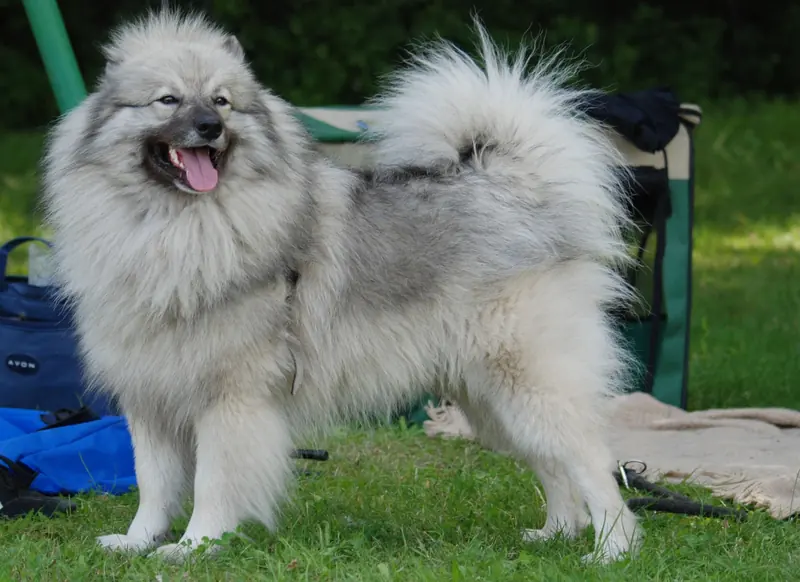
Keeshond
The grey, spectacled Spitz with a mane like a lion's collar, devoted to its household and convinced every doorbell is its business.
EnergyGroomingFlat life
Samoyed
The smiling white spitz of the Arctic: friendly, talkative and covered in fur.
EnergyGroomingFlat life

