


History
The Samoyed takes its name from the Samoyed tribes of northern Russia and Siberia. The FCI records that in the southern part of that region the dogs herded reindeer, while in the north they were used for hunting and for pulling sledges. They lived closely with their owners, and were even used as living heaters inside shelters, which helps explain a dog that is so dependent on people and so unwilling to be left in the yard.
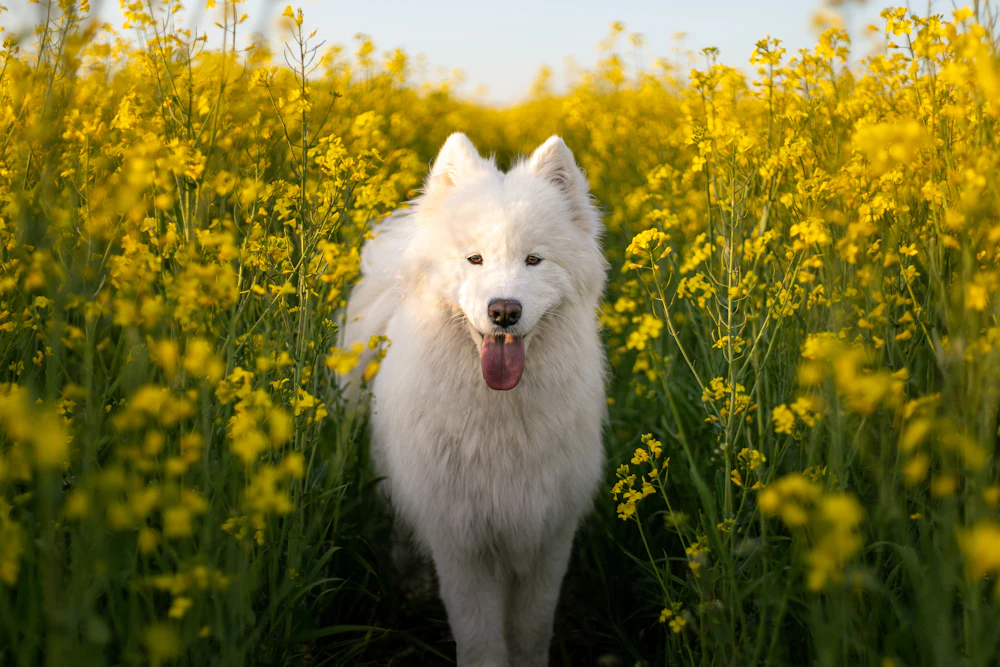
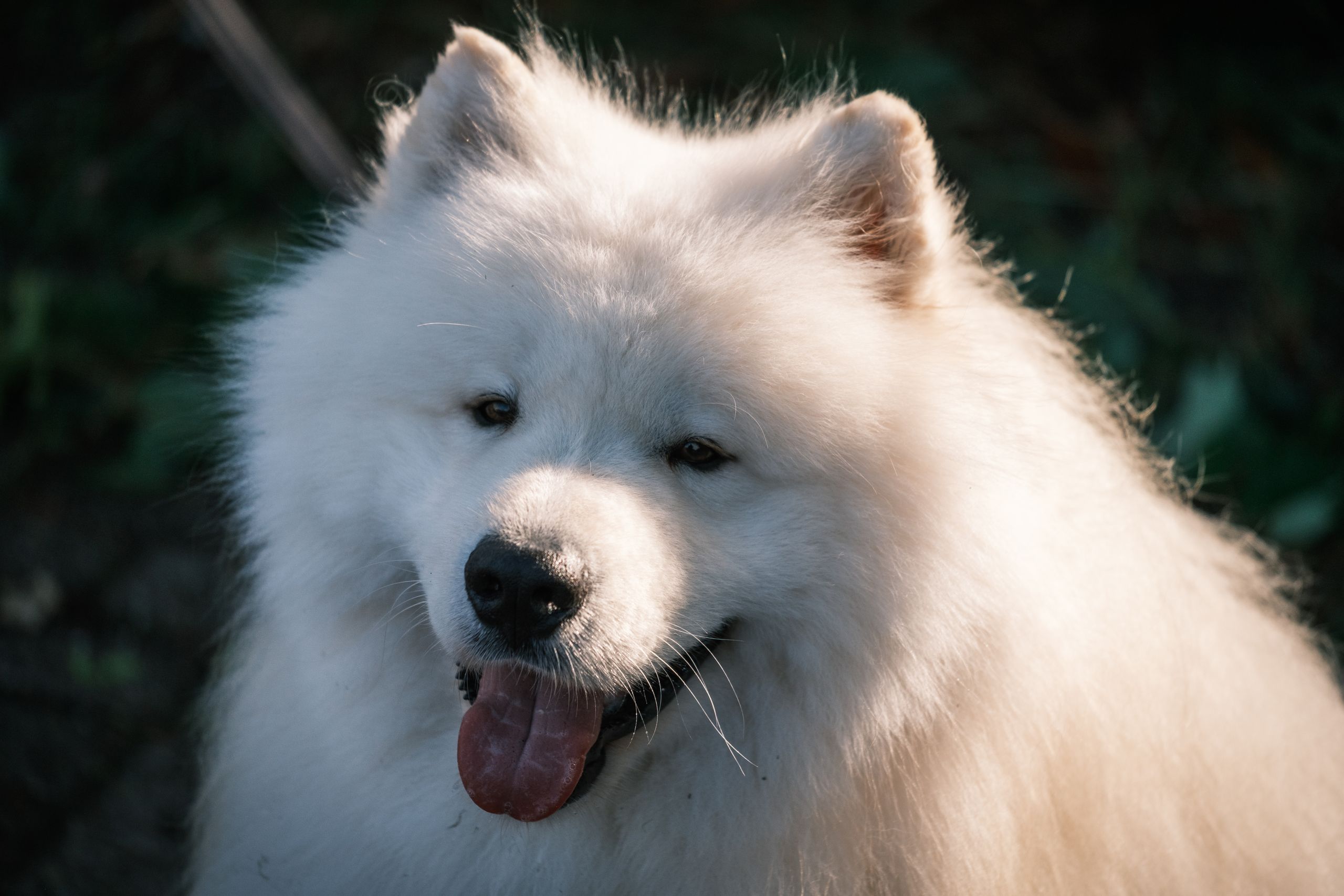
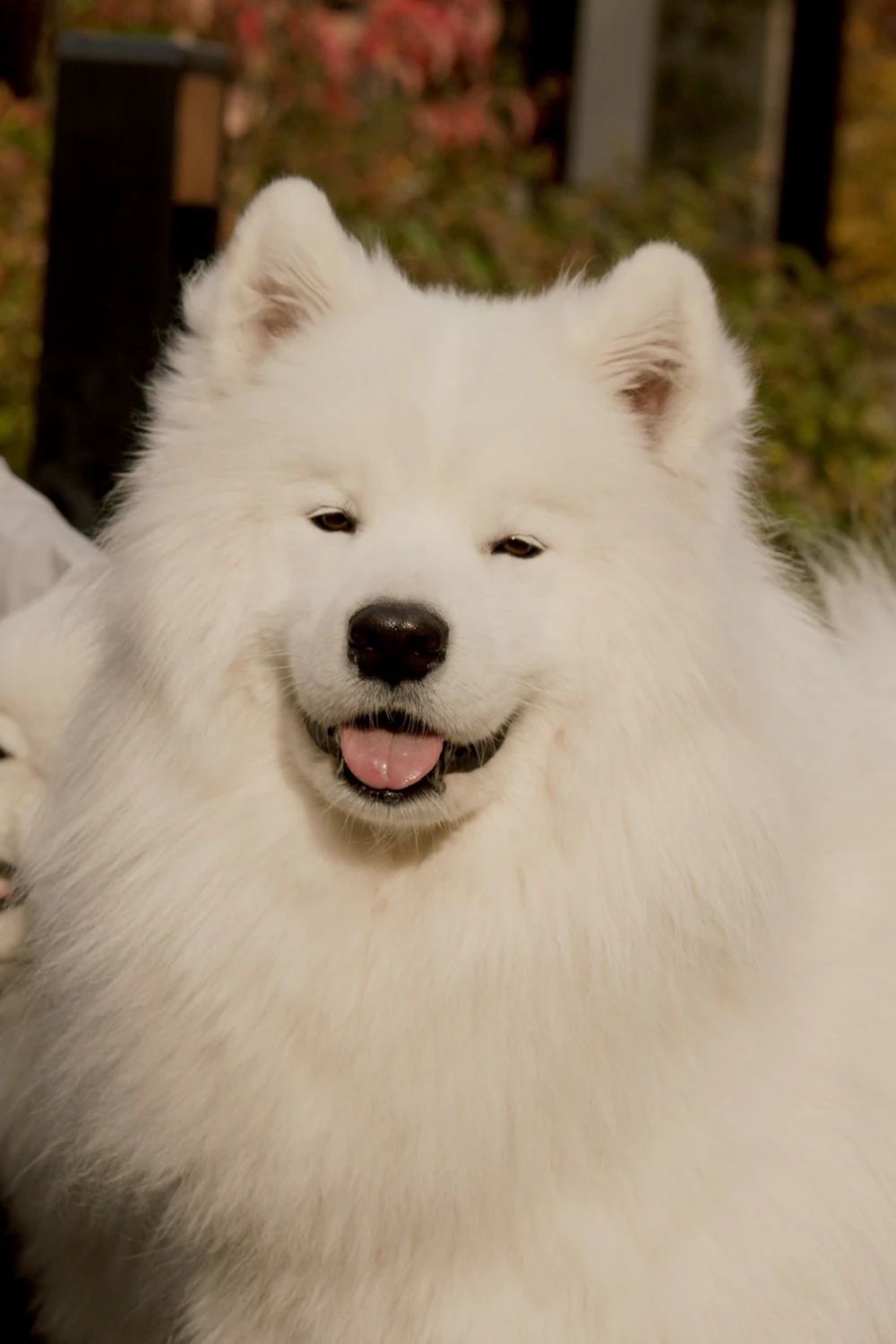
The British zoologist Ernest Kilburn Scott brought foundation stock to England in 1889, importing several dogs that formed the base for the western Samoyed. The first breed standard was established in England in 1909. The FCI describes a medium sized, elegant Arctic spitz that gives an impression of power, endurance, charm, suppleness, dignity and self-confidence. Its defining feature is the Samoyed smile, created by the shape of the eyes and the slightly upturned corners of the mouth.
Temperament
The FCI describes the Samoyed as friendly, open, alert and lively, never shy and never aggressive. It adds that the hunting instinct is minimal, and that the breed is highly social and unsuitable as a guard dog. That fits what most owners find: a dog that greets strangers as potential friends, announces them with a cheerful stream of chatter, and has no idea what a watchdog is for.
Samoyeds are talkative and expressive, with a repertoire of whoops, howls and conversational grumbles. They bond deeply, and they hate to be shut out of family life. Left alone for long hours, they can bark, dig and chew. They are also clever enough to find ways round simple barriers. Their joy is infectious, but their charm can mask stubbornness, so patience and humour serve the owner better than force.
Children and other pets
Samoyeds are famously good with children and enjoy games, although a bouncy, strong spitz can knock over very small children by accident. They usually get on well with other dogs. With the hunting instinct minimal, as the FCI notes, they are often easier with cats and other pets than many northern breeds, though introductions should be supervised. Their sociable nature means they need company, and they are not a dog to shut away from the family.
Exercise and the daily walk
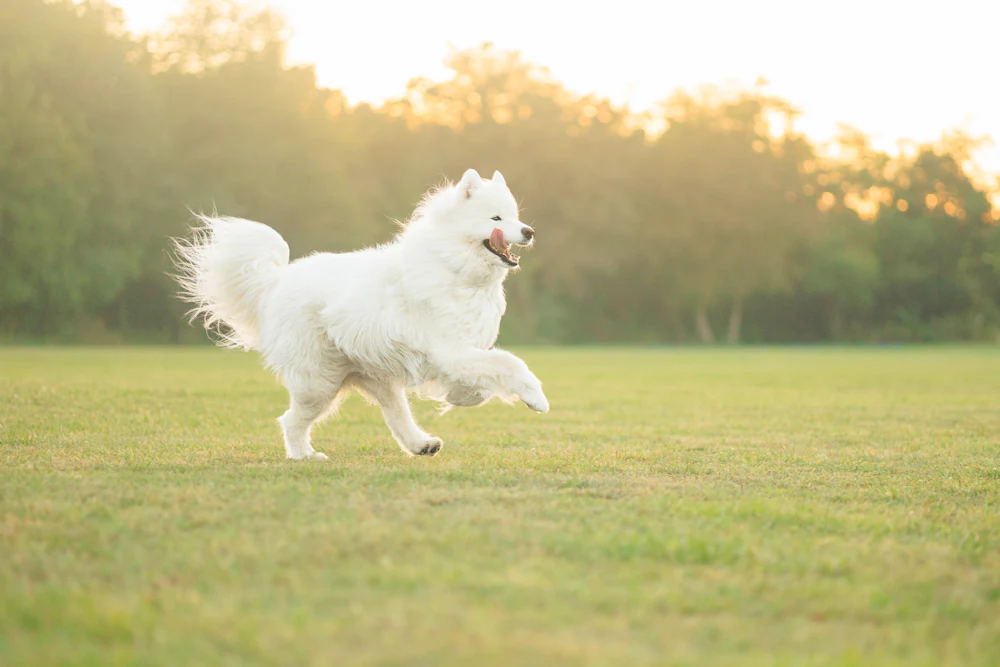
A healthy adult needs between an hour and a half and two hours of exercise a day. Samoyeds were bred for endurance, and they enjoy long walks, hiking, and cold weather pursuits such as pulling a sledge or skijoring. A short walk around the block leaves them restless. Give them a mix of steady distance and activity that engages the mind, and keep them under control near roads, because their sociable curiosity can lead them astray.
Mental work is as important as miles. Scent games, trick training, and sport such as agility or canicross provide variety and avoid boredom, which can show itself in noise and digging. Heat is the limiting factor: a dense polar coat is built for the Arctic, so in warm weather exercise early in the morning or late in the evening, rest in shade and provide plenty of cool water. Never leave the dog in a car.
Training
Samoyeds are intelligent and eager to please, but they are not obedient in the way of a collie. They think independently, they get bored with repetition, and they are easily distracted by people. Keep sessions short and varied, use rewards, and make learning a game. Harsh methods are unnecessary, and a cheerful dog quickly loses interest in a sullen trainer.
Early training should cover loose lead walking, since this is a strong breed that was designed to pull. Recall needs plenty of work, and for many Samoyeds a long line is wise even into adulthood. Teach calm greetings, so that the natural friendliness does not become jumping. Practise being alone in short stages, and prepare a plan for the noise, because a Samoyed that learns to complain loudly is hard to unlearn.
Coat and grooming
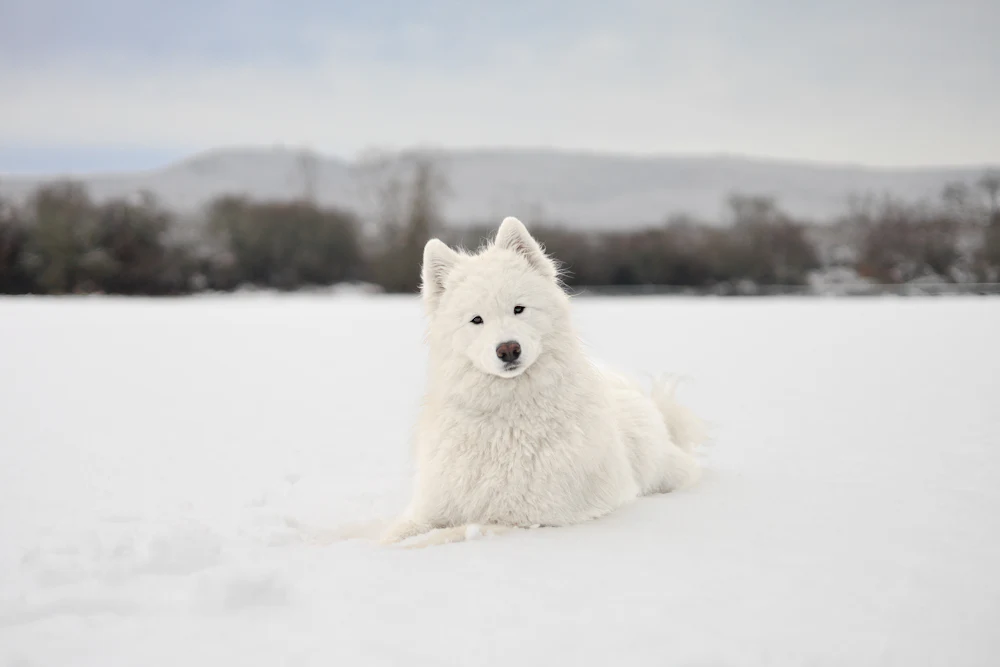
The FCI describes a profuse, thick, flexible and dense polar coat in two layers, a short, soft undercoat beneath a longer, harsher outer coat, with a ruff around the neck and shoulders and trousers on the hind thighs. It should have a glistening sheen. Permitted colours are pure white, cream, or white with biscuit. Brush several times a week, and daily during the heavy moults twice a year, when the undercoat comes out in clouds. Never shave the coat, and bath only when needed.
Feeding and weight
Feed a good complete diet suited to a medium sized, active dog, and adjust portions to keep the dog lean, since weight hides easily under a thick coat. Feel the ribs regularly rather than judging by sight. Two meals a day suit most adults. Some Samoyeds have sensitive digestion, so change foods gradually. Use part of the daily ration for training rewards, and always keep fresh water available, especially in warm weather.
Work out a starting calorie figure and food weight with the calorie calculator. Not sure this is the right breed? Take the quiz.
Health
Every breed carries predispositions. These are the conditions most often discussed for the Samoyed, not a prediction for any individual dog.
- Samoyed hereditary glomerulopathy (kidney disease)
- Hip dysplasia
- Diabetes
- Eye conditions including PRA
- Heat intolerance
What to ask the breeder. Hip scores, an eye examination and DNA tests offered by the breed club.
Choosing a puppy
Choose a breeder who tests the parents, with hip scores, eye examinations and the DNA tests offered by the breed club. Ask about kidney health in the line, since hereditary kidney disease occurs in the breed. Meet the mother and judge her sociable nature. A Samoyed puppy is a fluffy bundle that grows quickly, and it needs early socialisation, grooming practice and gradual alone time. Prepare for a lot of shedding, chatter and energy.
In Luxembourg the national kennel club is the Fédération Cynologique Luxembourgeoise (FCL), a member of the FCI. Many owners also buy from breeders in Germany, France or Belgium; a puppy coming from another EU country must be microchipped and vaccinated against rabies, which in practice means it cannot travel before about fifteen weeks of age. Where to get a dog in Luxembourg.
The older Samoyed
Samoyeds often stay lively into old age, but the later years need some care. Keep teeth clean, keep the dog lean and brush frequently, since older dogs may groom less easily. Watch for increased thirst, weight changes or stiffness, and have regular vet checks that include blood and urine tests. Heat is harder for an older dog, so keep the home cool in summer. Gentle walks and mental games keep an older Samoyed happy.
A realistic day
A realistic weekday for a working household in Luxembourg City, with a midday visit. Adjust it to your dog, not the other way round.
Brisk walk of 45 minutes, early and cool, with training practice.
Breakfast, then a quick brush.
Midday visit from a walker: toilet break, fresh water and a walk.
Longer outing in the forest or park, with games and sniffing time.
Brush the coat, a last toilet trip and bed.
A Samoyed in Luxembourg
A Samoyed in a Luxembourg flat is possible with a lift and a committed owner, but heat and shedding need planning. Summers can reach the 30s, which is hard on a polar coat: walk before breakfast and after dusk, keep rooms cool, and use the shade of the Bambësch and Grünewald forests. The Pétrusse valley, Parc Merl and Kinnekswiss provide good variety. Cooler months suit this breed best, and many Samoyeds come alive in cold, damp weather.
Every dog must be microchipped, declared to the commune and insured for third-party liability, and the commune charges an annual dog tax. Neighbours may not enjoy the vocal habits of a bored Samoyed, so exercise and company matter. Expect white hair on dark clothes and furniture, and regular brushing outdoors. Buses and trams are free nationwide, and a calm, well-trained Samoyed is a sociable traveller who will charm every passenger.
Every dog in Luxembourg must be identified, declared to the commune and covered by liability insurance. How registration works.
When you travel
Samoyeds hate to be alone, so a sitter who stays with the dog is far better than visits. Keep to the exercise, brushing and feeding routine, and make sure the dog is kept cool and has water at all times. Warn the sitter that a Samoyed can be vocal and may test boundaries, and that the coat must never be shaved. Leave the vet's number, the groomer's details and a note on any food sensitivities.
PAWLY's holiday and overnight care takes place in your home, so your dog keeps its own bed and routine.
Myths and facts
MythSamoyeds are only for cold climates.
FactThey cope better in cool weather, but with early walks, shade, cool rooms and a brushed coat, they can live in temperate places.
MythYou should shave a Samoyed in summer.
FactThe double coat helps regulate temperature and protects the skin. Shaving can spoil it and expose the skin to sun.
MythSamoyeds make good guard dogs.
FactThe FCI says the breed is unsuitable as a guard dog. They are friendly and social, and will greet a burglar like a visitor.
Is it the right dog for you?
Suits
- Sociable, active owners
- Families with children
- People who enjoy hiking in cool weather
- Owners who do not mind white hair and chatter
Think twice if
- You dislike constant shedding
- You are out for long days
- You want a quiet, private dog
- You live somewhere without cool rooms in summer
Questions owners ask
Do Samoyeds shed a lot?
Yes, constantly and then dramatically twice a year, when the undercoat comes out in clumps. Brush several times a week, and daily during the moult. Many owners use a good vacuum and accept white hair as a fact of life.
Are Samoyeds good in hot weather?
Not particularly. A dense polar coat suits the Arctic, so in summer walk early and late, provide shade and water, and keep indoor rooms cool. Never shave the coat, and never leave the dog in a car.
Do Samoyeds bark a lot?
They are talkative, with a range of barks, howls and grumbles. A bored or lonely Samoyed can be noisy. Plenty of exercise, company and training for quiet help, but this is not a silent breed.
How big is a Samoyed?
The FCI gives an ideal height of 57 cm for males, plus or minus 3 cm, and 53 cm for females, plus or minus 3 cm. The standard sets no weight, though healthy adults are lean and athletic.
Sources
Photo: Unsplash (Unsplash License) · Photo: Unsplash (Unsplash License) · Photo: Unsplash (Unsplash License) · Photo: Pexels (Pexels License) · Photo: Unsplash (Unsplash License)
General information for dog owners in Luxembourg, not veterinary or legal advice. Official facts (origin, size, group, history and temperament as described by the breed standard) follow the FCI standard; health and care sections reflect breed-club and veterinary guidance and are typical ranges rather than rules. For your own dog, ask your vet, the breed club or your commune. How this guide is written and checked. Last reviewed 8 October 2026.
Need someone for your Samoyed?
PAWLY offers an individual 45-minute walk or a home visit at your dog's pace, the same walker every time, and a written report with photos after every visit, across Luxembourg City.
Read next: the journal, for the Samoyed
All articles
Dogs in hot weather: the Luxembourg summer guide
The Samoyed carries a heavy coat or a heavy frame, which makes a Luxembourg summer the hard season.

Building a recall you can actually rely on
Scent and movement can cancel a recall; this is the method for the Samoyed.

Grooming and coat care through the Luxembourg year
The Samoyed has a coat that needs a routine that holds through the Luxembourg seasons.
Similar breeds
All 198 breeds
Siberian Husky
A sled dog built to run for hours in the cold, friendly with everyone and loyal to no fence.
EnergyGroomingFlat life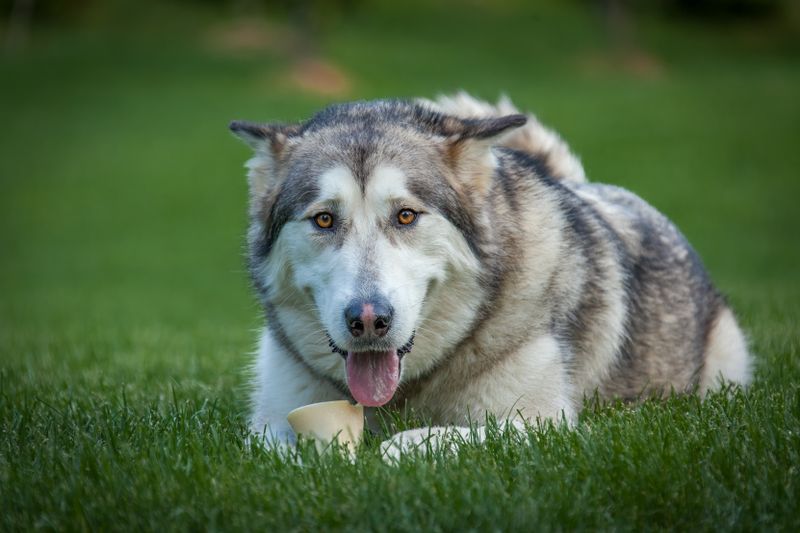
Alaskan Malamute
Built to haul heavy freight across snow, a friendly, powerful and opinionated companion that needs work, cool weather and an owner with patience.
EnergyGroomingFlat life
Eurasier
A calm, watchful family spitz that wants to be wherever its people are, and sulks quietly when it is not.
EnergyGroomingFlat life

