


History
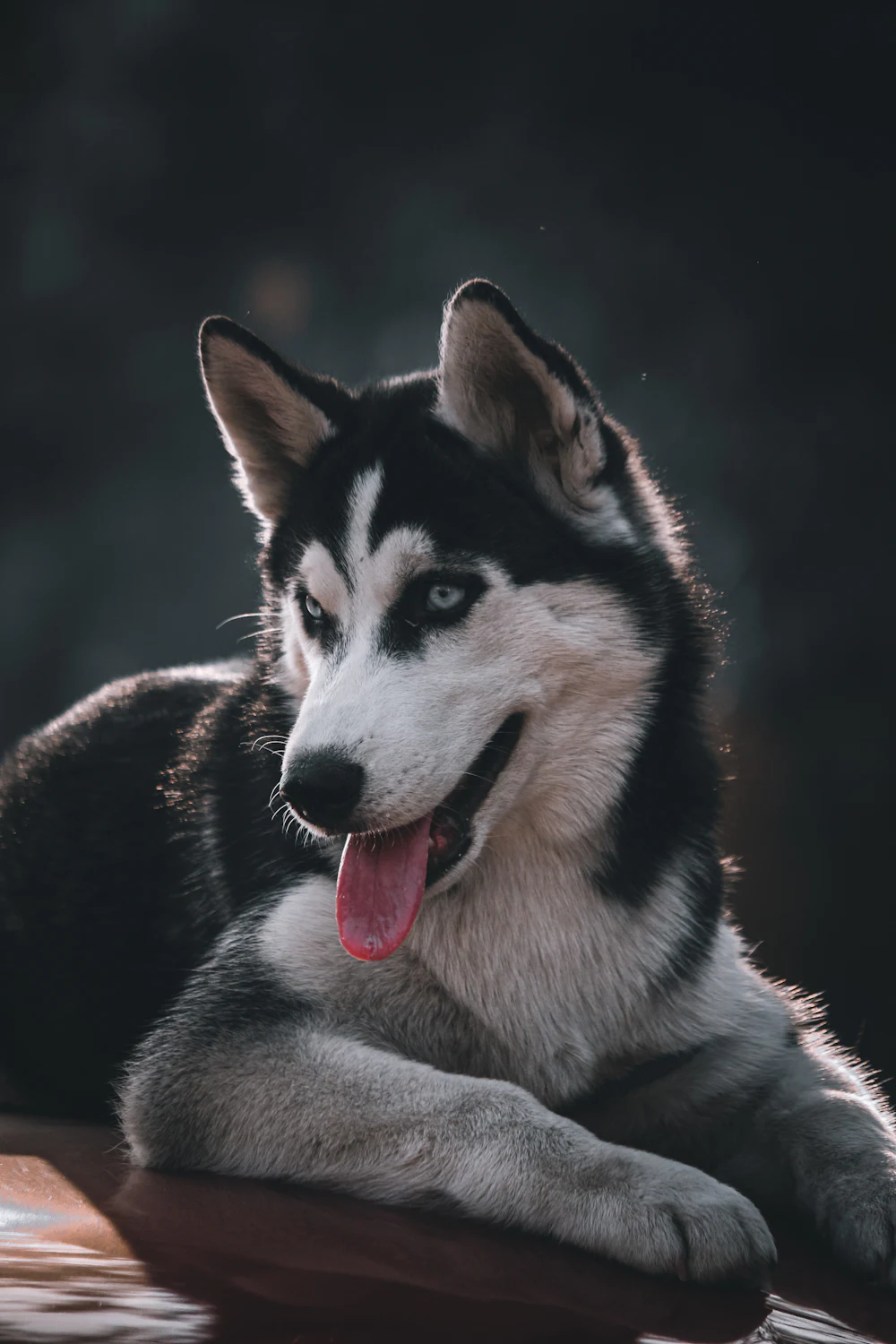
The Siberian Husky descends from the sled dogs of the Chukchi people of north-eastern Siberia, who bred them to cover long distances with light loads in extreme cold. The FCI lists the United States as the country of origin and patronage of the standard, where the breed was established after its arrival from Siberia. The standard lists its use as sledge dog and describes a medium-sized working dog, quick and light on its feet and free and graceful in action.
The breed became famous in 1925 during the serum run to Nome, Alaska, when relay teams of sled dogs, including the huskies Togo and Balto, carried diphtheria antitoxin across hundreds of kilometres of frozen country to a stricken town. The FCI places the breed in Group 5, Section 1, Nordic sledge dogs, and the current standard is dated November 2022. Its size, a medium dog of balanced proportions, reflects the original purpose: endurance and speed rather than raw pulling power.
Temperament
The FCI states that the characteristic temperament of the Siberian Husky is friendly and gentle, but also alert and outgoing. In practice a Husky greets strangers as friends, which makes it a hopeless guard dog and a very sociable one. It enjoys people, other dogs and crowds, and it is usually forgiving of children, though its size and energy make supervision sensible around toddlers.
The friendliness comes with an independent mind. A Husky was bred to make decisions at the front of a team, so it asks why before it obeys. Many have a strong urge to run and a high prey drive towards cats and small animals. They are escape artists: they dig, jump, and open gates and latches. Bored Huskies howl and talk, and a dog left alone for long days will tell the whole building about it.
Children and other pets
Huskies are friendly with people, including children, and usually sociable with other dogs. Their size and exuberance can knock over small children, so supervise play. Cats, rabbits and small animals are at real risk from their prey drive, even in the same household, though a Husky raised with a cat can sometimes learn to live alongside it. Never trust it with unfamiliar small animals.
Exercise and the daily walk
Two hours or more a day is the honest figure, and it needs to be real running, not a pavement stroll. Huskies were bred to pull for hours, so canicross, bikejoring and scootering with a proper harness are excellent outlets in cool weather. Without that outlet, a Husky will find its own, which usually means digging, chewing or escaping.
Most Huskies cannot be trusted off lead in unfenced areas, because the urge to run wins over recall. Use a long line or a securely fenced field. Heat is the main risk: the dense coat insulates, so exercise hard only in cool weather, and build in rest. Mental work also counts, whether sled-style games, scent trails or training sessions that give the dog something to think about.
Training
Huskies are intelligent and independent, bred to make decisions at the front of a team. They learn quickly but ask why. Reward-based training with high-value food and short sessions works best, and harshness only makes them harder to handle. Harness training for pulling sports gives them a legitimate outlet for the urge to run, and teaching loose-lead walking early prevents a lifetime of being towed.
Recall is the honest weak point: most Huskies should not be let off lead outside secure areas. Build containment into your life with a secure garden fence, closed doors and a harness that fits well. Teach a solid leave it and a settle on a mat. Socialisation is easy with a naturally friendly breed, but still do it widely, because a Husky that has met everything is calmer in a busy city.
Coat and grooming
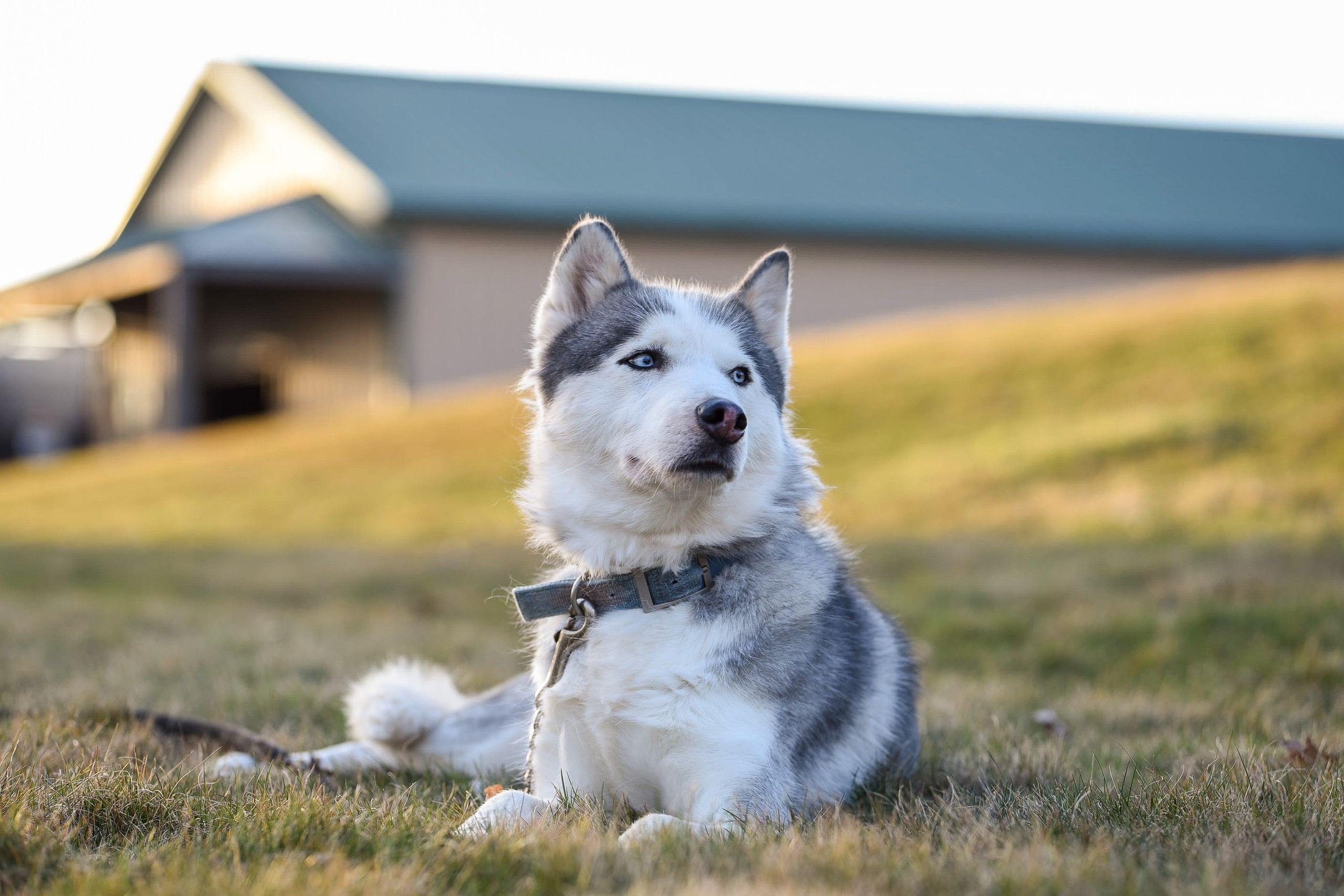
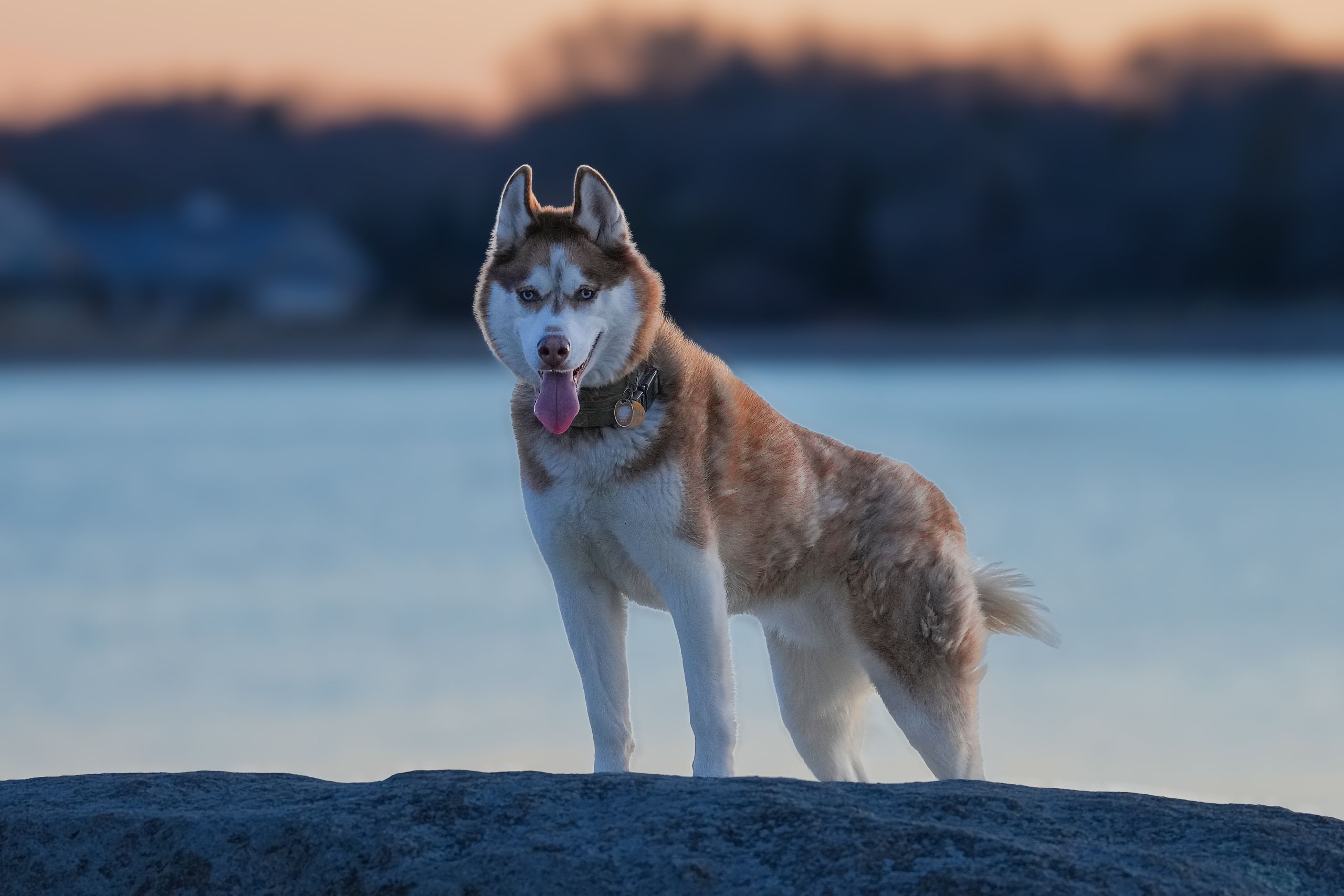
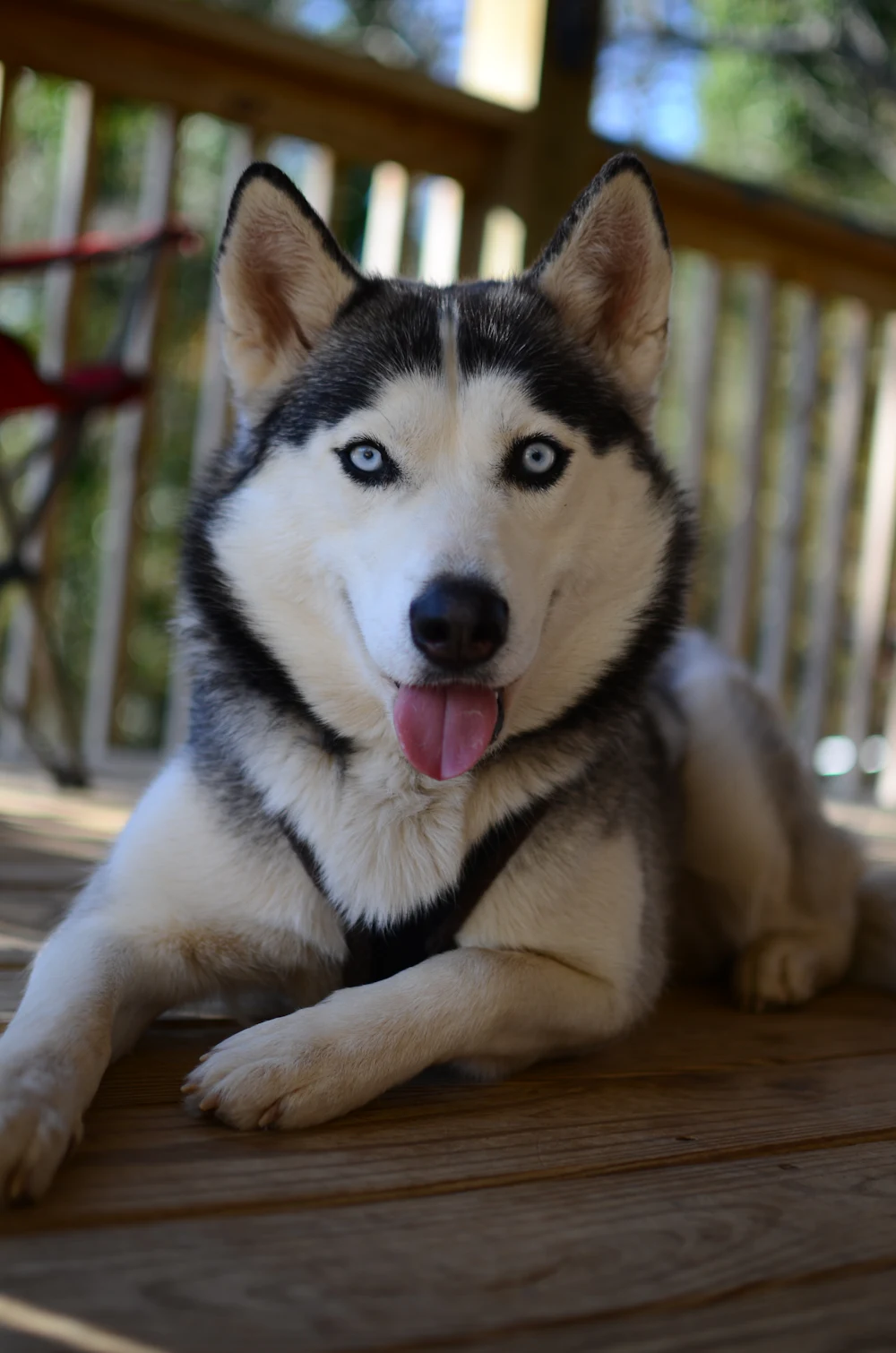
The FCI describes a double coat of medium length, with allowable colours including black, grey, agouti, sable, red and white, and eyes that may be brown or blue, one of each, or particoloured. The coat is self-cleaning and largely odourless, but it blows once or twice a year in spectacular quantities. Brush weekly, and daily during the shed. Do not shave a Husky, since the coat insulates against heat as well as cold.
Feeding and weight
Huskies are often efficient eaters, and many need less food than people expect for their size. Adjust portions to activity, and weigh the dog regularly, since under a thick coat weight changes are hard to see. Feed after exercise rather than before, and keep fresh water available. Some are fussy, and others will steal anything on a counter, so store food securely and avoid sudden changes of diet.
Work out a starting calorie figure and food weight with the calorie calculator. Not sure this is the right breed? Take the quiz.
Health
Every breed carries predispositions. These are the conditions most often discussed for the Siberian Husky, not a prediction for any individual dog.
- Eye conditions, such as juvenile cataracts, corneal dystrophy and progressive retinal atrophy
- Hip dysplasia
- Zinc-responsive dermatosis (a skin condition linked to zinc uptake)
- Hypothyroidism (underactive thyroid)
- Overheating in warm weather, because of the dense coat
What to ask the breeder. Ask for eye examination results and hip scores for both parents, and about eye conditions in the lines.
Choosing a puppy
Ask for eye examinations and hip scores for the parents. Meet the mother, and be honest with yourself about the breed's escape and prey instincts before committing. Puppies are friendly and chaotic, so prepare for chewing, digging and howling. Start harness training, recall games and gentle introduction to lifts, traffic and other dogs early, and never overexercise a growing puppy on hard ground.
In Luxembourg the national kennel club is the Fédération Cynologique Luxembourgeoise (FCL), a member of the FCI. Many owners also buy from breeders in Germany, France or Belgium; a puppy coming from another EU country must be microchipped and vaccinated against rabies, which in practice means it cannot travel before about fifteen weeks of age. Where to get a dog in Luxembourg.
The older Siberian Husky
Many Huskies stay active well into old age. Keep eyes checked and exercise adapted to the temperature, with shorter and gentler runs as the years pass. Watch for stiffness, weight change and thinning coat, which may indicate thyroid trouble. Many older Huskies still enjoy a good trot, so keep a regular routine and allow plenty of cool, quiet rest.
A realistic day
A realistic weekday for a working household in Luxembourg City, with a midday visit. Adjust it to your dog, not the other way round.
Canicross or a long walk while the air is cool.
Breakfast and a settled rest before work.
Midday walk or visit, essential to prevent howling.
Evening run or long walk after the heat of the day.
Short final walk.
A Siberian Husky in Luxembourg
Summer is hard on a Husky here: Luxembourg regularly reaches the 30s, so exercise only in the cool early morning and late evening, and keep the flat shaded and ventilated. In winter, Huskies are in their element and love snow and frost. Their howling and talking carries in apartment buildings, and a bored Husky alone all day will let the neighbours know. A flat is possible only with a very active owner.
The Bambësch and Grünewald forests offer the real running space, best on a long line or in secure areas, with free buses and trams helping you reach them without a car. The Pétrusse valley and Parc Merl are fine for shorter outings on the lead. Lift manners matter, as a strong, friendly Husky can pull hard. Insist on a harness that fits, and train loose-lead walking before the dog is full size.
Every dog in Luxembourg must be identified, declared to the commune and covered by liability insurance. How registration works.
When you travel
Escape risk is the key concern when you are away: a sitter must know every gap in the fence and every door that does not close. Huskies should never be left in a warm car, and they need their exercise to continue, with long sessions in cool hours. Keep the routine, use a well-fitted harness and a secure lead, and expect howling if the dog is left too long.
PAWLY's holiday and overnight care takes place in your home, so your dog keeps its own bed and routine.
Myths and facts
MythHuskies are part wolf.
FactThey are a domestic breed with a long working history, not a wolf hybrid.
MythHuskies need to be shaved in summer.
FactThe double coat insulates against heat as well as cold, and shaving can damage it. Shade, water and cool exercise do more.
MythHuskies are good guard dogs because they look fierce.
FactThe FCI describes them as friendly and gentle, alert and outgoing. A Husky will greet a burglar like a visitor.
Is it the right dog for you?
Suits
- Very active owners
- Runners and canicross enthusiasts
- Households with a secure garden
- People who enjoy a sociable, vocal dog
Think twice if
- You expect off-lead reliability
- You have cats or small pets
- You leave the dog alone for long days in a flat
- You dislike hair and noise
Questions owners ask
Can a Husky live in a flat?
It is possible with a very active owner, but it is not an easy match, especially in summer and with long working days. A Husky needs hours of real exercise, secure containment and company.
Husky or Alaskan Malamute?
The Malamute is larger and heavier, bred for hauling loads. The Husky is lighter and built for speed and distance; the FCI gives males 53.5 to 60 cm and 20.5 to 28 kg.
Why do Huskies howl?
Howling and talking are natural for the breed and are often a response to boredom, loneliness or a sound they like. Exercise, company and training reduce it a good deal, but expect some, and warn the neighbours when the dog arrives.
Are Huskies good with other dogs?
Usually, since the breed is sociable and was bred to work in teams. They can play roughly and chase, so supervise introductions, keep small dogs and cats apart, and choose playmates who enjoy a fast game.
Sources
Photo: Pexels (Pexels License) · Photo: Pexels (Pexels License) · Photo: Pexels (Pexels License) · Photo: Unsplash (Unsplash License) · Photo: Unsplash (Unsplash License)
General information for dog owners in Luxembourg, not veterinary or legal advice. Official facts (origin, size, group, history and temperament as described by the breed standard) follow the FCI standard; health and care sections reflect breed-club and veterinary guidance and are typical ranges rather than rules. For your own dog, ask your vet, the breed club or your commune. How this guide is written and checked. Last reviewed 8 October 2026.
Need someone for your Siberian Husky?
PAWLY offers an individual 45-minute walk or a home visit at your dog's pace, the same walker every time, and a written report with photos after every visit, across Luxembourg City.
Read next: the journal, for the Siberian Husky
All articles
Dogs in hot weather: the Luxembourg summer guide
The Siberian Husky carries a heavy coat or a heavy frame, which makes a Luxembourg summer the hard season.

Building a recall you can actually rely on
Scent and movement can cancel a recall; this is the method for the Siberian Husky.

Working breeds in a city flat: the honest version
High-drive dogs like the Siberian Husky can live in a flat, but it takes a plan.
Similar breeds
All 198 breeds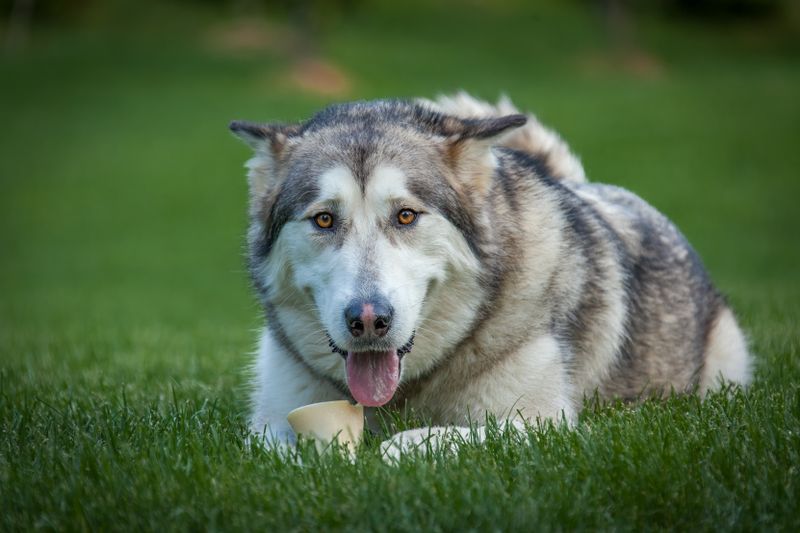
Alaskan Malamute
Built to haul heavy freight across snow, a friendly, powerful and opinionated companion that needs work, cool weather and an owner with patience.
EnergyGroomingFlat life
Samoyed
The smiling white spitz of the Arctic: friendly, talkative and covered in fur.
EnergyGroomingFlat life
Akita Inu
A dignified, loyal Japanese spitz, made famous by Hachikō, and a serious dog for experienced owners.
EnergyGroomingFlat life

