


History
The Alaskan Malamute takes its name from the Mahlemut, an Inuit people of north-western Alaska who developed these dogs to pull heavy loads over long distances. The Royal Kennel Club describes it as the strongest of the sled dogs. Unlike lighter racing breeds, the Malamute was a freighting dog, built for stamina and power rather than speed, and that purpose still shapes its body and temperament today: heavy bone, strong feet and a mind that prefers steady work to quick bursts.
The FCI standard follows the American standard and carries no separate historical section; the United States holds the breed, which was recognised by the American Kennel Club in 1935. The current FCI standard, dated 2023, places it in Group 5, Section 1, among the Nordic sledge dogs. Its sizes are given as a desirable freighting size, a reminder that type, proportion and movement matter more than height alone. The standard is explicit that size should not outweigh functional attributes.
Temperament
The FCI standard describes the Malamute as an affectionate, friendly dog, not a one-man dog, a loyal and devoted companion that is playful on invitation and impressive in its dignity once mature. Most greet visitors warmly, which makes them poor guard dogs, and they enjoy being with the family rather than shut away.
That friendliness comes with a strong will. A Malamute was bred to work in a team and to think for itself in difficult conditions, so it does not obey blindly. Many are vocal, more given to howling and talking than barking, and some can be assertive with other dogs of the same sex. Boredom shows quickly in digging, chewing and escape attempts.
Children and other pets
A well-raised Malamute is usually kind and patient with children, but its size and strength mean young children should never walk it and play should be supervised. Many live happily with another dog of the opposite sex, though some adults do not tolerate same-sex dogs. The prey drive is strong: cats, rabbits and poultry are often seen as quarry, and even a dog raised with a cat may not extend that tolerance to cats outdoors.
Exercise and the daily walk
An adult Malamute needs two hours or more of activity a day, and it thrives when that activity has a purpose. Long walks, hiking, pulling sports such as canicross, bikejoring or scootering, and carrying a light pack are all ideal once the dog is fully grown. A Malamute that only gets a short stroll around the block will find its own outlets, rarely ones its owner likes.
Off-lead freedom is risky. The combination of independence and prey drive means many Malamutes will follow a scent or chase wildlife and not return. Use a long line in the forest and a secure garden or enclosed field for free play. In warm weather move exercise to early morning and late evening, and never work the dog hard in heat.
Training
Training needs to start early and continue throughout life. Malamutes learn quickly when they see a reason to cooperate, so food rewards, games and short sessions work far better than repetition. They test boundaries, particularly in adolescence, and an owner who is inconsistent will soon find the dog making the rules about sofas, food and doors.
Teach loose-lead walking before the dog is strong enough to pull you over, because a determined adult can easily do so. Handling exercises for grooming, food bowl manners and calm greetings with other dogs are worth practising from puppyhood. Many owners find that a harness sport channels the pulling instinct into something useful.
Coat and grooming
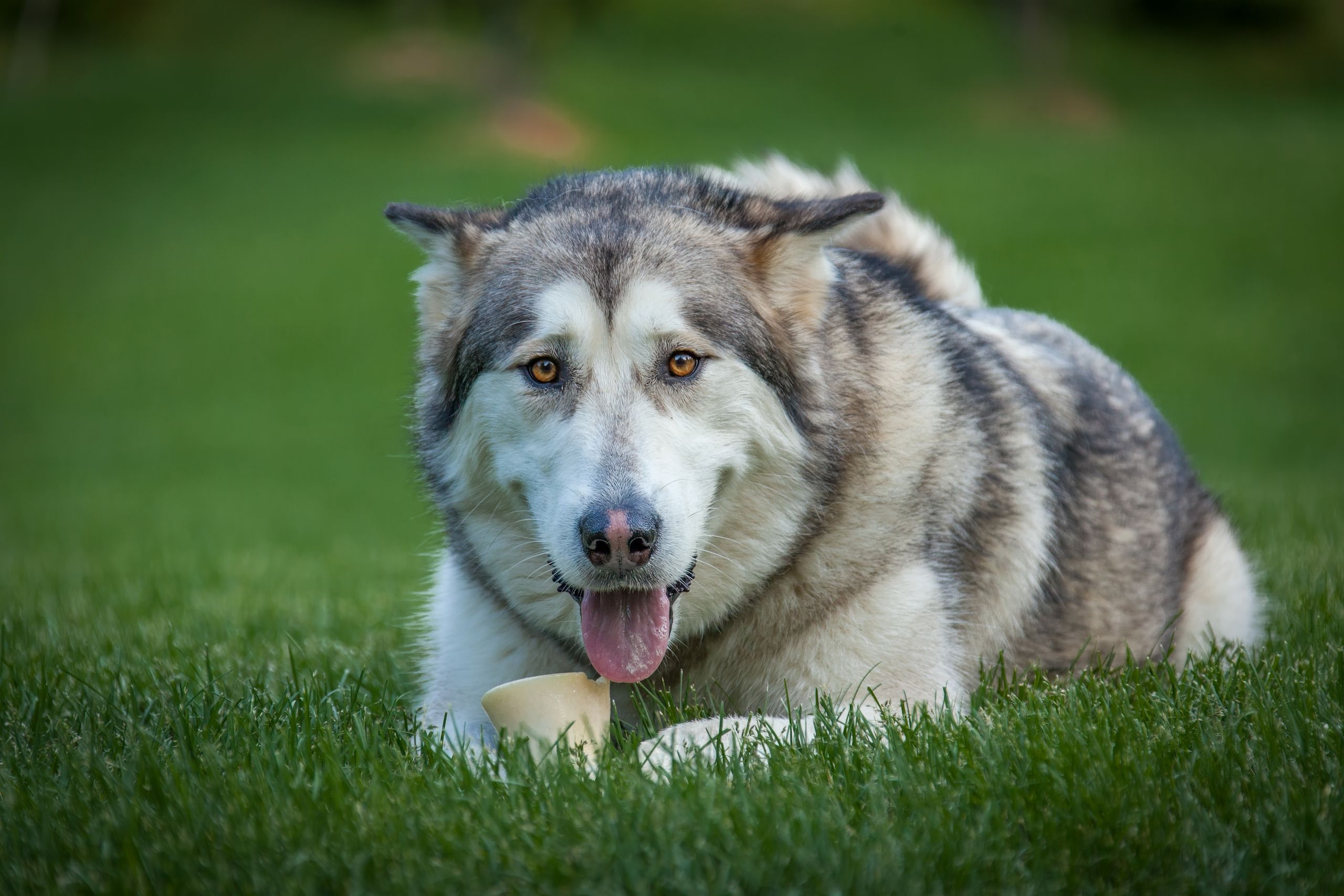
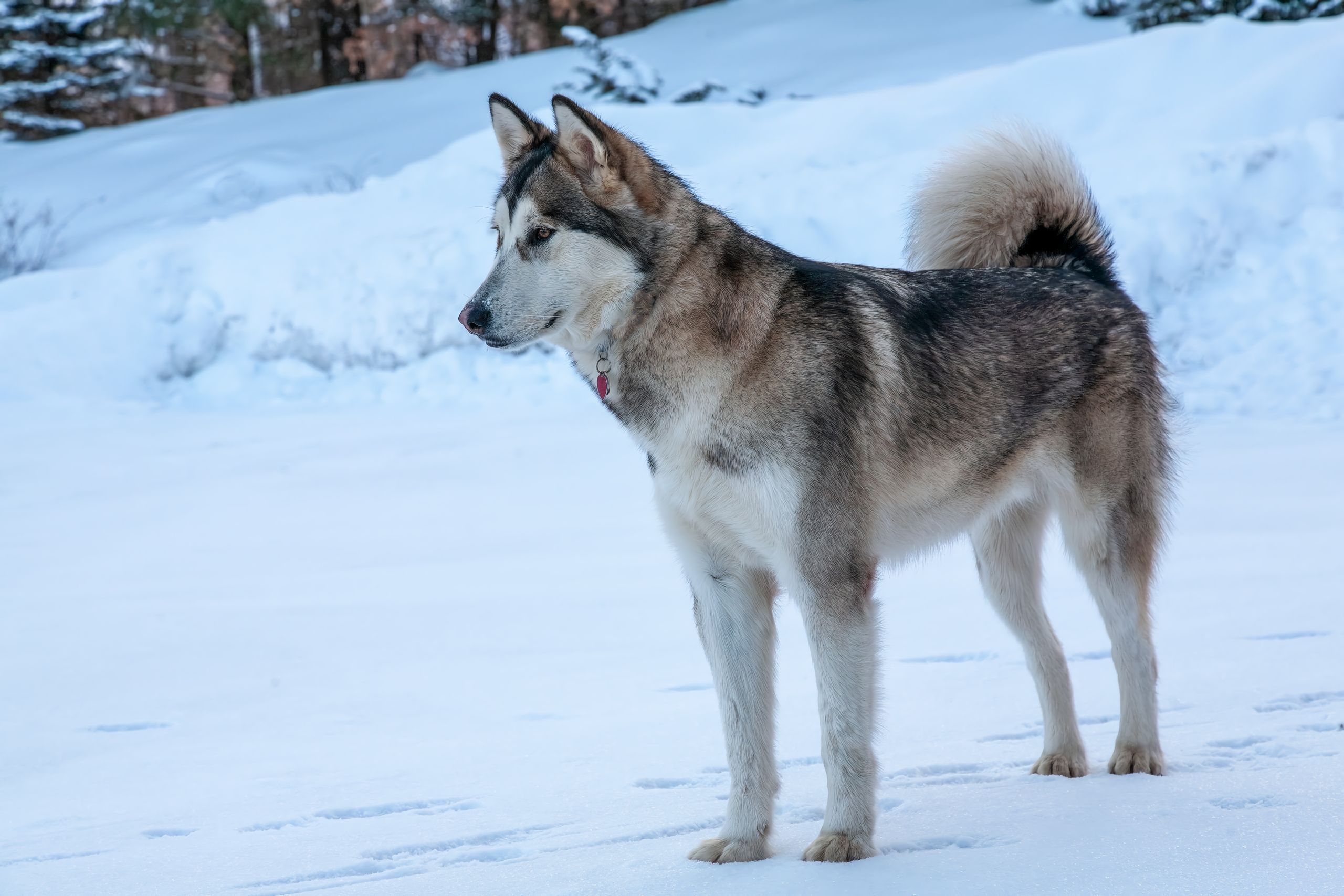
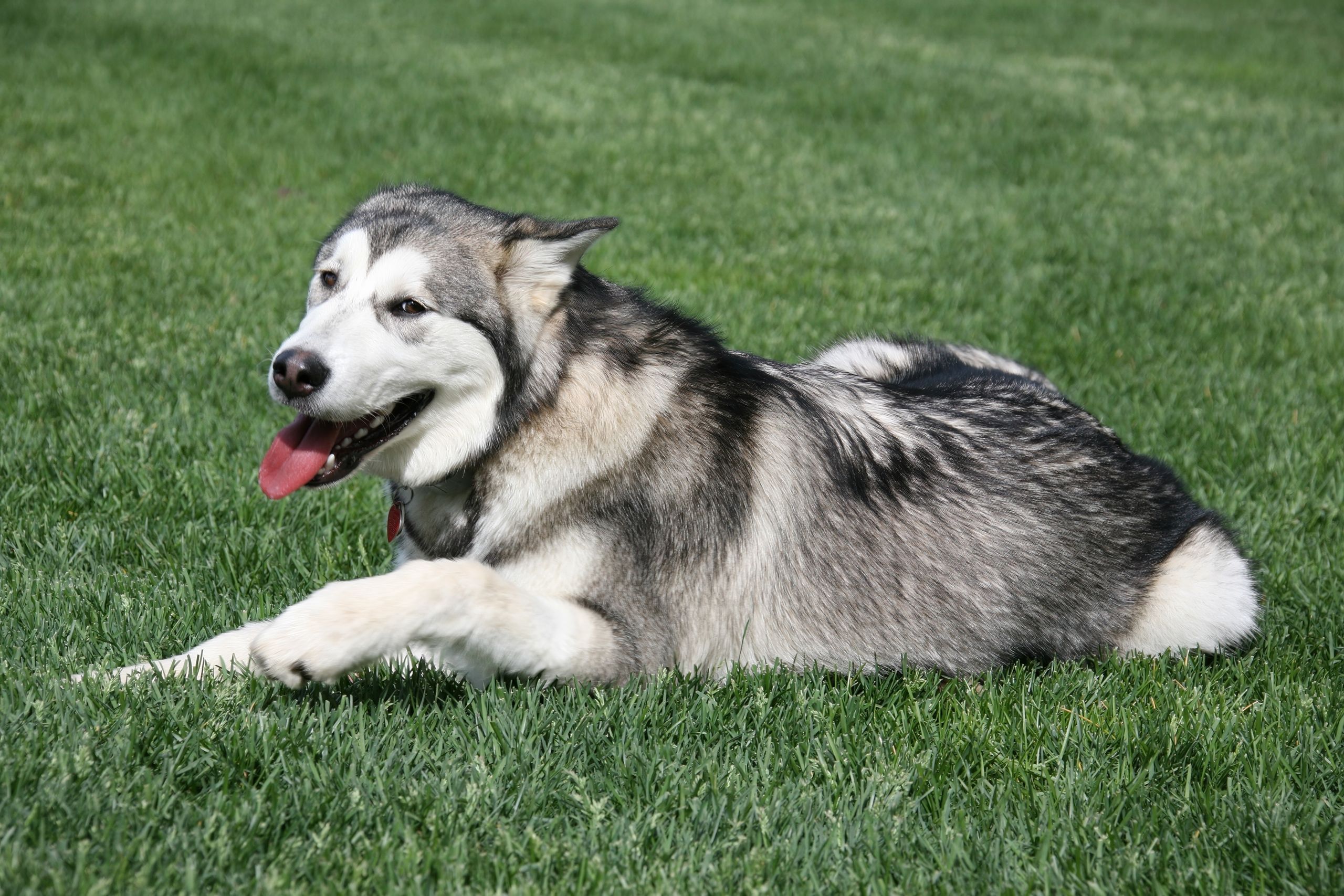
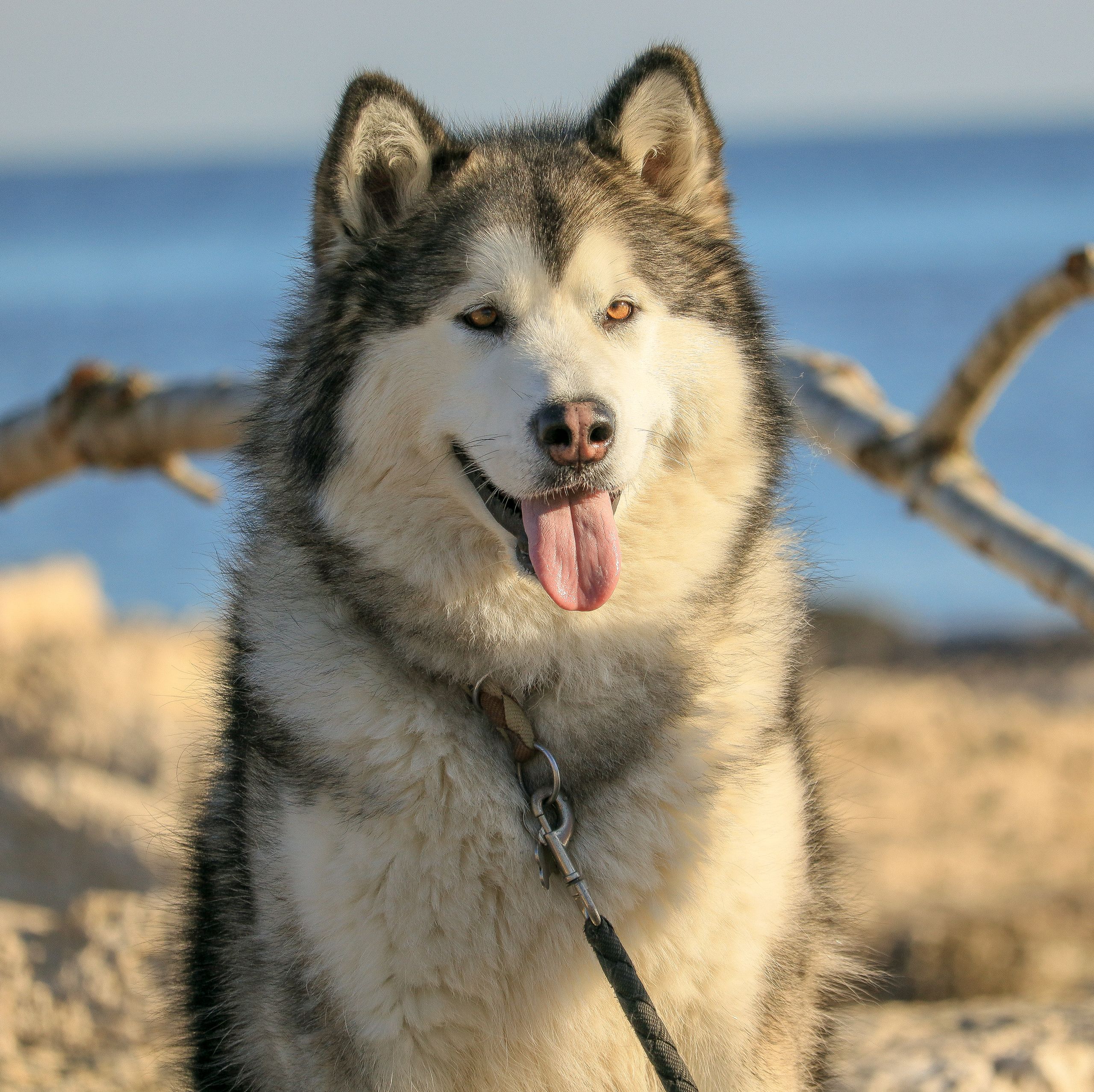
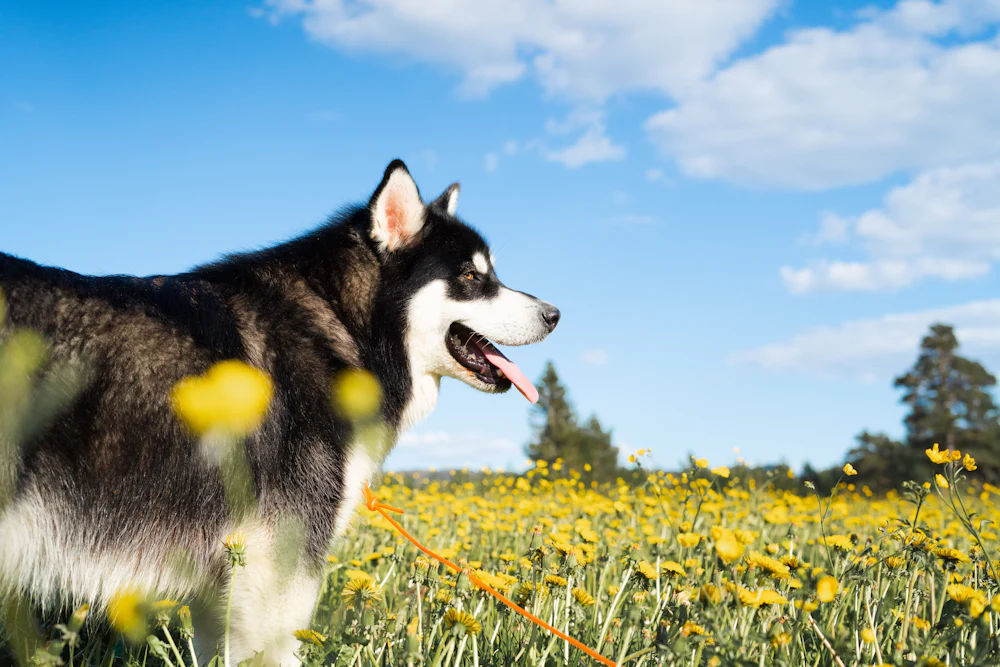
The Malamute has a thick, coarse guard coat, never long and soft, over a dense, oily, woolly undercoat. The usual colours range from light grey through intermediate shadings to black, sable and shades of sable to red, and the only solid colour allowed is white. White predominates on the underbody, parts of the legs, feet and face markings. The coat sheds heavily, especially during one or two seasonal moults when undercoat comes out in handfuls. Regular brushing with an undercoat rake keeps the skin healthy. Shaving the coat is not recommended, as it insulates against both cold and sun.
Feeding and weight
Malamutes are often enthusiastic eaters and some are known to steal food, so meals and bins need to be secured. Feed a complete diet for a large, active breed, adjusted to the amount of work the dog actually does, which in a city is usually less than the dog would like. Keep the dog lean, since extra weight puts strain on hips and joints. Two meals a day and a rest period after eating are sensible.
Work out a starting calorie figure and food weight with the calorie calculator. Not sure this is the right breed? Take the quiz.
Health
Every breed carries predispositions. These are the conditions most often discussed for the Alaskan Malamute, not a prediction for any individual dog.
- Hip dysplasia
- Alaskan Malamute polyneuropathy (AMPN)
- Hereditary cataracts and other eye conditions
- Hypothyroidism
- Chondrodysplasia (inherited dwarfism)
What to ask the breeder. Ask for hip scores, current eye examinations and the DNA test result for Alaskan Malamute polyneuropathy for both parents, and how the breeder screens for chondrodysplasia.
Choosing a puppy
Malamute puppies are fluffy, bold and very busy. They grow fast, so keep exercise moderate and avoid repeated stairs and jumping until the joints mature; in a flat building, carry small puppies or use the lift. Start socialisation, lead training and handling of feet and coat immediately, and expect chewing, digging and plenty of vocal protest. Group puppy classes help, because a Malamute that learns good manners with other dogs early is much easier to live with as a 35 kg adult.
In Luxembourg the national kennel club is the Fédération Cynologique Luxembourgeoise (FCL), a member of the FCI. Many owners also buy from breeders in Germany, France or Belgium; a puppy coming from another EU country must be microchipped and vaccinated against rabies, which in practice means it cannot travel before about fifteen weeks of age. Where to get a dog in Luxembourg.
The older Alaskan Malamute
Senior Malamutes usually remain sociable and keen for walks, though they slow down and may develop stiff joints. Shorter, more frequent outings, careful weight control and non-slip flooring help a great deal. Watch for changes in coat, energy and weight that can point to thyroid issues, and keep an eye on eyesight. Older dogs feel heat even more, so summer routines need extra care.
A realistic day
A realistic weekday for a working household in Luxembourg City, with a midday visit. Adjust it to your dog, not the other way round.
Brisk hour on lead or a canicross run in the Grünewald while it is still cool, then breakfast after a rest.
Quick brush and a stuffed chew toy to keep the dog occupied as the owner leaves for work.
PAWLY midday visit: 45 to 60 minutes of walking with sniffing time on a long line, fresh water and a check on the garden or balcony.
Training game or pulling session, then a long walk in Bambësch or along the Pétrusse, followed by dinner.
Short evening walk and grooming time in front of the television.
An Alaskan Malamute in Luxembourg
A Malamute can live in a flat if it has a lift, a calm building and an owner prepared to spend many hours outdoors, but it is happiest with access to a garden. Neighbours may hear it howl when left alone, and the seasonal moult leaves undercoat in lifts and corridors. The forests around Luxembourg City, notably the Grünewald and Bambësch, are excellent for long walks on a line, but wildlife is everywhere, so off-lead freedom is not realistic.
Summer is the main concern. When temperatures climb into the 30s °C, a Malamute should be walked only at dawn and late evening, kept indoors in the coolest room and given plenty of water and shade. Winters, by contrast, suit the breed well. Like all dogs in Luxembourg it must be microchipped, declared to the commune and covered by third-party liability insurance.
Every dog in Luxembourg must be identified, declared to the commune and covered by liability insurance. How registration works.
When you travel
A sitter must know that a Malamute is a determined escape artist: check fences, gates, balcony doors and bins, and never leave food within reach. Long daily walks on a secure harness are essential, along with chew toys to keep the dog busy. Howling when the owner is away is common in the first days. In warm weather the sitter must follow the heat routine strictly and contact the vet at the first sign of overheating.
PAWLY's holiday and overnight care takes place in your home, so your dog keeps its own bed and routine.
Myths and facts
MythA Malamute is a bigger version of a Husky.
FactThe two are distinct breeds. The Malamute was developed for heavy freight, the Siberian Husky for faster, lighter sled work, and their builds and temperaments differ.
MythA thick coat means it should be shaved in summer.
FactThe double coat insulates against heat as well as cold. Shaving can damage regrowth and remove protection from the sun; shade, cool hours and brushing out the undercoat help more.
MythMalamutes make good guard dogs.
FactThe FCI standard describes a friendly dog, not a one-man dog. Most Malamutes welcome strangers.
Is it the right dog for you?
Suits
- Active owners who hike, run or enjoy pulling sports
- Experienced dog people who like an independent character
- Homes with a secure garden and cool living spaces
- Families who want a sociable, affectionate dog and accept the hair
Think twice if
- Think twice if you live in a small flat without a lift
- Think twice if you have cats or other small pets
- Think twice if the dog would be alone for long days
- Think twice if you dislike hair on clothes and furniture
Questions owners ask
Can a Malamute cope with Luxembourg summers?
Yes, with management. Walk only in the coolest hours, provide shade and water, keep the home cool and skip strenuous exercise on hot days. Learn the signs of heatstroke, such as heavy panting, weakness or glazed eyes, and call a vet immediately if you see them.
How much does a Malamute shed?
A great deal, especially during the seasonal moults when the undercoat comes out in clumps for a few weeks. Brushing with an undercoat rake several times a week, and daily during the moult, keeps the house manageable.
Is a Malamute suitable as a first dog?
It can work for a committed first-time owner who takes training classes and has plenty of time, but the breed's strength, independence and prey drive make it a better fit for people with some dog experience.
Do Malamutes bark?
They tend to howl, woo and talk rather than bark. That makes them less noisy than some breeds day to day, but a bored or lonely Malamute can be heard by the whole building.
Sources
- FCI breed standard No. 243 (Alaskan Malamute)
- The Royal Kennel Club, Alaskan Malamute
- AKC Working Group health testing requirements
Photo: Pexels (Pexels License) · Photo: Pexels (Pexels License) · Photo: Pexels (Pexels License) · Photo: Pexels (Pexels License) · Photo: Unsplash (Unsplash License)
General information for dog owners in Luxembourg, not veterinary or legal advice. Official facts (origin, size, group, history and temperament as described by the breed standard) follow the FCI standard; health and care sections reflect breed-club and veterinary guidance and are typical ranges rather than rules. For your own dog, ask your vet, the breed club or your commune. How this guide is written and checked. Last reviewed 8 October 2026.
Need someone for your Alaskan Malamute?
PAWLY offers an individual 45-minute walk or a home visit at your dog's pace, the same walker every time, and a written report with photos after every visit, across Luxembourg City.
Read next: the journal, for the Alaskan Malamute
All articles
Dogs in hot weather: the Luxembourg summer guide
The Alaskan Malamute carries a heavy coat or a heavy frame, which makes a Luxembourg summer the hard season.

Working breeds in a city flat: the honest version
High-drive dogs like the Alaskan Malamute can live in a flat, but it takes a plan.

Building a recall you can actually rely on
Scent and movement can cancel a recall; this is the method for the Alaskan Malamute.
Similar breeds
All 198 breeds
Siberian Husky
A sled dog built to run for hours in the cold, friendly with everyone and loyal to no fence.
EnergyGroomingFlat life
Samoyed
The smiling white spitz of the Arctic: friendly, talkative and covered in fur.
EnergyGroomingFlat life
Akita Inu
A dignified, loyal Japanese spitz, made famous by Hachikō, and a serious dog for experienced owners.
EnergyGroomingFlat life

