

History
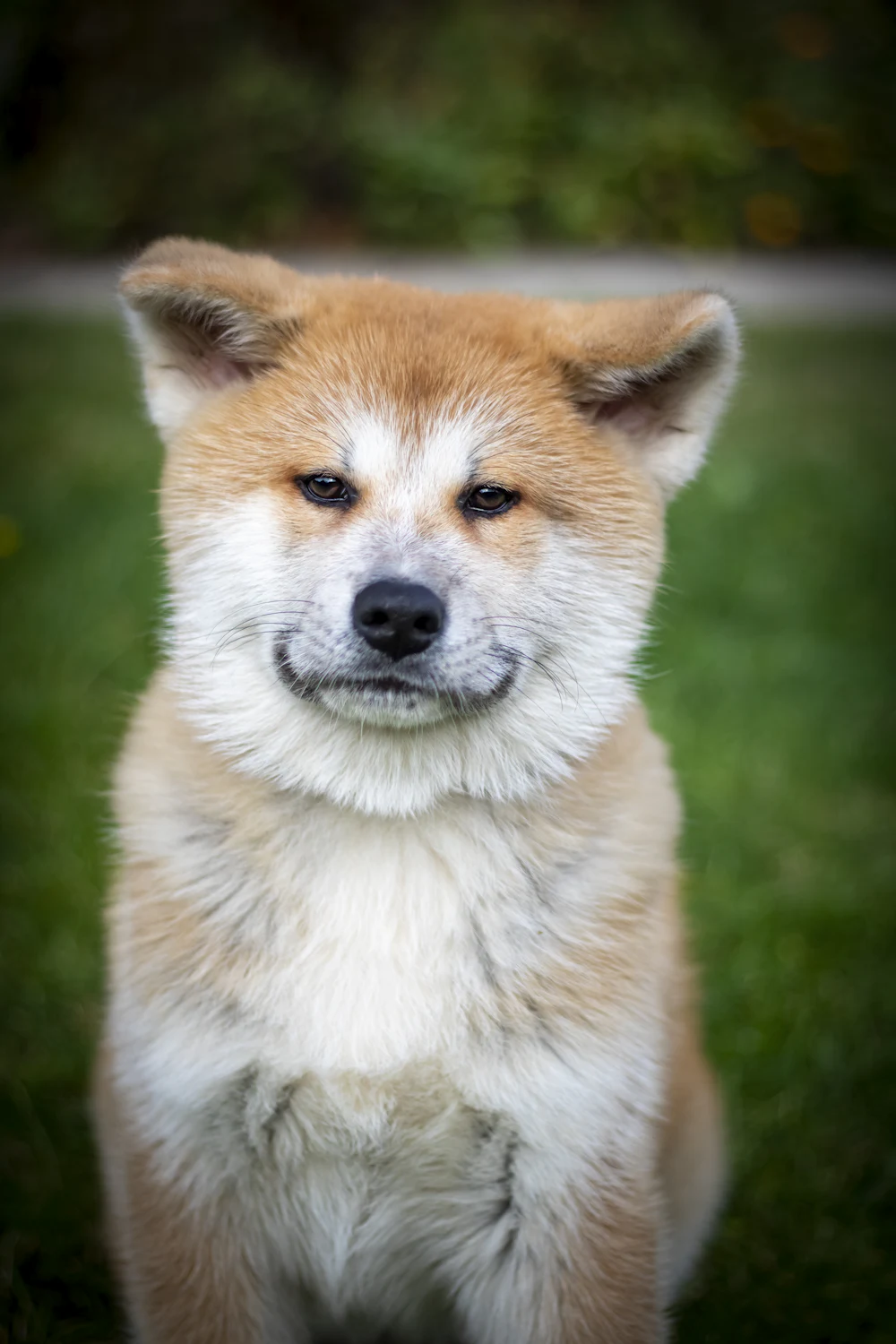
The Akita comes from the Akita region of northern Japan. The FCI standard says it evolved from the medium sized Akita Matagi, used to hunt bear, and that from 1868 the local dogs were crossed with Tosas and Mastiffs. They grew larger but lost much of their spitz character. A ban on dog fighting in 1908 further threatened the type, and in 1931 nine dogs were designated Natural Monuments of Japan.
After the Second World War the breed was restored from three distinct types. Breeders crossed the remaining dogs with Matagi Akitas to recover the original pure Japanese dog, and the large strain known today emerged. The most famous Akita is Hachikō, who waited at Shibuya station in Tokyo for his owner, Professor Hidesaburō Ueno, nearly every day for almost ten years after Ueno died in 1925. The American Akita is recognised by the FCI as a separate, heavier breed.
Temperament
The FCI standard describes the temperament as composed, faithful, docile and receptive, in a dog of nobility and dignity with a tough constitution. Faults include shyness and aggression. That matches what walkers see: a calm, watchful dog that does not fuss, studies strangers before deciding about them and rarely barks without reason.
The word docile needs care. An Akita is receptive to its own people, but it is a strong, serious dog with a hunting and guarding past, and many are intolerant of other dogs, especially of the same sex. They are clean, relatively quiet and deeply attached to the household. They need an owner who is calm, consistent and experienced, and who prefers loyalty to eagerness to please.
Children and other pets
Akitas can be loyal and gentle with their family's children, but a large, reserved dog needs supervision around young ones and above all around visiting children, whose noise and sudden movements it may not welcome. Do not leave them unsupervised together. Other dogs, especially of the same sex, can be a problem, and cats and small pets need very careful assessment. Many Akitas are happiest as the only dog.
Exercise and the daily walk
An adult needs roughly an hour and a half a day, mostly in steady walking rather than frantic games. They are not usually marathon dogs, but they are strong and need purposeful outings in all weathers. Two good walks and a short toilet break suit most households, with a little scent work or training added for variety.
Choose quiet routes at quiet times, because the real challenge is encounters with other dogs on narrow paths. A well fitting harness and a secure lead matter more than distance. Avoid hard exercise in warm weather, and never leave an Akita in a hot car or a sunny conservatory.
Training
Start early and keep training calm, fair and consistent. Akitas respond to respect and clear boundaries rather than force, and heavy handed methods can damage trust in a dog of this temperament. Short, rewarding sessions work best, with food or play as the reward. Teach lead manners from the first week, because a fully grown Akita is far too strong to be corrected by muscle.
Socialisation is the central project and must be carefully managed rather than maximised. Introduce puppies to many people, surfaces, sounds and calm adult dogs, but do not rely on dog parks. Teach a reliable leave it, a settle and a recall, and accept that off lead freedom will be limited to secure areas.
Coat and grooming
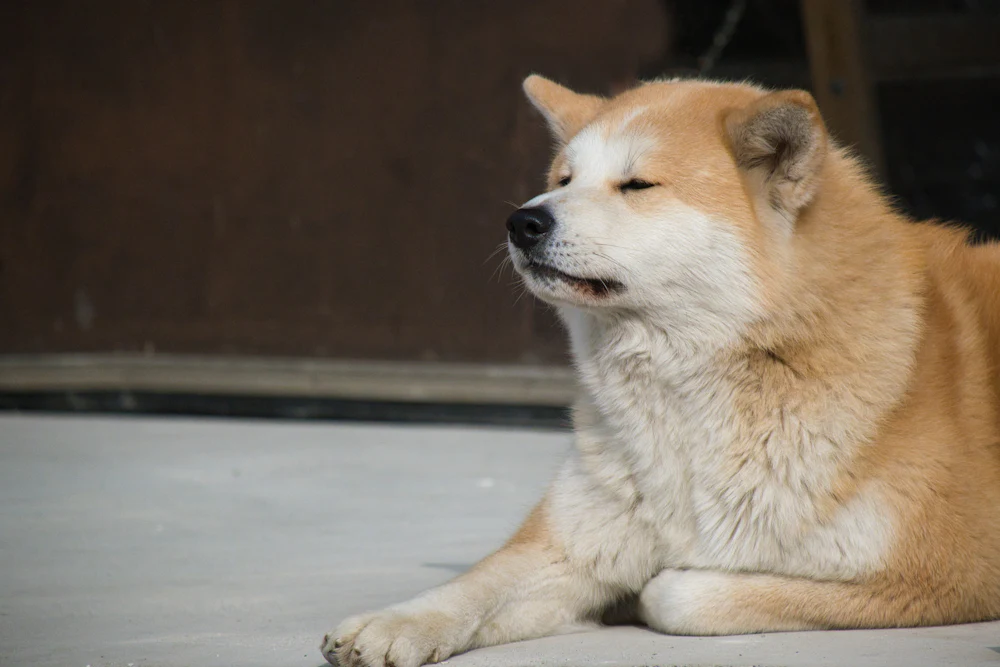
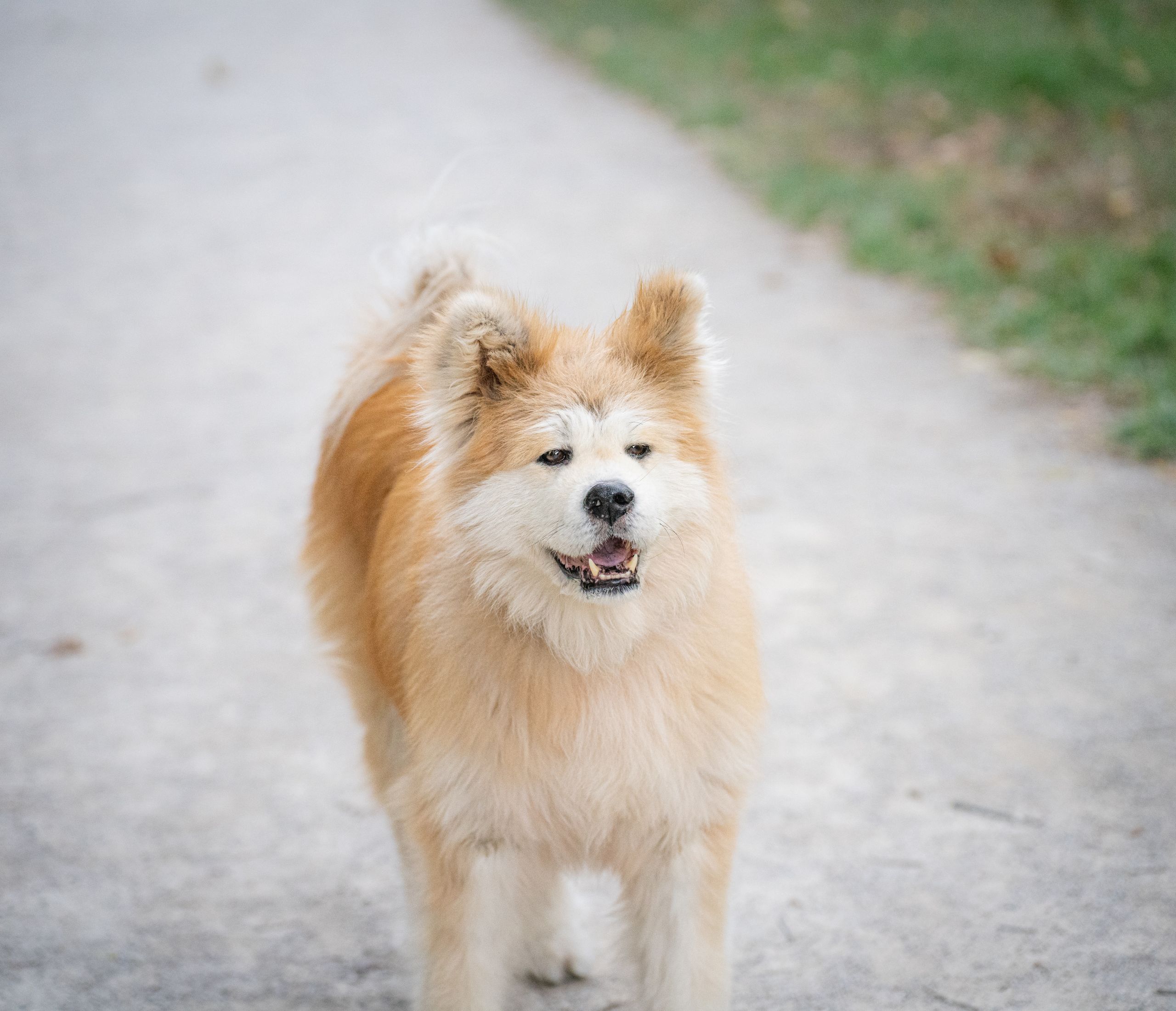
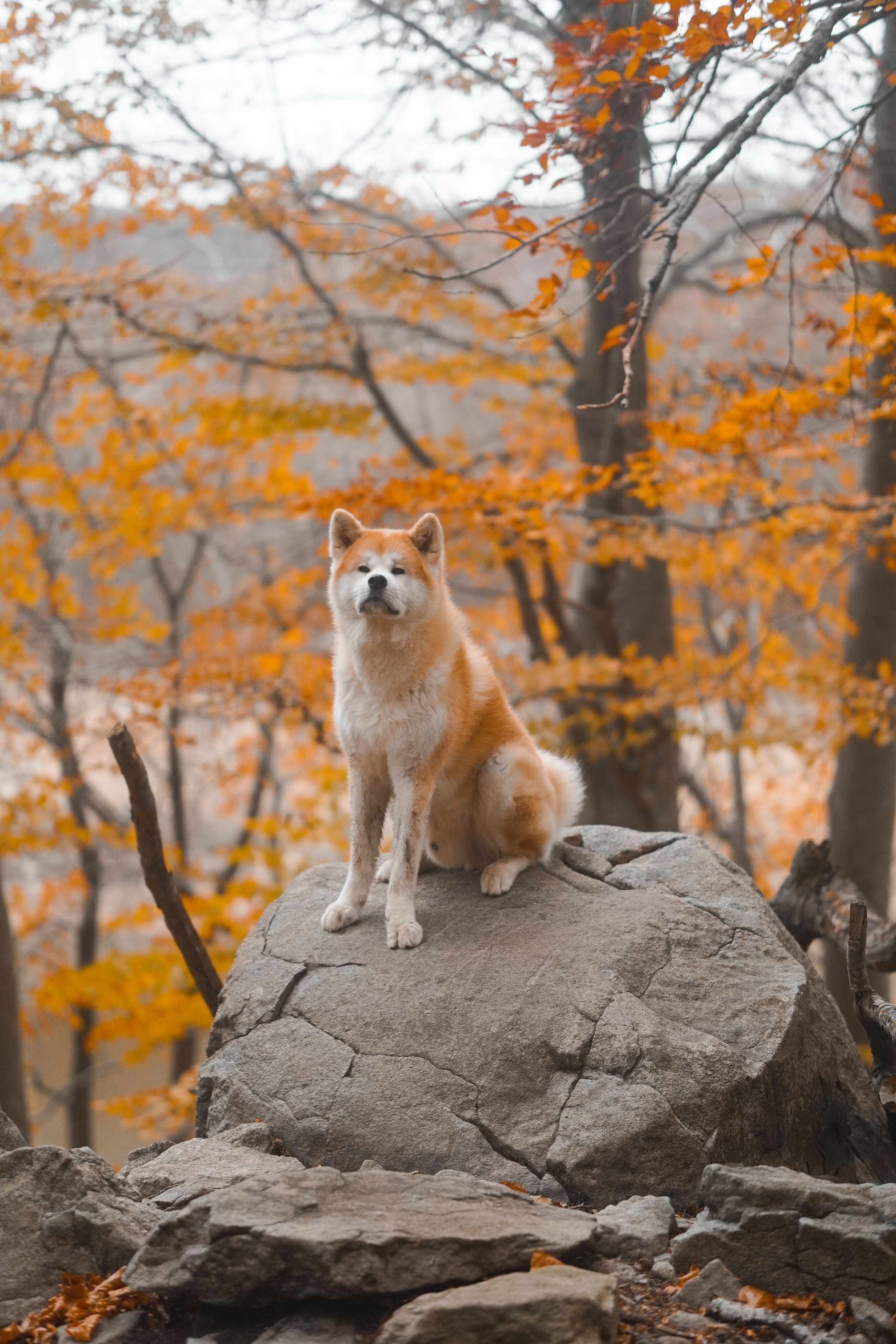
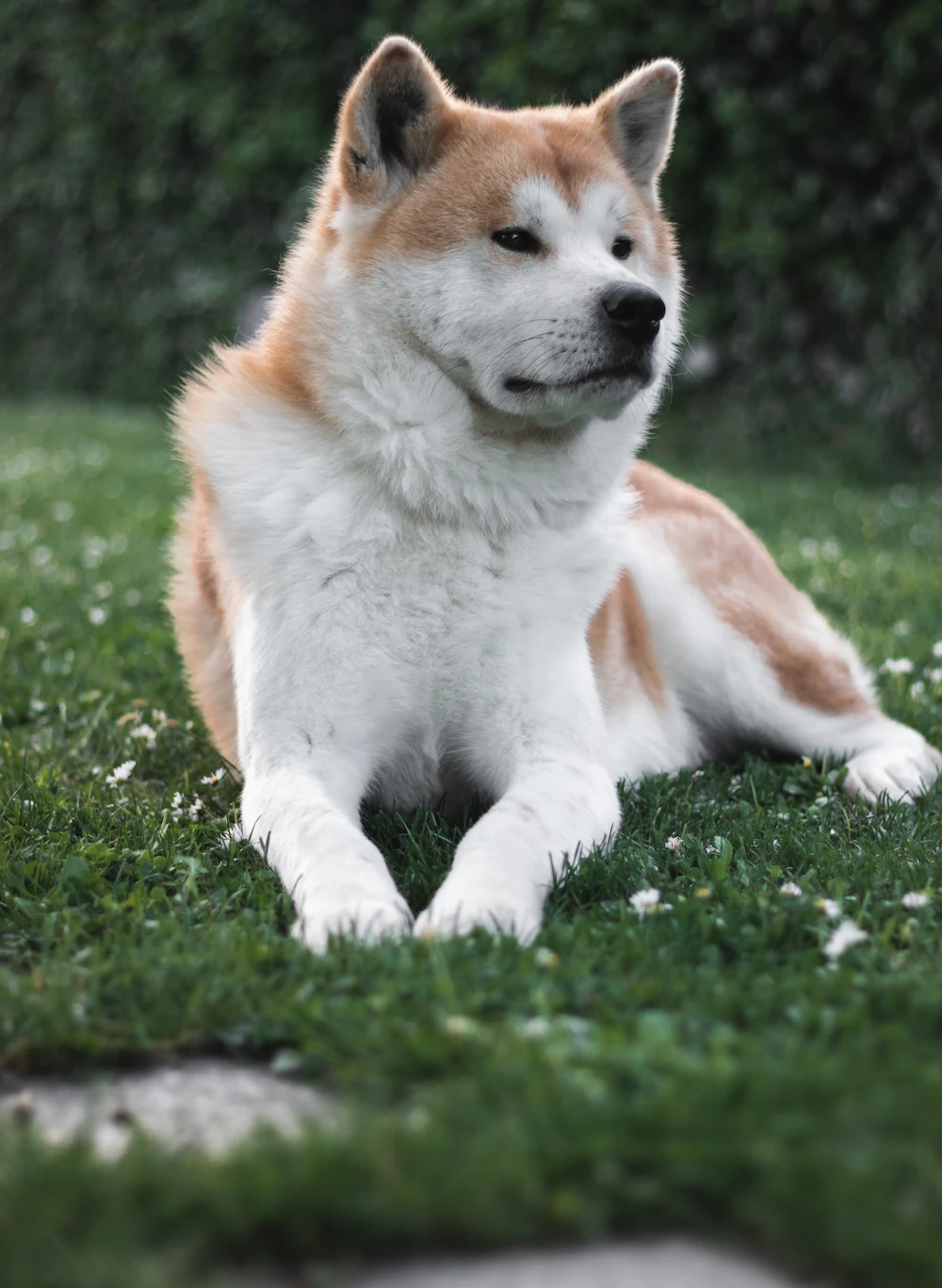
The standard describes a harsh, straight outer coat over a soft, dense undercoat. Accepted colours are red fawn, sesame, brindle and white. Except for white, the dog should show urajiro, the pale markings on the face, chest and legs. A weekly brush is enough for most of the year, but twice a year the undercoat comes out in handfuls, and daily brushing for a few weeks is needed. Bathing is rarely required.
Feeding and weight
Feed a good quality, balanced diet suited to a large, sturdy dog, and keep the dog lean. Rapid growth in puppies can stress the joints, so avoid overfeeding and unplanned supplements. Split the daily ration into two meals, and avoid vigorous exercise around mealtimes because deep chested breeds can suffer bloat. Fresh water should always be available, especially in summer.
Work out a starting calorie figure and food weight with the calorie calculator. Not sure this is the right breed? Take the quiz.
Health
Every breed carries predispositions. These are the conditions most often discussed for the Akita Inu, not a prediction for any individual dog.
- Autoimmune conditions, including uveodermatological syndrome and sebaceous adenitis
- Hip dysplasia
- Hypothyroidism
- Gastric dilatation-volvulus (bloat)
- Progressive retinal atrophy
What to ask the breeder. Ask for hip scores, an eye examination and thyroid testing for both parents, and whether any relatives have had autoimmune disease. Meet the adults and judge how they react to strangers and other dogs.
Choosing a puppy
Choose a breeder who raises puppies in the house and can show the parents. Look for a confident, steady puppy, not one that is withdrawn or pushy. An Akita puppy grows quickly into a large dog, so begin handling, lead training and calm exposure to the outside world at once. Prepare for a long adolescence, and plan for a harness, a strong lead and a secure garden or quiet routes before the puppy arrives.
In Luxembourg the national kennel club is the Fédération Cynologique Luxembourgeoise (FCL), a member of the FCI. Many owners also buy from breeders in Germany, France or Belgium; a puppy coming from another EU country must be microchipped and vaccinated against rabies, which in practice means it cannot travel before about fifteen weeks of age. Where to get a dog in Luxembourg.
The older Akita Inu
Older Akitas may develop stiff hips, thyroid changes, eye problems and skin disease, and new lumps should always be checked. Shorter, steadier walks usually suit them, along with soft bedding and non slip floors. Many remain dignified and alert in old age. Keep weight under control, because every extra kilo loads the joints, and schedule regular vet checks once the dog is past about eight.
A realistic day
A realistic weekday for a working household in Luxembourg City, with a midday visit. Adjust it to your dog, not the other way round.
A calm walk on a quiet route, avoiding busy dog areas.
Breakfast, then rest while the household gets ready.
Midday visit from a trusted walker: toilet break, water and a short, quiet outing.
Longer walk with some training, again on a quiet route.
Final toilet walk and a settled evening beside the family.
An Akita Inu in Luxembourg
An Akita can live in a flat, since it is clean, relatively quiet and calm indoors, provided it gets proper walks and the building has easy access to quiet streets. The lift is usually a test of manners rather than size: teach it to wait and enter calmly, and be ready for a neighbour with a dog in the corridor. Registration is routine, with a microchip, a declaration to the commune, third party liability insurance and the annual dog tax.
Summers in Luxembourg can reach the 30s, and a thick double coat makes the Akita heat sensitive. Walk early and late, find shade, and skip midday outings. In cooler months the Grünewald and Bambësch forests suit them well, as does the Pétrusse valley on a quiet morning. Choose less crowded spots over popular parks such as Kinnekswiss at busy times, where an unexpected dog can cause trouble.
Every dog in Luxembourg must be identified, declared to the commune and covered by liability insurance. How registration works.
When you travel
Akitas need a sitter they have met in advance, because they are reserved with strangers and do not give trust quickly. Share written routines, the usual routes and any triggers with other dogs. The sitter should keep the dog on a lead outside, check that gates are secure, and avoid dog heavy areas. Keep the house cool in summer and make sure water is always available.
PAWLY's holiday and overnight care takes place in your home, so your dog keeps its own bed and routine.
Myths and facts
MythAkitas are aggressive.
FactThey are reserved and protective, and often intolerant of other dogs, but with people they are usually calm and loyal. The difficulty is management, not constant hostility.
MythAn Akita is just a big Shiba.
FactThey are different breeds with different sizes, histories and temperaments. The Akita is much larger, more serious and generally more reserved than the Shiba.
MythAkitas are low maintenance because they are clean.
FactThey are tidy, but the heavy seasonal moult is considerable, and the demands of socialising and managing a large dog are anything but low.
Is it the right dog for you?
Suits
- Experienced owners
- Quiet households
- People wanting a loyal, dignified companion
- Owners comfortable with a one dog home
Think twice if
- First time owners
- Homes with other dogs of the same sex
- Dog park lifestyles
Questions owners ask
Is the Akita good with other dogs?
Often not, especially with dogs of the same sex. Many are best as the only dog. With careful early socialisation some live happily with a companion, but never assume it, and always introduce new dogs slowly on neutral ground.
Akita Inu or American Akita?
The FCI treats them as two breeds. The American Akita is heavier with a broader head and a wider range of colours, while the Akita Inu is the lighter Japanese type with the colours described in its standard.
How much do Akitas shed?
Moderately through the year and heavily twice a year, when the undercoat comes away in clumps. Brush daily during these weeks, and expect to vacuum often. Shaving is not recommended, because the coat protects against heat as well as cold.
Can an Akita be left alone?
Many cope with a working day if exercised and settled, ideally with a midday visit. They are not usually destructive out of anxiety, but they are loyal and can become distressed if left for long, regular stretches.
Sources
Photo: Unsplash (Unsplash License) · Photo: Pexels (Pexels License) · Photo: Pexels (Pexels License) · Photo: Unsplash (Unsplash License) · Photo: Unsplash (Unsplash License)
General information for dog owners in Luxembourg, not veterinary or legal advice. Official facts (origin, size, group, history and temperament as described by the breed standard) follow the FCI standard; health and care sections reflect breed-club and veterinary guidance and are typical ranges rather than rules. For your own dog, ask your vet, the breed club or your commune. How this guide is written and checked. Last reviewed 8 October 2026.
Need someone for your Akita Inu?
PAWLY offers an individual 45-minute walk or a home visit at your dog's pace, the same walker every time, and a written report with photos after every visit, across Luxembourg City.
Read next: the journal, for the Akita Inu
All articles
Dogs in hot weather: the Luxembourg summer guide
The Akita Inu carries a heavy coat or a heavy frame, which makes a Luxembourg summer the hard season.

Building a recall you can actually rely on
Scent and movement can cancel a recall; this is the method for the Akita Inu.

Feeding, portions and how to tell if your dog is the right weight
Large dogs suffer more from extra weight; this is how to judge the right one.
Similar breeds
All 198 breeds
Shiba Inu
Japan's ancient little hunting dog, clean and dignified, with a cat-like habit of deciding for itself when to listen.
EnergyGroomingFlat life
Siberian Husky
A sled dog built to run for hours in the cold, friendly with everyone and loyal to no fence.
EnergyGroomingFlat life
Chow Chow
A dignified, lion-like Spitz with a blue-black tongue, loyal to its own people and politely indifferent to almost everyone else.
EnergyGroomingFlat life

