


History
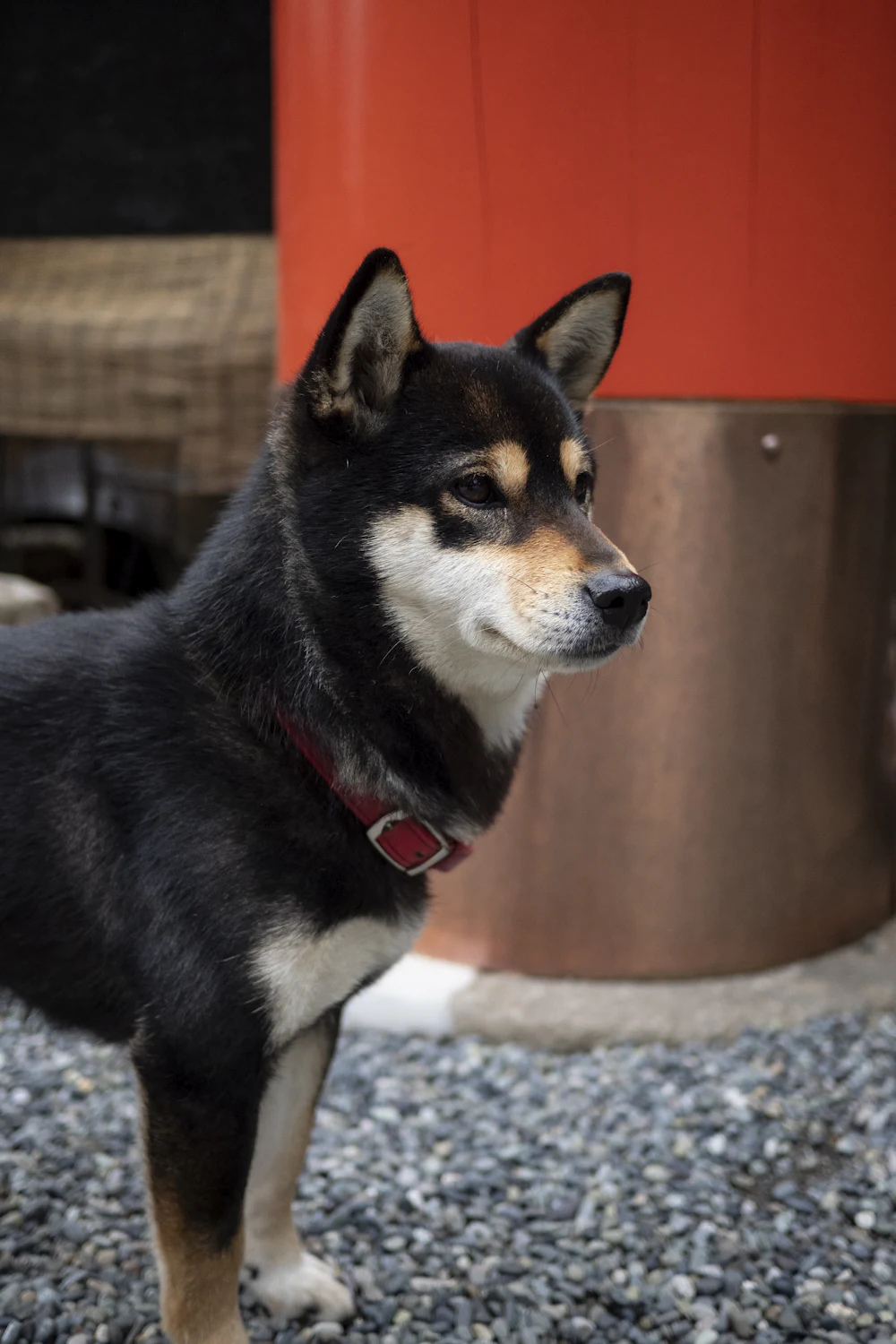
The Shiba is Japan's native small breed, with roots that go back to primitive times. The name means small dog. The FCI standard records that it was used as a hunting dog for birds and small animals in the mountainous regions facing the Sea of Japan, steep, wooded country that suits a tough, agile, alert little dog. It is the smallest of the Japanese spitz breeds, and the standard lists its use as hunting dog and companion dog.
The breed nearly disappeared. The standard describes how the importing of English hunting dogs between 1868 and 1912 led to widespread crossbreeding, and by the early twentieth century pure Shibas were scarce. Preservation work began around 1928, a unified standard followed in 1934, and in 1937 the Shiba was designated a natural monument in Japan. The FCI places it in Group 5, Section 5, Asian spitz and related breeds, and the current standard is dated October 2016.
Temperament
The FCI says only that the temperament is faithful, with keenness in sense and high alertness, and that shyness is a fault while aggressive or overly shy dogs are disqualified. In daily life that means a dog that is loyal, watchful and confident, with sharp eyes and ears and a very clear idea of what it likes. The gait the standard calls light and brisk is exactly how a Shiba trots down the pavement.
Anyone who has met many Shibas will add that the breed is independent, often reserved with strangers and selective about other dogs. They are fastidious, washing their paws and keeping themselves clean in a manner that people often compare with cats. Many dislike being restrained or handled, and the famous Shiba scream, a piercing protest when displeased, can startle neighbours the first time. It is not aggression but the dog's way of saying no.
Children and other pets
Shibas suit families with older children who respect their independence and space. They do not like being hugged, carried or restrained, and small children often do all three. Some tolerate other dogs well, particularly if raised with them, while others prefer to be the only dog. Small pets, cats and birds are at risk, since the hunting instinct is real and quick.
Exercise and the daily walk
Daily walks and games for an hour to an hour and a half suit an adult. Shibas are light, brisk and agile, and they enjoy a variety of routes, scents and terrain more than repeating the same lap. A good walk with sniffing time, a game of fetch or tug and a short training session leave most Shibas content and quiet at home.
Recall is notoriously unreliable. Most Shibas should be walked on a lead or long line outside fenced areas, because the hunting instinct and independence combine to make off-lead walking risky near roads. Fenced dog areas are the safest option for freedom. Teach a solid leave it and a lead-walking routine, and use a well-fitted harness, since Shibas are talented at slipping a collar.
Training
Shibas are intelligent and independent, and they do what they judge worthwhile. Reward-based training with high-value food works best; confrontation does not. Early handling practice is essential, because many Shibas resist restraint. Teach them to enjoy having feet, ears, teeth and coat handled from the first weeks, and pair every vet or grooming visit with something good.
Keep sessions brief and varied. A Shiba that decides a drill is dull will simply walk away, so use short bursts, clear rewards and finish while the dog is still interested. Socialise widely, since the standard treats shyness as a fault and a poorly socialised Shiba can become wary or reactive. Expect a smart dog that bargains rather than obeys.
Coat and grooming
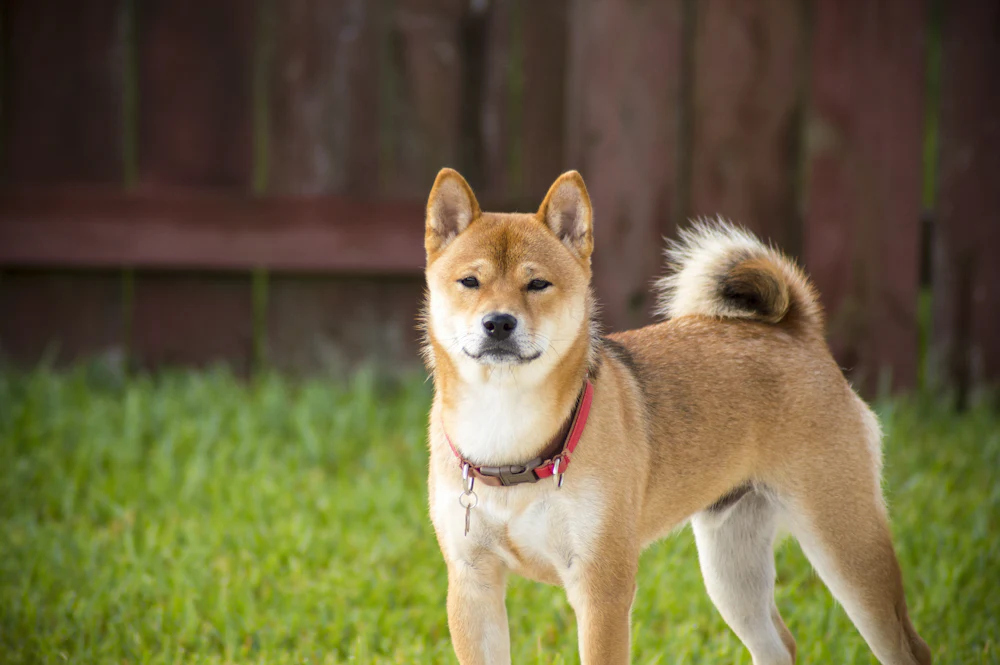
The FCI describes an outer coat that is harsh and straight over a soft, dense undercoat. Permitted colours are red, black and tan, sesame, black sesame and red sesame, all with urajiro, the whitish markings on the muzzle, cheeks, jaw, neck, chest, stomach, tail underside and inside of the legs. The coat sheds heavily twice a year, so brush weekly and daily during the shed. Bathing is occasional, as the coat stays clean.
Feeding and weight
Shibas are usually moderate eaters, but they are clever about finding food. Keep portions measured, store food securely and use part of the daily allowance for training. Allergies and skin problems are common in the breed, so if there is itching or recurring ear trouble, speak to the vet before changing the diet. Introduce any new food gradually, and keep the dog lean.
Work out a starting calorie figure and food weight with the calorie calculator. Not sure this is the right breed? Take the quiz.
Health
Every breed carries predispositions. These are the conditions most often discussed for the Shiba Inu, not a prediction for any individual dog.
- Allergies and skin problems
- Patellar luxation (slipping kneecaps)
- Glaucoma (raised pressure in the eye)
- Hip dysplasia
- GM1 gangliosidosis (a rare inherited neurological disease, with a DNA test)
What to ask the breeder. Ask for patella checks, hip scores and an eye examination for the parents, and for the GM1 DNA test result.
Choosing a puppy
Ask for patella and eye checks, hip scores and the GM1 DNA test for both parents. Meet the mother and look for a confident, not fearful, puppy, since the standard treats shyness as a fault. Start handling practice and gentle socialisation early, introduce a harness and long line from the first outings, and invest in a secure environment before the puppy arrives.
In Luxembourg the national kennel club is the Fédération Cynologique Luxembourgeoise (FCL), a member of the FCI. Many owners also buy from breeders in Germany, France or Belgium; a puppy coming from another EU country must be microchipped and vaccinated against rabies, which in practice means it cannot travel before about fifteen weeks of age. Where to get a dog in Luxembourg.
The older Shiba Inu
Eyes and allergies need attention with age, so have the vet check the eyes regularly and mention any redness, squinting or cloudiness. Many Shibas live long lives and stay active. Keep the dog lean, maintain regular walks and add traction to slippery floors. Handling practice from puppyhood pays off now, when senior checks and medication are easier with a dog that tolerates touch.
A realistic day
A realistic weekday for a working household in Luxembourg City, with a midday visit. Adjust it to your dog, not the other way round.
Morning walk on a lead or long line, with a game of fetch.
Breakfast, then a few minutes of handling and coat checks.
Midday visit with a toilet break, a short walk and a puzzle.
Evening walk with scent work and some training.
Quiet time, a brush and a last short outing.
A Shiba Inu in Luxembourg
A good flat dog: quiet, clean and moderately active. A Shiba is compact enough for lifts and stairs, and it does not usually bark without reason, though the scream can surprise a neighbour. Start handling practice early so that vet visits, grooming and nail trimming are not battles. The Pétrusse valley and Parc Merl suit morning walks, while fenced areas are the place for any off-lead running.
For longer outings, the Bambësch and Grünewald forests give plenty of scent, and free buses and trams get you there without a car. Walk on a lead or long line, because wildlife will trigger the chase. The thick double coat holds heat, so in summer temperatures that reach the 30s call for early and late walks, shade and water. In winter the breed is in its element.
Every dog in Luxembourg must be identified, declared to the commune and covered by liability insurance. How registration works.
When you travel
Shibas can be wary of strangers and are skilled escape artists. Introduce the sitter before you leave and let the dog approach in its own time. Check every door, gate and window, use a well-fitted harness and a lead outdoors, and never trust a recall. Keep meals and walks to the usual times, and warn the sitter that the Shiba scream is not injury.
PAWLY's holiday and overnight care takes place in your home, so your dog keeps its own bed and routine.
Myths and facts
MythShibas are small Akitas.
FactThey are a separate breed with their own history and standard, though both are Japanese spitz breeds.
MythShibas are easy because they are clean.
FactThey are clean, but independent and strong-willed, and many resist restraint and recall.
MythThe Shiba scream means the dog is hurt.
FactIt is a vocal protest, often at being restrained or at a nail trim. It is startling, but it is not a sign of injury. Handling practice from puppyhood reduces it.
Is it the right dog for you?
Suits
- Experienced owners who like an independent dog
- Flat-dwellers with a secure routine
- People who value a clean, quiet dog
- Owners who enjoy training with food and patience
Think twice if
- You expect reliable off-lead behaviour
- You have cats, birds or small pets
- You want an obedient, cuddly dog
- You have young children who like to hug
Questions owners ask
Are Shibas good for first-time owners?
They can be, for owners who read up and accept an independent dog. They are not a Labrador in a small body, and early handling work, secure walking and patient training are essential.
Shiba or Akita?
The Akita is much larger and more guarding. The Shiba is smaller, with males about 39.5 cm and females about 36.5 cm per the FCI, and is generally easier in a city, though both are independent Japanese spitz breeds.
Do Shibas shed?
Yes, heavily twice a year, and lightly the rest of the time. Brush weekly, and daily during the shed, and use a deshedding comb to remove the undercoat quickly. Expect hair on furniture.
Can a Shiba be left alone while I work?
Many manage with a midday visit, a good morning walk and puzzle toys. They are independent, but boredom brings chewing and escape attempts, so build time alone gradually and secure doors and windows.
Sources
Photo: Unsplash (Unsplash License) · Photo: Unsplash (Unsplash License) · Photo: Unsplash (Unsplash License) · Photo: Unsplash (Unsplash License) · Photo: Unsplash (Unsplash License)
General information for dog owners in Luxembourg, not veterinary or legal advice. Official facts (origin, size, group, history and temperament as described by the breed standard) follow the FCI standard; health and care sections reflect breed-club and veterinary guidance and are typical ranges rather than rules. For your own dog, ask your vet, the breed club or your commune. How this guide is written and checked. Last reviewed 8 October 2026.
Need someone for your Shiba Inu?
PAWLY offers an individual 45-minute walk or a home visit at your dog's pace, the same walker every time, and a written report with photos after every visit, across Luxembourg City.
Read next: the journal, for the Shiba Inu
All articles
Building a recall you can actually rely on
Scent and movement can cancel a recall; this is the method for the Shiba Inu.

Dogs and cats in the same flat
The Shiba Inu can see small animals as prey; this covers living with a cat in a flat.
The dog that is afraid of people
The Shiba Inu is often reserved with strangers; early, patient handling of that matters.
Similar breeds
All 198 breeds
Akita Inu
A dignified, loyal Japanese spitz, made famous by Hachikō, and a serious dog for experienced owners.
EnergyGroomingFlat life
Basenji
A small hunting dog from Central Africa that yodels rather than barks, grooms itself like a cat and thinks for itself at every turn.
EnergyGroomingFlat life
Eurasier
A calm, watchful family spitz that wants to be wherever its people are, and sulks quietly when it is not.
EnergyGroomingFlat life

