


History
The Basenji comes from Central Africa, where dogs of this type have long helped people hunt in forest and bush, working by both sight and scent. The FCI lists Central Africa as its country of origin and Great Britain as the country of patronage, since the modern breed was established and standardised there after dogs were brought to Britain in the 1930s. The FCI standard contains no historical summary, but describes its use simply as a hunting dog and companion.
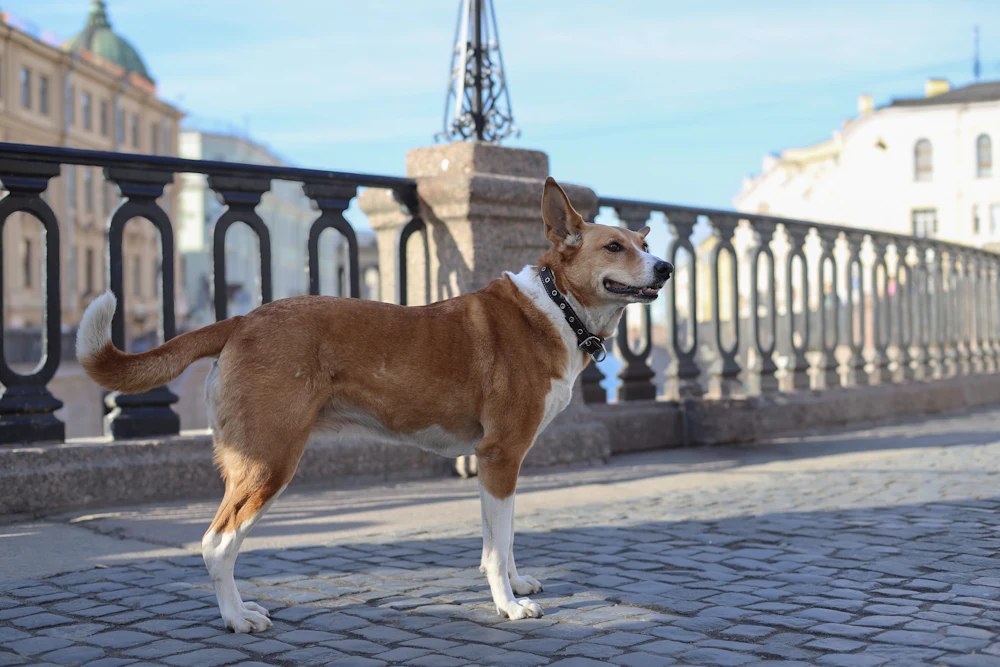
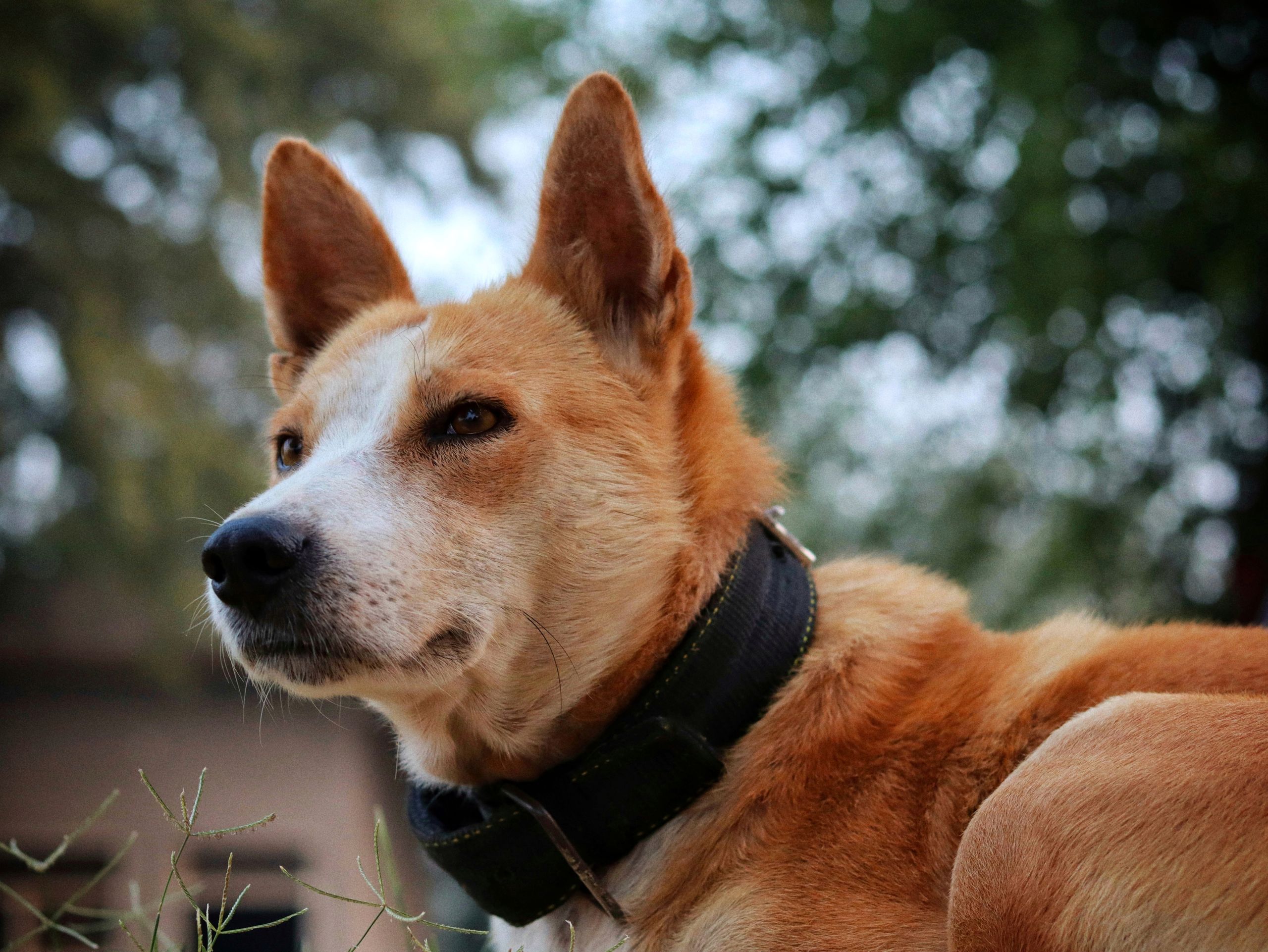
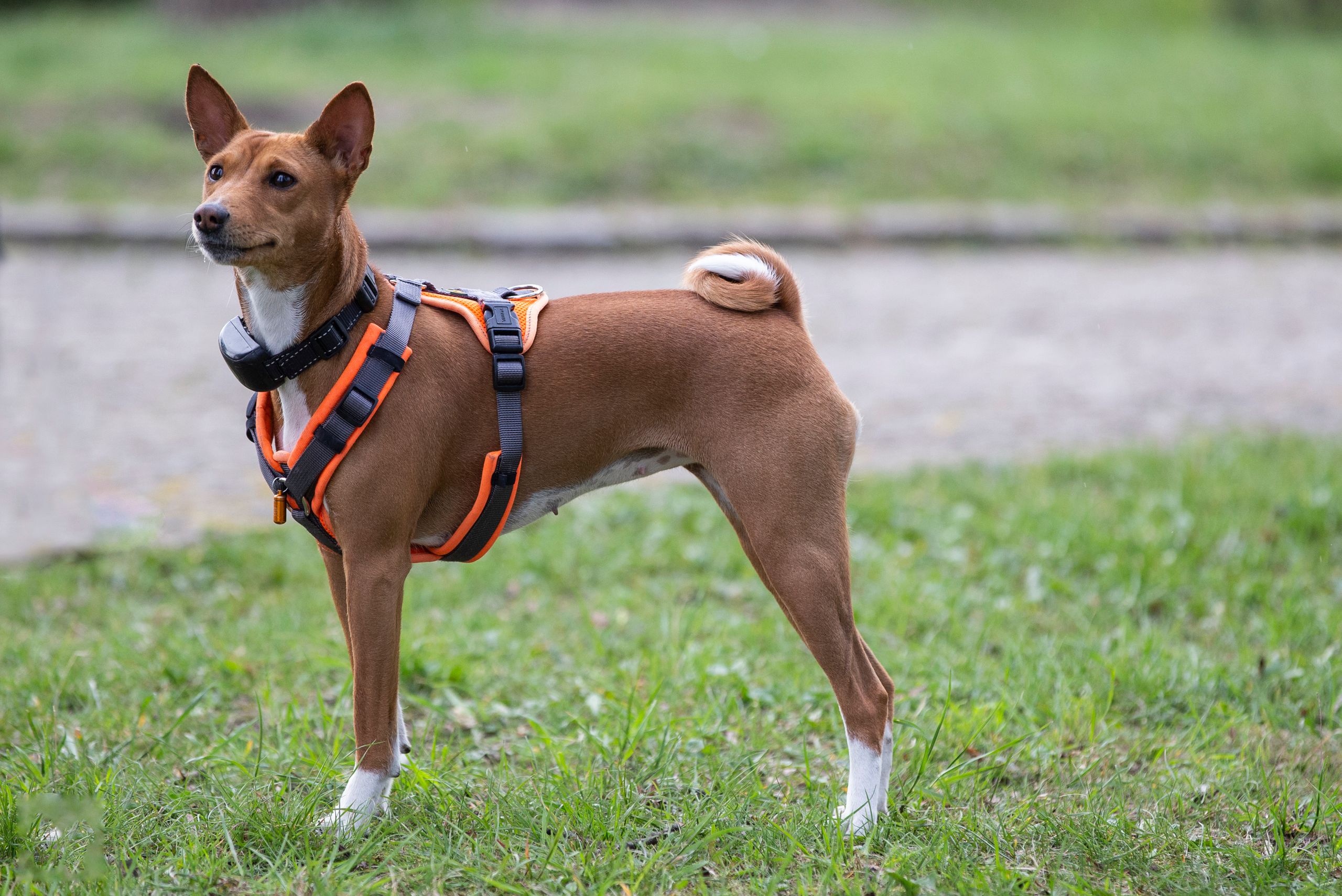
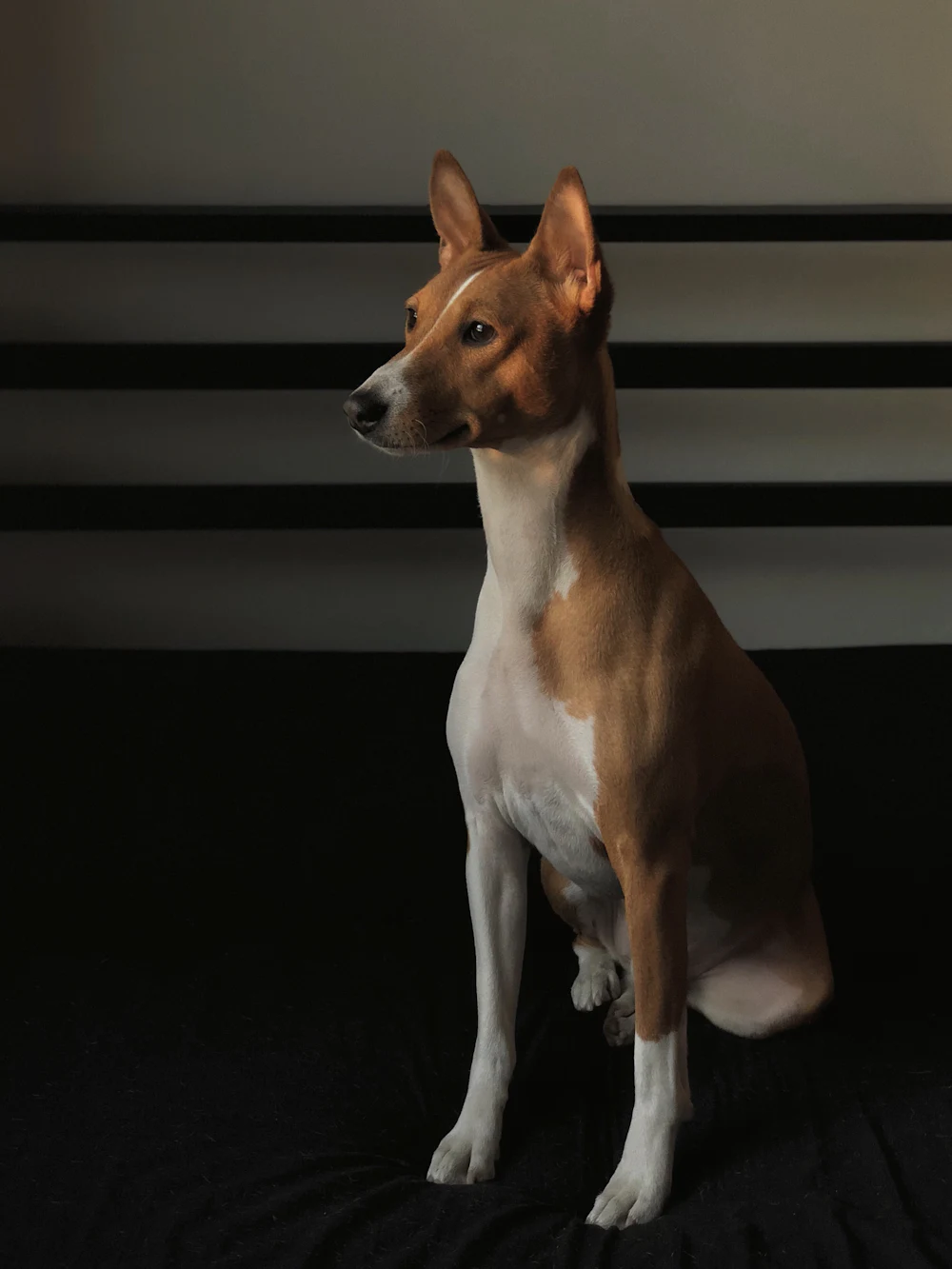
The breed sits in FCI Group 5, Section 6, among the primitive types, alongside other breeds that kept many features of early domestic dogs. The current FCI standard dates from 1999. One of those primitive traits is reproductive: Basenji females usually come into season only once a year, rather than twice like most breeds. Its short coat, upright ears, tightly curled tail and wrinkled forehead when alert give it a look that is instantly recognisable on any street.
Temperament
The FCI standard describes the Basenji as intelligent, independent but affectionate and alert, and adds that it can be aloof with strangers. It also notes the breed's most famous trait: it does not bark, but it is not mute either. Its own special noise is a mixture of a chortle and a yodel, and Basenjis can also whine, grumble and scream when frustrated.
Living with one is often compared to living with a clever cat. Basenjis are remarkably clean, groom themselves and dislike wet weather. They are curious, playful and quick to find opportunities, from an open cupboard to an unguarded sandwich. Their independence means they cooperate when it suits them, and they tend to be devoted to their family while ignoring everyone else.
Children and other pets
With respectful children who understand that the dog likes its space, a Basenji can be a lively, affectionate companion, though it will not tolerate much rough handling. It usually does best with other dogs of similar size and energy, sometimes better with the opposite sex. The hunting instinct is strong and quick: cats outdoors, rabbits, guinea pigs and birds are at real risk, and even an indoor cat should be introduced with great care.
Exercise and the daily walk
An adult Basenji needs about an hour to an hour and a half of activity a day, ideally with a mix of brisk walks, sniffing time and play. Many love lure coursing, which satisfies the urge to chase in a safe setting. A tired Basenji is a well-behaved one; an under-exercised one is inventive and destructive.
Recall is unreliable in most Basenjis, so walks should be on lead or on a long line, and free running only in secure areas with high fences, since many climb or jump well. A good harness is useful, as they are good at slipping collars. In rain many Basenjis simply refuse to walk, so indoor games and puzzle feeders are useful on wet days.
Training
Basenjis learn quickly but see little point in repetition. Use short sessions, high-value rewards and plenty of variety, and stop before the dog loses interest. Force or nagging does not work with this breed. Owners who enjoy clicker training and creative problem solving usually get the best results.
House training is often easy, thanks to the breed's cleanliness. The harder parts are polite behaviour around food, staying calm when left alone and coming back when called. Teach crate or pen training early, and manage the environment, since a Basenji will often find the one thing you forgot to put away.
Coat and grooming
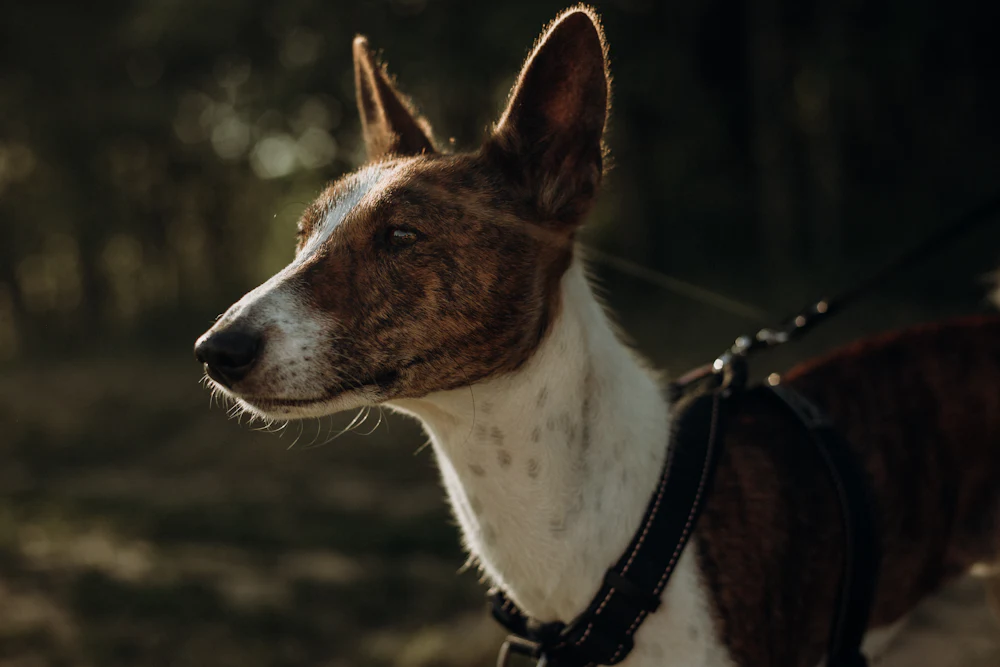
The coat is short, sleek and close, with very fine hair, and needs little more than a weekly rub with a soft glove or cloth. Basenjis shed lightly and have little doggy odour. The FCI standard accepts pure black and white, red and white, black and tan and white with tan markings on the muzzle and cheeks and melon pips above the eyes, black, tan and white, and brindle, meaning black stripes on a red background. White should appear on the feet, chest and tail tip. The thin coat offers little protection from cold, so a coat in winter is sensible.
Feeding and weight
Basenjis are small and active, but they are also opportunistic thieves, so food should be stored securely and counters kept clear. Feed a complete diet suited to a small, energetic dog in measured portions, divided into two meals. Use some of the ration for training and puzzle toys, which help with the breed's boredom. Keep the dog lean, with a visible waist and ribs that are easy to feel.
Work out a starting calorie figure and food weight with the calorie calculator. Not sure this is the right breed? Take the quiz.
Health
Every breed carries predispositions. These are the conditions most often discussed for the Basenji, not a prediction for any individual dog.
- Fanconi syndrome (kidney disorder)
- Progressive retinal atrophy
- Hypothyroidism
- Hip dysplasia
- Pyruvate kinase deficiency (inherited anaemia)
What to ask the breeder. Ask for DNA results for Fanconi syndrome and PRA, recent eye examinations, hip scores and thyroid testing for both parents.
Choosing a puppy
A Basenji puppy is clever, fast and constantly exploring, so puppy-proof the flat thoroughly and supervise closely. Start crate or pen training, short training sessions and gentle handling from the first day. Introduce the puppy to people, other dogs, trams and lifts early, since Basenjis can become aloof or nervous without broad socialisation. Chewing is intense in the first year, and electrical cables, shoes and remote controls are common victims.
In Luxembourg the national kennel club is the Fédération Cynologique Luxembourgeoise (FCL), a member of the FCI. Many owners also buy from breeders in Germany, France or Belgium; a puppy coming from another EU country must be microchipped and vaccinated against rabies, which in practice means it cannot travel before about fifteen weeks of age. Where to get a dog in Luxembourg.
The older Basenji
Senior Basenjis usually remain playful and alert. Keep their weight steady, check teeth and kidneys regularly with your vet, and offer shorter walks with more sniffing time. Older dogs feel cold even more, so warm beds and coats in winter help. Mental games remain important, as the breed's curiosity rarely fades with age.
A realistic day
A realistic weekday for a working household in Luxembourg City, with a midday visit. Adjust it to your dog, not the other way round.
A 40-minute brisk walk in the Pétrusse valley on a harness, then breakfast from a puzzle toy.
The Basenji settles in its pen or a secure room with chews as the owner leaves for work.
PAWLY midday visit: a 45-minute walk with sniffing time on a long line, fresh water and a short play session.
Evening walk in Parc Merl or the Kinnekswiss, a short training game, then dinner.
Short last walk and bed, often under a blanket.
A Basenji in Luxembourg
The Basenji's size, quiet nature and cleanliness make it a good candidate for flat life in Luxembourg City, and neighbours are unlikely to be disturbed by barking. However, the breed can yodel or scream when frustrated, and boredom can be destructive, so a midday visit matters on long office days. Lifts and trams are easy for a small, light dog once it is accustomed to them, and public transport is free nationwide.
Parks such as Parc Merl, Kinnekswiss and the Pétrusse valley suit lead walks. The forests are full of deer and other wildlife, so a long line is essential there. Many Basenjis dislike rain and cold, which makes Luxembourg winters a challenge; a warm, waterproof coat helps. Every dog must be microchipped, declared to the commune and insured for third-party liability.
Every dog in Luxembourg must be identified, declared to the commune and covered by liability insurance. How registration works.
When you travel
A sitter must keep the Basenji on lead or a long line at all times outside, check that doors and balconies are secure and keep food well out of reach. Daily walks, puzzle feeders and chew toys keep the dog occupied. The sitter should know the dog's usual vocal sounds, to tell the difference between excitement and distress, and keep a coat ready for cold, wet days.
PAWLY's holiday and overnight care takes place in your home, so your dog keeps its own bed and routine.
Myths and facts
MythBasenjis are silent.
FactThey do not bark in the usual way, but they are not mute. The FCI standard describes a mixture of a chortle and a yodel, and they can be quite loud when they want something.
MythA small dog needs little exercise.
FactBasenjis are hunting dogs with plenty of stamina and need daily exercise and mental stimulation.
MythThey are hypoallergenic.
FactNo dog is truly hypoallergenic. The Basenji sheds lightly and has little odour, which some allergy sufferers tolerate better, but reactions vary between people.
Is it the right dog for you?
Suits
- Owners who enjoy an independent, cat-like companion
- Flat dwellers who value a quiet, clean dog
- People who like creative, reward-based training
- Households without small pets
Think twice if
- Think twice if you need reliable off-lead recall
- Think twice if you have cats, rabbits or other small pets
- Think twice if you want an obedient, eager-to-please dog
- Think twice if long walks in rain are part of your routine
Questions owners ask
Do Basenjis really not bark?
They rarely bark in the usual sense. Instead they yodel, chortle, whine and grumble, and some can produce a loud scream when frustrated. Overall they are quieter than many breeds, which suits flat life, but they are certainly not silent.
Can a Basenji be left alone during the working day?
Many cope with a few hours alone once trained, but a full office day is too long. A midday walk and puzzle toys make a big difference. A bored Basenji can be destructive.
Is a Basenji good with cats?
Some live peacefully with a cat they have grown up with, but the prey drive is strong and outdoor cats are often chased. Small pets such as rabbits and guinea pigs are not a safe mix.
Do Basenjis need a coat in winter?
Many benefit from one. The short, fine coat gives little protection from cold and rain, and many Basenjis refuse to walk in wet weather without one. Choose a well-fitted, waterproof coat that does not rub under the legs.
Sources
- FCI breed standard No. 43 (Basenji)
- AKC Hound Group health testing requirements
- The Royal Kennel Club, Basenji
Photo: Unsplash (Unsplash License) · Photo: Unsplash (Unsplash License) · Photo: Pexels (Pexels License) · Photo: Pexels (Pexels License) · Photo: Unsplash (Unsplash License)
General information for dog owners in Luxembourg, not veterinary or legal advice. Official facts (origin, size, group, history and temperament as described by the breed standard) follow the FCI standard; health and care sections reflect breed-club and veterinary guidance and are typical ranges rather than rules. For your own dog, ask your vet, the breed club or your commune. How this guide is written and checked. Last reviewed 8 October 2026.
Need someone for your Basenji?
PAWLY offers an individual 45-minute walk or a home visit at your dog's pace, the same walker every time, and a written report with photos after every visit, across Luxembourg City.
Read next: the journal, for the Basenji
All articles
Building a recall you can actually rely on
Scent and movement can cancel a recall; this is the method for the Basenji.

How much exercise does your dog actually need?
The Basenji is an active breed, so it is worth checking the exercise numbers against your actual week.

Dogs and cats in the same flat
The Basenji can see small animals as prey; this covers living with a cat in a flat.
Similar breeds
All 198 breeds
Shiba Inu
Japan's ancient little hunting dog, clean and dignified, with a cat-like habit of deciding for itself when to listen.
EnergyGroomingFlat life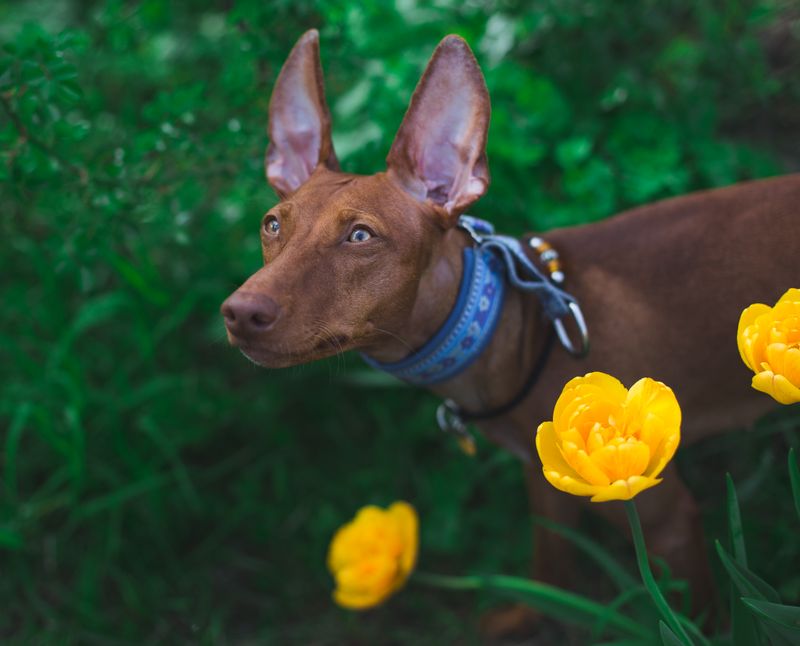
Pharaoh Hound
Malta's elegant tan hunting dog, which blushes when it is happy and hunts by sight, scent and hearing.
EnergyGroomingFlat life
Whippet
A sprinter who sleeps most of the day: one of the best city dogs you have never considered.
EnergyGroomingFlat life

