


History
The FCI standard attributes the Chow Chow's ancestry to China, where it was kept as a guard dog and also used for hunting, and states that it has been known there for more than 2,000 years. The standard describes it as related to the Nordic Spitz type, with something of the mastiff. Great Britain holds the patronage of the standard.
Because of China's closed policy towards foreigners, according to the standard, Chows did not begin to appear in other countries until around 1800. The breed reached England in the late 18th century but attracted little attention there until the 1920s, and a number were shown at Crufts in 1925. The FCI now classifies it in Group 5 among the Asian Spitz and related breeds, as a guard dog and companion without working trial.
Temperament
The standard's description is brief and accurate: a quiet dog, a good guard, independent, loyal yet aloof. Chows tend to bond closely with one or a few people and ignore strangers with cool dignity. They are generally clean, reserved indoors and rarely bark without reason, which makes them easy neighbours.
Independence is the defining trait. A Chow cooperates when it sees a reason and is unimpressed by repetition or pressure. Many dislike being touched by strangers, being hugged, or having their space invaded. The restricted vision caused by deep-set eyes in some dogs can make sudden approaches startling. Respect for the dog's boundaries is the foundation of a good relationship.
Children and other pets
Chows can live well with respectful older children who understand their need for space, but they are not natural playmates for toddlers, and many do not tolerate grabbing or rough play. Supervision is essential. With other dogs, Chows are often reserved and may not enjoy boisterous greetings; same-sex pairs can be difficult. A cat raised with the dog is usually accepted, though unfamiliar small animals may not be.
Exercise and the daily walk
Adult Chows need around an hour of exercise a day, in two calm walks at a steady pace. They are not built for running, and long jogs are unsuitable. What they enjoy is a predictable route with time to observe and sniff.
Heat is the main restriction. The dense coat, particularly in the rough variety, makes Chows very sensitive to warm weather, so summer walks should be early and late, in shade, with water available. In winter, by contrast, many Chows are at their most comfortable. Avoid over-exercising puppies and limit stairs during growth.
Training
Training a Chow requires patience, consistency and good humour. Use rewards and keep sessions short and purposeful. Expect the dog to think about each request before deciding. Force produces resistance, while calm repetition and respect build a cooperative partnership over time.
Early socialisation is essential to prevent excessive suspicion: introduce the puppy to many people, places and sounds in a calm, positive way. Teach acceptance of grooming, examination of eyes and ears and handling by the vet from the start, as an adult Chow that refuses handling becomes difficult to care for. Housetraining is usually quick, as the breed is naturally clean.
Coat and grooming
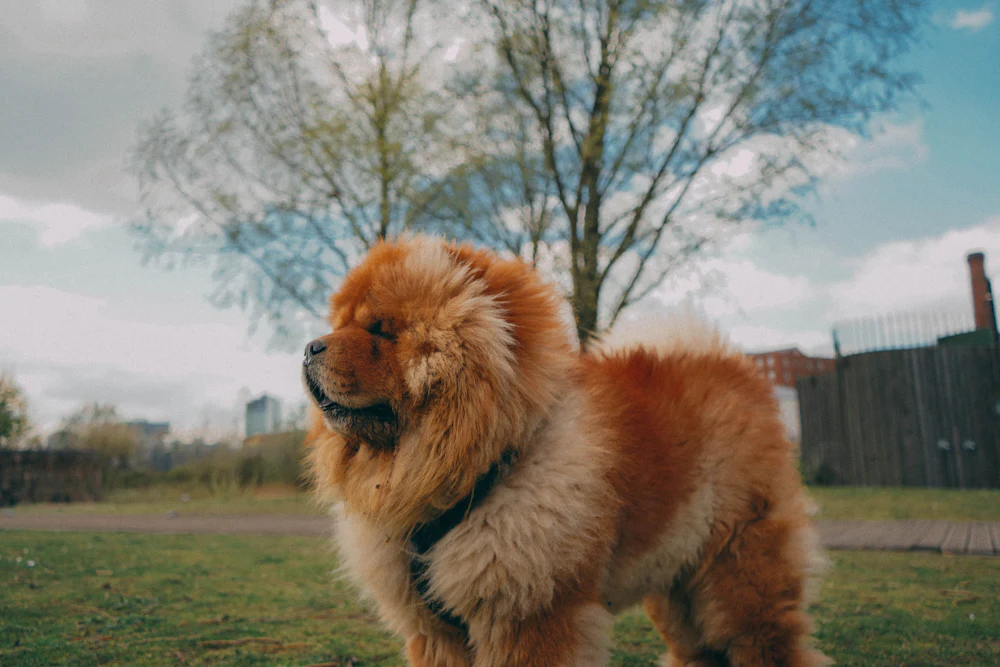
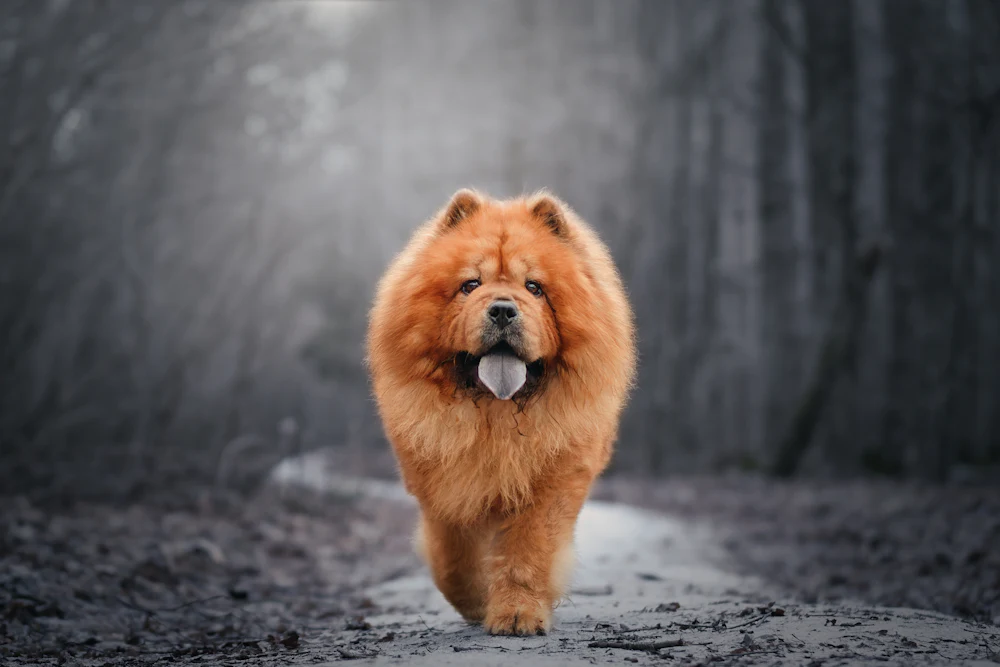
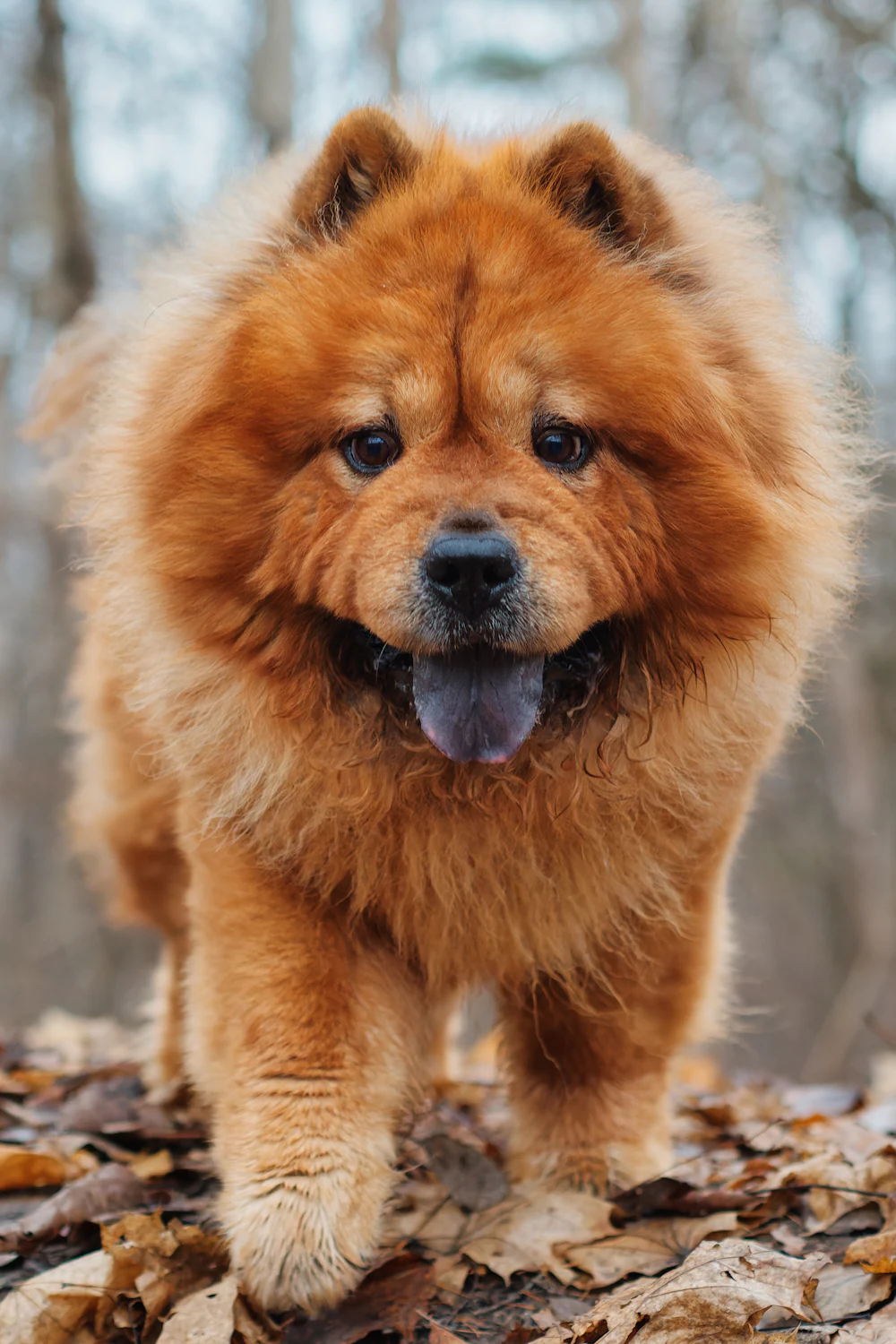
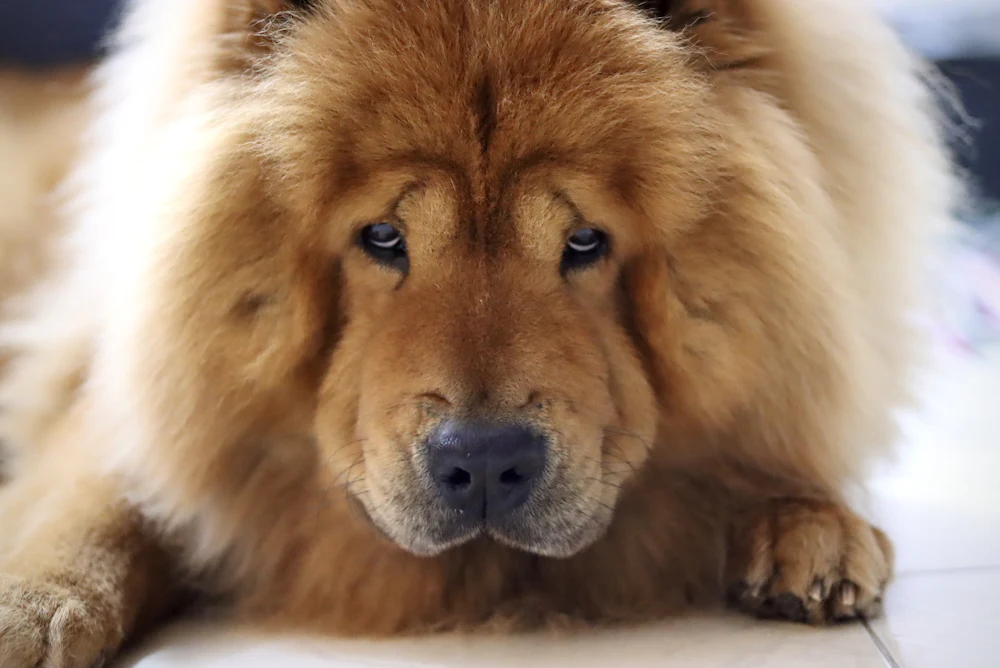
The FCI recognises two coats. The rough coat is profuse, dense, straight and stand-off, with a coarse outer coat and soft woolly undercoat; it needs thorough brushing down to the skin several times a week and sheds heavily at seasonal moults. The smooth coat is short, dense and upstanding, and easier to maintain. Permitted colours are solid black, red, blue, fawn, cream or white, often shaded but never patched or parti-coloured. The tongue is bluish-black.
Feeding and weight
A complete diet suited to a medium-sized, moderately active dog, divided into two meals, works for most adults. Chows are often not greedy, and some are fussy, so avoid creating a habit of constant menu changes. Watch body condition under the thick coat by feeling the ribs regularly. Fresh water must always be available, especially in summer.
Work out a starting calorie figure and food weight with the calorie calculator. Not sure this is the right breed? Take the quiz.
Health
Every breed carries predispositions. These are the conditions most often discussed for the Chow Chow, not a prediction for any individual dog.
- Eyelid problems (entropion)
- Hip dysplasia
- Elbow dysplasia
- Patellar luxation
- Hypothyroidism (underactive thyroid)
- Heat intolerance
What to ask the breeder. Ask for hip and elbow scores, a recent eye examination and thyroid results for both parents, and ask whether either parent has needed eyelid surgery.
Choosing a puppy
Chow puppies look like teddy bears but already show an independent streak. Begin handling, grooming and calm socialisation early, with many brief, positive experiences: lifts, trams, visitors and the vet's surgery. Avoid letting the puppy be passed around by strangers if it is uncomfortable. Establish brushing routines while the puppy coat is easy. Keep exercise short and gentle while it grows.
In Luxembourg the national kennel club is the Fédération Cynologique Luxembourgeoise (FCL), a member of the FCI. Many owners also buy from breeders in Germany, France or Belgium; a puppy coming from another EU country must be microchipped and vaccinated against rabies, which in practice means it cannot travel before about fifteen weeks of age. Where to get a dog in Luxembourg.
The older Chow Chow
Older Chows often become even more settled and home-centred. Maintain grooming, as an older dog may find long sessions tiring; shorter, more frequent brushing helps. Watch eyes, joints and weight, and keep walks gentle. A cool, quiet resting place in summer is important. Regular vet checks can catch thyroid and joint changes early.
A realistic day
A realistic weekday for a working household in Luxembourg City, with a midday visit. Adjust it to your dog, not the other way round.
A calm 30-minute walk before the heat, then breakfast.
Owner leaves; the dog rests in a cool spot, usually without fuss.
Midday visit by a familiar walker: a short, quiet walk, fresh water and a check on comfort.
Evening walk of about 30 minutes; brushing session, then dinner.
Brief toilet break and a quiet evening.
A Chow Chow in Luxembourg
A Chow Chow can suit a Luxembourg City flat very well: it is quiet, clean and content with calm walks around Parc Merl, the Kinnekswiss or the Pétrusse valley. The main challenge is summer, when days in the 30s °C can be dangerous for a heavily coated dog. Walk only early and late, use shade, keep the flat cool and avoid hot pavements. Cool, rainy winters suit the breed far better.
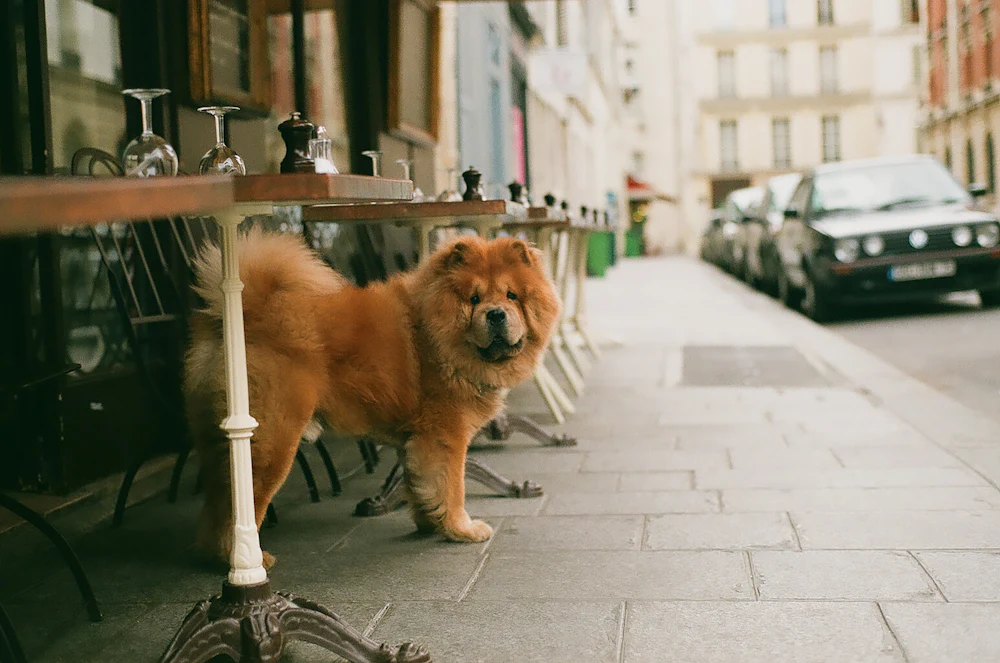
In lifts and on free buses and trams, a Chow is usually composed but prefers not to be touched by strangers; a polite word to fellow passengers helps. Standard obligations apply: microchip, declaration to the commune, third-party liability insurance and the annual dog tax.
Every dog in Luxembourg must be identified, declared to the commune and covered by liability insurance. How registration works.
When you travel
A Chow may not accept a stranger easily, so arrange several meetings with the sitter beforehand. Explain the dog's boundaries: no hugging, no forced handling, calm approaches from the front. In summer, the sitter must walk only in cool hours and watch for heat stress. Leave grooming tools and ask for regular brushing during longer stays, especially at moulting times.
PAWLY's holiday and overnight care takes place in your home, so your dog keeps its own bed and routine.
Myths and facts
MythChows are aggressive by nature.
FactThe FCI describes the breed as quiet, loyal and aloof. Reserve is normal; aggression usually reflects poor socialisation or disrespect for the dog's space.
MythThe blue-black tongue is a sign of illness.
FactIt is a breed characteristic described in the FCI standard.
MythA Chow is a cuddly teddy bear for children.
FactMany Chows dislike being hugged and handled, and are best with calm, respectful older children.
Is it the right dog for you?
Suits
- Calm adult households and quiet flats
- Owners who appreciate an independent, dignified dog
- People prepared for regular, thorough grooming
- Experienced owners who respect a dog's boundaries
Think twice if
- You have toddlers or frequent young visitors
- You cannot keep the dog cool during summer heat waves
- You want an eager, obedient dog for dog sports
- You dislike heavy seasonal shedding
Questions owners ask
Can a Chow Chow cope with Luxembourg summers?
With care. Summer days in the 30s °C are hard for this heavily coated breed. Walk early and late, keep the flat cool, provide shade and water, and never leave the dog in a car. Do not shave the coat without discussing it with your vet or groomer.
Is a Chow Chow good with children?
Chows can live with respectful older children who give them space. Many do not tolerate grabbing, hugging or loud play, so they are usually not a good choice for families with toddlers.
Does a Chow Chow bark a lot?
No, the FCI describes it as a quiet dog. Chows usually bark only when there is a reason, which makes them easy neighbours in a flat.
How much grooming does a Chow need?
The rough coat needs thorough brushing several times a week, down to the skin, and more during moults. The smooth coat is easier. Regular grooming also allows you to check skin, eyes and ears.
Sources
- FCI breed standard No. 205 (Chow Chow)
- The Royal Kennel Club, Chow Chow
- AKC, Non-Sporting Group health testing requirements
Photo: Unsplash (Unsplash License) · Photo: Unsplash (Unsplash License) · Photo: Unsplash (Unsplash License) · Photo: Unsplash (Unsplash License) · Photo: Unsplash (Unsplash License)
General information for dog owners in Luxembourg, not veterinary or legal advice. Official facts (origin, size, group, history and temperament as described by the breed standard) follow the FCI standard; health and care sections reflect breed-club and veterinary guidance and are typical ranges rather than rules. For your own dog, ask your vet, the breed club or your commune. How this guide is written and checked. Last reviewed 8 October 2026.
Need someone for your Chow Chow?
PAWLY offers an individual 45-minute walk or a home visit at your dog's pace, the same walker every time, and a written report with photos after every visit, across Luxembourg City.
Read next: the journal, for the Chow Chow
All articles
Dogs in hot weather: the Luxembourg summer guide
The Chow Chow carries a heavy coat or a heavy frame, which makes a Luxembourg summer the hard season.

Grooming and coat care through the Luxembourg year
The Chow Chow has a coat that needs a routine that holds through the Luxembourg seasons.

Building a recall you can actually rely on
Scent and movement can cancel a recall; this is the method for the Chow Chow.
Similar breeds
All 198 breeds
Shar-Pei
A self-possessed guardian in a loose, sandpaper coat, devoted to its own household and politely uninterested in almost everyone else.
EnergyGroomingFlat life
Akita Inu
A dignified, loyal Japanese spitz, made famous by Hachikō, and a serious dog for experienced owners.
EnergyGroomingFlat life
Eurasier
A calm, watchful family spitz that wants to be wherever its people are, and sulks quietly when it is not.
EnergyGroomingFlat life

