History
The Finnish Spitz is the national dog of Finland, a status it received in 1979 according to the FCI standard. Its roots lie in centuries of hunting in the northern forests. The standard records that the first breed standard was drawn up in 1892, and that bird hunting trials began in 1897, which makes it one of the more formally documented hunting spitzes in Europe.
The FCI places the breed in Group 5, Section 2, Nordic hunting dogs, and describes it as a forest game bird hunter, also used on small predatory game and waterfowl. Its special skill is barking at game that has taken to a tree, holding the bird's attention while the hunter approaches. The standard notes that, following an agreement in 2006, the Karelian-Finnish Laika was merged into this breed, so the Finnish Spitz of today includes that older type.
Temperament
The FCI describes a lively, vigorous, brave and determined dog, with some reserve towards strangers but without aggression. That matches the dogs seen on the street: bright-eyed, quick to notice, and often rather independent. They tend to be warm and affectionate with their own people and polite but cool to everyone else. They are not usually timid, and they carry themselves with an air of knowing exactly where they are going.
The famous bark is the part new owners underestimate. The breed was developed to bark at treed birds for long periods, and it still uses the voice for excitement, alarm and boredom. It is loud, rapid and carrying. Early training in a quiet cue helps, but it will never become a silent dog. A Finnish Spitz also has a sturdy streak of independence, so patience and humour work better than force.
Children and other pets
With older children who respect a lively dog the Finnish Spitz is a cheerful, game companion, and it enjoys family activity. Young children may find the barking and the dog's reluctance to be handled when it is busy hard to read, so supervise closely. It generally gets on with other dogs if socialised early. Hunting heritage means birds, squirrels and small pets in the garden are tempting, and cats are best introduced when the dog is young and kept under watch.
Exercise and the daily walk
Plan for at least an hour and a half of varied exercise a day. The Finnish Spitz is a fit, athletic forest dog with plenty of stamina, and a short lap round the block will not satisfy it. Woodland walks, hill paths and games with a ball or tug are all welcome. It enjoys exploring and will follow its nose and ears whenever something rustles in the undergrowth.
Off-lead freedom needs careful judgement. The breed hunts by sound and scent and can disappear after a bird or a squirrel with surprising speed. Use a long line until recall is truly reliable, and keep the dog on lead near roads. Mental work such as scent games, trick training and agility keeps it content on days when the weather limits long walks.
Training
The Finnish Spitz is clever and quick, but it was bred to work independently at some distance from the hunter, and it often asks what is in it for them. Keep sessions short and varied, use food and play, and avoid repetition. Dogs trained with firmness and fairness tend to be pleasant partners; dogs trained with force often become evasive and louder.
Teach the basics early: a reliable recall, a calm walk on the lead, polite greetings and a quiet cue. Barking can be channelled by rewarding silence and managing triggers, such as the window overlooking the street. Socialise widely as a puppy so that natural reserve with strangers stays polite. Do not expect a Border Collie style of obedience, but with consistency the breed learns more than people expect.
Coat and grooming
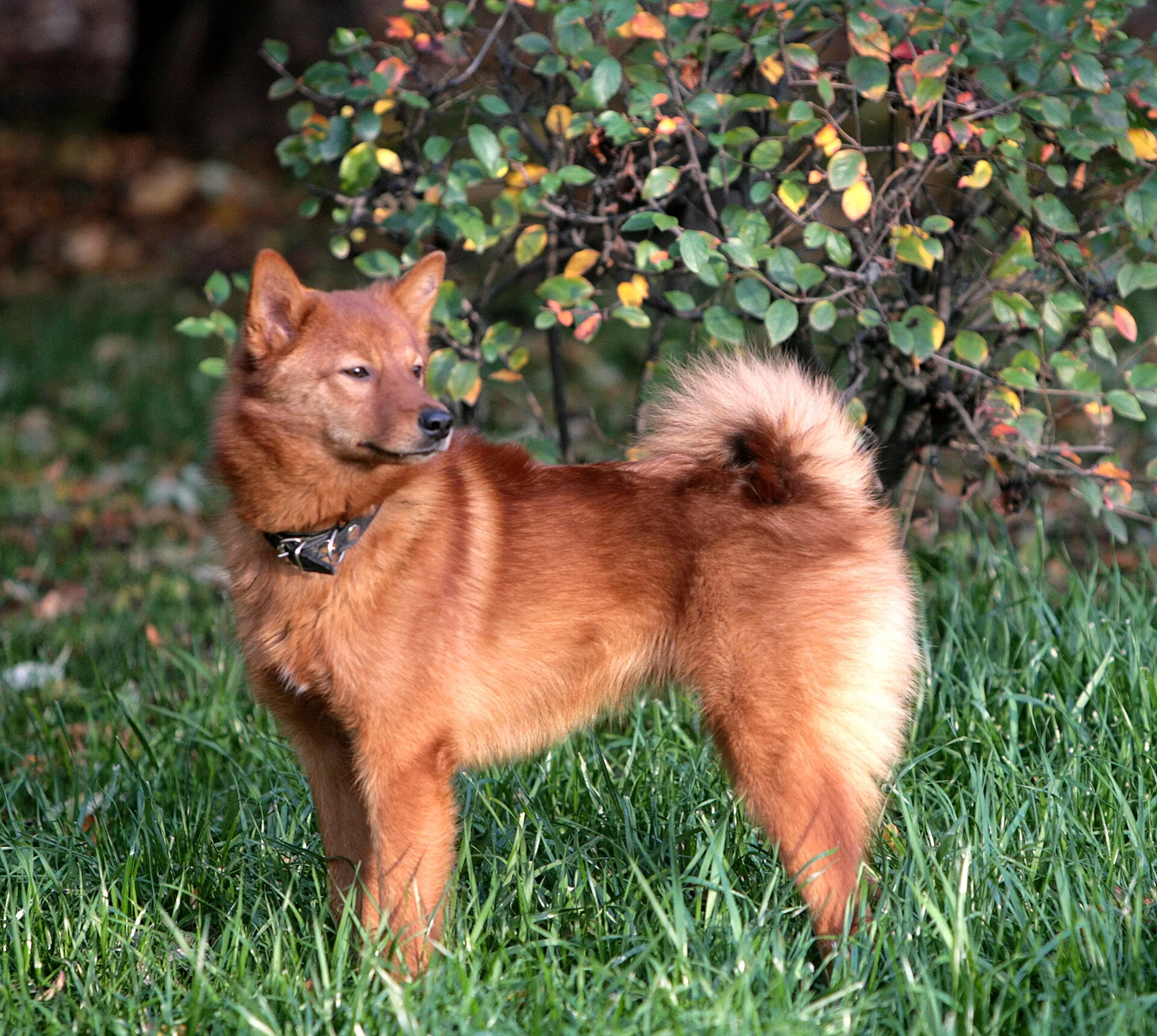
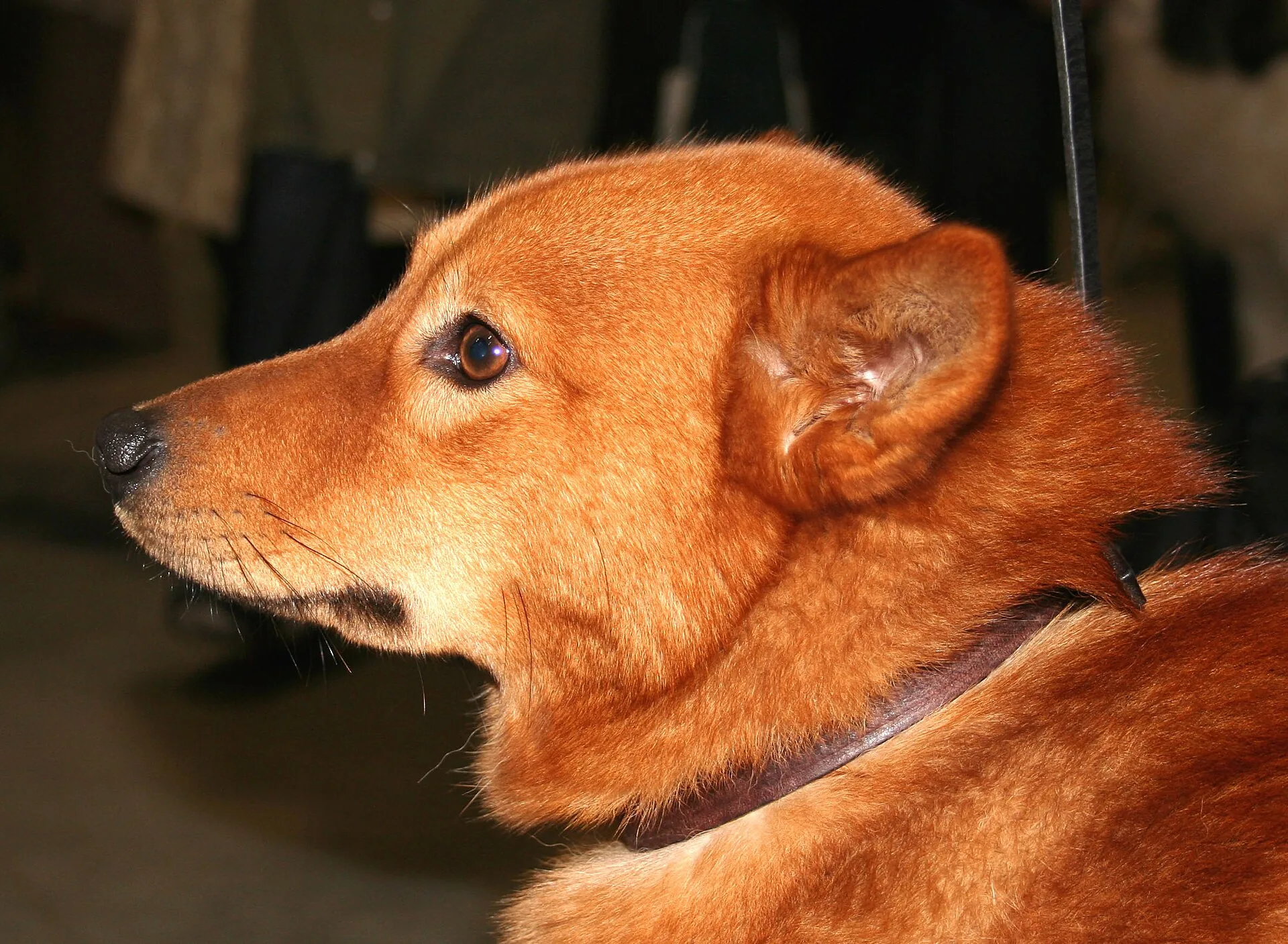
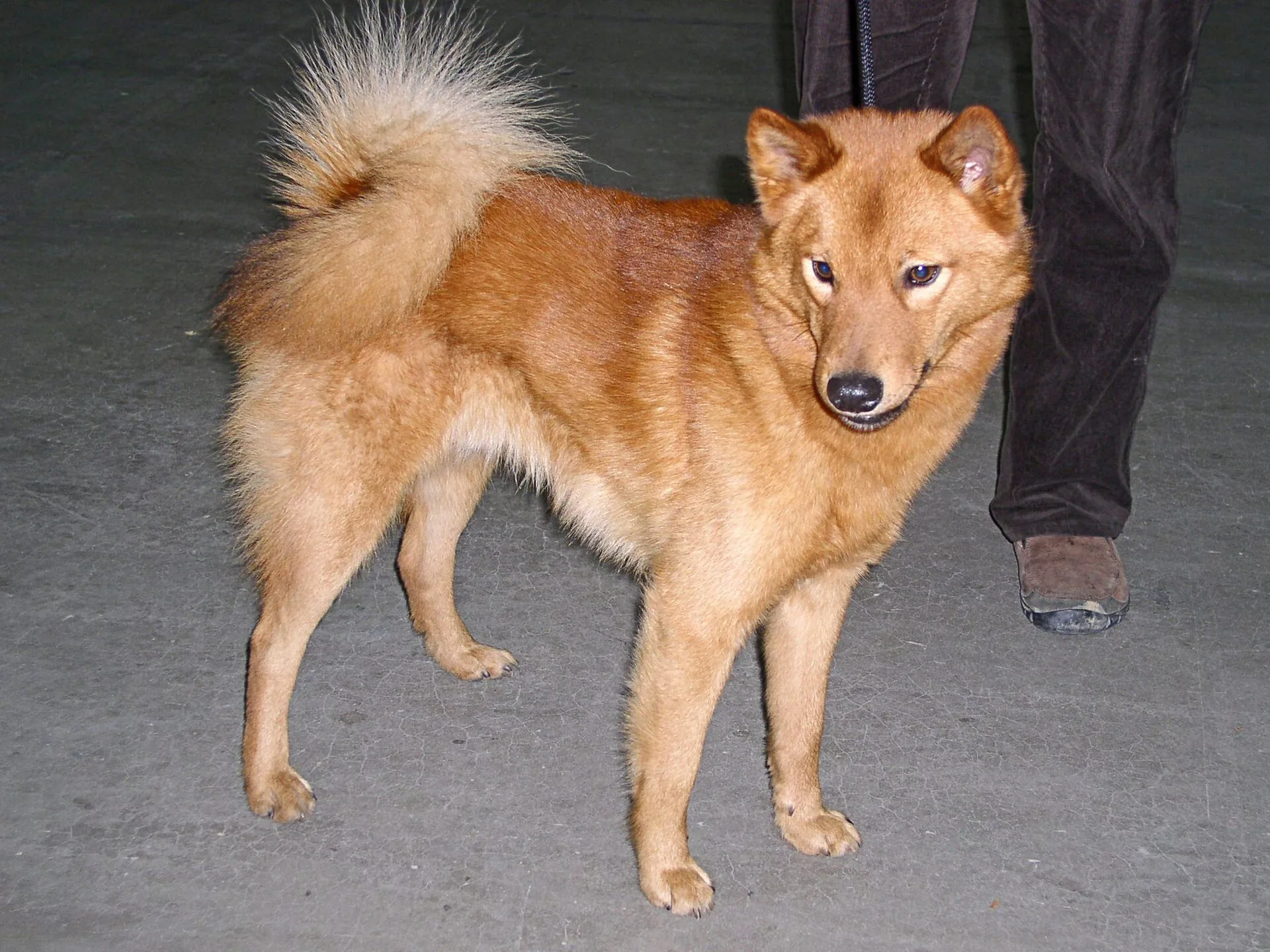
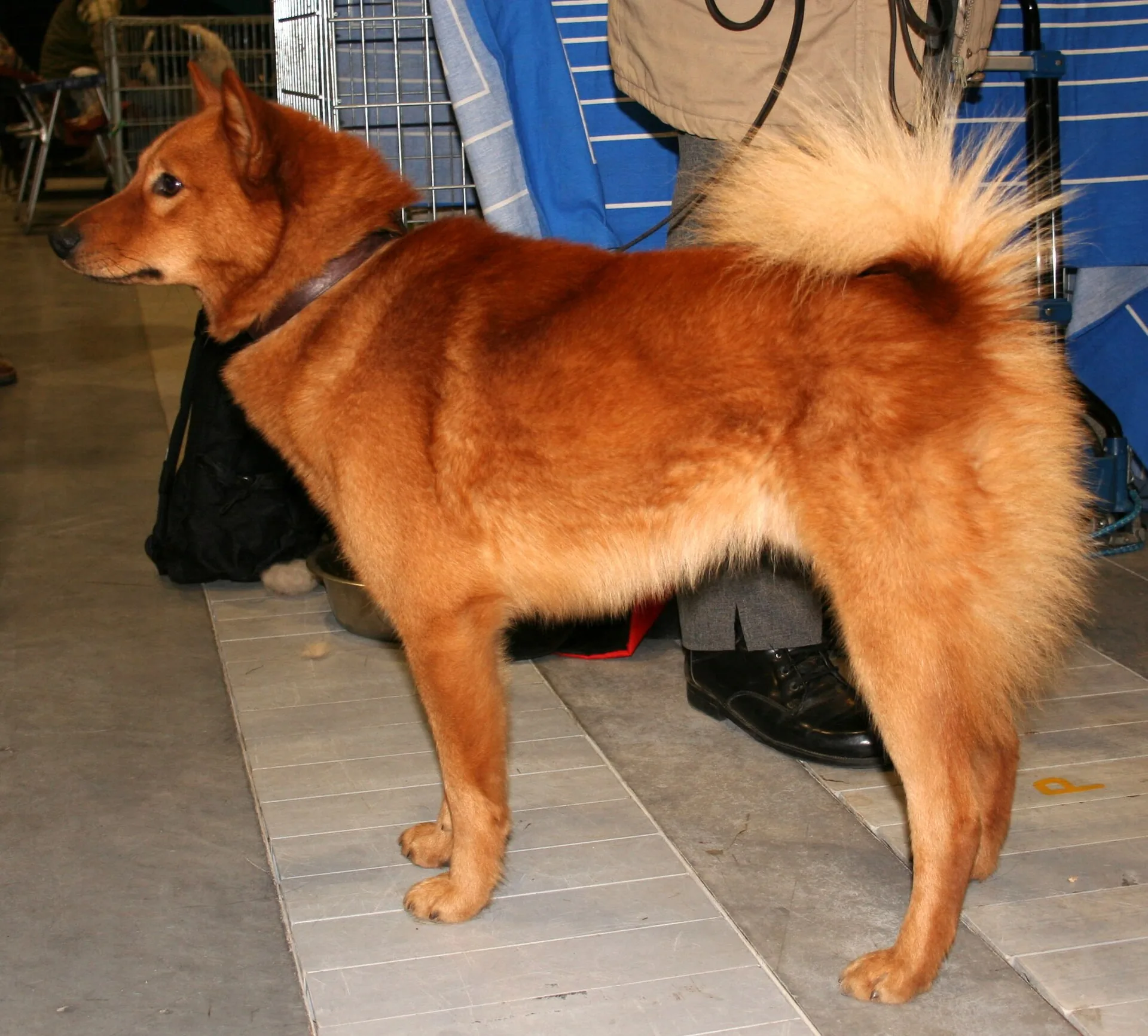
The standard describes a moderately long, stand-off coat, shorter on the head and legs, with a dense undercoat and longer, denser hair on the trousers and tail. The colour is a bright red or golden red on the back, lighter on the ears, cheeks, throat and underside, with small white spots on the chest and white on the feet permitted. The coat sheds heavily once or twice a year, and brushing weekly, daily in moult, keeps it healthy. It does not need clipping and is largely dirt-resistant.
Feeding and weight
Feed a complete diet suited to an active medium-sized dog, in two meals a day. Finnish Spitzes are lean and athletic, and most hold their weight well when exercised, but a bored dog can gain from treats. Adjust portions for training days and for the winter or summer. Fresh water must always be available, particularly after walks in warm weather. Avoid strenuous exercise immediately after meals.
Work out a starting calorie figure and food weight with the calorie calculator. Not sure this is the right breed? Take the quiz.
Health
Every breed carries predispositions. These are the conditions most often discussed for the Finnish Spitz, not a prediction for any individual dog.
- Hip dysplasia (poor hip joint formation)
- Patellar luxation (slipping kneecaps)
- Epilepsy
- Inherited eye disease
- Allergic skin trouble and ear infections
What to ask the breeder. Ask to see hip and eye test results for both parents, and ask the breeder about any history of epilepsy or skin allergies in the line.
Choosing a puppy
Finnish Spitz puppies are fluffy, bold and noisy from an early age. Start socialisation straight away, with calm exposure to traffic, lifts, bicycles and strangers, and begin teaching a quiet cue before the barking becomes a habit. Keep exercise gentle while the joints grow, with plenty of short play sessions instead of long walks. Leave the puppy alone for short, increasing periods so that separation does not become a trigger for barking.
In Luxembourg the national kennel club is the Fédération Cynologique Luxembourgeoise (FCL), a member of the FCI. Many owners also buy from breeders in Germany, France or Belgium; a puppy coming from another EU country must be microchipped and vaccinated against rabies, which in practice means it cannot travel before about fifteen weeks of age. Where to get a dog in Luxembourg.
The older Finnish Spitz
Many Finnish Spitzes remain agile and spirited into their senior years. From about ten, shorter walks, a soft bed and regular vet checks for joints, eyes and teeth are sensible. Keep the dog lean, as extra weight strains the hips and knees. Some dogs bark more as their hearing or eyesight declines, so patience and routine help them settle.
A realistic day
A realistic weekday for a working household in Luxembourg City, with a midday visit. Adjust it to your dog, not the other way round.
Brisk 40-minute lead walk with sniffing time, then breakfast and a quick brush.
Owner leaves; the dog has a stuffed chew toy and the window blind lowered to discourage barking at passers-by.
Midday visit: a 45-minute walk in a park or woodland edge on a long line, fresh water and a short training game.
Longer evening outing of about an hour, with off-lead time in a safely fenced area if available.
Last short walk, a calm tug game, then bed.
A Finnish Spitz in Luxembourg
The Finnish Spitz is a forest dog at heart, and the woods of the Grünewald and Bambësch offer exactly the right smells and sounds. Use a long line, as wildlife is abundant and the breed will chase. In town, Parc Merl and the Pétrusse valley are good for shorter outings. Free buses and trams make it easy to reach green spaces, but a barky dog should be taught calm behaviour on public transport first.
Flat living works only if the owner takes the bark seriously. Thin walls, a shared stairwell and a dog left alone for long hours can lead to complaints. Coordinating walks, enrichment and a midday visit helps greatly. Summers in the 30s °C are hard on a thick-coated dog, so exercise early and late. Remember the obligations: microchip, declaration to the commune, third-party liability insurance and the annual dog tax.
Every dog in Luxembourg must be identified, declared to the commune and covered by liability insurance. How registration works.
When you travel
A sitter should know that this is a vocal, alert dog that may bark at noises in the stairwell and at passers-by. Keep the dog on a long line or lead outdoors, as it may bolt after birds or squirrels. Provide chews, scent games and long walks to avoid boredom. Brush in moult season, watch for overheating in summer, and keep the vet's contact details to hand.
PAWLY's holiday and overnight care takes place in your home, so your dog keeps its own bed and routine.
Myths and facts
MythFinnish Spitzes bark only when something is wrong.
FactThe bark was developed for hunting and is used for excitement, boredom and attention as well as alarm. Training can reduce it, but never remove it.
MythA spitz coat means they need no grooming.
FactThe coat is fairly self-cleaning, but it sheds heavily once or twice a year and needs regular brushing to stay healthy.
MythThey are happy to be left alone all day in a garden.
FactThis is an active, social dog. A bored Finnish Spitz barks, digs and tries to leave.
Is it the right dog for you?
Suits
- Active owners who enjoy woodland walks
- People who can tolerate a loud voice
- Households with a garden or easy access to forest
- Owners who like an independent, clever dog
Think twice if
- You live in a flat with thin walls
- Your dog would be alone for most of the day
- You want a dog that is reliably off lead near wildlife
- You prefer a quiet, undemanding dog
Questions owners ask
Is the Finnish Spitz a good flat dog?
Only for a committed owner. The dog is manageable indoors when exercised, but the bark is loud and frequent. Think about neighbours, walls and your daily routine before choosing this breed.
Can a Finnish Spitz be trained not to bark?
The bark can be reduced and controlled with early work on a quiet cue and by managing triggers, but the breed was developed to bark, and complete silence is unrealistic.
How much grooming does a Finnish Spitz need?
A weekly brush most of the year, and daily brushing during the heavy shed once or twice a year. The coat does not need clipping and tends to shed dirt easily.
Is a Finnish Spitz good with children?
Often, with older, respectful children. The breed is lively and affectionate, but the noise and energy can overwhelm toddlers, so supervise and teach children how to handle a dog.
Sources
Photo: Karelgerda. Karelgerda, CC BY-SA 3.0, via Wikimedia Commons · Photo: Pleple2000, CC BY-SA 3.0, via Wikimedia Commons · Photo: No machine-readable author provided. PrzemekL assumed (based on copyright claims)., Public domain, via Wikimedia Commons · Photo: Unsplash (Unsplash License) · Photo: Pleple2000, CC BY-SA 3.0, via Wikimedia Commons
General information for dog owners in Luxembourg, not veterinary or legal advice. Official facts (origin, size, group, history and temperament as described by the breed standard) follow the FCI standard; health and care sections reflect breed-club and veterinary guidance and are typical ranges rather than rules. For your own dog, ask your vet, the breed club or your commune. How this guide is written and checked. Last reviewed 8 October 2026.
Need someone for your Finnish Spitz?
PAWLY offers an individual 45-minute walk or a home visit at your dog's pace, the same walker every time, and a written report with photos after every visit, across Luxembourg City.
Read next: the journal, for the Finnish Spitz
All articles
Dogs in hot weather: the Luxembourg summer guide
The Finnish Spitz carries a heavy coat or a heavy frame, which makes a Luxembourg summer the hard season.

How long can a dog really be left alone?
A sociable breed has a real limit on time alone; this is how to work it out.

Ears: the three signs that mean an appointment
Ear trouble is common in the Finnish Spitz; these are the three signs that mean an appointment.
Similar breeds
All 198 breeds
Finnish Lapphund
A soft-eyed reindeer herder from the far north, friendly and calm indoors, but equipped with a ready voice and a coat built for snow.
EnergyGroomingFlat life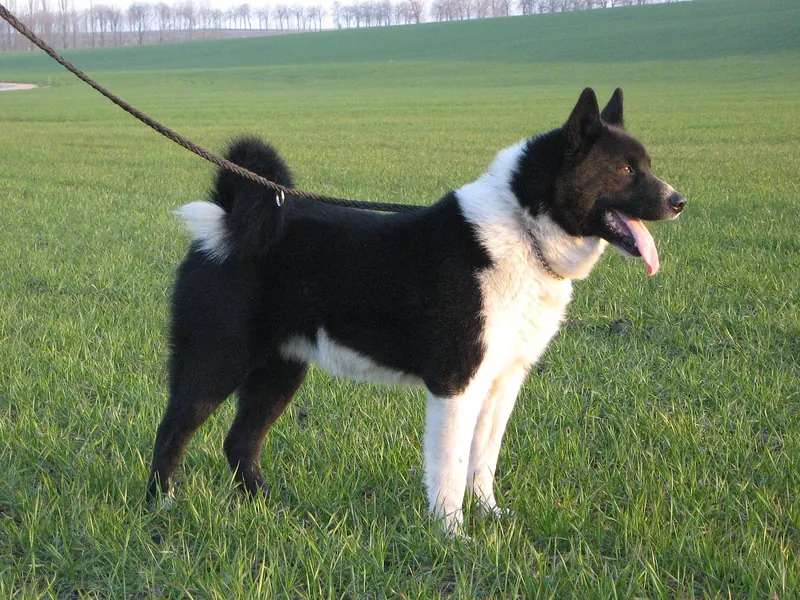
Karelian Bear Dog
A black and white Finnish spitz bred to corner bears and elk, which makes the average city squirrel seem a personal challenge.
EnergyGroomingFlat life
Norwegian Elkhound
A square, silver-grey Nordic hunter built to hold a moose at bay with its voice, hardy, friendly and never short of an opinion.
EnergyGroomingFlat life

