History
The FCI places the Karelian Bear Dog in Group 5, Section 2, the Nordic hunting dogs, with Finland as its country of origin. According to the standard it descends from Komi dogs originating in Karelia and Russian Karelia. Planned breeding began in 1936, with the aim of producing a sturdy barking dog for big game. The breed was formally named and standardised in 1945, and the first registrations followed in 1946.
The standard defines its use as a hunting spitz, mainly for elk and bear, where it holds the game at bay. The dog finds the animal, keeps it occupied and signals its position by barking until the hunter arrives. This is a dog with real courage and independence, bred to face animals much larger than itself, and that history shapes everything about it, from its self-confidence to its indifference to being told what to do.
Temperament
The FCI describes an eager hunter, very independent yet working co-operatively to game. It adds that the breed is very self-confident, courageous and persistent, slightly reserved and never aggressive towards people. In everyday life that means a dog that is dignified with its family, aloof with strangers and unimpressed by commands that make no sense to it. It is loyal, but its loyalty has to be earned rather than assumed.
Many individuals are strongly territorial and will challenge other dogs, especially of the same sex, with little warning. They are also strongly driven to chase and hunt, and a Karelian Bear Dog will treat squirrels, cats and deer as work. This is not a casual companion. Without enough exercise and structure, it becomes noisy, destructive and difficult to manage, but with an experienced owner it is an impressive, honest and loyal partner.
Children and other pets
A Karelian Bear Dog can be devoted to its own family, but it is not a natural nanny and its size, strength and independence mean toddlers should never be left unsupervised with it. Older children who respect the dog's space can have a rewarding relationship. It may be dominant or intolerant with other dogs, particularly of the same sex, and its prey drive makes cats and small pets risky. Early, careful socialisation is vital.
Exercise and the daily walk
A healthy adult needs around two hours of activity a day, and it should include real exploration, not just pavement. The breed's hunting heritage means it enjoys long hikes, jogging and scent work, and it is tireless on a cold day. Because the prey drive is strong, almost all of this should happen on a lead or long line, or within a very secure fence. Even a reliable dog may disappear after a scent.
Mental work is as important as miles. Tracking, scent games, canicross and bikejoring are good outlets, and a bored Karelian Bear Dog digs, barks and escapes. Puppies should avoid long runs and hard jumping while the joints develop. Provide short, structured walks and play until about a year old, then build up gradually. In warm weather, restrict activity to early and late hours.
Training
Training this breed takes patience, calm confidence and a good sense of humour. It is independent and decides for itself whether an instruction is worth following, so reward-based methods with plenty of variety work far better than repetition or force. Start socialisation early with people, dogs, traffic and city noise, and keep going for the first two years, as the reserved, territorial character needs careful guidance.
Recall cannot be trusted outdoors, and an owner who expects off-lead freedom in open countryside is asking for trouble. Teach a recall for enclosed areas anyway, along with loose-lead walking, a settle on a mat and impulse control around other animals. Barking should be managed from the start. Experienced owners who understand primitive hunting breeds will find this dog rewarding rather than difficult.
Coat and grooming
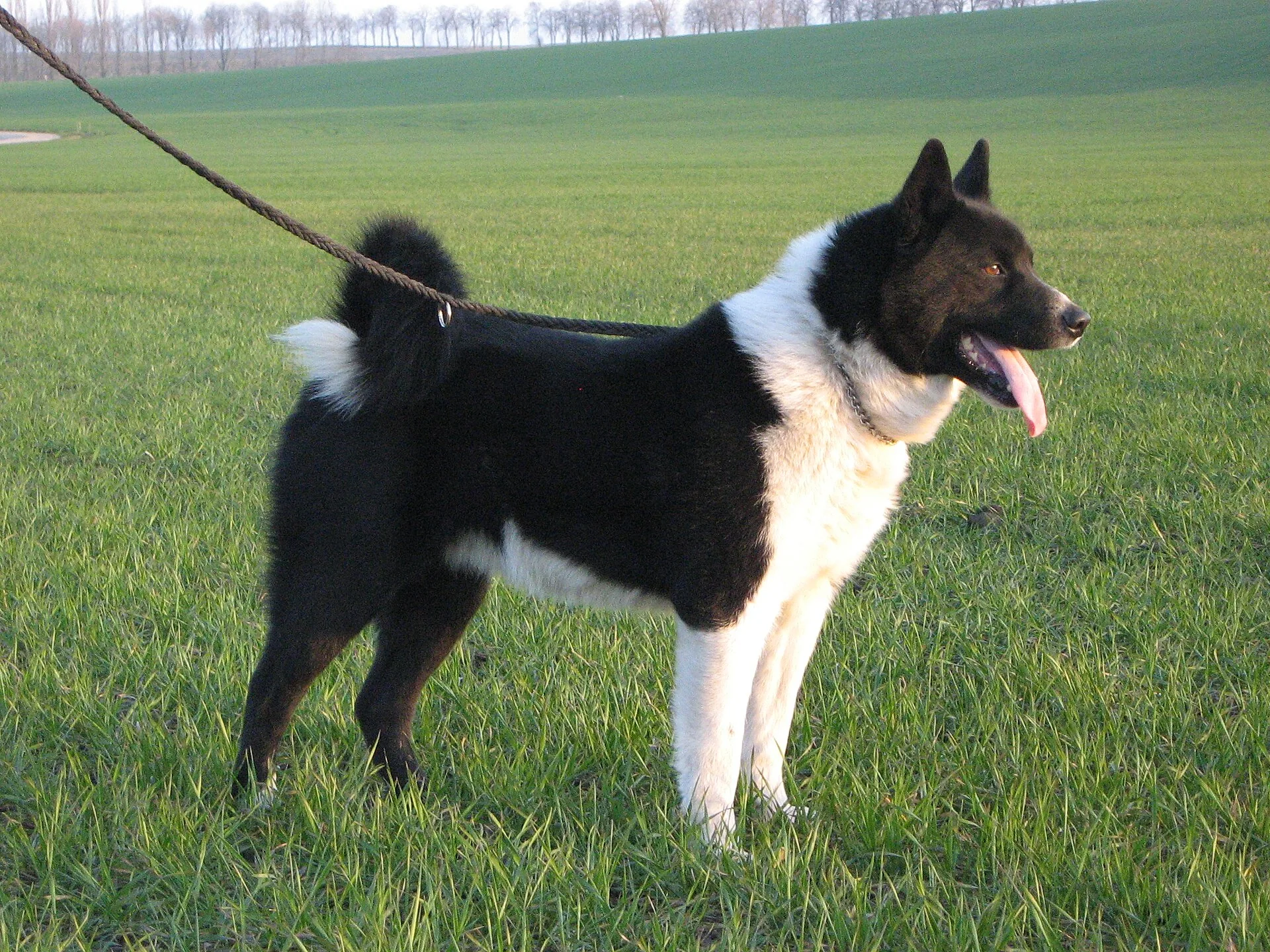
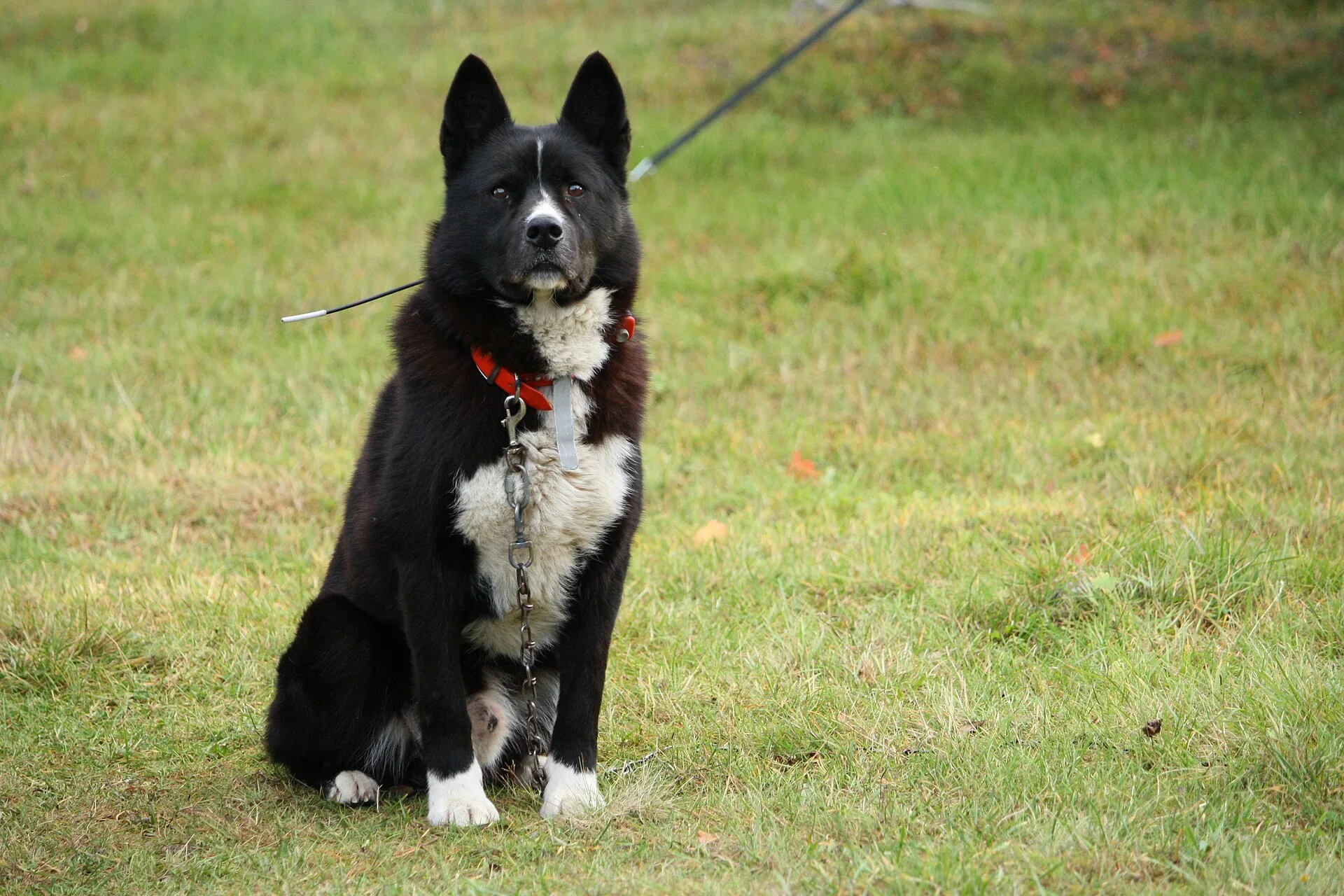
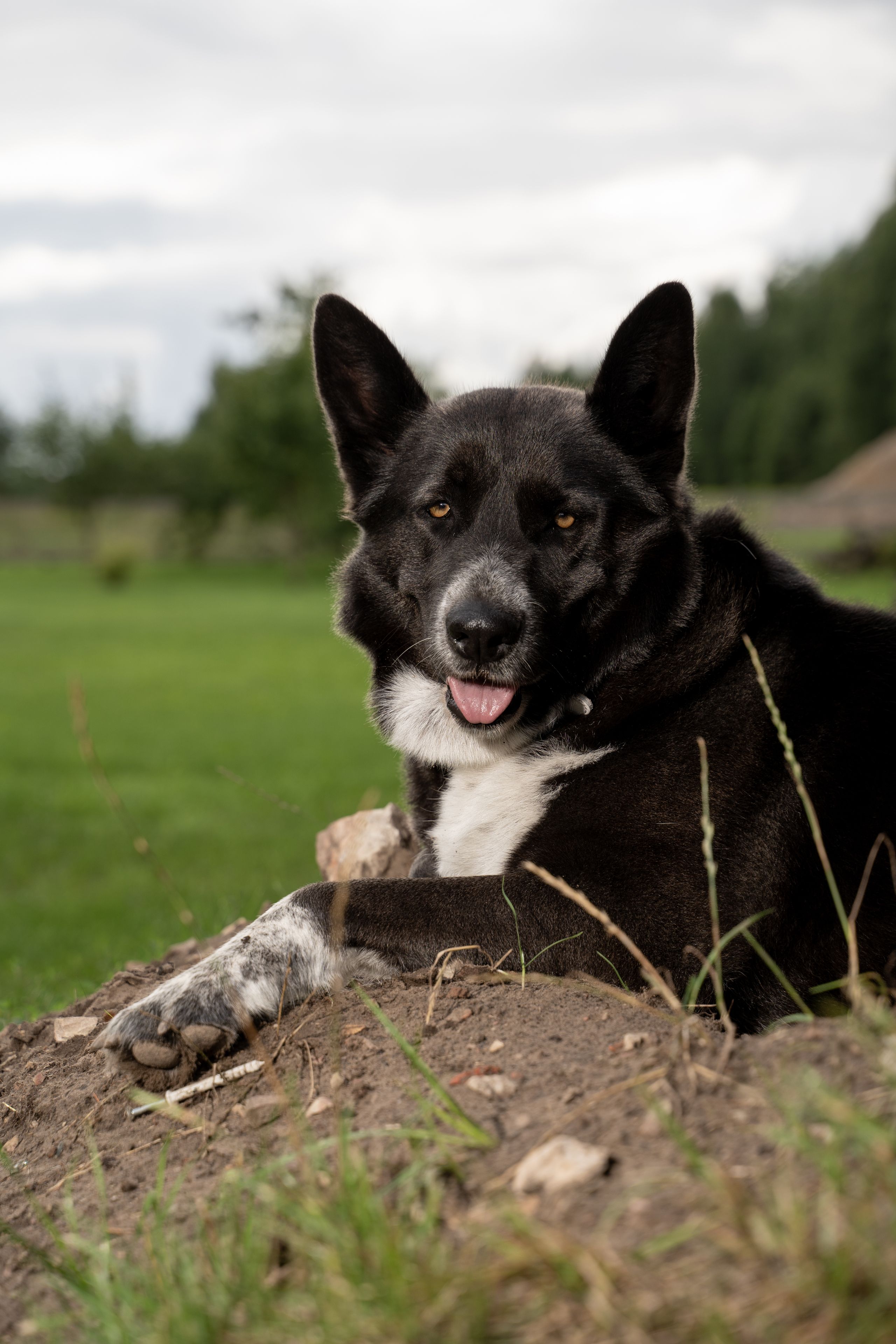
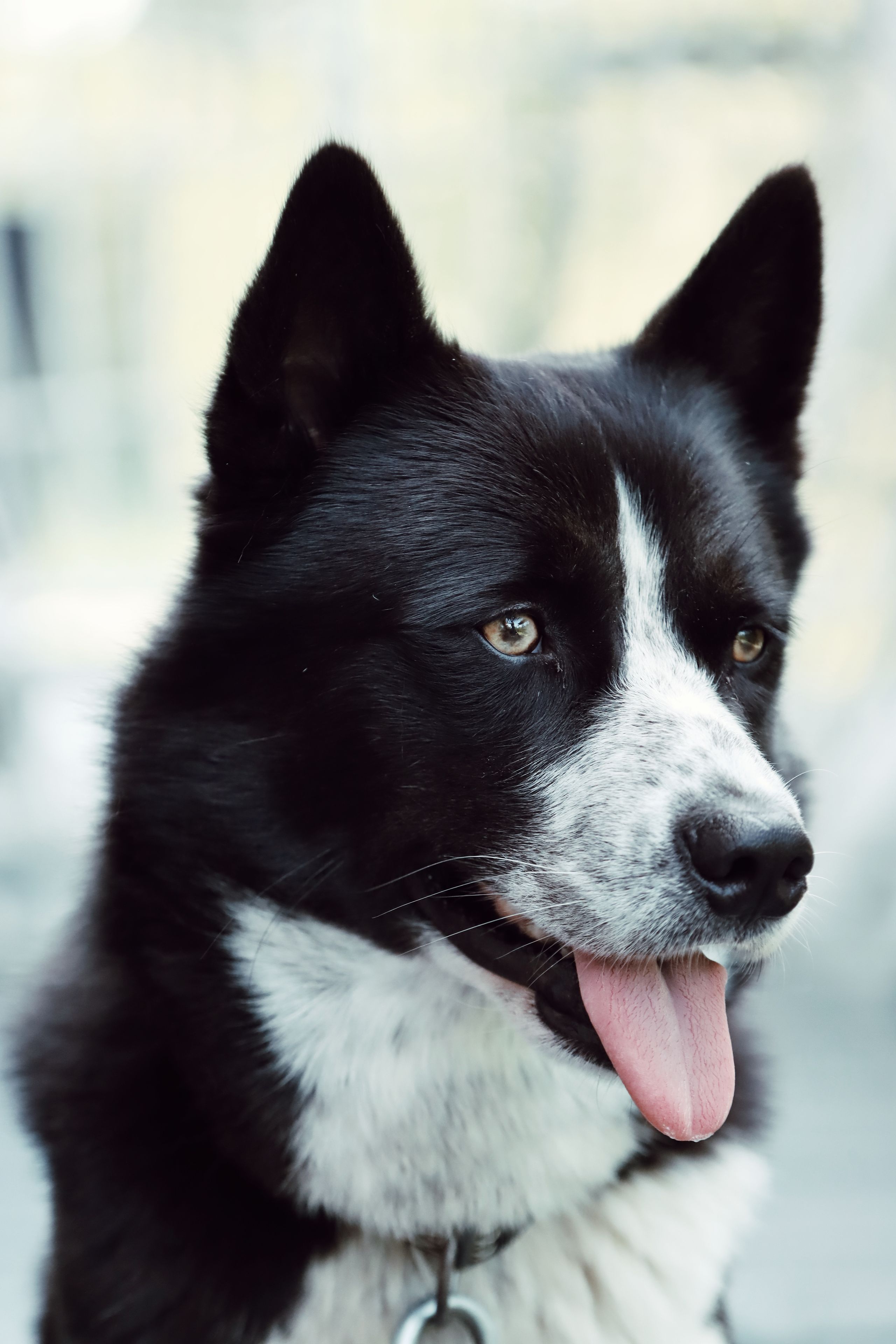
The FCI describes a harsh, straight outer coat over a soft, dense undercoat. The colour is black, which may be dull or with nuances of brown, with white markings typically on the head, neck, chest, belly and legs. Brush weekly to remove loose hair, and expect heavy shedding of the undercoat once or twice a year, when daily brushing is needed. Bathing is rarely necessary, as the coat sheds dirt well.
Feeding and weight
A complete, good-quality diet suited to a medium, very active dog works well, usually in two meals a day. Working Karelian Bear Dogs can eat a surprising amount in cold weather, but a city dog with a quieter schedule needs less, so adjust portions to body condition and activity. Keep food and bins secured, as the dog is resourceful. Fresh water should always be available, particularly after exercise.
Work out a starting calorie figure and food weight with the calorie calculator. Not sure this is the right breed? Take the quiz.
Health
Every breed carries predispositions. These are the conditions most often discussed for the Karelian Bear Dog, not a prediction for any individual dog.
- Hip dysplasia
- Elbow dysplasia
- Eye conditions such as cataract
- Ear infections
What to ask the breeder. Ask to see hip and elbow results and eye examination certificates for both parents, and ask how the breeder assesses the temperament of the working lines.
Choosing a puppy
Karelian Bear Dog puppies are confident and curious from the start, and the first months are the most important. Socialise widely and positively with people, other dogs, lifts, traffic and trams, always with treats and calm encouragement. Begin lead training early and teach the puppy to settle alone for short periods. Provide strong chew toys, secure the garden or balcony, and keep exercise gentle. Handling of paws, ears and coat prepares the dog for vet visits and grooming.
In Luxembourg the national kennel club is the Fédération Cynologique Luxembourgeoise (FCL), a member of the FCI. Many owners also buy from breeders in Germany, France or Belgium; a puppy coming from another EU country must be microchipped and vaccinated against rabies, which in practice means it cannot travel before about fifteen weeks of age. Where to get a dog in Luxembourg.
The older Karelian Bear Dog
Many Karelian Bear Dogs stay active and bold into old age, but from about ten expect a slower pace and some stiffness. Shorter, more frequent walks and a supportive bed help the joints. Keep weight under control, check eyes and ears regularly and watch for any change in mobility. An older dog still needs mental challenges and secure outings, since the hunting instinct rarely fades completely.
A realistic day
A realistic weekday for a working household in Luxembourg City, with a midday visit. Adjust it to your dog, not the other way round.
Brisk 40-minute lead walk with sniffing and impulse control practice, then breakfast.
Owner leaves; the dog rests on a firm bed with a chew toy, away from windows that overlook the street.
Midday visit: 45-minute walk on a long line in a quiet green area, fresh water, a short training game.
Evening outing of about an hour, including scent work or a longer lead walk, then dinner.
Calm toilet break on lead and bed.
A Karelian Bear Dog in Luxembourg
A Karelian Bear Dog is a challenging choice for a Luxembourg flat. It is capable of settling indoors when well exercised, but it is a dog bred to work in cold forest, and it can bark in the lift and at neighbours. A house with a secure garden suits it far better. Exercise needs the Bambësch and Grünewald forests, but wildlife there is abundant, so a long line and a secure harness are essential rather than optional.
The dense double coat is a burden in summer, when temperatures can reach the 30s °C, so plan very early and late outings, shade and cool floors. In town the Pétrusse valley and Parc Merl are suitable for lead walks, though other dogs may attract challenges. Free buses and trams help, if the dog is well socialised. As always, the dog must be microchipped, declared to the commune and insured for third-party liability, and the commune charges an annual dog tax.
Every dog in Luxembourg must be identified, declared to the commune and covered by liability insurance. How registration works.
When you travel
A sitter must be experienced, calm and physically strong, as this breed is independent and powerful. The dog should be kept on a lead or long line outdoors at all times, with secure doors and gates, because it may bolt after wildlife. Expect territorial behaviour towards other dogs, and avoid dog parks. Provide regular exercise, mental games and a clear routine, and leave vet details and instructions on how the dog behaves with strangers.
PAWLY's holiday and overnight care takes place in your home, so your dog keeps its own bed and routine.
Myths and facts
MythIt is just a bear-hunting dog and has no use in a home.
FactThe standard says it is never aggressive to people and it can be a devoted companion, but it needs an experienced owner and plenty of exercise.
MythA good trainer can make it reliable off lead.
FactRecall can improve, but the breed's independence and prey drive mean open off-lead freedom is risky.
MythIt will be fine with the family cat.
FactThe strong hunting instinct makes cats and small pets a risk, even with a dog raised alongside them.
Is it the right dog for you?
Suits
- Experienced owners of spitz or hunting breeds
- Active people with access to forest and secure space
- Households with a house and secure garden
- People who enjoy long hikes in cold weather
Think twice if
- You are a first-time dog owner
- You live in a flat with thin walls
- You have cats or small pets
- You want a dog you can trust off lead
Questions owners ask
Can a Karelian Bear Dog live in a flat?
It is possible only with a very committed owner, as the breed needs about two hours of activity daily and may bark. A house with a secure garden is a better match, and neighbours need to be considered.
Is it good with other dogs?
Often not easily. Many are intolerant of other dogs, especially of the same sex, so careful early socialisation and lead walking are important. Avoid crowded dog areas.
How much does it shed?
Heavily during moult, once or twice a year, when the undercoat comes out in clumps and daily brushing is needed. Otherwise shedding is moderate and weekly brushing is enough.
Is it dangerous to people?
The FCI standard says it is slightly reserved but never aggressive towards people. Its size, strength and independence still call for experienced, responsible handling.
Sources
Photo: Fraczek.marcin, CC BY-SA 4.0, via Wikimedia Commons · Photo: Uusijani, CC0, via Wikimedia Commons · Photo: Pexels (Pexels License) · Photo: Pexels (Pexels License)
General information for dog owners in Luxembourg, not veterinary or legal advice. Official facts (origin, size, group, history and temperament as described by the breed standard) follow the FCI standard; health and care sections reflect breed-club and veterinary guidance and are typical ranges rather than rules. For your own dog, ask your vet, the breed club or your commune. How this guide is written and checked. Last reviewed 8 October 2026.
Need someone for your Karelian Bear Dog?
PAWLY offers an individual 45-minute walk or a home visit at your dog's pace, the same walker every time, and a written report with photos after every visit, across Luxembourg City.
Read next: the journal, for the Karelian Bear Dog
All articles
Dogs in hot weather: the Luxembourg summer guide
The Karelian Bear Dog carries a heavy coat or a heavy frame, which makes a Luxembourg summer the hard season.

Building a recall you can actually rely on
Scent and movement can cancel a recall; this is the method for the Karelian Bear Dog.

The dog that barks and lunges on the lead
Some Karelian Bear Dog dogs are selective with other dogs; this is the plan for lunging and barking on the lead.
Similar breeds
All 198 breeds
Norwegian Elkhound
A square, silver-grey Nordic hunter built to hold a moose at bay with its voice, hardy, friendly and never short of an opinion.
EnergyGroomingFlat life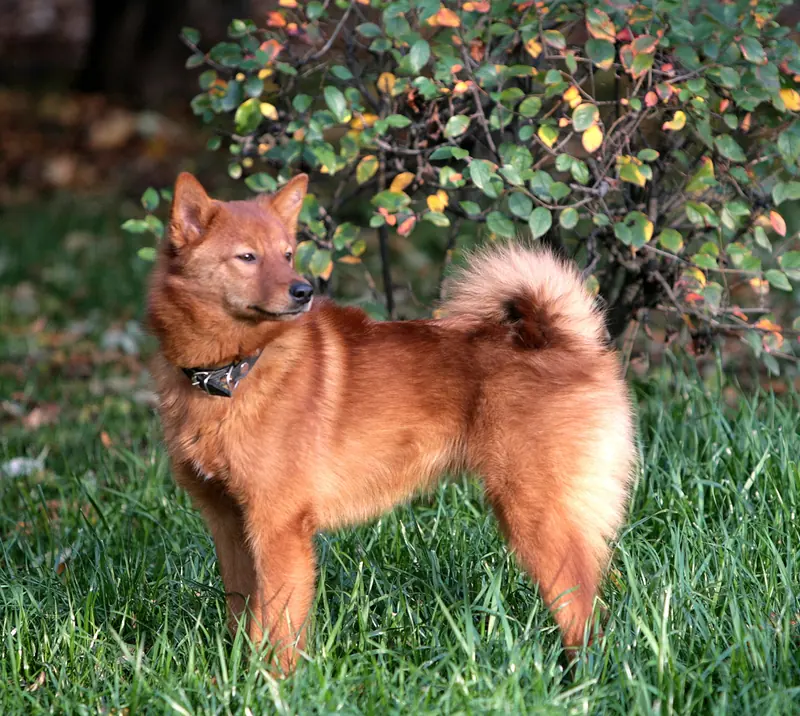
Finnish Spitz
A fox-coloured Finnish bird dog with a ringing bark, a quick mind and a firm opinion of its own.
EnergyGroomingFlat life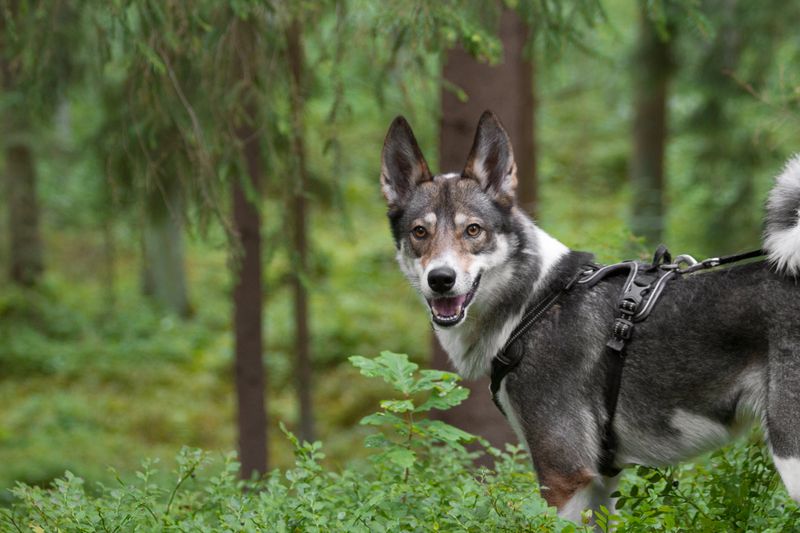
West Siberian Laika
A vigorous Siberian forest hunter with a brilliant nose and a passion for game that no flat can absorb.
EnergyGroomingFlat life

