


History
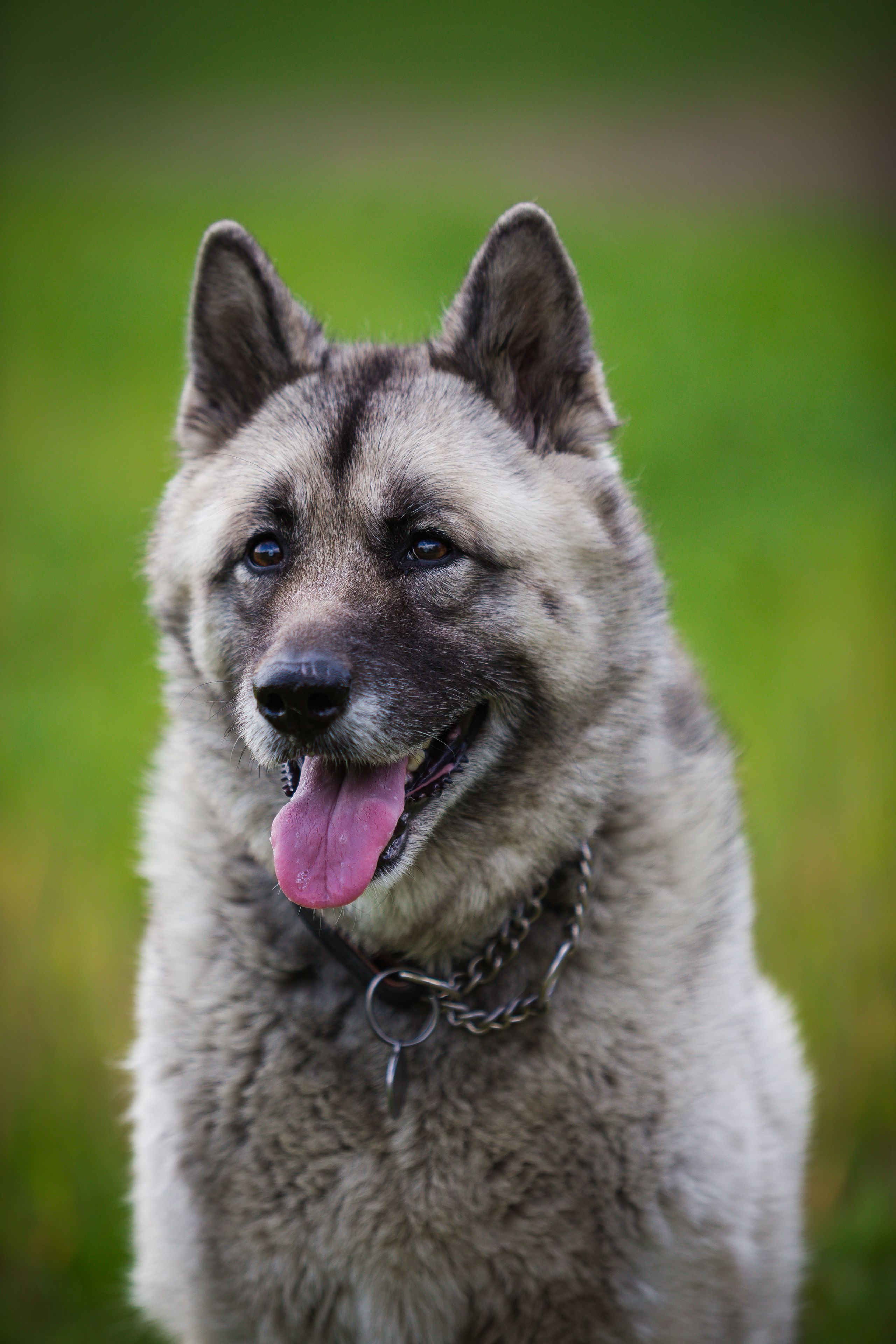
The Norsk Elghund Grå, or grey Norwegian Elkhound, is an old Nordic hunting spitz. Its name refers to the elg, the animal the British call elk and North Americans call moose. Hunters in Norway used the dog to find moose in the forest by scent, then hold it at bay by circling and barking until the hunter arrived. The FCI standard lists its use simply as a dog for elk hunting, and it remains a working hunting dog in Scandinavia today.
Norway is the country of origin, and the current FCI standard, dated 9 August 1999, places the breed in Group 5, Section 2, among the Nordic hunting dogs. A working trial is required only in the Nordic countries. The standard itself gives no historical summary. The FCI also recognises a separate, smaller black variety, the Norsk Elghund Sort, so the grey dog described here should not be confused with it. Outside Scandinavia the grey Elkhound is mostly a companion and show dog, though its hunting instincts are intact.
Temperament
The standard sums up the character in three words: fearless, energetic, brave. In a family, an Elkhound is usually friendly, sociable and affectionate, with a cheerful confidence that makes it easy to like. It is not a one-person dog and often enjoys meeting people. It is, however, independent: a dog bred to work at a distance from the hunter thinks for itself.
The voice is the trait every owner should know about before buying. Elkhounds were selected to bark persistently at game, and many will bark at anything interesting: birds, other dogs, doorbells, noises on the stairs. This is manageable with training and enough activity, but it is never entirely absent. Add a strong nose and a love of food, and you have a dog that will explore every bin and every crumb.
Children and other pets
Elkhounds are generally good-natured with children, robust enough for family life and patient with considerate play. Their size and enthusiasm mean small children should be supervised, mostly to avoid accidental knocks. They usually get on with other dogs, although some can be assertive with dogs of the same sex. Cats raised with them may be accepted, but small animals and outdoor cats may trigger the hunting instinct.
Exercise and the daily walk
Bred to work in the forest for hours, the Elkhound needs at least an hour and a half of daily exercise, ideally including a long walk on varied ground. It is a stamina dog rather than a sprinter. Hiking, canicross in cool weather and long walks in the forest suit it well. Scent work is a natural outlet for its keen nose.
Off-lead freedom needs caution. An Elkhound on a scent trail may range far and ignore calls, so use a long line in forests and unfenced areas until recall is reliable, and keep it on lead near deer. In summer heat, the thick coat becomes a burden: walk in the early morning and late evening, and keep outings shorter on hot days.
Training
Elkhounds are intelligent but independent, and they respond poorly to repetitive drills. Keep training short, varied and rewarding, using food, which they love. Recall and quiet on cue deserve extra attention from the start. Persistence pays off, and harsh methods usually make the dog more stubborn rather than more obedient.
Early socialisation with people, dogs, traffic and city life helps the Elkhound become a relaxed adult. Teach calm behaviour in lifts and corridors, and reward silence as well as good manners. Mental challenges such as tracking, nose work and puzzle toys are particularly useful for this breed, and a tired, satisfied Elkhound barks less.
Coat and grooming
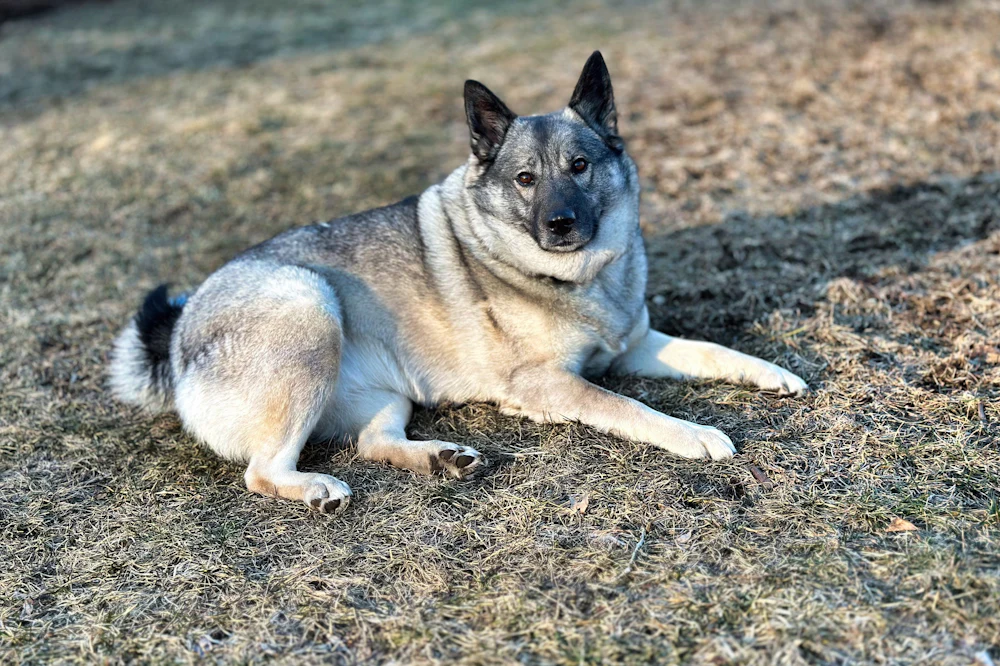
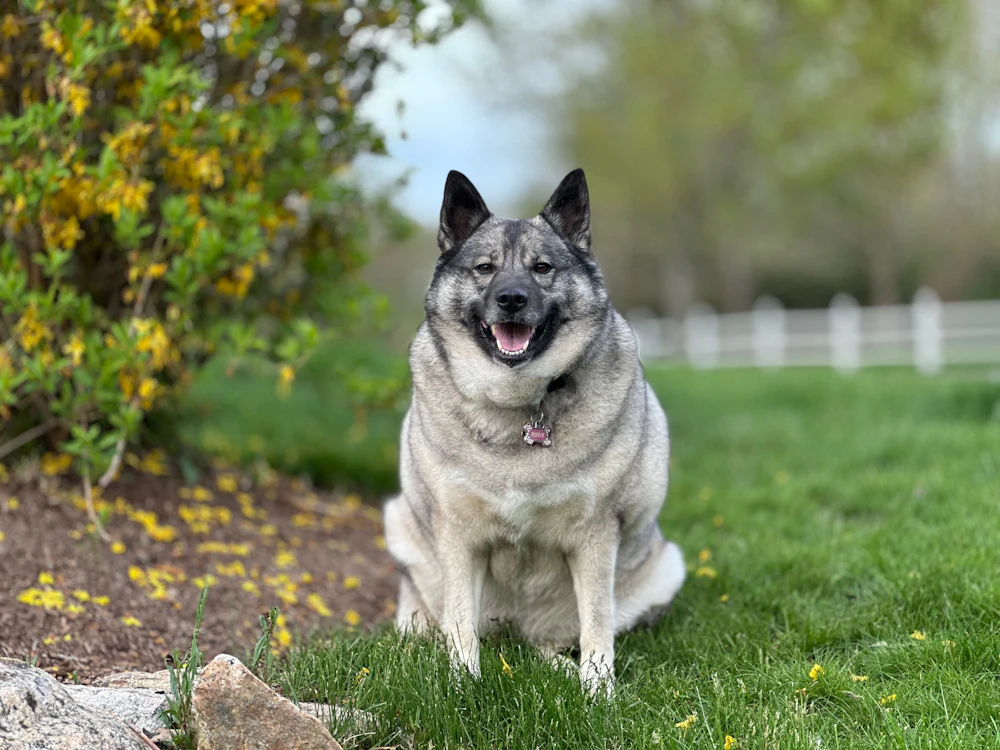
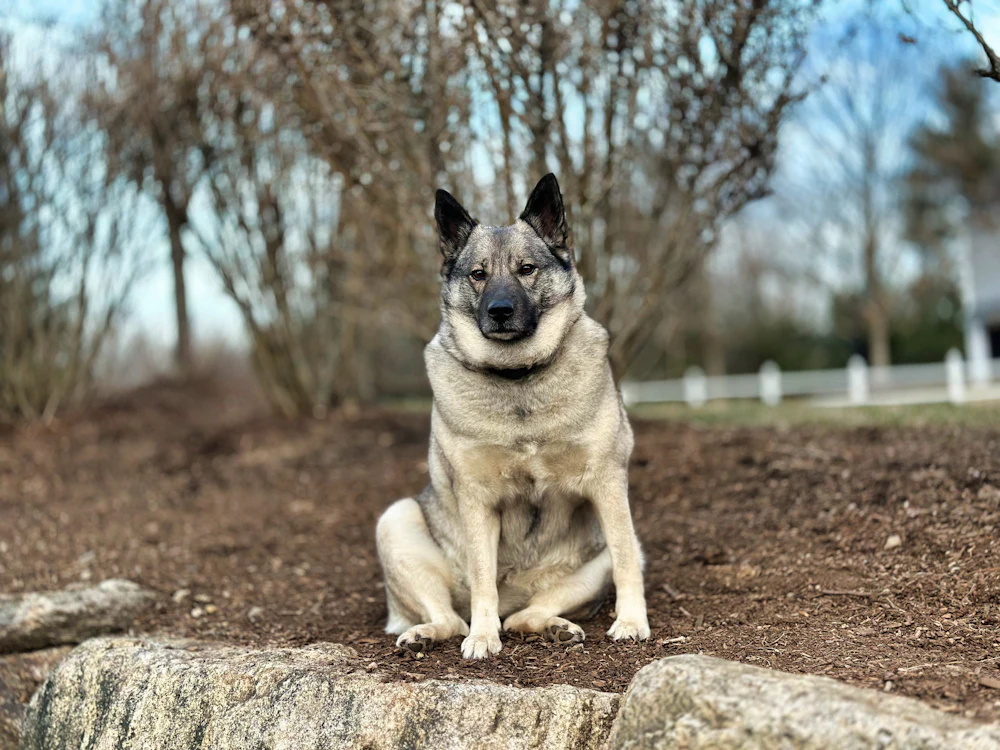
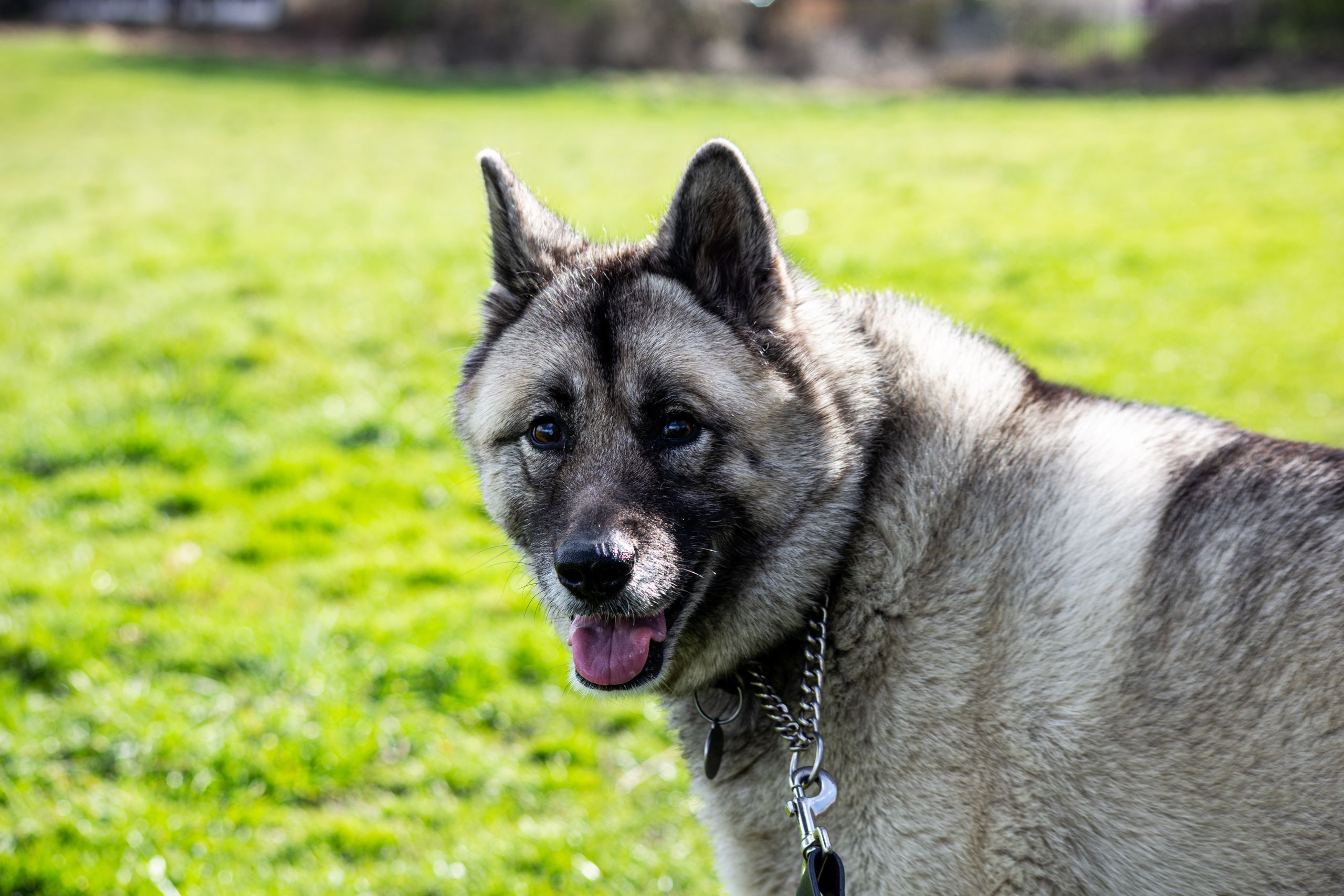
The FCI standard describes a thick, abundant, coarse outer coat with a soft, dense undercoat, short and smooth on the head and front of the legs and longest on the neck, the back of the thighs and the tail. The colour is grey in various shades, with black tips on the guard hairs, lighter on chest, belly and legs, and a darker mask. Brush weekly, and daily during the seasonal moult, when shedding is heavy. Do not shave the coat.
Feeding and weight
Elkhounds have an excellent appetite and a reputation for putting on weight easily. Feed a complete diet suited to a medium-sized active dog, in two meals, and adjust portions to activity and body condition. Count treats and training rewards in the daily ration. Keep food and bins secure, as this breed is a determined scavenger. Fresh water is essential, especially in warm weather.
Work out a starting calorie figure and food weight with the calorie calculator. Not sure this is the right breed? Take the quiz.
Health
Every breed carries predispositions. These are the conditions most often discussed for the Norwegian Elkhound, not a prediction for any individual dog.
- Hip dysplasia
- Progressive retinal atrophy (inherited eye disease)
- Primary open-angle glaucoma (DNA test available)
- Chondrodysplasia (an inherited skeletal condition, DNA test available)
- Hypothyroidism (underactive thyroid)
- Sebaceous cysts and other skin lumps
What to ask the breeder. Ask for official hip scores and recent eye examinations for both parents, and DNA results for glaucoma and chondrodysplasia.
Choosing a puppy
An Elkhound puppy is confident, curious and often vocal from the first days. Start training quiet behaviour, recall and calm greetings early, always with rewards. Introduce the puppy gradually to the city, lifts, trams and noises. Keep walks short and varied while the joints are growing, and give plenty of chew toys. Be strict about food on counters from the beginning: a puppy that never finds anything stops looking.
In Luxembourg the national kennel club is the Fédération Cynologique Luxembourgeoise (FCL), a member of the FCI. Many owners also buy from breeders in Germany, France or Belgium; a puppy coming from another EU country must be microchipped and vaccinated against rabies, which in practice means it cannot travel before about fifteen weeks of age. Where to get a dog in Luxembourg.
The older Norwegian Elkhound
Elkhounds often stay active into old age but may slow down from about ten. Watch the weight closely, as older dogs gain easily, and look out for stiffness, eye changes and thyroid signs such as lethargy or coat changes. Maintain regular gentle walks and scent games, and provide a firm, warm bed. Regular veterinary checks help catch problems early.
A realistic day
A realistic weekday for a working household in Luxembourg City, with a midday visit. Adjust it to your dog, not the other way round.
Morning walk of 40 minutes, with plenty of sniffing and some recall practice.
Breakfast in a puzzle feeder, then a nap while the household leaves.
Midday visit: a 30 to 40 minute walk, a short scent game and fresh water.
Long evening walk in a forest or large park, on a long line where needed.
Short last outing, a chew, then sleep.
A Norwegian Elkhound in Luxembourg
An Elkhound can live in a Luxembourg City flat, but barking is the issue to plan for. Neighbours may not appreciate a dog that reports every noise on the stairs, so training, enough exercise and not leaving the dog alone for long periods are essential. A ground floor or a quieter building helps. The Bambësch forest and the Grünewald offer ideal terrain for long walks, while free buses and trams make it easy to reach them.
Summer is hard on a dog designed for Nordic winters. When temperatures reach the 30s °C, walk only in the cool hours, keep the flat cool and provide shade and water. On the other hand, wet, cold Luxembourg winters suit the breed perfectly. Microchipping, declaration to the commune, third-party liability insurance and the annual dog tax apply as for any dog.
Every dog in Luxembourg must be identified, declared to the commune and covered by liability insurance. How registration works.
When you travel
A sitter should know that the Elkhound is vocal, food-motivated and independent. Keep food and bins secure, and never let the dog off lead in forests unless recall is reliable. Maintain long daily walks, as a bored Elkhound barks more. In summer, keep the home cool and walks short. The breed copes better with someone present for much of the day than with brief visits.
PAWLY's holiday and overnight care takes place in your home, so your dog keeps its own bed and routine.
Myths and facts
MythElkhounds hunt elk, so they are aggressive.
FactThey hold large game at bay by barking, not by attacking. With people they are usually friendly and sociable.
MythNordic dogs are fine in any climate.
FactThe thick coat suits cold weather; summer heat requires careful management.
MythA medium-sized dog needs little exercise.
FactThis is a working hunting dog that needs at least 1.5 hours of activity a day.
Is it the right dog for you?
Suits
- Active owners who enjoy long walks and hiking
- Families who want a friendly, robust dog
- People who like an independent, characterful companion
- Owners in quieter buildings or houses
Think twice if
- Your neighbours are sensitive to barking
- You want reliable off-lead walks with little training
- You dislike dog hair in the home
- The dog would be alone for long days
Questions owners ask
Do Norwegian Elkhounds bark a lot?
Yes, it is part of their heritage, as they were bred to bark persistently to hold game at bay. Training, exercise and company can reduce barking, but it rarely disappears. Prospective owners in flats should think carefully about neighbours.
How much do they shed?
Quite a lot, especially during the seasonal moult, when the undercoat comes out in large amounts. Weekly brushing, and daily brushing during the moult, keeps it manageable. The coat should never be shaved.
Can they live in a flat?
It is possible with enough exercise, training and attention to barking. A ground-floor flat or a building with good sound insulation helps. A long daily walk and mental activity are essential to keep the dog calm.
Are they easy to train?
They are intelligent but independent, and they can be stubborn. Food rewards work very well, while repetitive or harsh training does not. Recall needs particular attention due to the breed's hunting instinct and strong nose.
Sources
Photo: Unsplash (Unsplash License) · Photo: Unsplash (Unsplash License) · Photo: Unsplash (Unsplash License) · Photo: Pexels (Pexels License) · Photo: Pexels (Pexels License)
General information for dog owners in Luxembourg, not veterinary or legal advice. Official facts (origin, size, group, history and temperament as described by the breed standard) follow the FCI standard; health and care sections reflect breed-club and veterinary guidance and are typical ranges rather than rules. For your own dog, ask your vet, the breed club or your commune. How this guide is written and checked. Last reviewed 8 October 2026.
Need someone for your Norwegian Elkhound?
PAWLY offers an individual 45-minute walk or a home visit at your dog's pace, the same walker every time, and a written report with photos after every visit, across Luxembourg City.
Read next: the journal, for the Norwegian Elkhound
All articles
Dogs in hot weather: the Luxembourg summer guide
The Norwegian Elkhound carries a heavy coat or a heavy frame, which makes a Luxembourg summer the hard season.

Building a recall you can actually rely on
Scent and movement can cancel a recall; this is the method for the Norwegian Elkhound.

The dog that barks and lunges on the lead
Some Norwegian Elkhound dogs are selective with other dogs; this is the plan for lunging and barking on the lead.
Similar breeds
All 198 breeds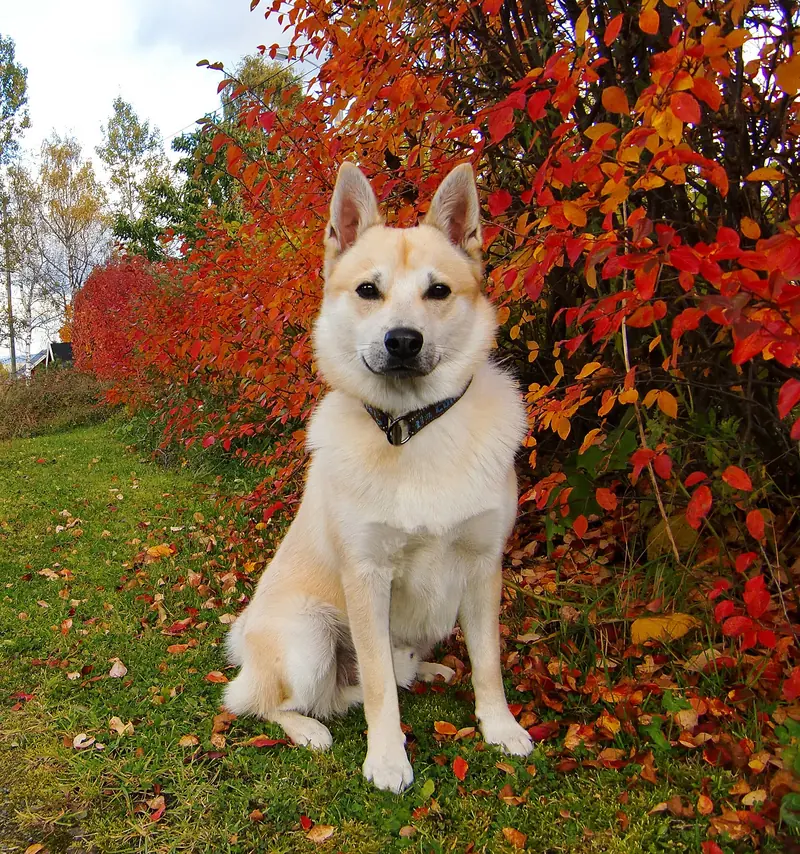
Norwegian Buhund
A cheerful Viking-age farm dog that herds, guards and talks, and expects to be involved in everything you do.
EnergyGroomingFlat life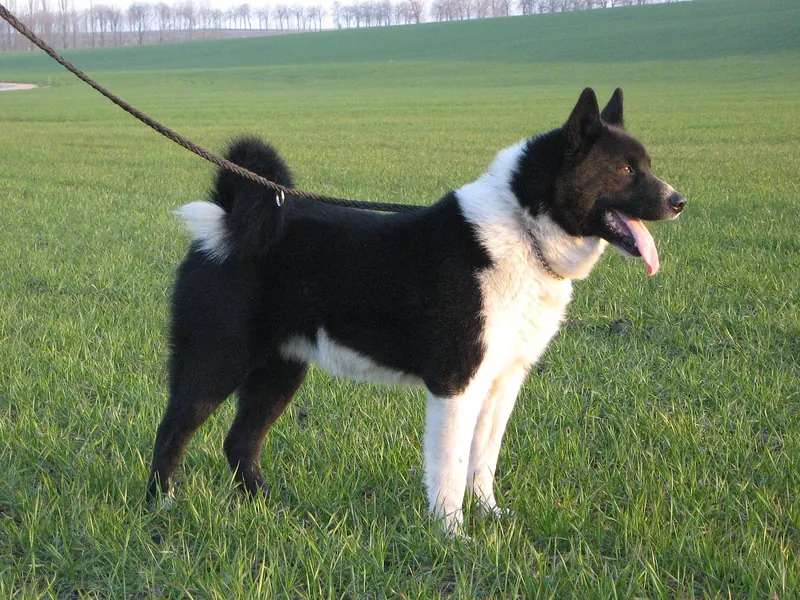
Karelian Bear Dog
A black and white Finnish spitz bred to corner bears and elk, which makes the average city squirrel seem a personal challenge.
EnergyGroomingFlat life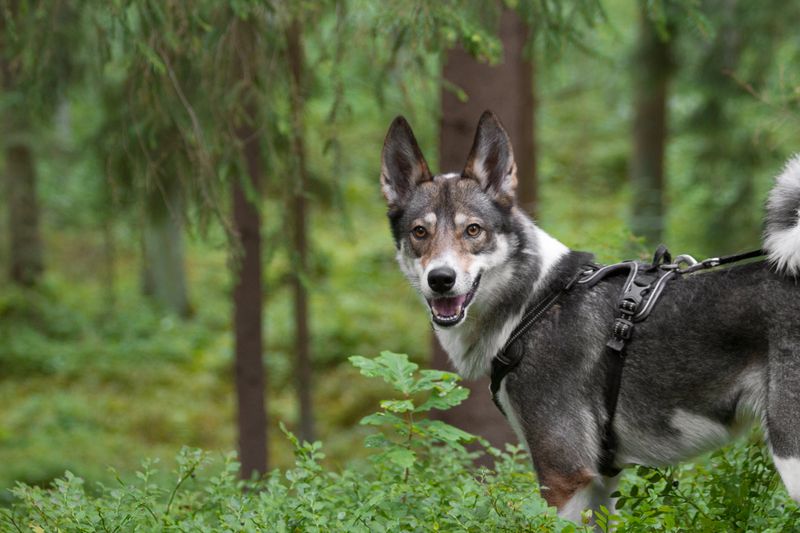
West Siberian Laika
A vigorous Siberian forest hunter with a brilliant nose and a passion for game that no flat can absorb.
EnergyGroomingFlat life

