History
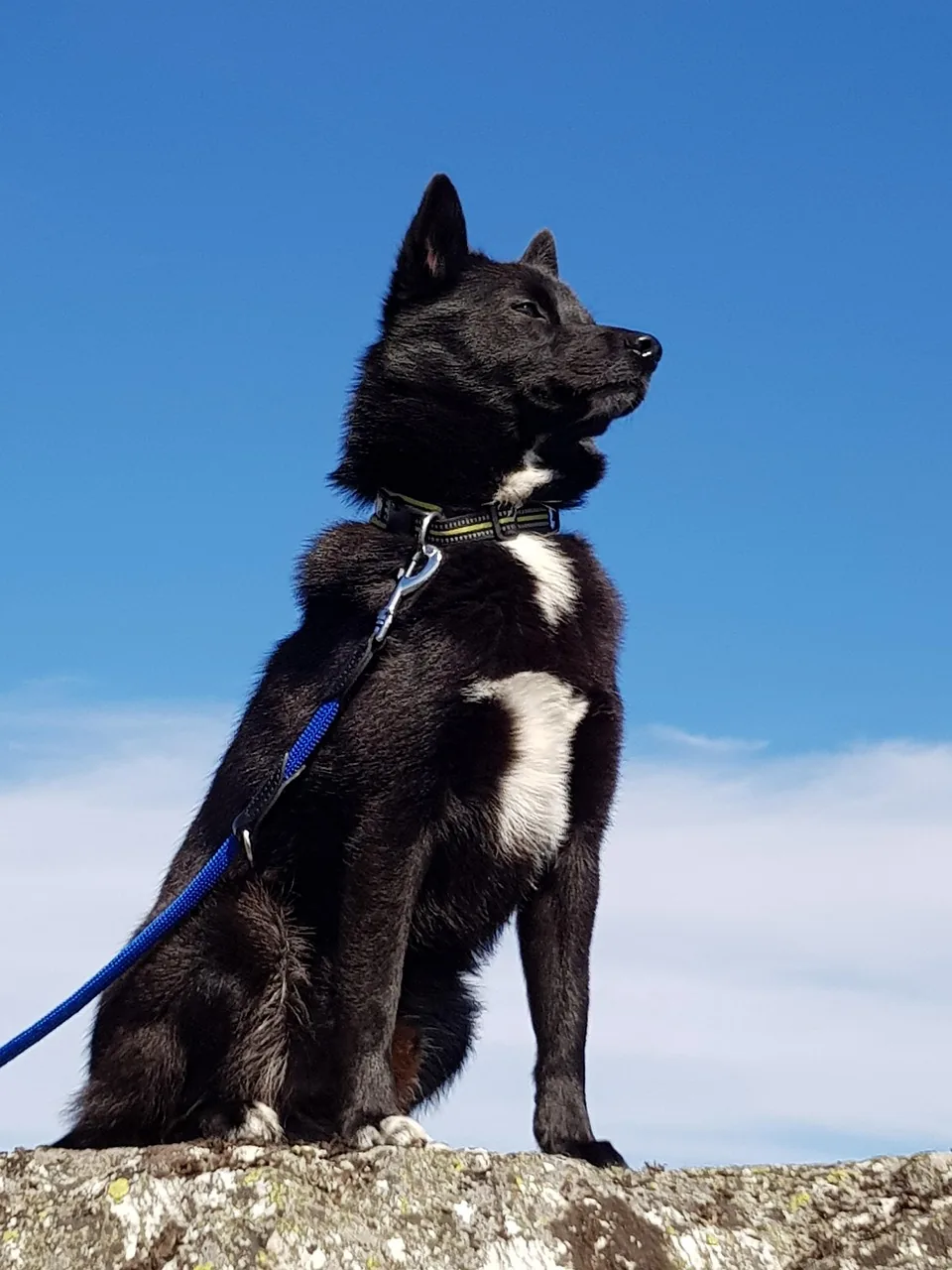
The Norwegian Buhund, Norsk Buhund in the FCI standard, belongs to Group 5, Section 3, Nordic watchdogs and herders, without a working trial. The standard describes a breed with more than a thousand years of history in Norway, predating the Viking Age, and refers to archaeological finds in Viking burial mounds of a dog of this spitz type. Buhund means farmstead dog, and the term appears in the Norse King Sagas by Snorri Sturlason.
Traditionally the dog worked on Norwegian farms as both guard and herder, looking after livestock and the buildings. It is therefore a thinking, versatile worker with a natural voice, used to making its own decisions on the farm. The first official standard was established in 1926. The FCI standard currently published is dated 24.03.2026. The breed remains uncommon in continental Europe.
Temperament
The FCI sums up the temperament in three words: courageous, energetic and friendly. In practice, the Buhund is an alert, confident, cheerful dog that likes to be at the centre of family life and has opinions about it. It is typically good-natured towards visitors once they have been announced, and is vocal. Anything that moves outside the window is likely to be reported.
Boredom is the breed's enemy. A Buhund with nothing to do will invent employment: herding the children, barking at passers-by, digging, or redesigning the sofa. With enough exercise and mental work, though, it is an engaging, funny companion with plenty of stamina. It tends to be self-confident and independent in the head, which is why consistent, positive handling matters from the beginning.
Children and other pets
Buhunds usually enjoy family life and are good with children who are respectful, since they are lively and playful. A herding dog may circle, nudge or try to round up running children, so teach both dog and child some calm rules. With other dogs they are generally friendly but confident. Cats in the house are often accepted if introduced early; outdoors, small animals may be chased. Barking is a constant factor with any neighbours.
Exercise and the daily walk
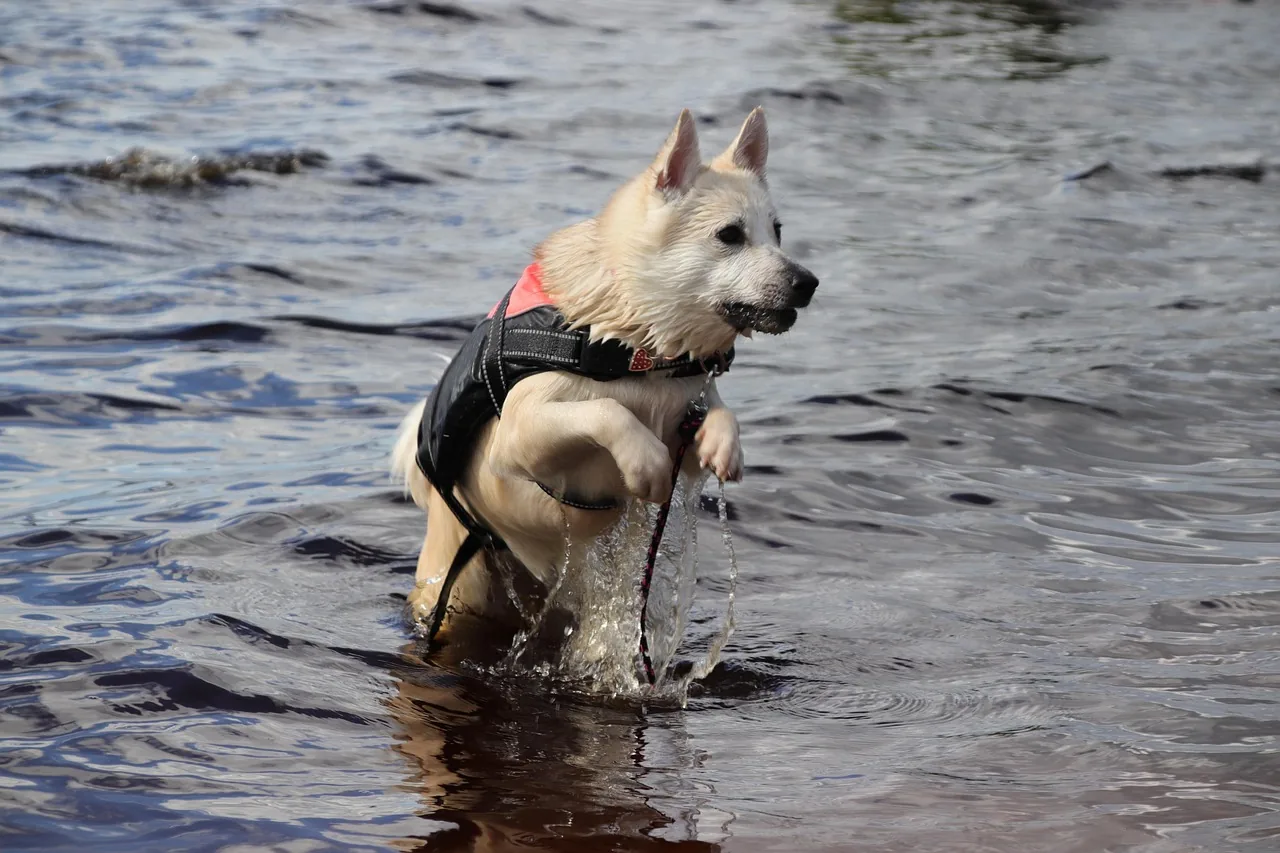
A healthy adult needs at least an hour and a half of purposeful activity a day, and more is welcome. It is an agile, hardy dog that enjoys hiking, running alongside a cycle on safe paths and any game involving chasing and retrieving. Lead walks alone do not satisfy it; a Buhund needs freedom to run, ideally in safe, enclosed spaces, as recall can be selective in the presence of distractions.
Mental exercise counts as much as the physical sort. Agility, obedience, herding trials, trick training and scent games appeal strongly. A few short training sessions a day often calm a dog more than one extra kilometre. Young dogs should not do forced running or repetitive jumping while growing. Thick coat and a love of work mean the dog can overheat, so avoid hard exercise in hot weather.
Training
The Buhund is bright and willing, and learns quickly if there is something in it for the dog. Keep sessions short, varied and positive. It will argue its case politely if training becomes repetitive or heavy-handed. The dog's courage and independence mean it benefits from a handler who is calm and consistent about rules, rather than one who changes them with mood.
Typical project areas are barking on cue and off cue, recall, calm greetings and not herding people or other animals. Teach a quiet command early, rewarding silence after the first warning bark. Socialise broadly in the first months so that alertness does not turn into suspicion. Teach alone-time gradually, as a dog bred to be at the heart of a farm may struggle when left. Dog sports provide a structured outlet.
Coat and grooming
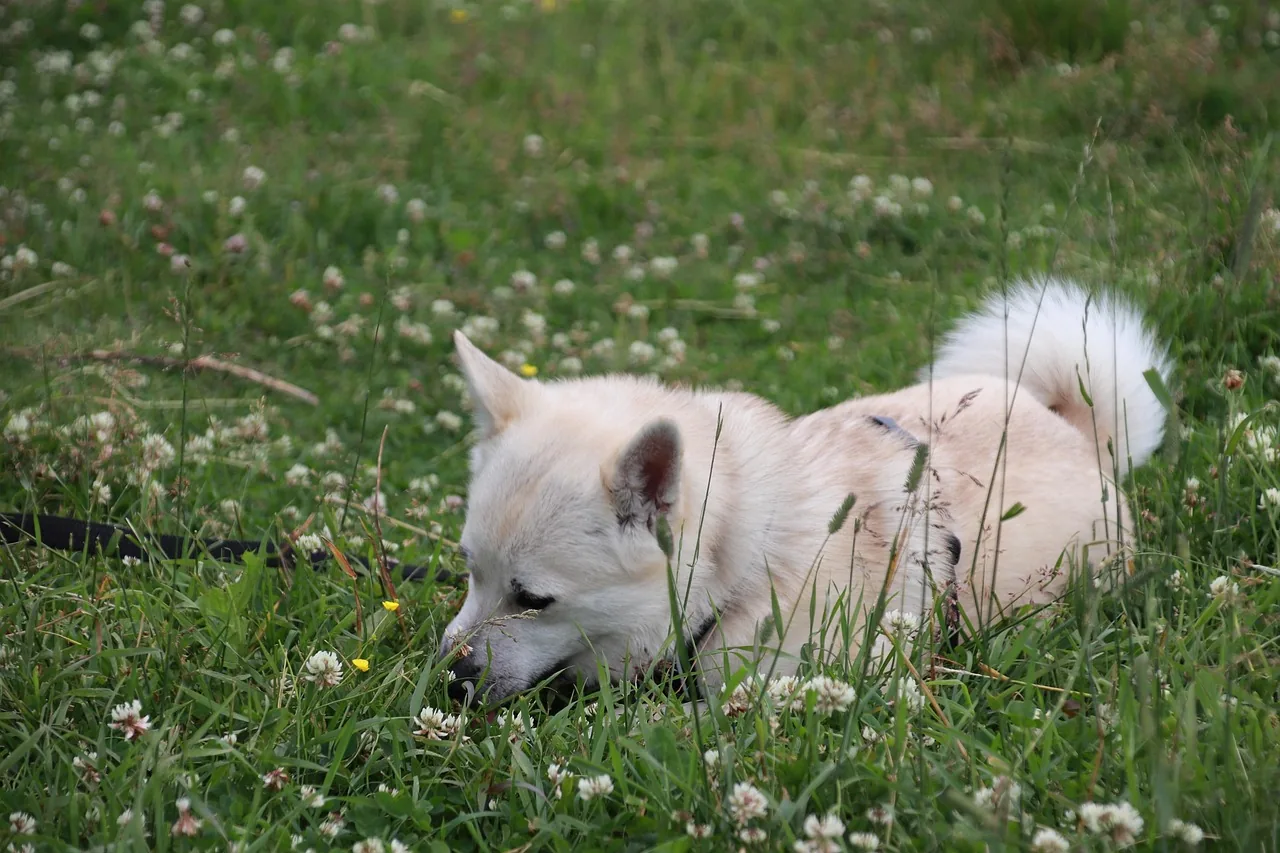
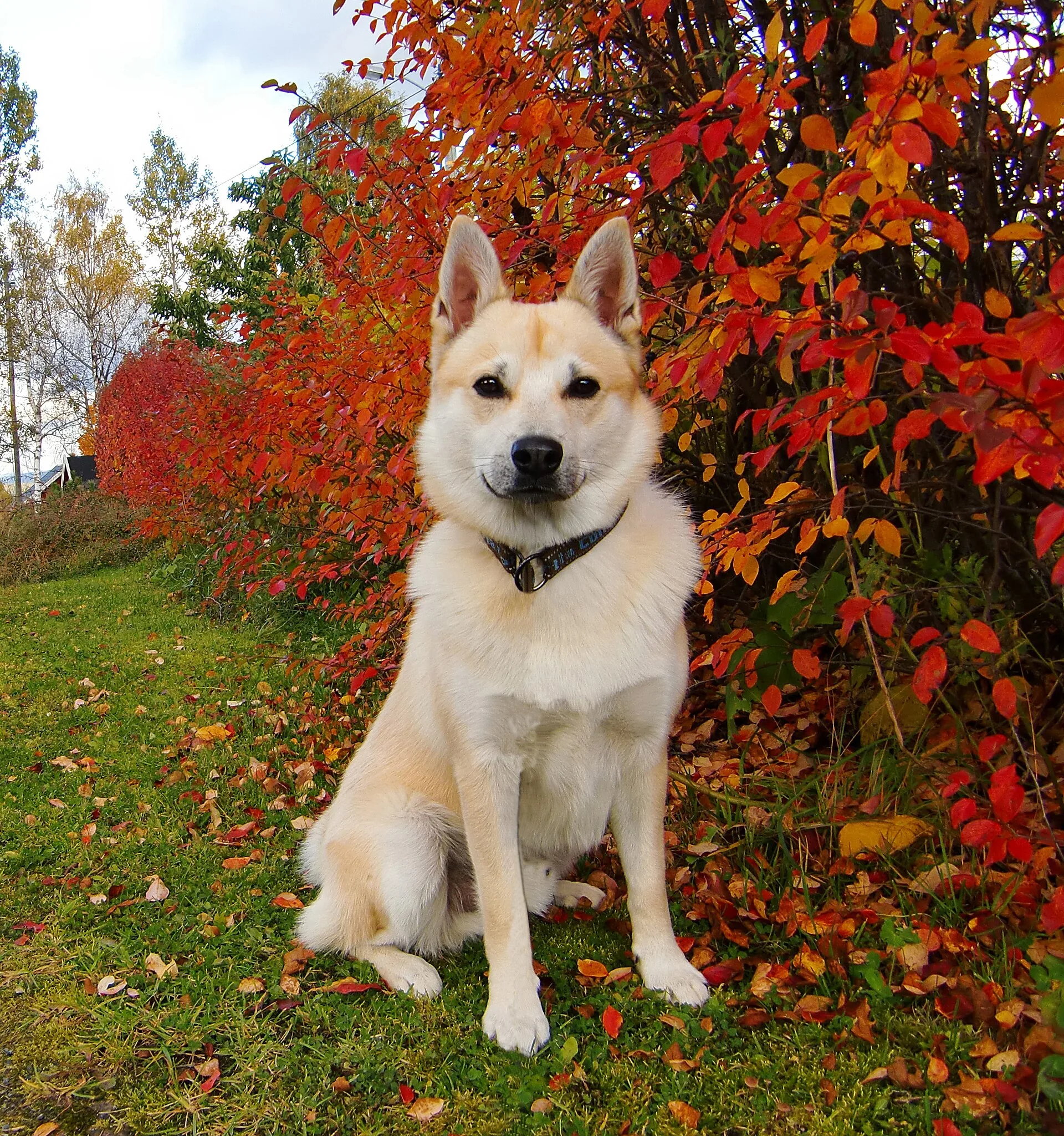
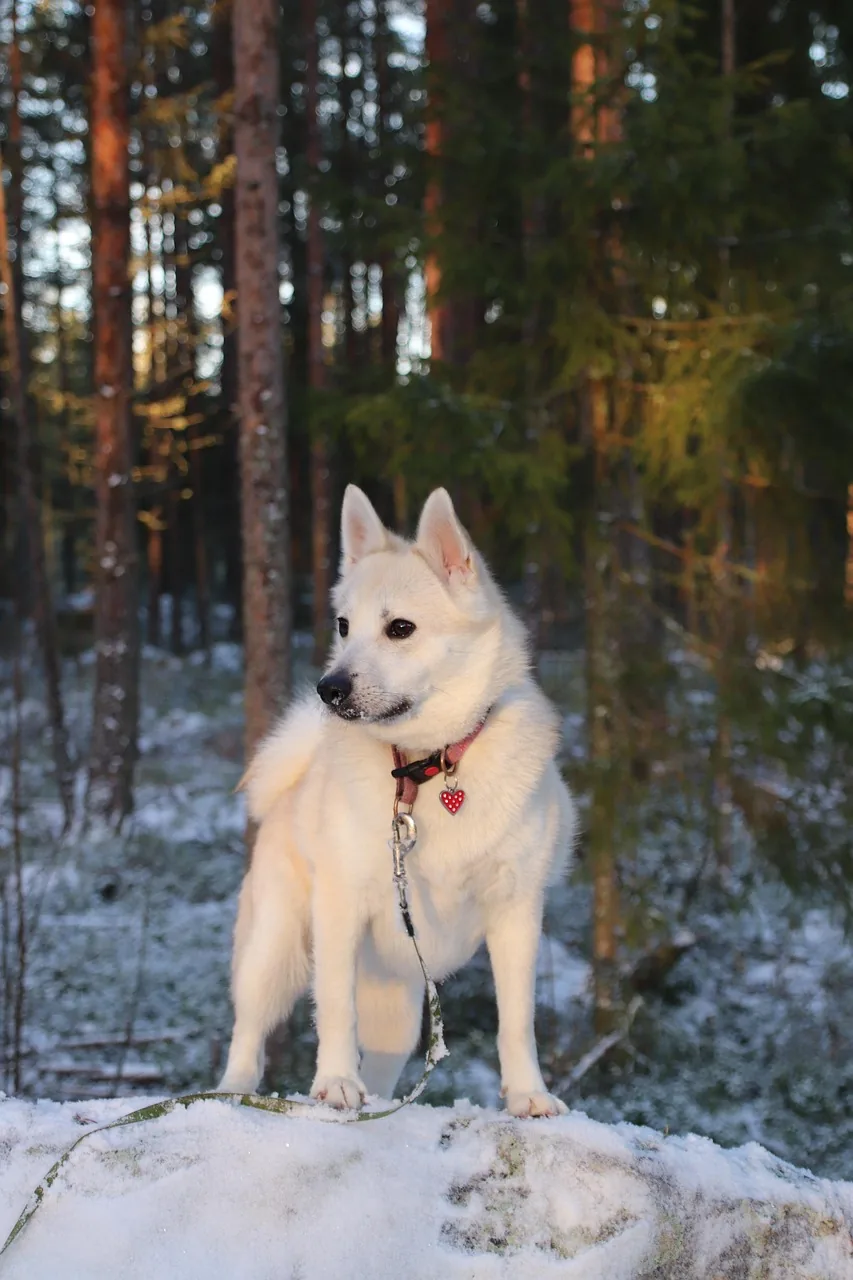
The FCI describes a thick, hard outer coat with a soft, dense undercoat, shorter on the head and front of the legs and longer on neck, chest, back of the thighs and tail. Permitted colours are wheaten, from light to yellowish red, with solid black also accepted and preferred in the standard's wording. Brush weekly and daily during the heavy moult, which happens once or twice a year and fills the flat with hair. Bathing is seldom needed. The coat sheds water and dirt well.
Feeding and weight
A complete diet for an active medium-sized dog works well, fed in two meals. The thick coat can hide extra weight, so check ribs by touch rather than eye. Measure portions, use training treats from the daily allowance and avoid free feeding. Adjust amounts for winter and summer activity. Provide fresh water, especially after hard play or on warm days.
Work out a starting calorie figure and food weight with the calorie calculator. Not sure this is the right breed? Take the quiz.
Health
Every breed carries predispositions. These are the conditions most often discussed for the Norwegian Buhund, not a prediction for any individual dog.
- Hip dysplasia (malformed hip joints)
- Elbow dysplasia (developmental joint disease)
- Hereditary cataract (clouding of the lens)
- Progressive retinal atrophy (inherited eye disease leading to sight loss)
What to ask the breeder. Ask for hip and elbow scores and current eye examination certificates for both parents. A responsible breeder will be open about eye test results across the line.
Choosing a puppy
Buhund puppies are bold, clever and mischievous. Begin training and socialisation straight away, covering lifts, trams, city noise and children, and keep sessions short. Give chew toys and puzzles to channel mouthing and chewing. Teach settling and alone-time in small steps, and start recall with food. Limit stairs and jumping while growing, and brush gently from the start to make grooming an enjoyable routine.
In Luxembourg the national kennel club is the Fédération Cynologique Luxembourgeoise (FCL), a member of the FCI. Many owners also buy from breeders in Germany, France or Belgium; a puppy coming from another EU country must be microchipped and vaccinated against rabies, which in practice means it cannot travel before about fifteen weeks of age. Where to get a dog in Luxembourg.
The older Norwegian Buhund
Many Buhunds stay active until ten or beyond, although a slower pace is normal. Keep walks regular but gentler, offer joint support after discussing it with your vet, and watch weight. Check eyes for cloudiness or hesitation in dim light, and teeth for tartar. Mental games keep an older dog engaged. Non-slip surfaces and a supportive bed help stiff joints.
A realistic day
A realistic weekday for a working household in Luxembourg City, with a midday visit. Adjust it to your dog, not the other way round.
Brisk 45-minute walk with a ball or recall game, then breakfast.
Owner leaves for work; the dog is tired and settled with a stuffed chew.
Midday visit: an energetic hour in the Pétrusse valley or Parc Merl with training games and fresh water.
Evening outing of 60 to 90 minutes, preferably with off-lead running in a safe area, then dinner.
Short toilet break and a quiet trick session before bed.
A Norwegian Buhund in Luxembourg
A Buhund can live in a Luxembourg flat if its exercise and mental needs are met, but it will call for planning. The main issue is noise. It is alert and vocal, and sounds from a landing or lift may prompt a bark. Thin walls and close neighbours therefore call for early training in quiet behaviour and enough exercise to keep boredom away. A midday visit makes a large difference for professionals.
The city has the green space the breed needs: Parc Merl and the Pétrusse valley for daily outings, and the Bambësch and Grünewald forests for longer runs, always mindful of wildlife and paths. The double coat is heat-tolerant only up to a point, so in summer temperatures in the 30s °C keep exercise to early morning and evening and provide shade and water. Free buses and trams make countryside excursions easy. The usual obligations apply: microchip, declaration to the commune, insurance and the dog tax.
Every dog in Luxembourg must be identified, declared to the commune and covered by liability insurance. How registration works.
When you travel
A sitter must be prepared for a lively, talkative dog that needs real exercise twice a day, plus something to think about. Barking at the window or door is normal but should be managed with toys and activity. Keep the dog on a lead near roads, as recall may fail when something interesting moves. Brush regularly during moulting, keep fresh water out and follow the usual feeding routine.
PAWLY's holiday and overnight care takes place in your home, so your dog keeps its own bed and routine.
Myths and facts
MythA Buhund is just a smaller husky.
FactIt is a separate Norwegian farm dog, a herder and guardian, not a sled dog, and it is far more people-focused.
MythThey are quiet because they are small.
FactThe breed is vocal and quick to sound the alarm. Quiet cues and enough exercise help.
MythSpitz coats need constant grooming.
FactWeekly brushing is enough, with extra at the heavy moult.
Is it the right dog for you?
Suits
- Active owners who like hiking and dog sports
- Families with older, respectful children
- People who can offer plenty of mental stimulation
- Those who can tolerate a vocal dog
Think twice if
- Your neighbours are sensitive to barking
- You work long hours with no midday cover
- You want a calm, sedentary dog
- You dislike the sight of hair in the flat
Questions owners ask
Is the Norwegian Buhund a good family dog?
Usually yes. The FCI describes it as courageous, energetic and friendly, and many love children and activity. Its herding instinct and lively nature mean children should be taught to respect the dog, and the dog taught not to nip or round them up.
Does a Buhund bark a lot?
It tends to be vocal. It was a farm guard as well as a herder, and it reports activity. Training a quiet cue, giving enough exercise and managing the view from windows reduce barking.
How much exercise does a Buhund need?
Plan on at least an hour and a half a day, including time to run and think, with more on weekends. A dog that is under-exercised may bark, dig or chew.
Can a Buhund be left alone?
Short periods, yes, once trained. Long days without company lead to boredom and noise. A midday visit and puzzle toys are recommended for working owners.
Sources
Photo: Canossa, CC BY-SA 4.0, via Wikimedia Commons · Photo: Pixabay (Pixabay Content License) · Photo: Pixabay (Pixabay Content License) · Photo: Pixabay (Pixabay Content License) · Photo: Pixabay (Pixabay Content License)
General information for dog owners in Luxembourg, not veterinary or legal advice. Official facts (origin, size, group, history and temperament as described by the breed standard) follow the FCI standard; health and care sections reflect breed-club and veterinary guidance and are typical ranges rather than rules. For your own dog, ask your vet, the breed club or your commune. How this guide is written and checked. Last reviewed 8 October 2026.
Need someone for your Norwegian Buhund?
PAWLY offers an individual 45-minute walk or a home visit at your dog's pace, the same walker every time, and a written report with photos after every visit, across Luxembourg City.
Read next: the journal, for the Norwegian Buhund
All articles
Building a recall you can actually rely on
Scent and movement can cancel a recall; this is the method for the Norwegian Buhund.

Forests, hunting season and wildlife
The Norwegian Buhund was bred to follow game, which matters in the forests around Luxembourg.

What actually tires a dog indoors
Walks alone rarely tire a busy breed like the Norwegian Buhund; this covers what works indoors.
Similar breeds
All 198 breeds
Swedish Vallhund
A short-legged Swedish cattle heeler with a wolf-grey coat, a busy mind and the confidence of a dog twice its height.
EnergyGroomingFlat life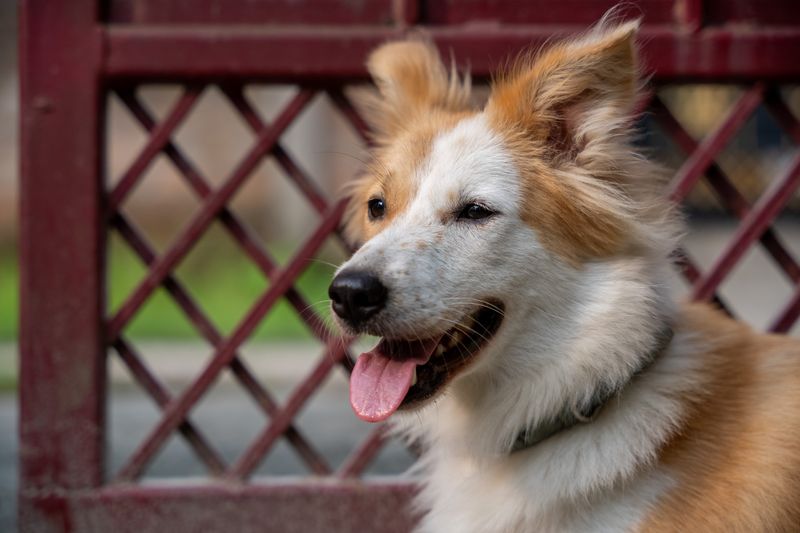
Icelandic Sheepdog
A cheerful, curly-tailed Viking herder that wants to be involved in everything and will say so, loudly, at every opportunity.
EnergyGroomingFlat life
Finnish Lapphund
A soft-eyed reindeer herder from the far north, friendly and calm indoors, but equipped with a ready voice and a coat built for snow.
EnergyGroomingFlat life

