


History
The FCI standard, where the breed appears as the Västgötaspets, places its modern story in the early 1940s. Count Björn von Rosen and the headmaster K. G. Zetterstén went looking for an old herding dog type that still survived in Västergötland, the province of West Gotha, and found dogs with consistent features on the plains around Vara. Zetterstén then led a breeding programme designed to fix the type while keeping the dog's working ability.
There has long been discussion about a possible link with the Welsh Corgis, which share the low, long body. The standard treats the breed as authentically Swedish while acknowledging that doubt remains about any connection. The breed's traditional work was as a heeler, moving cattle by nipping at their heels, and the FCI still lists it as a herding heeler. Sweden is the country of origin, and the current standard dates from 29 October 2013.
Temperament
The standard describes the Vallhund in four words: watchful, energetic, fearless and alert. Owners would add cheerful and sociable. This is a small dog with a big working outlook, keen to be involved in everything and quick to learn routines. It likes people, enjoys games and is usually friendly once introductions are made.
Two traits deserve warning. The first is voice: Vallhunds bark to alert, to herd and sometimes just to comment, and many have a range of yodels and chatter. The second is the heeling instinct, which can show as nipping at the ankles of running children or joggers. Both are manageable with training and enough exercise, but neither disappears on its own.
Children and other pets
Vallhunds are usually affectionate with children and robust enough for family play. Their urge to herd means they may chase and nip at running youngsters, so games should be structured and the habit redirected from puppyhood. They generally get on with other dogs and can live with a cat they are raised with. Small pets may trigger chasing, so introductions should be supervised and contact kept limited.
Exercise and the daily walk
Despite the short legs, a Vallhund is an athletic working dog that needs around an hour of exercise a day, with mental stimulation as well. Brisk walks, hikes, ball games, herding instinct tests and dog sports such as agility, rally and scent work all suit it. A bored Vallhund tends to bark and invent work.
Because of the long back and short legs, avoid encouraging repeated jumping down from furniture or cars, and keep the dog lean. Steep staircases are manageable for a fit adult, but a lift is kinder for puppies and older dogs. Recall is usually trainable, though moving joggers, cyclists or livestock can tempt a dog to chase.
Training
Vallhunds are clever and eager to work with their people, and they respond very well to positive, varied training. Short sessions with food or toys hold their attention. They can be independent and vocal when frustrated, so clear criteria and patience help. Early training of a quiet cue and calm behaviour at the door pays off in a flat.
Teach the puppy to channel its herding drive into acceptable games, such as chasing a toy on a rope, rather than ankles. Socialisation should include children, bicycles, scooters and joggers, so these become ordinary rather than things to round up. Many Vallhunds enjoy trick training, which is a useful outlet on rainy days.
Coat and grooming
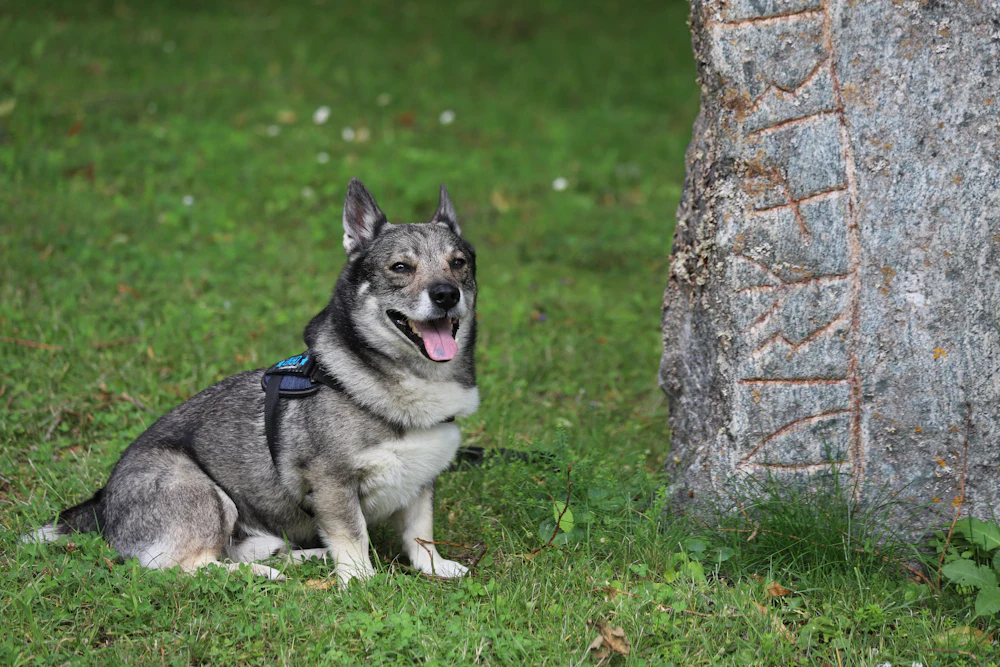
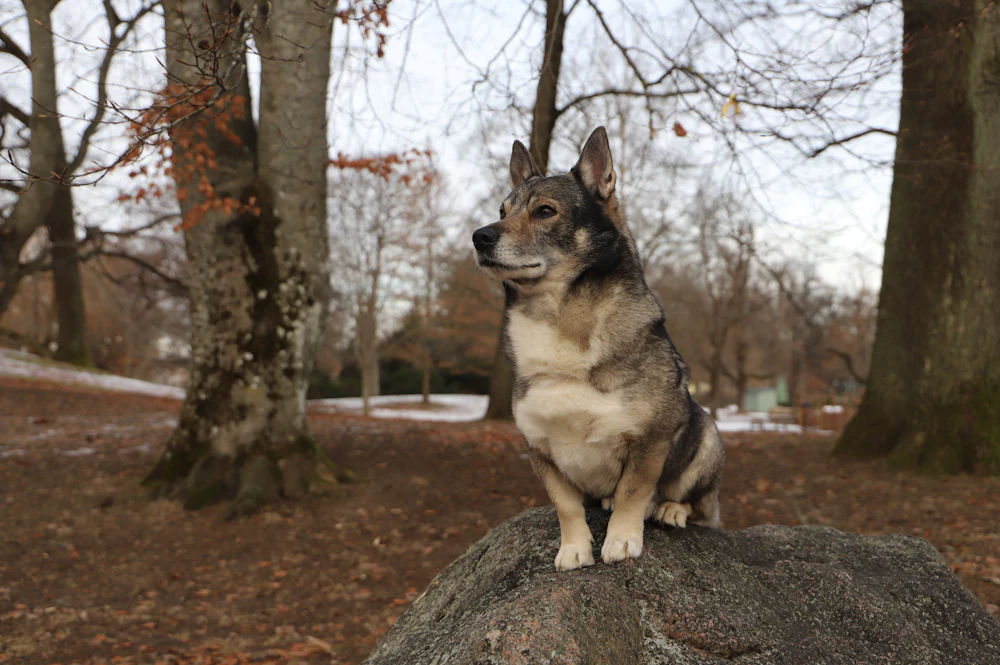
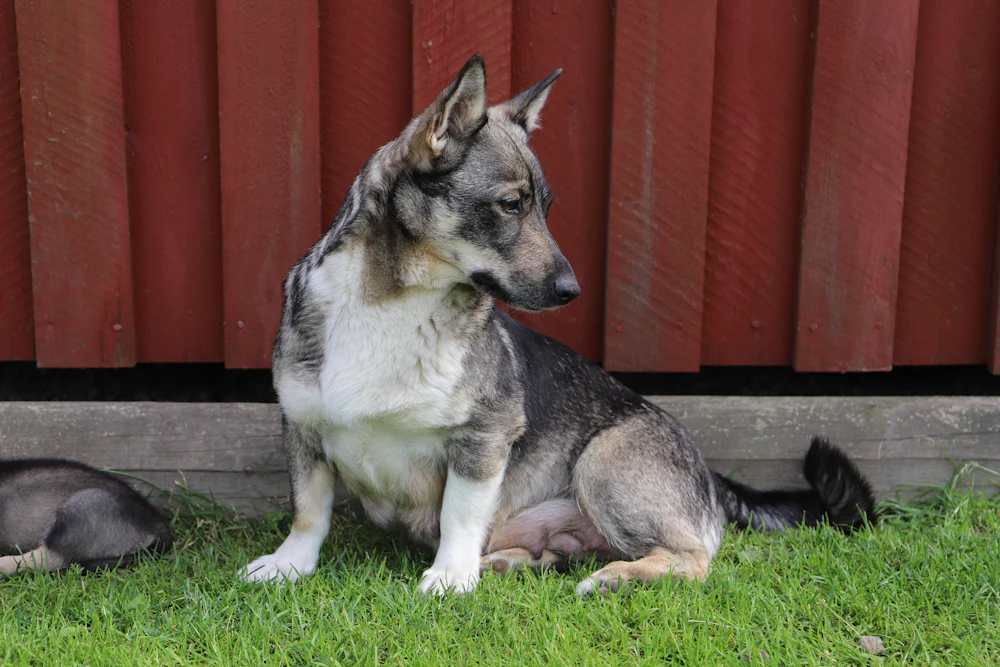
The double coat has a hard, close-lying topcoat of medium length and a soft, dense undercoat, ideal for Nordic weather. A weekly brush keeps it tidy, but during the seasonal moult the undercoat comes out in quantity and daily brushing is needed. Bathing is rarely necessary. The FCI standard permits grey, greyish brown, greyish yellow, reddish yellow or reddish brown, with darker guard hairs on the back and lighter areas on the muzzle, throat, chest, belly and legs, and limited white markings.
Feeding and weight
Feed a complete diet suited to an active small-to-medium dog, divided into two meals. Many Vallhunds are enthusiastic eaters, and extra weight puts strain on the long back and short legs, so measure portions and keep treats in check. Use part of the daily ration for training. Weigh the dog every few weeks and feel for a waist and ribs beneath the dense coat.
Work out a starting calorie figure and food weight with the calorie calculator. Not sure this is the right breed? Take the quiz.
Health
Every breed carries predispositions. These are the conditions most often discussed for the Swedish Vallhund, not a prediction for any individual dog.
- Hip dysplasia
- Swedish Vallhund retinopathy (an inherited retinal disease)
- Other inherited eye disease, checked by routine eye examination
- Back strain and disc problems linked to the long, low build
What to ask the breeder. Ask for hip scores and recent eye examination results for both parents, and how the breeder monitors their lines for retinopathy.
Choosing a puppy
Vallhund puppies are lively, bold and very vocal. Start teaching calm behaviour, a quiet cue and gentle play from the first day, and redirect any nipping to toys. Keep exercise to short sessions with plenty of rest, and limit stairs and jumping while the back and joints develop. Socialise widely, including with joggers, bicycles and children running, so the herding instinct does not settle on them.
In Luxembourg the national kennel club is the Fédération Cynologique Luxembourgeoise (FCL), a member of the FCI. Many owners also buy from breeders in Germany, France or Belgium; a puppy coming from another EU country must be microchipped and vaccinated against rabies, which in practice means it cannot travel before about fifteen weeks of age. Where to get a dog in Luxembourg.
The older Swedish Vallhund
Many Vallhunds remain active into their senior years. Keep them lean to protect the back and joints, and continue regular walks at a slower pace. Watch for stiffness, reluctance to climb stairs or changes in vision, and schedule regular vet checks. Ramps, non-slip floors and help in and out of cars make daily life easier.
A realistic day
A realistic weekday for a working household in Luxembourg City, with a midday visit. Adjust it to your dog, not the other way round.
Forty-five minute walk with a ball game or short training session, then breakfast.
Owner leaves; a chew or food puzzle keeps the dog busy while it settles.
Midday visit: 30-minute walk with sniffing, a few tricks and fresh water.
Evening outing of 30 to 45 minutes in a park, including play and recall practice on a long line.
Short toilet walk and a quiet brush during the moulting season.
A Swedish Vallhund in Luxembourg
A Vallhund's size makes it practical in a Luxembourg City flat, and it travels easily on buses and trams, which are free nationwide. The main issue in a building is noise: a watchful, talkative dog can bark at every lift door, so quiet behaviour should be taught early. Using the lift rather than long staircases protects the back of puppies and older dogs.
Parks such as Parc Merl and the Pétrusse valley suit daily walks, and the Bambësch or Grünewald forests offer longer outings where joggers and cyclists are good training opportunities. The double coat handles cold and rain well, but in summers reaching the 30s °C, walks belong in the cooler hours. Every dog must be microchipped, declared to the commune, insured and taxed annually.
Every dog in Luxembourg must be identified, declared to the commune and covered by liability insurance. How registration works.
When you travel
A sitter should provide two proper walks and some brain work each day, or the dog will become noisy and restless. Herding nips at ankles should be calmly redirected, not encouraged. During the moult, daily brushing prevents tufts all over the home. Keep the dog on lead near livestock, joggers and cyclists, and use lifts where possible.
PAWLY's holiday and overnight care takes place in your home, so your dog keeps its own bed and routine.
Myths and facts
MythThe Vallhund is a Swedish Corgi.
FactThe breed is often compared with the Corgis, but the FCI standard states that modern research supports a Swedish origin. It is a separate breed.
MythShort legs mean little exercise.
FactThis is a working heeler that needs about an hour of activity a day, plus mental work.
MythAll Vallhunds have short tails.
FactThe FCI standard recognises both long tails and natural short tails, carried in any position.
Is it the right dog for you?
Suits
- Active owners who want a small but sturdy dog
- People interested in training or dog sports
- Families with older children who can follow rules about play
- Owners in flats who use a lift
Think twice if
- You need a quiet dog for a building with sensitive neighbours
- Toddlers or small children often run around the home
- You prefer a dog that is content with short walks
- You dislike seasonal shedding
Questions owners ask
Do Swedish Vallhunds bark a lot?
Many do. They are watchful and vocal, and some make a wide range of sounds. Training a quiet cue, managing triggers at windows and giving enough exercise all help, but expect some noise.
Is the Vallhund related to the Corgi?
The two are often compared because of their similar build and work. The FCI standard notes the debate but says modern research supports a Swedish origin for the Vallhund.
How much do Vallhunds shed?
They shed lightly most of the year and heavily during the seasonal moult, when the undercoat comes out. Daily brushing at that time keeps the home tidier.
Can a Vallhund live in a flat?
Yes, if it gets about an hour of exercise a day and enough mental stimulation. Using the lift instead of stairs protects its back, and quiet behaviour in shared spaces should be trained early.
Sources
Photo: Unsplash (Unsplash License) · Photo: Unsplash (Unsplash License) · Photo: Unsplash (Unsplash License) · Photo: Unsplash (Unsplash License) · Photo: Unsplash (Unsplash License)
General information for dog owners in Luxembourg, not veterinary or legal advice. Official facts (origin, size, group, history and temperament as described by the breed standard) follow the FCI standard; health and care sections reflect breed-club and veterinary guidance and are typical ranges rather than rules. For your own dog, ask your vet, the breed club or your commune. How this guide is written and checked. Last reviewed 8 October 2026.
Need someone for your Swedish Vallhund?
PAWLY offers an individual 45-minute walk or a home visit at your dog's pace, the same walker every time, and a written report with photos after every visit, across Luxembourg City.
Read next: the journal, for the Swedish Vallhund
All articles
Building a recall you can actually rely on
Scent and movement can cancel a recall; this is the method for the Swedish Vallhund.

Dogs and cats in the same flat
The Swedish Vallhund can see small animals as prey; this covers living with a cat in a flat.

Forests, hunting season and wildlife
The Swedish Vallhund was bred to follow game, which matters in the forests around Luxembourg.
Similar breeds
All 198 breeds
Pembroke Welsh Corgi
A big herding dog on short legs, bold, clever and much more athletic than it looks.
EnergyGroomingFlat life
Cardigan Welsh Corgi
The Pembroke's older, long-tailed cousin: sturdy, steady and quietly clever, a cattle dog in a very low frame.
EnergyGroomingFlat life
Norwegian Buhund
A cheerful Viking-age farm dog that herds, guards and talks, and expects to be involved in everything you do.
EnergyGroomingFlat life

