


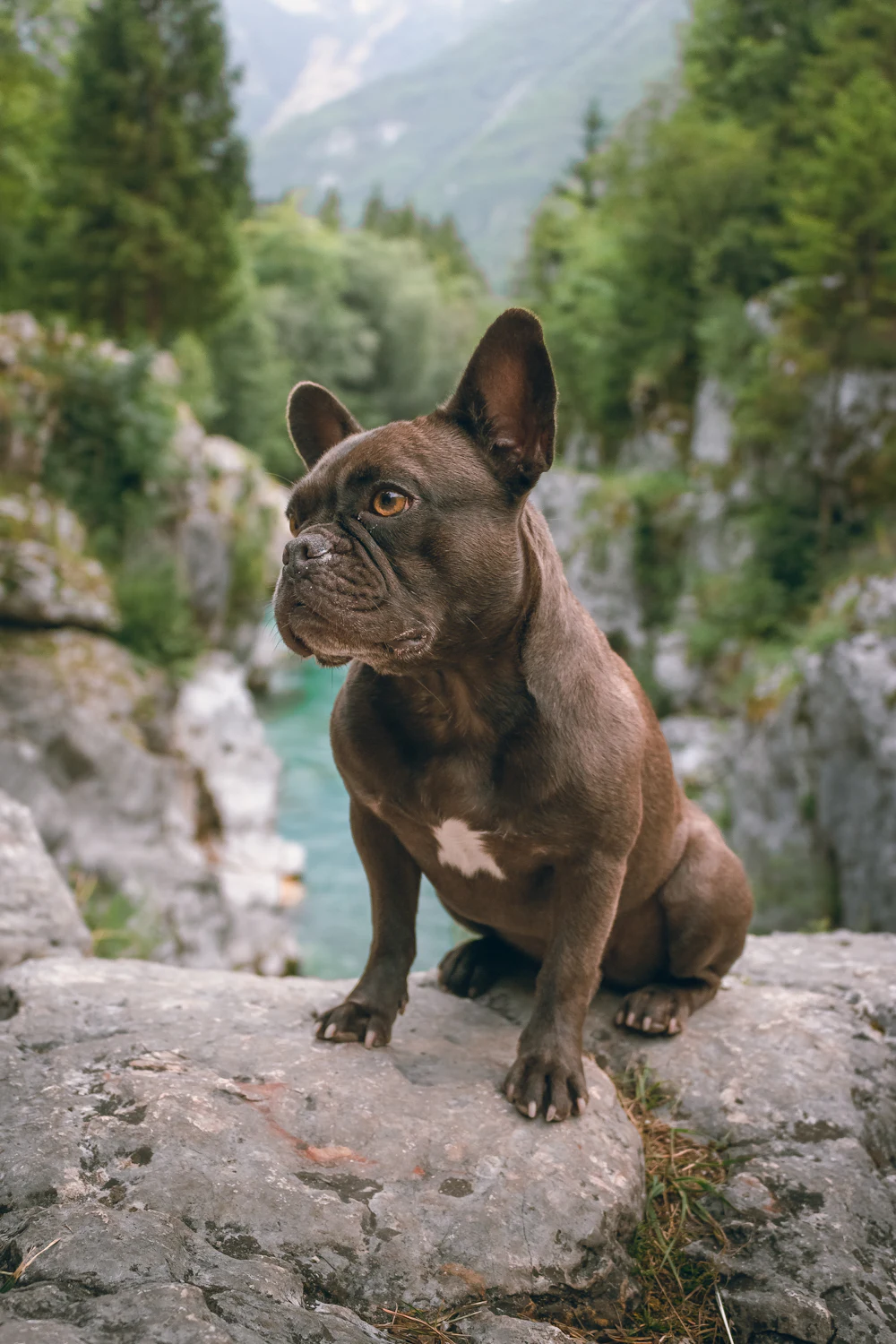
History
According to the FCI standard, the French Bulldog probably descends from Roman molossers and is related both to the British Bulldog and to French mastiffs. The dog we know today, the standard says, is the product of different crossings made by enthusiastic breeders in the popular quarters of Paris in the 1880s. Its first owners were market workers and butchers, which is a long way from the glossy image the breed has today.
The little dog then won over Parisian high society and artistic circles. The FCI records that the first breed club was founded in 1880 and that official registration began in 1885. The French Kennel Club recognised the breed in 1898, the year the first standard was adopted, and the standard has been revised several times since, with the current edition dated 2023. Popularity has since far outrun the careful shaping those early breeders imagined.
Temperament
The FCI describes the French Bulldog as a sociable, lively, playful, possessive and keen companion dog. Every word is useful. Sociable means it expects to be part of whatever you are doing, lively and playful mean it wants games, and possessive means it can guard a favourite person, toy or sofa corner with surprising force. It is a companion first and last.
Frenchies bark relatively little, get on with most people and dogs, and need less exercise than most breeds, which is why they suit city flats so well. They can also be stubborn, and house training sometimes takes patience. They crave company and cope poorly with long days alone, so a household where somebody is home or a midday visit is arranged suits them far better than a nine-hour absence.
Children and other pets
Frenchies are generally good with children and other pets, and their size makes them manageable. Teach children not to pick them up carelessly, because the spine and airway are vulnerable, and not to play hard in warm weather. The possessive side means food bowls and toys deserve rules, and a dog that guards a toy should have a quiet place where small hands do not reach.
Exercise and the daily walk
Short, regular walks at the dog's pace are ideal, perhaps thirty to sixty minutes a day in several outings. Never exercise a French Bulldog hard in warm weather: the flat face limits the dog's ability to cool itself by panting, and heatstroke can develop quickly. A harness is kinder than a collar for a dog with a compressed airway.
Most Frenchies cannot swim safely, so keep them away from open water or use a dog life jacket. Indoor games, snuffle mats and short training sessions give the mind a workout without tiring the body. If the dog begins to snort, slow down or lie down, stop and move it somewhere cool.
Training
Frenchies are clever but not always motivated. Short, fun sessions with food rewards work best. House training can take a few months; frequent trips outside and praise do more than any punishment. Stubbornness is usually a sign that the reward is not worth the effort, so find something the dog really wants.
Teach them to accept handling of the face, ears, feet and folds from puppyhood. Daily care is much easier with a dog that enjoys it. Practise being left for short, calm periods early, because a Frenchie that has never been alone will find a first working day hard.
Coat and grooming
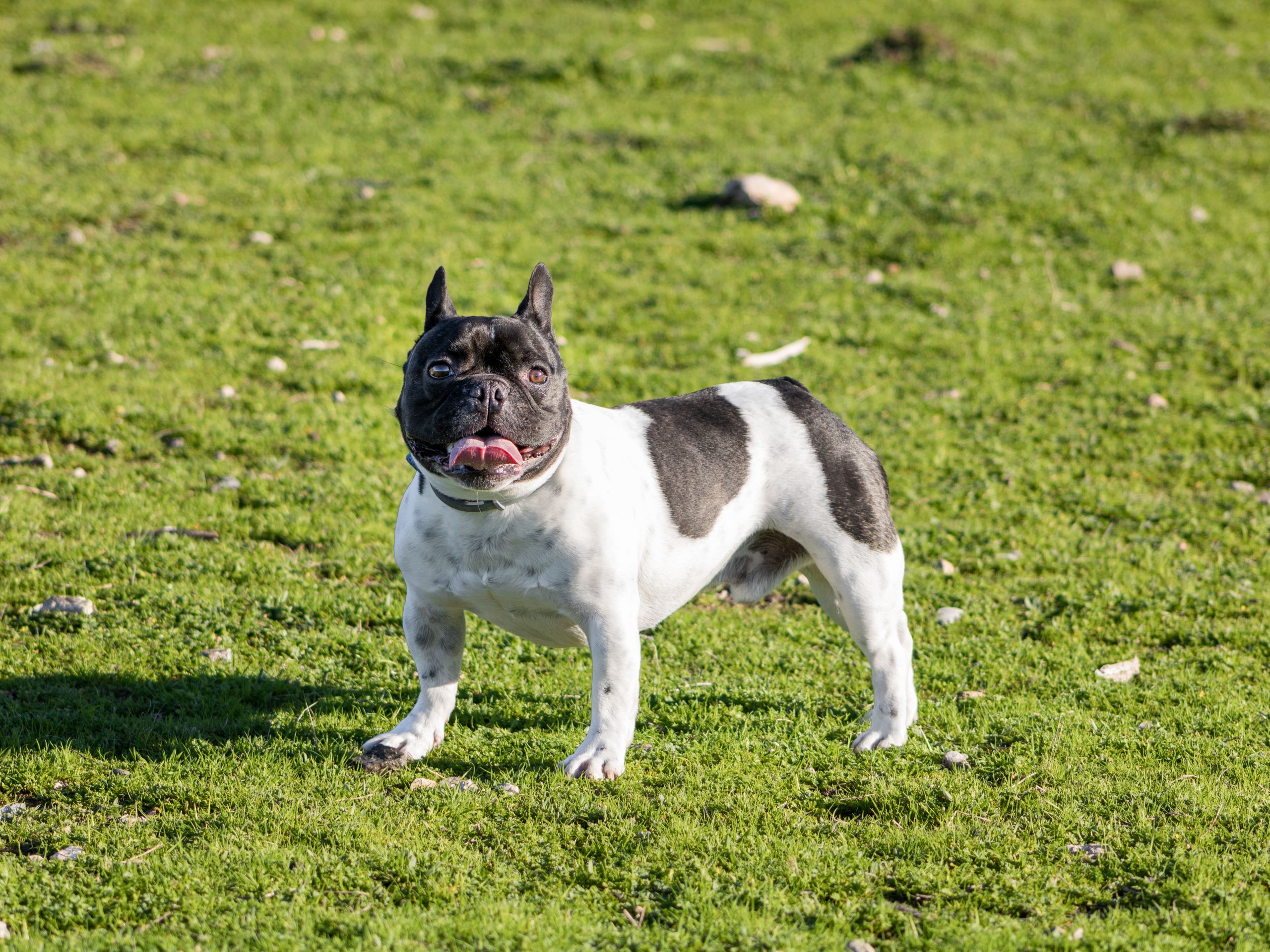
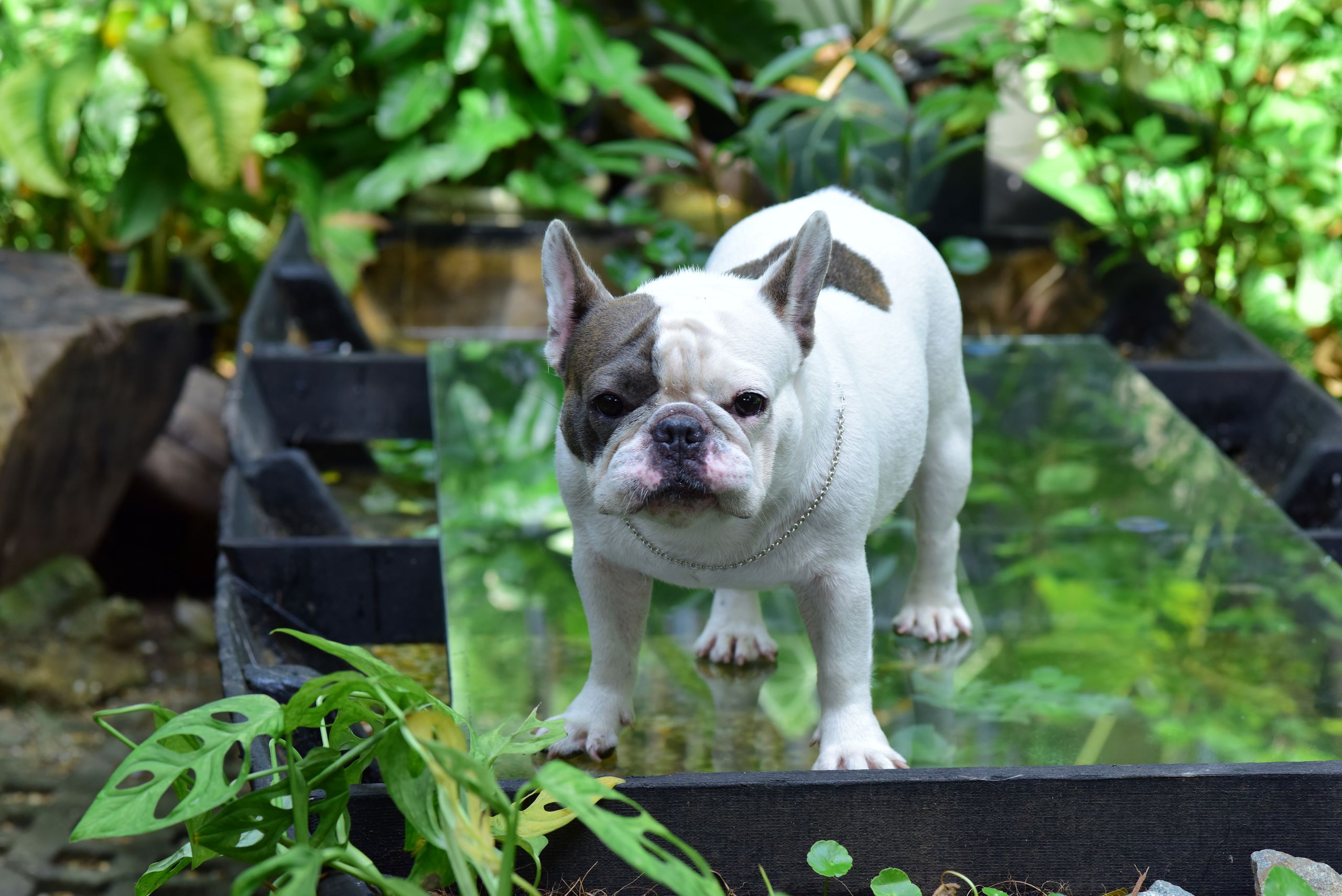
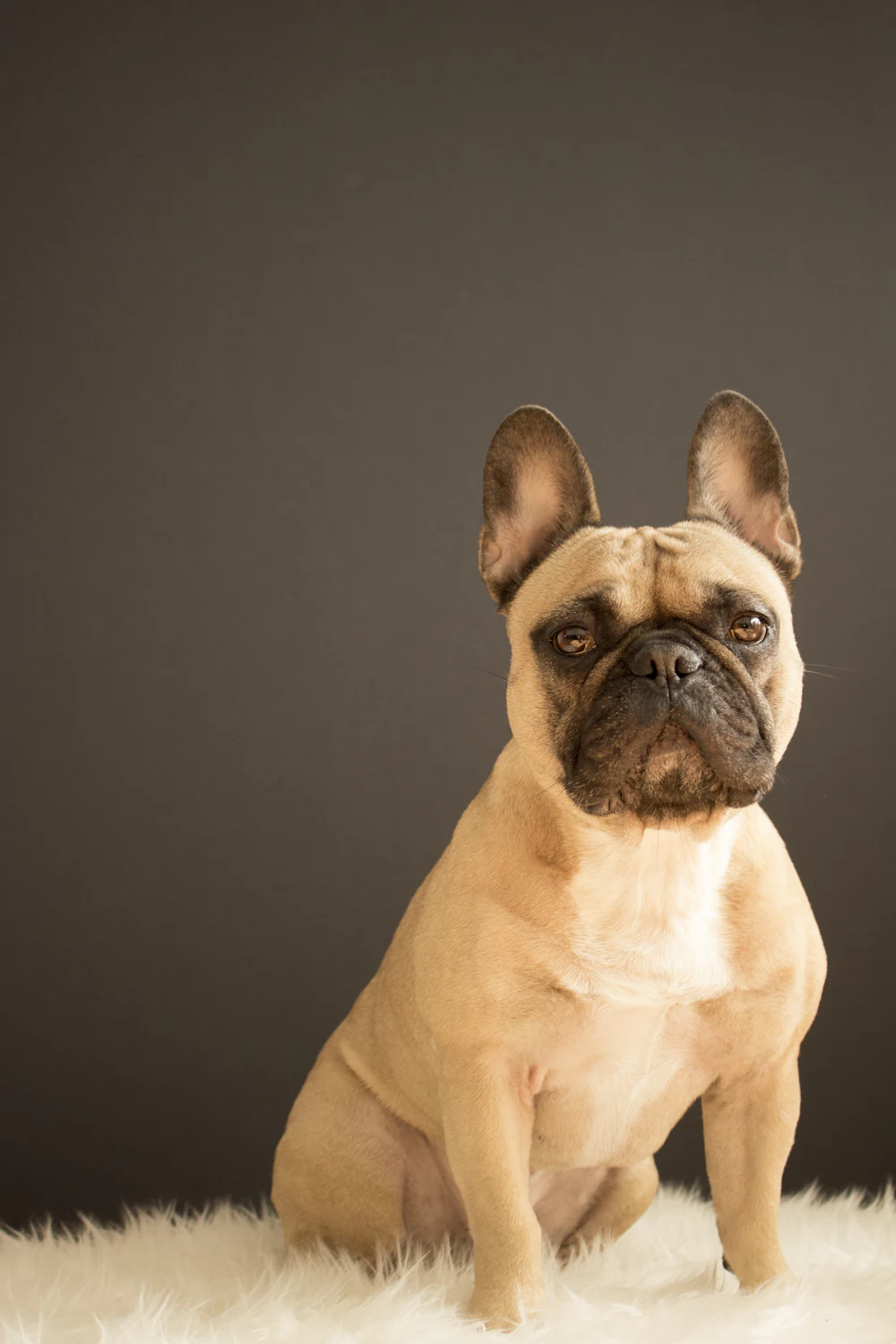
The FCI describes a smooth, glossy, soft coat with no undercoat. Accepted colours are fawn, with or without a black mask, brindle, and combinations with white spotting, and the nose must always be black. The coat is easy, with an occasional rub, and shedding is light. The work is in the face: clean and dry the skin folds regularly, check the tail pocket if there is one, and watch the eyes, which are prominent and easily scratched.
Feeding and weight
Keep them slim, because extra weight makes breathing worse. Many Frenchies have sensitive digestion and skin, and some gulp food and air, so a slow feeder helps. Avoid rich scraps and measure meals carefully. If the dog has recurrent itching, loose stools or wind, speak to your vet before trying one food after another, since the cause is not always the diet.
Work out a starting calorie figure and food weight with the calorie calculator. Not sure this is the right breed? Take the quiz.
Health
Every breed carries predispositions. These are the conditions most often discussed for the French Bulldog, not a prediction for any individual dog.
- Brachycephalic obstructive airway syndrome (BOAS): noisy breathing, snoring, exercise and heat intolerance
- Spinal problems, including hemivertebrae and intervertebral disc disease
- Skin fold infections and allergies
- Eye injuries and corneal ulcers
- Difficult births: many litters are delivered by caesarean section
What to ask the breeder. Ask for a respiratory function grading of both parents where the breed club offers it, and choose a dog with visibly open nostrils and a moderate face.
Choosing a puppy
Choose parents with open nostrils, a visible muzzle and quiet breathing at rest. Avoid breeders selling rare colours at premium prices, which have often been associated with poor health practices. The standard asks for no exaggeration, and you should too. A puppy that already snores loudly or tires on a short walk is a warning, and a good breeder will explain how they screen for airway and spinal problems.
In Luxembourg the national kennel club is the Fédération Cynologique Luxembourgeoise (FCL), a member of the FCI. Many owners also buy from breeders in Germany, France or Belgium; a puppy coming from another EU country must be microchipped and vaccinated against rabies, which in practice means it cannot travel before about fifteen weeks of age. Where to get a dog in Luxembourg.
The older French Bulldog
Breathing and spinal problems can worsen with age. Keep the weight down, avoid heat, and discuss any change in walking or breathing with your vet. Ramps help dogs that used to jump onto the sofa, and non-slip mats protect weak hind legs. Dental care, skin checks and regular eye examinations become increasingly important, and shorter walks keep an older Frenchie comfortable.
A realistic day
A realistic weekday for a working household in Luxembourg City, with a midday visit. Adjust it to your dog, not the other way round.
A gentle twenty-minute walk.
Breakfast in a slow feeder, face folds cleaned.
Midday visit: short walk, play, company.
Evening stroll in the shade.
A short toilet walk, then bed, often yours.
A French Bulldog in Luxembourg
In a Luxembourg flat a Frenchie is in its element, and a lift makes life easy. Parc Merl and the Pétrusse valley provide gentle paths for a slow walk, and a dog this size can ride a bus or tram with you, since both are free. The limits are summer and stairs: carry the dog on long staircases and never leave it in a car.
Summers can reach the 30s °C, so walk very early and late in heat waves and keep the flat cool. Several airlines refuse snub-nosed breeds in the hold, which matters to expatriate families who move often. Check before you buy. Dog tax, microchipping and third-party liability insurance apply as with any dog, and vet costs can be high.
Every dog in Luxembourg must be identified, declared to the commune and covered by liability insurance. How registration works.
When you travel
Many airlines refuse snub-nosed breeds in the hold, and heat during travel is dangerous. For most owners, care at home while they travel is safer than taking the dog. Tell the sitter about heat limits, breathing, fold cleaning and the slow feeder, and arrange a midday visit if the sitter is out at work. Leave your vet's number visible.
PAWLY's holiday and overnight care takes place in your home, so your dog keeps its own bed and routine.
Myths and facts
MythSnoring is a sign of a happy Frenchie.
FactSnoring signals airway obstruction. It is common in the breed, but it is a health issue, not a personality trait.
MythFrench Bulldogs do not need walks.
FactThey need less than most breeds, but short daily walks are still important for health and mind.
MythA French Bulldog is just a small English Bulldog.
FactThe FCI treats it as its own breed, shaped by Parisian breeders in the 1880s, with erect ears, a naturally short tail and no undercoat.
Is it the right dog for you?
Suits
- Apartment dwellers
- Owners who work from home or can break the day
- People wanting a small, sociable companion
Think twice if
- Active outdoor lifestyles, running or hiking
- Anyone unprepared for vet costs
- Families who move often by plane
Questions owners ask
Why do French Bulldogs snore?
Because the airway is compressed by the short face. Loud snoring and noisy breathing at rest are signs of airway obstruction, not charm, and worth discussing with a vet. A moderate face and open nostrils reduce the problem.
Can a French Bulldog be left alone?
For a few hours, yes, once trained. They are companion dogs and do not cope well with full working days alone. A midday visit from a walker or sitter breaks the day and helps house training.
How big does a French Bulldog get?
The FCI gives 27 to 35 cm for males and 24 to 32 cm for females, with 9 to 14 kg for males and 8 to 13 kg for females. Choose a dog within that range, and be wary of sellers promising a miniature.
Do French Bulldogs bark a lot?
Relatively little. Many are quiet, though they grunt, snort and snore, which is not the same as barking. Some bark when left alone or when guarding a favourite person, which training and regular exercise can reduce.
Sources
Photo: Pexels (Pexels License) · Photo: Unsplash (Unsplash License) · Photo: Pexels (Pexels License) · Photo: Unsplash (Unsplash License) · Photo: Unsplash (Unsplash License)
General information for dog owners in Luxembourg, not veterinary or legal advice. Official facts (origin, size, group, history and temperament as described by the breed standard) follow the FCI standard; health and care sections reflect breed-club and veterinary guidance and are typical ranges rather than rules. For your own dog, ask your vet, the breed club or your commune. How this guide is written and checked. Last reviewed 8 October 2026.
Need someone for your French Bulldog?
PAWLY offers an individual 45-minute walk or a home visit at your dog's pace, the same walker every time, and a written report with photos after every visit, across Luxembourg City.
Read next: the journal, for the French Bulldog
All articles
Dogs in hot weather: the Luxembourg summer guide
Flat-faced and short-nosed breeds like the French Bulldog overheat quickly, which matters in a Luxembourg summer.

Long-backed breeds, stairs and the spine
A long back makes stairs matter more than most owners think.

Separation anxiety: the signs owners miss and what actually helps
The French Bulldog bonds closely with its people; this covers the signs owners miss.
Similar breeds
All 198 breeds
Pug
An ancient Chinese companion breed, affectionate and comic, whose flat face brings real health limits.
EnergyGroomingFlat life
Boston Terrier
The American Gentleman: friendly, lively and tidy in its black and white tuxedo.
EnergyGroomingFlat life
English Bulldog
Gentle, dignified and devoted, a symbol of tenacity whose extreme shape carries a heavy health cost.
EnergyGroomingFlat life

